
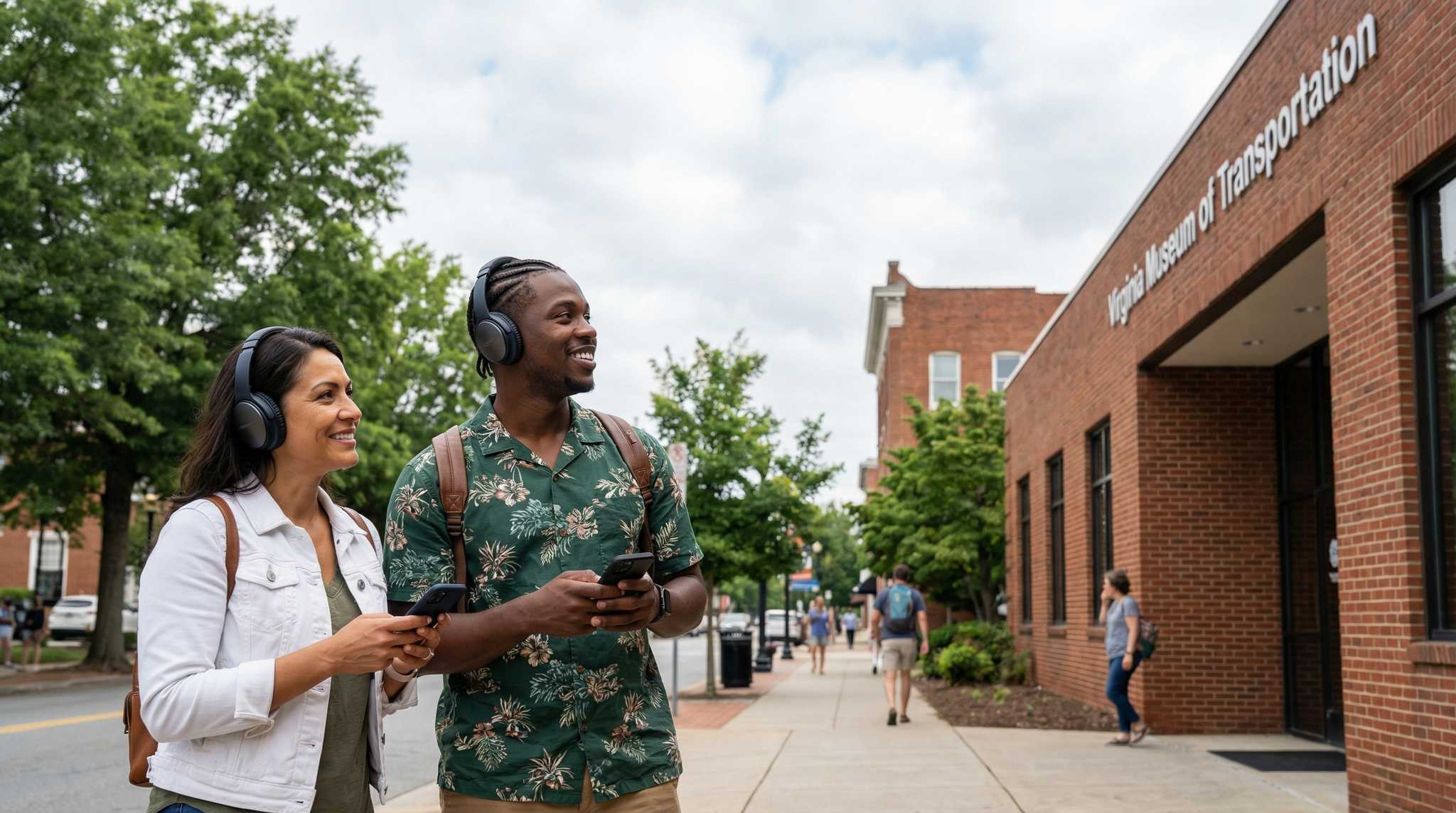
Tour de audio de Roanoke: Rieles de acero, historias imponentes y ecos históricos
Un titán a vapor una vez tronó por los rieles donde las calles de la ciudad ahora duermen y resuenan con secretos. Roanoke está viva con historias bajo su piel industrial. Este tour de audio autoguiado te lleva por el lado inesperado del centro, donde los juzgados históricos se encuentran con leyendas de locomotoras. Gira en esquinas que la mayoría nunca nota. Descubre historias que pocos escuchan. ¿Quién se mantuvo desafiante en las sombras del juzgado durante un escándalo que sacudió el sistema judicial de la región? ¿Qué pacto oculto unió a magnates ferroviarios y líderes cívicos bajo el estruendo de la Norfolk and Western 1218? ¿Y por qué un vagón olvidado en el Museo del Transporte sigue atrayendo susurros de los lugareños décadas después? Pasea desde el solemne mármol hasta el hierro y el vapor. Sigue el pulso de la ciudad desde enfrentamientos legales hasta maravillas mecánicas. Cada paso desvela el drama de Roanoke y te invita a ver lo ordinario transformado por la chispa de la historia. Empieza ahora. Sigue el trueno y revela lo que otros pasan por alto.
Vista previa del tour
Sobre este tour
- scheduleDuración 40–60 minsVe a tu propio ritmo
- straighten3.3 km de ruta a pieSigue el camino guiado
- location_onUbicaciónRoanoke, Estados Unidos
- wifi_offFunciona sin conexiónDescarga una vez, úsalo en cualquier lugar
- all_inclusiveAcceso de por vidaReprodúcelo en cualquier momento, para siempre
- location_onComienza en Distrito Histórico de la Compañía Ferroviaria Norfolk and Western
Paradas en este tour
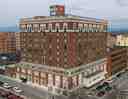
Look for the big, tan-brick railroad office blocks ahead of you, with a taller central tower and rows of dark windows-hard to miss, especially with the rail yards spread out…Leer másMostrar menos
Look for the big, tan-brick railroad office blocks ahead of you, with a taller central tower and rows of dark windows-hard to miss, especially with the rail yards spread out nearby. You’re standing at the Norfolk and Western Railway Company Historic District, which is basically Roanoke’s “we run this town” portfolio in brick and stone. Three major buildings make up the story here, and they don’t even pretend to be shy about it. The oldest part is the General Office Building-South. In 1896, after N and W’s previous headquarters went up in flames in January… they rebuilt on the same spot, because railroads don’t do “setbacks.” The eastern wing came first, then in 1903 they copied it like a carbon print and added a matching western wing, linking the two with a connector piece-practical, symmetrical, very “we have schedules to keep.” Then in 1931, they add the General Office Building-North, connected by a skywalk. This one leans Art Deco and borrows some swagger from New York-design cues that nod at the Chrysler Building, scaled to Roanoke and powered by coal-country confidence. Just east of here sits the Passenger Station-born in 1905 with a classical, civic-look… then remodeled in 1949 into sleek Moderne by designer Raymond Loewy. If that name rings a bell, it should: the guy shaped the look of 20th-century industry, and people have argued this station was one of his best architectural swings. Passenger service ended in 1971, offices moved out in 1992, and these buildings got second lives-apartments, classrooms, and today, visitors and local history inside the station. In 1999, the whole trio earned a spot on the National Register. When you’re set, Wells Fargo Tower is a 3-minute walk heading east, and it’ll be on your right.
Abrir página dedicada →Look to your right for a tall, pale gray, twelve-story tower with a crisp, classical “crown” along the roofline and rows of dark, square windows stacked like graph paper against…Leer másMostrar menos
Look to your right for a tall, pale gray, twelve-story tower with a crisp, classical “crown” along the roofline and rows of dark, square windows stacked like graph paper against the sky. Alright, you’re standing beside what Roanoke once treated like the height of modern ambition… literally. This is the Colonial National Bank building, finished in 1926 to 1927, when downtown was still trying on its big-city shoes. It’s granite and gray enamel brick, and it’s dressed in a Neoclassical outfit-because if you’re going to hold people’s money, you might as well look like you learned trustworthiness from ancient Rome. Here’s the fun part: the whole building is designed like a classical column. Not a carved marble one, obviously-more like “skyscraper cosplay.” The first three floors form the base, solid and weighty in granite. Above that, the next seven floors are the plain “shaft,” mostly unadorned brick-just business, no jewelry. Then the top two floors are the “capital,” with more ornament, like the building remembered at the last second that it’s supposed to be fancy. This corner was banking territory long before this tower went up. The bank started in 1910, and by 1912 it had moved into the Terry Building right here-an Italianate seven-story “skyscraper” for its day. Roanoke’s first. But styles change, and by 1927 the Terry Building was starting to feel… dated. So the bank did what ambitious institutions tend to do: it knocked the old landmark down and built a taller one in its place. Local architects Frye and Stone-names that pop up all over Roanoke-gave the city this twelve-story statement piece. For nearly fifty years, it was the tallest building in town, which is a long reign in skyline years. Inside, the bottom two floors handled the banking-tellers, ledgers, the whole ritual. The ten floors above were laid out in identical office suites, sixteen per floor. And in a perfect little time capsule detail: each floor had men’s and women’s restrooms… with five fixtures for men and only one for women. Nothing says “modern progress” like designing the future with your eyes shut. In 1929, Colonial National merged with American National, and one of the building’s signature features dates from that era: a copper-and-stained-glass clock jutting from the corner, with chimes tucked inside and the bank’s name glowing in colored glass. It’s the kind of detail meant to stop you mid-stride and think, “Okay, these folks wanted to be remembered.” The building kept evolving-an annex went up next door in 1949 and 1959, and the lobby levels got a remodel in 1960. Then, in 1992, Roanoke tried something bold up on the roof: peregrine falcons, released to help rebuild the state’s population and maybe chase off downtown pigeons. The city bought five chicks at $1,600 each-about $3,600 today-funded by downtown businesses, plus a sixth rescued bird from the U.S. Fish and Wildlife Service. Turns out pigeons don’t scare easy… and the falcons didn’t quite solve the problem. Today, it’s still working for a living: banking down low, and high-end homes up top, after renovations and conversions over the years. A money-and-people machine… just with better views now. When you’re ready, Mill Mountain Theatre is next-just walk east for about 1 minute.
Abrir página dedicada →
Mostrar 11 paradas másMostrar menos paradasexpand_moreexpand_less
On your right, look for the sturdy red-brick building with two big street-level garage arches and a small white-topped bell tower centered above them. This is Fire Station No.…Leer másMostrar menos
On your right, look for the sturdy red-brick building with two big street-level garage arches and a small white-topped bell tower centered above them. This is Fire Station No. 1, and it’s wearing its civic pride right on its sleeve. The design was deliberately modeled after Philadelphia’s Independence Hall… because if you’re building a firehouse in a growing city, why not borrow the look of American confidence? It went up fast: the city broke ground on February 19, 1906, and by 1907 this Georgian Revival firehouse was standing here on its limestone base, dressed up with terra cotta details like it was headed to a formal event. Back in 1882, Roanoke’s firefighters were volunteers. Then, in 1906, the city finally hired its first paid crew, and this place became their powerhouse. Imagine the scene: boots thudding on the floor, the sharp smell of smoke clinging to wool uniforms, and that bell up top calling people to move... NOW. The tower wasn’t just for show, either. When it was new, it gave a clear view across the whole city-your early-1900s “situational awareness,” no app required. Very cutting-edge. By 1911, Roanoke put its first engine-powered fire truck here, and by 1918 the horses were officially out of the job. The bell itself-cast in 1886-was taken down in 2001, restored, and now sits on the first floor like a retired celebrity. After a careful restoration in 2003, this station kept working until it stopped running calls on May 9, 2007-about a full century of service. Today, it’s swapped sirens for shoppers: showroom, restaurant, and a boutique hotel. When you’re set, Boxley Building is a 2-minute walk heading south.
Abrir página dedicada →On your right, look for a sturdy eight-story beige-brick building with lots of evenly spaced windows and a slightly fancier top edge that reads like an old-school crown. This is…Leer másMostrar menos
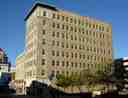
On your right, look for a sturdy eight-story beige-brick building with lots of evenly spaced windows and a slightly fancier top edge that reads like an old-school crown. This is the Boxley Building, raised in 1922 when Roanoke was on a post-World War One building spree and optimism was basically a construction material. If it feels a little “formal,” that’s on purpose: the design follows the classic skyscraper trick of pretending it’s a giant column. Down low, you’ve got a one-story granite “base” that looks ready to take a hit. Then come six stories of beige, enameled brick-the “shaft”-all business, all repetition, like the city’s steady heartbeat. And up top, the eighth floor is dressed up with decorative terra cotta panels and a crisp copper cornice, the architectural equivalent of putting on a nice hat before you head out. The man behind it was William Wise Boxley-local builder, developer, and, conveniently, Roanoke’s mayor at the time. Because if you’re going to run the city, you might as well improve the skyline while you’re at it. He helped launch Shenandoah Life Insurance and Colonial American Bank, and served on boards at Roanoke College and Virginia Military Institute. The architect, Edward G. Frye, was a familiar name downtown too-his firm handled big civic projects, so this building arrived with serious credentials. For decades, Boxley’s own materials company worked from inside. Then, after sitting empty for a stretch in the late 2000s, the building got a second act in 2016: lower floors became dorm-style housing for international students, and the upper floors turned into luxury apartments. Same address, very different lifestyles. When you’re set, Carilion Roanoke Memorial Hospital is a 4-minute walk heading north.
Abrir página dedicada →On your left, look for the broad, modern hospital complex with a tall brick tower that reads “Carilion Roanoke Memorial Hospital,” backed by a wall of green trees. This is…Leer másMostrar menos
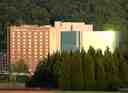
On your left, look for the broad, modern hospital complex with a tall brick tower that reads “Carilion Roanoke Memorial Hospital,” backed by a wall of green trees. This is Carilion Roanoke Memorial Hospital, a private teaching hospital with about 703 beds... basically a small city that happens to hand out care instead of parking tickets. It started in 1899 as plain old Roanoke Hospital, back when “modern medicine” still involved a lot of hope and not nearly enough antibiotics. In the 1920s and 1930s, the place grew fast thanks to David W. Flickwir, a railroad executive who married the hospital’s nursing superintendent and then put serious money behind expansion-hundreds of thousands of dollars then, roughly several million in today’s cash. The 1925 Flickwir Memorial Unit still stands, a quiet reminder that love stories sometimes come with construction budgets. Today, it’s the region’s ONLY Level One trauma center, with three LifeGuard helicopters ready to lift off when seconds matter. When you’re set, Roanoke Downtown Historic District is a 1-minute walk heading north.
Abrir página dedicada →Ahead of you, look down the street for a layered skyline of brick buildings stepping up to a tall tower in the distance, with shopfronts and older stone facades lining both sides.…Leer másMostrar menos
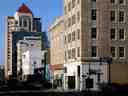
Ahead of you, look down the street for a layered skyline of brick buildings stepping up to a tall tower in the distance, with shopfronts and older stone facades lining both sides. Welcome to the Roanoke Downtown Historic District... basically, the city’s scrapbook, but made of 122 real buildings. From the late 1800s through the mid-1900s, this area collected the places people needed and argued about: churches, banks, newspapers, civic offices, clubs, and businesses. You’ve got landmarks like the Roanoke Times Building going back to 1892, the Municipal Building from 1915, and the Post Office and Courthouse built in 1930... all meant to project that very specific message: “We are ORGANIZED here.” Which is exactly what every growing rail-and-commerce town wants to believe. What I love is the mix: a candy company near a funeral home, a library near a YMCA... life’s full itinerary inside a few blocks. In 2002, it all earned a spot on the National Register, which is the government’s way of saying, “Don’t mess this up.” When you’re set, the Virginia Museum of Transportation is a 7-minute walk heading west.
Abrir página dedicada →On your right, look for the long brick-and-glass freight-station building with big white letters across the top that read “VIRGINIA MUSEUM OF TRANSPORTATION.” This place is…Leer másMostrar menos
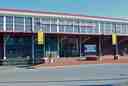
On your right, look for the long brick-and-glass freight-station building with big white letters across the top that read “VIRGINIA MUSEUM OF TRANSPORTATION.” This place is basically Roanoke admitting what we all already know: transportation built the town, paid the bills, and left behind some very large souvenirs. The museum you’re looking at sits inside the old Norfolk and Western Railway Freight Station, and the building itself is part of the exhibit. It’s got that early-1900s industrial confidence-rows of tall windows, wide bays, and a platform edge that still feels like it’s waiting on something heavy to roll in. The museum’s story starts a little more modestly in 1963, when it was called the Roanoke Transportation Museum and lived out in Wasena Park in an old freight depot by the Roanoke River. Early on, the collection had two attention-grabbers: a United States Army Jupiter rocket-yes, a rocket-and Norfolk and Western’s J class steam locomotive No. 611, donated because Roanoke was where so many of those machines were built. Nothing says “small museum” like “we’ve got a rocket and a locomotive.” Over time, the collection got delightfully broad. Not just rail gear like a PCC streetcar, but also horse-drawn vehicles-things like a hearse and wagons that remind you transportation didn’t start with gasoline or steel wheels. Then, in 1983, Virginia’s General Assembly made it official: this was the state’s transportation museum. A nice honor… and then nature promptly tested it. In November 1985, a flood hit hard, damaging the museum and much of what it held. Museums hate water almost as much as paperwork loves it. But the comeback was quick. By April 1986, it reopened here downtown in this former freight station, reborn as the Virginia Museum of Transportation. Now, about the building: what you see is a 1918 station with two clear parts-a long, two-story freight house built parallel to the tracks, and a brick annex that once held division offices for the railroad. The railroad stopped using it for freight business in 1964, but the structure stuck around long enough to get listed on the National Register of Historic Places in 2012. That same year, during the museum’s 50th birthday, the City of Roanoke transferred ownership of locomotives No. 611 and No. 1218 to the museum-finally putting the crown jewels in the museum’s own vault, so to speak. Inside, the museum spreads the love across cars, planes, and trains. The auto gallery covers everything from early-century vehicles to modern culture, with an oral-history feature called “Driving Lessons,” because everyone has a story about a car. Aviation has “Wings Over Virginia,” mixing the science of flight with first-hand voices from pilots and builders. And rail? Rail is the headliner-exhibits on railroad leadership, African American railroad workers whose stories were often skipped over, and a recreated small-town depot scene called “Big Lick,” nodding to Roanoke’s old nickname. When you’re set, Norfolk and Western 1218 is next-just walk west for about 2 minutes.
Abrir página dedicada →On your left is the United States District Court for the Western District of Virginia… and yeah, it’s one of those buildings that quietly says, “Careful what you say next.” This…Leer másMostrar menos
On your left is the United States District Court for the Western District of Virginia… and yeah, it’s one of those buildings that quietly says, “Careful what you say next.” This isn’t just a courthouse in the everyday sense. It’s part of the federal court system-meaning the cases here involve federal laws, constitutional questions, and disputes that can ripple way beyond Roanoke. Here’s the interesting part: this court isn’t only about Roanoke. The Western District of Virginia is seated in several cities across the state-places like Abingdon, Charlottesville, Danville, Harrisonburg, Lynchburg… and right here in Roanoke. So even though you’re standing in one spot, the court’s reach stretches across a huge swath of Virginia-dozens of counties and independent cities. Picture a map with a big hand laid over the mountains and valleys of the western half of the state… that’s the territory this court covers. The story goes back to the earliest days of the United States. In 1789, when the country was still figuring out how to be a country, Congress passed the Judiciary Act and created the original federal district courts-thirteen of them. Virginia got one. Then, as America did what America always does… it reorganized the paperwork. In 1801, Virginia got split into multiple judicial districts, and just a year later, Congress reversed course and put it back together again. If you ever feel like your job is chaotic, just know the early federal court system was basically “try something, undo it, try again.” In 1819, Virginia finally split into Eastern and Western districts again. And here’s a twist: at that point, West Virginia didn’t exist yet-so the “Western District of Virginia” included the region that would later become West Virginia. Then the Civil War hit, West Virginia broke away in 1863, and the court boundaries got scrambled again. For a while, the western district essentially became the District of West Virginia, and the remainder got merged back into a single Virginia district in 1864. By 1871, Congress divided Virginia into Eastern and Western districts once more-basically the setup we recognize today. If a case here gets appealed, it usually heads to the U.S. Court of Appeals for the Fourth Circuit. But-because the legal world loves exceptions-some specialized cases, like certain patent disputes or claims against the federal government under the Tucker Act, go to the Federal Circuit instead. Simple, right? One more human detail: this district has a chief judge, but it’s not a permanent “boss” position. It rotates among the judges based on seniority and eligibility, with term limits and age rules-kind of like responsible adult musical chairs. When you’re ready, the Patrick Henry Hotel is a 7-minute walk heading northwest.
Abrir página dedicada →On your right, look for the tall, red-brick hotel building with creamy white trim and a row of arched windows near the top… it’s the kind of place that still looks like it expects…Leer másMostrar menos
On your right, look for the tall, red-brick hotel building with creamy white trim and a row of arched windows near the top… it’s the kind of place that still looks like it expects your luggage to arrive on a cart. This is the Patrick Henry Hotel, a big, confident Colonial Revival landmark that opened in 1925, right when Roanoke was riding the post-World War One wave and the Norfolk and Western Railway was helping turn the city into a serious destination. Travelers poured in… and Roanoke needed beds. Lots of beds. A local business leader named William Wise Boxley set the whole thing in motion, creating a development company and hiring architect William Lee Stoddart… a guy who knew how to design hotels that made guests feel like they’d “made it,” even if they’d just made it off a train. Construction costs crept up, because of course they did, so Boxley had to form a second corporation in 1924 to raise more money and get the job finished. The oldest tradition in American building: “We’re gonna need more capital.” When it finally opened on November 10, 1925, the Patrick Henry came out swinging: about 300 rooms, and a grand opening party that pulled in over 2,000 people. The name “Patrick Henry” wasn’t picked by some smoky boardroom committee, either… it came from a naming contest won by a young Roanoker, John Payne, who later headed to Hollywood and became a 1940s film star. Not a bad origin story for a hotel sign. Over the decades, the building lived a lot of lives: run for years by a management company based out of Birmingham, updated in 1938 by local architects, then later sold at auction in 1961 to deal with debts. By the late 1960s, the original 300 rooms were carved into 121 hotel-and-apartment units… a practical makeover with less champagne and more monthly rent. Then came the rough patch: a 1990 purchase and a $3 million renovation (about $7.3 million today) to rebrand it as a Radisson… followed by foreclosure attempts, failed conversion plans, and finally closure in 2007. It was even condemned for fire code issues… which is a pretty blunt way for a building to get grounded. But it didn’t stay down. After a 2009 foreclosure for unpaid taxes, it sold for $2 million (around $2.9 million today), and a $20 million renovation (about $29 million today) brought it back in 2011: 134 apartments, plus a restaurant and office and retail space… now simply called “The Patrick Henry.” Dropping “Hotel” is a polite way of saying, “We’ve reinvented ourselves.” When you’re set, St. John’s Episcopal Church is a 5-minute walk heading south.
Abrir página dedicada →On your left, look for the sturdy blue-gray limestone church with a square corner tower and a steep gabled front wall punctuated by a big pointed Gothic window. This is St.…Leer másMostrar menos
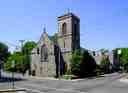
On your left, look for the sturdy blue-gray limestone church with a square corner tower and a steep gabled front wall punctuated by a big pointed Gothic window. This is St. John’s Episcopal Church, and it has the quiet confidence of a place that’s been through a few name changes, a boomtown growth spurt, and more than one argument over where exactly it ought to stand. The building you’re looking at went up in 1891 to 1892, designed in a late Gothic Revival style by Charles M. Burns, an architect from Philadelphia who knew how to make an Episcopal church look like it means business. The limestone blocks-cool-toned, almost steel-blue in the sun-give it that “built to last” feel, because that’s exactly what it was meant to do. But the congregation’s story starts earlier… way earlier. Back in the 1830s, a traveling preacher named Nicholas H. Cobbs came through the Roanoke Valley spreading Episcopal worship. Cobbs later became the first Bishop of Alabama, which is a pretty impressive career leap for a guy doing circuit work in the mountains. By 1850, this group had grown into an independent parish. Their first building was in Gainesborough-today’s Gainsboro-then they moved again in 1876 to Big Lick. Yes, Big Lick. Roanoke wore that name for a while like a slightly embarrassing childhood nickname. Then came the railroads. In 1881, it was announced that Big Lick would become the junction point for the Shenandoah Valley Railroad and the Norfolk and Western… and suddenly this little place had big-city ambitions. By 1884, Roanoke was officially a city, and St. John’s started to swell with new members, many tied to the railroad and the leaders building a boomtown from scratch. When a prime lot opened up here at Jefferson and Elm in 1891, a parishioner bought it so the church could relocate to the growing residential area just south of downtown. Not everyone loved that plan… and some folks broke off and formed Christ Episcopal Church. Churches grow like families sometimes: with love, changes… and the occasional split at the dinner table. Architecturally, St. John’s is clever as well as handsome. It’s a clerestory-style church: lower roofs over the aisles, a higher roof over the nave, and a long band of high windows that bring in light and air-without needing heavy exterior buttresses. Inside, there’s a hammerbeam roof and plenty of stained glass, including one window signed by Louis C. Tiffany himself. The bell tower you see on the northeast corner is three stories tall… but fun fact: it didn’t get its bell until 1989. Better late than silent. This congregation also had real influence. In 1919, when Southwest Virginia created its own Episcopal diocese, St. John’s-then the largest of 82 churches-became the diocesan home base. And in 1925, when the city wanted to widen Jefferson Street in a way that would’ve forced the altar to move, the church helped stop it. If you’re going to build a sanctuary, you generally prefer it stays put. St. John’s landed on the National Register of Historic Places in 1991-official recognition for a church that’s been riding Roanoke’s changes since the days of Big Lick… and still looks solid doing it.
Abrir página dedicada →

Preguntas frecuentes
¿Cómo empiezo el tour?
Después de la compra, descarga la app AudaTours e ingresa tu código de canje. El tour estará listo para comenzar de inmediato - solo toca play y sigue la ruta guiada por GPS.
¿Necesito internet durante el tour?
¡No! Descarga el tour antes de empezar y disfrútalo completamente sin conexión. Solo la función de chat requiere internet. Recomendamos descargar en WiFi para ahorrar datos móviles.
¿Es un tour guiado en grupo?
No - esta es una audioguía autoguiada. Exploras de forma independiente a tu propio ritmo, con narración de audio reproduciéndose en tu teléfono. Sin guía, sin grupo, sin horario.
¿Cuánto dura el tour?
La mayoría de los tours toman 60–90 minutos para completar, pero tú controlas el ritmo completamente. Pausa, salta paradas o toma descansos cuando quieras.
¿Qué pasa si no puedo terminar el tour hoy?
¡No hay problema! Los tours tienen acceso de por vida. Pausa y continúa cuando quieras - mañana, la próxima semana o el próximo año. Tu progreso se guarda.
¿Qué idiomas están disponibles?
Todos los tours están disponibles en más de 50 idiomas. Selecciona tu idioma preferido al canjear tu código. Nota: el idioma no se puede cambiar después de generar el tour.
¿Dónde accedo al tour después de comprarlo?
Descarga la app gratuita AudaTours desde App Store o Google Play. Ingresa tu código de canje (enviado por email) y el tour aparecerá en tu biblioteca, listo para descargar y comenzar.
Si no disfrutas el tour, te reembolsamos tu compra. Contáctanos en [email protected]
Paga de forma segura con 


