
Audioguía de Bethlehem: Ecos Moravos y Orígenes Industriales
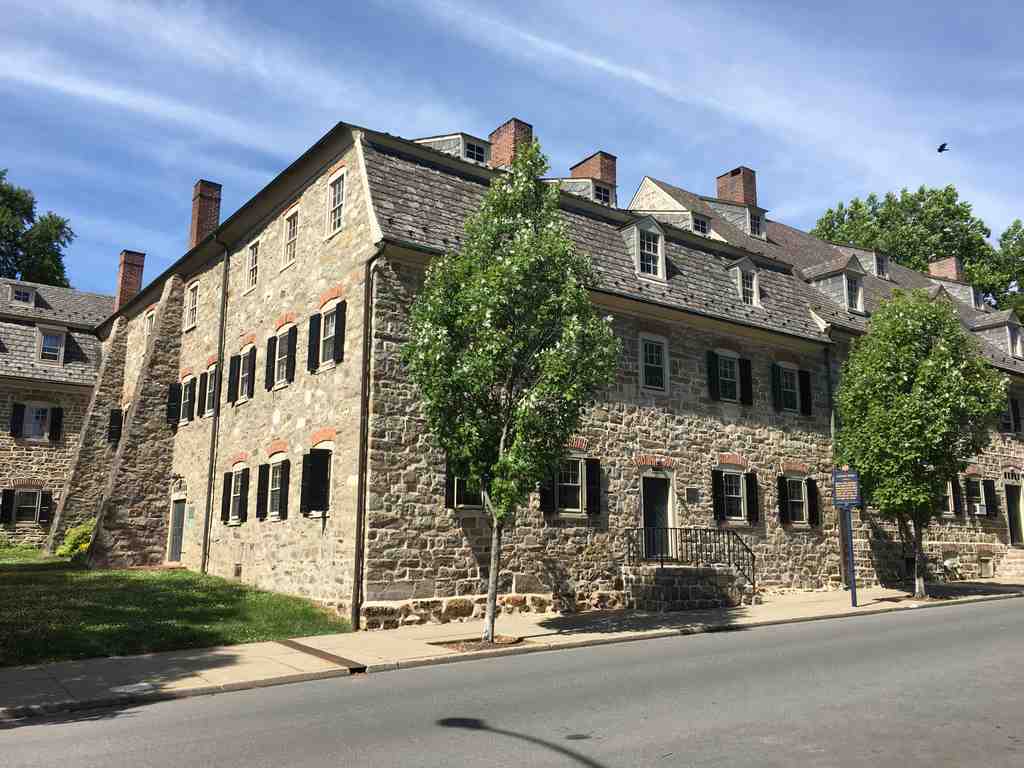
Una red secreta de túneles bullía bajo las tranquilas calles adoquinadas de Bethlehem, donde revolucionarios conspiraban a la luz de las velas y pensadores radicales reescribían la historia en silencio. Sigue estos hilos ocultos en una audioguía autoguiada que revela las historias detrás de puertas por las que la mayoría de la gente pasa de largo. Descubre leyendas perdidas y rincones olvidados sin una guía o una multitud. ¿Quién lo arriesgó todo en el Barrio Industrial Colonial, donde el olor a hierro fundido una vez presagió el desastre? ¿Qué rituales prohibidos se desarrollaron en la Casa de las Hermanas Solteras después del anochecer, detrás de las persianas cerradas? ¿Por qué una orquídea rara desató obsesión y rivalidad en la Residencia de Lewis David de Schweinitz? Recorre siglos en una sola tarde, sintiendo cada eco de ambición, invención e intriga bajo tus pies. Deja que cada punto de referencia devuelva sus secretos a la vida mientras la ciudad se transforma a tu alrededor. Pulsa reproducir y sumérgete bajo la superficie de las calles más intrigantes de Bethlehem.
Vista previa del tour
Sobre este tour
- scheduleDuración 30–50 minsVe a tu propio ritmo
- straighten2.7 km de ruta a pieSigue el camino guiado
- location_onUbicaciónBethlehem, Estados Unidos
- wifi_offFunciona sin conexiónDescarga una vez, úsalo en cualquier lugar
- all_inclusiveAcceso de por vidaReprodúcelo en cualquier momento, para siempre
- location_onComienza en Posada Morava del Sol
Paradas en este tour
Look for the long, gray stone building with deep red window frames and a hanging white sign that reads “1758 SUN INN,” just under the tree branches. Welcome to the Moravian Sun…Leer másMostrar menos
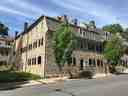
Look for the long, gray stone building with deep red window frames and a hanging white sign that reads “1758 SUN INN,” just under the tree branches. Welcome to the Moravian Sun Inn… which started life in 1758 as Bethlehem’s official guesthouse for outsiders doing business with the Moravian community. Back then, this place wasn’t “cute historic downtown” yet-it was frontier edge-of-the-map America, and the Moravians ran a tight, organized town. They needed a spot where non-Moravian merchants could stay without turning the community upside down, so they built this sturdy, two-story stone inn-about 66 by 40 feet-with a mansard roof, and got it properly licensed by King George the Third. Because nothing says “hospitality” like paperwork from a monarch an ocean away. Now, take in the thickness of those stone walls. They weren’t going for dainty. They were going for “you can ride out trouble here,” and trouble arrived on schedule. The Sun Inn became a kind of VIP hallway of early America: governors, British military leaders, and-soon enough-patriots on the move. George Washington and Martha Washington passed through. So did Hamilton, Franklin, Lafayette, Pulaski, Von Steuben… basically, if you’re assembling a Revolutionary War trading-card set, this is a strong place to start. The most dramatic entry in the guest register came in September 1777, when members of the Continental Congress fled after the British took Philadelphia. John Adams, Samuel Adams, John Hancock, Richard Henry Lee, and others bedded down right here. Picture wet boots by the fire, tense whispers, and the unmistakable feeling that history is happening whether you’re ready or not. And it wasn’t only politicians. The inn also hosted dozens of Iroquois leaders-fifty-one chiefs and warriors are said to have stayed here, including the Seneca orator Cornplanter. Add great food, early “private suite” comforts, and you’ve got the kind of reputation that made John Adams call it the best inn he’d ever seen. Which, coming from John Adams, is practically a parade. The inn stopped operating as a hotel in 1961-two centuries after its original license-then locals rallied to save it from decay. Today it’s restored and working again: museum, tavern, and even a micro-distillery… proof that some traditions age better than others. When you’re set, Goundie House is a 2-minute walk heading south, and it’ll be on your right.
Abrir página dedicada →On your right, look for the low, wide red-brick house with crisp white shutters and a centered doorway under a small arched pediment, topped by two dormer windows peeking out of…Leer másMostrar menos
On your right, look for the low, wide red-brick house with crisp white shutters and a centered doorway under a small arched pediment, topped by two dormer windows peeking out of the roof. This is the Goundie House... and it’s basically Bethlehem’s early-1800s mic drop in brick and mortar. Built in 1810 for John Sebastian Goundie - say it like “GUN-dee” - it’s believed to be the town’s first brick residence, and one of the first private homes here to show off the new American Federal style. In a place known for sturdy German Colonial stone buildings, this was a clear message: “We’re doing things a little differently now.” Goundie’s story starts with a suitcase and a skill. He arrived in Bethlehem in 1802, a trained brewer from Neuwied, Germany, headed for a Moravian community in Salem, North Carolina. He tried it... and within months he was back in Bethlehem. Why? The records get a little foggy, but one story says he thought the site picked for the brewery down there was, “not ideal.” So Bethlehem’s leaders made a deal: Goundie would become the brew master. He was ambitious, sharp, and not always thrilled with how the town made decisions. The Moravians often used a “lot” system - basically drawing a result from a box to decide important matters. By the early 1800s, folks were getting skeptical about leaving real estate to divine roulette. In 1808, Goundie wanted to buy a home lot... the lot draw didn’t go his way... and meeting notes say he had to be “calmed down.” He even threatened to teach brewing to somebody else and move out of town. And yet... two years later, here it is: the house he wanted anyway. Somehow he secured a church lease for the property, though the paperwork doesn’t exactly spell out how that happened. Inside, the layout was practical - a central hall with two rooms on each side - but there was also a wonderful bit of old-school engineering: a beehive oven tied into fireplaces on multiple floors, the kind of feature that made a home feel warm, busy, and alive. Goundie also worried about what went into his beer. In 1811 he complained that water from the creek near the old brewing site was being fouled by tannery waste. He pushed for a new brewery location closer to here, and by 1812 the town was praising his beer as better than the pricier Philadelphia method. Not bad for a guy who nearly stormed off. This building had more lives than a neighborhood cat: doctor’s office, boarding house, shops, agencies - you name it. In 1968 it was almost demolished, until local advocates stepped in and Historic Bethlehem bought it for $22,000 - roughly about $200,000 in today’s money - then restored it carefully, even preserving an old connecting doorway and a pressed tin ceiling. When you’re set, Moravian Book Shop is a 1-minute walk heading south, and it’ll be on your left.
Abrir página dedicada →
Mostrar 8 paradas másMostrar menos paradasexpand_moreexpand_less
On your left, look for the long, white clapboard building with a steep roof, a row of little dormer windows, and several brick chimneys lined up like they’re standing at…Leer másMostrar menos
On your left, look for the long, white clapboard building with a steep roof, a row of little dormer windows, and several brick chimneys lined up like they’re standing at attention. This is the Lewis David de Schweinitz Residence… though the building’s first name was the 1741 Gemeinhaus, which basically means “Community House,” and it took that job description very seriously. When it went up in 1741, Bethlehem was young, scrappy, and very Moravian-about 80 people trying to build a town with faith, discipline, and a lot of shared chores. This place wasn’t just a house. It was the house: where people lived, cooked, learned, got medical care, and worshiped… all under one roof. If that sounds cozy, just remember “cozy” hits different when the community starts pushing past 100 residents. Take a second to notice how big it feels from the street-two and a half stories, stretched wide, with that orderly rhythm of windows. Underneath the clapboard skin is a log structure, and not a small one: it’s considered the largest surviving log house in continuous use in the United States. The building reached its current form by 1743, which is a polite way of saying they realized pretty quickly they needed MORE room. Upstairs was the Saal, the earliest worship space in Bethlehem and the largest room in the building. Imagine that room filled with voices-Moravians were serious about music. They didn’t just sing; they memorized hundreds of hymns and could sing them in multiple languages. At one point there were as many as 13 languages spoken in the community… and yes, sung here, too. A spinet arrived from England in 1744, and a pipe organ followed in 1746-because if you’re going to build a utopia in the woods, you might as well have a soundtrack. This building also held some of Bethlehem’s biggest moments. The first funeral took place here in 1742. The first wedding happened the same year… and then, in 1749, they hosted the “Great Wedding,” marrying 28 couples in one service. Seven clergy officiating. That’s not a ceremony, that’s an assembly line with vows. And then there’s Lewis David de Schweinitz, born here in 1780, later one of America’s top experts on fungi. His 1831 work, “Synopsis of North American Fungi,” helped organize a field that was… let’s call it “wildly unorganized” before him. So yes: one of the country’s leading mushroom minds came out of this very building. History is strange and wonderful like that. When you’re set, Kemerer Museum of Decorative Arts is a 5-minute walk heading southwest.
Abrir página dedicada →On your right, look for the long, sturdy limestone building with black shutters and little red brick arches over the windows, stretching back under a slate-gray roof with dormers…Leer másMostrar menos
On your right, look for the long, sturdy limestone building with black shutters and little red brick arches over the windows, stretching back under a slate-gray roof with dormers and chimneys. This is the Single Sisters’ House, and it’s been pulling its weight in Bethlehem since 1744. The Moravians built it first as a “choir house” for single men and boys-about fifty men and a handful of younger kids living together under one very organized roof. It was also a bit of a flex: Bethlehem’s first limestone building, done in a clean Colonial Germanic style… practical, handsome, and not interested in showing off too much. Except it kind of does anyway. If you glance along the side, there’s a vertical sundial dated 1744-one of the oldest timekeepers in town. When your community is built around shared work schedules, you don’t just “wing it” and hope the sun’s doing the right thing. This place wasn’t only about beds and chores, either. In the same year it opened, the Collegium Musicum-often called one of the earliest orchestras in America-started up here. Imagine the sound: fiddles and voices drifting out through these windows, mixing with the everyday clatter of communal life. And upstairs, a Moravian missionary named John Pyraleus ran what’s considered the first school in the colonies focused on teaching American Indian languages. In other words, this building helped turn Bethlehem into a serious little hub of learning and culture early on. Then came the great switch. The men outgrew the place and moved into a new house in 1748. That’s when Anna Nitschmann-spiritual leader of the Single Sisters-pushed hard to claim this building for the women. She won. On November 15, 1748, twenty-one single sisters and twenty-nine girls moved in. The lower floors became workspaces for crafts and production; the top floor was dorm-style sleeping. It had what you’d want in a self-contained world: a chapel space and a kitchen-because even deep spiritual life runs on dinner. As the choir grew, the building grew with it: a 1752 addition added a dining hall and more sleeping space, celebrated with a shad banquet at noon-music included, naturally. Later, more expansion, more reinforcement, even stone buttresses in 1756 when folks got worried the structure needed extra muscle. This house kept adapting. By the mid-1800s, rooms shifted into apartments for unmarried, independent Moravian women-a rare arrangement in a world that usually insisted women needed a man to make the math work. Here, women cooked, sewed, taught, gardened, led, made art-often on equal footing with men. After the communal economy ended, residents paid their share; in 1772, the weekly fees added up to about thirteen pounds a year-roughly around $3,000 in today’s money, plus clothing and laundry. Independence wasn’t free, but it was possible. In the 1960s, part of the basement served as a fallout shelter. In the 1980s, the dining room became an aerobics room. History is nothing if not flexible. Today, part remains residences, and part is museum space in the wider Historic Moravian Bethlehem district-now a World Heritage Site. Not bad for a building that started as a very serious boarding house with a sundial. When you’re ready, the Colonial Industrial Quarter is about a 6-minute walk heading west.
Abrir página dedicada →On your right, look for the cluster of old mill buildings along the creek: a sturdy gray-stone structure with red shutters near the water, backed by larger brick industrial…Leer másMostrar menos
On your right, look for the cluster of old mill buildings along the creek: a sturdy gray-stone structure with red shutters near the water, backed by larger brick industrial buildings. Welcome to Bethlehem’s Colonial Industrial Quarter… which is a fancy way of saying: this was America’s earliest industrial park, before anyone had invented the word “business casual.” The Moravians set this ten-acre work zone right along Monocacy Creek because the creek did two crucial jobs for free: it helped power machines, and it sat next to a spring that provided clean drinking water. In the 1700s, that’s basically winning the infrastructure lottery. Early on, the workshops here started out as simple log buildings-practical, quick, and not exactly built for Instagram. But the place grew fast. By 1743, the Moravians had already built a saw mill, a soap mill, wash houses, a grist mill, an oil mill, a tannery, a blacksmith shop, and even a brass foundry. Then the list just kept getting longer-by 1747, there were dozens of trades operating here: bakers, weavers, dyers, coopers, tailors, cobblers, carpenters… the whole “we can make it ourselves” mindset taken to an extreme. Basically, Bethlehem was trying to be its own tiny supply chain… and doing a pretty good job. As the community expanded, those log buildings got replaced with bigger limestone structures through the late 1740s into the early 1770s-more durable, more fire-resistant, and a little more serious-looking. By the mid-1750s, the number of trades had grown to around 50, turning this into one of the densest concentrations of industry in the American colonies. Even outsiders noticed. John Adams visited during the Revolutionary era and wrote home that Bethlehem was a “curious and remarkable town,” praising how far they’d pushed the mechanical arts-especially the mills. He rattled off the grist mills, fulling mills for processing cloth, an oil mill, a bark-grinding setup for the tannery, and a dye house that could produce “all colours.” When John Adams is impressed by your machinery… you’re doing something right. This whole area is also part of the Historic Moravian Bethlehem District-recognized nationally in 2012, and as of July 2024, officially on the World Heritage List. Not bad for a place that, at one point, fell on hard times. Because here’s the twist: by the mid-1800s, a lot of the original 18th-century buildings got repurposed or torn down. And by the 1950s… this stretch had become an automobile junk yard. History’s glamorous like that. It took a wave of local civic energy and preservation work-especially in the 1960s-to clean it up, study it archaeologically, and restore what could be saved. And then there’s the creek itself. Monocacy is beautiful, but it has always had a habit of flooding. Over centuries, floodwater left behind layers of silt and soil, raising the ground level here by nearly six feet. That’s why some doorways-like at the tannery nearby-sit oddly low today. The landscape literally climbed upward over time, like the site was slowly being re-buried. Today, the city owns these buildings and ruins, and Historic Bethlehem Museums and Sites manages them-keeping this place from becoming, you know, a used muffler lot again. And it still draws crowds for big annual events, too-Musikfest, the Celtic Classic… even a historic Turkey Trot run. Nothing says “colonial industry” like modern people sprinting past it in neon sneakers. When you’re set, The Tannery is a 2-minute walk heading south.
Abrir página dedicada →On your right, look for the big, rectangular gray-stone building with red-trimmed windows and a steep reddish roof sitting low in the grass like it’s been patiently waiting since…Leer másMostrar menos
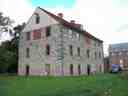
On your right, look for the big, rectangular gray-stone building with red-trimmed windows and a steep reddish roof sitting low in the grass like it’s been patiently waiting since colonial times… because it has. This is The Tannery, built by Bethlehem’s Moravians-first as a modest log setup back in 1743, then upgraded to this solid limestone workhorse in 1761. If the stone walls feel a little no-nonsense, that’s the point: this place wasn’t for show. It was for turning raw animal hides into leather-one of the most useful materials in an early American town and, conveniently, one of the most profitable. Shoes, harnesses, saddles… if it creaked, flexed, buckled, or had to survive weather and hard use, leather was the answer. By the 1760s, this operation was processing something like 1,000 to 2,000 hides a year. That’s not “a quaint craft demo,” that’s production. Colonial Bethlehem had hobbies, sure… but it also had a supply chain. The Moravians here were feeding leather to local shoemakers and tradespeople in Bethlehem, Nazareth, and nearby communities. Then came the American Revolution, and with it the sudden end of smooth trade with England. Leather demand didn’t politely dip-it spiked. The Continental Army needed hard-wearing gear: boots, caps, coats, buckets, saddles. This tannery ramped up to an estimated 3,000 hides per year. Picture the yard busy with soaking pits, the sharp tang of wet hide, and that earthy bite of ground oak and hemlock bark-the “tanbark” that made the chemistry happen. And the chemistry was… intense. The full process could take up to two years. Hides got washed and trimmed, then sat in lime for weeks. After that came scraping the hair off-heavy work when a wet hide can weigh a few hundred pounds. Then the worst part: “bating,” a soak in water, salt, and manure to neutralize the lime and soften the skin. Yep. History has smells. Next, months in vats with tanbark “liquor,” then pounding, drying, and sometimes extra finishing by a currier for softer, more waterproof leather. One odd detail I love: when this building went up in 1761, you would’ve walked UP steps to reach the first floor. Today you walk down. Archaeology found the land around it was later filled in-by seven or eight feet-quietly reshaping the whole scene. The Moravians ran tanning here until 1829, and tanning finally stopped in 1873 when tanbark got too expensive. After that, the building had a rougher chapter-turned into housing, later surrounded by an auto junkyard, and sliding toward ruin. Restoration work in the late 1960s and early 1970s brought it back, and it even reopened for tours for a time-until storm damage shut things down again. It’s city-owned now, leased to Historic Bethlehem Museums & Sites, but not currently open inside. When you’re set, Bethlehem Waterworks is a 2-minute walk heading south.
Abrir página dedicada →You’re looking for a compact, two-and-a-half-story limestone building with a steep red tile roof and deep red doors and window frames... it sits low by the trees near the creek,…Leer másMostrar menos
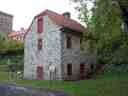
You’re looking for a compact, two-and-a-half-story limestone building with a steep red tile roof and deep red doors and window frames... it sits low by the trees near the creek, like it’s been quietly minding its own business for about 260 years. This is the Bethlehem Waterworks-also called the Old Waterworks or the 1762 Waterworks-and it has a pretty serious claim to fame: it’s widely believed to be the oldest pump-powered public water supply in what became the United States. Not “old for Bethlehem.” Old, period. Now, the problem they were trying to solve was simple: most people lived up the hill, but the good spring water was down here near the bottom. Carrying buckets works fine right up until you’re carrying buckets all day, every day, for a whole town. So in 1755, a Danish millwright named Hans Christoph Christensen designed a system to haul water uphill with mechanical muscle instead of human backs. The spring down here pushed out around 800 gallons a minute-plenty for drinking, cooking, bathing, and, importantly, firefighting. Because nothing ruins a nice colonial afternoon like your town catching fire. The earliest setup was a wooden structure with a cistern and a pump made from lignum vitae, an extremely tough tropical wood. Water got shoved through pipes that started as bored-out hemlock logs-yes, basically long wooden straws-floated down the Lehigh River. If you’re thinking “that sounds like it might leak,” congratulations, you understand early plumbing. The pipes leaked, burst, and generally behaved like pipes that used to be trees. So Christensen upgraded the whole operation in 1762, building this limestone pumphouse you’re standing by. He was paid thirty shillings for the job-call it roughly a few hundred dollars today, depending on how you convert eighteenth-century wages. Either way, it’s a reminder that “critical infrastructure” has never paid quite what it should. Inside, the design is clever. The building sits over a holding pit fed from the spring, and a waterwheel-an undershot wheel originally turned by the creek-powered three cast-iron pumps. The energy from that one wheel was said to equal about 100 men. The pumps pushed water nearly 94 feet uphill to a collecting tower near where Central Moravian Church stands today. From there, gravity took over, delivering water into cisterns serving the community’s different choir houses. It’s a beautiful system when it works... and a moody one when pressure builds too high and pipes decide to explode. As Bethlehem grew, demand grew too-and the Monocacy Creek could only spin so much power. By the early 1800s, the Waterworks and the nearby Oil Mill had to share the same tail race, and the Oil Mill sometimes shut down two days a week so the town could fill its reservoirs. In 1832, water operations moved into the Oil Mill building, which carried the load for 81 more years. Then came the darker twist: water quality. Epidemics of typhoid and dysentery were traced to the supply, and in January 1913 the state ordered the system shut down for good. Helpful water is great. Helpful water that makes you sick... less great. This little building has collected honors since: major engineering landmark designations in 1971, and National Historic Landmark status in 1981. It was even restored using original craftsmen’s drawings preserved in the Moravian Archives-again in 2009 after Hurricane Ivan damaged the wheel. Turns out the eighteenth century left better documentation than some modern contractors. When you’re set, Central Bethlehem Historic District is a 5-minute walk heading south toward Main Street.
Abrir página dedicada →
Preguntas frecuentes
¿Cómo empiezo el tour?
Después de la compra, descarga la app AudaTours e ingresa tu código de canje. El tour estará listo para comenzar de inmediato - solo toca play y sigue la ruta guiada por GPS.
¿Necesito internet durante el tour?
¡No! Descarga el tour antes de empezar y disfrútalo completamente sin conexión. Solo la función de chat requiere internet. Recomendamos descargar en WiFi para ahorrar datos móviles.
¿Es un tour guiado en grupo?
No - esta es una audioguía autoguiada. Exploras de forma independiente a tu propio ritmo, con narración de audio reproduciéndose en tu teléfono. Sin guía, sin grupo, sin horario.
¿Cuánto dura el tour?
La mayoría de los tours toman 60–90 minutos para completar, pero tú controlas el ritmo completamente. Pausa, salta paradas o toma descansos cuando quieras.
¿Qué pasa si no puedo terminar el tour hoy?
¡No hay problema! Los tours tienen acceso de por vida. Pausa y continúa cuando quieras - mañana, la próxima semana o el próximo año. Tu progreso se guarda.
¿Qué idiomas están disponibles?
Todos los tours están disponibles en más de 50 idiomas. Selecciona tu idioma preferido al canjear tu código. Nota: el idioma no se puede cambiar después de generar el tour.
¿Dónde accedo al tour después de comprarlo?
Descarga la app gratuita AudaTours desde App Store o Google Play. Ingresa tu código de canje (enviado por email) y el tour aparecerá en tu biblioteca, listo para descargar y comenzar.
Si no disfrutas el tour, te reembolsamos tu compra. Contáctanos en [email protected]
Paga de forma segura con 


