AudaTours logoAudaTours

Tour de audio de Louisville: Whisky, Maravillas y Torres Atemporales

Guía de audio13 paradas

La historia de Louisville está grabada en ecos de bates y susurrada a través de las vidrieras de la catedral. Bajo sus vibrantes calles, leyendas de rivalidades secretas, misterios sin resolver y ambición audaz esperan ser desenterradas. Establece tu propio ritmo en este tour de audio autoguiado y descubre el lado oculto de la ciudad. Cada paso te lleva a historias que la mayoría de los visitantes nunca escuchan, desde la historia del béisbol en el Museo Louisville Slugger hasta las oraciones silenciosas y la intriga política tejidas en la Catedral de la Asunción. ¿Qué obligó a una congregación a mantenerse desafiante mientras los disturbios amenazaban su santuario? ¿Qué bate tallado en el siglo pasado podría estar relacionado con un escándalo deportivo del que todavía se susurra hoy? ¿Por qué algunos creen que una sola pintura dentro del Museo de Historia Frazier guarda la clave de una disputa de décadas? Muévete por el pulso de Louisville, donde surgieron héroes, los misterios persisten y cada calle revela otro capítulo no contado. Pulsa reproducir y deja que los secretos de Louisville te encuentren.

Vista previa del tour

map

Sobre este tour

  • schedule
    Duración 40–60 minsVe a tu propio ritmo
  • straighten
    4.5 km de ruta a pieSigue el camino guiado
  • location_on
  • wifi_off
    Funciona sin conexiónDescarga una vez, úsalo en cualquier lugar
  • all_inclusive
    Acceso de por vidaReprodúcelo en cualquier momento, para siempre
  • location_on
    Comienza en Whiskey Row, Louisville

Paradas en este tour

  1. To find Whiskey Row, look for a long row of brick buildings with arched windows and classic, old-time storefronts stretching along Main Street-they’re hard to miss and right by…Leer másShow less

    To find Whiskey Row, look for a long row of brick buildings with arched windows and classic, old-time storefronts stretching along Main Street-they’re hard to miss and right by the curb. Welcome to Whiskey Row, where the air almost tingles with stories of bourbon barrels and old money, and the bricks might just be soaked with a bit of history-and more than a hint of whiskey! Picture this street in the 1850s: the clatter of horse-drawn wagons hauling barrels, workers shouting out to each other, the scents of toasted oak and sweet mash swirling in the breeze. These buildings were Louisville’s whiskey banks, built back in 1857, standing sturdy as bourbon rolled in from nearby distilleries. Every stone and window arch on this block whispered tales of deals and dreams; in fact, so many whiskey firms crowded onto Main Street that people just started calling this patch “Whiskey Row.” At its peak, Kentucky wasn’t just leading the country in bourbon-it was the place for all distilled spirits, with famous names like Brown-Forman and Greenbrier Distillery hanging their hats right here. The Galt House Hotel, just a few doors down, was known coast-to-coast, and all the top distilleries had their feet firmly planted on this historic block. If you look up, you might spot those cast-iron storefronts-a mark of wealth and ambition in their day-designed in styles from Renaissance Revival to Beaux Arts, even showy Chicago School just to keep things spicy. But it wasn’t all smooth sippin’. When Prohibition struck in 1919, the barrels dried up and silenced the buzz; many grand buildings faded or fell. This block, running from 101 to 133 West Main, almost vanished forever in 2011-just one swing of a wrecking ball away-until the city, savvy developers, and some determined preservationists stepped in. Then, in 2015, fire roared up from a basement where workers were peeling away old pipes with torches. Flames shot up, smoke billowed out, but by luck, no one was hurt. Even then, like a stubborn Kentucky oak, Whiskey Row didn’t give in. Today, its bricks are buzzing again with bars, restaurants, and distilleries-luxury apartments on the rise, bourbon flowing like it’s 1890. The Old Forester Distillery came home, the Evan Williams Bourbon Experience moved in, and hotels sparkle where whiskey tycoons once made their fortunes. From wagons to firetrucks and whiskey barrels to shopping bags, Whiskey Row has weathered it all. So, take a deep breath-if you catch a whiff of bourbon, that’s just Louisville’s spirit showing off!

    Open dedicated page →
  2. Look for a grand stone building with tall columns and ornate details sandwiched between two classic brick structures-Actors Theatre of Louisville will be right in front, with…Leer másShow less

    Look for a grand stone building with tall columns and ornate details sandwiched between two classic brick structures-Actors Theatre of Louisville will be right in front, with dramatic banners hanging on display. Alright, center stage is yours, friend-right here stands one of Louisville’s most celebrated landmarks, where the magic of theatre leaps out from the mighty columns of the old Bank of Louisville building. Picture it: the year is 1964, and two local theatre troops-Actors, Inc. and Theatre Louisville-are about to become one, giving birth to the Actors Theatre. It’s like a merger with more jazz hands! The team was powered by Louisville’s own Ewel Cornett and Richard Block, and soon enough, this place would become the "State Theater of Kentucky." Now, that’s some applause-worthy status. But it wasn’t always standing tall in this elegant Greek Revival hall. The very first shows were performed above a luggage company-yes, really, an old Egyptian Tea Room. You won’t find any pyramids here, but the drama was just as grand. By 1965, the theatre packed up and moved to an abandoned train station, its 350 seats filled with anticipation and, probably, hopes that no trains would disrupt a tragic monologue. Yet, fate had its own script-demolition loomed, and in 1972, the Actors Theatre finally settled here in this striking landmark, stitched together from the old bank and the stately Myers-Thompson Display Building. Inside, nearly 400 performances roll across the stage every year. Think about it: comedies, classics, bold new works, and even an all-you-can-watch buffet of plays at the famed Humana Festival of New American Plays. This festival introduced almost 450 brand-new shows-three of which even snagged the Pulitzer Prize. “The Gin Game,” “Crimes of the Heart,” maybe even a show called “The Scene” where the cast has to explain Twitter to their grandma. During the Humana Festival, there’s a buzz on Main Street louder than a box full of drama students! If you feel a little inspired by the legends who’ve been here, you’re in good company. Famous directors, talented artistic leaders, and energetic education teams have all left their footprints. Jon Jory-son of screen star Victor Jory-set the pace for thirty years, producing more than 1,300 plays and pushing the theatre’s budget into the millions. Talk about giving “break a leg” a whole new meaning. And don’t get me started on the Professional Training Company-young actors hone their craft, earning both applause and the occasional unplanned onstage surprise. Everyone from students to seasoned playwrights has found their spotlight here. Even if you can’t see the ghosts of plays past, you might sense that spark-the thrill of opening night, the nervous excitement of a new script, or the laughter echoing after a perfectly timed joke. Step a little closer and you’re stepping right into Louisville’s creative heartbeat, where actors and audiences have been sharing moments of wonder for decades. And honestly, who wouldn’t want to say they’ve stood on the same ground as Tony Award-winning legends, all while surrounded by more history than you could fit in a ten-minute play? If you're keen on discovering more about the humana festival of new american plays, leadership or the buildings, head down to the chat section and engage with me.

    Open dedicated page →
  3. As you’re standing before the Galt House, just imagine a building buzzing with life - laughter tumbling out from grand ballrooms, the smell of bourbon wafting through lively bars,…Leer másShow less

    As you’re standing before the Galt House, just imagine a building buzzing with life - laughter tumbling out from grand ballrooms, the smell of bourbon wafting through lively bars, and the gentle flow of the Ohio River right at its doorstep. Today, the Galt House is a towering modern hotel, impossible to miss at 25 stories tall with over 1,300 rooms. But this landmark wears many hats, and none of them boring. First, picture Louisville in the 1800s, horse-drawn carriages clattering down Main Street. Back then, this spot was the domain of Dr. William Craig Galt, and in 1835, a grand hotel was built on his land. That first Galt House quickly became the finest in the city, luring travelers like the famous novelist Charles Dickens. Dickens was so impressed, he wrote that he felt pampered as if he were in Paris, not a frontier city hundreds of miles past the Alleghenies. Not too shabby for a Louisville address. The Galt House wasn’t just a place for dapper hats and fancy dinners-it was a hotbed for history. During the Civil War, Union generals planned some of the war’s most pivotal moments here. The tension ran as high as the stakes: one day in 1862, General Jefferson C. Davis (no relation to the Confederate president, but just as dramatic) ended a squabble with General Bull Nelson by shooting him-right inside the hotel. That’s not quite the customer service we look for these days! A couple of years later, it was claimed that Ulysses S. Grant and William Tecumseh Sherman plotted their legendary campaign through Georgia in these very walls, though historians now argue whether it actually happened here or across town. You can’t blame them; if you’re going to cook up a battle plan, there’s no finer spot for brainstorming than a swanky Louisville hotel. As with many great tales, fire brought an abrupt end to the original Galt House in 1865. Not to be outdone by disaster, a new, even grander Galt House arose from the ashes in 1869 just a block away. For the next fifty years, it was Louisville’s social epicenter, hosting U.S. presidents from Grant to Theodore Roosevelt, and even a Russian Grand Duke who probably wondered why the river didn’t freeze in winter. Eventually, time caught up with the grand old hotel and it was demolished in the 1920s, replaced by a hardware company. But you can’t keep a good hotel down! In 1972, the Galt House was reimagined as the glittering wonder you see today, part of Louisville’s push to rejuvenate its riverfront. Now, the Galt House is bigger than ever, proudly straddling the city’s skyline with towers, conservatories, and enough meeting rooms to host all the generals-and plenty of friendly guests, too. Where else could you watch the world-famous Derby Festival Thunder Over Louisville, or maybe bump into a presidential motorcade? Even recruits shipping out with the military spend their last night in civilian clothes here. The Galt House is a place where the past gets a modern suite-sometimes with a view of the river and, if you’re lucky, a visit from history itself. Now, how’s that for a room with a story?

    Open dedicated page →
Show 10 more stopsShow fewer stopsexpand_moreexpand_less
  1. As you stand here on what might seem like just another spot in downtown Louisville, try to imagine a completely different skyline. Picture yourself craning your neck, all the way…Leer másShow less

    As you stand here on what might seem like just another spot in downtown Louisville, try to imagine a completely different skyline. Picture yourself craning your neck, all the way up-62 stories high-at the Louisville Museum Plaza, a glass giant that was almost Kentucky’s tallest building, but instead became Louisville’s greatest “what if” story. Let’s travel back to a time when this city block was buzzing with the energy of big dreams and even bigger machinery. In 2006, the city announced with pride that they were going to put Louisville on the map with the Museum Plaza. Not just another tall building-this would have been the king of Kentucky’s skyline! The plan: a 703-foot skyscraper filled to the brim with luxury condos, lofts, a sparkling hotel, offices, a contemporary art museum, restaurants, and shops-all wrapped around a one-acre public plaza and park. The design was the brainchild of New York architect Joshua Prince-Ramus, whose style was, let’s say, so avant-garde it made the AEGON Center look like yesterday’s news. But to get here, the city didn’t just clear away some dust. They demolished four old Main Street buildings, saving their classic facades to create a grand pedestrian entrance-a nice nod to history in a project that was all about the future. Imagine the sounds echoing down Main Street as brick and mortar gave way to dreams of glass and steel. By October 25, 2007, they had a groundbreaking ceremony. You can almost hear the speeches, hopeful applause, and the shovels plunging into the dirt. Developers promised a city-defining marvel: the most ambitious project Kentucky had ever seen, with a $490 million price tag and enough space to swallow half of downtown. The University of Louisville was even in talks to move its fine arts program here, students creating glass art in sky-high studios! But, ah, no great drama comes without tension. As plans grew, so did financial headaches-costs ballooned from $380 million to $465 million, and then again nearing $490 million. Adding restaurants, parks, and a Westin Hotel to the mix didn’t come cheap. The city and state scrambled to redirect taxes to fund new roads, a public plaza, a reworked floodwall-everybody argued about who would get the biggest piece of the pie. At one point, Mayor Abramson gave developers and hotel groups a “48-hour” deadline to get it together… talk about pressure! Things looked promising when they scored $130 million in state funding. Shops and restaurants, a sprawling plaza crawling with public art, parking for 800 cars, offices for thousands-it was almost too much to believe. But as they say, the taller they are, the harder they… stall. Main Street’s historic buildings trembled-literally. Construction stopped when the site’s deep digging sent vibrations through the district’s old bones. But the real trouble lay underground, where stubborn bedrock made engineering a nightmare. Crew wage slips went unpaid, hefty liens started stacking up, and the city faced a classic case of “pay now, or pay later.” Even as late as 2010, hope lingered-perhaps a freshly-baked federal loan or a sprinkle of stimulus money would revive the dream. Developers promised, “Next year, we’ll start! Really!” But the cranes never rose higher. The bulldozers never hummed for long. And by the windy days of August 2011, the Museum Plaza was officially off the table, another ghost in the chronicles of architectural ambition. So now, as you peer at this place, try to envision skies glazed with sunlight bouncing off a 62-story sculpture. Instead, you have the whispers of what could have been-a window into a future Louisville that almost was. And hey, at least you don’t have to worry about neck cramps from looking up all day!

    Open dedicated page →
  2. To spot the Frazier History Museum, just look for a grand yellow-brick building with striking red accents, a corner turret, and tall, arched windows running across its façade-it’s…Leer másShow less

    To spot the Frazier History Museum, just look for a grand yellow-brick building with striking red accents, a corner turret, and tall, arched windows running across its façade-it’s hard to miss with those bold banners and the old-timey barrels outside! Alright, let’s step back through time-right here on West Main Street, you’re standing where Louisville’s heart has been beating for centuries, in front of a building that’s seen tornadoes, factory workers, and now, tales of Kentucky’s wildest adventures. Close your eyes for a second and imagine this spot in the late 1800s: the street smelled of river water, tobacco, and fresh bricks, as workers hurried into the original Doerhoefer building. Built in 1898, this place sprang up after a ferocious tornado-nicknamed “the whirling tiger of the air”-swept through town, flattening the old tobacco warehouse that sat here before. Jumping forward to 1900, the echoing clatter of sewing machines filled the halls above you as the Ox Breeches factory earned its place as America’s “largest producer of pants.” Imagine the steady hum of hundreds of workers, bustling to make a living-until, one stormy night in 1916, flames roared through the floors, charring timber beams. Even now, if the building creaks, maybe it’s just reminiscing about that fire! But the museum’s story really catches fire with a man named Owsley Brown Frazier. After a tornado in 1974 destroyed his home and swept away a cherished family long rifle, Frazier went on a quest searching for his lost heirloom. He never found it, but collected an armory so vast and fascinating, he decided to share it with the world. Fast-forward to 2004, and voila-the Frazier History Museum opens! Imagine stepping through the doors then, greeted by more than 1,500 arms and artifacts, whole battle scenes frozen in time, and stories from every corner of history-European knights, Kentucky frontiersmen, even Buffalo Bill and President Teddy Roosevelt’s favorite rifles. But wait, there’s more-the Frazier didn’t want to just stick to swords and muskets! Over time, it transformed from a hall of arms to the storyteller of Kentucky: home to pop culture, bourbon, and the magic of everyday life. It’s the official starting point of the Kentucky Bourbon Trail, giving visitors the lowdown on Kentucky’s legendary whiskey, and a literal taste of history-talk about raising the bar! Wander inside and you’ll see everything from toy soldiers locked in epic, tiny battles to treasures like George Washington’s hunting rifle and a rare first edition of Uncle Tom’s Cabin. The building itself is a museum artifact-a beautiful blend of cast iron and yellow brick, topped by a tower and cupola, designed by the same architects who drew Churchill Downs’ iconic Twin Spires. Walk past, and you’re strolling one of America’s greatest collections of cast-iron façades outside SoHo, New York. Even the sidewalks have seen drama-strikes, court battles, and the first major fire of Louisville’s 20th century. And just when you think you’ve seen it all, think again. The museum stages epic theatrical performances: from the chilling words of Edgar Allan Poe echoing in the halls each Halloween, to actors reliving pirate legends or Civil War battles right before your eyes. It’s living history at its best-always something surprising around the corner. So, next time you’re enjoying a bourbon in the Gateway Garden or standing in the shadow of those soaring windows, remember: the Frazier History Museum is more than a building-it’s a time machine, a vault of stories, and a celebration of Kentucky’s wild, bold spirit. And who knows? Maybe you’ll uncover a secret or two in its halls-or just find yourself face-to-face with Teddy Roosevelt’s famous “big stick.” Yearning to grasp further insights on the building, layout or the collection? Dive into the chat section below and ask away.

    Open dedicated page →
  3. Alright, step right up-don’t be shy! You’re standing in front of a true Louisville legend: the Louisville Slugger Museum & Factory. Now, I know your eye might be drawn straight to…Leer másShow less

    Alright, step right up-don’t be shy! You’re standing in front of a true Louisville legend: the Louisville Slugger Museum & Factory. Now, I know your eye might be drawn straight to the *World’s Largest Baseball Bat* outside-yep, that’s 120 feet tall and weighs a whopping 68,000 pounds. Trust me, if Babe Ruth ever tried to swing that, he’d need to hit a home run to the moon-or maybe just call for a crane! Picture this: It’s the late 1800s in Louisville. Steam and sawdust fill the air in tiny workshops back then, and baseball is in its wild, woolly youth. In 1884, young Bud Hillerich watched Louisville Eclipse star Pete Browning snap his favorite bat during a game. Legend says Bud took Browning back to his dad’s shop, and hand-carved him a new bat overnight on South First Street. The next day, Browning smacked out three hits. Suddenly, every player in town wanted a “Louisville Slugger.” And voila! A legend was born on these very streets. Time rolled on, and so did the factory-hopscotching from that first shop to bigger digs on South Preston and Finzer, and later across the Ohio River in Indiana for a couple decades. But in the early ‘90s, John Hillerich III knew something was missing-Louisville bats needed to be made in Louisville. So right here, on Museum Row, was found the perfect spot-a repurposed tobacco warehouse that, after grand renovations, opened with a Hall of Fame bash in 1996. Imagine Ted Williams, Ernie Banks, Harmon Killebrew and Pee Wee Reese here on opening night, swapping stories and swinging slugger bats-*pure baseball magic*. Now, the magic’s inside, too. If you walk in today, you’ll find more than the sweet smell of wood shavings. Interactive exhibits let you swing like Ken Griffey Jr., face a 90 MPH fastball, or stare up at lifelike statues of Jackie Robinson, Babe Ruth, and more. Seriously, you could meet Babe Ruth *and* hold a bat he actually swung. I promise-not even the internet can beat that. And if you hear the whir of machinery? That’s the famous Louisville Slugger Factory, just behind those walls. On a tour, you follow the journey of raw lumber transforming into bats-each one hand-turned, sanded, burn-branded with that iconic logo. At the finish line, you’ll get your very own mini bat to keep-just a little something to remind you not to use it on piñatas at home. The museum isn’t just stuck in the past, though. They’ve shaken hands with the likes of Norman Rockwell, Charles Schulz, LEGO artists, and even Ripley’s Believe It or Not! Pop culture, meet pure baseball nostalgia. And if you’re lucky, you might spot the Mobile Museum hitting the road-bringing pieces of this slugger history to ballparks nationwide. Let’s face it, Louisville Slugger bats get around more than a seasoned baseball scout. But it’s not just bats. Upstairs, there are offices for Hillerich & Bradsby, the original owners-still running the show for the museum and factory. Wilson Sporting Goods might own the bat brand now, but it’s the Hillerich family that keeps the historic spirit alive. Every year since 2007, they crown a “Living Legend,” someone whose hands, like yours, gripped a bat and swung at greatness. Don’t forget to check out the Signature Wall-signatures of every Louisville Slugger contract player cover it from top to bottom. Imagine all those MLB legends together. No autographs, though, unless you can catch a ghost. And with each step inside, you’re part of the 300,000+ fans-maybe like the record 326,595 visitors in 2017! And with every visit, this place reinvents itself, with brand new renovations in 2008 and again in 2023. Feels like baseball’s version of a magic trick-the bats just keep coming, and the stories never stop. Ready to step inside? Or maybe you just want to stare in awe and ponder: how many Louisville bats would it take to build a bridge across the Ohio River? Quick answer: way more than they’d let me count! Now, let’s swing on to the next stop!

    Open dedicated page →
  4. Standing here in front of the Louisville Sinking Fund Building, take a moment to look up and picture the city the way it was in 1891-a place where the clip-clop of horse-drawn…Leer másShow less

    Standing here in front of the Louisville Sinking Fund Building, take a moment to look up and picture the city the way it was in 1891-a place where the clip-clop of horse-drawn fire engines and the sharp clang of warning bells meant firefighters were rushing to save the day. This building, with its sturdy red sandstone and deep Romanesque arches, was the headquarters of Louisville’s Division of Fire. It was designed by the local McDonald Brothers, who definitely knew how to make a landmark you could trust in an emergency-and maybe admire on your lunch break, too. It wasn’t called the Sinking Fund Building at first. That name actually comes from how they paid for it, with a clever little pot of money saved up over time-a so-called “sinking fund.” I guess if you’re going to have a fire station, you want to fund it with a name that floats your boat, not sinks it! As you look up, spot the five-story tower. It once supported another two-story belfry, where firefighters scanned the city for smoke. Imagine being the lookout-any time you heard a bell, you knew it was time to wake up the horses. The fire warning bell might be gone, but the names of Benjamin Bache, the fire chief, and Emile Bourlier, the sinking fund’s bookkeeper, are still there in sculptures above the door. Talk about leaving your mark at the office! When the fire department moved out in 1937, the building didn't gather dust. It became a home for the police traffic division-though not before a river flooded and hijacked their renovation funds. It was a regular game of musical chairs, with each city department needing space. Over the years, walls were knocked out, air-conditioning breezed in, and even an elevator was installed-fancy for a former firehouse, right? People once suggested tearing the place down in the 1970s for something more “modern,” but voters weren’t having it. The building survived, brushed off its bricks, and landed a spot on the National Register of Historic Places. By the 2000s, it played musical chairs again, but the Louisville Metro Revenue Commission-your local tax collectors-eventually claimed it as their home. So, if you feel the urge to pay your taxes while you’re standing here, you’re in the right spot. But no need to rush-there are plenty of stories trapped in these arches, each one more surprising than the last.

    Open dedicated page →
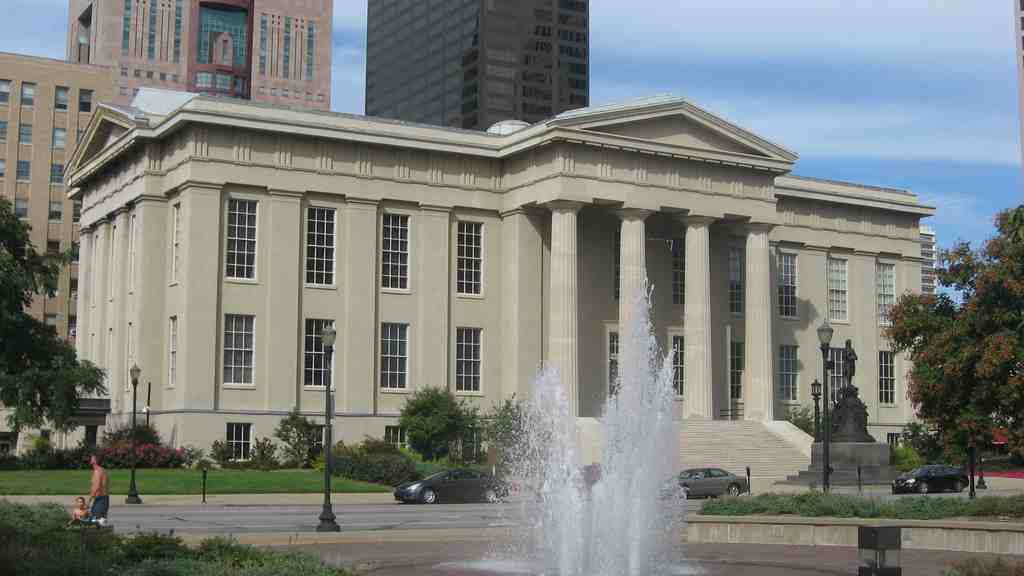
  5. Directly in front of you stands a grand, pale stone building with towering columns and a triangular pediment at the top; to spot the Louisville Metro Hall, look for the massive…Leer másShow less

    Directly in front of you stands a grand, pale stone building with towering columns and a triangular pediment at the top; to spot the Louisville Metro Hall, look for the massive front steps leading up past those impressive columns, right behind the splashing fountain. Now that you’re standing at the heart of Louisville’s government, let your imagination wander back nearly two centuries. The year is 1836, and this spot is a noisy construction site, dust swirling around workers as hammers clang against stone. The city dreams big-architect Gideon Shryock envisions a courthouse grand enough to lure Kentucky’s capitol away from Frankfort. He pictures six Doric columns, a fancy cupola, and sweeping porticos. But like many ambitious projects, things don’t exactly go according to plan. Shryock resigns before seeing his dream finished, and when bridge engineer Albert Fink takes over, the building gets trimmed down-less money, fewer columns, no cupola. The end result? Let’s just say the Louisville Daily Journal wasn’t very kind when they called it an “elephantine monstrosity.” If only social media had existed back then! Despite its rough start, the courthouse quickly became more than just a government hub. Imagine the city in the 1840s-raw and complicated, with slave trading and abolitionist speeches both taking place near these steps. There was a moment of political hope when James Guthrie, a powerful local figure, pushed to make this building the new Statehouse for Kentucky. But Frankfort kept that honor, and locals started jokingly calling the structure “Guthrie’s folly.” Now, it has a new name-Louisville Metro Hall-but the stories haven’t stopped. During the Civil War, this building briefly became the center of Kentucky’s government while Frankfort was held by Confederate forces. Imagine the tension, the meetings, the hurried decisions echoing through these thick walls. Then, in 1905, a fire gut-punched the building, but like every good survivor, it rose again, thanks to architect Brinton B. Davis’s talents. Louisville loves a comeback story. There’s more beauty-and a dash of international mystery-outside, too. Look to your left and you’ll spot a proud statue of Thomas Jefferson, a gift from 1901. But the true conversation starter is across the street: a marble statue of King Louis XVI, all 12 feet and nine tons of him. Given to Louisville by its French sister city Montpellier in 1967, this statue’s journey was nearly as dramatic as the king’s own story: hidden from angry mobs in France, gathering dust in storage, shipped across the ocean, and finally arriving here-minus, after recent protests, one hand. The building and its statues have seen the city’s joys and pain, sometimes at the very center of it all. So, as traffic hums by, and the fountain bubbles cheerfully in front, take a moment to appreciate all the dreams, missteps, and bold personalities that helped create the soul of Louisville right here on these stone steps. And remember: even an “elephantine monstrosity” can become the heart of a city! If you're keen on discovering more about the design, statues or the gallery, head down to the chat section and engage with me.

    Open dedicated page →
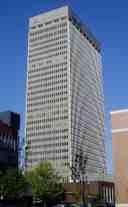
  6. Look up and slightly to your right, and you’ll spot a tall, boxy skyscraper with rows and rows of concrete window panels stacked like a giant game of Tetris-this is the commanding…Leer másShow less

    Look up and slightly to your right, and you’ll spot a tall, boxy skyscraper with rows and rows of concrete window panels stacked like a giant game of Tetris-this is the commanding 500 West Jefferson. Now, let’s take a deep breath and travel back in time to 1971, when this giant first pierced the Louisville skyline. Imagine the hum of construction and the excitement as 500 West Jefferson, then called Citizens Fidelity Plaza, claimed its throne as the tallest building in Kentucky-if only for a year! (Talk about winning the gold and then immediately having it passed to National City Tower in 1972. That’s a quick dethroning even by game show standards.) Designed by Welton Becket, its stacked concrete window panels give it a unique, rugged look that you could probably spot in your rearview mirror. Through the years, it changed hands and names almost as many times as a world champion wrestler! From Citizens Fidelity Plaza to PNC Plaza after the bank merge, and now simply “500W.” It’s seen million-dollar deals, takeovers, a bit of international controversy (a little laundering lawsuit in 2020-don’t worry, not the laundry kind), and, of course, some major league tenants. Picture the tip-top of the building once buzzing with laughter and deals at the exclusive Jefferson Club-until it closed in 2010. These days, financial giants like Baird have moved in, jazzing up the top floors, while hungry workers tease their taste buds with Ev’s Deli. And who knows, soon you might find the aroma of Barista Parlor coffee swirling in the atrium! Standing here, it’s impossible not to feel the wild ride this building has been on. From dizzying heights to dramatic lows and energetic upgrades, 500 West is an ever-changing reflection of Louisville’s own growth, ambition, and more than a little dash of drama. So, keep your eyes up and your spirits higher-after all, Louisville’s skyline wouldn’t be quite the same without it!

    Open dedicated page →

  7. Take a deep breath and look up-there it is, the Cathedral of the Assumption, towering over the city like a guardian from another era. Picture yourself not as a modern-day walker…Leer másShow less

    Take a deep breath and look up-there it is, the Cathedral of the Assumption, towering over the city like a guardian from another era. Picture yourself not as a modern-day walker with a phone, but as a traveler in 1852, with horse hooves clopping down the street and the scent of burning coal hanging in the air. Back then, this very spot was alive with the sounds of hammers and saws, as Louisville’s Catholics dreamed big: to build a church for the ages. But let’s rewind a bit further. The story actually begins in 1811, when a tiny group of Catholics met at 10th and Main. Their first shepherd? Father Stephen Badin, known as the “circuit rider priest.” He covered so much ground, if priests gave out frequent traveler miles, he’d have flown for free! After some tragic losses-including Father Philip Hosten, lost to yellow fever-this community finally settled here on Fifth Street. The ground you’re standing on? It’s been holy for almost two centuries. Fast-forward to 1841, when the seat of the diocese moved from Bardstown, and St. Louis Church became the new heart of Catholic life in Kentucky. Bishop Flaget-who had a beard that could rival any hipster’s today-laid the cathedral’s cornerstone in 1849, but never got to see it finished. His remains, by the way, are still beneath your feet in the chapel crypt. Talk about staying close to your flock! It wasn’t all peace and prayers, though. Imagine the tension on “Bloody Monday” in 1855, with rumors swirling through the city. Anti-Catholic, anti-immigrant mobs threatened to burn this very building-people thought the basement was stuffed with secret weapons! Mayor John Barbee himself had to inspect the crypts and, spoiler alert, found no swords or muskets, just echoes of prayers and-probably-a few nervous priests. Despite these scares, the Cathedral grew into a Louisville landmark. Its doors have cared for the city’s lost and hungry: orphans, immigrants, the sick, and the needy. The Sandefur Dining Room still serves meals to the homeless, while choirs warm souls with music that’s even done European tours-England, Ireland, Gloucester Cathedral, you name it. If the walls could sing, they’d sound like a thousand angels… or maybe forty-five very well-rehearsed volunteers. Speaking of walls, here’s a fun secret: these massive columns aren’t even stone! During the grand renovation in the 1980s, artists fooled everyone by painting the plaster to look like stone blocks. The effect is so convincing, people still tap the walls in disbelief. And in the nave-the main body of the church-they didn’t put in heavy pews, but individual chairs you can move around for special services. It’s almost like spiritual musical chairs, but with less elbowing. Among its artistic treasures, gaze up to spot the Coronation Window-one of America’s oldest stained glass windows-depicting the Virgin Mary’s heavenly crown. Moving it back to its rightful place during restoration cracked the building itself. Don’t worry, engineers tied steel beams through the nave to keep it safe; the only thing falling now is an occasional angel in a ceiling fresco. If the organ plays while you’re here, listen for its three keyboards and forty-three ranks of pipes, with fanfare trumpets added in 1994. Above the altar stands the Archbishop’s official chair-the “cathedra”-with symbols from Louisville’s rich past, from the fleur-de-lis to river waves. Today, the cathedral is still buzzing with activity and compassion. There’s music, daily lunches for those in need, and interfaith partnerships. On Holy Saturday, they even light new fire with their neighboring Episcopal friends and process through the city. So as you stand here, picture the centuries of history, generosity, and hope humming in the air-and maybe, just maybe, you’ll hear the faintest echo of organ pipes following you down the street.

    Open dedicated page →
  8. Standing here on Fourth Street, you’re looking for an elegant, ten-story building with grand arched windows and ornate stonework at its base, topped by stately brickwork that…Leer másShow less

    Standing here on Fourth Street, you’re looking for an elegant, ten-story building with grand arched windows and ornate stonework at its base, topped by stately brickwork that stretches up toward detailed cornices-if you spot the gold-lettered "Seelbach Hilton" sign above its canopied entrance, you’ve found Louisville’s most storied hotel. Alright, friend, let’s take a deep dive into the lavish and, at times, downright wild history of the Seelbach Hotel-Louisville’s answer to the question, “How fancy can a hotel possibly get?” Picture the scene: it’s the spring of 1905, and Kentucky is buzzing with Kentucky Derby fever. You smell fresh marble, hear laughter echoing in ballrooms, and the air carries hints of European perfume. The Seelbach brothers, Louis and Otto, had just opened what would be the city’s first “grand hotel,” their dream to bring a little of Vienna and Paris to a town where folks still argued over bourbon and horseshoes. They were German immigrants, and if you ever taste the Seelbach cocktail here-bourbon, triple sec, two kinds of bitters, and a splash of champagne-you’ll know they took their drinks just as seriously as their architecture. Opening day saw 25,000 curious visitors streaming in, jaws dropping at marble from Italy, Germany, and France, and wood that traveled all the way from the West Indies-proving that the brothers were not into half measures. The original 150 rooms were thrown open for dinner parties on that first night. That must have been quite a scene: silk gowns, fine cigars, and, at least for a few, a bit of Kentucky’s finest whiskey. Soon enough, a rooftop garden-later enclosed and made available all year-added a bit of old-world charm. The hotel grew quickly, boasting 500 rooms within just two years, and began a long tradition of impressing locals and travelers alike. Not everyone thought this was going to be a good idea. The mayor himself reportedly scoffed, “No one will come to a hotel so far away!”-which is funnier now that downtown Louisville swirls around the Seelbach, with shops, hotels, and restaurants all vying for the same clientele. Who knew that building a luxury hotel at a 'bad' location would basically start an entire district? The Seelbach set off a wave, inspiring others to invest, and soon it was the anchor for Louisville’s busiest shopping streets. The 1930s through the 1960s saw this place surrounded by the best boutiques, and the hotel was never short on action. Over the years, history passed through these doors-sometimes elegantly, sometimes in a hurry. Want U.S. presidents? The Seelbach has hosted Taft, Wilson, FDR, Truman, JFK, LBJ, Carter, Clinton, and George W. Bush. Musicians and movie stars followed-Elvis dropped by, as did Billy Joel and the Rolling Stones. And for those who like a side of organized crime with their champagne, the Seelbach was a favorite haunt for gangsters like Lucky Luciano, Dutch Schultz, and most famously, Al Capone, who played secret poker games and, when things got dicey, used hidden tunnels and staircases to make speedy exits. If only Capone had been this clever at tax time. Now, let’s talk literature. F. Scott Fitzgerald, who trained in Louisville in 1918, was so inspired by the Seelbach’s glitz that he included a hotel based on it in “The Great Gatsby.” He was a fan-at least until expensive bourbon and lively conversation resulted in him getting kicked out one night. After several changes of ownership, including stints with Sheraton, Gotham Hotels, and Radisson, the hotel faced tough times and even closed in the 1970s. But a spirited Louisville native bought it in 1978, brought in restoration crews, and the Seelbach returned to glamour with a grand reopening-think gilded mirrors, polished marble, and the kind of chandeliers that beg to be part of a movie scene (which, by the way, happened in “The Insider” in 1999). The Seelbach’s dining has always been just as legendary. While its Oakroom was the region’s only AAA Five Diamond restaurant, the Rathskeller in the basement, decorated in Rookwood Pottery and inspired by German council cellars, reminds visitors of the brothers’ roots-not a rat in sight, just historic charm. So next time you sip a cocktail at Gatsby’s on Fourth, imagine the mingling of presidents, poets, and poker-faced mobsters, and remember: Louisville might have grown up around this hotel, but it’s the Seelbach that taught the city how to party in style. And if you hear something rustling in the lobby-it’s probably not a ghost. It’s just history refusing to leave the party. To expand your understanding of the impact on louisville, notable guests or the assessment, feel free to engage with me in the chat section below.

    Open dedicated page →
  9. To spot The 800 Apartments, just look up-a strikingly tall, slender skyscraper with turquoise and aqua panels stands out above the treetops like someone dressed in '60s style at a…Leer másShow less

    To spot The 800 Apartments, just look up-a strikingly tall, slender skyscraper with turquoise and aqua panels stands out above the treetops like someone dressed in '60s style at a modern party. Standing here, it’s easy to see why locals call this the “Turquoise Tower of Power.” When The 800 first soared into the Louisville skyline in 1963, it was the tallest building in the whole city-a true celebrity on the block, towering at 29 stories, and shimmering with its iconic blue-green aluminum shell. Just imagine the buzz in the air as architects William Strudwick Arrasmith, joined by Chicago’s Loewenberg team, watched this futuristic beauty rise, step by concrete step. It wasn't just a looker, either-the Federal Housing Administration thought it was such a knockout that they gave it their first-ever Honor Award for superior design. Not bad for a building that cost $6 million to build-those penthouses up top must have pretty fancy rooftop parties! But The 800 Apartments is more than just good looks. For years, it housed the city’s soundtrack, with G.I. Joe-sized radio transmitters perched on the roof and disc jockeys filling the ninth floor with music, stories, and, let’s be honest, probably pizza crumbs. Once filled with the hum of WLRS-FM, its hallways might have carried snippets of radio hits or the latest news. Today, after a whopping $10 million renovation, you’ll find modern, lively apartments and even a tasty Italian restaurant on the ground floor-so now you can admire the view with a slice of pizza in hand. The Turquoise Tower isn’t just part of Louisville’s skyline; it’s a real character in the city’s story, adding a pop of color and a lot of personality to SoBro.

    Open dedicated page →
  10. By 1891, the school was bursting at the seams, and they splurged a whopping $35,000 for a new lot and fancy house at the corner of Fourth and Breckenridge-a serious fortune at the…Leer másShow less

    By 1891, the school was bursting at the seams, and they splurged a whopping $35,000 for a new lot and fancy house at the corner of Fourth and Breckenridge-a serious fortune at the time. The talented D. X. Murphy designed the new building-you may recognize his style from Churchill Downs, home of the Kentucky Derby. His signature twin spires became even more famous, but here he gave Presentation an unforgettable silhouette. When the gym and auditorium arrived in 1938, along with new classrooms added in 1948, the building kept growing like a proud parent adding new photos to the hallway. Listen closely and you just might hear distant echoes of bustling students swapping stories and laughter in the halls. Presentation hasn’t just survived; it’s thrived, even through some real nail-biters. In 1993, enrollment dropped and a mountain of debt threatened to close the doors forever. But here’s where the magic of community shines: alumnae, students, parents-all banded together, holding events and campaigns, and wouldn’t you know it, they cleared the debt and kept the Academy alive. The Sisters of Charity passed the baton to nearby Spalding University, then in 2004, Presentation stood independently again, now with a healthy $6.2 million budget. If these walls could talk, they’d probably give you a pep talk! Now, don’t miss that striking tower. In 1977, a fire swept through, but the tower rose from the ashes-talk about “towering” resilience! Inside, generations of seniors have signed their names on those hidden walls. It’s a secret tradition: the front red carpet staircase is reserved for seniors only-unless you’re a freshman on your very first day or a senior on your last. But don’t try to sneak a walk up that famous staircase-I hear there’s a “Carpet Guard Duck” who takes his job very seriously. Quack if you dare! Let’s not forget modern changes! In 2009, the sparkling new Arts and Athletic Center opened, crowning the campus with a state-of-the-art facility. It has a 700-seat gym, 300-seat auditorium, and space for all the arts and sports you can imagine. The center even snagged the “Best New Landmark” title that year. Field trips are a local adventure-students stroll downtown, visiting the Courier-Journal, Hall of Justice, Muhammad Ali Center, and Frazier Museum. But what’s life without a bit of spirit? Every fall, the Walk-A-Thon sees girls parading through Louisville in creative T-shirts, raising funds and raising eyebrows with their energy. And the array of clubs? From Math Club and Drama to the legendary Prezettes and Podcasting, this place is never short on ways to get involved. Presentation Academy’s legacy isn’t just local; grads include the acclaimed stage actress Mary Anderson and Mia Zapata, lead singer for The Gits. With students now hailing from over 85 zip codes, Presentation’s reach is wider than ever. So, whether you’re watching a parade of uniforms-white polos and navy skirts, with maybe a rogue plaid thrown in-or hearing cheers from the gym, you’re witnessing nearly 200 years of loyalty, laughter, and learning. Stand tall and soak up the moment-you’re at one of Louisville’s greatest educational treasures. Seeking more information about the traditions, campus or the uniform? Ask away in the chat section and I'll fill you in.

    Open dedicated page →

Preguntas frecuentes

¿Cómo empiezo el tour?

Después de la compra, descarga la app AudaTours e ingresa tu código de canje. El tour estará listo para comenzar de inmediato - solo toca play y sigue la ruta guiada por GPS.

¿Necesito internet durante el tour?

¡No! Descarga el tour antes de empezar y disfrútalo completamente sin conexión. Solo la función de chat requiere internet. Recomendamos descargar en WiFi para ahorrar datos móviles.

¿Es un tour guiado en grupo?

No - esta es una audioguía autoguiada. Exploras de forma independiente a tu propio ritmo, con narración de audio reproduciéndose en tu teléfono. Sin guía, sin grupo, sin horario.

¿Cuánto dura el tour?

La mayoría de los tours toman 60–90 minutos para completar, pero tú controlas el ritmo completamente. Pausa, salta paradas o toma descansos cuando quieras.

¿Qué pasa si no puedo terminar el tour hoy?

¡No hay problema! Los tours tienen acceso de por vida. Pausa y continúa cuando quieras - mañana, la próxima semana o el próximo año. Tu progreso se guarda.

¿Qué idiomas están disponibles?

Todos los tours están disponibles en más de 50 idiomas. Selecciona tu idioma preferido al canjear tu código. Nota: el idioma no se puede cambiar después de generar el tour.

¿Dónde accedo al tour después de comprarlo?

Descarga la app gratuita AudaTours desde App Store o Google Play. Ingresa tu código de canje (enviado por email) y el tour aparecerá en tu biblioteca, listo para descargar y comenzar.

verified_user
Satisfacción garantizada

Si no disfrutas el tour, te reembolsamos tu compra. Contáctanos en [email protected]

Paga de forma segura con

Apple PayGoogle PayVisaMastercardPayPal

AudaTours: Audioguías

Tours a pie autoguiados entretenidos y económicos

Probar la app arrow_forward

Amado por viajeros de todo el mundo

format_quote Este tour fue una excelente manera de ver la ciudad. Las historias fueron interesantes sin parecer demasiado guionadas, y me encantó poder explorar a mi propio ritmo.
Jess
Jess
starstarstarstarstar
Tour de Tbilisi arrow_forward
format_quote Esta fue una forma sólida de conocer Brighton sin sentirme como un turista. La narración tenía profundidad y contexto, pero no se excedía.
Christoph
Christoph
starstarstarstarstar
Tour de Brighton arrow_forward
format_quote Empecé este tour con un croissant en una mano y cero expectativas. La app simplemente vibra contigo, sin presión, solo tú, tus auriculares y algunas historias geniales.
John
John
starstarstarstarstar
Tour de Marsella arrow_forward

Audioguías Ilimitados

Desbloquea el acceso a TODOS los tours del mundo

0 tours·0 ciudades·0 países
all_inclusive Explorar Ilimitado