
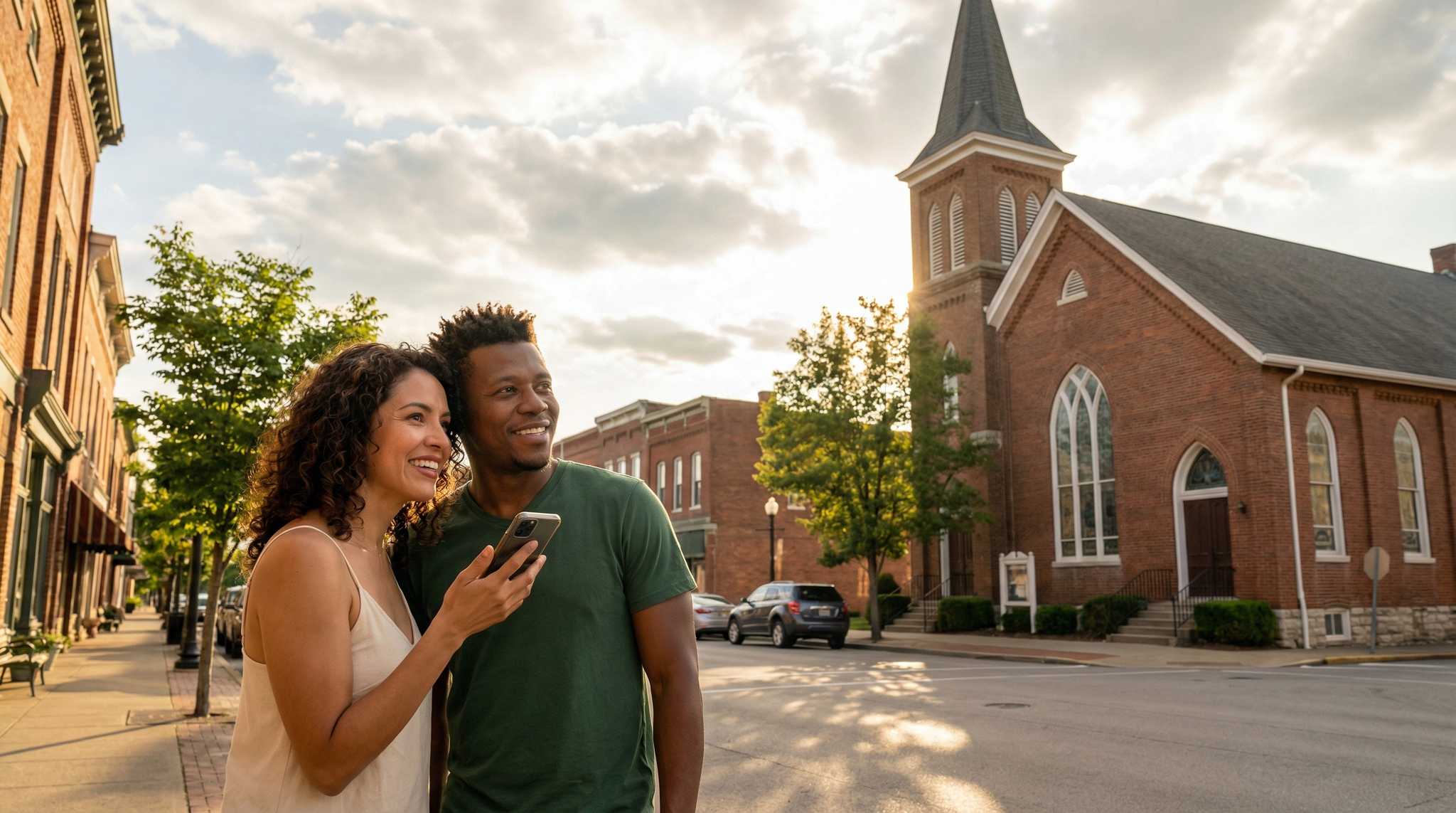
Tour de audio de Georgetown: Ecos de herencia en salones históricos y hogares ocultos
La niebla se eleva de Royal Spring y susurra secretos sobre calles de ladrillo donde leyendas del bourbon y rebeliones universitarias moldearon el alma de Georgetown. La historia se esconde a plena vista aquí, justo debajo de los tranquilos céspedes del parque y detrás de las majestuosas columnas de Giddings Hall. Este tour de audio autoguiado invita al descubrimiento más allá de las vistas de postal. Descubre los rincones ocultos de la ciudad y las historias largamente enterradas que desaparecen para la mayoría de los visitantes. ¿Qué sucedió en la Casa Hawkins que casi cambió el futuro político de Kentucky de la noche a la mañana? ¿De quién son los pasos que resuenan en los salones más antiguos de Georgetown College después de medianoche, llevando un secreto nunca confesado? ¿Por qué un manantial ordinario se convirtió en el escenario de un escándalo que resuena hasta el día de hoy? Sigue aceras sinuosas y callejones sombríos mientras capas de drama, ambición e intriga cobran vida a tu alrededor. Cada punto de referencia revela nuevas olas de sorpresa y asombro. ¿Listo para caminar por la línea entre el encanto pacífico de Georgetown y las verdades impactantes que se esconden debajo? Presiona reproducir y deja que las historias ocultas comiencen.
Vista previa del tour
Sobre este tour
- scheduleDuración 40–60 minsVe a tu propio ritmo
- straighten3.3 km de ruta a pieSigue el camino guiado
- location_onUbicaciónGeorgetown, Estados Unidos
- wifi_offFunciona sin conexiónDescarga una vez, úsalo en cualquier lugar
- all_inclusiveAcceso de por vidaReprodúcelo en cualquier momento, para siempre
- location_onComienza en Distrito del barrio de South Broadway
Paradas en este tour
To spot the South Broadway Neighborhood District, just look for a line of stately old brick and wood homes sitting up on grassy lawns along the street, with broad porches and…Leer másMostrar menos
To spot the South Broadway Neighborhood District, just look for a line of stately old brick and wood homes sitting up on grassy lawns along the street, with broad porches and steep steps leading right up to their doors. As you look around, imagine the sound of footsteps on stone steps, the gentle rustle of leaves, and the cheerful wave of a neighbor from a wide, welcoming porch. This is the heart of Georgetown’s historic soul-a place where over 149 grand old buildings and 67 sturdy structures huddle together, each one with its own secrets. Think of the stories held by the people who lived, laughed, and maybe even argued here (probably about who made the best pie on the block). Some say the houses gently creak at night, as if swapping tales about horse-drawn carriages and Sunday socials from over a century ago. But this isn’t just any group of houses. The district is packed with treasures, like the grand Garth School and the mighty Holy Trinity Episcopal Church-a little like a celebrity neighborhood, except instead of actors, it’s historic buildings striking architectural poses. Even the air seems a bit more patient here, as if it respects the 93.4 acres of memories. Every block has a new detail to spot, so take your time-and whatever you do, don’t challenge a local to a porch-sitting contest. They always win!
Abrir página dedicada →You’re looking for a long, red-brick building with tall windows and striking stone towers-just ahead, across a wide, grassy lawn with a classic school sign out front. Imagine…Leer másMostrar menos
You’re looking for a long, red-brick building with tall windows and striking stone towers-just ahead, across a wide, grassy lawn with a classic school sign out front. Imagine it’s 1925 and Georgetown’s pride is on display-bright young students are filling the halls you see before you, shoes tapping the terrazzo floors and laughter swirling through the air. Garth School was the local high school then, its sturdy Collegiate Gothic towers and red brick walls standing like guardians over education in Scott County. See those strong lines of stone trim and the imposing entrance arches? They’ve watched generations tackle math tests, write love notes, and even survive cafeteria lunches (a truly heroic feat at any school). This isn’t just any school building-it sits on a grand six-acre lawn, split into terraces where kids once raced during recess and teachers may or may not have nervously watched from the windows. In 1988, the school earned its spot on the National Register of Historic Places, recognized for housing the hopes and dreams of Georgetown’s youth. Today it’s Garth Elementary, where echoes of the past mix with the buzz of present-day learning. If only my teachers had taught in a castle like this-I might have paid more attention!
Abrir página dedicada →To spot the Branham House, look for a two-story, bright white brick home with a simple symmetrical front, three windows across each floor, and a small front porch with a wooden…Leer másMostrar menos
To spot the Branham House, look for a two-story, bright white brick home with a simple symmetrical front, three windows across each floor, and a small front porch with a wooden door and stone steps. Welcome to the Branham House! Take a deep breath and picture the days when Georgetown was just a patchwork of cabins and muddy roads, and this quiet house was brand new-back in the 1790s. You are now standing in front of the oldest house in all of Georgetown, a silent witness to over two centuries of history. Imagine the clop of horse hooves and the rustle of heavy skirts on these steps. This sturdy two-story brick home, built on a solid stone foundation, has weathered storms, celebrations, and probably a few arguments about chores. Its Greek Revival portico-a fancy front porch-was added later, adding a dash of high style to its timeless, sturdy walls. Back in 1973, the Branham House got its own spot on the National Register of Historic Places-proof that sometimes, being old really is something to brag about. Life here was no fairy tale; folks would have tackled farm chores, braved Kentucky winters, and maybe, just maybe, whispered a ghost story or two by lamplight. If only these bright old bricks could talk!
Abrir página dedicada →

Mostrar 9 paradas másMostrar menos paradasexpand_moreexpand_less
Look ahead for a striking, light stone church with tall, pointed windows and big, bold red doors-if you spot the bright red entrances, you’ve found Holy Trinity Episcopal…Leer másMostrar menos
Look ahead for a striking, light stone church with tall, pointed windows and big, bold red doors-if you spot the bright red entrances, you’ve found Holy Trinity Episcopal Church! Picture yourself here in Georgetown back in the late 1860s-the year is 1864, the aroma of fresh-cut limestone fills the air, and the echoes of chisels ring out as John and Henry Clarke shape the very stones quarried from this exact site to build this church. They often worked by lamplight, which, frankly, must have tested both their patience and eyesight-makes you appreciate your phone’s flashlight, doesn’t it? The beautiful wood carvings inside, crafted by their hands, still decorate the building to this day, holding stories in every swirl and notch. The church finally opened its doors in 1870, with Bishop George David Cummins delivering the grand consecration. Fast forward to the early 1900s, and things were a bit gloomy. Membership dwindled so much that you could have shouted in the sanctuary and only the echo would answer back. But when Reverend William D. Smith and his energetic wife “Miss Beulah” swept in during 1948, they brought a spark of life. With just twenty folks left, the Smiths rallied the congregation, reviving the church with laughter, faith, and-rumor has it-a pretty memorable potluck or two. They built a new parish hall in 1966 and a peaceful memorial garden, complete with a columbarium for those choosing cremation. Today, Holy Trinity isn’t just a place of worship. It’s a community hub, offering apartments for seniors and land for a child development center. It’s gone from lamplight and low attendance to a landmark bursting with life-so don’t forget to peek at those famous red doors before we wander on!
Abrir página dedicada →To spot Royal Spring Park, just look ahead for a rocky overhang with lush greenery dangling toward a clear, blue pool of water nestled in the stone-a quiet oasis framed by the…Leer másMostrar menos
To spot Royal Spring Park, just look ahead for a rocky overhang with lush greenery dangling toward a clear, blue pool of water nestled in the stone-a quiet oasis framed by the city. Imagine standing at the edge of this tranquil spring, feeling the cool air drifting from the rocks and hearing the gentle echo of water as it flows from deep within the earth. This is Royal Spring, where the story of Georgetown’s survival and spirit comes to life. Long before the city was bustling, John Floyd stumbled across this source in 1774, winning not just a giant “thank you” but 1000 acres of Kentucky land as payment-talk about striking it rich with water! Known then as “Mr. Floyd’s Spring,” it soon changed hands, and in 1776, pioneers built McClelland’s Fort nearby, seeking safety while keeping close to this life-giving spring. Imagine the tension of those early days, huddled inside the fort, ears straining for the sound of approaching danger, all while hoping the water wouldn’t run dry. But that’s not all. By the late 1700s, the park’s most “spirited” chapter began-when Elijah Craig, a preacher with a knack for invention, used the spring water to craft the very first bourbon whiskey in 1789. So, you can thank Royal Spring every time you see Kentucky bourbon swirling in a glass! You’ll also notice a historic log cabin nearby, built in 1874 by Milton Leach, a man born into slavery who turned his freedom into a legacy you can step into today. Stroll through Royal Spring Park and you’ll see it’s more than just beautiful scenery; it’s the wellspring of a city, a crossroads of courage, survival, and a few good sips of history.
Abrir página dedicada →You’ll spot the First African Baptist Church in front of you-it’s a striking reddish-brick building with three pointed arched windows above a set of concrete steps and a single…Leer másMostrar menos
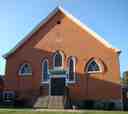
You’ll spot the First African Baptist Church in front of you-it’s a striking reddish-brick building with three pointed arched windows above a set of concrete steps and a single central door, so just look for the bold triangular facade lined with crisp white trim. Now, let’s set the scene-imagine yourself standing here in the heart of Georgetown, the year is 1870, and this place is buzzing with excitement. The air is thick with anticipation as a brand-new church rises up, sturdy red bricks glowing in the sun, and the sound of hammers and hopeful voices seems to echo even now. It all began decades earlier, in 1815, with a small, determined congregation-the original First Baptist Church-gathering just a stone’s throw away. Fast-forward to 1842: Pastor Howard Malcom leads the main church to a new home closer to the college, and hands this hallowed ground over to Georgetown’s Black Baptists. The first leader here? G. W. Dupee, a man who began as a slave and rose to become the church’s first official pastor-talk about beating the odds! Over time, the community grew, laughter and perseverance filling every inch, until in 1870, during Pastor Reuben Lee’s tenure, this Gothic Revival building was born, complete with its original double doors (for men and women to enter separately-imagine the awkward shuffling when folks forgot which door to use!). In 1984, both church and parsonage earned a place on the National Register of Historic Places-a testament to all the prayers, songs, and dreams that passed through these doors.
Abrir página dedicada →Look for a large, two-story brick house with a bold white columned entrance and tall rectangular windows-it's standing just ahead of you, catching the sun with its classic…Leer másMostrar menos
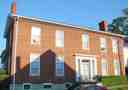
Look for a large, two-story brick house with a bold white columned entrance and tall rectangular windows-it's standing just ahead of you, catching the sun with its classic elegance. You’re right by the Johnston-Jacobs House-a place that’s seen more stories than a tavern cat at closing time! Picture it: back in 1795, Adam Johnston built this very spot as a tavern and inn, so weary travelers could stomp the Kentucky mud off their boots, have a bite to eat, a sip of whiskey, and even park their horses for the night. Imagine the clatter of mugs, the low hum of voices, and the warm crackle of a fire after a long journey. After Adam Johnston passed away, his son Thomas took the keys, and the building stayed in the family until Mary Ann, Adam’s granddaughter, and her husband took over. Then along came William Jacobs, a hardworking blacksmith who left his mark. In 1860, Nathan Payne gave the house a Greek Revival makeover, adding those stately columns that make you feel like you've just stepped into ancient Greece-minus the togas. Over the years, new owners arrived, each adding their own flair, while the old walls held onto the echoes of laughter, bargains, and maybe a few secrets exchanged over candlelight. Today, this spot is a true time traveler among houses, standing proudly on the National Register of Historic Places-so don’t forget to tip your imaginary hat to the past while you’re here!
Abrir página dedicada →Look for a two-story, red-brick building with a rugged stone foundation, barred windows, and a rusty metal staircase right in front-the Scott County Jail Complex is hard to…Leer másMostrar menos
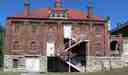
Look for a two-story, red-brick building with a rugged stone foundation, barred windows, and a rusty metal staircase right in front-the Scott County Jail Complex is hard to miss! Right here stands a jail that was more than just a place to keep outlaws; built in 1892, this brick Italianate-style building was once the center of law and order-and plenty of drama-for almost a hundred years. Imagine the clang of cell doors, the heavy footsteps echoing through the halls, and the eyes peeking out from behind those iron bars, all packed within these thick walls. Today it’s peaceful, maybe even a bit artsy, but don’t let that fool you: this was where the county kept its wildest tales under lock and key! The Jailer's Dwelling, which stretches over 44 feet long and stands strong on its stone base, used to be a hive of activity, and perhaps the odd midnight escape plan. In 2002, this place won a spot on the National Register of Historic Places, swapping prisoners for painters as the Scott County Arts & Cultural Center. They say every masterpiece here has just a touch of that old jailhouse grit-after all, nothing inspires creativity quite like a strong dose of history and maybe, just maybe, a ghost or two lurking by the barred windows!
Abrir página dedicada →Right in front of you is a low, stately brick house with grand white columns and a black iron fence-just peer through the trees to find its classic Greek Revival doorway! Now,…Leer másMostrar menos
Right in front of you is a low, stately brick house with grand white columns and a black iron fence-just peer through the trees to find its classic Greek Revival doorway! Now, let’s step back into 1814, when John and Mary Buckner-families made of true Kentucky pioneer stock-picked this very spot for their timeless home. Just imagine the flicker of candlelight inside, as stories unfolded under these old rafters. Over the years, the Shropshire House became something of a social chameleon, trading owners and names like it was the city’s most popular hat! In 1818, it even became the residence of John T. Johnson, who’d run off to Congress but always returned home to Main Street-who says politicians don’t like a cozy bed? Later on came Robert J. Ward, the future Confederate governor George W. Johnson, and finally the Shropshire family, who rolled up their sleeves for a grand remodel just after World War I-leaving echoes of saws and hammers in the walls. Through every century, its Federal bones and Greek Revival makeover have stood strong, witnessing Kentucky’s joys, struggles, and plenty of neighborhood gossip. Not bad for a house that started as a simple family dream!
Abrir página dedicada →Directly across the street, you’ll see tidy brick and white houses peeking out from behind iron fences and lush trees-just look for those grand porches lined with columns! Now,…Leer másMostrar menos
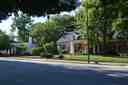
Directly across the street, you’ll see tidy brick and white houses peeking out from behind iron fences and lush trees-just look for those grand porches lined with columns! Now, imagine yourself strolling Main Street back in the 1800s-you’d be dodging horse-drawn carriages, not cars, and passing by some of Georgetown’s fanciest addresses. This district stretches along Main between Warrendale and Mulberry, winding with history and shaded by old trees. You’re actually surrounded by 41 historic buildings-each could tell stories of laughter, arguments, and probably more than one undercooked family dinner, if only their walls could talk! There’s the stately Scott County Post Office, built in 1915, where locals once grumbled about mail being late by days, not hours. Step further and you’ll see the brick Gothic spires of Georgetown Presbyterian Church, built right after the Civil War, when the air still buzzed with hope-and maybe some leftover cannon smoke. Don’t miss houses like the James Emison House, built in 1820, one half of a two-story double brick masterpiece, perfect for double the gossip. Every house here stands as a chapter in Georgetown’s ongoing story. So take a deep breath, listen for echoes of footsteps from ages past, and maybe-just maybe-you’ll catch a whiff of Mrs. Shropshire’s famous biscuits drifting out a window!
Abrir página dedicada →Right in front of you, you'll spot Giddings Hall by its grand brick exterior, six massive columns with curly Ionic tops, and that classic white triangular roof - just head for the…Leer másMostrar menos
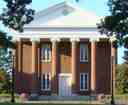
Right in front of you, you'll spot Giddings Hall by its grand brick exterior, six massive columns with curly Ionic tops, and that classic white triangular roof - just head for the tall, temple-like building at the top of Giddings Circle. Imagine the year is 1839 in Georgetown, Kentucky. The air is filled with excitement - and probably a few hammer swings - because a dream is taking shape right where you’re standing. Giddings Hall, originally called Recitation Hall, rises up in Greek Revival style, the first solid sign that a brand new Baptist college really is here to stay. Georgetown College was the first Baptist college west of the Allegheny Mountains, and what you see before you was its first permanent building, thanks to the big plans of Rev. Rockwood Giddings, the school's third president, after whom the building was later named. But here’s a twist: legend has it that a Georgetown math professor, Jonathan E. Farnam, drew up the first sketches, and a mysterious local architect, A.T. Rice, polished it off. Local hands built this place - an African-American mason laid the foundation while brickmason A.L. White crafted these thick walls. Imagine students in the past wandering these halls, shuffling their books as they headed to class or chapel. Some say the building even doubled as a library and theater over the years. Oh, and see those chunky Ionic columns? According to campus lore, thanks to the college’s early connection to Elijah Craig, the guy who allegedly invented bourbon whiskey, there’s a quart of bourbon under each column. If only those columns could talk - or pour a drink! Today, Giddings Hall runs the whole college show as the main administrative building, standing like a proud sentinel over the campus. From its stone basement to its deep attic, every brick tells a story of ambition, community, and a little bourbon-inspired mystery.
Abrir página dedicada →To spot the Hawkins House, look straight ahead for a large, two-story brick home painted bright white with deep green shutters and a central doorway framed by columns-it's the…Leer másMostrar menos
To spot the Hawkins House, look straight ahead for a large, two-story brick home painted bright white with deep green shutters and a central doorway framed by columns-it's the stately house with flags waving above the entrance, standing proudly at the edge of the sidewalk. Here you are, at the final stop! Imagine standing in front of this impressive house, its white walls gleaming in the sun and the air filled with the distant rustle of trees. But don’t let its calm appearance fool you-this place has worn many hats, and maybe even a few bonnets! Over the past 180 years, the Hawkins House, known also as the Cantrill House, has been a rope factory, a women’s dormitory, a bustling home, and a silent witness to the changing tides in Georgetown’s history. Picture the late 1700s: the area wasn’t even Georgetown yet, but a budding town called Lebanon, Virginia. It started around Royal Spring, where the water was cool and reliable-which, let’s be honest, was even better than having fast Wi-Fi back then. And thanks to some forward-thinking folks like Elijah Craig, the name soon changed to honor America’s first president, George Washington. Who wouldn’t want a town named after them? Now, back to this house. The land here was known as “ropewalk alley,” and it lived up to the name. With fields of hemp just up the road, Thomas Hawkins once ran a ropewalk and bagging factory right where you’re standing. Imagine the steady slap of hemp being twisted into rope, the low murmur of workers, and the scent of raw fiber in the air. Rope from here helped supply a growing region, tying together Georgetown’s early fortunes. But then, the story takes a twist-literally! Georgetown College snapped up this spot not once, not twice, but three times. Once, it served as a president’s home. Then a men’s dorm (good luck to anyone trying to keep it clean back then!). At one point, a tragic fire struck the Georgetown Female Seminary, so the house became a refuge for women students. The halls rang with laughter, stress, and maybe a little gossip-imagine author Sallie Rochester Ford scribbling her first stories somewhere inside. And just when you think things would finally settle down, the house transformed again-becoming the elegant family home for professors, doctors, and the well-known Hawkins clan, each adding a chapter to its story. The Hawkins House stands here today, quietly holding all these memories beneath its roof. Can you feel the footsteps of time echoing around you? As we end our tour, take a moment to imagine the many lives and voices that built Georgetown's storied past-sometimes all a house needs is a good story and a little bit of rope!
Abrir página dedicada →



Preguntas frecuentes
¿Cómo empiezo el tour?
Después de la compra, descarga la app AudaTours e ingresa tu código de canje. El tour estará listo para comenzar de inmediato - solo toca play y sigue la ruta guiada por GPS.
¿Necesito internet durante el tour?
¡No! Descarga el tour antes de empezar y disfrútalo completamente sin conexión. Solo la función de chat requiere internet. Recomendamos descargar en WiFi para ahorrar datos móviles.
¿Es un tour guiado en grupo?
No - esta es una audioguía autoguiada. Exploras de forma independiente a tu propio ritmo, con narración de audio reproduciéndose en tu teléfono. Sin guía, sin grupo, sin horario.
¿Cuánto dura el tour?
La mayoría de los tours toman 60–90 minutos para completar, pero tú controlas el ritmo completamente. Pausa, salta paradas o toma descansos cuando quieras.
¿Qué pasa si no puedo terminar el tour hoy?
¡No hay problema! Los tours tienen acceso de por vida. Pausa y continúa cuando quieras - mañana, la próxima semana o el próximo año. Tu progreso se guarda.
¿Qué idiomas están disponibles?
Todos los tours están disponibles en más de 50 idiomas. Selecciona tu idioma preferido al canjear tu código. Nota: el idioma no se puede cambiar después de generar el tour.
¿Dónde accedo al tour después de comprarlo?
Descarga la app gratuita AudaTours desde App Store o Google Play. Ingresa tu código de canje (enviado por email) y el tour aparecerá en tu biblioteca, listo para descargar y comenzar.
Si no disfrutas el tour, te reembolsamos tu compra. Contáctanos en [email protected]
Paga de forma segura con 


