

Tour de audio de Columbia: Historias de santuarios y paseos históricos por la ciudad
A la sombra de altísimas agujas de mármol y columnas pintadas, Columbia esconde historias que sacuden sus cimientos. Este tour de audio autoguiado serpentea por el corazón de la ciudad, revelando secretos que la mayoría de los paseos pasan por alto. Escucha atentamente y descubre la verdad detrás de las silenciosas vidrieras, las audaces esculturas y las torres con campanario que han visto pasar siglos. ¿Qué postura audaz en la catedral sacudió la política de la ciudad hasta sus cimientos? ¿Qué leyenda susurrada recorre los pasillos resonantes del Museo de Arte de Columbia? ¿Qué acera desprevenida esconde huellas de un escándalo entrelazado con la iglesia y el estado? Muévete de santuarios silenciosos a galerías vibrantes, a través de susurros de rebelión y bajo techos manchados olvidados. Cada paso ofrece una nueva perspectiva, desvelando el intrincado pasado de Columbia y el pulso bajo su superficie pulida. Comienza el viaje. Los secretos de la ciudad esperan justo detrás de la siguiente columna.
Vista previa del tour
Sobre este tour
- scheduleDuración 40–60 minsVe a tu propio ritmo
- straighten4.8 km de ruta a pieSigue el camino guiado
- location_onUbicaciónColumbia, Estados Unidos
- wifi_offFunciona sin conexiónDescarga una vez, úsalo en cualquier lugar
- all_inclusiveAcceso de por vidaReprodúcelo en cualquier momento, para siempre
- location_onComienza en Catedral Episcopal de la Trinidad
Paradas en este tour
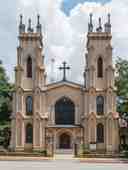
If you’re searching for Trinity Episcopal Cathedral, look for two tall Gothic towers with pointed tops and a large cross perched above the center door, framed by beautiful…Leer másMostrar menos
If you’re searching for Trinity Episcopal Cathedral, look for two tall Gothic towers with pointed tops and a large cross perched above the center door, framed by beautiful stained-glass windows-right on the east side of Sumter Street, just across from the State House. Now, take a deep breath and take it all in: you’re standing in front of Columbia’s oldest surviving sanctuary, lovingly modeled after the grand York Minster in England but with a distinctly southern charm. Picture the year 1812-Columbia is still a young city bustling with new dreams. Reverend Fowler has just arrived, sent by the Society for the Advancement of Christianity, with a mission to bring the Episcopal faith to this corner of South Carolina. Imagine the crisp air as the city’s first congregation forms, holding church services right in the State House itself! The plot thickens when the Legislature, in a clever little deal, gives the Episcopalians and Presbyterians some choice real estate-only to see the Episcopalians sell their lots to fund the First Presbyterian Church down the street. Fast forward to 1814: Parishioners stand in anticipation as Bishop Theodore Dehon lays the cornerstone and, later that year, consecrates the original wooden church. It’s cruciform in shape and stands just across from where you are, its construction made possible thanks to a hefty gift from General Hampton, including, believe it or not, the church’s very first organ. The true transformation begins years later when Peter J. Shand arrives-initially just a lay reader, but soon the heart and soul of Trinity for over half a century. Under his care, the parish blossoms, opening its doors to a Sunday School for African Americans in 1838 and creating a school for indigent children a few years later. You could say Trinity was ahead of its time, trying to “spread the love” in every way it could. In 1845, the Gothic Revival masterpiece you see today started taking shape, designed by Edward Brickell White. Close your eyes and picture that day, the excitement as fresh mortar is spread and stones are stacked. Imagine the towers with eight stone fleur-de-lis pinnacles-many people heard the echoes of medieval England right here in South Carolina. Look up: each buttress, window, and exposed wooden beam seems to have its own ancient secret. Inside, the church was once lit by the gentle colors of stained-glass windows from Munich, glowing like jewels around 1860. Each window holds silent stories of faith, hope, and a little bit of mischief. Speaking of mischief, tradition claims that as Union soldiers entered the city in 1865, quick-thinking locals pulled down Episcopal signs and stuck up papier-mâché crosses. They figured, “If General Sherman’s Catholic, maybe he’ll leave us alone!” This clever ruse must have worked-while much of Columbia burned, Trinity stood firm. Imagine the tense silence as parishioners defied the occupying soldiers, rising from their knees and refusing to say “Amen” during a prayer for the President. Over time, the church grew grander: more stained-glass in 1890, intricate choir stalls, a dazzling organ, and the regal eagle lectern-all weaving new chapters into the story. Trinity became the cathedral of the new Episcopal Diocese of Upper South Carolina in 1977, ensuring its spirit would endure. And don’t miss the churchyard-the living memory beneath your feet. Generals, governors, poets, and presidents of colleges rest beneath the great live oaks, planted to mark milestones in Trinity’s journey. As you walk among the gravestones, you’re tracing the footsteps of some of South Carolina’s most storied sons and daughters. This is a place etched in time, where the past reaches across the centuries just to say hello.
Abrir página dedicada →Take a good look at the building before you: welcome to the Episcopal Diocese of Upper South Carolina, one of the spiritual nerve centers of the region. Imagine the bustle back in…Leer másMostrar menos
Take a good look at the building before you: welcome to the Episcopal Diocese of Upper South Carolina, one of the spiritual nerve centers of the region. Imagine the bustle back in 1922-after almost two years of careful planning and a few heated discussions, this diocese officially branched out from its sibling, the Diocese of South Carolina. Here in Columbia, the diocese grew wings, watching over around 60 congregations across the Upstate and Midlands with names like Midlands, Catawba, Foothills, Gravatt, and Piedmont-almost sounds like a superhero team, right? Their leader today is Bishop Daniel P. Richards, who donned the bishop’s robes in a ceremony at Trinity Cathedral in 2022. But the diocese isn’t just about grand titles; it’s a hub of energy and activities, from faith retreats to summer camps. In fact, since 1949, many young folks have traded their phones for sleeping bags at the Bishop Gravatt Center-a tradition full of laughter, bonfires, and new friendships. So whether you imagine choirs singing or kids racing through fields, you’ll find a place woven with both history and heart right here.
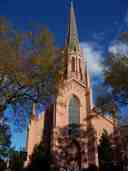
Abrir página dedicada →To spot the First Presbyterian Church, look straight ahead for a grand, pinkish-brick building with tall, arched stained-glass windows topped by an impressive spire that points…Leer másMostrar menos
To spot the First Presbyterian Church, look straight ahead for a grand, pinkish-brick building with tall, arched stained-glass windows topped by an impressive spire that points dramatically into the sky. Welcome to one of Columbia’s true storytellers in stone-First Presbyterian Church! Can you picture it? The year is 1854. The city is just a little quieter, but on this corner, generations of dreams echo in the brickwork and the soaring gothic arches. Before the church stood here, the congregation must’ve been a bit nomadic, meeting wherever they could-sometimes even inside the State House. Imagine the sigh of relief in 1813, when the South Carolina Legislature finally said, “Alright, you Presbyterians, you get your own place!” But there’s a twist-this spot was actually a cemetery shared with the Episcopalians. You’d think they’d ‘plot’ out a dramatic battle, but legend says they simply drew lots. First Presbyterian landed here, at Lady and Marion Streets, probably thrilled and, at the same time, keeping a wary eye on the neighbors. The original building is still here, now called Jackson Hall-talk about good real estate. Now, look up! The spire you see has had quite an adventure. The original shot up 180 feet but was toppled in an 1875 hurricane, rebuilt, roasted by fire in 1910, and rebuilt even taller-like the church was trying to get a better signal with the heavens. As you stand here, you’re walking among legends. Woodrow Wilson’s parents are buried in the cemetery, and so is Henry William de Saussure, a director of the U.S. Mint, and Martha Thomas Fitzgerald, who broke new ground as the first woman elected in a general election to the South Carolina House of Representatives. Music swelled from a rebuilt organ loft after the 1925 expansion made more room for worshippers’ voices. Through all these storms, fires, and changes, First Presbyterian has stood tall, a witness to Columbia’s unfolding story, weathering both literal and political winds with a graceful, gothic grin. Now, who’s ready for the next chapter?
Abrir página dedicada →

Mostrar 11 paradas másMostrar menos paradasexpand_moreexpand_less
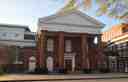
Right in front of you is a grand brick building with four thick columns and a classic white triangular pediment-look for the broad front steps and the three arched doorways right…Leer másMostrar menos
Right in front of you is a grand brick building with four thick columns and a classic white triangular pediment-look for the broad front steps and the three arched doorways right in the center of Hampton Street. Imagine it’s a crisp December morning in 1860, and Columbia is buzzing with whispers and footsteps as people gather at this very church. This Greek Revival beauty was brand new at the time, thanks to the generosity of James P. Boyce-if only all churches came with a donor like that! Sunlight gleams off the bricks, some of which once wore a not-so-glamorous muddy brown coat of paint before a makeover in the 1940s left them looking just a bit sun-kissed, a patchwork of tans and pinks. Inside, there are tall Tuscan columns, side balconies, and even a balcony over the door, all hinting at big moments and big crowds. Now, the serious business that went on here: On December 17, 1860, nervous delegates hustled through these doors for a convention that would set the nation on fire-literally and figuratively. After Abraham Lincoln got elected, the question wasn’t “if” but “how fast” South Carolina would leave the Union. The city was in the grip of smallpox, so speed was of the essence; the group didn’t waste time, voting unanimously to secede from the United States-159 hearts pounding in agreement. That convention lasted just one day, with everyone quickly packing up and heading for Charleston before anyone caught the sniffles. But the decision made here would have a domino effect, convincing six more states to leave the Union before the first shot of the Civil War. Now, here’s a twist worthy of a good soap opera: when the Union Army invaded Columbia later in the war, they accidentally set fire to the wrong church! A well-meaning sexton pointed them at the Methodist church down the street, thinking it was the site of secession. So while flames rose from a neighboring church, the First Baptist stood unharmed, perhaps feeling a little smug. This church would go on to host TV broadcasts, weddings, and even a coffee shop-proving that history and caffeine can go hand in hand. It's seen the city change around it, growing from a stone-cold symbol of upheaval to a welcoming, living landmark in Columbia’s heart.
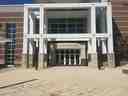
Abrir página dedicada →To spot the Columbia Museum of Art, just look straight ahead for a tall, modern building with a grand entrance framed by big white beams and brick-a bold sign above glass doors…Leer másMostrar menos
To spot the Columbia Museum of Art, just look straight ahead for a tall, modern building with a grand entrance framed by big white beams and brick-a bold sign above glass doors reads “Columbia Museum of Art.” Welcome to the cultural heart of Columbia! Imagine stepping through history’s own front door, because you’re standing before a museum that’s transformed more times than a chameleon at a paint store. Back in 1950, the Columbia Museum of Art began life in a fancy old house-the Taylor family’s 1908 residence, just a few blocks from here. Picture big oak trees, creaky wooden floors, and, for almost 50 years, a planetarium plopped in the backyard. Space and Renaissance paintings, all under one Southern roof! Now that’s one way to keep your parties interesting. Inside those first walls, the museum showcased treasures gifted by local collectors, and ten very serious, very old “Old Master” paintings. Imagine the ghost of Juan de Pareja rolling his eyes at the noise when a school trip came through. But things really got wild in 1954, when the Samuel H. Kress Foundation picked Columbia as a regional art haven, and over the next two decades, the museum scored nearly 80 masterpieces from the glittering Renaissance and fancy Baroque periods. Suddenly, this was the place to see golden halos, swirling gowns, and suspiciously chubby cherubs. The Taylor House wore its “museum and science” hat for decades, but by the 1990s, the collection had outgrown the original house-imagine trying to fit a Jackson Pollock mural into your grandma’s living room. The museum needed a new home. Here’s where things get delightfully dramatic: the museum took over a pair of deserted department stores on Main Street-Belk and Macy’s. The Belk store was partly demolished to create Boyd Plaza, the sculpture-filled courtyard in front of you. The Macy’s skeleton now forms the sturdy framework of this stylish modern museum, clinging to its past with red-brick veneer and a portico inspired by its Taylor House ancestor. If you listen closely at the doors, you might hear echoes of clattering construction from 1998, when the new museum was unveiled, boasting over 20,000 square feet of gallery space and room to grow. Step inside, and you’re greeted by sunlight pouring through a two-story atrium roof and-get this-a 14-foot glass chandelier that looks like a dragon sneezed jewels! That neon splash of red, orange, and gold is a creation by Dale Chihuly, a favorite with the museum’s professional crowd-no hard hats required for this one. Upstairs, wander through art from ancient Greece, touchable only with your eyes, and Roman marble heads that-true story-are missing every possible body part they could misplace. You’ll find Greek vases, glass from Roman times, and even the mysterious headless statue of Hygeia. Slide through centuries of European and American paintings, then duck into galleries lined with furniture from the likes of Duncan Phyfe and Tiffany Studios’ shimmering stained glass. But it’s not all dusty old masters and ancient marbles. The museum swings modern too. In recent years, you could have glimpsed a 20-foot Pollock mural, Roy Lichtenstein’s comic-book colors, Warhol’s bold pop art, and even charcoal drawings by Georgia O’Keeffe, who cruised through Columbia back in 1915. Jasper Johns, a South Carolina native, brought a splash of rebellious creativity, and the museum loves to host family programs in honor of his Aunt Gladys-the world’s only children’s art club named after a lady on Lake Murray! So, the Columbia Museum of Art is more than four sturdy walls. It’s an ever-changing treasure chest-one that’s been lifted up by community spirit, surprise donations, and the simple belief that everyone in Columbia deserves to walk among masterpieces. And just remember, if you hear squeaky shoes behind you, it’s probably just one of those cherubs coming to admire their own portrait.
Abrir página dedicada →To spot Richland Library, look for the bold, modern building ahead of you with huge green-tinted glass windows and an angular concrete top-almost like a giant book cracked open…Leer másMostrar menos
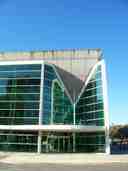
To spot Richland Library, look for the bold, modern building ahead of you with huge green-tinted glass windows and an angular concrete top-almost like a giant book cracked open and ready for an adventure. Now, take a deep breath and picture this spot just a little over a century ago. The story of Richland Library actually began in 1896, not as the grand library you see today, but as a humble charity-probably the kind where you’d find dusty books and creaky floors, not shiny glass and four stories! Imagine the city’s bookworms back then, eagerly flipping through pages wherever there was space, whether it was a storefront or even the old home of Dr. James Woodrow-yup, the uncle of President Woodrow Wilson himself! Talk about a presidential endorsement for readers. Fast forward through a whirlwind of changes-in the 1920s the city took the reins, and by the 1930s, a bookmobile began rolling through the streets, delivering joy to kids and adults alike. There was a special branch in Waverly just for the African-American community too, at a time when that meant a little extra hope and opportunity. By the late 1980s, the library collection was bursting at the seams-coming out of the shelves like popcorn in a microwave. So, the folks in Richland County banded together and voted for a new main library. Architect Eugene Aubry gave it a look that even Superman would love-just check out all that glass! The grand opening was on Valentine’s Day, which feels fitting, since this library is a true love letter to learning. Don’t miss the basement’s Children’s Room, where Maurice Sendak’s “Wild Things” frolic along the walls-the only place in the entire world the author ever allowed this! No wonder, in 2001, this library was named National Library of the Year. So, whether you’re here to read, imagine, or just to cool off-Richland Library is where Columbia’s stories come to life. Now that’s a happily ever after!
Abrir página dedicada →To spot the House of Peace Synagogue, look for a charming two-story white wooden building with a red roof and a bold red door, framed by tall arched stained glass windows, right…Leer másMostrar menos
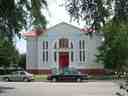
To spot the House of Peace Synagogue, look for a charming two-story white wooden building with a red roof and a bold red door, framed by tall arched stained glass windows, right on the corner just across from you. Now, as you pause here, imagine Columbia over a century ago-horse-drawn carriages clacking by and whispers of many different languages swirling in the air. This building, with its rounded windows and playful red roof, began life as a synagogue for the Beth Shalom Congregation, built by Polish and Russian immigrants searching for a new beginning. The community, which had already known the pain of losing their original synagogue in a great fire during the Civil War, was determined to keep their culture alive. So, in 1915, here on Park Street, they prayed, celebrated, and gathered together, rebounding from loss and building dreams out of timber and hope. But this place has more layers than a very ambitious onion. By the late 1920s, the congregation had outgrown their cozy synagogue, so they moved on to a larger home. And that’s when the next chapter-arguably the most fabulous one-began. The old synagogue became the Big Apple Club, an African-American nightclub where history quite literally danced. Inside, you could smell sweat and cologne, the sweet tang of soda, and see laughter bouncing off the stained glass. The hottest dances of the 1930s were born and perfected right here, under a domed ceiling that, for a time, sparkled with neon moons and shooting stars. Young white college students from USC, desperate to learn the moves, would pay just to watch from the balcony, copying steps from above. They carried the Big Apple all the way to the bright lights of New York, where it shimmied its way into national dance floors (and probably onto a few stubbed toes). This building’s journey didn’t stop at the jitterbug. Over the decades, it’s been a club, a business, and even the home of a heating and air company. In the early 1980s, they picked up the whole building and gently moved it right here to the corner lot. Since the 1990s, restored and gleaming, it’s celebrated as the Big Apple-a true party animal in the world of historic landmarks. Now, people rent it out for their own celebrations, hoping, maybe, to catch a little of that old magic in the air. And who knows, if you walk past here late at night, you might just imagine the tap of shoes and the laughter of an era gone by.
Abrir página dedicada →Looking ahead, you can spot the Basilica of St. Peter by its soaring, slate-gray spire topped with a cross and its distinct dark red brick walls accented with limestone - just…Leer másMostrar menos
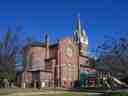
Looking ahead, you can spot the Basilica of St. Peter by its soaring, slate-gray spire topped with a cross and its distinct dark red brick walls accented with limestone - just glance past the playground to see its dramatic Gothic appearance rise above the surrounding trees. Now, take in the imposing sight of the very first basilica in South Carolina - a title so new, it was only granted in 2018 by the Vatican! Imagine it's 1820, and Columbia’s first Catholic priest is arriving in a dusty town where Catholics were few and far between. The parish quickly grew, and by 1824, famed South Carolina architect Robert Mills had designed their first church. Sadly, that original gem was demolished to make place for the magnificent Gothic Revival sanctuary you’re gazing at now, its construction beginning in 1906 under the watchful eye of Father Thomas J. Hegarty. The result is a symphony of Bedford limestone trim, rich brick, and a cruciform shape, with a high nave stretching out 64 feet above your head. Legend has it that the 3,500-pound bell, cast in Baltimore in 1911, sometimes startled even the bravest parishioners with its mighty clang. Today, as South Carolina’s oldest Catholic parish, the basilica is not only a beacon for Columbia, but a spot that’s seen weddings, funerals, and maybe even the occasional playground escape to those grounds behind you.
Abrir página dedicada →Look ahead for a striking building with bold blue and ivory bands, a sleek glass block wrap, and a tall, retro sign that once sported a neon greyhound racing above the entrance on…Leer másMostrar menos
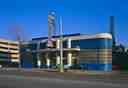
Look ahead for a striking building with bold blue and ivory bands, a sleek glass block wrap, and a tall, retro sign that once sported a neon greyhound racing above the entrance on Blanding Street. Now, picture Columbia in 1939-the roads busy with travelers, the air full of suitcases thumping and engines rumbling as buses roll in and out of this very spot. The Greyhound Bus Depot was the city’s modern gateway, gleaming in the latest Streamline Moderne style, thanks to architect George D. Brown. With its curving corners, gleaming glass blocks, and those glossy Vitrolite panels, it looked ready for a rocket launch rather than a road trip. For nearly 50 years, hopeful passengers gathered here, maybe to reunite with family, ship off for adventure, or just escape Aunt Mildred’s “famous” tuna surprise. The sign above-the “running greyhound”-lit up the night, promising speed and freedom at the flick of a neon switch. When the buses pulled away for good in 1987, the building wasn’t about to retire! In marched Lexington National Bank, turning ticket windows into teller stations-it’s a transaction transformation. Then the bank departed, and the place sat empty and dreaming. In 2005, the depot was reborn as a plastic surgeon’s office-so these days, it’s more about facelifts than bus schedules! Through it all, the exterior has kept its distinctive wrap of blue, glass, and drama, even if the famous greyhound logo called it quits. Today, it stands as an artful landmark in the Columbia Commercial Historic District-a time capsule of streamline style right in the heart of town, with just a hint of mystery about who might be slipping out looking… a little younger than before!
Abrir página dedicada →Right in front of you, nestled behind a white picket fence and partially shaded by leafy trees, stands a charming white cottage with three dormer windows peeking from the roof, a…Leer másMostrar menos
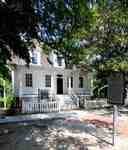
Right in front of you, nestled behind a white picket fence and partially shaded by leafy trees, stands a charming white cottage with three dormer windows peeking from the roof, a raised porch with four sturdy columns, and a welcoming set of stairs leading to its dark front door-just look for the house that looks ready to host a porch swing and an afternoon story or two. Now, let’s dive into the story of the Mann-Simons Cottage-a place full of courage, community, and a sprinkle of good old-fashioned resilience. Imagine dust swirling under your feet as the 1800s city wakes, and the air is thick with the scent of magnolia and possibility. This very corner-at Richland and Marion-was where Celia Mann, once born enslaved in Charleston in 1799, built a new world. Her husband, Ben DeLane, scraped together his boatman’s wages to buy her this land in 1843. Picture the scene: papers exchanging hands, hopes as high as the bluest summer sky. By 1850, Celia was officially free-her name marked in the census and her roots firmly planted. Not one to sit idle, Celia became a skilled midwife, her gentle knock heard all across Columbia by families both anxious and joyous. Back then, free Black people made up just 6% of the city’s souls, so the Mann household was not just a home-it was a beacon. After the Civil War ended and the country tried to patch itself together, Calvary Baptist Church itself was born inside Celia’s very house-even Sunday hymns here must have been something to hear! After Celia passed in 1867, her daughter Agnes inherited both her mother’s will and her spirit. Agnes Jackson Simons had her hands full with a growing family and a changing world. She and her husband, Bill Simons, a free man of color and a popular musician, didn’t just settle-they expanded. The old hall-and-parlor house was replaced in the 1870s by this very “cottage style” home with its unmistakable gabled roof and those three windows poking out front like curious children. The Simonses added buildings out back: a small grocery, a lunch counter, even another house. You can almost smell the biscuits and hear the laughter as locals traded stories nearby, everyone a piece of this lively neighborhood puzzle. When Agnes died in 1907, her son Charles Simons stepped into the spotlight. Charles wasn’t just a homeowner-he was a deacon and a Freemason, a community leader who bought up extra land and built rental homes. Here’s a twist: after 1913, he started renting these houses mostly to European immigrants, echoing Columbia’s ever-shifting cultural scene. Charles thrived in a time when Black South Carolinians rarely found economic security. He built not just a life for himself, but a legacy. After Charles, the house passed to Amanda, his wife, a dressmaker respected in her own right. When Amanda died in 1960, her niece, Bernice Conners, became the final family resident. The tides turned in 1970 when the city eyed this spot for new apartments and seized it through eminent domain. But the community wasn’t about to let Celia’s cornerstone disappear without a fight. Spearheaded by her great-great-granddaughter, Robbie Atkinson, a movement swelled up-Black organizations, churches, garden clubs all banded together to protect their heritage. Thanks to their efforts, by 1973, the house was listed in the National Register. Ever since, historians and locals have teamed up to dig deep-literally!-with archaeological projects that uncovered new layers of this home’s story. Today, the Mann-Simons Cottage stands not only as a museum, but as a symbol of what can grow when a community refuses to let its roots be torn out. So as you stand in the soft shade, take a moment to appreciate all the footsteps that crossed this porch before yours-and don’t trip on the history, it’s pretty thick around here!
Abrir página dedicada →
Preguntas frecuentes
¿Cómo empiezo el tour?
Después de la compra, descarga la app AudaTours e ingresa tu código de canje. El tour estará listo para comenzar de inmediato - solo toca play y sigue la ruta guiada por GPS.
¿Necesito internet durante el tour?
¡No! Descarga el tour antes de empezar y disfrútalo completamente sin conexión. Solo la función de chat requiere internet. Recomendamos descargar en WiFi para ahorrar datos móviles.
¿Es un tour guiado en grupo?
No - esta es una audioguía autoguiada. Exploras de forma independiente a tu propio ritmo, con narración de audio reproduciéndose en tu teléfono. Sin guía, sin grupo, sin horario.
¿Cuánto dura el tour?
La mayoría de los tours toman 60–90 minutos para completar, pero tú controlas el ritmo completamente. Pausa, salta paradas o toma descansos cuando quieras.
¿Qué pasa si no puedo terminar el tour hoy?
¡No hay problema! Los tours tienen acceso de por vida. Pausa y continúa cuando quieras - mañana, la próxima semana o el próximo año. Tu progreso se guarda.
¿Qué idiomas están disponibles?
Todos los tours están disponibles en más de 50 idiomas. Selecciona tu idioma preferido al canjear tu código. Nota: el idioma no se puede cambiar después de generar el tour.
¿Dónde accedo al tour después de comprarlo?
Descarga la app gratuita AudaTours desde App Store o Google Play. Ingresa tu código de canje (enviado por email) y el tour aparecerá en tu biblioteca, listo para descargar y comenzar.
Si no disfrutas el tour, te reembolsamos tu compra. Contáctanos en [email protected]
Paga de forma segura con 


