
Tour de audio de Baton Rouge: Masones, Mansiones y Leyendas Ribereñas
El fuego y la fortuna una vez iluminaron las orillas del Misisipi, dejando susurros ocultos entre las elegantes fachadas y las imponentes catedrales de Baton Rouge. Este tour de audio autoguiado desvela la superficie pulida de la ciudad, revelando historias secretas que la mayoría de los visitantes pasan por alto. ¿Por qué un atraco sin resolver en el Belle of Baton Rouge sumió a la ciudad en el caos político? ¿Quién pasó por los pasillos de vidrieras de la Iglesia Episcopal de St. James llevando cartas prohibidas? ¿Qué extraña carga viajó en tren desde la estación de Baton Rouge una noche tormentosa de 1926? Rastrea leyendas a través de calles bulliciosas y capillas silenciosas. Párate donde estallaron escándalos, los rebeldes conspiraron y los ecos de una ambición pasada aún perduran en el aire húmedo. Cada paso ofrece una nueva sorpresa y una visión más rica y salvaje de Baton Rouge. Escucha atentamente. Los secretos no contados de la ciudad esperan, ¿estás listo para desenterrarlos?
Vista previa del tour
Sobre este tour
- scheduleDuración 30–50 minsVe a tu propio ritmo
- straighten3.9 km de ruta a pieSigue el camino guiado
- location_onUbicaciónBaton Rouge, Estados Unidos
- wifi_offFunciona sin conexiónDescarga una vez, úsalo en cualquier lugar
- all_inclusiveAcceso de por vidaReprodúcelo en cualquier momento, para siempre
- location_onComienza en Templo Masónico Prince Hall
Paradas en este tour
Look up at that tall rectangular brick structure, where the pale concrete bands contrast with the masonry and a bright blue Masonic square-and-compass emblem sits squarely between…Leer másMostrar menos
Abrir página dedicada →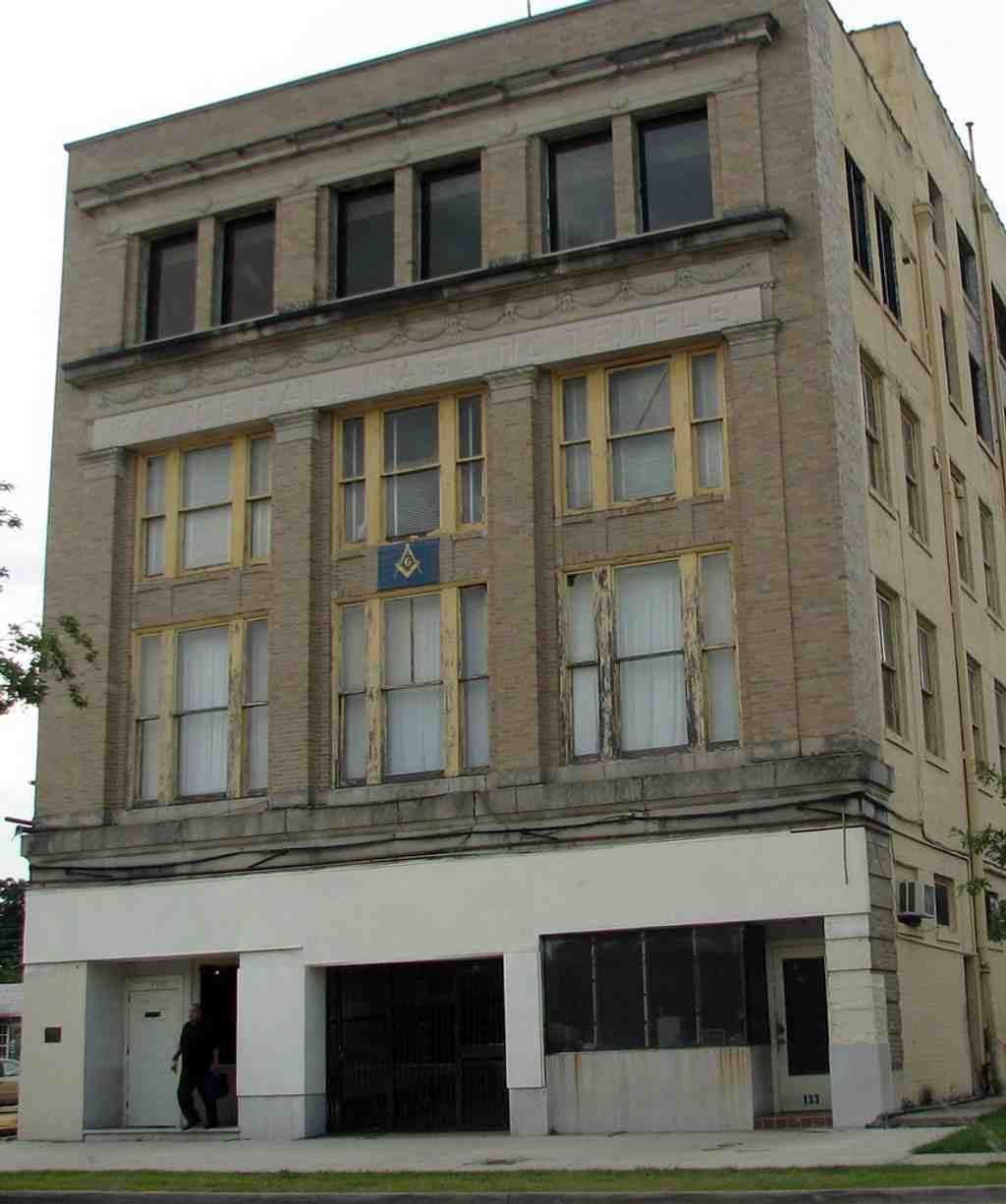
Prince Hall Masonic TemplePhoto: Tjean314, Wikimedia Commons, CC BY-SA 3.0. Cropped & resized. Look up at that tall rectangular brick structure, where the pale concrete bands contrast with the masonry and a bright blue Masonic square-and-compass emblem sits squarely between the middle windows. This building is a masterclass in living multiple lives. Originally built in 1924, it has constantly shifted its identity, transforming from a fraternal lodge to a vibrant entertainment mecca, and later into a vital command center for civil rights. It perfectly sets the stage for a city that constantly reuses its spaces, always forging its next era straight out of the framework of the past.
Built by a prominent local Black contracting company, Conner, Bryant and Bell, this Neo-Classical building, meaning it borrows symmetrical monumental elements from ancient Greece and Rome, was initially a meeting hall for the Grand United Order of Odd Fellows. But it was what happened inside that made it legendary. Upstairs, the Temple Roof Garden, often called the Grand Ballroom, was the absolute pinnacle of glamour for Black social functions in Baton Rouge. Downstairs, the Temple Theatre, run by local legend Uncle Fred Williams, served as the premier spot for movies and live stars for the segregated community. Take a peek at your app to see its historical facade.
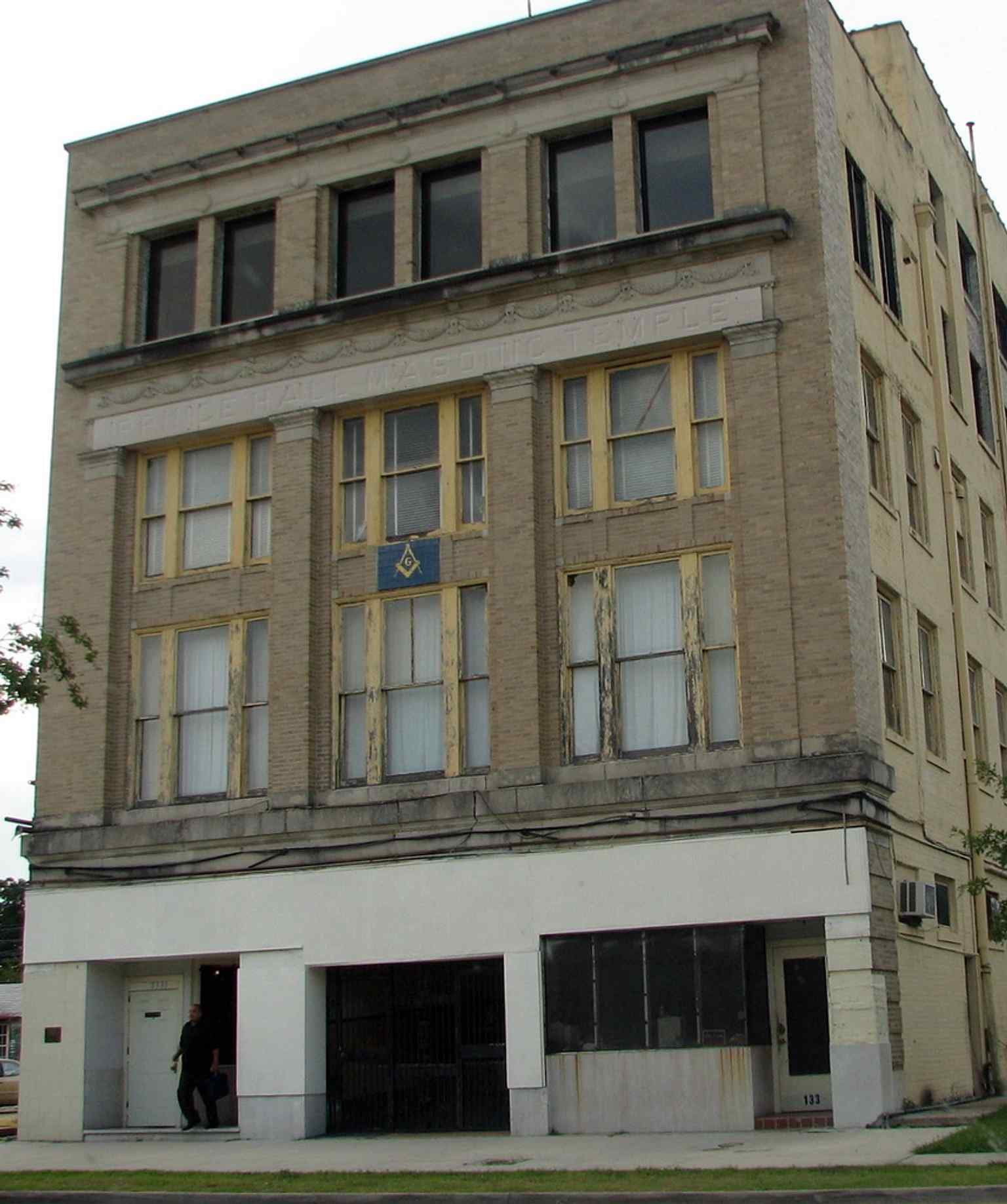
This Neo-Classical brick structure, built in 1924, once housed the Temple Theatre and Roof Garden, and was added to the National Register of Historic Places in 1994.Photo: Tjean314, Wikimedia Commons, CC BY-SA 3.0. Cropped & resized. Because Black entertainers were barred from white-owned hotels during the era of forced segregation, legends traveling the Chitlin Circuit, a historic network of venues safe for African-American performers, made this their home. Imagine the massive windows thrown wide open, pouring the live swinging music of Duke Ellington, Louis Armstrong, and Cab Calloway out into the streets. It was pure magic. A 1938 ad even crowned it the finest dancing hall South.
Though it faced financial ruin in the Great Depression, the Prince Hall Freemasons bought it in 1948, turning these very dance floors into a vital strategy hub for the historic 1953 Baton Rouge bus boycott. This place proves how architecture evolves alongside its people. Now, as we leave this monument of vibrant history, we are going to walk about sixteen minutes to explore a completely different kind of ambition, the grand yet distinctly flawed urban planning of Beauregard Town.
Look to your left at that classic, white wood-framed house featuring a triangular roofline and a front porch supported by distinctive square columns resting on solid brick…Leer másMostrar menos
Abrir página dedicada →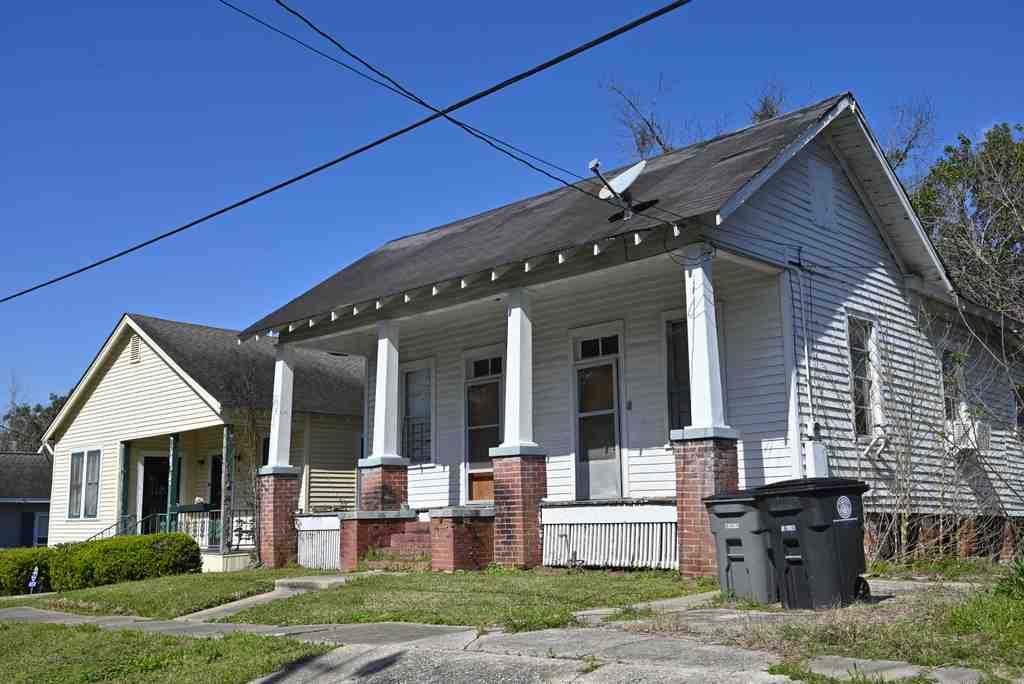
Beauregard TownPhoto: Bubba73, Wikimedia Commons, CC BY-SA 3.0. Cropped & resized. Look to your left at that classic, white wood-framed house featuring a triangular roofline and a front porch supported by distinctive square columns resting on solid brick pedestals. This quiet, charming street is the footprint of what was supposed to be the ultimate baroque metropolis, an intensely theatrical and highly ornate center of power. Back in 1806, a man named Elias Beauregard looked at his muddy plantation and envisioned a grandiose administrative hub for the Spanish province of West Florida, complete with a massive cathedral square, a coliseum, and lush pleasure gardens. He hired a French engineer to map out sweeping diagonal streets intersecting in a grand X, a layout typical of the grand European manner of town design. Look at your screen for a moment to see an aerial map of how these bold diagonal avenues still cut through the neighborhood today.
But there was a slight problem with Beauregard's grand vision... reality. The terrain was an absolute swamp. Beauregard was so eager to cash in that he started auctioning off lots before his land surveyor, a miserable fellow named Kneeland, had even finished mapping out the difficult landscape. Eager buyers arrived on riverboats clutching gorgeous promotional sketches, only to step off and realize their new luxury estates were quite literally submerged in water.
Naturally, chaos erupted, sparking Louisiana's very first real estate lawsuit. Kneeland, who complained bitterly about working up to his waist in mud, was never even paid his four hundred ninety dollar fee, which would be well over twelve thousand dollars today. The absurd legal battle dragged on for years until the United States annexed the territory in 1810, and the lawsuit over the Spanish land grant was just casually dropped.
Over the centuries, this area has continuously rewritten its own physical story, burying those sweeping public plazas under a late nineteenth century building boom and widened modern traffic arteries. Yet, the bones of that spectacular failure remain. The very streets you are walking on are still named after European rulers and continents, echoing an empire that never actually materialized. Check your app to see a broader street view of the beautiful, diverse architectural styles that eventually filled in the gaps of his shattered dream.
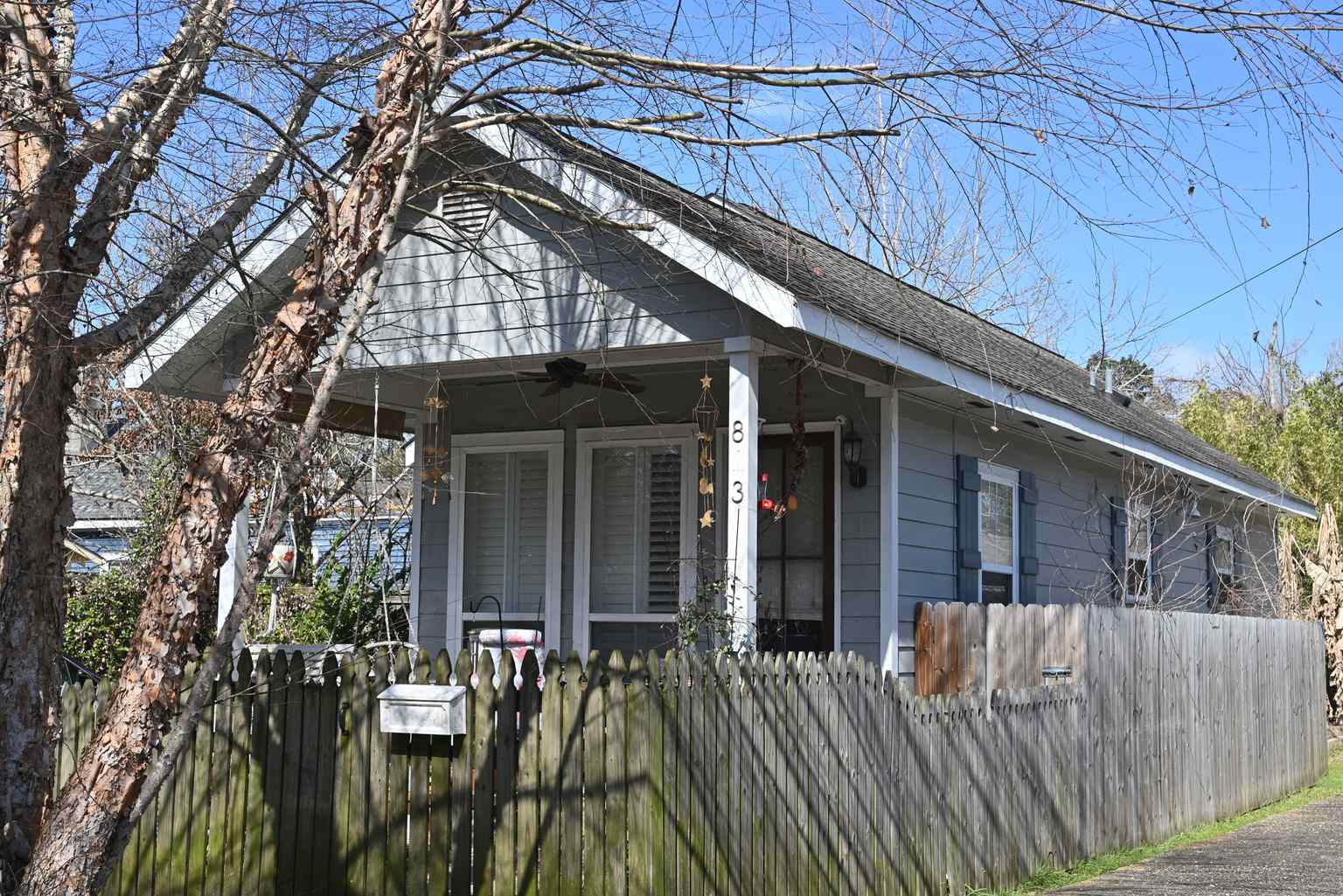
This contemporary street scene highlights the architectural charm of the district, where many streets are named after rulers and continents, as originally planned by Elias Beauregard.Photo: Bubba73, Wikimedia Commons, CC BY-SA 3.0. Cropped & resized. Grand plans have a funny way of shifting into something completely unexpected around here. Our next stop is the Old Louisiana Governor's Mansion, just a seven minute walk away, where political ambition took on a very literal and famously eccentric shape. Let us head over.
On your right stands a gleaming white mansion defined by its imposing square shape, supported by four massive front columns, and capped with a distinctive triangular roofpiece.…Leer másMostrar menos
Abrir página dedicada →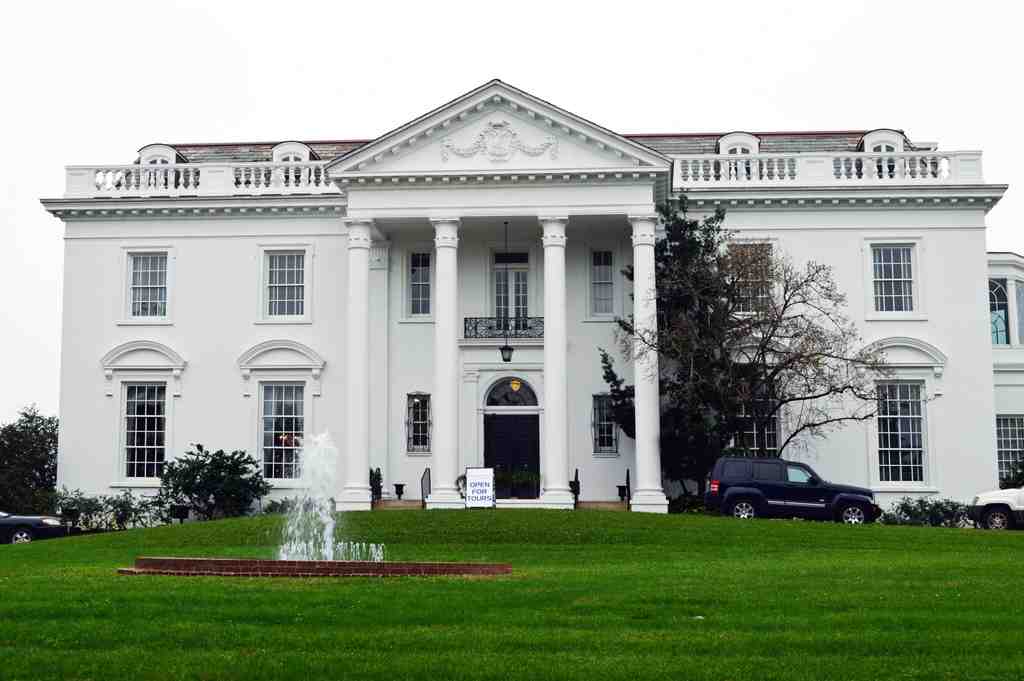
Old Louisiana Governor's MansionPhoto: Niagara, Wikimedia Commons, CC BY-SA 3.0. Cropped & resized. On your right stands a gleaming white mansion defined by its imposing square shape, supported by four massive front columns, and capped with a distinctive triangular roofpiece.
Let me introduce you to Huey P. Long, a man so boldly ambitious that local lore says he walked into a New Orleans architecture firm, slapped a twenty dollar bill upside down on a desk, and told them, I want that. He was pointing to the back of the bill, demanding an exact replica of the White House right here in Baton Rouge. Legend has it he simply wanted to learn his way around the presidential residence long before he actually got elected president.
But grand new visions usually require erasing whatever stood there before. The previous governor's mansion on this exact spot was a much older home that Long despised, seeing it as a relic of his political enemies. Claiming the old place was infested with rats and termites, he orchestrated an audacious display of raw power. He brought in a crew of state prisoners who completely dismantled the historic house in just six hours, hauling everything away. When critics complained about destroying a home that previous governors found perfectly adequate, Long compared it to a dirty boarding house towel, joking that people simply get used to the grime.
Look up at the triangular pediment resting above those massive columns. Can you spot the ornate carving of the pelican feeding her young, a beautiful detail borrowed directly from the Great Louisiana State Seal?
Those giant Corinthian columns, the pillars with the intricately carved leaves at the top, were designed to project absolute authority. Long spent almost one hundred fifty thousand dollars... over three million dollars today... plus another twenty two thousand just on crystal chandeliers and fine velvet drapes. If you look at your screen, you can see the opulent East Ballroom inside, designed specifically to mimic the real White House layout.
But despite that grand facade, life in the state's mansions was often comically chaotic and uncomfortable. The wife of a previous governor complained the old house was freezing in winter, boiling in summer, and took a whole regiment to clean. One family even brought their yard chickens and let them roam freely across the executive lawns. And the new mansion was just as wild. Long's brother, Governor Earl Long, lived here later, and supposedly his wife once found a famous burlesque dancer's coat in the house and angrily threw it straight into the washing machine.
This grand estate has shifted beautifully with the times, and you can check out the before and after image on your app to see how the surrounding trees have matured since the nineteen seventies, framing that impeccably preserved exterior.
If you want to explore the secret staircases, the mansion is open for visitors Monday through Friday from 9 AM to 4 PM. We are heading to the United States Post Office and Courthouse next, about a seven minute walk away, where we will uncover the rather dark history buried beneath its elegant facade.


Mostrar 8 paradas másMostrar menos paradasexpand_moreexpand_less
Here on your left is a three-story rectangular fortress clad in smooth pale limestone, featuring a slightly projecting center section framed by four tall grooved column-like…Leer másMostrar menos
Abrir página dedicada →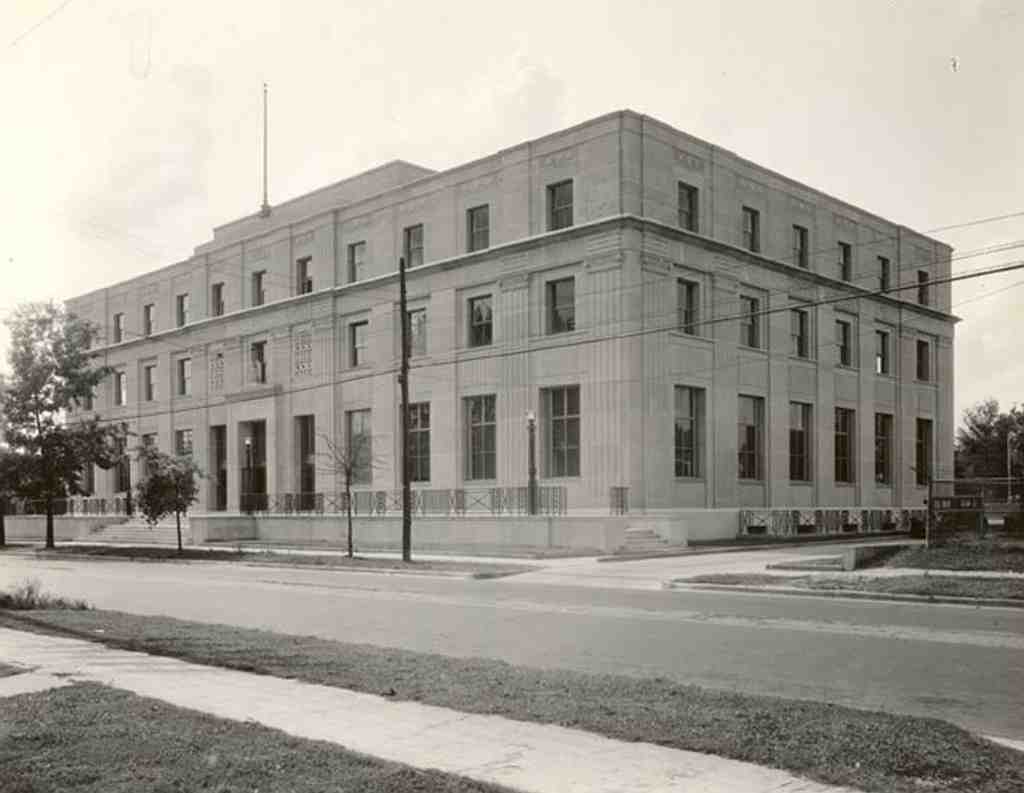
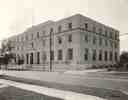
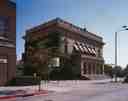
United States Post Office and Courthouse–Baton RougePhoto: not dated; photo looks to have been taken soon after building was completed in 1933., Wikimedia Commons, Public domain. Cropped & resized. Here on your left is a three-story rectangular fortress clad in smooth pale limestone, featuring a slightly projecting center section framed by four tall grooved column-like structures called pilasters. It is a stunning example of Art Deco design, that sleek geometric architectural style popular in the nineteen twenties and thirties. But beneath its solid granite foundation lies a much heavier story. Before this beautiful monument to federal justice was built, this exact ground was the site of the Louisiana State Penitentiary, a grim nineteenth-century prison that was severely damaged during the Civil War before finally being demolished in nineteen seventeen. For decades, the shadows of that old prison soaked right into the soil.
Then came a massive transformation. During the darkest days of the Great Depression, the government wanted to project absolute stability, completely paving over the past to construct this grand building in nineteen thirty-two. Take a glance at your app to see a historical view of the structure shortly after its completion, looking incredibly crisp and modern against the Baton Rouge skyline. Local architect Moise H. Goldstein designed it, utilizing local talent because the economic crash had completely wiped out over half of the country's construction firms.
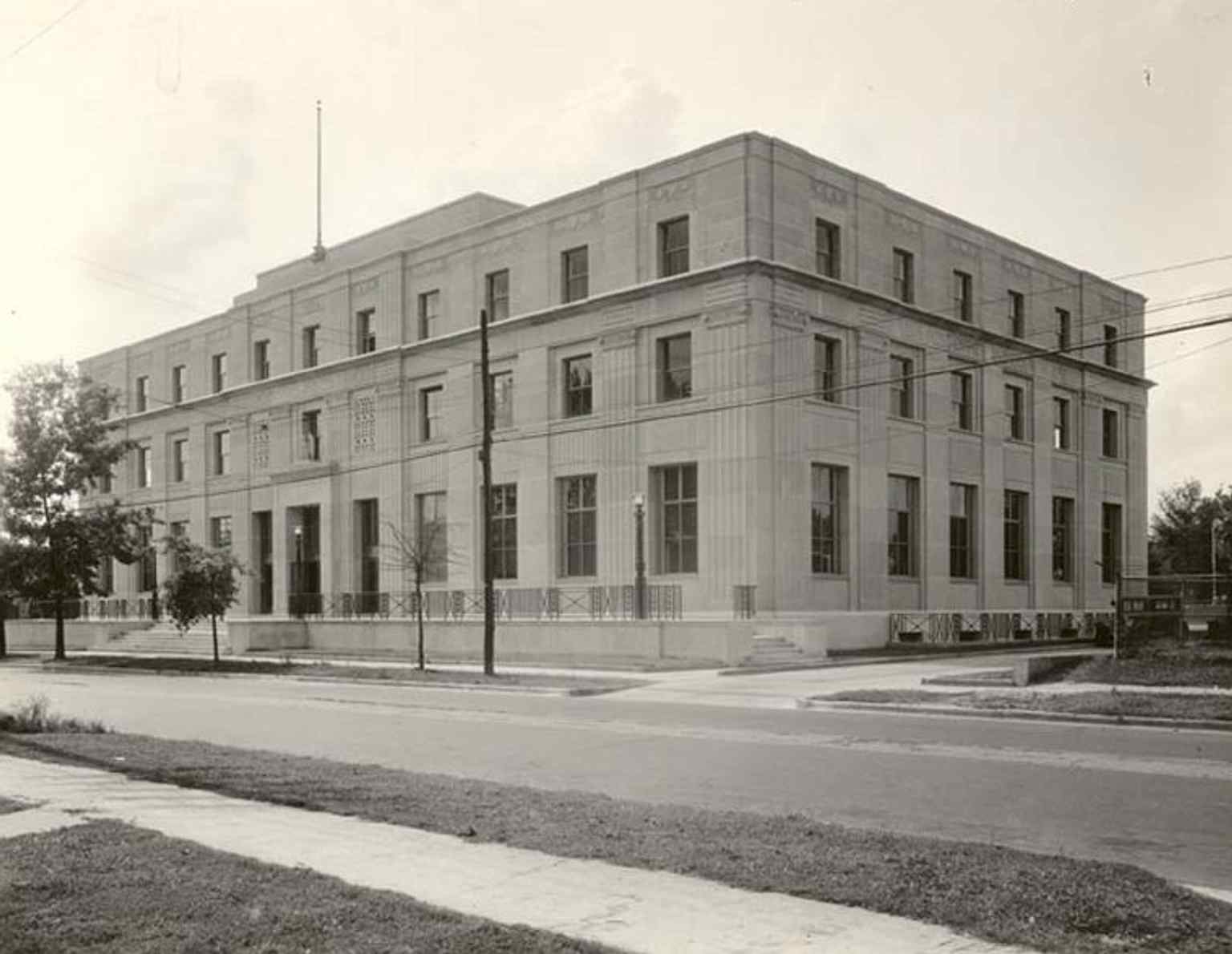
A historical view of the U.S. Post Office and Courthouse shortly after its 1932 completion, showcasing its distinct Art Deco architecture and limestone cladding designed by Moise H. Goldstein.Photo: not dated; photo looks to have been taken soon after building was completed in 1933., Wikimedia Commons, Public domain. Cropped & resized. While the nation was crippled by severe poverty outside, stepping inside this building felt like stepping into an opulent new world. The interior was lavishly appointed with green Vermont Olive marble walls, gleaming terrazzo floors, and trabeated plaster ceilings, which simply means the ceilings were supported by straight horizontal beams rather than arches. It was a palace of repurposed spaces, originally housing a massive post office on the first floor with over fourteen hundred postal boxes, while federal courts operated above.
In a fascinating twist of fate, the justice handed down inside these walls eventually had to confront the echoes of the land it sits on. In recent years, this federal courthouse has been ground zero for monumental civil rights litigation. Judges here shut down the Baton Rouge police department's scandalous Brave Cave, a secret off-the-books warehouse where citizens were illegally strip-searched and abused. Even more incredibly, this courthouse has hosted landmark hearings mandating life-saving heat protections for inmates at the infamous Angola prison farm line, which is the direct successor to the very penitentiary that once stood on this exact plot of land. History really does have a strange way of rising up through the concrete.
If you want to peek inside, the courthouse is open Monday through Friday from eight thirty in the morning to four in the afternoon. Now, let us take a six minute walk over to St. James Episcopal Church, a breathtaking sanctuary that has quietly survived all of the city's most turbulent eras.
Notice St. James Episcopal Church here on your left, a classic cruciform building shaped like a cross, constructed of locally made soft pink brick and anchored by a towering…Leer másMostrar menos
Abrir página dedicada →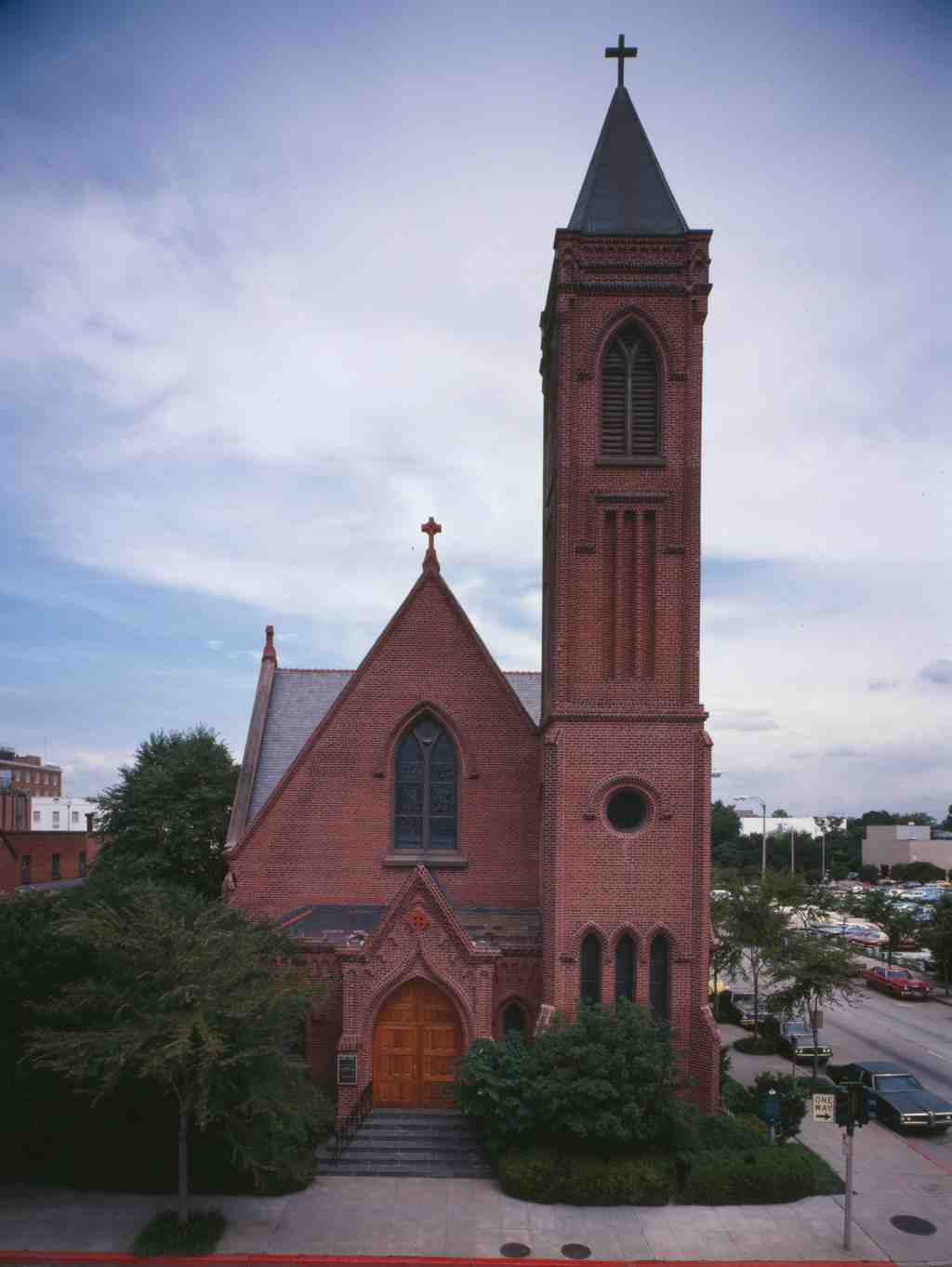
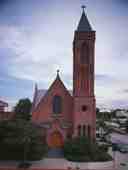
St. James Episcopal ChurchPhoto: David J. Kaminsky, Wikimedia Commons, Public domain. Cropped & resized. Notice St. James Episcopal Church here on your left, a classic cruciform building shaped like a cross, constructed of locally made soft pink brick and anchored by a towering square side steeple topped with a copper cross.
It is a stunning sight, but the grand architecture you see today rests on a foundation of profound heartbreak and incredible survival. In 1820, Margaret Peggy Taylor, the wife of future United States President Zachary Taylor, lost two of her young daughters to a devastating illness known as bilious fever. Desperate for spiritual comfort and a sense of community, she petitioned her husband for space at the local military barracks to gather a small group of wives for prayer, a quiet gathering that eventually led to the formal chartering of this congregation in 1844.
That original 1844 wooden church went on to demonstrate profound resilience. It stood firm while a severe tornado ripped through the city, survived relentless outbreaks of yellow fever, and weathered a massive fire that wiped out twenty percent of the buildings in Baton Rouge. Even during the bloody Civil War in 1862, the peaceful sanctuary was transformed into a chaotic triage hospital, its wooden pews holding wounded soldiers while the congregation navigated the bitter divides of a torn nation.
But this city is always writing new chapters over its scars, turning the ashes of history into soaring new monuments. By 1895, the congregation financed a massive grassroots campaign to replace the battered wooden frame with the magnificent Gothic Revival structure standing before you today. Gothic Revival is an architectural style known for its dramatic pointed arches and upward reaching lines, designed to draw the eye toward the heavens. If you look at your screen, you can see how architect Colonel W. L. Stevens used that pink brick and brownstone to create those substantial, sweeping proportions.
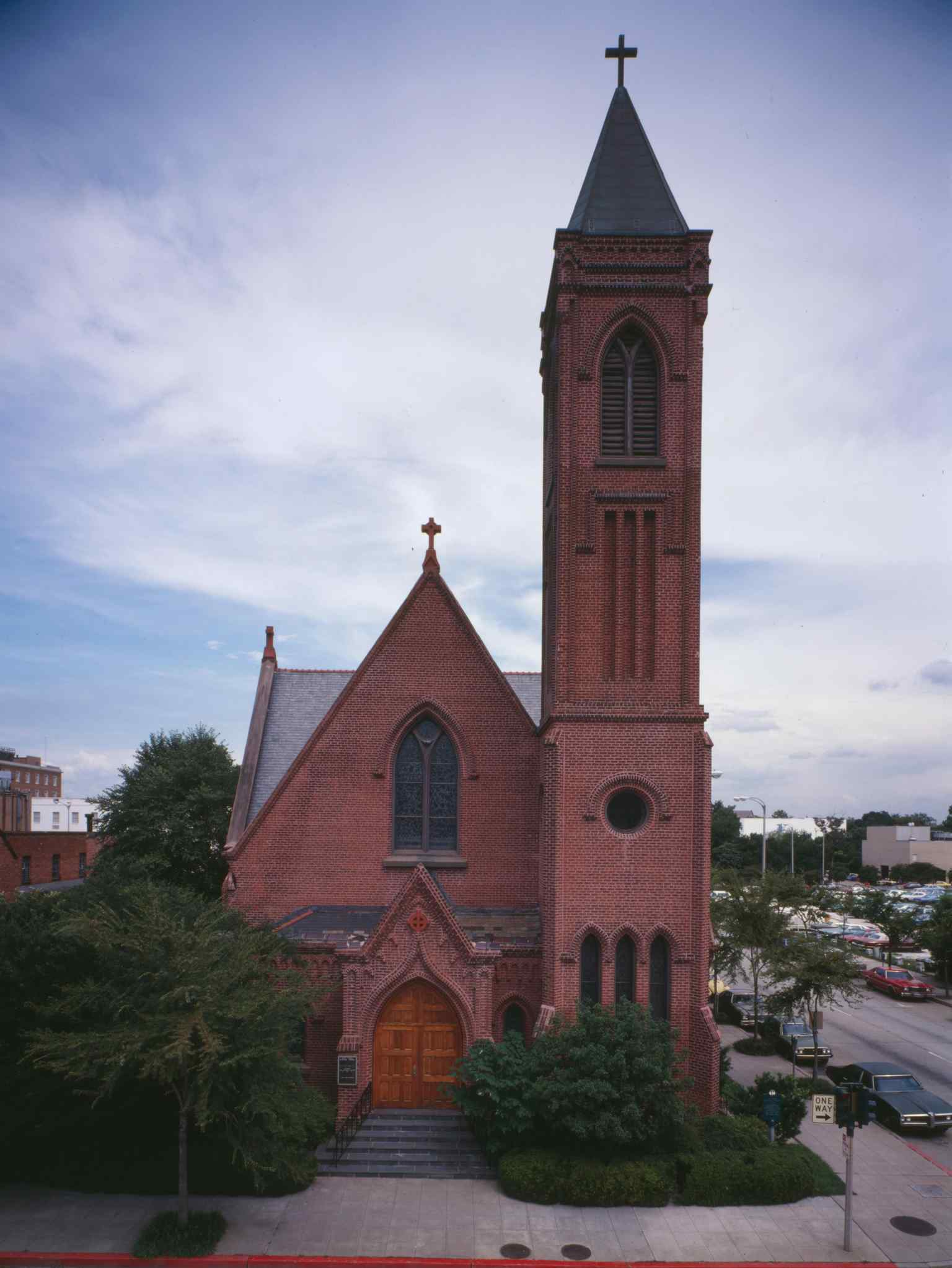
The Gothic Revival-style church building, completed in 1896, was designed by architect Colonel W.L. Stevens. It was listed on the National Register of Historic Places in 1978.Photo: David J. Kaminsky, Wikimedia Commons, Public domain. Cropped & resized. Inside, the legacy of former adversaries finding common ground is quite literally carved in stone. There is a solid Italian granite baptismal font donated by the son of a Union General who died fighting in the Battle of Baton Rouge. That General had regularly attended services here during the occupation, writing letters home to marvel at how the locals warmly welcomed him despite being on opposite sides of a bloody war. Later, a rector, which is the Episcopal term for a head priest of a self supporting parish, named Joseph Tucker began hand carving thirty six intricate cypress wood panels for the altar. When he died before finishing, his son Louis took over as the new rector and completed the work, cementing a deeply personal family legacy into the very walls.
It is a place of quiet endurance that remains highly active today, and you can step inside during their regular weekday hours from eight to five, or on Sunday mornings. For now, let us keep moving toward the commercial heart of the city on 3rd Street, as we transition to our next stop at the Downtown Baton Rouge Historic District, just a short two minute walk away.
Straight ahead is a grand, rectangular tan brick building, easily recognized by its classical ground floor colonnade and the decorative balustrade lining its flat roof. You are…Leer másMostrar menos
Abrir página dedicada →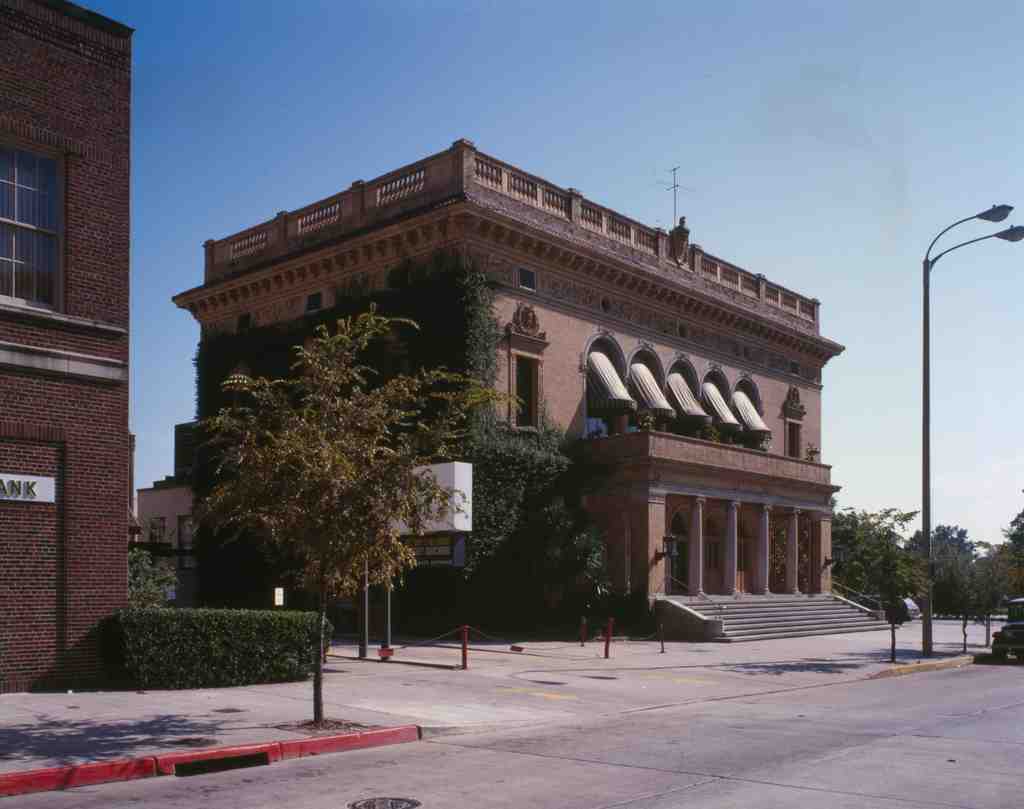
Downtown Baton Rouge Historic DistrictPhoto: David J. Kaminsky, Wikimedia Commons, Public domain. Cropped & resized. Straight ahead is a grand, rectangular tan brick building, easily recognized by its classical ground floor colonnade and the decorative balustrade lining its flat roof. You are standing in the Downtown Baton Rouge Historic District, specifically looking at the Old Post Office. Built in 1894, this is a masterpiece of Renaissance Revival architecture, a style that deliberately mimics the symmetry and monumental scale of early European palaces.
It is fascinating how this single structure reflects the district's restless energy. Originally a federal courthouse and post office, it was later adapted into City Hall. Then, in 1957, it transformed again into the Baton Rouge City Club, an exclusive men's club for the city's business elite, before finally opening its doors to female professionals late in the twentieth century.
This entire corridor along 3rd Street, from Main Street to North Boulevard, was the commercial heart of the city for nearly a century. Forty-three commercial buildings stand here, mapping a timeline of progress from the 1860s to the 1950s.
But that progress was rarely simple. Check out your app to see a wider shot of this historic avenue.
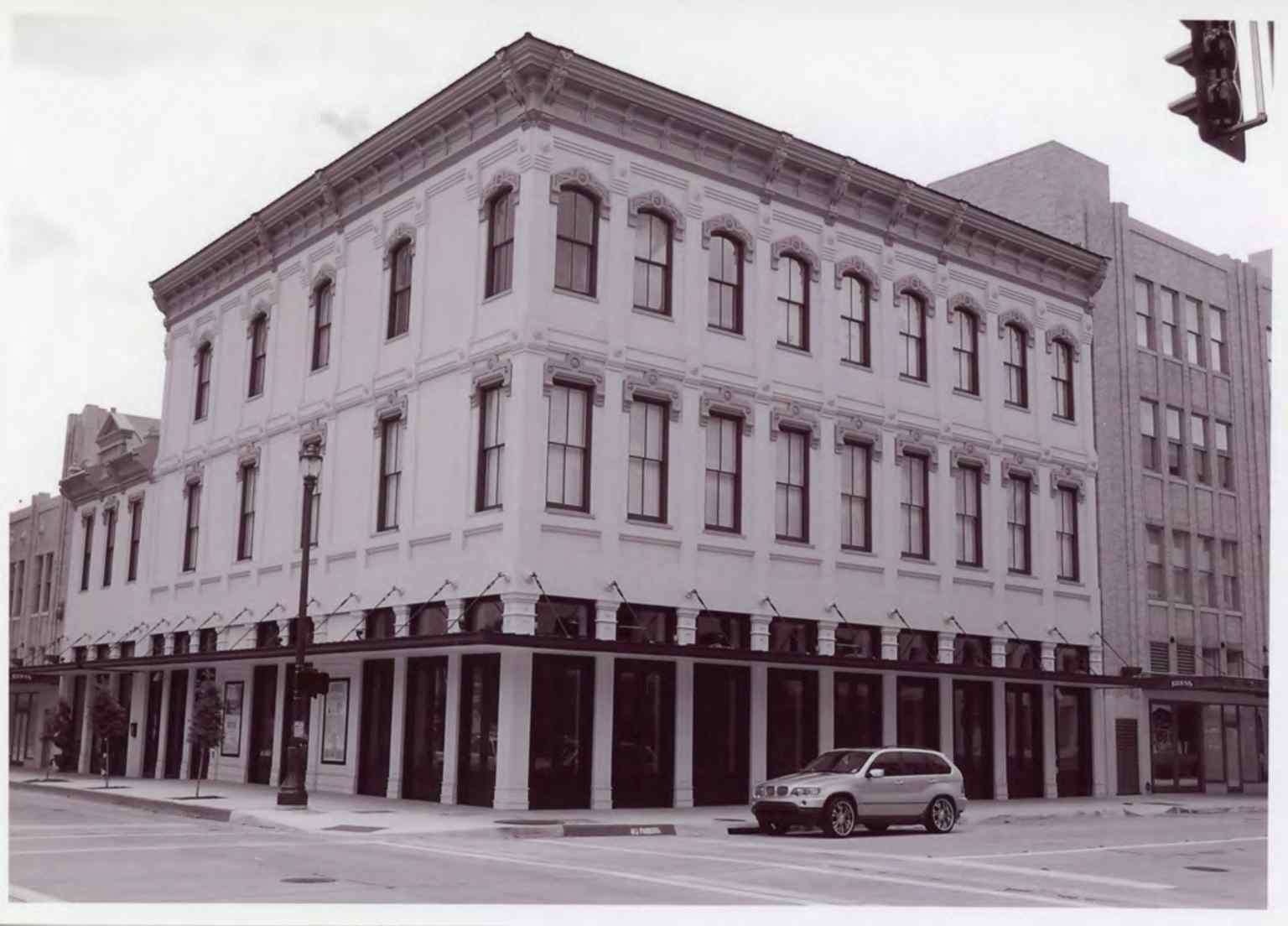
A bustling view of 3rd Street, which served as downtown Baton Rouge's main commercial avenue during its historic period from the 1860s to mid-1950s.Photo: Donna Fricker, Wikimedia Commons, Public domain. Cropped & resized. Every brick here holds a story of fierce ambition, and sometimes, spectacular scandal. Down the street is the site of the Mayer Hotel, built around 1910 by brothers Rafe and Louis Mayer. During World War One, they were eager to look patriotic, heavily promoting their compliance with government rationing. That wholesome image vanished overnight in June 1918 when government agents raided the hotel. They discovered the brothers had secretly hoarded 4,700 pounds of sugar in just three months, which was three times their legal limit, sparking a massive local controversy.
There is a delicate tension here between preserving the past and pushing forward. Take a look at your screen again to see the Belisle Building.
It was added to the National Register in 1993 as a beautiful example of early commercial architecture, but it highlights a phenomenon we call an architectural clash. When extensive modern alterations completely strip away a structure's original character, it loses its official historic status, showcasing a brutal battle between old designs and new commercial needs. Because its facade was heavily modernized over the decades, preservationists ultimately excluded the Belisle Building from the district's contributing properties.
This neighborhood is a perfect demonstration of how a metropolis continually overwrites its own history, modifying or burying older eras to construct the next big vision right on top of them.
To see where this collision between historical foundations and modern design is most striking and dramatic, we will head to our next destination. Let us make the three minute walk to the Shaw Center for the Arts.
Over on your left is a massive, rectangular complex where a sleek upper structure clad in frosted glass floats directly above a heavy historic brick base. This is the Shaw Center…Leer másMostrar menos
Abrir página dedicada →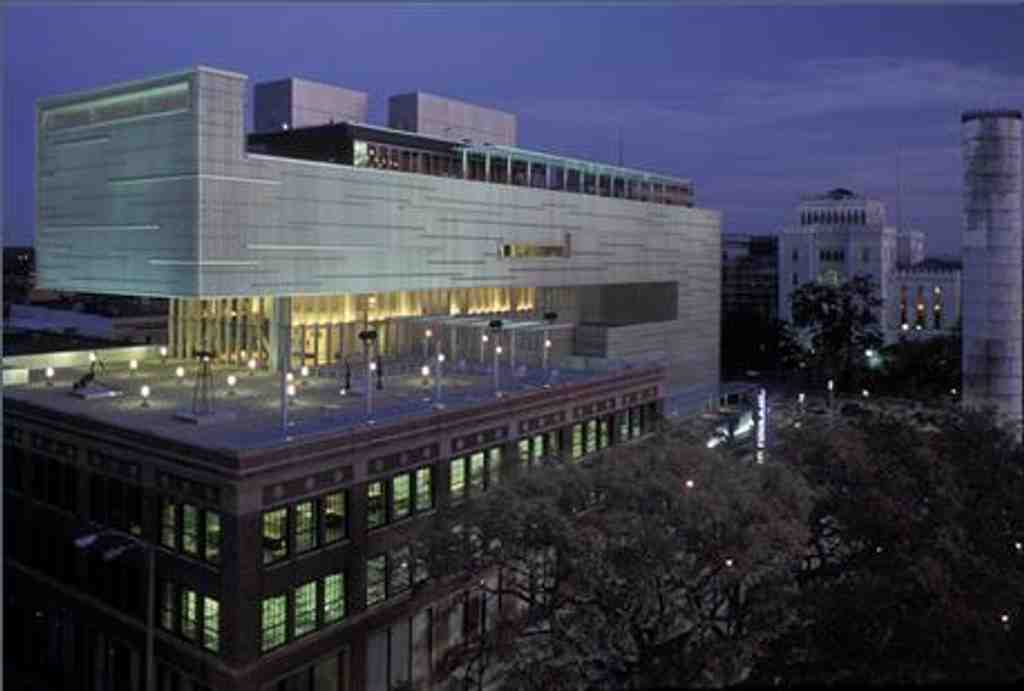
Shaw Center for the ArtsPhoto: UrbanPlanet BR, Wikimedia Commons, CC BY-SA 3.0. Cropped & resized. Over on your left is a massive, rectangular complex where a sleek upper structure clad in frosted glass floats directly above a heavy historic brick base. This is the Shaw Center for the Arts. If you want to see how this city constantly rewrites its own story, building bold futures right on top of its history, just look at this architecture. Pull up the image on your app to see how dramatically these two eras collide.
That heavy brick foundation belongs to a 1922 Auto Hotel, an early parking garage that eventually became an abandoned downtown eyesore. When developers decided to build a sixty million dollar arts center here in 2005, bureaucrats insisted a massive public and private partnership simply could not be done. The developers essentially asked, why not? They tore down most of the ruined garage but kept the northern and western Art Deco walls. Art Deco is a design style from the nineteen twenties known for its geometric brickwork and structured lines.
So now, you have this stunning architectural clash. Rising out of that vintage brick is a futuristic skin of translucent channel glass, a specialized architectural glass manufactured in Germany that lets light filter through without being completely transparent. This bold design helped kickstart a one point seven billion dollar downtown revitalization.
But there is a lot more going on inside than just what you can see from the street. Somewhere inside those walls is a massive, secret five thousand square foot storage room. Its exact location is hidden for security reasons because it holds over five thousand priceless works of art for the LSU Museum of Art. The collections manager designed it as a perfect ecosystem with airtight cabinets and custom hanging racks. When the museum wanted to bring in a Zen garden exhibit in 2016, she forced the team to thoroughly wash, rinse, and dry four hundred pound boulders before they were allowed inside, just to make sure no outside bugs compromised the pristine environment. Talk about strict standards.
The galleries here have also hosted intense local drama. In 2009, organizers of a major summer art show took down a photograph of a nude woman after some attendees complained. This sudden censorship sparked massive public outrage and a fierce debate over whether the capital was truly ready for serious contemporary art. The museum has also tackled painful local history, hosting an incredibly powerful exhibition marking the tenth anniversary of Hurricane Katrina. It featured stark photos of the 2005 shelter crisis right down the street, giving the city a vital space to process the upheaval.
You can explore the museum, theater, and rooftop restaurant Tuesday through Sunday, with varying operating hours. Now, we are going to pivot from artistic controversies to intense political ones. Let us head just a short walk away to the Hilton Baton Rouge Capitol Center, where political drama once reached an absolute fever pitch.
Check your screen to see the full scale of this ten-story, cream-colored stone tower, capped with a flat roofline and distinctive, rounded Romanesque arches along the upper floor.…Leer másMostrar menos
Abrir página dedicada →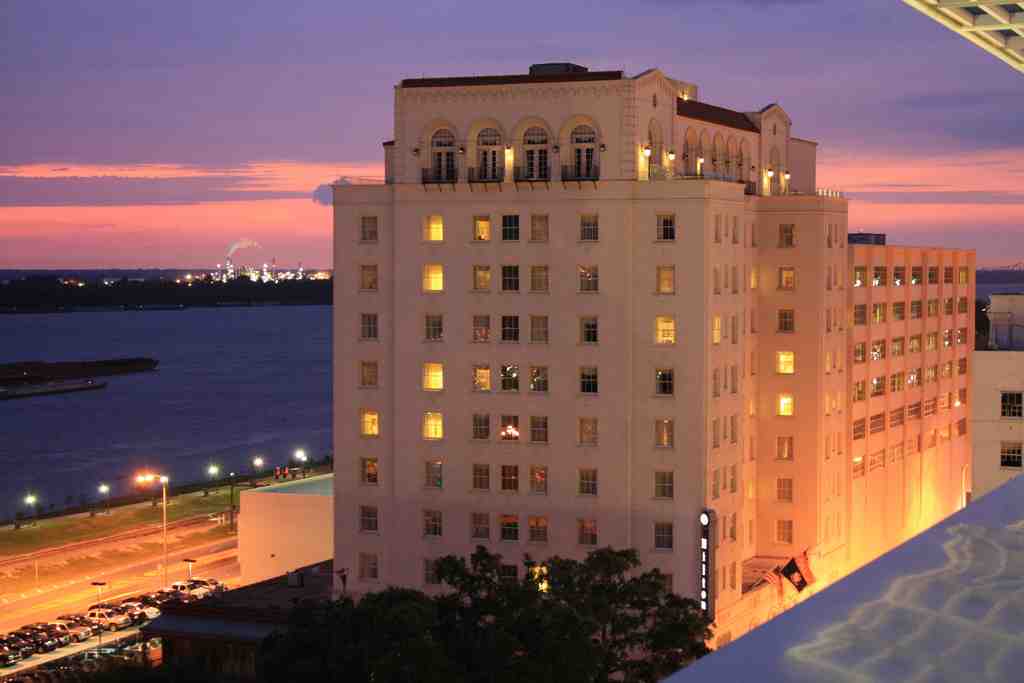
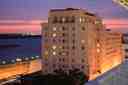
Hilton Baton Rouge Capitol CenterPhoto: Tjean314, Wikimedia Commons, CC BY-SA 3.0. Cropped & resized. Check your screen to see the full scale of this ten-story, cream-colored stone tower, capped with a flat roofline and distinctive, rounded Romanesque arches along the upper floor. Built in 1927 as the luxurious Heidelberg Hotel, this skyscraper began as a casual sketch on a cocktail napkin by architect Edward F. Neild. His audacious ambition was to create a grand centerpiece for the capital city, designing it in a Romanesque style, which mimics the heavy stone walls and semi-circular arches of medieval Europe.
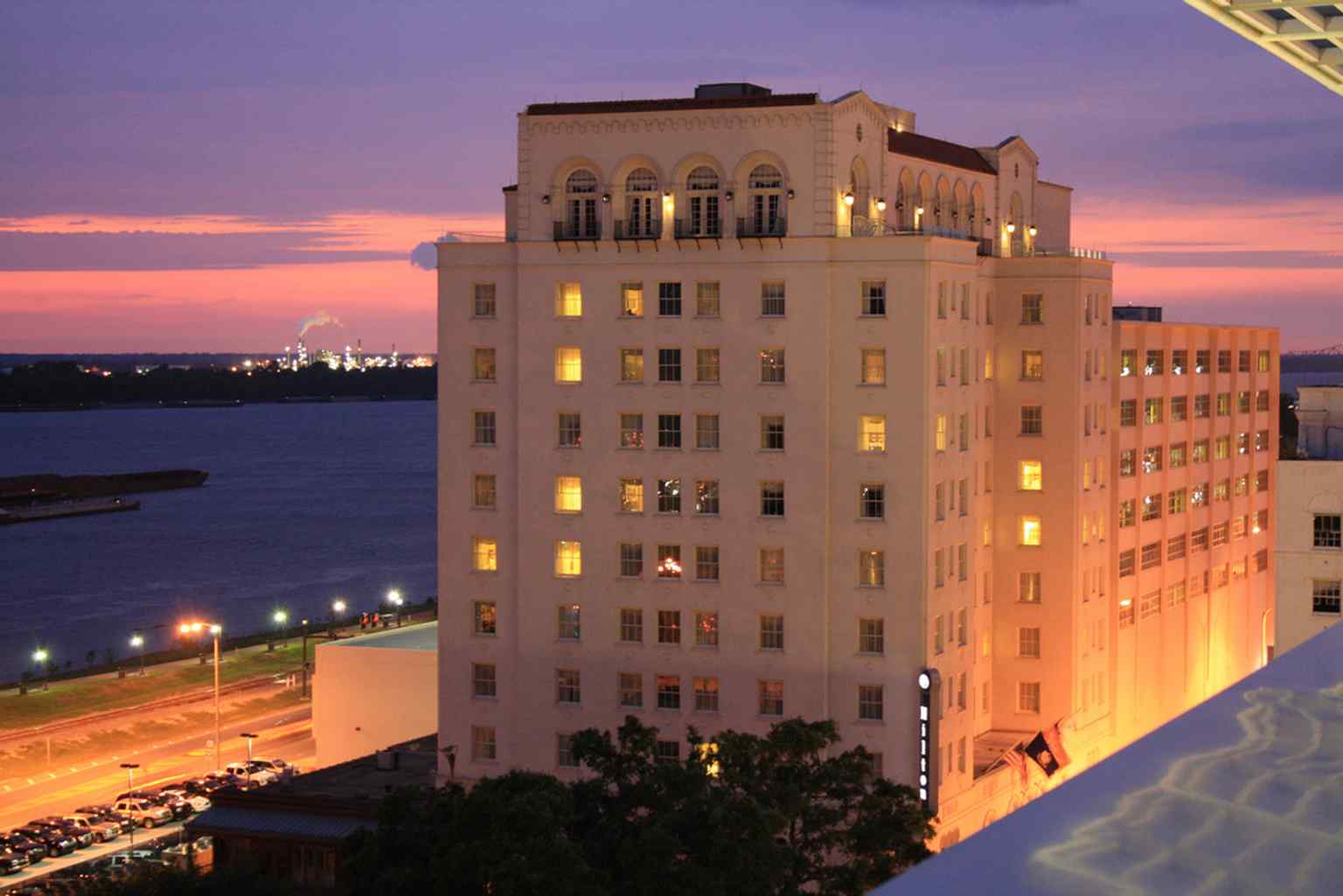
The grand exterior of the Hilton Baton Rouge Capitol Center, originally built as the Heidelberg Hotel in 1927. Noted architect Edward F. Neild famously sketched his initial vision for this ten-story Romanesque skyscraper on a napkin.Photo: Tjean314, Wikimedia Commons, CC BY-SA 3.0. Cropped & resized. This lavish building quickly became the ultimate personal playground for Louisiana's most infamous political titan, the legendary Huey P. Long. He kept a sprawling three-bedroom suite on the mezzanine floor. To dodge the relentless press, he frequently slipped through a massive underground tunnel connecting the Heidelberg to a sister hotel across the street. Adorned with ornate mosaic tiles and dubbed Peacock Alley, this subterranean passageway was originally built just to move room service carts out of sight. Today, the space has been reborn as a Prohibition-style speakeasy, an illicit hidden bar where modern guests need a secret password sent via text message to get inside.
But the real drama unfolded upstairs. In 1931, this hotel was transformed into a bizarre battleground. After being elected to the United States Senate, Long flat-out refused to surrender his role as governor. Infuriated, Lieutenant Governor Paul Cyr declared himself the rightful executive and set up a rogue, shadow government right here inside the Heidelberg. For a brief, wild moment, this hotel actually served as the temporary State Capitol. Long eventually had Cyr evicted, but the chaos did not end there. During a later impeachment threat, his political enemies rented out an entire floor as a command post while Long directed his counter-attacks from a suite just a few floors away.
The building sat abandoned for twenty years before reopening in 2006, a perfect example of how this city is always reinventing itself, constructing its brilliant modern chapters right on top of its own phantom past. And the past here might literally be phantoms. The modern hotel is strictly smoke-free, yet housekeepers on the tenth floor frequently report sudden, thick whiffs of phantom cigar smoke. Some even claim to see an apparition in a long coat and bucket hat, pacing the halls exactly as the old governor used to do.
Picture the electric tension in these elegant lobbies back in 1931. What would it actually feel like to watch a glamorous luxury hotel morph into a cutthroat war room for control of an entire state? Let us head toward the riverfront now to uncover the remnants of the heavy railroad era, as we make our way to the Baton Rouge station, just a three-minute walk away.
The building before you is a sturdy red brick rectangle anchored by a grand colonnade of tall, pale stone pillars stretching across its striking two-story facade. This was once…Leer másMostrar menos
Abrir página dedicada →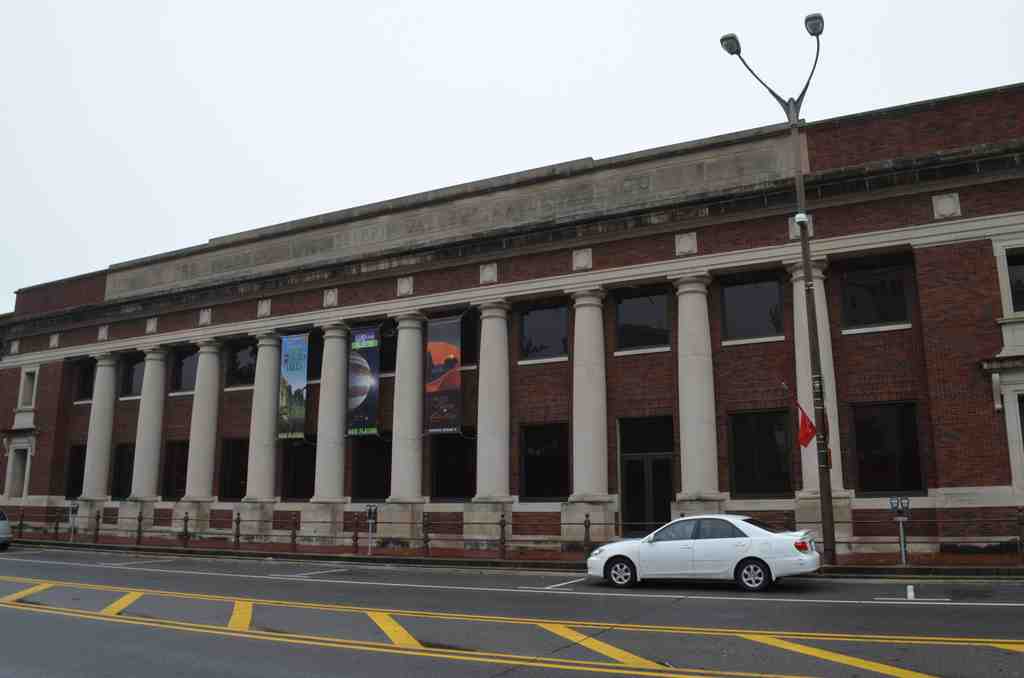
Baton Rouge stationPhoto: Niagara, Wikimedia Commons, CC BY-SA 3.0. Cropped & resized. The building before you is a sturdy red brick rectangle anchored by a grand colonnade of tall, pale stone pillars stretching across its striking two-story facade. This was once the powerful Baton Rouge station. Just steps from where you stand is the mighty Mississippi River. For generations, that restless water was the absolute industrial and logistical lifeblood of this city, carrying the raw materials that built the region. But the river needed a partner on land, and that is exactly why this massive depot was constructed for the Yazoo and Mississippi Valley Railroad.
Think of the sheer force that used to rumble right where you are standing. If you pull up the second picture on your app, you can see the legendary IC-333. This beast was a massive coal-burning steam engine built in 1918. It was a zero-six-zero switcher, a specialized classification for incredibly heavy locomotives designed to haul colossal freight cars around the railyards with brute, unstoppable power. For decades, that massive iron machine sat right outside this building as a monument to the city's heavy industrial grit, before it was eventually relocated to a museum in Tioga in 2011.
As passenger rail declined, this mighty station was abandoned. But true to the spirit of a place that never stops forging its next chapter from the foundations of its past, the depot was entirely reborn. In 1976, it transformed into the Louisiana Art and Science Museum.
Inside these old brick walls, they hold some genuinely wild artifacts. They have an actual Apollo 11 lunar sample, and a massive sixty-five-million-year-old Triceratops skull named Jason. They even house an ancient Egyptian mummy from the Ptolemaic dynasty. For years, experts thought the mummy was a female priestess because of how the hands were crossed over the pelvis. But modern scanning technology revealed a much darker truth. The mummy was actually a young man who suffered seven fatal broken ribs right before his death. Because he was naturally mummified in the dry sand before traditional burial rites, rare physical details like his hair and an open mouth were perfectly preserved.
If you want to explore the museum and its planetarium, they are open Wednesday through Sunday with varying afternoon hours. Now, let us walk toward the River Center, a place of modern entertainment that holds a profound modern history, as we make the five-minute trek to our next destination, the Raising Cane's River Center.
To your right is a modern complex featuring a towering glass facade framed by thick stone pillars and an angled roof adorned with distinct slatted metal sunshades. This is the…Leer másMostrar menos
Abrir página dedicada →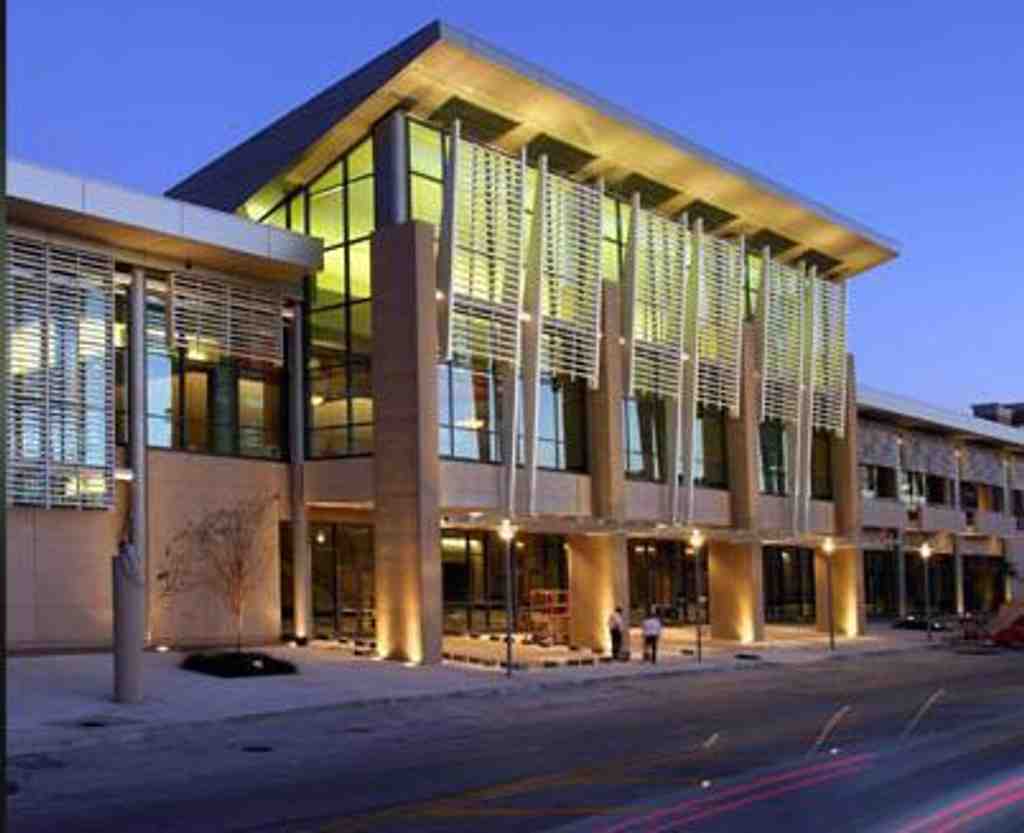
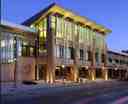
Raising Cane's River CenterPhoto: UrbanPlanet BR, Wikimedia Commons, CC BY-SA 3.0. Cropped & resized. To your right is a modern complex featuring a towering glass facade framed by thick stone pillars and an angled roof adorned with distinct slatted metal sunshades. This is the Raising Cane's River Center. You can check your app to see the complex back in 2008, before its current naming rights took effect.
Built in 1977 as the Riverside Centroplex, this massive structure was engineered for joy. It was a space designed for grand exhibitions, Broadway musicals, and minor league hockey games where thousands of fans roared. But a city is always reinventing itself, and its buildings are often forced to carry a weight far heavier than their creators ever intended.
In September 2005, the entertainment abruptly stopped. As Hurricane Katrina decimated the coast, this sprawling venue was instantly transformed into a massive triage and shelter facility for 6,000 evacuees fleeing the storm. The sudden influx of displaced residents nearly doubled the population of Baton Rouge overnight. What had been a quiet college town suddenly became a major metropolis, and this very complex stood as the epicenter of an immense migration.
Inside those walls, the sprawling 70,000 square foot exhibition space became the backdrop for profound resilience. Consider Cassandra Brown, a 45 year old New Orleans resident who survived for days with floodwaters rising all the way up to her chin. It was right here, in this vast, echoing hall, that she was finally reunited with her daughter.
The sheer scale of the crisis drew highly unusual rescue efforts. At one point, a group of recruiters from Columbus, Ohio, arrived right at the shelter doors. They offered evacuees guaranteed jobs and fully furnished, rent free apartments for a whole year if they simply agreed to relocate to the Midwest.
Yet amidst the unimaginable tragedy, there was also unexpected warmth. Monique Cavasher and Raymond Montgomery, two evacuees who had lost absolutely everything they owned, met just behind the shelter. A romance blossomed between them in the rubble of their old lives, a poignant reminder that new futures are so often built directly upon the ghosts of the past.
Now, let us move toward our final stop, where a failed 1980s dream meets the modern casino era. We are heading to the Belle of Baton Rouge, just a four minute walk away.
You can spot our final destination by its ten-story rectangular hotel tower standing right alongside a massive, five-story-tall glass-enclosed atrium, anchored by the bold red…Leer másMostrar menos
Abrir página dedicada →
Belle of Baton RougePhoto: Tropicana Entertainment, Wikimedia Commons, Public domain. Cropped & resized. You can spot our final destination by its ten-story rectangular hotel tower standing right alongside a massive, five-story-tall glass-enclosed atrium, anchored by the bold red lettering of the Bally's sign.
We are standing at a site that perfectly captures this relentless drive to rebuild, stacking wild new dreams directly over the shadows of what came before. Back in July 1984, this exact spot was a historic warehouse district transformed into Catfish Town, a thirty million dollar festival marketplace. But the project failed miserably. Baton Rouge simply did not have the population to support it, and developers quickly cut their losses.
In a brilliant stroke of irony, the bankrupt complex was saved by the Resolution Trust Corporation. That was a federal agency whose literal job was to liquidate assets from failed banks, meaning the government disaster-cleanup crew became the primary tenant keeping this commercial disaster afloat.
Then came 1991, and Louisiana legalized riverboat gambling. A group called Jazz Enterprises swooped in with an audacious ambition to turn the failed Catfish Town into a massive casino complex.
But this is Louisiana politics, and things got messy fast. Associates of the governor at the time tried to extort the developers. A local contractor demanded a twelve point five percent ownership stake, aggressively warning them that without his cut, the governor would make sure they never got a license.
But Jazz Enterprises refused to fold. Their vice president of operations secretly wore an FBI wire, catching the threats on tape and sending the extortionist to federal prison.
Jazz won their license and launched the Belle of Baton Rouge. Pull up your phone to see what she looked like in her glory days. That was a two hundred and sixty eight foot sternwheeler, a classic riverboat propelled by a massive paddlewheel at the back, packed with three decks of slot machines floating right on the Mississippi River.
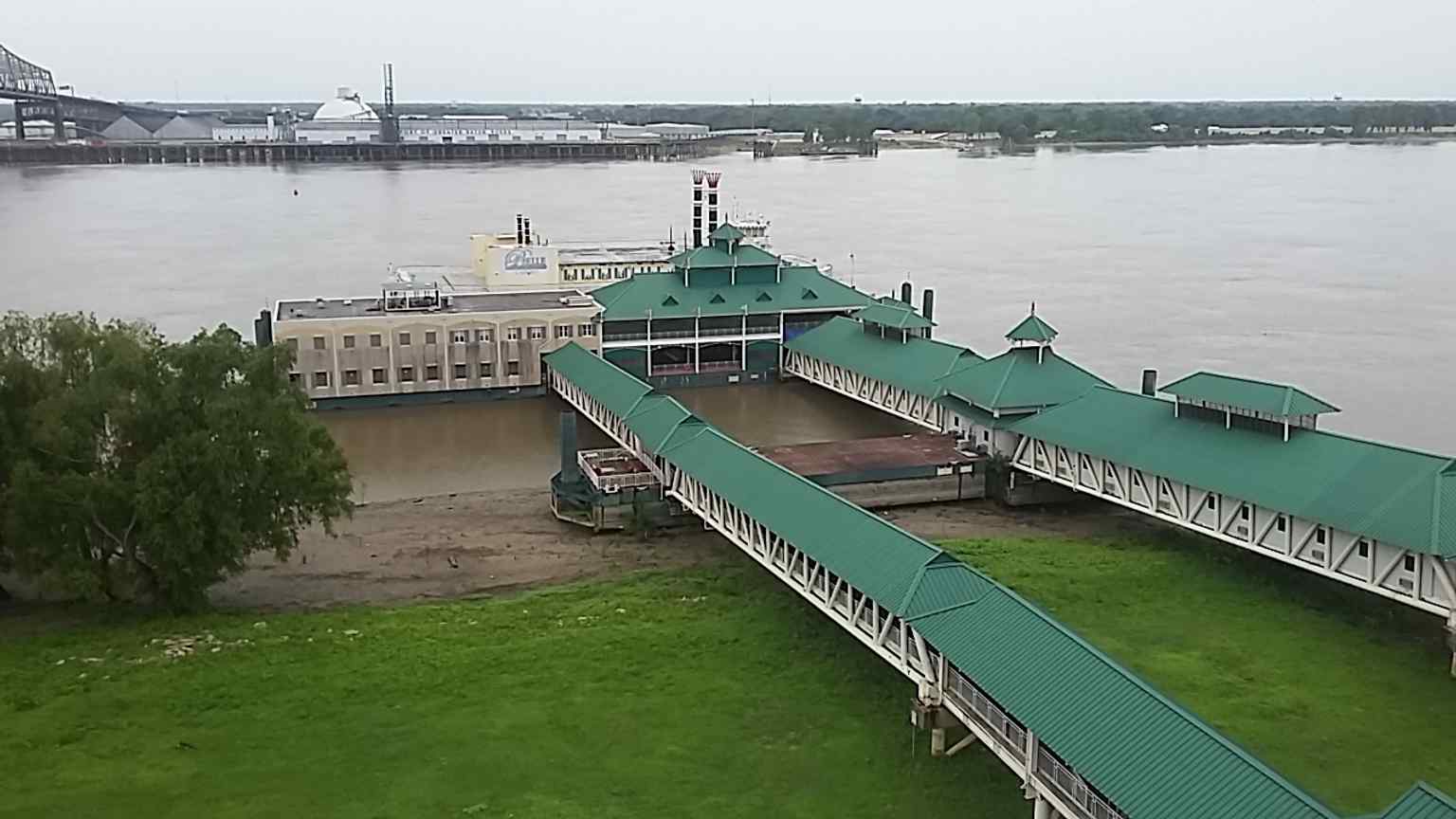
This is the Belle of Baton Rouge casino boat, a 268-foot, four-deck sternwheeler with 28,500 square feet of gaming space, which was famously towed down the Mississippi River in 2025 to be scrapped.Photo: Toohool, Wikimedia Commons, CC BY-SA 4.0. Cropped & resized. And that giant glass atrium standing in front of you? Check your screen for a glimpse inside. That fifty thousand square foot space became a chaotic, high-energy arena for mixed martial arts cage fights and nationally televised boxing matches.
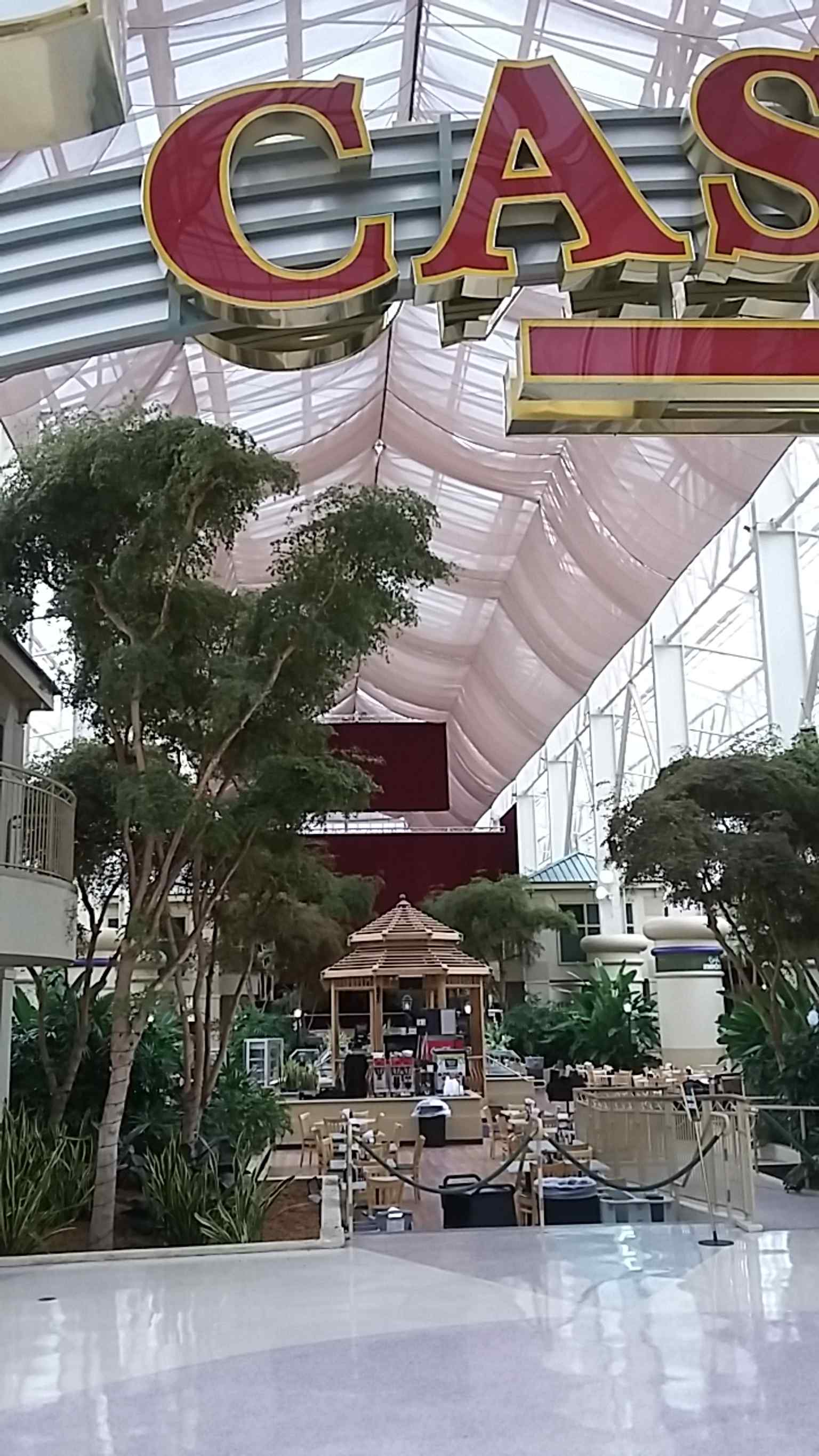
The spacious, glass-enclosed atrium, measuring 50,000 square feet, has served as a versatile performance venue, hosting everything from concerts to mixed martial arts and nationally televised boxing matches.Photo: Toohool, Wikimedia Commons, CC BY-SA 4.0. Cropped & resized. But the glamour faded. When flashier competitors opened, the Belle hemorrhaged money, becoming the lowest-grossing casino in the state. By 2023, the owners could not even afford basic maintenance. The physical riverboat era recently came to a definitive end when tugboats towed the grand vessel down the river to be scrapped for parts. Shortly after, the heavy footbridges that once connected the land to the boat catastrophically collapsed into the water, completely severing the final physical tie to the casino's floating past.
Now operating under new ownership, it is preparing for a new life entirely on land. From a failed marketplace to an extorted riverboat, and now a land-based casino, this spot represents a final gamble on the riverfront. It is proof that this city never stops dealing new hands, tearing down the old to make way for the next big bet.



Preguntas frecuentes
¿Cómo empiezo el tour?
Después de la compra, descarga la app AudaTours e ingresa tu código de canje. El tour estará listo para comenzar de inmediato - solo toca play y sigue la ruta guiada por GPS.
¿Necesito internet durante el tour?
¡No! Descarga el tour antes de empezar y disfrútalo completamente sin conexión. Solo la función de chat requiere internet. Recomendamos descargar en WiFi para ahorrar datos móviles.
¿Es un tour guiado en grupo?
No - esta es una audioguía autoguiada. Exploras de forma independiente a tu propio ritmo, con narración de audio reproduciéndose en tu teléfono. Sin guía, sin grupo, sin horario.
¿Cuánto dura el tour?
La mayoría de los tours toman 60–90 minutos para completar, pero tú controlas el ritmo completamente. Pausa, salta paradas o toma descansos cuando quieras.
¿Qué pasa si no puedo terminar el tour hoy?
¡No hay problema! Los tours tienen acceso de por vida. Pausa y continúa cuando quieras - mañana, la próxima semana o el próximo año. Tu progreso se guarda.
¿Qué idiomas están disponibles?
Todos los tours están disponibles en más de 50 idiomas. Selecciona tu idioma preferido al canjear tu código. Nota: el idioma no se puede cambiar después de generar el tour.
¿Dónde accedo al tour después de comprarlo?
Descarga la app gratuita AudaTours desde App Store o Google Play. Ingresa tu código de canje (enviado por email) y el tour aparecerá en tu biblioteca, listo para descargar y comenzar.
Si no disfrutas el tour, te reembolsamos tu compra. Contáctanos en [email protected]
Paga de forma segura con 


.jpg)
.jpg)
.jpg)


