
Tour de Audio de St Albans: Legados, Leyendas y Rincones Ocultos Revelados
Bajo las tranquilas calles y los tejados medievales de St Albans yace una ciudad forjada por antiguas intrigas, rebeliones rugientes y secretos escandalosos susurrados a través de los siglos. Este tour de audio autoguiado te lleva más allá del sendero turístico, a las sombras de The Old Kings Arms, las paredes en constante evolución de Verulam House y bajo la imponente mirada de la Catedral de St Albans, invitándote a descubrir historias ocultas a plena vista. ¿Qué peligroso pacto se selló una vez en madera empapada de cerveza? ¿Por qué una iglesia inacabada dejó a una comunidad en un limbo legal? ¿Y los ojos de quién supuestamente cayeron a la tierra cuando el martirio golpeó en tierra sagrada? Recorre callejones soleados donde los gobernantes conspiraban, los viajeros huían de la ruina y los milagros surgían en medio de la agitación. Cada paso desvela drama, resurrección y capítulos perdidos que cambiarán la forma en que ves cada ladrillo y cada callejuela de esta histórica ciudad. ¿Listo para cambiar la calma de hoy por los secretos palpitantes de St Albans? Tu viaje a lo desconocido comienza ahora.
Vista previa del tour
Sobre este tour
- scheduleDuración 40–60 minsVe a tu propio ritmo
- straighten4.5 km de ruta a pieSigue el camino guiado
- location_onUbicaciónLuton, Reino Unido
- wifi_offFunciona sin conexiónDescarga una vez, úsalo en cualquier lugar
- all_inclusiveAcceso de por vidaReprodúcelo en cualquier momento, para siempre
- location_onComienza en El Antiguo Brazo del Rey
Paradas en este tour
Look for a charming black-and-white timber-framed building on George Street, with old wooden beams zig-zagging across the walls and a sign hanging above the door that reads…Leer másMostrar menos
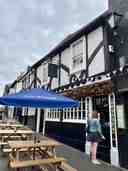
Look for a charming black-and-white timber-framed building on George Street, with old wooden beams zig-zagging across the walls and a sign hanging above the door that reads "DYLANS"-it's right next to the pavement, so you really can't miss it. Now, as you stand here, imagine George Street hundreds of years ago-dusty, noisy, bustling with traders, horses, and the occasional nobleman trying to look important. The Old Kings Arms has been waiting right here since the fifteenth century, its thick wooden beams whispering stories of medieval mischief. Picture the glow of candlelight flickering through these windows and the laughter of townsfolk mingling with the clatter of mugs. Back then, you might have rubbed shoulders with traveling minstrels, scheming merchants, or maybe even the occasional king’s spy (but let’s not get anyone in trouble today). If these timbers could talk, they’d tell of feasts, brawls, and secret pacts by the fireside. But don’t worry-the only trouble you’re likely to find these days is deciding which craft ale to try first! After being closed for over a decade (imagine the silence after so many centuries of noise!), the Old Kings Arms came back to life as "Dylans" in 2015, proving you can’t keep a legendary pub down for long. So, take a deep breath-you’re standing in the heart of living history, right where countless stories began. And if you hear ghostly laughter after closing time, well, you didn’t hear it from me!
Abrir página dedicada →To spot Verulam House, just look for a handsome red brick building with large white-paned windows, a blue nursing home sign out front, and a distinctive arched window right by the…Leer másMostrar menos
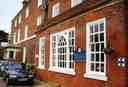
To spot Verulam House, just look for a handsome red brick building with large white-paned windows, a blue nursing home sign out front, and a distinctive arched window right by the entrance. Now, if you’re standing here-take a step back in time with me! Picture yourself on Verulam Road in the roaring 1820s, the air practically humming with the clatter of horse-drawn coaches. This spot was once the grand Verulam Arms coaching inn, welcoming tired travelers from the superhighway Thomas Telford built-yes, the “Colossus of Roads” himself! Imagine the excitement: new arrivals, clinking glasses, gossip swirling around the fire. But, as the iron horses-trains, that is-started rumbling into the world and stealing all the travelers, the busy inn faded into a quieter life. By 1849, the inn was sold, stable boys packed away their hay forks, and the old stables were cleared to make room for a brand new church. Talk about repurposing! But hold on, here comes a dash of drama: the local MP, Alexander Raphael, who started building the church, passed away before he could finish-and without a will to boot! Enter Isabella Worley, a kind benefactor who swooped in to complete the church’s construction and donate it to the Church of England. Even today, if you peek to your left up Verulam Road, you’ll spot the old church’s Lombardic style tower, keeping watch over the street. The house itself played host to some very fashionable families-not only the Palins, but also, through marriage, the Vyses, famed for their straw hat factory. So next time you see a snazzy straw hat, just think, “That could’ve started right here in St Albans!” But here’s my favorite twist: In 1908, the house was upgraded to “Bishop’s Palace,” rolling out the red carpet for the Anglican Bishop of St Albans. And as if that wasn’t enough, by 1926 the house was echoing with spiritual conversations as a Diocesan Retreat and Conference Centre. Then, World War II swept through Britain, and this house transformed yet again-this time into a bustling maternity hospital for evacuees from central London. If these walls could talk, they’d probably give you baby names! Over two thousand babies took their first breaths right here between 1939 and 1946. After the war, and many more twists and turns, the house finally settled into its present life as a caring nursing and residential home. Services are still held in the old chapel, so trace your fingers along the brickwork and imagine all those generations-innkeepers, bishops, newborns, and more-who’ve called this place home. Isn’t it amazing how much history can fit behind a single red-brick façade?
Abrir página dedicada →Look ahead and you’ll see a mighty stone church with a pair of pointed towers flanking a grand entrance, a giant rose window above the door, and a long nave stretching back to a…Leer másMostrar menos
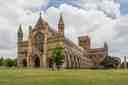
Look ahead and you’ll see a mighty stone church with a pair of pointed towers flanking a grand entrance, a giant rose window above the door, and a long nave stretching back to a tall, square, reddish tower-it’s almost impossible to miss, especially as it looms up over the enormous green lawn in front of you. Welcome to St Albans Cathedral, a place where history isn’t just behind the walls-sometimes, it feels like it’s hiding in the bricks, waiting to leap out at the unsuspecting visitor! Let’s set the scene: this cathedral, also known as "the Abbey," has a story so epic it could rival your favorite adventure movie, with a little bit of mystery, some drama, and even a sprinkle of comedy. It all starts with Alban, a kind man living here almost 1,700 years ago, when Romans ruled Britain and Christians were being hunted. One day, Alban met a desperate priest named Amphibalus, running for his life. Alban’s big heart got the better of him, and he hid the priest in his house. After a few days, Alban was so inspired by his guest’s faith that he swapped places with him when soldiers came, wearing the priest’s cloak and bravely stepping forward to be arrested. As Alban was sentenced to death and led up the hill, he grew thirsty-legend says he prayed for a drink and, right on cue, a spring bubbled up at his feet. That’s some VIP treatment from above! When he was finally executed, something truly bizarre happened: the executioner’s eyes supposedly dropped right out of his head. Not exactly a sightseeing tip I’d normally give, but there you have it. The cathedral was later built to mark the spot where Alban became Britain’s first Christian martyr. Over centuries, the Abbey grew and transformed-founded way back in the 8th century, rebuilt by Normans in the 11th (they liked their buildings as sturdy as their armor), and touched up by pretty much every generation since. Look up at that massive nave-you’re looking down the longest in England, stretching a whopping 85 meters. If you’re feeling brave, try to picture medieval monks bustling around, their footsteps echoing under these arches, chanting prayers, and occasionally ducking as bits of poorly-repaired roof tumbled down! Much of this stone actually came from the ruins of Roman Verulamium next door-so you’re not just seeing Norman craftsmanship, you’re staring at recycled Roman bricks, once part of a bustling ancient city. The old monks must have been the world’s original upcyclers. The Abbey itself was the biggest church in England when it was first built, complete with its great tower-still standing today, by the way, and weighing a hefty 5,000 tons. The tower once rang with the sound of five bells, some donated by locals, and now you’ll find 23 bells that ring out over St Albans, including one from the 13th century that still peals as the sanctus bell. But life here wasn’t always peaceful. The Abbey was raided by Vikings, partially rebuilt, shaken by earthquakes, and even used to hold prisoners of war during the English Civil War (let’s just say there were more than a few rowdy nights). Trouble continued long after-the roof leaked, walls cracked and windows rattled every time a storm rolled through. At one point, the Abbey nearly became rubble, when someone floated the idea of simply knocking it all down and building a smaller, cheaper church. Luckily for us-and you-they stuck it out, patching up holes, re-leading the roof, and eventually transforming the battered church into the cathedral you see today. Victorian architects left their stamp, mixing styles a bit like kids mixing paint-sometimes beautiful, sometimes a bit odd. There’s even a local saying that if you stand here long enough, you’ll hear three things: the bells ringing, the ghost of a monk still searching for his lost keys, and visitors gasping as they step inside that breath-taking nave. So as you gaze on St Albans Cathedral, remember, you’re looking at almost two millennia of stories, triumphs, disasters, and-best of all-rebirths. Now, shall we pop inside and see what secrets the next few centuries have left for us to discover? For a more comprehensive understanding of the britain's first christian martyr, modern times or the dean and chapter, engage with me in the chat section below.
Abrir página dedicada →
Mostrar 11 paradas másMostrar menos paradasexpand_moreexpand_less
To spot the site of the First Battle of St Albans, look for an area where the streets come together with a sense of open history around you - imagine yourself standing exactly…Leer másMostrar menos
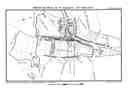
To spot the site of the First Battle of St Albans, look for an area where the streets come together with a sense of open history around you - imagine yourself standing exactly where ancient lanes and alleys would have once echoed with the chaos of battle, right in the heart of St Albans. Alright, my fellow time explorer, ready your imagination! Let’s turn back the clock to a spring morning in 1455, right here in these very streets. There’s a nervous buzz in the air, not just from the market traders and townsfolk, but from thousands of armed men bracing themselves for the thunder of one of England’s most famous street fights. This wasn’t just any old scuffle-this was the First Battle of St Albans, a clash that kicked off the bloody Wars of the Roses. Picture it: two mighty rivals circling each other like angry cats. On one side, you’ve got Richard, Duke of York-a man who’d spent years exiled in Ireland and was tired of seeing another, less successful noble, Edmund Beaufort, Duke of Somerset, fumble the kingdom’s fortunes in France. Richard returns, all swagger and purpose, and soon he’s the people’s hero and, for a brief time, the Lord Protector of England, thanks to King Henry VI’s unfortunate case of royal brain fog. But no sooner does Henry recover than York’s chance at command slips away, and Somerset is back in favour... tensions boil hotter than a cauldron in a medieval kitchen. York and his allies, the hard-nosed Neville family-think of them as the celebrity power-cousins of the age, led by the lively Earls of Salisbury and Warwick-suddenly have a problem. With politics as sharp as any sword, they fear Somerset will drag them into court at Leicester and point the guillotine their way. So here’s the plan: they’re not waiting around. They raise an army-thousands of boots hitting the dusty roads, banners fluttering in the breeze-and head south towards St Albans, ready for a showdown. Now, turn your gaze around you and imagine what happened right where you stand. Somerset’s men fan out through the narrow lanes, setting up barricades near St Peter’s Church and the Tonman Ditch, hoping to block York’s path. It’s tense. Messengers on horseback dash madly back and forth, carrying letters filled with threats and demands across the lines. Imagine the shouts, the clatter of armour, and the anxious whispers of townspeople peeking out their windows-because this wasn’t just a battle; it happened right in the middle of the town, between shops, homes, and taverns. After hours of tense negotiation, York-the pushy but popular duke-has had enough. If only peaceful talks could settle these things! Suddenly, Warwick, just twenty-six and already dreaming big, leads a group of Yorkists sneaking through tiny back lanes, splashing through gardens, surprising everyone by bursting out into the heart of the market square. Many of Somerset's men are caught off guard, some even without helmets-sleepy soldiers hoping for peace. That dream shatters fast when Warwick charges. In the blink of an eye, chaos erupts as steel clashes on cobblestone, arrows whizz overhead, and the market that usually sells bread and apples becomes a battleground. Somerset himself dashes for shelter-imagine him barreling into a tavern called the Castle Inn (yes, they literally used a pub as a fortress). Trapped and desperate, the duke fights bravely, but can’t escape the Yorkist blades waiting outside. With Somerset killed, and King Henry VI found, confused and apparently a bit battered by a stray arrow, York becomes the man in charge once more. Yet for all this drama, would you believe the whole fight lasted less than half an hour? Out of five thousand warriors, fewer than sixty perished! It was quick and brutal-history in fast-forward. King Henry VI was taken back to London, and if you listened closely that day, you might have even heard the first whispers of the Earl of Warwick’s nickname: "the kingmaker," a title he’d earn in the epic years yet to come. And here’s a funny thought-imagine the medieval paperwork after all this: the king, recaptured; a duke, defeated; and half the nobles nursing bruised egos! Shakespeare himself thought it so dramatic, he made it the grand finale of Henry VI, Part 2. So, as you stand here, feel the pulse of history where roses, both red and white, first drew blood-a place where the fate of England was decided before lunchtime. Now that’s what I call a memorable morning in St Albans! If you're curious about the background, prelude or the battle, the chat section below is the perfect place to seek clarification.
Abrir página dedicada →As you stand here on Holywell Hill, cast your eyes over the diocesan offices-the busy nerve centre of the Diocese of St Albans! Imagine the gentle hum of activity behind those…Leer másMostrar menos
As you stand here on Holywell Hill, cast your eyes over the diocesan offices-the busy nerve centre of the Diocese of St Albans! Imagine the gentle hum of activity behind those doors as centuries of English church history swirl around you. You’re standing at the administrative heart of a community that stretches across rolling Hertfordshire fields, lively towns in Bedfordshire, and even the suburbs at London’s edge. That’s over 1.6 million people, from the whispers of rural hamlets to the chatter of bustling cities like Luton and Bedford. But let’s rewind the clock. Picture yourself in the late 1870s, when men wore top hats and the most scandalous thing you could do was eat cheese in church. This spot marks the creation site of the Diocese of St Albans, an event triggered by a royal Order in Council. The date was 30 April 1877-the ink barely dry on the Bishopric of St Albans Act 1875. Until then, the area had answered to the much bigger, much older Diocese of Rochester-think of it like moving out from your parents’ house to a lively new home of your own. The first Bishop on the scene was Thomas Legh Claughton. He kicked things off in fine Victorian style, likely ignoring calls to join the new telephone craze. His original task? Overseeing more than 600 parishes-an absolutely whopping number-and forming a bridge between the history-rich churches of Essex and Hertfordshire. Imagine what it was like for Bishop Claughton to steer this new diocese; it’s the spiritual equivalent of juggling flaming torches, while riding a unicycle, being watched by a very stern Queen Victoria. St Albans Cathedral, just down the road, became his headquarters. Its ancient stone walls had seen it all: monks humming Gregorian chants, Henry VIII’s men shutting down abbeys, local folks clubbing together to buy the place as a parish church in 1553, and finally, its grand transformation into a cathedral in 1877. You could say the bishop’s seat, or “cathedra,” has had a revolving door policy for over a thousand years! Now, you didn’t think dioceses just stood still and stopped changing, did you? Fast forward to 1914 and, like someone splitting a massive pudding at a very large dinner, Essex was carved off to become the new Diocese of Chelmsford. To keep things interesting, the Archdeaconry of Bedford was borrowed from Ely, making the diocese the shape it is today. It was all about fine-tuning the boundaries-let’s just say, God doesn’t love bureaucracy, but sometimes you need a good map. Supporting the Bishop of St Albans are the suffragan bishops-sort of like vice-principals, if you will. There’s the Bishop of Bedford and the Bishop of Hertford, each with their own patch and archdeacons-three in total-helping keep all those parishes running. And if you’re into titles, the Bishop of St Albans has A LOT of help: more honorary assistant bishops than you could shake a crozier at! Retired bishops like Robin Smith and Stephen Venner live nearby-think of them as seasoned coaches ever ready to blow the whistle if things get unruly. Occasionally, the church faces a bit of drama-some parishes prefer their priests without the XX chromosome, so they call on Norman Banks, the Bishop suffragan of Richborough, to lend a wise and friendly ear as the provincial episcopal visitor. Over the centuries, administrative posts have come and gone faster than you can say “Order in Council.” The Archdeaconry of Hertford was created in 1997 to keep things running smoothly. Only two people have filled the role since: Trevor Jones, who probably had the world’s neatest filing cabinet, and Janet Mackenzie, collated in 2016. So next time you spot a bishop’s purple shirt or see the doors open here, imagine the lively debates, everyday miracles, and the gentle footsteps of history echoing through these offices. Here at the Diocese of St Albans, faith really is a living, breathing thing-sometimes calm, sometimes noisy, always fascinating. For a more comprehensive understanding of the current geographical limits and structure, bishops or the archdeacon of hertford, engage with me in the chat section below.
Abrir página dedicada →Look for a grey stone church with tall, pointed windows, detailed stonework, and a turret rising above a red-roofed entrance - it's right in front of you, framed by leafy trees…Leer másMostrar menos
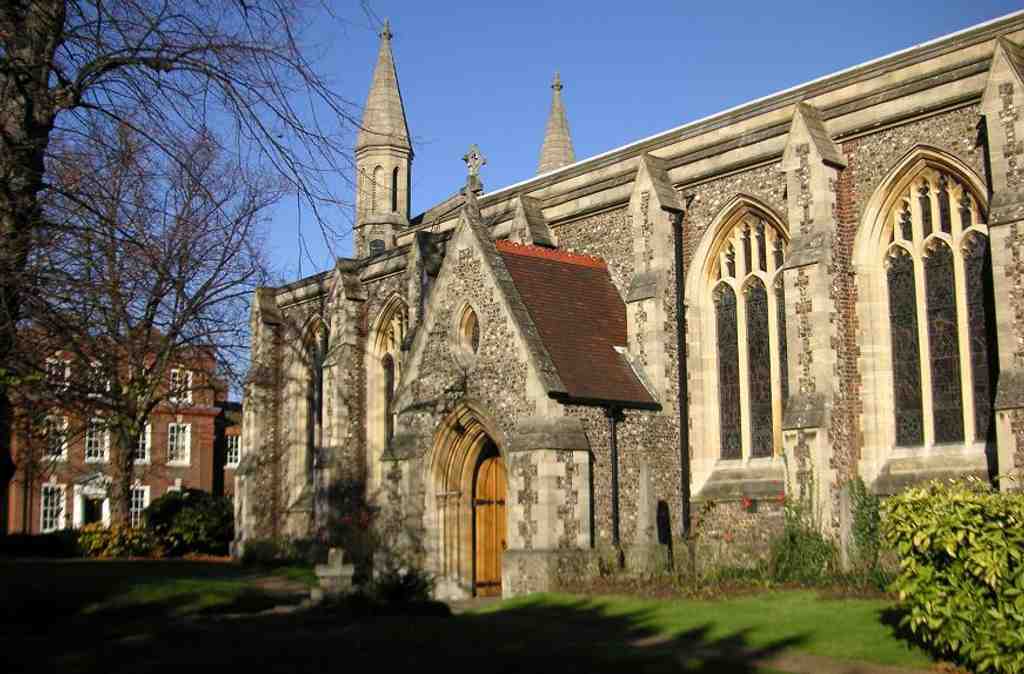
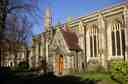
Look for a grey stone church with tall, pointed windows, detailed stonework, and a turret rising above a red-roofed entrance - it's right in front of you, framed by leafy trees and a quiet green lawn. Welcome to St Peter’s Church! As you stand here, imagine yourself back over a thousand years ago, when Abbot Ulsinus founded this place round about AD 948. No one’s sure of the exact year-record-keeping back then was mostly left to historians like Matthew Paris, who apparently never had to deal with messy handwriting! The church was one of a trio-alongside St Stephen’s and St Michael’s-planted on the main roads in to St Albans. Why? To welcome weary pilgrims and prepare them for a visit to the grand shrine of St Alban. Picture the bustling roads and the eager, nervous faces of travelers approaching from the countryside, the crunch of footsteps on the gravel. Now, the church you see was once very different. If you squint hard enough and let your imagination do the heavy lifting, you might picture a simple wooden structure here-the original Anglo-Saxon church. But, time, fires, and eager builders left little of that behind, so what you see is actually the result of centuries of rebuilding and grand ideas (with a few architectural disagreements thrown in for good measure). By the 13th century, St Peter’s had become a grand, cross-shaped church with a tower in the middle-more impressive than your average village hall, let’s be honest. Fast-forward to the 15th century, and the nave and aisle walls got a makeover, while the original doorways stayed to greet visitors, as they do today. But, oh, the drama of repairs! In 1756, the arches under the tower were made taller. Unfortunately, they should have hired a better architect, because within thirty years the tower was wobbling more than a jelly at a summer fête. Instead of fixing it properly, the parish tried propping it up with timber. Spoiler alert: that did not end well. The tower became so unsafe that by 1799 it had to be taken down, and in 1801 the belfry floor collapsed with a mighty crash. It was during Victorian times that the church got its big rescue mission. Lord Grimthorpe, who had a bit of a reputation for decisive action and very little patience, swooped in after restoring the Abbey and declared he’d fix St Peter’s too. He spent only an hour-and-a-half deciding exactly what to do-a record for any building committee, I’d think! He lengthened the chancel and nave, gave the church a stone facelift, and even added the dramatic rose window at the west end, flanked by quirky turrets. The angel corbels up in the roof? Those were left right where you see them, with a gentle nod to the church’s many lives and roofs over the centuries. There’s more modern magic too. Every Sunday, the walls echo with music from a grand three-manual organ installed in 2005-bet the original pilgrims never saw that coming! If you pop in at the right time, you might hear the traditional sung Evensong or the energy of a morning Communion. St Peter’s has witnessed more than history and hymn-singing, though. It even starred in the BBC’s EastEnders-yes, that was Ricky and Bianca’s second wedding filmed right here! And speaking of future-shaping, Anne Hollinghurst broke new ground as the first woman vicar here, before becoming one of the first female bishops in all of England. As you stand outside, think of the crowds of centuries past, arguments about repairs that nearly led to disasters, voices of famous and not-so-famous visitors, and the timeless invitation to step inside for a moment of calm or a song. And perhaps, if you listen closely, you’ll catch the lingering sound of celebration, prayer, and the laughter of history still alive within these stones. To delve deeper into the background, architecture or the present, simply drop your query in the chat section and I'll provide more information.
Abrir página dedicada →To spot St Albans Crown Court, look for a big, modern building made of brown and red brick, just across the street, with a proud Royal coat of arms displayed above a set of large…Leer másMostrar menos
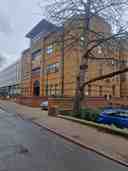
To spot St Albans Crown Court, look for a big, modern building made of brown and red brick, just across the street, with a proud Royal coat of arms displayed above a set of large windows and a central tower peeking over the roofline. Welcome to St Albans Crown Court - the beating heart of legal drama in Hertfordshire! Right now, you’re standing where high-stakes stories have played out, not just in books or movies, but in real life. Imagine the tension in the air as families wait nervously on benches, barristers stride in with their black gowns fluttering, and anxious whispers echo beneath the tall central tower. Before this court was built, all the city’s big cases squeezed into the Old Town Hall over on St Peter’s Street. By the 1990s, the city had outgrown its shoes - there were just too many mysteries and mischief-makers for the old place to handle! So, the search began for a new home of justice, and the spot chosen was once the site of a rather grand private house: No. 4 Bricket Road. If you listen closely, you might still hear the distant clink of a tea cup - this was the home of Captain Lightly Harold Birt, a real-life hero from the First World War who wore his Distinguished Service Order with pride. Imagine the stories that old house could tell, with medals glinting on the mantelpiece. But out went the old, and in came the new: in 1992, after a whopping £16.3 million makeover, up sprang this grand modern courthouse - all sharp lines, neat symmetry, and a twist of boldness with its striking brickwork and unusual windows. The architects, Macintosh Haines and Kennedy, took no chances, making sure everyone - even a lost pigeon - could spot it with those unique round and square windows and the magnificent Royal coat of arms glowing over the main entrance. Inside, there’s a warren of nine courtrooms where major drama unfolds. Over the years, some chilling tales have passed through these doors. Notorious cases - like the trial of Stephen Marshall, the “Jigsaw Killer,” in 2010, and other headline-making trials - have gripped the public’s imagination here. Each courtroom could tell you tales of heartbreak, hope, and sometimes hilarious courtroom blunders (ask any lawyer about mix-ups with wigs and you’re in for a laugh). Rest assured, every day is different in these halls! So, next time you see a legal drama on telly, remember - truth really is stranger than fiction, especially right behind these brick walls.
Abrir página dedicada →

Preguntas frecuentes
¿Cómo empiezo el tour?
Después de la compra, descarga la app AudaTours e ingresa tu código de canje. El tour estará listo para comenzar de inmediato - solo toca play y sigue la ruta guiada por GPS.
¿Necesito internet durante el tour?
¡No! Descarga el tour antes de empezar y disfrútalo completamente sin conexión. Solo la función de chat requiere internet. Recomendamos descargar en WiFi para ahorrar datos móviles.
¿Es un tour guiado en grupo?
No - esta es una audioguía autoguiada. Exploras de forma independiente a tu propio ritmo, con narración de audio reproduciéndose en tu teléfono. Sin guía, sin grupo, sin horario.
¿Cuánto dura el tour?
La mayoría de los tours toman 60–90 minutos para completar, pero tú controlas el ritmo completamente. Pausa, salta paradas o toma descansos cuando quieras.
¿Qué pasa si no puedo terminar el tour hoy?
¡No hay problema! Los tours tienen acceso de por vida. Pausa y continúa cuando quieras - mañana, la próxima semana o el próximo año. Tu progreso se guarda.
¿Qué idiomas están disponibles?
Todos los tours están disponibles en más de 50 idiomas. Selecciona tu idioma preferido al canjear tu código. Nota: el idioma no se puede cambiar después de generar el tour.
¿Dónde accedo al tour después de comprarlo?
Descarga la app gratuita AudaTours desde App Store o Google Play. Ingresa tu código de canje (enviado por email) y el tour aparecerá en tu biblioteca, listo para descargar y comenzar.
Si no disfrutas el tour, te reembolsamos tu compra. Contáctanos en [email protected]
Paga de forma segura con 


