
Audioguía de Londres: Cuentos de Fulham—Palacios, Parques y Lugareños Legendarios
Bajo el frondoso dosel de Hammersmith y Fulham, antiguos secretos laten justo debajo de las bulliciosas calles. Esto no es un paseo cualquiera: es una aventura de audio autoguiada a través de siglos de rebelión, intriga y salvaje reinvención, que revela historias que los lugareños rara vez comparten. ¿Quién encarceló a un obispo en su propio palacio durante los días más anárquicos de Inglaterra? ¿Por qué un foso silencioso sigue rondando los terrenos del Palacio de Fulham a pesar de haber desaparecido hace cien años? ¿Qué tramaban los fantasmas de los abstemios dentro de una sala de billar que ahora bulle con risas y bebidas? Sigue tus pasos desde palacios góticos hasta pubs con torretas, siguiendo los ecos de manuscritos perdidos, ruidosas discusiones callejeras y transformaciones escandalosas. Siente cómo cada adoquín tiembla mientras el drama largamente enterrado resurge a tu alrededor. Atrévete a descubrir lo que Londres esconde tras sus muros de ladrillo rojo. Desbloquea los cuentos olvidados de Fulham y adéntrate en el verdadero corazón de la ciudad: tu viaje comienza ahora.
Vista previa del tour
Sobre este tour
- scheduleDuración 40–60 minsVe a tu propio ritmo
- straighten4.9 km de ruta a pieSigue el camino guiado
- location_onUbicaciónLondres, Reino Unido
- wifi_offFunciona sin conexiónDescarga una vez, úsalo en cualquier lugar
- all_inclusiveAcceso de por vidaReprodúcelo en cualquier momento, para siempre
- location_onComienza en Palacio de Fulham
Paradas en este tour
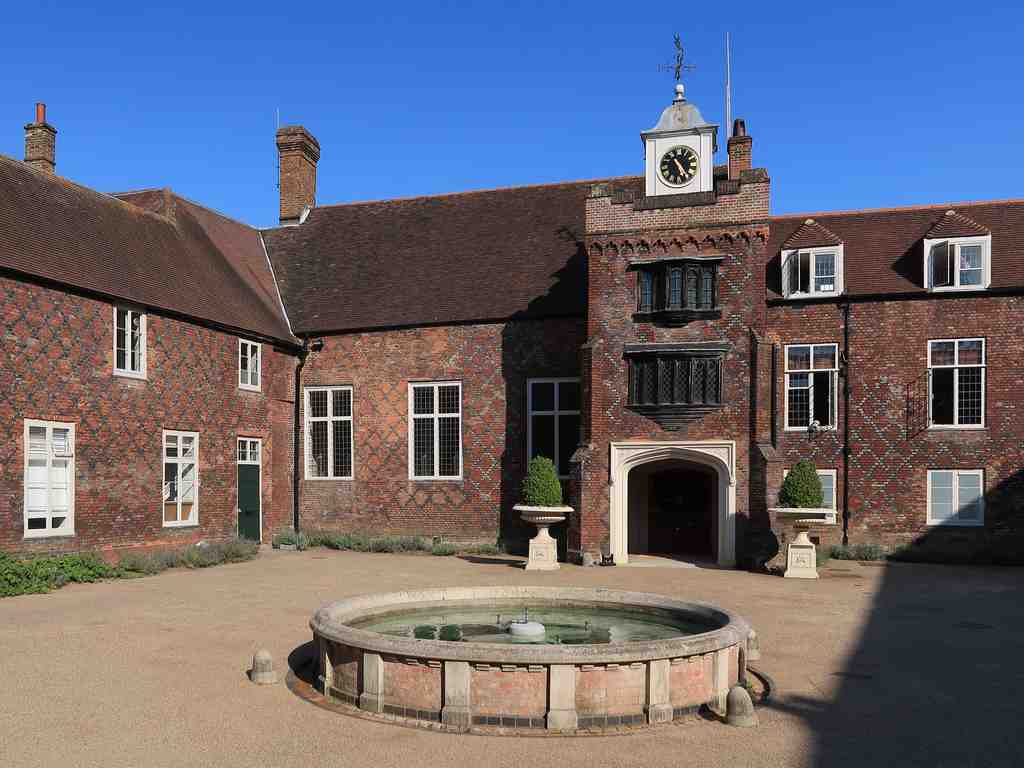
To spot Fulham Palace, look for a large, red-brick building with ornate diamond patterns pressed into the walls, a central clock tower above the main entrance, tall windows, and a…Leer másMostrar menos
To spot Fulham Palace, look for a large, red-brick building with ornate diamond patterns pressed into the walls, a central clock tower above the main entrance, tall windows, and a peaceful fountain right in front-simply follow the path until you reach the grand courtyard. Welcome, time travellers! As you stand here, take in the crisp air swirling around the old bricks of Fulham Palace. Imagine, if you will, you’re not strolling through 21st-century London but slipping back through thousands of years of history-don’t worry, there’s no need to dodge any Vikings unless you see someone with a horned helmet by the fountain. Now, let’s wind the clock back-way back. The site of Fulham Palace was no ordinary plot of land; ancient folks once camped here in prehistoric times, working flint on what was then a little eyot surrounded by the wild Thames. Fast forward a bit to the Romans, and you’d have found farmers working the land, maybe a villa standing proud by the water’s edge, with the sound of distant river traffic in the air. In AD 704, this land became truly special. Bishop Waldhere acquired the Manor of Fulham and its reach stretched far and wide-imagine ruling everything from Chiswick to Chelsea! Since the 8th century, almost every Bishop of London has called this palace home, and the epic saga really begins here. If you’re a fan of Medieval drama, picture a roaring hearth around 1080, the flicker of candlelight bouncing off stone walls, and, oh yes-a few surprise house guests. Bishop Robert de Sigello was once held captive here during “The Anarchy.” No Netflix in those days, but at least the roof was solid-thanks to a shingle board borrowed (let’s hope they used the word ‘borrowed’) from the nearby church! By the late 1400s, the palace was transformed by Bishop Thomas Kempe and Richard FitzJames, with fantastic Tudor touches still visible today. The gate you might have just walked past? Its timber dates to 1495-older than most family trees. Some bishops barely had time to admire their fresh home before moving on-much like a London flat rental these days. As you walk through the courtyards, you’re crossing layers of architectural time: the grand Tudor hall, elegant Georgian court, and hints of Gothic flair. Add in the occasional creak or groan from these ancient timbers, and you’ve got an atmosphere that would make any ghost feel right at home. Fulham Palace has survived wars, fashions, and waves of history. During World War I, the grounds grew food for the war effort while the palace itself buzzed with the activity of a military hospital. The bishops that remained after such hustle and bustle couldn’t always keep up with the bills, and the poor old palace was nearly handed over to secular hands… but in true dramatic fashion, the bishops clung on! World War II wasn’t kind either-bombs left scars, but resilience runs deep in these walls. After the Church of England finally vacated in 1973, Fulham Palace had seen better days. Luckily, a dedicated group swooped in by the 1990s to restore and protect it, bringing the palace back to life for curious explorers like you. Strolling through the gardens, you tread where exotic plants from all over the world first grew in England. The palace boasts one of London’s oldest botanic gardens-founded by Bishop Grindal in the 1500s-and introduced tamarisk, azaleas, and even the first English coffee tree! Imagine the rumble of 17th-century horticultural excitement, the snip of pruning shears, and the eager exchange of seeds between continents. In fact, a giant holm oak has stood here for 500 years. Maybe give it a pat for sticking around so long! A mysterious moat once protected the palace-nearly 1.4 km long-the greatest domestic moat in all medieval England. Though filled in during the 1920s, it’s all still there, silently circling underground. Some say it was for defense, others claim it was just handy flood protection (the Danes were clever like that). Finally, be sure to peek into the Tait Chapel, marvel at the ancient rooms restored by the Fulham Palace Trust, and enjoy stories of lost manuscripts, American grapes sent to Queen Elizabeth I, and bishops who never seemed to sit still for long. If you listen close enough, you might just hear them whispering through the halls-or giggling about you taking this tour. So, as the sun glints off these old bricks, and the fountain splashes gently at your feet, know you’re standing on ground shaped by centuries of secrets, power, and the odd well-timed joke. Now, onwards: adventure awaits at the next stop! Yearning to grasp further insights on the fulham palace today, the palace moat or the the palace garden? Dive into the chat section below and ask away.
Abrir página dedicada →Look for a red-brick building with a pointy turret rising in the middle-almost like a fairy-tale castle wedged between modern neighbors-right on Fulham High Street in front of…Leer másMostrar menos
Look for a red-brick building with a pointy turret rising in the middle-almost like a fairy-tale castle wedged between modern neighbors-right on Fulham High Street in front of you. Now, step closer and take a deep breath-you’re not just seeing a pub, you’re unearthing over a century of Fulham’s lively secrets! The King’s Head, built in 1906, flashes its Scottish Baronial charm for all to admire, complete with detailed stonework and a turret that looks ready for a watchful guard (or maybe just a tipsy storyteller). Once, this spot was owned by Criswick & Feaviour-you can almost imagine them clinking glasses, arguing over ales and adding up coin around 1919, when the street bustled with the clatter of horses and carts. But this isn’t your average, sleepy old pub. Over the decades, the King’s Head has shapeshifted more than a magician at a children’s party-turning American as “Low Country,” going South African as Joe Cool’s and Zulu’s, thumping out live music as The King’s Head, and recently dazzling with cocktails as The Courtyard. The local’s secret? The magical garden out back, transformed like clockwork every six months. Imagine the laughter floating on summer air, the clink of glasses toasting six Time Out awards, or the bass thrum when this sun-kissed spot turns into a nightclub after dark. Every brick here still hums with nights of music, dazzling lights, and stories-so go ahead, take a look, and maybe imagine yourself dancing along with Fulham’s ever-changing crowd!
Abrir página dedicada →To spot the Temperance Billiard Hall, just look ahead for the grand corner building with a striking green dome on top and “THE TEMPERANCE” written above its doors-it’s hard to…Leer másMostrar menos
To spot the Temperance Billiard Hall, just look ahead for the grand corner building with a striking green dome on top and “THE TEMPERANCE” written above its doors-it’s hard to miss as it proudly stands out on Fulham High Street. Now, take a deep breath and imagine you’re standing outside this beautiful building in 1910. The air is filled with excitement and a bit of suspense, because here, in a time when most halls rang with the clink of beer glasses, people filed in to play billiards-and drink lemonade! This place was built for the Temperance Billiard Halls Ltd, a company on a mission to save the people of Fulham from the “evils” of alcohol. The architect, Norman Evans, designed it to catch every eye-and maybe distract you from the pub next door! Picture the gentle click of balls on polished tables, and the faint smell of fresh wood polish. Over the years, it changed names and owners-from the wild Pharaoh and Firkin days to the lively O’Neill’s bar. Today, it's a pub again (oh, the irony!). But if you listen closely, you might just hear the ghostly debate of teetotalers versus tipplers echoing under that wonderful green dome. Now, who do you think is winning today?
Abrir página dedicada →

Mostrar 12 paradas másMostrar menos paradasexpand_moreexpand_less
To spot the Golden Lion, look for a sturdy brick building with three floors, black signage featuring a golden lion, and a row of colorful hanging flower baskets right on Fulham…Leer másMostrar menos
To spot the Golden Lion, look for a sturdy brick building with three floors, black signage featuring a golden lion, and a row of colorful hanging flower baskets right on Fulham High Street - you really can’t miss that proud lion staring you down! Now, let me spin you a tale that stretches all the way back to 1455, when the original Golden Lion was built - yes, long before Spotify, Netflix, or even the teabag. Imagine this street in the twilight gloom, the soft flicker of torches bobbing up and down, and suddenly, out of the mist, emerges the ancient Golden Lion pub, its windows glowing with candlelight. This wasn’t just any old watering hole; back in Tudor times, the Golden Lion was probably the grandest building on the street and maybe even played host to a bishop or two! According to local legend and a fellow named Faulkner, the original mansion was fit for royalty - or at least for Bishop Bonner, notorious in his day and said to have called the mansion home. Fancy a mansion-turned-inn where bishops and playwrights might brush shoulders? That’s the Golden Lion. James Dugham even called it a “princely residence,” not the sort of place you’d expect spilled ale on the floor or a rowdy group of locals singing sea shanties (though I bet there was plenty of that too). It was inside these walls, centuries ago, that William Shakespeare himself might have raised a cup with his old playwriting pal Fletcher, swapping lines and maybe even a few jokes. Imagine, the Bard of Avon, perhaps with ink on his fingers and a twinkle in his eye, whispering new inspiration to Fletcher over a pie and pint. The Golden Lion has long drawn curious souls - playwrights scheming, bishops frowning, and later, an entire meeting called the Bachelors Club (though you’d be forgiven for thinking it sounded more like a secret society for men who can’t fold laundry). The history does twist and turn: in April 1836, the original building was pulled down, but the spirit of the Lion refused to leave. A grand Victorian owner had it rebuilt, adding those now-familiar brick and black features you see today. For a while, the chimneys were inscribed and the magazine Gentlemen’s Magazine even featured the Golden Lion’s picture, proof that folks just couldn’t stop talking about the place. Deep beneath its floorboards, there was once a dark vaulted cellar, rumored as “Bishop Bonner’s Dungeon.” Picture a creaky trap door swinging open, a shaft of dusty light, and winding stone stairs into a chilling, brick-lined vault: the atmosphere thick with stories, secrets, and maybe a forgotten bottle or two. That’s enough to make anyone walk a little faster at night! And if you thought the story ended in the old days, you’d be wrong. In the 1970s, guitars and thunderous drumbeats replaced the whispers of playwrights as the Golden Lion transformed into a hub for rock musicians - including, believe it or not, members of Led Zeppelin who’d gather for a drink after recording at the nearby Manticore studios. The Lion would roar with music, laughter, and the clink of pint glasses long into the night. So as you pause here and look up at the sign, let the weight of centuries settle around you. Imagine this spot as it’s been: from grand mansion, to bishop’s home, to rambunctious playwright’s haunt, to a rock and roll sanctuary. You’re standing in a living, breathing piece of London history - and if the walls could talk, oh, the tall tales you’d hear. Be sure to wink at the lion sign on your way past - Shakespeare might have done the very same.
Abrir página dedicada →To spot Fulham Pottery, just look ahead for a big, round, bottle-shaped brick kiln with a wide base, black stripes, and a large sign overhead reading “The Fulham Pottery”-it’s…Leer másMostrar menos
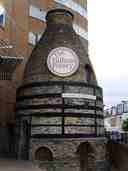
To spot Fulham Pottery, just look ahead for a big, round, bottle-shaped brick kiln with a wide base, black stripes, and a large sign overhead reading “The Fulham Pottery”-it’s tucked right up against the modern building, so you can’t miss its old-fashioned, squat silhouette. Step closer and imagine yourself three centuries back, standing in the bustling heart of the pottery yard. This place was once filled with the clatter of tools and the scent of wet clay. The year is 1672, and you’d be dodging workers carrying lumpen balls of clay while John Dwight himself hurries past, his Oxford education tucked beneath a streaky apron. There’s an air of excitement-after all, he’s just set up England’s most ambitious pottery workshop at the junction of New King’s Road and Burlington Road, just a stone’s throw from the river and not far from Putney Bridge. Now, here’s a twist: Dwight wasn’t your average mud-slinger. He once worked with the famous scientist Robert Boyle and loved experimenting. His goal? Elevating English pottery to something that could rival Germany and even China! Dwight’s kilns here roared day and night as he tried to perfect the mysterious art of porcelain-a mission so complex that he kept careful, coded records, as if he were working with secret formulas. Imagine the crackle and roar as he lifted another test piece, wondering if he’d finally created something worthy of a king. Long before Spode and Wedgwood, Dwight was sneaking little trial pots into the flames, working by candlelight. Here, brown and white salt-glazed stonewares piled up, with rough, German-inspired jugs beside smooth, Chinese-inspired vases. But pottery’s not all work and no play. Dwight was quite a sentimental chap at heart. Picture a family scene: he calls in a sculptor to create life-sized busts of his wife or tiny, hand-modeled statues of gods. The Victoria and Albert Museum even has a somber memorial statue of his daughter Lydia, made after she died tragically young. You can almost feel the hush and reverence as he places her likeness-full of love and sadness-into the flames to fire. After Dwight’s death in 1703, things got a bit more down-to-earth. His family kept the fires going, but suddenly Fulham Pottery was all about bottles, mugs, and jugs-the sort of sturdy fare you’d find in a noisy tavern. The walls echoed with laughter and the thud of tankards, and popular designs included hunting scenes and cheeky mugs decorated with scenes from William Hogarth’s “Midnight Modern Conversation”-sort of like the eighteenth-century version of a pub cartoon, really. Competition heated up, too! The Dutch Elers brothers set up just down the street, quickly giving Dwight a run for his money before heading off to revolutionize Staffordshire pottery. In the 1800s a young John Doulton, destined to become a pottery mogul, finished his apprenticeship here, learning how to throw enormous pots (and, I imagine, probably smashing a few in the process-oops). By the Victorian era, the old pottery was crumbling. Then along came C.J.C. Bailey, like the pottery world’s own superhero, swooping in to revive it with fresh ideas and swanky architectural ceramics. But the most impressive survivor is this gigantic bottle kiln-now Grade II listed and as stubborn as stone. From the flicker of candlelight and the clang of clay, Fulham Pottery pressed on, creating salt-glazed masterpieces until the 1950s. Even after the ovens fell quiet, artists kept sneaking in to fire new creations. You might’ve caught a whiff of excitement in the 1980s, with modern artists like Quentin Bell popping in to try their luck in the ancient kiln. If these oven-bricks could talk, they’d have thousands of stories-of vision, rivalry, heartbreak, and resilience-baked deep into their walls. So, as you stand beside this mighty bottle kiln, remember: you’re not just looking at a big old chimney. You’re standing where centuries of craftspeople dreamed, toiled, laughed, and sometimes wept, all in pursuit of turning simple clay into something magical. And hey, for all we know, one of those ancient experimental mugs might just be sitting in a London museum right now, with a bit of Dwight’s spirit still inside!
Abrir página dedicada →Look to your left and you’ll spot a row of honey-coloured stone cottages with charming pointed arches and detailed carvings just above the doorways-almost like something from a…Leer másMostrar menos
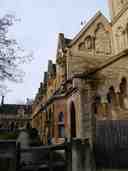
Look to your left and you’ll spot a row of honey-coloured stone cottages with charming pointed arches and detailed carvings just above the doorways-almost like something from a fairy tale book. Now, imagine you’re back in 1869-there are no planes overhead, but perhaps you hear the gentle clatter of a horse-drawn cart or the murmur of church bells from nearby All Saints. Before you stands Sir William Powell’s Almshouses, built with the noble aim of giving older women a safe, snug place to live long before “retirement communities” were all the rage. There are twelve cosy flats in total, and if these walls could talk, I bet they’d have some cracking tales! Built by the good Sir William, their unmistakable pointed roofs and patterned stonework shielded generations from London’s tempests. And here’s the twist-centuries later, they’re managed by the Sir Oswald Stoll Foundation, still embracing those in need. The real magic? If you stick your nose near a window (don’t actually do it, you might get some odd looks!), you might catch the scent of someone's tea brewing or a faint chuckle drifting out-a reminder that behind these historic doors, life is still bubbling along just as warmly as it did over 150 years ago. This place isn’t just stone and mortar-it’s a legacy of care. Let’s hope one day, “almshouse chic” makes it big on Pinterest!
Abrir página dedicada →To spot All Saints Church, just look ahead for a grand old stone building with a square tower flying the St George’s flag, topped with a clock face, and lined with intricate…Leer másMostrar menos
To spot All Saints Church, just look ahead for a grand old stone building with a square tower flying the St George’s flag, topped with a clock face, and lined with intricate windows above a peaceful churchyard. Welcome to All Saints’ Church, Fulham-the heart of centuries of stories, secrets, and some fairly important burials. Imagine you’re standing here nearly a thousand years ago. Before all these houses, before the hum of the buses, this land was part of Fulham Manor, and the church you see was where the local lords-none other than the Bishops of London-prayed, pondered, and eventually, rested for eternity. Even now, you’re walking in the footsteps of bishops, adventurers, abolitionists, and the odd royal doctor. Let’s transport you back to 1154, the year of our first written record-though legend says worship was happening here much earlier. Picture weathered farmers and bustling townsfolk coming to church in the shadow of Fulham Palace, which stood just next door and served as the bishops’ home. The stone tower in front of you, with its clock slowly ticking away the years, began its rise in 1440. Everything else? Well, that’s the result of some fancy Victorian renovations in the 1880s. Sir Arthur Blomfield led the charge, crafting those Perpendicular windows and laying every squared stone. But old Fulham didn’t forget its past. Walk quietly and you’ll see memorials from the earlier church inside, alongside a plaque to the men of the 25th Cyclist Battalion who drilled at Fulham House. The churchyard, green and dappled with sunlight, is an open book of people who shaped Britain’s story-a map-maker here, a physician to King Henry VIII there, even the abolitionist Granville Sharp, whose tomb is Grade II listed. Oh, and a few bishops, too-eleven, in fact, with names like Humphrey Henchman, Edmund Gibson, and John Randolph, each with a story of faith and a lifetime of secrets lying just beneath your feet. Now, for some riverside trivia-this church is one half of Britain’s most unique bridge. Putney Bridge, stretching nearby, is the only bridge in the country with a church at both ends. Across the Thames stands St. Mary’s, so you could literally cross from church to church if your Sunday schedule is packed! And if you feel a shiver up your spine, maybe it’s not just the history; All Saints played a starring role in the creepy film “The Omen.” In one unforgettable scene, a priest is zapped by lightning and-spoiler alert-meets a rather sharp ending atop the tower. Luckily, there’s only drama of the musical kind during modern times: in 2017, the Christmas Day service here was broadcast to homes across Britain. As you stand next to the ancient stones and under the wide sky, maybe you’ll hear the echoes of Fulham’s bishops, the laughter of Victorian children, or the rumbling wheels of First World War cyclists-and remember, if walls could talk, these would probably demand a microphone.
Abrir página dedicada →Look for a large, pale-yellow house with perfectly straight black-trimmed windows and a striking ironwork entrance gate framed by tall brick pillars-it should be right ahead of…Leer másMostrar menos
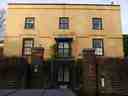
Look for a large, pale-yellow house with perfectly straight black-trimmed windows and a striking ironwork entrance gate framed by tall brick pillars-it should be right ahead of you. Welcome to The Vineyard, a grand house with stories as lush as its legendary garden. Imagine you’re stepping back in time to the early 1600s: artisans shaping the sturdy walls, and carriages rumbling along Hurlingham Road. Later, the house grew even grander with 18th-century flair and a garden so massive, it’s the envy of the borough-seriously, it’s probably bigger than your local park! Fast forward to 1918, when the mighty Lord Beaverbrook swept in and made The Vineyard his palace. You can almost hear the echo of laughter and debate, as Winston Churchill-yes, the Winston Churchill-was a regular visitor. Imagine Churchill and Beaverbrook wandering through the vast gardens, plotting history while maybe getting just a little lost among the greenery. For 70 years, the Beaverbrook family called this place home, shrouding it in an air of importance and just a pinch of mystery. If these walls could talk, they’d likely boast about secret conversations and dramatic wartime decisions-maybe even complain about the drafty windows! As you stand here now, picture the grand parties, the whispered secrets, and the timeless allure of a house that’s seen centuries unfold.
Abrir página dedicada →To spot Broom Villa, look for a stately, creamy-yellow house with bare vines sweeping across its flat front, white-trimmed windows, and an inviting little portico at the…Leer másMostrar menos
To spot Broom Villa, look for a stately, creamy-yellow house with bare vines sweeping across its flat front, white-trimmed windows, and an inviting little portico at the center-right across from you on Broomhouse Road. Imagine standing here in the early 1800s, when this beautiful villa was newly built-before cars lined up outside, when perhaps a fancy carriage with big wheels would have rolled by instead! The house, now Grade II listed for its special charm, has seen generations come and go behind those stone walls. Picture the old wooden doors swinging open as ladies in rustling dresses and gentlemen with tall hats hosted grand afternoon teas in the drawing room, the scent of garden flowers sneaking in on the breeze. Maybe the old vines covering the front, now tangled and bare, once hummed with life-secretly listening to whispered gossip and clinking cups, or offering shade to a mischievous cat on patrol. In its long history, Broom Villa has watched Fulham transform from quiet countryside to busy London borough. So next time you walk by, imagine the echoes of laughter and secrets that linger in the air, and keep your eyes peeled-someone might be peeking out from behind the shutters, curious about today’s visitors. And if you ask me, even the bricks here have a few tales up their sleeves!
Abrir página dedicada →To spot the Castle Club, look for a striking red-brick building with spiky rooftop battlements and tall chimneys, rising just behind the brick wall to your left. Now, imagine the…Leer másMostrar menos
To spot the Castle Club, look for a striking red-brick building with spiky rooftop battlements and tall chimneys, rising just behind the brick wall to your left. Now, imagine the year is 1855, and right here stands a brand-new, almost castle-like school, its red bricks glowing in the sunshine and those tall, Gothic-style turrets practically begging for a few bats to flutter around them at dusk. This was no ordinary school: it was the Elizabethan Ragged School, paid for by Laurence Sulivan, whose grandfather once ran the powerful East India Company. He named it for his beloved wife Elizabeth-who, just so you can drop it into conversation later, happened to be the younger sister of the Prime Minister! Picture ragged-clothed kids shuffling in, their eyes wide with awe at the grand architecture-probably worried they'd have to joust at recess. Fast forward: the old classrooms once echoed with children's songs, but soon they were used for caring for sick children, those struggling with tuberculosis. You can almost hear the faint coughs and whispers of hope. Later on, the air was filled with the excited chatter of teenagers as it became the Eight Feathers youth club-a place of safety, games, and a little teenage mischief, I reckon. The Castle Club has worn many hats, but standing here, it still looks ready for a tale or two. If only these walls could talk… or maybe, after sunset, they do!
Abrir página dedicada →



Preguntas frecuentes
¿Cómo empiezo el tour?
Después de la compra, descarga la app AudaTours e ingresa tu código de canje. El tour estará listo para comenzar de inmediato - solo toca play y sigue la ruta guiada por GPS.
¿Necesito internet durante el tour?
¡No! Descarga el tour antes de empezar y disfrútalo completamente sin conexión. Solo la función de chat requiere internet. Recomendamos descargar en WiFi para ahorrar datos móviles.
¿Es un tour guiado en grupo?
No - esta es una audioguía autoguiada. Exploras de forma independiente a tu propio ritmo, con narración de audio reproduciéndose en tu teléfono. Sin guía, sin grupo, sin horario.
¿Cuánto dura el tour?
La mayoría de los tours toman 60–90 minutos para completar, pero tú controlas el ritmo completamente. Pausa, salta paradas o toma descansos cuando quieras.
¿Qué pasa si no puedo terminar el tour hoy?
¡No hay problema! Los tours tienen acceso de por vida. Pausa y continúa cuando quieras - mañana, la próxima semana o el próximo año. Tu progreso se guarda.
¿Qué idiomas están disponibles?
Todos los tours están disponibles en más de 50 idiomas. Selecciona tu idioma preferido al canjear tu código. Nota: el idioma no se puede cambiar después de generar el tour.
¿Dónde accedo al tour después de comprarlo?
Descarga la app gratuita AudaTours desde App Store o Google Play. Ingresa tu código de canje (enviado por email) y el tour aparecerá en tu biblioteca, listo para descargar y comenzar.
Si no disfrutas el tour, te reembolsamos tu compra. Contáctanos en [email protected]
Paga de forma segura con 


