Audioguía de High Wycombe: Maravillas, Tradiciones y Joyas Ocultas
Bajo las frondosas calles de High Wycombe, juegos de poder y secretos susurrados se extienden desde elegantes teatros hasta las sombras de antiguos barrios. Cada rincón ha presenciado más de lo que aparenta. Realice esta audioguía autoguiada por el corazón de Wycombe, descubriendo drama y misterio donde la mayoría de los visitantes simplemente pasan de largo. Explore las historias reales tejidas en los lugares cotidianos. ¿Estalló un escándalo político detrás de las puertas del Wycombe Swan? ¿Qué pistas ocultaron los pasillos del Hospital de Wycombe durante sus horas más turbulentas? ¿Quién dejó extrañas tallas escondidas en el Museo de Wycombe, y por qué sus orígenes han desconcertado a los lugareños durante generaciones? Recorra siglos con cada paso mientras los callejones se transforman en escenarios de intriga y los edificios susurran lo que las guías nunca imprimen. Vea calles ordinarias convertidas en extraordinarias, obteniendo una nueva perspectiva de los relatos tácitos de Wycombe. Desbloquee las profundidades ocultas bajo fachadas familiares. Su viaje al lado secreto de High Wycombe comienza ahora.
Vista previa del tour
Sobre este tour
- scheduleDuración 40–60 minsVe a tu propio ritmo
- straighten4.4 km de ruta a pieSigue el camino guiado
- location_onUbicaciónHigh Wycombe, Reino Unido
- wifi_offFunciona sin conexiónDescarga una vez, úsalo en cualquier lugar
- all_inclusiveAcceso de por vidaReprodúcelo en cualquier momento, para siempre
- location_onComienza en Museo de Wycombe
Paradas en este tour
To spot Wycombe Museum, look through the leafy trees for an old, stone-and-brick house with big white windows, nestled beside a path and surrounded by gardens-there's even a big…Leer másMostrar menos
To spot Wycombe Museum, look through the leafy trees for an old, stone-and-brick house with big white windows, nestled beside a path and surrounded by gardens-there's even a big green ball sculpture out front to help guide you! Alright, welcome to your first stop-Wycombe Museum! Now, if you listen closely, you might just hear the mysterious creak of the old wooden gate as the wind drifts through the Victorian gardens around you. Imagine this: you’re standing in front of Castle Hill House, an 18th-century mansion with walls that have seen centuries of laughter, hard work, and the odd bit of scandalous town gossip. Inside, the air still carries the buttery scent of polished wood from the days when High Wycombe was the absolute king of chair-making. That’s right-the city practically sat the nation down, thanks to its legendary Windsor chairs! But don’t be fooled by the quiet-these walls are full of secrets. Wander inside and you’ll find rows of beautiful furniture, delicate lace, and curious old tools, each telling the story of Wycombe’s bustling industry. Try imagining the hustle and bustle-woodworkers hammering away, the rhythmic tap of tools as craftsmen shape a leg or backrest, and maybe even a stray chair rolling down the path in a hurry. It’s not just furniture and art; there are tokens, coins, and even old sale catalogues tucked away in the archives, waiting for a curious mind. Fancy yourself a detective? The museum is home to photographs and account books packed with clues about the people who built the town’s history-imagine flipping back in time with every page. And while there was once a room dedicated to Wycombe Wanderers football club and its legendary Comanche mascot, you’ll have to settle for tales of glory in the town’s local pubs now. Even TV fame found its way here-Gavin & Stacey gave the museum a little mention thanks to James Corden, who grew up nearby. So, take a moment to breathe in the history, and let your imagination run wild: whose hands once shaped these chairs? Whose dreams are tucked between these old bricks? Ready for the next adventure? Let’s wander on!
Abrir página dedicada →Right in front of you, you’ll spot a striking red-brick building with a clock tower-just glance to your left, just before the impressive stone railway arch, and you can’t miss…Leer másMostrar menos
Right in front of you, you’ll spot a striking red-brick building with a clock tower-just glance to your left, just before the impressive stone railway arch, and you can’t miss it! Now, let’s rewind the clock-pun absolutely intended-to 1946. Imagine you’re standing here, the air buzzes with excitement and war-weary locals begin to queue, eager for a night of laughter and drama. The Wycombe Repertory Theatre is preparing for its grand opening! The doors swing open with a creak and folks pour in, ready to swap the gloom of the past years for a bit of magic and stage lights. Inside, the theatre was cozy-around 300 seats, every one of them soon filled with people hungry for entertainment after the war. The very first play, “George and Margaret,” draws applause and the odd giggle from the crowd. Four men ran the show, all fresh out of the Royal Electrical and Mechanical Engineers. Imagine them: Ian Dobbie in the director’s chair, Nick Simms wrangling the lights, Jack Stone backstage whispering cues, and Edward Shoesmith making sure the interval refreshments were up to scratch. I bet those four shared more than a few backstage jokes! But the theatre’s story has as many twists as any play. Midway through its life, the building was renamed-a couple of times, in fact! First, it became the Tower Theatre in 1952, then, after another bout of drama, it reinvented itself once more as the Intimate Theatre in 1955. Desperate times called for creative thinking; there were pleas for bigger crowds, new owners taking over, and creative fundraising, from membership bars to Supporters’ Club dances. You can almost hear the echo of lively music drifting out on a Friday night. In the end, despite all the effort, the curtain came down in 1958 after nearly 400 shows. But as you stand here, you can almost imagine the ghosts of those actors, still hoping for one last round of applause. That’s showbiz for you-a stage full of dreams, with just a hint of mystery behind every door. Shall we move on to our next adventure?
Abrir página dedicada →To spot the Royal Military College, High Wycombe, look for a classic red-brick building with tall white pillars, and keep your eyes peeled for a striking red lion perched above…Leer másMostrar menos
To spot the Royal Military College, High Wycombe, look for a classic red-brick building with tall white pillars, and keep your eyes peeled for a striking red lion perched above the entrance-like it’s guarding the whole street! Now, let’s step back to the late 1700s-imagine you’re standing here, but instead of bakeries and bunting, you hear the sharp click of boots on cobblestones and voices practicing French phrases. Welcome to 1799, when Colonel John Le Marchant thought, “Why not turn an ordinary inn-the Antelope Inn right here-into the starting line for future British Army officers?” Inside, young men sweated over trigonometry and geometry, preparing for staff duties and siege warfare-believe me, it was more algebra than action movies! The inn soon burst at the seams with eager cadets and the energy of ambition. But this grand old building was like a too-tight pair of boots for growing feet, so, with a mix of relief and nostalgia, the college packed up in 1813 and moved to Farnham, continuing its journey to even more famous addresses like Sandhurst and Camberley. Picture smoky candlelight, whispered plans for daring campaigns, and the hope that someday, these students-who maybe just wanted a hot meal and a nap-would keep Britain safe. Standing here, you can almost feel the echoes of all those future officers, learning to conquer the world, one geometry problem at a time!
Abrir página dedicada →
Mostrar 9 paradas másMostrar menos paradasexpand_moreexpand_less
To spot the High Wycombe Guildhall, look ahead for a grand red-brick building with tall white arches at the ground level, five large bays, and a small white cupola topped with a…Leer másMostrar menos
To spot the High Wycombe Guildhall, look ahead for a grand red-brick building with tall white arches at the ground level, five large bays, and a small white cupola topped with a weather vane on the roof-right at the heart of the High Street. Now, step a little closer and imagine yourself transported back to the bustling 1750s. The air smells faintly of horses and old wood. You stand before this splendid neo-classical building, the proud creation of Henry Keene, paid for by the generous (and probably slightly self-important) Earl of Shelburne. If you listen closely, you might just hear the distant echo of horse-drawn carriages rumbling on the cobbled street. Long before this beauty stood here, there was a medieval guildhall, then a more “modern” version from 1604. Sadly, the previous guildhall was claimed by fire in the mid-1700s, so the Earl felt it was time for a stylish upgrade. And stylish it is! Look up to see those five elegant arches, the rows of windows, and the mischievous cupola atop with its weather vane spinning in the Buckinghamshire breeze. That weather vane, by the way, has surely seen its share of drama. Inside, back in the day, the principal council chamber could squeeze in a hundred councillors. Imagine heated debates echoing off painted plaster, polished boots shuffling, and-ah, yes-the time in 1830 when a debate about the Swing Riots got so out of hand, the councillors themselves broke out into a brawl! Nothing like a punch-up to spice up local government. As you gaze up, spot the stone plaque commemorating Sir George Henry Dashwood’s 1859 renovations-another local VIP keen on leaving his mark. By 1876, the walls in the council chamber welcomed a royal presence-a portrait of the Prince of Wales, a generous gift from Lord Carrington. I doubt the Prince ever sat in on those wild council meetings. Yet, perhaps the quirkiest tradition happens right here every year-the mayor is weighed in public to check if they’ve been indulging themselves a little too much at the town’s expense. Imagine the suspense as the crowd watches-will the mayor pass the test, or will their love of pudding be revealed to all? These walls have seen centuries of decisions, debates, and a little bit of delicious local silliness. Ready for the next tale on our journey?
Abrir página dedicada →To spot the Wycombe Swan, just look for the big, modern red-brick building with a curved frontage and large glass windows, with “WYCOMBE SWAN” written above the entrance-it’s…Leer másMostrar menos
To spot the Wycombe Swan, just look for the big, modern red-brick building with a curved frontage and large glass windows, with “WYCOMBE SWAN” written above the entrance-it’s right in front of you! Welcome to the Wycombe Swan! Imagine standing here on a chilly November evening back in 1992. There’s a buzz in the air as folks clutch their tickets, scarves fluttering, waiting for the grand opening. It was built by Wycombe District Council, and since then, it’s thrown open its shiny glass doors to everyone who craves a little sparkle and stage magic. This isn’t just any theatre-over a thousand people can squeeze in, ready to laugh, gasp, or maybe cry (just a little) at whatever’s happening onstage. In 2010, hammers, drills, and probably a few groans from tired builders echoed through these halls as the whole place got a smart new makeover. But that’s not all. Tucked inside this giant brick swan’s nest is the buzzing Wycombe Swan Youth Project, where kids and teens swap their school shoes for dancing feet and let loose their inner divas and directors. Every year, a new show brings a fresh storm of nerves, excitement, and thunderous applause. So next time you hear music and laughter drifting out these doors, remember: the show here is always about community and a little touch of theatre magic.
Abrir página dedicada →Look for a set of large, ornate iron gates that spell out “LOAKES PARK” at the top, just ahead of you, with green sheds and a grassy field visible beyond. Alright, time to lace…Leer másMostrar menos
Look for a set of large, ornate iron gates that spell out “LOAKES PARK” at the top, just ahead of you, with green sheds and a grassy field visible beyond. Alright, time to lace up your imaginary boots, because you’re now standing at the historic gates of Loakes Park, the beating heart of football in High Wycombe for nearly a century. Close your eyes and picture this place way back in 1895-it’s a bright Saturday, the air is filled with the excited chatter of fans gathering for the first ever match here. Why did Wycombe Wanderers end up here? Well, their old pitch, Spring Meadow, was sold out from under their boots, so they turned to Lord Carrington for a patch of green. Permission was granted, boots laced, and Wycombe Wanderers were off on a new adventure. Now, Loakes Park might have looked peaceful from the outside, but inside, it was famous for something rather cheeky-an eleven-foot slope from one end of the field to the other! You can just imagine defenders clinging on for dear life so they didn’t accidentally roll to the bottom. Picture strikers praying for a downhill run and goalies at the top, peering nervously down as if guarding the gates of Mordor. The main stand, holding about a thousand hardy souls, must have creaked and groaned with anticipation, while opposite, in the affectionately named “Cowshed” (which, you can guess, smelt like a farm on particularly wild days), fans shuffled and stamped on shallow terraces. Open terraces at each end gave the fiercest fans a perfect view-provided you didn’t mind a bit of fresh English drizzle. But here’s where the drama kicks in. In February 1950, this little patch of turf hosted the biggest crowd Wycombe has ever seen-over 15,800 fans squeezed together, barely enough room to raise a pie! It was the FA Amateur Cup, and Wycombe won 4-1. The roar from those homemade terraces? Utterly deafening. Fast-forward to January 1975 and Wycombe, nobodies in football’s mighty pyramid, face off against Middlesbrough-giants of the old First Division. No one gave the Wanderers a hope. But, in front of 12,000 breathless spectators, the underdogs grit their teeth and somehow held firm for a 0-0 draw. If there was ever a day when you thought the pitch might just tip over from the excitement, it was this one! Sadly, in the 1980s, the nearby hospital needed to expand, and the club was forced to sell up. It took several failed planning attempts-nine, would you believe, rejected by the council-before the Wanderers finally found a new home. That fresh ground, fittingly named Adams Park, was a tribute to Frank Adams, the generous ex-player who had once bought the freehold and gifted Loakes Park to the club back in ’45. Although Loakes Park is now partly a car park and new housing, the stories, sweat, and mud from all those years linger on. And if you visit Adams Park today, you’ll spot the old Loakes Park gates-lifted from here and set up at the new ground, so the spirit always travels with the team. Sometimes, you can almost hear the ghostly echoes of cheers and last-minute goals floating on the breeze.
Abrir página dedicada →To spot Wycombe Hospital, just look ahead for a cluster of large, flat-roofed modern buildings spread across the hillside, with lots of windows reflecting the sunlight-right past…Leer másMostrar menos
To spot Wycombe Hospital, just look ahead for a cluster of large, flat-roofed modern buildings spread across the hillside, with lots of windows reflecting the sunlight-right past the small car park and brick walls in front of you. Now, as you stand in front of Wycombe Hospital, let me take you on a little time-travel tour-no appointment needed, I promise. Imagine the air back in 1923, a bit fresher, filled with the hopeful sound of people dedicating the very first High Wycombe War Memorial Hospital to honor lives lost in war. That original building was a heartfelt gesture, built right up on Marlow Hill. Picture local families, ladies in hats, men in suits, gathered for the opening-maybe wondering if the place could ever feel big enough for a growing town. Fast-forward to the swinging sixties: you’d see cranes and builders hard at work, piecing together the Wycombe Hospital you see today through the 1960s and early ‘70s. Each phase brought something new. Suddenly, the hospital was humming with life-staff racing along the corridors, visitors nervously clutching flowers, and the chatter of a busy, thriving place. By 2000, the sounds of construction picked up once again as new wings rose-thanks to a rather expensive scheme (I hope they got a discount for all that noise). But here's where it gets dramatic: the hospital’s Accident and Emergency department closed in 2005, setting off local protests and passionate campaigns, as people campaigned with banners and petitions to bring back the lifelines they’d once relied on. Over 6,000 signatures filled the streets-see if you can imagine the determined faces and bustling rallies, all fighting for their community’s care. Today, Wycombe Hospital hosts a midwife-led birthing centre and other essential services-but folks haven’t let their hospital fade quietly. Even their local MP once suggested Wycombe could become a model for a new, modern emergency service. So, as you stand here, think back to the layers of hope, hard hats, and heartfelt voices that have shaped this place-Wycombe’s hospital, always at the heart of the town’s story.
Abrir página dedicada →Look ahead for a large open roundabout ringed by traffic signs, with several roads feeding into it, right where the snowy road bends and meets others under a crown of frosted…Leer másMostrar menos
Look ahead for a large open roundabout ringed by traffic signs, with several roads feeding into it, right where the snowy road bends and meets others under a crown of frosted trees. Welcome to High Wycombe’s very own Magic Roundabout-officially called the Abbey Way Gyratory! Now, if you’re eyeing this circle of confusion and thinking, “Is this where lost drivers come to meet?” you’re not alone-nobody gets through it the first time without their knuckles turning white! Picture legendary questers setting out from London’s Marylebone, following twisting roads-A40 via Beaconsfield and A404 via Amersham-all to unite right here. It’s the second secret handshake between these two great roads, and just like any good meeting spot, it’s surrounded by drama: honking horns, drivers wide-eyed with either awe or mild panic, and even the main entrance to Wycombe Abbey school lurking on the edge. If you take a deep breath, you might almost taste the nervous excitement in the air. This roundabout doesn’t just spin drivers in circles; it sends them off to Oxford, Cheltenham, South Wales-or whirls them back south to Marlow and Maidenhead. Add in a couple of sneaky back roads and you’ve got a recipe for utter navigation madness. But that’s the magic: the roundabout is a dance of destiny for cars and people, a place where journeys twist, cross, and begin again-hopefully, with everyone pointing the right way!
Abrir página dedicada →You’re looking for a grand, red-brick building with creamy white stonework, tall windows, and, if you glance upward, a clock turret perched right in the center of the roof like a…Leer másMostrar menos
You’re looking for a grand, red-brick building with creamy white stonework, tall windows, and, if you glance upward, a clock turret perched right in the center of the roof like a proud hat-spot it standing across Queen Victoria Road. Take a moment and imagine yourself here in November 1903, in a bustling town eager for something spectacular. The air is chilly, excitement buzzing as the mayor, Daniel Clarke, steps forward to lay the very first stone of the new Town Hall. Designed by Charles Bateman and Alfred Hale, the building is all confidence and style-those big windows lined up like guards, Ionic columns flanking the doorway as if holding the secrets of the town inside. When the doors first opened in 1904, this wasn’t just another government building; it was the beating heart of Wycombe’s social life. On the first floor was the grand Oak Room-with walls so covered in oak panels you’d think you’d wandered into a posh forest, and sunlight danced through stained glass windows painted with the faces of local legends. Can you picture philosopher Edmund Burke discussing deep matters, Benjamin Disraeli thinking up witty jokes, John Hampden looking stern (as usual), and William Penn probably planning his next big adventure? Now, you might wonder: why didn’t they build that snazzy extra north wing, complete with a court and council chamber, just as the architects had dreamed? Well, here’s where things get tricky and a little funny-turns out the town’s piggy bank was a bit emptier than expected. So the council kept dreaming, squirreling away a patch of land just in case. Years down the line, as plans changed, a brand-new Municipal Offices building popped up right across the road, while the leftover plot became a home for a public library and museum. Inside this Town Hall, drama came in all forms! Not just council debates, but legendary concerts too-imagine the thumping bass of The Rolling Stones in 1963, or the wild energy of The Who in 1965, with Joy Division bringing their mysterious songs in 1980. Eventually, it became part of the Wycombe Swan complex, forever echoing with the energy of gatherings, laughter, and applause. So as you stand here, listen closely-maybe, just maybe, you'll hear the distant chime of the turret clock, ringing out for the next big adventure in Wycombe’s vibrant story.
Abrir página dedicada →To spot the Municipal Offices, just look ahead for a grand, red-brick building with a sloping tiled roof, a row of eleven windows, and a rather proud union flag waving right out…Leer másMostrar menos
To spot the Municipal Offices, just look ahead for a grand, red-brick building with a sloping tiled roof, a row of eleven windows, and a rather proud union flag waving right out front-plus a balcony stretching across the middle above the entrance. Alright, traveler, you’ve found yourself standing before the Municipal Offices, right at the heart of Queen Victoria Road! Imagine the scene in the early 1930s-a bustling town growing tired of borrowed offices and scattered council papers. The local council wanted a place to finally call their own, so they rolled up their sleeves and got to work. And what did they decide? Well, instead of taking the easy option of building next to the Town Hall, they crossed the road and picked this very plot. I’m sure the architects, Richard Greaves Brocklehurst and Charles Cowles-Voysey, had a good laugh thinking, “We’ll go our own way!” Now picture this: on a brisk morning, 16th May 1931, dignitaries and townsfolk gathered round as the foundation stone was laid right where you’re standing. There might have been a few rusty shovels, some stiff upper lips, and a lot of excitement swirling in the air. By June 1932, the finishing touches were in place. Up went those elegant sash windows and the full-length balcony, all sparkling in the sun. The five central windows, like a parade of mothers admiring their talented children, looked proudly out onto the street. Wrought iron curls on the balcony signaled a bit of flair-almost as if the building winked at the Town Hall across the road each morning. Inside, the council chamber filled with the breathless anticipation of debate. You’d hear echoes of councillors’ voices mixing with the creak of polished wooden seats as all manner of decisions were made. Over the years, the building listened quietly while history roared outside-new laws, royal visits, even council reorganisations! With classic British stubbornness, it stayed right here as names and officials came and went. Even today, this place is more than a bundle of bricks; it’s a symbol of the town’s independence and humor-proof that High Wycombe likes to do things with a bit of style! And don’t forget, the architects were so proud, they walked away with a shiny bronze medal for their efforts-as if the building itself couldn’t look more dignified. And if you ever spot those doors opening, you’ll know the next chapter in the Municipal Offices’ story might be about to unfold…
Abrir página dedicada →To spot the High Wycombe Roman villa, look straight ahead for a series of low, rectangular trenches in the earth, with patches of uncovered ancient mosaic floor visible among…Leer másMostrar menos
To spot the High Wycombe Roman villa, look straight ahead for a series of low, rectangular trenches in the earth, with patches of uncovered ancient mosaic floor visible among grassy mounds and tarps-right here, you’re standing on the very footprint of a Roman world! Now, imagine you’re standing in the middle of a bustling Roman estate about 1,800 years ago. The air is filled with the distant sounds of laughter and splashing from the villa’s bathhouse, and somewhere in the background, a cook is probably grumbling about running out of olive oil again. Built between 150 and 170 AD, this was once a grand villa-a true Roman dream home-expanded in the early 4th century as the family grew richer or maybe just needed more space for all those relatives who “just popped by.” The people who lived here strolled along mosaic floors (just like the one in front of you), their sandals quietly clacking as they arranged deals, planned feasts, or just tried not to slip on the bathhouse tiles. And while the last coin discovered here dates to about 320 AD-meaning the villa kept its doors open until at least then-there’s no sign it was ever violently destroyed. One day, people just left, maybe because their favorite bath salts ran out. But the story didn’t end there-after the Romans moved on, their lovely roof tiles got pinched and reused in the Hospital of St John the Baptist. If recycling awards existed in the Middle Ages, these guys deserved one! By the 1850s, many villa remains were bulldozed as a modern bath house was built-talk about history repeating itself. And oh, that sense of mystery-mosaics were discovered here by chance as early as 1724, mistaken for “old pavement.” By 1862, vivid patterns and mysterious tesserae peeked from the soil. During the First English Civil War in 1642, the Battle of Wycombe Rye is rumored to have roared right over this forgotten paradise. Over centuries, gardeners unknowingly dug away at buried treasures, and even now, some secrets likely linger beneath your feet. What stories would those mosaics tell if only they could talk? For now, let’s just hope they don’t criticize our choice of socks!
Abrir página dedicada →You’re looking for a big green field edged with trees and a charming pavilion-just look ahead for the open grass and the cricket players moving under the wide blue sky. You’ve…Leer másMostrar menos
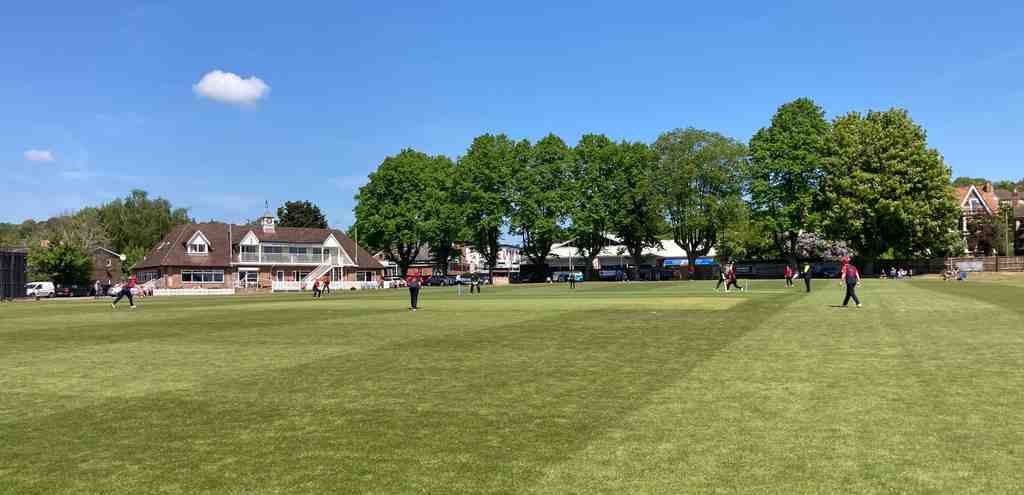
You’re looking for a big green field edged with trees and a charming pavilion-just look ahead for the open grass and the cricket players moving under the wide blue sky. You’ve made it to London Road, the beating heart of cricket in High Wycombe! Now, close your eyes for a moment and let your nose catch the scent of freshly cut grass and sun-warmed wood from the old pavilion. Imagine it: it’s 1891, the crowd buzzes with excitement, and the High Wycombe team is squaring off against a rather unlikely opponent-the House of Commons. Who knew that politicians could bowl googlies? Years flew by, the sound of leather on willow echoing across this historic ground as championship matches unfolded and local players dared to dream big. Tension crackled through the air in 1970, as Buckinghamshire took on Bedfordshire in the Gillette Cup right here-each thwack of the bat a promise of glory or heartbreak. And then, in 1979, a Minor Counties South team tried to outwit the mighty Worcestershire. Drama, cheers, maybe even a dropped catch or two-London Road has seen it all. These days, you might spot High Wycombe Cricket Club heroes chasing down impossible scores or a lazy afternoon match soaking up the sun. Isn’t it amazing? Over a century of cricketing history, and it all happens right here. This is where legends take guard, and anyone with a dream, and a good pair of pads, can be a part of the story.
Abrir página dedicada →
Preguntas frecuentes
¿Cómo empiezo el tour?
Después de la compra, descarga la app AudaTours e ingresa tu código de canje. El tour estará listo para comenzar de inmediato - solo toca play y sigue la ruta guiada por GPS.
¿Necesito internet durante el tour?
¡No! Descarga el tour antes de empezar y disfrútalo completamente sin conexión. Solo la función de chat requiere internet. Recomendamos descargar en WiFi para ahorrar datos móviles.
¿Es un tour guiado en grupo?
No - esta es una audioguía autoguiada. Exploras de forma independiente a tu propio ritmo, con narración de audio reproduciéndose en tu teléfono. Sin guía, sin grupo, sin horario.
¿Cuánto dura el tour?
La mayoría de los tours toman 60–90 minutos para completar, pero tú controlas el ritmo completamente. Pausa, salta paradas o toma descansos cuando quieras.
¿Qué pasa si no puedo terminar el tour hoy?
¡No hay problema! Los tours tienen acceso de por vida. Pausa y continúa cuando quieras - mañana, la próxima semana o el próximo año. Tu progreso se guarda.
¿Qué idiomas están disponibles?
Todos los tours están disponibles en más de 50 idiomas. Selecciona tu idioma preferido al canjear tu código. Nota: el idioma no se puede cambiar después de generar el tour.
¿Dónde accedo al tour después de comprarlo?
Descarga la app gratuita AudaTours desde App Store o Google Play. Ingresa tu código de canje (enviado por email) y el tour aparecerá en tu biblioteca, listo para descargar y comenzar.
Si no disfrutas el tour, te reembolsamos tu compra. Contáctanos en [email protected]
Paga de forma segura con