
Tour de audio de Cambridge: Leyendas y tradiciones a lo largo del sendero de Castle Hill
¡Descubre la rica historia y la impresionante arquitectura de Cambridge en este cautivador tour! Explora las antiguas ruinas del Castillo de Cambridge, adéntrate en los sagrados pasillos del St John's College con sus hermosas capillas y jardines, y pasea por los encantadores patios del Magdalene College. En el camino, sumérgete en la vibrante atmósfera académica y descubre joyas ocultas que hacen de Cambridge un destino atemporal. ¡Únete a nosotros para un viaje inolvidable a través de una de las ciudades universitarias más icónicas de Inglaterra!
Vista previa del tour
Sobre este tour
- scheduleDuración 40–60 minsVe a tu propio ritmo
- straighten2.3 km de ruta a pieSigue el camino guiado
- location_onUbicaciónCambridge, Reino Unido
- wifi_offFunciona sin conexiónDescarga una vez, úsalo en cualquier lugar
- all_inclusiveAcceso de por vidaReprodúcelo en cualquier momento, para siempre
- location_onComienza en St John's College, Cambridge
Paradas en este tour
Look for a grand, castle-like building stretching across a wide green lawn, with tall towers and pointed arches-just imagine Hogwarts if it hired a rather serious British…Leer másMostrar menos
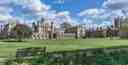
Look for a grand, castle-like building stretching across a wide green lawn, with tall towers and pointed arches-just imagine Hogwarts if it hired a rather serious British architect! Welcome to St John’s College, where you aren’t just walking into a building, you’re stepping into over 500 years of adventure, rivalry, and more stories than you can shake a scholar’s cap at. Close your eyes and imagine the year is 1511. Outside, a chilly breeze is sweeping through Cambridge, carrying the clang of builders’ hammers. Lady Margaret Beaufort, the mighty Tudor matriarch-and mother to King Henry VII-dreamed this place into being, hoping to create a world where knowledge and kindness go hand in hand. Once, it was just a hospital serving weary travelers. But by the 16th century, the old hospital was falling to pieces-not the best conditions for studying Aristotle, unless you like leaky roofs with your Latin. With Lady Margaret’s death, it looked like the dream would die, until the determined Bishop John Fisher wrangled with everyone from King Henry VIII to the Pope for permission and money. At last, in 1511, St John’s College was born. Just inside those gates behind you, picture the scene five centuries ago: the doors would slam shut at dusk, sealing the monks-and later, scholars-inside away from the wild world of Cambridge. They lived, studied, and sometimes squabbled right where you’re standing now. Speaking of rivalry, you might hear whispers about “Trinity,” the college next door, and their endless one-upmanship. The two have out-pranked, out-studied, and possibly out-eaten each other for centuries. There’s even a legend that says only St John’s fellows and the royal family are allowed to feast on unmarked swans-how’s that for an exclusive club? Another tale claims Trinity has a cannon pointed at St John’s, but don’t worry, no cannonballs have flown for at least a hundred years. Now look around you-these courts and lawns have seen everything from Queen Elizabeth I herself grandly riding her horse into the dining hall (who needs valet parking?) to ingenious undergrads planning the D-Day landings in the shadowy windows of the Long Gallery during World War II. The buildings are a patchwork of centuries: Tudor elegance, Georgian facades, Victorian flourishes, and even a modern 20th-century splash. The Great Gate where you entered, topped by heraldic beasts called “yales” and the symbols of Lady Margaret, isn’t just decoration-her family’s rose and portcullis are a bold message: this was a place for learning, for courage, and for a bit of mystery. If you peek inside the chapel, you’ll find stained glass, ancient wood, and statues remembering the minds that have wandered these corridors-everyone from the poet Wordsworth to abolitionists who helped end British slavery, to two Nobel Prize winners who cracked open the atom to see what secrets hid inside. If you start to hear angelic voices drifting on the wind, that’s no accident. The college choir is nearly as old as the college itself, singing six days a week since the 1670s. And just to keep things interesting, St John’s recently welcomed girls and women into the choir, breaking a tradition as old as some of these towers. You might wonder, with all these tales of rivalry and rules, does anything spooky happen here? Well, some say the second court is haunted by a former master named James Wood, who studied by stairway light because he couldn’t afford a candle. Maybe if you listen closely at night, you’ll hear the creak of ghostly footsteps or the distant chime of a bell that never was-the famous New Court’s clock tower remains clockless, wrapped in mystery and legend. Whether you believe in ghosts or just good stories, remember: these lawns have seen everything from secret exams to midnight duels of wit. Take a deep breath and soak in the centuries-at St John’s, you’re not just a visitor. You’re part of the story now! Interested in knowing more about the buildings and grounds, college choirs or the traditions and legends
Abrir página dedicada →Right in front of you, there’s a beautiful, stone-covered bridge with elegant arched windows stretching across the River Cam-just look for the grand structure connecting two…Leer másMostrar menos
Right in front of you, there’s a beautiful, stone-covered bridge with elegant arched windows stretching across the River Cam-just look for the grand structure connecting two college buildings, decorated with graceful spikes along the top. Welcome to the famous Bridge of Sighs! Now, don’t worry, you haven’t accidentally wandered into Venice-though this bridge does share its dramatic name with the much older one in Italy. Built in 1831, this masterpiece was dreamed up by architect Henry Hutchinson, who clearly believed that crossing the River Cam should be unforgettable. Imagine Victorian students and scholars bustling past, the sound of their shoes echoing under the bridge’s mysterious stone roof. The bridge links the busy New Court with the historic Third Court of St John’s College, letting students sneak between classes-possibly with a sigh or two, especially after a tough exam! Queen Victoria is said to have adored this spot more than anywhere else in Cambridge. You can picture her pausing by the windows, peeking out at the sparkling water below, probably wondering if it was named after the sighs of students or something more romantic. But here’s where things get even more fun. Legendary student pranks have happened right on this bridge! In 1963, a group of daring students managed to hoist a 1928 Austin 7 car underneath using nothing but a few punts, some rope, and a lot of questionable decision-making. It must have been quite a sight-imagine sleepy rowers drifting by at dawn, blinking in disbelief at a tiny car dangling over their heads. And if you’re a movie buff, you might recognize this spot from films like Elizabeth: The Golden Age or The Theory of Everything-or even in Pink Floyd’s “High Hopes” music video. Every inch of this bridge seems wrapped in stories, whispers, and a bit of cheeky mischief. So take a moment to gaze at the sunlight dancing through those tall windows, and remember: around here, sighs come with a smile.
Abrir página dedicada →

Mostrar 12 paradas másMostrar menos paradasexpand_moreexpand_less
To spot Duroliponte, look for the gentle rise of Castle Hill just ahead, dotted with historic-looking buildings and surrounded by greenery-imagine the ancient fort once standing…Leer másMostrar menos
To spot Duroliponte, look for the gentle rise of Castle Hill just ahead, dotted with historic-looking buildings and surrounded by greenery-imagine the ancient fort once standing mighty on that very hill. Alright, take a deep breath and let your imagination travel back nearly two thousand years-because you’re actually standing at the crossroads of ancient adventures! This very spot was once the heart of Duroliponte, a lively Roman town buzzing with the sounds of horse hooves on stone and Roman soldiers’ shouts echoing over the fields. Picture a wooden fort perched on this hill, smoke curling from simple roofs, and a market full of strangers speaking Latin and local languages. If you listen closely, you might almost hear the clang of a blacksmith’s hammer or the laughter of children darting between timber houses colored with painted plaster. Duroliponte began its life as a vast Iron Age hillfort, high above the marshy land, perfect for spotting would-be invaders. Around 70 AD, the Romans swept in-imagine them, cloaks flapping and shields gleaming, setting up a snug little outpost here. At first, it was all business: stone walls, ditches, and marching soldiers. But over time, things calmed down a bit, and a town slowly grew-shops, homes with thatched roofs, even fancy painted walls for those who liked a bit of Roman glamour. Only one stone building was ever found, so luxurious stone wasn’t quite the fashion here! But life wasn’t all toga parties and soldiering. As the centuries rolled on, folks started building stronger defenses-walls went up, gates guarded the roads, and rumors flew of mysterious strangers along the River Cam (which the Romans called the Granta, by the way). Imagine the spooky thrill as dusk fell and travelers hurried in before the gates locked for the night. Even as the Roman legions marched away from Britain, people clung to this place, keeping candles burning while Saxons crept ever closer. So, right where you stand, you’re walking in the footsteps of ancient traders, brave soldiers, and families who built a town that just wouldn’t quit-even as empires rose and fell all around them. If these stones could talk, what stories they’d tell!
Abrir página dedicada →To spot Cambridge Castle, look ahead for a large, grassy mound rising from the earth, like a giant green cake plopped onto the landscape-this is Castle Mound, the last major…Leer másMostrar menos
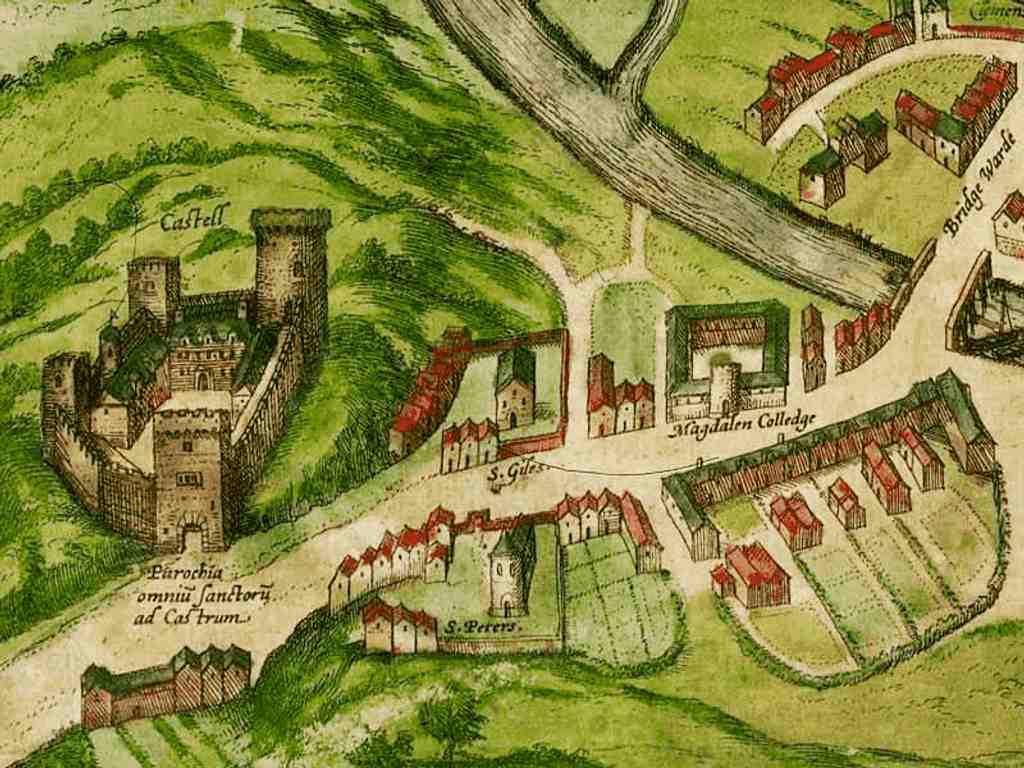
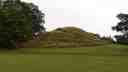
To spot Cambridge Castle, look ahead for a large, grassy mound rising from the earth, like a giant green cake plopped onto the landscape-this is Castle Mound, the last major remnant of the once-mighty fortress. So here you are, standing at the foot of a mound where over 950 years of drama, danger, and-let’s be honest-quite a lot of stone recycling have unfolded! If you close your eyes for a moment, you might almost hear the clang and clatter of Norman soldiers hammering in the chilly Cambridge air. Back in 1068, William the Conqueror was fresh from his takeover, and he needed to keep a tight grip on the road north to York. “Grantabridge”-as Cambridge was called back then-was the perfect strategic spot, so he sent his sheriff, Picot, to build a motte and bailey castle. Of course, this didn’t exactly make him popular-27 houses were flattened just to make space for this new outpost! Imagine the wooden walls quickly rising, smoke swirling from the fires of nervous townsfolk, and then centuries of barons, soldiers, and even invading French armies storming this very hill. In the 1140s, during a chaotic time called the Anarchy, Geoffrey de Mandeville-one of those timeless baddies with a name to match-attacked the castle, seized it for the Empress Matilda, and then staged midnight raids down the lanes of Cambridge. But King Stephen fought back, and after much tussle and a bit of sneaky castle building of his own in nearby Burwell, the attackers were pushed out. Those were restless times, a bit like medieval capture-the-flag, but with a lot more mud. The castle enjoyed a bit of sprucing up whenever England seemed on the verge of falling apart. King John spent a small fortune adding a fancy new hall and chambers-let’s be honest, every castle could benefit from a stylish upgrade, even with barons outside waving swords around. During the First Barons' War, rebel barons and even the French managed to capture the castle-what a party! Eventually, though, it returned to royal hands, and under Henry III, Cambridge got a grand “King’s Ditch” for extra protection, like a medieval moat with a royal seal of approval. But it was under Edward I, the castle received its most regal glow-up: huge walls, round towers at every corner, a circular stone keep-an imposing fortress where even the boldest invader might find themselves second-guessing. Edward spent more than a thousand golden pounds on the project, and even slept here a couple of nights-imagine a king sighing on those drafty stone pillows, probably longing for a nice Tudor inn! Alas, stone has a funny way of wandering off in Cambridge. As the centuries passed, the castle began to crumble, and bits of it appeared everywhere: some became foundations for King's College, some tucked into the chapel at Trinity, and plenty of other fragments ended up in local mansions and college halls. By the 1600s, the castle itself was mostly rubble, and much of what remained was turned into a jail, rattling with the sounds of keys and the laments of prisoners dreaming of a better life. Come the English Civil War, the old castle had a brief encore. Parliamentary soldiers, loyal to Oliver Cromwell, scrambled to patch up its lost defenses. They built brick barracks and new earth ramparts, and for a few tense years, you’d have seen soldiers peeking nervously over wooden walls, muskets in hand. And then-just like that-peace returned, and the castle was ordered to be “slighted,” which in layman’s terms means “properly smashed up.” By the late 1700s, almost everything above ground was gone except for this remarkable earthwork. The last leftovers-a grim old jail-came down in the 1930s, and the modern Shire Hall sprouted up instead. What you’re standing on is the original Norman motte, rising ten meters high and offering the very best views in Cambridge. The echoes of history, though, still linger in the grass beneath your feet. And the next time you wander into a grand college, take a close look at the walls-the stones might just be from this very spot, carrying with them stories of battles, kings, prisoners, and more than a few ambitious builders. Take a moment to climb the mound, if you fancy-the city stretches all around you, and it’s the perfect place to imagine everything that’s happened right here. Don’t worry, there aren’t any angry Norman knights left, but keep an eye out for students charging around; they move quickly too!
Abrir página dedicada →You’re looking for a small, ancient stone church with a tall, pointed spire topped by a weather vane, nestled among trees-just ahead on your right you’ll spot it rising above the…Leer másMostrar menos
You’re looking for a small, ancient stone church with a tall, pointed spire topped by a weather vane, nestled among trees-just ahead on your right you’ll spot it rising above the grass, its rough stone walls shining softly in the daylight. Now, step a little closer and imagine: you’re standing in front of St Peter’s Church, a time traveler’s pit stop in Cambridge! This little church, “St Peter by the Castle,” has hung around since the twelfth century-or maybe even longer, if you believe the whispers about Anglo-Saxon roots. With its chunky stone walls and a tower capped by an octagonal spire (that’s right, eight sides-count if you like!), St Peter’s has stood as a guardian between eras, just across the old Roman road from mighty St Giles’. Once, this church was the heart of a bustling parish, with a nave, aisle, tower, and probably its fair share of medieval gossip. Even Queen Elizabeth I herself got involved, handing the church over to the See of Ely! But in 1650, the town commissioners took one look and declared, “There’s neither parsonage nor vicarage here!”-no priest’s house, nothing. So, it merged into St Giles’ parish, making this perhaps one of the earliest examples of “closing accounts” in Cambridge. Look closely at the entrance-a worn but wonderful south doorway from the thirteenth century still greets visitors, and inside is a curious font from the twelfth, decorated with mermen! Yes, mermen: medieval proof that merfolk made a splash even in church decor. Through the centuries, St Peter’s dodged ruin by the skin of its stone teeth. By 1900, it was teetering on dereliction, but the 1930s saw it patched up with fresh stone, a little like Cinderella’s glass slipper-if Cinderella had been a Norman church. And atop it all, the weather vane is cheekily marked “AP”-initials said to flip between ‘A Papist’, ‘A Protestant’, or ‘A Puritan’-just whichever way the wind blows, really! Now, St Peter’s opens its doors for art, linking the ancient stones with modern creativity, in collaboration with the nearby Kettle’s Yard. So next time you hear the wind whistle here, imagine it carrying stories from twelve centuries of Cambridge life, secrets, and probably a medieval joke or two.
Abrir página dedicada →To spot Westminster College, look for a grand red-brick Tudor-style building just ahead, with a tall, square tower on the left side and lots of stone-framed windows stretching…Leer másMostrar menos
To spot Westminster College, look for a grand red-brick Tudor-style building just ahead, with a tall, square tower on the left side and lots of stone-framed windows stretching across the front, framed by deep green ivy curling up the walls. Now, take a breath and imagine yourself stepping back in time, hearing your footsteps crunch on the pebbled path as you approach Westminster College. The smells of fresh ivy and old red brick mingle in the air, and above you, the college’s sturdy tower rises like a watchful sentinel, keeping an eye out for wayward theologians and lost tourists alike. Let’s roll back the clock to London in 1844, when Westminster College was just a twinkle in the eyes of a few determined Presbyterians. Back then, its first home was in the bustling Exeter Hall on the Strand, full of the sounds of carriages and city life. But these theologians dreamed bigger! By 1859 they had moved to Queen Square, but-plot twist!-at the dawn of the next century, the college packed its bags for Cambridge, thanks to a most unexpected pair of heroes: Agnes Smith Lewis and Margaret Dunlop Gibson. Now, Agnes and Margaret weren’t your typical Victorian ladies primly sipping tea. These sisters were globe-trotting, manuscript-hunting adventurers who could rival Indiana Jones! Imagine the two of them, dusty and determined, bargaining in the Cairo markets for ancient scrolls-no pyramids in the background, but a lot of palm trees and camels, and probably a few cats. Their passion for old texts and the deep mysteries of early Christianity brought them to purchase a prime patch of land right here on Madingley Road. That’s what gave Westminster College its new, permanent, and rather posh home in Cambridge in 1899. And oh, what home it was! With funds raised from Presbyterians across the UK, the college hired renowned architect Henry Hare to design this Tudor fantasy, all in warm red brick with crisp stone trimming. This proud, stoic building you see today soon became a training ground for the ministers of tomorrow-but it had even more stories to tell. Let’s slip inside the chapel for a moment. It was dedicated in 1921, a gift from Sir William Noble and his wife, created to honor their son who died fighting in World War I. If you could peek through those stained-glass windows (crafted by Douglas Strachan, and completed in a flurry of colored glass in 1925), you might catch beams of sunlight dancing across the chapel floor-a rainbow tribute to hope beyond the tragedy of war. But Westminster College was never just about book learning or quiet prayers. It was home to two of the world’s most fascinating manuscript adventures! Those same Gibson sisters-their story’s not over yet-discovered, bought, and brought back to Westminster some of the earliest versions of the gospels, the Codex Climaci Rescriptus, and fragments from the Cairo Genizah. Picture rooms crammed with scholars, magnifying glasses in hand, pouring over parchments as the gentle ticking of a clock and the faint rustle of papers fills the room. These treasures illuminated the ancient world in a way nothing else could, creating quite the buzz among Cambridge’s academic community. Over the years, the college evolved alongside the times. By the 1960s, it joined forces with Cheshunt College, paving the way for the creation of the United Reformed Church in 1972-a thrilling union that combined strength and scholarship across traditions. Today, as students bustle in and out, you might catch snippets of lively debate-systematic theology over here, the mysteries of the Old Testament over there, and perhaps someone frantically finishing an essay due at midnight. Westminster College may not be a part of the University of Cambridge proper, but it’s right at the heart of its vibrant religious learning community, and now even houses the Woolf Institute for Abrahamic Faiths and the Faraday Institute for Science and Religion. To keep the spirit of learning alive, look out for a plaque honoring Frederick Buechner, the beloved American theologian and writer-the college even offers a prize in his name for the finest piece of writing. Who knows, maybe your steps around the grounds are setting the stage for your own big idea to take root! So as you stand here, surrounded by whispers of ancient discoverers, lost scholars, and world-changing ideas, take in Westminster’s walls and windows. Listen closely-you just might hear the echoes of the Gibson sisters plotting another great manuscript heist, or the proud chime announcing a new generation of scholars ready to change the world. Exploring the realm of the today, notable alumni or the notable staff? Feel free to consult the chat section for additional information.
Abrir página dedicada →To spot Lucy Cavendish College, look straight ahead for clusters of modern red-brick buildings with neat wooden balconies and big windows, surrounding a tidy green courtyard…Leer másMostrar menos
To spot Lucy Cavendish College, look straight ahead for clusters of modern red-brick buildings with neat wooden balconies and big windows, surrounding a tidy green courtyard filled with flowers and parked bicycles. Welcome to Lucy Cavendish College! Standing here, you’re actually at the edge of a modern legend-a college born out of a rebellion of ideas, an urge for fairness, and more than a dash of tenacity. Can you feel the gentle rustle of leaves and the faint laughter from students nearby? That’s the sound of today’s Lucians, as Lucy Cavendish students are affectionately called. Back in the swinging 1960s, when miniskirts were in and women’s rights were buzzing through the air, a group of women academics looked at Cambridge-a place of ancient tradition-and saw a problem. The great university, full of sprawling lawns and secret societies, simply didn’t have space at the table for all the brilliant women who longed to study or teach here. So, they decided to fix that. With a spark of courage and probably quite a few cups of tea, they founded Lucy Cavendish in 1965, named after Lucy Caroline Cavendish, herself a champion of women’s education who rattled the dusty shelves of academia in her day. Imagine Cambridge back then-a maze of colleges, but only two for women, Girton and Newnham. No wonder our founders-who politely called themselves “The Dining Group"-wanted more. It wasn’t just about a room of one’s own, but a whole college! For a while, they moved from building to building, carrying their hopes, books, and ever-growing aspirations with them. In 1970, Lucy Cavendish finally set down roots right here at the corner of Madingley Road and Lady Margaret Road, thanks to some generous land from nearby St John’s College. The campus grew around grand old villas, woven together with new, bold buildings-like the eco-friendly Passivhaus you can see here, which sips less energy than a dormouse with a cup of cold tea. Did I mention Lucy Cavendish is a green pioneer? In 2022, the college received the Platinum Award for Green Impact-basically the Nobel Prize of environmental practice. The electricity: 100% renewable. The housing: as eco-friendly and accessible as you’ll find anywhere in Cambridge. But let’s step inside the minds as much as the buildings! For years, Lucy was Cambridge’s only full college just for women, a sanctuary where future presidents, parliamentarians, and professors would forge their path. Its very first president, Anna McClean Bidder-a scientist fascinated by squid and octopus digestion-left her mark so clearly that you’ll find a nautilus shell in the college’s coat of arms. I suppose it could be said that at Lucy Cavendish, even traditions take a walk on the wild side! Rolling forward through time, there are stories woven into every corridor-students hunched over essays, the thrill of choir rehearsals drifting through the air, fierce debates in the Boat Club, laughter from the sewing society, stitches dropped by accident and friendships picked up by chance. And in the library, perhaps the next prize-winning novel is being penned for the famous Lucy Cavendish Fiction Prize, open to women authors yet to see their name on a bookstore shelf-after all, Gail Honeyman and Sara Collins, celebrated authors, both launched their careers here. Lucy Cavendish has always been about breaking barriers and opening doors. In 2021, it did something revolutionary-it opened its doors to everyone. That same mission rings as clear as ever: make Cambridge accessible to the brightest students, especially those from under-represented backgrounds. You can almost feel that spirit swirling around the grassy courtyards: ambition mixed with open-hearted welcome. In the 2022 intake, more than 90% of Lucy’s first-year undergraduates came from state schools-a record for Cambridge, showing just how much this place stands for change. Imagine the alumni wandering these walkways, from United Nations leaders like Noeleen Heyzer to parliamentarians, writers, and activists. Or the guest list of honorary fellows-a dazzling crowd featuring Dame Judi Dench, Sandi Toksvig, and even Queen Margrethe of Denmark. Not bad for a college that started as a dining club over half a century ago! So, as you stand here, listen to the soft shuffle of student life around you and feel the energy of a place that never stands still. Lucy Cavendish is proof that change can grow from the quietest corners-and that sometimes, all you need to start a revolution is a good friend, a better idea, and maybe a slice of cake. Exploring the realm of the college site, student body or the lucy cavendish fiction prize? Feel free to consult the chat section for additional information.
Abrir página dedicada →



Reseñas
Preguntas frecuentes
¿Cómo empiezo el tour?
Después de la compra, descarga la app AudaTours e ingresa tu código de canje. El tour estará listo para comenzar de inmediato - solo toca play y sigue la ruta guiada por GPS.
¿Necesito internet durante el tour?
¡No! Descarga el tour antes de empezar y disfrútalo completamente sin conexión. Solo la función de chat requiere internet. Recomendamos descargar en WiFi para ahorrar datos móviles.
¿Es un tour guiado en grupo?
No - esta es una audioguía autoguiada. Exploras de forma independiente a tu propio ritmo, con narración de audio reproduciéndose en tu teléfono. Sin guía, sin grupo, sin horario.
¿Cuánto dura el tour?
La mayoría de los tours toman 60–90 minutos para completar, pero tú controlas el ritmo completamente. Pausa, salta paradas o toma descansos cuando quieras.
¿Qué pasa si no puedo terminar el tour hoy?
¡No hay problema! Los tours tienen acceso de por vida. Pausa y continúa cuando quieras - mañana, la próxima semana o el próximo año. Tu progreso se guarda.
¿Qué idiomas están disponibles?
Todos los tours están disponibles en más de 50 idiomas. Selecciona tu idioma preferido al canjear tu código. Nota: el idioma no se puede cambiar después de generar el tour.
¿Dónde accedo al tour después de comprarlo?
Descarga la app gratuita AudaTours desde App Store o Google Play. Ingresa tu código de canje (enviado por email) y el tour aparecerá en tu biblioteca, listo para descargar y comenzar.
Si no disfrutas el tour, te reembolsamos tu compra. Contáctanos en [email protected]
Paga de forma segura con 


