

Audioguía de Bath: Recorrido por los Lugares Históricos de Bath
Una elegante fachada esconde siglos de secretos en la Great Pulteney Street de Bath, donde los grandes diseños se encuentran con historias inesperadas. Aventúrate más allá de las vistas de postal con esta audioguía autoguiada y descubre una ciudad moldeada por la rebelión, la reinvención y la intriga artística, lejos del camino turístico habitual. ¿Qué llevó a los concejales a talar árboles en busca de un orden perfecto? ¿Qué obsesión de un misterioso coleccionista transformó toda una colección de museo? ¿Y podría un incendio olvidado en el Theatre Royal haber cambiado el destino del drama británico? Pasea por amplias avenidas e historias sinuosas, pasando por teatros históricos y galerías ocultas. Rastrea batallas políticas, visiones excéntricas y escándalos cotidianos que construyeron Bath tanto desde las sombras como desde su superficie dorada. Cada paso trae nuevas revelaciones en piedra e historia. Las puertas de la historia oculta de Bath están abiertas. Da un paso adelante y descubre lo que la ciudad nunca antes ha mostrado.
Vista previa del tour
Sobre este tour
- scheduleDuración 40–60 minsVe a tu propio ritmo
- straighten3.9 km de ruta a pieSigue el camino guiado
- location_onUbicaciónBath, Reino Unido
- wifi_offFunciona sin conexiónDescarga una vez, úsalo en cualquier lugar
- all_inclusiveAcceso de por vidaReprodúcelo en cualquier momento, para siempre
- location_onComienza en Great Pulteney Street
Paradas en este tour
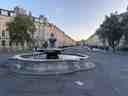
Now, let me tell you a little secret. While the road itself is over 1,000 feet long and 100 feet wide, with stunning façades along its entire length, the actual structures behind…Leer másMostrar menos
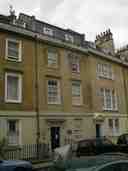
Now, let me tell you a little secret. While the road itself is over 1,000 feet long and 100 feet wide, with stunning façades along its entire length, the actual structures behind those façades were built by different owners. So, each building has its own unique features and quirks. Talk about an architectural surprise party! Speaking of surprises, did you know that one of the side streets off Great Pulteney Street, called Sunderland Street, is the shortest street in the whole city? I guess it really likes being in the spotlight! But wait, there's more! When Great Pulteney Street was first built, it was lined with beautiful trees. However, the town council faced a slight problem during autumn-the pesky leaf litter from those trees. Their solution? They simply chopped most of them down! I guess they preferred a treeless autumn landscape. Well, at least we can still enjoy the trees in the adjacent Laura Place. Now, if you have a hankering for some impressive architecture plans, head over to the Victoria Art Gallery at the corner of Pulteney Bridge and the Grand Parade. They have drawings of all the building plans, including some wild proposals that were never built. It's like stepping into a designer's dream! Oh, and you might have heard some discussion about renaming Great Pulteney Street due to the Black Lives Matter movement. While there has been talk in The Bath Magazine and Bath Newseum, there haven't been any official consultations on the matter yet. Stay tuned! Now, buckle up, because we're off to our next stop-the Holburne Museum of Art! You won't want to miss it, I promise. Let's go!
Abrir página dedicada →Ah, the Holburne Museum! Welcome! Did you know that this place used to have quite a mouthful of a name? It was once known as the Holburne of Menstrie Museum and the Holburne…Leer másMostrar menos
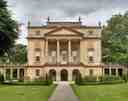
Ah, the Holburne Museum! Welcome! Did you know that this place used to have quite a mouthful of a name? It was once known as the Holburne of Menstrie Museum and the Holburne Museum of Art. Thankfully, they decided to simplify things a bit. Now, this museum is tugged away in Sydney Pleasure Gardens, right here in Bath. It's a Grade I listed building, which means it's really fancy and important. Inside, you'll find all sorts of fine and decorative arts that were collected by Sir William Holburne. When it comes to artists, this place isn't messing around. They've got some big names in their collection, including Gainsborough, Guardi, Stubbs, Ramsay, and Zoffany. Quite the impressive lineup, don't you think? But it's not just the artworks that make this museum special. They also have a jam-packed schedule of temporary exhibitions, music performances, creative workshops, family events, talks, and lectures. It's a cultural extravaganza! Feeling peckish? No worries! They've got a café where you can refuel and a lovely bookshop to browse through. And if the weather permits, you can even enjoy your coffee outside in Sydney Gardens. Perfect! By the way, did you know that the museum had a little makeover in 2011? They did some restoration work and added an extension, all thanks to the talented folks at Eric Parry Architects. Gotta love a good makeover, right? Oh, and let's not forget the heart of the collection, which was formed by Sir Thomas William Holburne himself. He inherited a bunch of cool stuff like Chinese armorial porcelain, silver, and portraits, and then added even more treasures like silver and porcelain from the 17th and 18th centuries, Italian maiolica and bronzes, Old Master paintings, books, furniture, and even Roman glass, coins, and snuff boxes. After Sir William passed away, his sister Mary Anne Barbara Holburne generously bequeathed his massive collection to the people of Bath. Isn't that nice? And the collection has been growing ever since, with new additions popping up all the time. Alright, enough chit-chat! Shall we move on to our next stop? It's going to be a blast, I promise!
Abrir página dedicada →Now, ladies and gentlemen, let's make our way to the marvelous Theatre Royal, Bath! This grand building was constructed way back in 1805, making it older than most of us here…Leer másMostrar menos
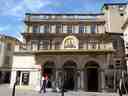
Now, ladies and gentlemen, let's make our way to the marvelous Theatre Royal, Bath! This grand building was constructed way back in 1805, making it older than most of us here today - no offense intended, of course! Get this, the Theatre Royal is a Grade II* listed building, meaning it's considered a pretty big deal in terms of Georgian theater architecture. It can hold around 900 audience members, so if you're thinking of putting on a show here, you better make sure you've got the talent to fill those seats! But wait, there's more history to be had! The Theater Royal was actually built to replace the Old Orchard Street Theatre, which must have been quite the place in its heyday. The funding for the new theater came from a funny-sounding thing called a Tontine, which was like a lottery combined with an investment plan. Sort of like winning the jackpot and then passing on your winnings to the lucky survivors - talk about keeping it in the family! The renowned architect George Dance the Younger designed the elegant exterior you see before you, complete with arches, pilasters, garlands, and all sorts of fancy ornaments. And let me tell you, when John Palmer got his hands dirty with the construction work, he did an incredible job. It's no wonder the Theatres Trust named this theater one of the most important surviving examples of its kind. Now, back in 1805, the theater burst onto the scene with a bang, hosting a performance of Shakespeare's Richard III. There's even a rumor that an unknown actor took on the lead role that night. But hey, we all have to start somewhere, right? And from there, the Theatre Royal grew in stature, showcasing acclaimed actors like Dorothea Jordan, William Macready, and Edmund Kean. They really knew how to bring the stage to life! Sadly, disaster struck in 1862 when a major fire engulfed the building and destroyed the interior. But never fear, folks! The theater rose from the ashes, thanks to the efforts and creativity of Charles J. Phipps, who led the reconstruction. He even added the current entrance, making sure to give it a touch of his own flair. Throughout the years, the Theatre Royal has seen a mix of drama, ballet, and even light entertainment. Some famous faces who graced its stage include the glamorous Sarah Bernhardt, the talented ballerina Anna Pavlova, and the unforgettable Mrs. Patrick Campbell. However, it seems like money troubles were a constant companion, and the theater wasn't always a profitable venture. But fear not, my dear friends, for in 1979, a trust swooped in to save the day and purchased the theater. Thanks to generous donations from the public, the stage was rebuilt, and a new taller fly tower was added for scenery and lighting. Talk about reinventing the stage! In 1997, a smaller theater called the Ustinov Studio was also added to the complex, proving that great things come in different sizes. And for all the little theater enthusiasts out there, there's even a dedicated children's theater called The Egg. Now, that's what I call an egg-cellent addition! So, my friends, let's take a moment to admire this wonderful gem of a theater. From the outside, it's a sight to behold, and from the inside, it's filled with history, stories, and most importantly, the magic of the performing arts. I hope you've enjoyed this stop on our tour, and get ready for more exciting adventures in the beautiful city of Bath! Onward we go!
Abrir página dedicada →
Mostrar 9 paradas másMostrar menos paradasexpand_moreexpand_less
Now, let me tell you a little bit about the history of this place. Queen Square was originally developed by the talented architect John Wood, the Elder, back in the early 18th…Leer másMostrar menos
Now, let me tell you a little bit about the history of this place. Queen Square was originally developed by the talented architect John Wood, the Elder, back in the early 18th century. He had this brilliant idea of designing the building frontages in Palladian style and then letting other builders finish the rest of the buildings. Talk about teamwork, right? In the center of the square, you'll find an impressive obelisk that was erected by a man named Beau Nash in 1738. It was dedicated to Frederick, Prince of Wales. I guess you could say they really wanted to make a point about their appreciation for royalty! During World War II, this square didn't have the best luck. The south side of the square got hit by bombs during the Bath Blitz. But fear not, my friend! After restoration work, many of the buildings are now offices. Isn't that a great way to turn adversity into opportunity? Now, if you're wondering why it's called Queen Square, it's because it was named in honor of Queen Caroline, the wife of George II. They wanted this square to look like a fancy palace, complete with wings and a splendid forecourt. It's like they were aiming to win an award for the most regal square ever! So take a stroll around and admire Wood's architectural masterpiece. Look at the north side, with its stunning Palladian composition. It's so impressive that our friend Nikolaus Pevsner called it "one of the finest Palladian compositions in England before 1730." And the west side, designed by John Pinch, has its own unique Neo-Grecian style. It's like Wood's creativity inspired others to add their own personal touch. And don't forget to explore the lovely garden in the center. Wood knew that people love to gather and parade, so he made sure to provide wide streets and raised pavements. The garden itself was originally enclosed by a stone balustrade, but the current railings are replicas from 1978. Fun fact, the garden area within the railings is exactly one acre! That's like having a giant green carpet in the heart of the square. With Queen Square, John Wood really raised the bar for urban development. He set fresh standards in scale, boldness, and social consequence. The elegant townhouses along the north side, especially the central house, will leave you in awe. But let's not forget about the other three wings - they were intentionally designed to complement the grandeur of the central palace front. It's all about balance and harmony, my friend. As you walk through this historic square, imagine the hustle and bustle of builders trying to complete their houses within the two-year deadline set by Wood. It was like a race against time! Thankfully, Bath was booming, and most plots were spoken for in no time. Can you imagine buying a house before the walls were even up? Talk about being ahead of the game! So there you have it, Queen Square. A key component of John Wood's grand vision for Bath. Now, let's continue our adventure and head over to our final stop, the iconic Pulteney Bridge. It's just a short stroll away!
Abrir página dedicada →Back in 1792, a solicitor named Richard Bowsher decided to develop this area and create a vibrant urban community centered around Norfolk Crescent. He wanted to connect the new…Leer másMostrar menos
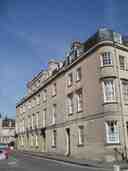
Back in 1792, a solicitor named Richard Bowsher decided to develop this area and create a vibrant urban community centered around Norfolk Crescent. He wanted to connect the new buildings to the main carriage route between Bath and Bristol, which is why Nile Street came into existence. Now, let's talk about the interesting names of the streets in this development. You see, the streets were named after Admiral Nelson, who was quite a hero at that time. We have Nelson Place, which pays homage to the great admiral himself. Then there's Norfolk Crescent, named after Nelson's home county. And of course, we have Nile Street, named after the famous Battle of the Nile, which was Admiral Nelson's most celebrated victory before the Battle of Trafalgar. At first, the west side of Nile Street had two houses, but unfortunately, they were destroyed by bombing during the Second World War. In 2010, there was only one house standing on that side, but more were under construction. It's impressive to see how this street has evolved over the years. Now, let's take a closer look at the houses on the east side of Nile Street. These houses were built around 1812-1814, and their design matches the houses in Great Stanhope Street. Interestingly, only one house, No. 2, had a specific facade plan mentioned in the building lease. The other houses were generally built according to a uniform facade, which suggests that the builders might have had some informal agreement or decided to put their own creative touch to the designs. During the Blitz in 1942, several incendiary bombs fell in this area, causing damage to No. 4 Nile Street and No. 1 St Georges Place. Even some houses on the north side of Great Stanhope Street were affected. But fear not! The damaged houses were rebuilt, and in the 1980s, the Great Stanhope Street houses were reconstructed as a block of flats called Clarkson House, replicating the original design. On the west side of Nile Street, the destroyed houses were replaced by a filling station in the 1960s, which later became a convenience store. However, in 2010-2011, the site was redeveloped again. A new house was built on the site of No. 4 Nile Street, and a shop was established on the corner with St. Georges Place. These new buildings were carefully designed to resemble the pre-war houses, preserving the charm of the street. So, that's a little history of Nile Street! Isn't it intriguing how this street has gone through changes over time? Now, let's continue our tour and head to our next stop.
Abrir página dedicada →Located at 19 New King Street in Bath, England, this museum is housed in the former home of William Herschel and his sister Caroline. You see, the Herschels were quite the…Leer másMostrar menos
Located at 19 New King Street in Bath, England, this museum is housed in the former home of William Herschel and his sister Caroline. You see, the Herschels were quite the astronomers. They moved into this townhouse in 1777 when the street was still being built, and William actually discovered the planet Uranus right here in 1781, using a telescope he designed and built in his workshop. Talk about impressive DIY skills! Now, the building itself is a real gem. It's a well-preserved Georgian townhouse, made of beautiful Bath stone ashlar. It's got five floors, including a basement and an attic. The entrance is on the left-hand side, and you'll find two sash windows on each floor. It's not as grand as some of the other houses in Bath, but it's a real gem for us regular folks. The museum was opened on March 13, 1981, exactly 200 years after Herschel discovered Uranus. And let me tell you, they've done an amazing job restoring the place. They used period detailed wallpaper and carpets based on 18th-century designs, so you'll feel like you've stepped back in time as you explore. Inside, you can take an audio tour and even a virtual tour if you have mobility issues. There's also a book with tactile images available for our blind or partially sighted visitors. They really make sure everyone can enjoy the wonders of astronomy. Now, don't forget to check out the basement. It's got a kitchen, a parlor, and even the original workshop where Herschel conducted his experiments. You can still see his treadle lathe there. And if you fancy a little stargazing of your own, they've set up a replica Georgian house in the kitchen. It's fully furnished inside, so you can feel like a proper astronomer yourself. Oh, and before you leave, don't forget to grab an illustrated trail from the shop. It'll make your visit even more fun and informative. Alright, my astronomer friend, let's move on to our next stop. We've got more excitement waiting for us in beautiful Bath!
Abrir página dedicada →Now, over the years, Bath Abbey has seen quite a few changes. It was reorganized in the 10th century and then rebuilt in the 12th and 16th centuries, giving it that beautiful…Leer másMostrar menos
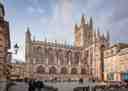
Now, over the years, Bath Abbey has seen quite a few changes. It was reorganized in the 10th century and then rebuilt in the 12th and 16th centuries, giving it that beautiful Perpendicular Gothic architecture you see today. Sir George Gilbert Scott, the fabulous architect, carried out some major restoration work in the 1860s. I guess you could say he gave the abbey a bit of a makeover, like Beyoncé getting ready for a concert. As you can imagine, a place as grand as Bath Abbey has had some pretty important roles in its time. It used to be a monastery, home to a bunch of Benedictine monks. Those monks must have been party animals because the church can seat up to 1,200 people! It's not just a regular church either. Bath Abbey is a Grade I listed building, which means it's extra special and protected. Not only is the abbey a place of worship, but it also hosts all sorts of events. You might even catch a concert or a lecture happening here. And if you love history as much as I do, you're in luck! There's a heritage museum in the cellars of the abbey where you can learn all about its fascinating past. It's like taking a trip through time, but without the awkwardness of dealing with time travel paradoxes. One thing that really stands out about Bath Abbey is its stunning fan vaulting. It's like walking under a sky full of gracefully spreading wings. And if you look closely at the west front, you'll see some little stone angels climbing up ladders to heaven. I guess even they need some help with their cardio workout! Oh, and did you know that the abbey has not one, but two organs? That's right, they're basically the DJ's of the church. I like to imagine them having a friendly organ-off, playing catchy tunes to see who can win the hearts of the congregation. Who knew church music could be so competitive? Okay, enough of my silly jokes. Bath Abbey has a lot more to offer, including war memorials, monuments, and beautiful stained glass. It's truly a sight to behold. So, let's go explore the abbey a little more and keep on discovering the wonders of Bath!
Abrir página dedicada →Originally known as St James's Park, this charming spot was created way back in 1709. It was actually built to accompany the Assembly Rooms, which were a popular hangout for those…Leer másMostrar menos
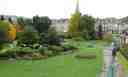
Originally known as St James's Park, this charming spot was created way back in 1709. It was actually built to accompany the Assembly Rooms, which were a popular hangout for those fancy Spa visitors. Can you imagine strolling around these gardens, feeling all posh and sophisticated? But wait! There's more! Fast forward to 1824, and the Bath Royal Literary and Scientific Institution was constructed right here on the very spot where the assembly rooms once stood. And that's when these gardens earned their cool new name - the Institution Gardens. Catchy, right? Now, I must warn ya, my friend, there's a small fee to enter Parade Gardens. But don't worry, if you happen to be a local with a Discovery Card, you'll get in for free! And if you're feeling a little peckish, you're in luck! There's a delightful cafe right here, so you can grab a tasty treat and soak in the beauty of this place. So, my dear friend, take a moment to relax, enjoy the serene atmosphere, and take in the history and beauty that surrounds you in Parade Gardens. And when you're ready, we'll move on to our next exciting stop on this adventure!
Abrir página dedicada →Ah, Pulteney Bridge, the final stop on our tour! Isn't it a beauty? This bridge is quite special because it's not your ordinary bridge, oh no! Pulteney Bridge is a bridge with a…Leer másMostrar menos
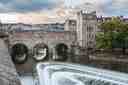
Ah, Pulteney Bridge, the final stop on our tour! Isn't it a beauty? This bridge is quite special because it's not your ordinary bridge, oh no! Pulteney Bridge is a bridge with a twist. It was completed in 1774 and was designed by the talented Robert Adam in a fancy Palladian style. But what sets it apart from other bridges is that it has shops built right on top of it! Yes, you heard me right, you can shop and cross a bridge at the same time! Talk about multitasking! The bridge was built by the Pulteney family, who had big dreams of developing the land on the other side of the River Avon. They wanted to create a fancy new town as a suburb to the historic city of Bath. And boy, did they go all out with this bridge! Back in the day, it was quite a fashionable thing to have shops on a bridge. In fact, Pulteney Bridge is one of only four bridges in the entire world to have shops on both sides. Impressive, right? The other three are in Italy and Germany, so you're in good company. Now, let me tell you a little bit about the history of Pulteney Bridge. Within just 20 years of its construction, they decided to make some changes. They expanded the shops and gave the bridge a bit of a facelift. But then, disaster struck! Floods came a-knocking, and poor Pulteney Bridge got damaged. But fear not, my friend, because it was rebuilt to look just like it did before. Talk about resilience! Over the years, the bridge has gone through a few more changes. They added some fancy cantilevered extensions to the shops on the bridge's north face. And in the 20th century, they carried out some preservation and restoration work to keep the bridge looking beautiful. They wanted to bring it back to its original charm and make it an even more popular tourist attraction. And boy, did they succeed! Nowadays, Pulteney Bridge is a sight to behold. It's a whopping 45 meters (148 feet) long and 18 meters (58 feet) wide. Quite impressive, wouldn't you say? There have been some talks about turning it into a pedestrian-only bridge, but for now, it's still used by buses and taxis. So, watch out for those buses zooming past and snapping pictures of this magnificent bridge! Oh, and did I mention that Pulteney Bridge is named after Frances Pulteney, the wife of a wealthy Scottish lawyer and member of Parliament? That's right! She inherited a fortune and some fancy estates in the area and they wanted a better way to get to their new town. So, Pulteney Bridge was born. Well, my friend, that concludes our tour of Bath! Thank you for joining me today and listening to my enthusiastic ramblings. I hope you had a blast and learned a thing or two along the way. If you enjoyed the tour, feel free to spread the word and bring along some more friends next time. Until we meet again, take care and keep exploring!
Abrir página dedicada →

Preguntas frecuentes
¿Cómo empiezo el tour?
Después de la compra, descarga la app AudaTours e ingresa tu código de canje. El tour estará listo para comenzar de inmediato - solo toca play y sigue la ruta guiada por GPS.
¿Necesito internet durante el tour?
¡No! Descarga el tour antes de empezar y disfrútalo completamente sin conexión. Solo la función de chat requiere internet. Recomendamos descargar en WiFi para ahorrar datos móviles.
¿Es un tour guiado en grupo?
No - esta es una audioguía autoguiada. Exploras de forma independiente a tu propio ritmo, con narración de audio reproduciéndose en tu teléfono. Sin guía, sin grupo, sin horario.
¿Cuánto dura el tour?
La mayoría de los tours toman 60–90 minutos para completar, pero tú controlas el ritmo completamente. Pausa, salta paradas o toma descansos cuando quieras.
¿Qué pasa si no puedo terminar el tour hoy?
¡No hay problema! Los tours tienen acceso de por vida. Pausa y continúa cuando quieras - mañana, la próxima semana o el próximo año. Tu progreso se guarda.
¿Qué idiomas están disponibles?
Todos los tours están disponibles en más de 50 idiomas. Selecciona tu idioma preferido al canjear tu código. Nota: el idioma no se puede cambiar después de generar el tour.
¿Dónde accedo al tour después de comprarlo?
Descarga la app gratuita AudaTours desde App Store o Google Play. Ingresa tu código de canje (enviado por email) y el tour aparecerá en tu biblioteca, listo para descargar y comenzar.
Si no disfrutas el tour, te reembolsamos tu compra. Contáctanos en [email protected]
Paga de forma segura con 


