Audioguía de Santa Cruz de Tenerife: Arte, Ecos y Torres de Salud - La Salle
Bajo el brillante sol atlántico, Santa Cruz de Tenerife esconde un laberinto de historias secretas en sus silenciosos cementerios y sus impresionantes salones modernos. Embárcate en este viaje de audio autoguiado para descubrir historias que la mayoría nunca escucha y explorar rincones donde las leyendas persisten justo más allá de la vista. ¿Por qué voces poderosas una vez callaron detrás de las puertas del Cementerio de San Rafael y San Roque? ¿Qué actuaciones desaparecidas aún resuenan dentro de las atrevidas curvas del Auditorio de Tenerife? ¿Podría un solo artefacto en el Museo de la Naturaleza y la Arqueología cambiar todo lo que se creía sobre los antiguos isleños? Muévete por una ciudad moldeada por la rebelión, la pasión, el misterio y el descubrimiento. Cada paso revela una arquitectura audaz ensombrecida por la intriga política y callejones ocultos que recuerdan escándalos desvanecidos. Contempla Santa Cruz de nuevo mientras la historia cobra vida con cada relato. Dale al play ahora y deja que los secretos de la ciudad te llamen.
Vista previa del tour
Sobre este tour
- scheduleDuración 40–60 minsVe a tu propio ritmo
- straighten3.8 km de ruta a pieSigue el camino guiado
- location_onUbicaciónSanta Cruz, España
- wifi_offFunciona sin conexiónDescarga una vez, úsalo en cualquier lugar
- all_inclusiveAcceso de por vidaReprodúcelo en cualquier momento, para siempre
- location_onComienza en Rascacielos en la Avenida Tres de Mayo
Paradas en este tour
Look for a tall, peach-colored building with lots of glassy balconies rising high above the palm trees on Tres de Mayo Avenue-trust me, it’s hard to miss! Here you are, standing…Leer másMostrar menos
Look for a tall, peach-colored building with lots of glassy balconies rising high above the palm trees on Tres de Mayo Avenue-trust me, it’s hard to miss! Here you are, standing in front of “El Rascacielos”-Santa Cruz de Tenerife’s first real flirtation with the clouds! Back in the 1970s, the city felt a little daring, thinking, “Why not reach for the sky?” Architect Carmelo Rodríguez Borrella answered the call, and in 1974, this 85-meter, 24-story giant opened its doors. Picture the city reels of that era: bell-bottoms, groovy glasses, and from street level, this towering building must have looked absolutely mind-blowing. For years, it was the king of the skyline, casting shade and perhaps a little envy over every other structure around. And just imagine the parties on May 3rd, the opening day-bet folks couldn’t stop looking up, wondering if the clouds might stop by for a visit! Though it’s no longer the city’s tallest (some newcomers eventually stole its crown), “El Rascacielos” remains a beloved, slightly retro superstar-a gentle giant with many stories, not just floors.
Abrir página dedicada →To spot the Cuatro Torres area, look for a vibrant modern cluster of buildings-with sharp glass edges and colorful grids-rising right next to the bustling avenue lined with palm…Leer másMostrar menos
To spot the Cuatro Torres area, look for a vibrant modern cluster of buildings-with sharp glass edges and colorful grids-rising right next to the bustling avenue lined with palm trees. Now, let’s step into a bit of a time machine, shall we? Picture yourself here in the early 1910s: instead of today’s busy modern scene, the neighborhood was known for four mysterious metal towers reaching up like robot arms from the ground. These weren’t your average towers; they were once part of the mighty Radiotelegraphic Station of Tenerife, buzzing with secret messages and the latest news from faraway lands. That’s actually where the name “Cuatro Torres” comes from-pretty clever, huh? Over time, the area grew into a lively urban trapezoid surrounded by major avenues-San Sebastián, José Manuel Guimerá, Tres de Mayo, and Los Molinos. Now, life here isn’t just about history: you’re standing in the heart of Santa Cruz, just 1.1 kilometers from the city center and barely 15 meters above sea level, where everyone seems to be in a hurry except for the palm trees gently swaying in the breeze. This spot is not just about old towers-it’s a magnet for Santa Cruz’s hotspots! Within steps, you’ll find the bustling Nuestra Señora de África Market (shopping and fresh bread smells galore), the historic San Rafael y San Roque Cemetery, and the skyscraper right along this avenue that’s probably making your neck ache from looking up. Today, these blocks are filled with banks, cafes, parks, public plazas, and even a pharmacy just in case your feet start rebelling from all this walking. And if you ever need to pay taxes (not the most thrilling part of travel, I admit!), or sort out school papers, you’re surrounded by important government buildings, law courts, and even the Social Security offices. Imagine all the people who have crossed these same streets-from radio pioneers to market sellers and modern-day city dwellers
Abrir página dedicada →To spot the Cemetery of San Rafael and San Roque, look for a tall white wall topped with a cross, a big dark green gate in the center, and standing slightly apart from the city’s…Leer másMostrar menos
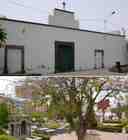
To spot the Cemetery of San Rafael and San Roque, look for a tall white wall topped with a cross, a big dark green gate in the center, and standing slightly apart from the city’s modern bustle-just ahead of you now, quietly tucked between the trees and pathways. Alright, take a breath and imagine stepping back to the early 1800s in Santa Cruz, when the city was expanding fast, people were living close together, and, well, let’s just say there was a shortage of space-especially underneath the churches! That’s exactly why this cemetery was born: by 1805, they simply ran out of room to bury their dead inside the temples. Then, in 1811, things really sped up. There was an outbreak of yellow fever and lots of folks were forced, perhaps reluctantly, to start thinking about a new cemetery outside the busy town center. You can almost hear the old city leaders sigh as they debated, “Another cemetery? Well, better safe than sorry!” So here, between two old hermitages, they established the San Rafael and San Roque cemetery. At that time it was far from the city’s main streets. The first four people laid to rest here? Two of them, Rafael and Roque, generously donated their names to the entire grounds-talk about leaving a legacy! Not long after, a smaller cemetery for English merchants, sailors, and officials appeared right next to the main one, making the spot a multicultural afterlife hotspot. Now, picture stepping inside. The ground plan is anything but regular, boxed in by high white walls that, if you squint, look a bit like a cake topped with battlements. Entering from the north, you’ll see three arches for the Catholics, one for the Protestants. The Protestant gate is framed by stone blocks and topped with a narrow, plant-decorated pediment-nature and history getting right to the point. Once you’re inside, it’s like wandering a maze of stories: grand mausoleums share ground with humble stone slabs. Some plots are marked by simple headstones, others by statues and metallic coats of arms, all set within leafy green paths that connect the Catholic and Protestant sides. Look for the big, historicist-style chapel from the second half of the 1800s-built just for the Anglican community. It’s not just the tombs that tell tales. Over 30,000 souls rest here, including local heroes and personalities. There’s Sabino Berthelot, Ireneo González, and Imeldo Seris-though the city later moved their remains to a fancier spot. Maybe most interesting is Secundino Delgado, a gentle rebel now at peace in the common grave. The last person to be buried here went in back in 1954, which means, for decades, this place has been a silent witness to Santa Cruz’s changing times. But here’s where things get dramatic-the cemetery has had a rough few decades. With rusty gates, cracked marble, and the odd missing sculpture, it’s been both neglected and, sadly, vandalized. For a while, you could only visit on November 1st and 2nd! Still, it was recognized in 2004 as a Monument of Cultural Interest, a sign of hope that one day it would be restored. And guess what? In 2019, the city budgeted half a million euros to give this place a proper face-lift: fixing up the gates, sprucing up the gardens, reconnecting the old chapels, and adding ramps and spaces for community events. So as you stand here, don’t just think of it as an old cemetery-imagine the echoes of history, the laughter of families visiting lost loved ones, and the quiet drama of city officials arguing about renovation budgets. The San Rafael and San Roque cemetery is like a “who’s who” of Santa Cruz civic history…and an ongoing mystery, waiting to welcome a new generation of curious visitors-minus the old yellow fever scare, of course!
Abrir página dedicada →
Mostrar 10 paradas másMostrar menos paradasexpand_moreexpand_less
To spot the Our Lady of Africa Market, look for a large, peach-colored building with a grand arched entrance labeled “La Recova” and a tall clock tower topped with weather…Leer másMostrar menos
To spot the Our Lady of Africa Market, look for a large, peach-colored building with a grand arched entrance labeled “La Recova” and a tall clock tower topped with weather vanes. Welcome to the vibrant heart of Santa Cruz de Tenerife, where the spirit of market life greets you with the buzz of conversation and the scent of fresh produce floating in the air. This is La Recova, officially the Mercado de Nuestra Señora de África, born in early 1944 with a flourish worthy of a movie opening. It all began thanks to General Ricardo Serrador Santés, whose wish for a grand market led him to commission architect José Enrique Marrero Regalado-the very same man who designed the island’s beloved Basílica de la Virgen de Candelaria. The result? A neocolonial marvel with hints of a Spanish plaza and a twist of Californian fortress, right here on Avenida de San Sebastián. Picture it: three spacious patios await inside, with a central area meant to feel like a classic Spanish square, flanked by two side courtyards, all beneath the watchful clock tower built in the unique Mudéjar style. Legend has it that the grand inauguration drew crowds in their Sunday best as the captain general cut the symbolic ribbon and the local bishop gave his blessing. To make getting here an adventure, the architect José Blasco Robles built the Serrador Bridge, so visitors could cross the Santos ravine straight from the bustling Calle Castillo right into the market’s open arms. Hidden within, just above the entryway, you'll spot a tiny statue of the Virgin of Africa, looking over the daily parade of customers. And directly across from her? Her Canarian counterpart, the Virgin of Candelaria, in miniature form-watch out, there may be more saints here than shoppers! In modern times, the market made it onto The Guardian’s list of the top ten best markets in the world-a little global fame to go with its fresh fish. In 2018, it bagged the city’s Gold Medal for its 75th anniversary, and in 2024, it was crowned Instagram’s most beloved market, so feel free to post your best avocado pics. Take a moment to appreciate how old-world charm meets the lively movement of today. La Recova is as much about sights and smells as it is about stories-a marketplace where history lingers between the tomatoes. Ready to delve deeper into the characteristics, other data or the image gallery? Join me in the chat section for an enriching discussion.
Abrir página dedicada →To spot the Tenerife Arts Space, just look for the striking modern building with sharp, angular concrete walls and huge glass windows-the bold “TEA” letters on the facade make it…Leer másMostrar menos
To spot the Tenerife Arts Space, just look for the striking modern building with sharp, angular concrete walls and huge glass windows-the bold “TEA” letters on the facade make it unmistakable as you stand in front of its wide, open plaza. Welcome to the Tenerife Espacio de las Artes, or as the locals call it, TEA-a cultural spaceship ready to launch your imagination! Imagine stepping into a place where art, architecture, and the creative spirit of an island all come together under one futuristic roof. The moment you stand here, you’ll notice its modern, almost mysterious exterior, designed by the world-famous Swiss architects Herzog & de Meuron with the local touch of Virgilio Gutiérrez Herreros. It’s not your everyday building, that’s for sure. The sharp lines and massive concrete walls look like they could hide secret alien artifacts... or just world-class artwork. Since its doors first swung open in 2008, TEA’s 20,000 square meters have been bursting with life-art galleries, a photography center, a huge library, and even a restaurant (just in case your imagination gets hungry). Rumor has it, on quiet days the building creaks with ideas and creativity drifting through its glass corridors. Designed with light and openness, TEA’s sweeping spiral staircase and airy plaza connect Santa Cruz’s old-town charm with the city’s pulse. There’s even a walkway that slices right through the building, making you feel like you’re on an urban adventure between past and future. TEA is all about fresh perspectives, not just pretty pictures. Since 2024, the center has been directed by Sergio Rubira-one brave steward in a line of directors devoted to turning this space into a lighthouse for contemporary culture. Its main mission? To encourage everyone, from curious school kids to lifelong art lovers, to reflect on today’s society through the lens of the 20th and 21st centuries. But let me let you in on a secret: TEA’s heart belongs to surrealism. Its permanent collection is anchored by pieces from Oscar Domínguez, Tenerife’s own surrealist trailblazer. And as if that wasn’t enough, TEA’s collection is a treasure trove of modern masters and up-and-coming talents, from Pablo Picasso to Patti Smith. The photography center here is almost a labyrinth of history-its “Fotonoviembre” event attracts world-class photographers and curious visitors every two years, making the galleries buzz with excitement. You can’t miss the building’s latest resident: “Carla,” a 7-meter-tall iron sculpture of a girl with her eyes gently closed, standing outside since 2023. Created by Jaume Plensa, she looks peaceful, wise... and just a bit mysterious, almost as if she’s dreaming up the next great idea brewing inside TEA’s walls. So, take a deep breath-let your mind wander, and see if you can feel the electricity in the air. And don’t worry, the only thing more creative than the art here is the haircuts you’ll see in the library. Ready to explore the future and the fantastic, all in one place? Seeking more information about the localization, design or the address? Ask away in the chat section and I'll fill you in.
Abrir página dedicada →Look around for a sleek modern building with large glass walls and an angled roofline; the Central Municipal Library is just ahead, with its transparent façade revealing rows of…Leer másMostrar menos
Look around for a sleek modern building with large glass walls and an angled roofline; the Central Municipal Library is just ahead, with its transparent façade revealing rows of glowing lights and shelves inside. Alright! Imagine yourself standing here, right outside the Central Municipal Library of Santa Cruz de Tenerife. You’re looking at a place where old stories, new ideas, and a thousand whispered secrets are trapped between the covers of books, quietly waiting for curious minds like yours. But this library, with its bold glass windows and dramatic overhang, wasn’t always this stylish hub. Oh no, its story is a real page-turner! Let’s go back to the foggy days of the 1870s, when the city’s first public library was little more than a dream, supported by local thinkers and visionaries. Picture scholars with spectacular mustaches and top hats debating in candle-lit rooms, fighting for the right to bring books to the people. Back then, the very first books found shelter in a humble building at what’s now the plaza Ireneo González. Soon, thanks to the generosity of Francisco de León Morales-who donated over 1,500 books on one curious condition (he wanted the job of librarian, with a respectable salary)-the library truly blossomed. It officially opened its doors in 1888, the same year people were probably still amazed by lightbulbs! This became a treasure chest for the city’s minds. But the library didn’t stay put! Oh no, it was like a wandering bookworm. It moved from a secularized church to a lawyers’ college, then, in 1932, joined the city’s art museum in a purpose-built home at Plaza del Príncipe. For almost a century, it changed addresses more often than a lost postcard-until, finally, in 2008, it arrived here, inside the Tenerife Espacio de las Artes. Now, this place is the “brain” of Santa Cruz’s library system. It’s part of a dynamic network-so dynamic, in fact, that they even have a “Biblioguagua,” a bus loaded with books that visits 30 neighborhoods. Imagine a magical bus rolling through the streets, filled with stories for anyone who flags it down! Step inside, and you’ll discover three main worlds: the general hall, an endless forest of desks and armchairs (if you ever dreamt of choosing your perfect reading spot, this is paradise); the children’s and youth library, a colorful kingdom of discovery and adventure; and a mysterious non-public archive, where old documents slumber, waiting for library detectives to crack their secrets. And the collection? Well, here, you’ll find nearly 200,000 original works, some dating back hundreds of years-including newspapers from 1785, the very first ever printed in all of the Canary Islands! It’s like a giant time machine made of paper and ink. They even have over 14,000 CDs and DVDs, just in case you want to swap the silence for some tunes. Oh, but guess what? The library never sleeps! Its main hall is open 24/7, every day-even at midnight, when the only sound is the hum of the air conditioning and the click of someone’s keyboard as they hunt down a deadline. Need to use a computer? Just show your ID. Want to borrow a book? Register for a free card, and boom, your access to written treasure is unlocked-not just here, but at every library in the Canary Islands’ network. And if you ever join a workshop or event, you’re stepping into a living tradition that’s been growing for over a century. So whether you’re here to chase facts, follow fairy tales, or just soak up the calm, remember you’re standing in a place that has spent over 130 years turning the dreams of readers into reality. And hey, if these walls could talk, I bet they’d whisper, “One more chapter… You’ve got time.”
Abrir página dedicada →To spot the Museum of Nature and Archaeology, look for a grand, rectangular neoclassical building with rows of arched windows and a triangular pediment at the top, standing…Leer másMostrar menos
To spot the Museum of Nature and Archaeology, look for a grand, rectangular neoclassical building with rows of arched windows and a triangular pediment at the top, standing proudly at the end of a ramp right in front of you. Welcome to one of Tenerife’s greatest treasure chests-the Museum of Nature and Archaeology! Now, you might expect a building like this to be full of doctors and nurses back in the day, and you’d be right-it was once the city’s Civil Hospital. Imagine the sound of footsteps echoing along these marble corridors, and the gentle clatter of nurses passing by. But don’t worry, today the only thing this building will do is stretch your curiosity rather than your heartbeat! Since the mid-1990s, the old hospital has hosted a spectacular collection that brings together archaeology, anthropology, and a world of natural wonders. The museum itself is one of the best examples of neoclassical architecture in the Canary Islands and was declared a Cultural Monument back in 1983. You could say it’s the healthiest building on the island-at least for your imagination! Step inside, and you’ll find yourself amidst the story of the Guanche people, Tenerife’s mysterious ancient inhabitants. Their story is preserved here, and I’ll let you in on some of the secrets-without mummifying the facts, I promise! This museum is world-famous for its collection of Guanche mummies. There are glass cases with elegantly preserved ancient people, some wrapped in goat skins, others in pig hide, and yes, even some particularly important mummies who took a surprise vacation to Argentina and Madrid before finally being repatriated back here. Traveling mummies-talk about frequent flyer miles! The Guanche funerary world is all around you, from tiny fetal mummies to robust warriors. There’s even a row of skulls belonging to goats that were buried alongside kings. And in the middle of all this-pottery, burial tools, and one of the most mysterious items: the Zanata Stone, featuring ancient inscriptions that still fuel debate and make archaeologists scratch their heads. The story doesn’t stop with ancient Tenerife. This building brings together three major institutions: the Archaeological Museum of Tenerife, the Canary Institute of Bioanthropology, and the Museum of Natural Sciences. That means you’ll also bump into giant lizard fossils, ancient shark teeth (imagine a Megalodon with a dentist bill!), rats the size of small dogs, and tortoise shells large enough to make you wonder what they were feeding those turtles! It’s not just bones and stones-there’s a treasure trove of ancient Mediterranean amphorae, a collection of Egyptian jars over five and a half millennia old, and ethnographic objects from the Americas and Africa. Superstars like the Aztecs, Mayas, and Toltecs have also sent their artifacts for a guest appearance. Beyond the relics, this museum is a living research center. International scientists gather here for conferences, and its halls have even starred in documentaries from Japan, the US, Italy, and South Korea. In fact, Stephen Hawking himself stopped by for a look-it seems the mysteries inside are enough to interest even the greatest minds. And if you’re hoping for free admission, come by on Friday or Saturday evening, or bring your under-eight-year-old explorer along-kids get in free. So as you stand here at the gateway to ancient Tenerife, imagine stories buried beneath volcanic soil, scientists puzzling over ancient puzzles, and mummies who took the scenic route before coming home. Don’t worry-if you see anything move inside, it’s probably just a curious scientist, not a mummy coming for a midnight stroll! Interested in a deeper dive into the projects, documentaries filmed at the museum or the overview? Join me in the chat section for an insightful conversation.
Abrir página dedicada →You’re looking for a small, pale stone building with a twin bell tower, a green cross on the roof, and a charming red iron gate - just ahead and slightly to your left. Right here…Leer másMostrar menos
You’re looking for a small, pale stone building with a twin bell tower, a green cross on the roof, and a charming red iron gate - just ahead and slightly to your left. Right here in front of you stands the Hermitage of San Telmo, one of the oldest buildings in all of Santa Cruz de Tenerife! Go ahead, take a good look at its rugged walls and arched black stone doorway. Fishers built this little church back in the 1500s to honor their favorite protector, San Telmo-because, let’s face it, who doesn’t want a saint on board when the high seas start showing their teeth? Inside, you’d discover not just San Telmo’s statue, but also an all-star cast: the Virgin of Buen Viaje, Saint Joseph, Saint Sebastian, and even Tenerife’s very first saint, Brother Pedro de Betancur. Talk about a guest list! This humble rectangular chapel witnessed the city’s very birth. Yes, it’s said the founding ceremony for Santa Cruz itself happened right here in 1494-no pressure, right? Over time, it housed treasures like the city’s original founding cross and held paintings that bring to life moments like Admiral Nelson’s famous (and failed!) attack. And there’s a little slice of pirate lore too: tradition claims the notorious Cabeza de Perro handed over a small ship figurine to the Virgin of Carmen before his doom, which still floats in the church as a quirky ex-voto. Each April, things really come alive here with the Romería of the Virgin of Buen Viaje and San Telmo-just imagine the laughter and music, along with carts decked out in flowers and pulled by well-groomed, prancing animals, all marching before these cherished statues. Santa Cruz’s farmers, dancers, and musicians bring traditions straight onto these cobbled streets, echoing the fisherman’s prayers from centuries ago. Now, that’s a party even San Telmo would approve of!
Abrir página dedicada →This avenue isn’t just a pretty face; it’s the meeting point of journeys. To the south, cars zoom in from the Autopista del Sur, carrying dreams of beaches and volcanoes. To the…Leer másMostrar menos
This avenue isn’t just a pretty face; it’s the meeting point of journeys. To the south, cars zoom in from the Autopista del Sur, carrying dreams of beaches and volcanoes. To the north, the road melts into Avenida Francisco La Roche-better known by locals as Avenida de Anaga-where the city meets the sea. So as you stand here, you’re right in the heart of it all, at the pulse of Santa Cruz. You know what they say: all roads lead to the perfect selfie spot!
Abrir página dedicada →Right in front of you, the Auditorio de Tenerife is impossible to miss-a dazzling white structure that curves skyward like a giant ocean wave ready to leap into the blue; just…Leer másMostrar menos
Right in front of you, the Auditorio de Tenerife is impossible to miss-a dazzling white structure that curves skyward like a giant ocean wave ready to leap into the blue; just look ahead and slightly to your left, and you’ll spot its dramatic arc towering above the seafront. Now, standing here, let’s imagine the scene more than two decades ago. The salty Atlantic breeze whooshes by and a crowd gathers at this very spot, but back then it was just an empty lot at the southern edge of the port. For years, Tenerife dreamed of a grand stage for music and spectacle-something truly world-class-and after much debate, the big idea finally took shape when they brought in the Spanish star architect Santiago Calatrava. Did you know it took almost as long to decide on a location as it did to actually build the thing? If these curves look familiar, that’s no accident-many have compared it to the Sydney Opera House. Locals chuckle and call Santa Cruz “the Sydney of the Atlantic.” By 1997, construction began, and people wondered if this gravity-defying design could really be built. When the final white tiles were fitted and that huge, swooping roof was finished, folks held their breath. That roof? It’s like a giant shell floating 40 meters in the air, weighing tons, but balanced delicately on just two points, leaving the edge to seemingly hover, like the wing of some futuristic bird. It’s neo-futurism, but I call it “Wow-ism.” Inside, the magic is just as real! The main concert hall (or Sala Sinfónica) seats over 1,600, all wrapped around in balconies and crowned with a magnificent dome. Even the organ pipes peek out surprisingly, ready to swallow you in music from all sides-Albert Blancafort designed them with surround sound before it was cool. The secondary chamber is smaller, but just as elegant, perfect for more intimate performances. On a busy evening, the hum and footsteps of concertgoers turn the echoing entry halls into their own music. Since its opening by the future King of Spain in 2003, every kind of star has stepped through these doors: from local orchestras to global legends. U.S. President Bill Clinton popped in for a visit (sadly, he did not play the saxophone). And the Auditorio's fame hasn't stopped there-a stamp was made with its image in 2008, a commemorative coin in 2011, and filmmakers have turned to this spot for dazzling scenes in movies and TV series, like “Doctor Who,” “Rambo,” and even “Foundation.” There’s a real chance Hollywood’s favorite aliens will be invading Santa Cruz soon. If you come by at night, those sweeping lines are lit up in bright colors-sometimes white, sometimes blue for World Diabetes Day, or even bright green for radio award galas. Sometimes, the building becomes the main character itself, with patterns and images dancing on the big curved “wing” overlooking the Atlantic. Come festival season, the plaza buzzes with actors and pop stars-think Latin megastars strutting down a green carpet and crowds hoping for a selfie. Even Stephen Hawking visited during the Starmus festival, choosing this spot as the island’s very own window on the universe. So, pause a moment and listen to the lapping waves, look up at that roof-still effortlessly challenging gravity. You’re standing at the beating artistic heart of Tenerife, in a place made for legends, laughter, drama, and a little bit of mystery. Ready to see what stories the next performance will bring? Ready to delve deeper into the location, project or the the building? Join me in the chat section for an enriching discussion.
Abrir página dedicada →But don't let the serious granite face fool you: this fortress also saw its fair share of drama and high society. In 1684, the King of Spain himself, Charles II, decided to let…Leer másMostrar menos
But don't let the serious granite face fool you: this fortress also saw its fair share of drama and high society. In 1684, the King of Spain himself, Charles II, decided to let the local government choose the castle’s warden, a position so prestigious that nobility practically lined up in their fanciest hats. Why? The warden controlled everything from fishing rights to port police, managed town disputes, and even had the all-important job of collecting salt and flour tariffs. The Black Castle wasn’t just about cannons-it was about power and privilege. And if you’re wondering about action scenes-every July, this place echoes with the roaring sounds and smoky muskets of the famous Battle of Santa Cruz re-enactment, when Admiral Nelson’s British troops tried their luck and, sorry Nelson, didn’t get a souvenir. So, standing here today, you’re right where history marched, argued, and even laughed-sometimes, at the British!
Abrir página dedicada →Look straight ahead and you'll spot two ultra-modern, silvery skyscrapers standing side by side, towering above the surrounding buildings like futuristic giants reaching into the…Leer másMostrar menos
Look straight ahead and you'll spot two ultra-modern, silvery skyscrapers standing side by side, towering above the surrounding buildings like futuristic giants reaching into the sky. Now that you’re standing in front of the Santa Cruz Towers, or as locals call them, “Las Torres,” you can really feel their impressive presence. Take in this striking pair: two identical siblings, both gleaming and sharp-edged, almost like giant tuning forks waiting to play you the song of modern Santa Cruz. Here’s a bit of their dramatic story-it’s not just glass and steel, but a tale worthy of the movies. Actually, it literally is featured in movies-I’ll get to that soon! The journey of the Torres de Santa Cruz started back in the early 2000s, when local architect Julián Valladares was handed the mighty task of designing the new crown jewels of Tenerife. Maybe he drew his first sketches with coffee in one hand and dreams of touching the sky in the other. When finished, these towers soared to 120 meters-taller than anything else in the Canary Islands. They even claimed the title of Spain’s highest residential buildings for six whole years. Sixth place isn’t bad though; it’s still a medal, right? But here’s where the drama kicks in. Construction on these towers came to a grinding halt after the shocking attacks on New York’s Twin Towers in 2001-even island life can suddenly feel connected to far-off events. For a while, the Santa Cruz Towers stood as blueprints and hopes. But when work resumed, the city watched as first one tower rose, then the next-a pair, but never together until both were finally completed by different firms: Ferrovial finished the first tower in 2004, while Candesa took the second to the finish line in 2006. Like a sibling rivalry right out of an architect’s family reunion! Picture this next moment: November 2005, and Santa Cruz is battered by Tropical Storm Delta. Howling winds whip through the city and-crash! -the original steel facade of the first tower comes tumbling down, panels flying into the streets. Nobody was injured, but let’s just say local pigeons found somewhere safer to perch for a while. This mishap led to both towers being wrapped in much tougher, storm-proof stainless steel, so today they’re armored up to face the wildest Atlantic weather. With 32 floors above ground and several more lurking below, these aren’t just pretty faces; the towers are packed with homes, offices, and shops. They’re also the tallest twin towers in all of Spain, beating even the iconic Kio Towers of Madrid by six meters-a fact the locals whisper to any wayward Madrid tourist who’ll listen. The towers quickly became symbols of the city’s new era, standing right near icons like the Auditorio de Tenerife, which you may be able to spot nearby. They’ve starred in films like Rambo: Last Blood and action series like Jack Ryan. Hollywood seems to love these skyscrapers almost as much as Santa Cruz does. As you gaze up at these silver titans, imagine the hustle and hope it took to build them-and the relief after those battered metal plates were finally replaced. Today, the Santa Cruz Towers don’t just tower over the city; they stand as bold emblems of Tenerife’s spirit and ambition-visible proof that even on an island known for its ancient volcanos, the future is always looking up. For a more comprehensive understanding of the location, the building or the records, engage with me in the chat section below.
Abrir página dedicada →Look ahead for a massive, futuristic building with a sweeping arched roof and a striking combination of glass, concrete, and stone-nearly impossible to miss as it dominates the…Leer másMostrar menos
Look ahead for a massive, futuristic building with a sweeping arched roof and a striking combination of glass, concrete, and stone-nearly impossible to miss as it dominates the seafront skyline right in front of you! Now, as you stand before the Tenerife International Trade Fair and Congress Centre-known to the locals as the Recinto Ferial-let your imagination take you on a whirlwind tour through its bustling halls and echoing events. Picture the year: it’s May 1996. The city hums with excitement as this giant of architecture throws open its doors for the very first time, proudly stretching over 40,000 square meters along the coast of Santa Cruz de Tenerife. Behind its daring design is the world-renowned architect Santiago Calatrava, who knew a thing or two about dreaming big. Some say the arched roof looks like a graceful wave about to crash on the shores it faces, and honestly, this building sure knows how to make a splash! Inside, the air is buzzing. On the upper floor, you’ll find La Gran Nave, the mighty Great Hall-bigger than any indoor space in the Canary Islands. Imagine standing at one end of this colossal room: 190 meters long, 70 meters wide, and almost 20 meters high. The walls shimmer with glass, iron, and concrete. It’s a space so massive you could practically host a small parade… and, at times, they actually do! This hall has rung with applause from thousands-up to 15,000 people at a time-gathered for everything from tech expos and food fairs to roaring rock concerts, glitzy fashion shows, glamorous carnival galas, and even TV broadcasts. Downstairs, in the Zócalo, a quieter scene unfolds. This is where minds meet for congresses or seminars, while the multi-purpose hall gets set up for everything from art exhibits to lively meetings. There's also the Anexo, a building full of bustling offices, technical hubs, and-just like every good fairy tale-an entrance under a dramatic 50-meter arch! But the Recinto Ferial doesn’t just host events; it throws true Tenerife parties! The Carnival’s Grand Queen Gala has claimed this space as its home several times-imagine glitter, music, feathers, and, of course, anticipation thick enough to taste! In 2015, the centre hit a high note by hosting the legendary Cadena Dial Awards. Picture flashing cameras, thumping music, and stars like Alejandro Sanz, Laura Pausini, and David Bisbal illuminating the night. So whether it’s wild carnival colors or the rich aroma of a food fair, this building laughs, sings, and sparkles with the spirit of Tenerife. And if these walls could talk, oh, the stories they’d tell!
Abrir página dedicada →
Preguntas frecuentes
¿Cómo empiezo el tour?
Después de la compra, descarga la app AudaTours e ingresa tu código de canje. El tour estará listo para comenzar de inmediato - solo toca play y sigue la ruta guiada por GPS.
¿Necesito internet durante el tour?
¡No! Descarga el tour antes de empezar y disfrútalo completamente sin conexión. Solo la función de chat requiere internet. Recomendamos descargar en WiFi para ahorrar datos móviles.
¿Es un tour guiado en grupo?
No - esta es una audioguía autoguiada. Exploras de forma independiente a tu propio ritmo, con narración de audio reproduciéndose en tu teléfono. Sin guía, sin grupo, sin horario.
¿Cuánto dura el tour?
La mayoría de los tours toman 60–90 minutos para completar, pero tú controlas el ritmo completamente. Pausa, salta paradas o toma descansos cuando quieras.
¿Qué pasa si no puedo terminar el tour hoy?
¡No hay problema! Los tours tienen acceso de por vida. Pausa y continúa cuando quieras - mañana, la próxima semana o el próximo año. Tu progreso se guarda.
¿Qué idiomas están disponibles?
Todos los tours están disponibles en más de 50 idiomas. Selecciona tu idioma preferido al canjear tu código. Nota: el idioma no se puede cambiar después de generar el tour.
¿Dónde accedo al tour después de comprarlo?
Descarga la app gratuita AudaTours desde App Store o Google Play. Ingresa tu código de canje (enviado por email) y el tour aparecerá en tu biblioteca, listo para descargar y comenzar.
Si no disfrutas el tour, te reembolsamos tu compra. Contáctanos en [email protected]
Paga de forma segura con 



