
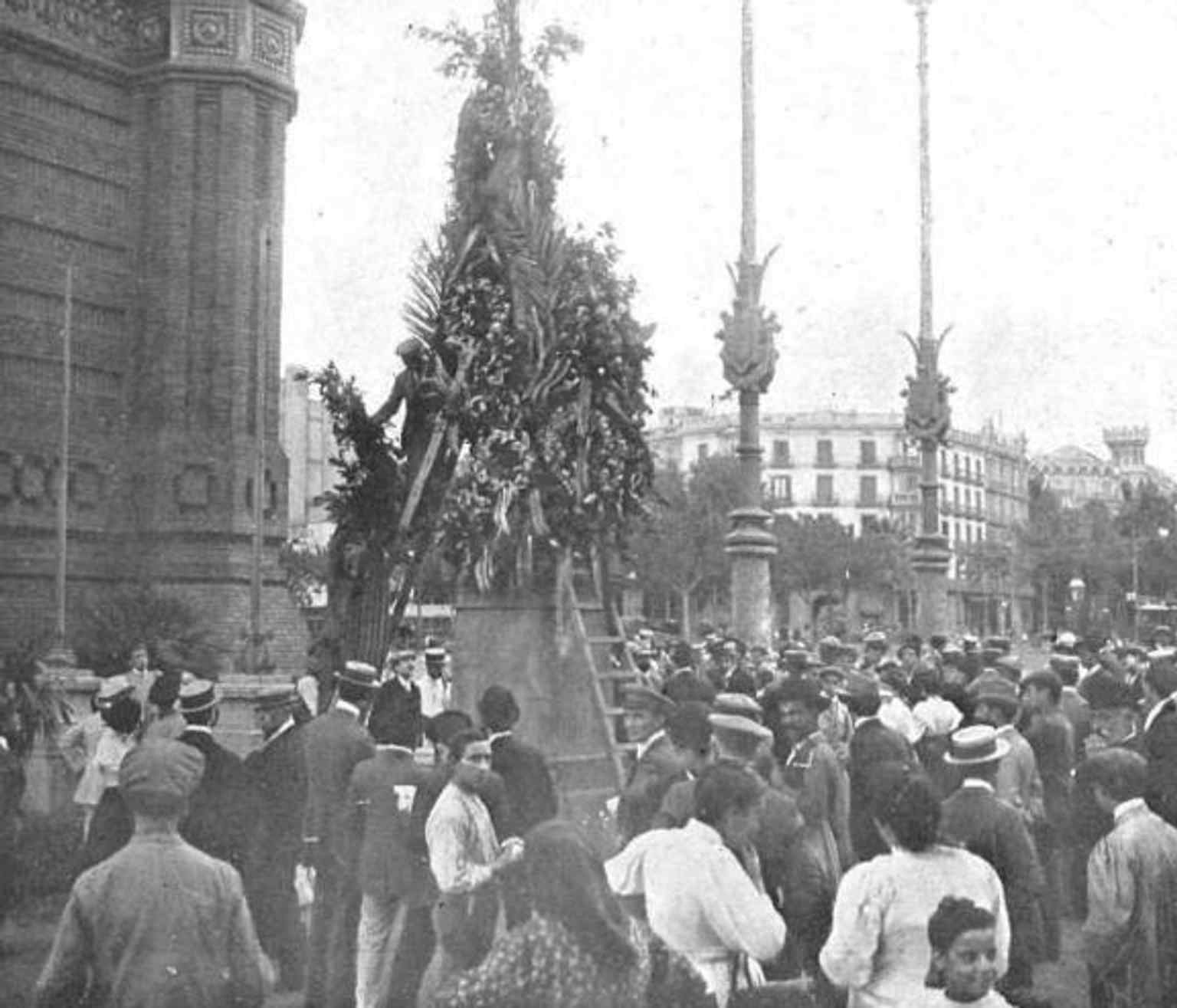
En 1914, para conmemorar el segundo centenario de la batalla, la ciudad trasladó la estatua a esta esquina donde cayó. Añadieron el amplio y fúnebre pedestal de piedra que ven hoy, diseñado por Alexandre Soler y Josep Llimona, con figuras femeninas que representan el inmenso dolor de la ciudad derrotada. El hecho de que estén contemplando la estatua de bronce original es un pequeño milagro de resistencia silenciosa. En 1939, tras la Guerra Civil Española, el nuevo régimen autoritario ordenó la destrucción total del monumento y su fundición para borrar su poderosa memoria política. Pero el alcalde de la ciudad ignoró discretamente las airadas órdenes de sus superiores. Hizo que la enorme figura de bronce fuera cuidadosamente desmontada y escondida en secreto bajo lonas en un polvoriento almacén municipal. Permaneció en la oscuridad durante casi cuarenta años. Entonces llegó 1977, y la turbulenta transición de vuelta a la democracia. Más de un millón de personas inundaron las calles de Barcelona, exigiendo el retorno de sus derechos históricos. Y justo en el centro emocional de aquel levantamiento masivo y alegre estaba Rafael Casanova, devuelto a la luz del sol e instalado exactamente donde pertenecía. Una ciudad rota y oculta, resurgiendo con más fuerza que antes. Dado que se encuentra en la vía póblica, esta resistente pieza de historia está abierta las 24 horas del día para cualquiera que desee presentar sus respetos. Sigamos avanzando ahora. Diríjanse directamente por la amplia avenida que tienen delante hacia el Arco de Triunfo, que estará a unos cinco minutos a pie.
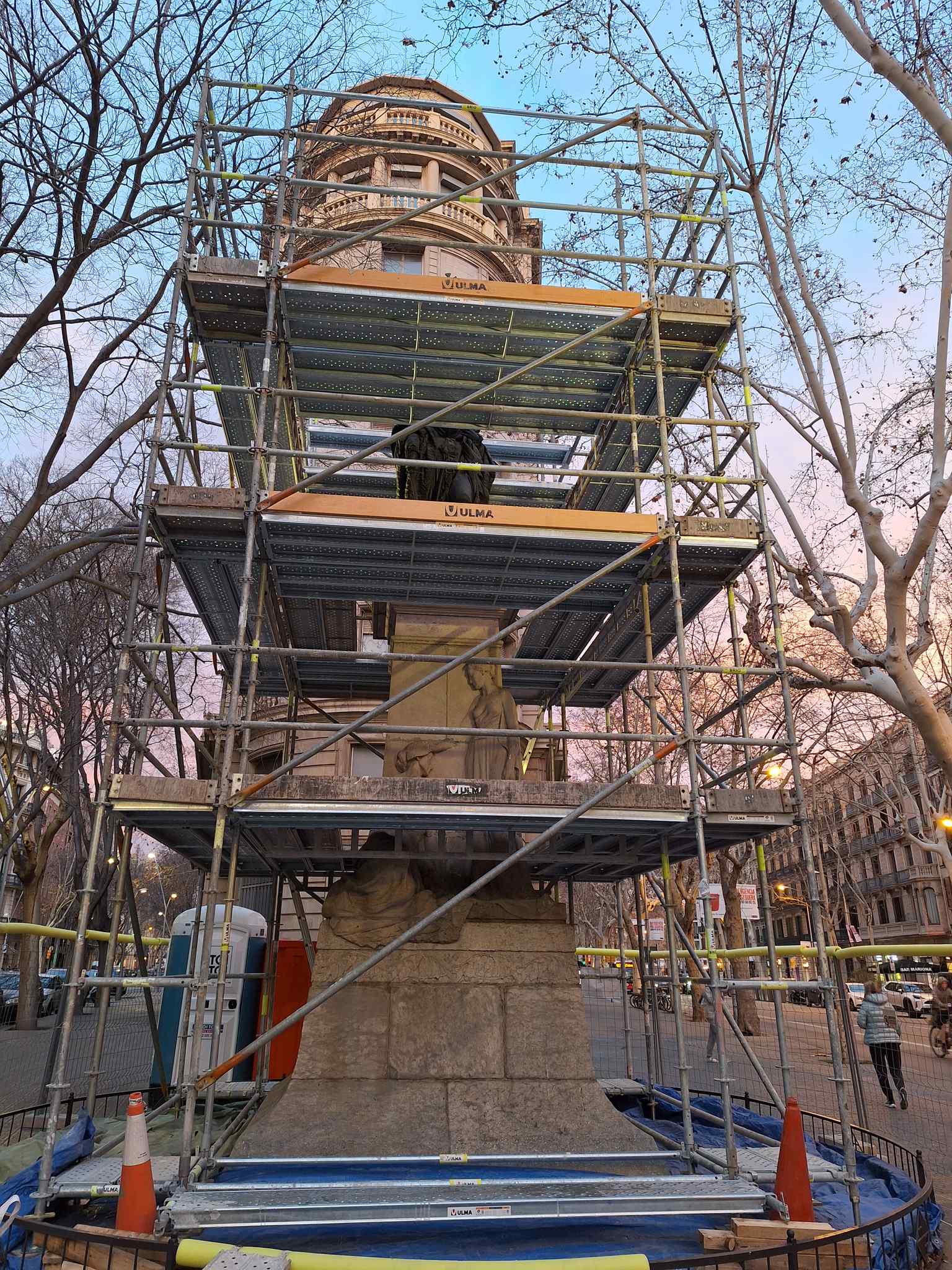
In 1914, to mark the second centennial of the battle, the city moved the statue to this corner where he fell. They added the sweeping, mournful stone pedestal you see today, designed by Alexandre Soler and Josep Llimona, with female figures representing the immense grief of the defeated city. The fact that you are looking at the original bronze statue is a minor miracle of quiet defiance. In 1939, following the Spanish Civil War, the new authoritarian regime ordered this monument completely destroyed and melted down to erase its powerful political memory. But the city's mayor discretely ignored the angry orders from his superiors. He had the massive bronze figure carefully dismantled and hidden in secret under tarps in a dusty municipal warehouse. It sat in darkness for nearly forty years. Then came 1977, and the turbulent transition back to democracy. More than a million people flooded the streets of Barcelona, demanding the return of their historical rights. And right at the emotional center of that massive, joyful uprising was Rafael Casanova, brought back into the sunlight and reinstalled exactly where he belonged. A city broken and hidden away, rising back up stronger than before. Since it stands in the public street, this resilient piece of history is open 24 hours a day for anyone who wants to pay their respects. Let us keep moving now. Head straight down the wide avenue ahead of you toward the Arc de Triomf, which will be about a five minute walk.






