
Tour de audio de Faro: Ecos de fe y paso a través del tiempo
Una ciudad romana duerme bajo las calles modernas de Faro, esperando que sus secretos emerjan en el aire vibrante de calor. Escucha el latido del corazón de la ciudad en este tour de audio autoguiado, serpenteando a través de arcos bañados por el sol y rincones olvidados. Descubre historias que acechan donde las guías permanecen en silencio y los lugareños rara vez pisan. ¿Qué acto desesperado en las murallas de Ossónoba desató un caos que resonó a través de los siglos? ¿Por qué los susurros se aferran a las piedras del Arco da Vila después del anochecer? ¿Y quién desapareció en el Granero de San Francisco, con su destino sellado tras puertas cerradas y rumores? Rastrea los contornos sombríos de rebeliones y escándalos mientras mosaicos perdidos brillan bajo tus pies. Sigue callejones sinuosos desde el poder romano hasta la intriga morisca y la fuga audaz. Ve Faro con nuevos ojos mientras cada monumento te adentra más en su enredado pasado. Desbloquea el corazón oculto de la ciudad y deja que su drama enterrado guíe tu próximo paso. Comienza tu viaje.
Vista previa del tour
Sobre este tour
- scheduleDuración 30–50 minsVe a tu propio ritmo
- straighten2.7 km de ruta a pieSigue el camino guiado
- location_on
- wifi_offFunciona sin conexiónDescarga una vez, úsalo en cualquier lugar
- all_inclusiveAcceso de por vidaReprodúcelo en cualquier momento, para siempre
- location_onComienza en Estación de tren de Faro
Paradas en este tour
To spot Faro railway station, just look for the classic white building with its bright orange-tiled roof and green window frames, sitting right beside the train tracks-a bit like…Leer másMostrar menos
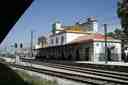
To spot Faro railway station, just look for the classic white building with its bright orange-tiled roof and green window frames, sitting right beside the train tracks-a bit like a giant cake with train tracks for candles! Now, picture yourself standing here back in 1889, the year this railway station flung open its doors and began a whole new era for Faro. Steam engines once chugged in with a dramatic hiss, bringing travelers, families, and even a chicken or two to town. Since those days, Faro station has evolved from the days of coal dust to the age of high-speed trains. Stand close and you might hear the faint hum of modern electric cables overhead, especially on the north-western line-while the line heading east to Vila Real de Santo António still waits patiently to join the electrified future! When the Alfa Pendular high-speed trains finally glided down from distant Braga and Porto in 2003, Faro must have felt like it had a ticket straight into the modern age. You’ll see travelers preparing for every journey-from big-city Lisbon to little nearby stations, but here’s a mystery: despite Seville being so close you could practically smell the tapas, there’s still no train across the border. So, it’s planes, buses, or your own two feet for Spanish adventures! Welcome to Faro, where every train whistle signals another story beginning.
Abrir página dedicada →To spot Ossónoba, look for a dazzling mosaic floor with earthy tones and geometric patterns, featuring the striking face of a bearded figure-this ancient artwork will be near the…Leer másMostrar menos
To spot Ossónoba, look for a dazzling mosaic floor with earthy tones and geometric patterns, featuring the striking face of a bearded figure-this ancient artwork will be near the ground, shimmering in the light like a window into the Roman past. Welcome to the land of Ossónoba! If you listen closely, you might almost hear the echoes of bustling markets and merchants calling out-. Right where you’re standing was once the center of a great port city, alive and bustling long before Portugal was even a dream! Picture it: the salty tang of the ocean on the air, fishermen hauling in big catches from the sparkling coast, and tradesmen gathering vats of garum-the legendary Roman fish sauce. Yes, you could say Ossónoba was the Algarve’s answer to fast food, and those Romans loved their garum a bit too much! At its height, this city was stuffed full of villas with colorful mosaic floors, some made by African artists, all glimmering in the Mediterranean sun. If you had hopped off a boat in Ossónoba back then, you might have seen busy patios full of workers salting fish, markets stacked high with amphorae from Italy and North Africa, and smoke rising from cookfires as the city’s Roman residents prepped for another hearty meal. But Ossónoba’s story doesn’t start and end with the Romans-they just threw the wildest parties. This city was born 400 years before Christ, first a Phoenician outpost, then a Carthaginian stronghold, before the Romans finally swept in around the 2nd century BC. Imagine legionaries marching in, sunshine glinting on their helmets, and the entire layout of the city changing almost overnight. The Romans were builders, so they went wild: walls, towers, and two main streets crossing the heart of town, with a grand forum at the middle where all the gossip and political scheming went down. Apparently, Romans really loved a bit of drama along with their architecture. By day, the port would have been alive with the hustle and bustle-cargo being loaded, people from all over the empire, and ships heading to Rome or Carthage. The city minted its own coins, stamped with a name you can still spot on ancient currency-OSVNBA. It was a place so important, even the Emperor got a mention on the walls here! But nothing lasts forever. The grandeur of Ossónoba faded as Roman power declined, around the 4th and 5th centuries, when invasions swept across the land-the sound of heavy boots and clashing swords is almost in the air--as “barbarian” tribes arrived. You could say Ossónoba got “unfollowed” by the Roman Empire, but new folks kept coming. It was taken by the Visigoths, who turned temples into churches, then by the Byzantines, who left towers where Roman walls once stood, and by the 8th century, the Muslims swept in, turning the city into a center of culture and learning called Santa Maria ibne Harune. Fancy a name change? Ossónoba had several! Each wave of conquerors left their own stamp, until the name Faro finally stuck. Even in those turbulent centuries, the old Roman bones of the city remained-its mosaics, tombs, and ceramics-waiting under the future streets. Some of those treasures were only found during modern construction, when backhoes and workers uncovered ancient tanks, artwork, and artifacts amidst the foundations. And if you want a clue about local style, check out that famous mosaic at your feet-that’s the mighty Ocean God himself staring back, surrounded by decorative tiles and the names of people long gone. They say it’s nine meters long by three and a half meters wide, and it’s now housed proudly in the Museu de Faro. I guess even godly mosaics need a bit of indoor rest after two thousand years! So, while Faro may look modern, remember: beneath your feet lies layer upon layer of history, shaped by waves, winds, and centuries of change. It’s a place where you can embrace the mystery, imagine what’s still hidden below, and maybe-just maybe-catch the whisper of ancient Ossónoba beneath the city’s lively rhythm today.
Abrir página dedicada →Look for a weathered white facade with three arches at ground level, twin bell towers on top, and a statue above the main doorway-right ahead of you, just past the blue…Leer másMostrar menos
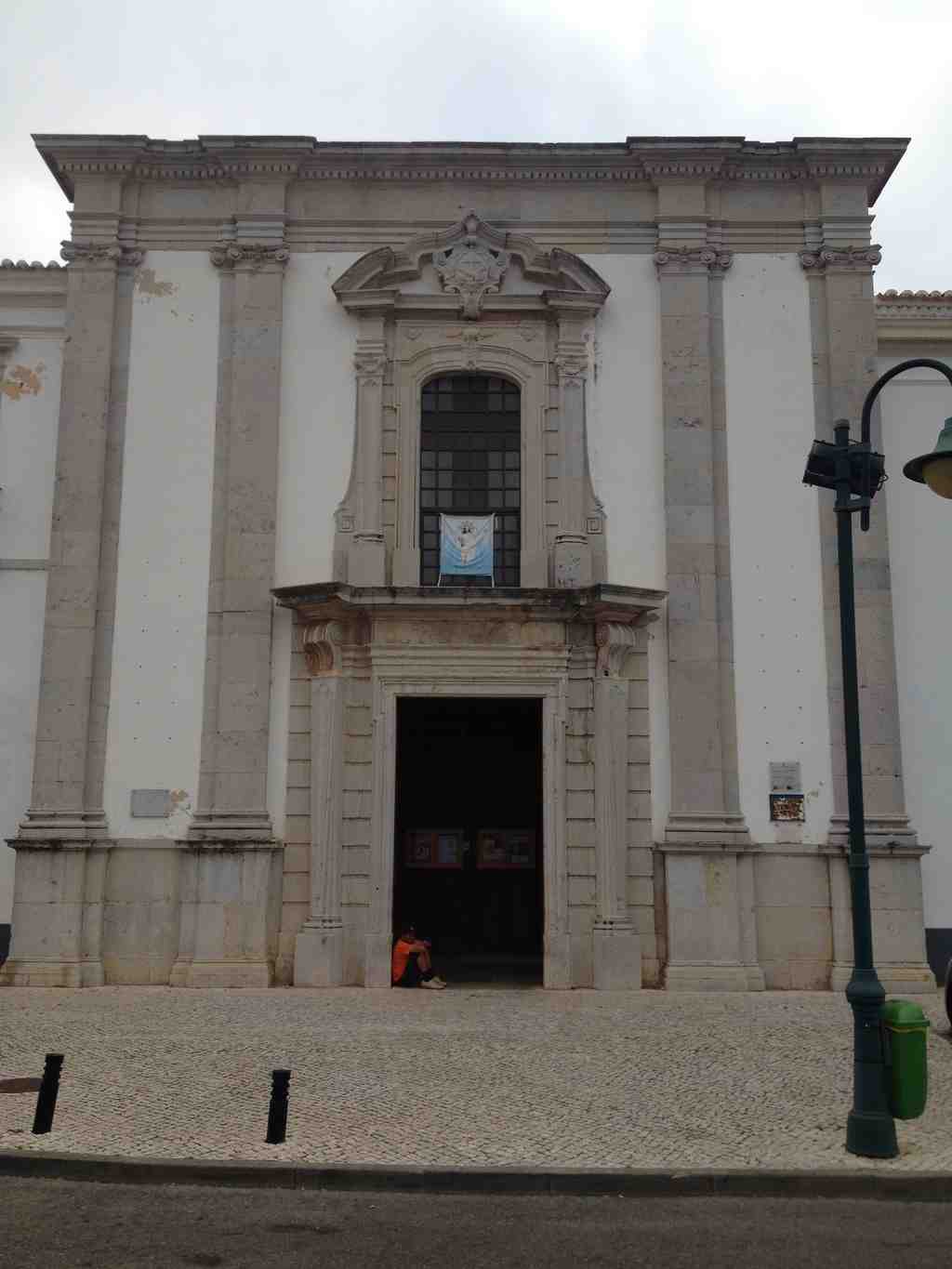
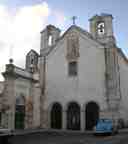
Look for a weathered white facade with three arches at ground level, twin bell towers on top, and a statue above the main doorway-right ahead of you, just past the blue car. Welcome to the Convent of Santo António dos Capuchos! Picture this spot centuries ago, at the edge of old Faro, when the city was still tucked safely inside its ancient walls. In the 17th century, friars in brown robes built this peaceful convent on land gifted by the city, hoping for quiet contemplation but, oh, did fate have other plans! When religious orders were dissolved and liberal politics swept the country, the monks bid farewell, leaving this sturdy building behind. By the early 1900s, military boots echoed in these halls-soldiers from the National Republican Guard marched in, swapping prayers for discipline drills. Even the left wing, where you see “CADEIA DA COMARCA,” was once Faro’s local jail. But if you had ducked inside back then, you’d be amazed by the small cloister, its garden a patch of calm, and the church glimmering with lavish Baroque carvings and blue-and-white tiles. Nowadays, the chapel only hears the hush of funeral rituals. From friars to guards, prisoners to mourners, the Capuchos has seen it all-maybe that’s why it’s always got such a serious face!
Abrir página dedicada →

Mostrar 8 paradas másMostrar menos paradasexpand_moreexpand_less
Right in front of you is the Carmo Church-a dazzling white Baroque building with twin bell towers topped by curvy domes and touches of gold trim-just look for the grand…Leer másMostrar menos
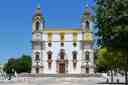
Right in front of you is the Carmo Church-a dazzling white Baroque building with twin bell towers topped by curvy domes and touches of gold trim-just look for the grand symmetrical facade and the statues nestled above the entrances. Welcome to the Carmo Church, a place with as many stories as there are bells in its tower! Picture the year 1713, when Bishop António Pereira da Silva had a sparkling idea: Why not build a church that would make Faro the envy of the Algarve? The first version sprang up inside the city’s old walls, thanks to the adventurous Father Frei Manuel da Conceição, who could probably draft a blueprint faster than you can say “Ordem Terceira.” But, as fate would have it, the original front had to go-much like a bad haircut-so, in 1747, master builder Diogo Tavares took over to give the place a serious architectural glow-up. Here, craftsmen worked tirelessly, chisels clinking and hammers echoing, as the church grew taller and grander each year. The last floor was finished in 1755, just as Lisbon was shaken by its famous earthquake, but Faro stood firm. The western bell tower took another century-finally finished in 1878. If you see the nine bells today, that’s all thanks to Gregório José da Silva, who cleverly melted down four old bells to forge nine harmonious new ones in 1876. Now that’s recycling! Inside, the drama continues: the nave sparkles with colorful tiles and enough golden woodwork to make a pirate blush, carved by Gaspar Martins, Manuel Martins, and Miguel Nobre. Don’t forget the side chapels and the mysterious Chapel of Bones-a little touch added in 1816 for those who love a shiver. Every nook is packed with treasures, from sacred images that join the proud Triumph Procession, to intricate decoration in the sacristy. All in all, not just a church, but a living story, layered with ambition, artistry, and-a huge bonus for you-perfect selfie spots.
Abrir página dedicada →To spot the Faro Cathedral, just look ahead for a tall, stone bell tower with a clock and several arches at its base, connected to a large whitewashed building. Alright,…Leer másMostrar menos
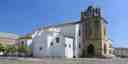
To spot the Faro Cathedral, just look ahead for a tall, stone bell tower with a clock and several arches at its base, connected to a large whitewashed building. Alright, explorer, you’re standing where centuries of stories have collided! Picture this: the ground beneath you once echoed with prayers in a Paleo-Christian basilica, then later, the rhythmic call of the muezzin as a mosque filled this very square during Arab Moorish times. The clash of swords and shields rang out in 1249, as King Afonso III’s forces reclaimed the city, and soon after, the mother church was rebuilt-goodbye minarets, hello bells! Now, take in the mix of gothic spires, chunky stone walls, touches of baroque flair, and those famous bones making up an altar outside. That bell tower up there? It’s not just for show-imagine the heavy clang of bells rolling across the rooftops, calling folks to mass for almost 800 years. Although the Earl of Essex tried to destroy it in 1596 (maybe he just wanted lower ceilings), Faro Cathedral survived and grew grander each time. Picture an organ being wheeled in during the 1700s, ready to raise the roof. And now, it welcomes you-travelers, worshippers, and curious souls alike-with every stone whispering: "Survived again-what’s next?"
Abrir página dedicada →Directly ahead of you, you’ll spot a tall, ancient stone archway built into a sturdy wall, with a rounded arch in the middle and signs on either side-this is the Arch of…Leer másMostrar menos
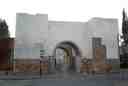
Directly ahead of you, you’ll spot a tall, ancient stone archway built into a sturdy wall, with a rounded arch in the middle and signs on either side-this is the Arch of Rest. Imagine it: centuries ago, this very arch saw both tension and relief. Originally constructed during the Almohad dynasty-so we’re talking around the twelfth or thirteenth century-it once marked a key entrance to the city’s protective walls. The air would have been thick with suspense; after all, when Christian forces led by King Afonso III finally conquered Faro in 1249, this gateway was heavily reinforced by the town’s Arab defenders with towers and sneaky side entrances. They did all they could to keep enemies out! But here’s the twist: legend has it that fresh from victory, the king’s tired troops rested right in this spot, giving the arch its name. Another tale clings to these old stones-the story of a lovesick Moorish girl, enchanted and trapped here by her own father after she fell for a Christian knight. Oh, family drama! And centuries later, in the eighteenth century, locals built a tiny shrine beneath one of the old arches, thanks to Queen Mariana, for the image of Our Lady of Rest. Every brick seems to whisper a different story-some full of battle, others full of mystery and legendary heartbreak.
Abrir página dedicada →To spot St. Francis’ Barn, just look for the octagonal tower with a weathered facade and unusual relief figures-if you see a building with Hercules and a giant carved right into…Leer másMostrar menos
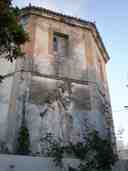
To spot St. Francis’ Barn, just look for the octagonal tower with a weathered facade and unusual relief figures-if you see a building with Hercules and a giant carved right into the wall, you know you’re in the right place! Now, imagine you’re standing in the heart of 18th-century Faro, the salty breeze swirling around this odd octagonal tower. Suddenly, you spot Hercules and the Giant Adamastor themselves staring down at you from the walls! No need to worry-they’re just decorative, though I bet they’d make for some wild neighbors. This peculiar site was dreamt up by Judge Veríssimo de Mendonça Manuel, who had a flair for the dramatic, at the same time he built the equally curious Casa das Figuras. As you stand here, you might hear the faint creaks and groans of old wood and stone--reminding us that for ages people believed this was just a fancy barn. Well, you can’t blame them-it was called Celeiro de São Francisco, after all! But plot twist: historians now believe this octagonal “barn” was never really for hay at all, but more like a cool, breezy retreat-a “house of freshness,” echoing the famous Tower of the Winds in Athens. Over centuries, its purpose remained shrouded in mystery, sparking rumors and curiosity right up until modern times. And speaking of drama, in 2018 the roof went out with a bang--and the building was abandoned. In a gift to the city, its owners handed it over to the people of Faro, and since 2020 it’s been lovingly restored. Soon, it’s set to become a vibrant cultural hub-a place where the city’s stories and memories come alive, powered by creativity and community spirit. So as you gaze at the barn and its dramatic heroes, remember: in Faro, every wall has an epic tale to tell, and sometimes a few muscle-bound legends thrown in for fun!
Abrir página dedicada →You’ll spot the Church of São Francisco right in front of you by its broad, white façade with tall stone columns, a grand central doorway, and a single large window framed by…Leer másMostrar menos
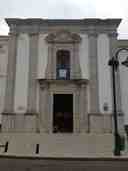
You’ll spot the Church of São Francisco right in front of you by its broad, white façade with tall stone columns, a grand central doorway, and a single large window framed by detailed baroque carvings-just look for the building that seems to stand quietly but proudly at the edge of the square. Now, imagine stepping into the late 1600s: the square is humming with the sound of hammers and laughter as builders lay the very first stone of this church, led by D. Manuel Guerreiro Camacho, who probably had more patience than a saint! This was no ordinary project-the original doorway here was so admired it actually became the model for another chapel nearby. Now don’t let the plain outside fool you; inside is a treasure trove of art and history. Just picture candlelight flickering on golden altar pieces, dazzling blue-and-white tiles climbing the ceiling, and the gentle echo of choir music. The most prestigious mason of the Algarve, Diogo Tavares e Ataíde, worked for years perfecting every inch-maybe he even lost a few good chisels to the stone, but the results are unforgettable. Four Italian paintings, commissioned in 1792, watch silently as visitors marvel; and amongst them, the dramatic image of St. Francis's death, painted in Rome, adds a touch of mystery and wonder. Since 2012, this place has had special protection as a Public Interest Building, so even the pigeons around here know they’re cooing at a masterpiece!
Abrir página dedicada →
Preguntas frecuentes
¿Cómo empiezo el tour?
Después de la compra, descarga la app AudaTours e ingresa tu código de canje. El tour estará listo para comenzar de inmediato - solo toca play y sigue la ruta guiada por GPS.
¿Necesito internet durante el tour?
¡No! Descarga el tour antes de empezar y disfrútalo completamente sin conexión. Solo la función de chat requiere internet. Recomendamos descargar en WiFi para ahorrar datos móviles.
¿Es un tour guiado en grupo?
No - esta es una audioguía autoguiada. Exploras de forma independiente a tu propio ritmo, con narración de audio reproduciéndose en tu teléfono. Sin guía, sin grupo, sin horario.
¿Cuánto dura el tour?
La mayoría de los tours toman 60–90 minutos para completar, pero tú controlas el ritmo completamente. Pausa, salta paradas o toma descansos cuando quieras.
¿Qué pasa si no puedo terminar el tour hoy?
¡No hay problema! Los tours tienen acceso de por vida. Pausa y continúa cuando quieras - mañana, la próxima semana o el próximo año. Tu progreso se guarda.
¿Qué idiomas están disponibles?
Todos los tours están disponibles en más de 50 idiomas. Selecciona tu idioma preferido al canjear tu código. Nota: el idioma no se puede cambiar después de generar el tour.
¿Dónde accedo al tour después de comprarlo?
Descarga la app gratuita AudaTours desde App Store o Google Play. Ingresa tu código de canje (enviado por email) y el tour aparecerá en tu biblioteca, listo para descargar y comenzar.
Si no disfrutas el tour, te reembolsamos tu compra. Contáctanos en [email protected]
Paga de forma segura con 


