
Tour de audio de la ciudad de Klaipeda: Leyendas, Castillos e Historias de Astilleros
Bajo el suave vaivén de la hierba marítima de Klaipėda, piedras e historias se niegan a descansar. Aquí, ruinas de castillos centenarios murmuran sobre rebeliones mientras grandes teatros y prisiones con barrotes de hierro observan en silencio desde calles sombreadas. Embárcate en una aventura de audio autoguiada por Senamiestis, donde cada giro desvela historias que la mayoría de los visitantes nunca escuchan. ¿Quién incendió el Castillo de Klaipėda en un momento de caos a medianoche? ¿Qué secretos ocultos resuenan desde el interior de las celdas abandonadas de la prisión de ladrillo rojo? ¿La rivalidad de qué actor casi provocó un motín a las puertas iluminadas del Teatro Dramático? Sigue los sinuosos adoquines pasando fortalezas pantanosas, hitos revolucionarios y escenarios empapados de escándalos. Rastrea huellas olvidadas mientras la gloria desvanecida choca con la cruda supervivencia, remodelando cómo ves cada piedra y sombra de esta ciudad portuaria. ¿Listo para deslizarte entre las grietas de la historia y descubrir el drama no contado que duerme bajo tus pies? El corazón oculto de Klaipėda te está esperando.
Vista previa del tour
Sobre este tour
- scheduleDuración 30–50 minsVe a tu propio ritmo
- straighten4.0 km de ruta a pieSigue el camino guiado
- location_on
- wifi_offFunciona sin conexiónDescarga una vez, úsalo en cualquier lugar
- all_inclusiveAcceso de por vidaReprodúcelo en cualquier momento, para siempre
- location_onComienza en Castillo de Klaipėda
Paradas en este tour
To spot Klaipėda Castle, look for an open area with low stone ruins, right near the water's edge, surrounded by a grassy park and just a hint of old fortress walls poking out from…Leer másMostrar menos
To spot Klaipėda Castle, look for an open area with low stone ruins, right near the water's edge, surrounded by a grassy park and just a hint of old fortress walls poking out from the ground. Nothing like the grand, towering castles you see in fairy tales-what’s left is more mysterious, peeking out from the earth, just waiting for someone with a good imagination to bring it back to life! If you see a modern glass structure nearby, that’s part of the museum sitting on top of the ancient bastion. Now, take a deep breath and imagine you’ve just stepped out of a time machine, and the fresh breeze carries hints of salt from the sea. About 800 years ago, it wasn’t quiet here-it was war, mud, shouts, and the sound of hammers as the Teutonic Knights scrambled to build Memelburg, right in the marshes between the rivers. Back then, wooden towers stretched toward the clouds, trying hard to stay upright on soggy land. You could probably smell fresh-cut pine and hear the nervous laughter of knights hoping this fortress would keep the pagans out. Spoiler alert: it didn’t always work. Warriors from the Samogitians and Lithuanians came charging through more than once, and the poor castle got whacked, burned, and rebuilt so many times it probably qualified for medieval insurance. As you stand here, try to picture armored knights keeping watch, maybe grumbling about their soggy boots and sharing stories of the latest attack. In 1379, smoke would have filled the air as the enemy set fire to the walls. And centuries later, the castle lost its importance and became-well, let’s say-Klaipėda’s most ambitious “DIY project,” getting upgraded, knocked down, and even sold off brick by brick. With every step, you’re walking over centuries of stories-if you listen closely, you might just hear the echo of ancient builders arguing about which wall should go where! Today, the rebuilt museum under your feet is a treasure box of this dramatic past, freshly restored and open to you. If these stones could talk, I bet they’d have some wild tales-and probably a complaint or two about the weather. So, are you ready to uncover the secrets of Klaipėda Castle before we move on?
Abrir página dedicada →You’re standing right next to the old Klaipeda prison, and you really can’t miss it. Look for a large red brick building that stretches along the street with a kind of tough,…Leer másMostrar menos
You’re standing right next to the old Klaipeda prison, and you really can’t miss it. Look for a large red brick building that stretches along the street with a kind of tough, no-nonsense attitude. Its windows are tall and narrow with old iron bars-just the look you’d expect for a place that’s held so many stories behind its walls. The facade has a stepped gable at the top, making the roofline a little jagged, and there’s a sturdy brick and wrought iron fence that seems to whisper, “Don’t even think about hopping over.” Above the main entrance, you might notice a round window and decorative brickwork splitting the building between the first and second floors-a dash of style for an otherwise serious place. If you’re wondering where you are, just look around for the big, blocky U-shaped building on Jūros Street with a slightly intimidating presence. Now, let me take you back in time-no need to worry, I checked, the doors are locked! This prison complex has been standing here since 1862, and it used to be the main court and prison for all of Klaipeda. In fact, the very first courtroom and prison in the city was over at Klaipeda Castle, but after a huge fire swept through the area in 1857, this new, fireproof brick fortress was built in what used to be a lumber yard. Just picture the daily life inside: thick metal beams holding up vaulted ceilings, heavy stone cellars, echoing corridors, and rooms that held more secrets than a magician’s hat. In its day, it even had special apartments for the guards-luxurious, if by “luxurious” you mean having running water. There was a part just for women, and a special yard where prisoners could stretch their legs, stare at the clouds, and dream of freedom. This place saw all kinds of people come and go-judges, wardens, prisoners, and once, a famous Lithuanian newspaper editor named Jurgis Arnašius, who worked here as a translator. If you glance up, you might see a memorial plaque for him, a little reminder that history isn’t always about the bad guys. During the Soviet years, these walls got even heavier, as the building became Prison No. 2, a spot where partisans and civilians faced interrogation during dark and stormy times after World War II. Later, the prison closed, and for a while, the police moved in. But eventually, everyone left, leaving this complex empty and echoing with memories. And get this-just a few years ago, someone actually bought this whole place for 2.2 million euros! Imagine the property listing: “Cozy neogothic fixer-upper, perfect for anyone who likes privacy and lots of… bars on the windows.” So, while you stand here and take in the serious brickwork, remember: this building watched over Klaipeda through fires, wars, and revolutions-if only those walls could talk, right? But don’t worry, you’re free to continue your tour!
Abrir página dedicada →To spot the Klaipėda Drama Theatre, just look ahead for a grand, reddish-orange building right in the middle of the square. Its beautiful classical facade is decorated with white…Leer másMostrar menos
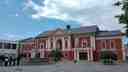
To spot the Klaipėda Drama Theatre, just look ahead for a grand, reddish-orange building right in the middle of the square. Its beautiful classical facade is decorated with white columns, large arched windows, and a triangular roof with ornate trim. The building is wide and symmetrical, and at the very top is a small cupola. There’s a statue in front and those sturdy oak doors almost look like they’re waiting to swing open for the next performance. The square in front is paved with old cobblestones, so you’ll know you’re in the right place when your footsteps start to sound like a percussion section on uneven stones. Welcome to Klaipėda Drama Theatre! Take a deep breath and imagine the magic of theatre-curtains rising, the scent of fresh paint backstage, the low hum of anticipation from the crowd. This isn’t just any building. Back in 1935, the story of Klaipėda’s drama theatre officially began when the old Šiauliai drama theatre packed up and moved here. Now, you might say: “Why’d they move?” Turns out, theatres like a bit of drama off the stage too! For years, this location was at the center of buzzing cultural life. The theatre even survived fires, wars, and enough plot twists to fill its own play. But let’s rewind a couple of centuries. Nobody’s sure exactly when the first theatre stood here, but there’s a hint in old city maps. Imagine the late 1700s-a mysterious square building called the “Comedy House” popped up not far from the castle, likely echoing with laughter, drama, and maybe some confused sheep, considering it once had a military use. After more than one fire and a series of rebuildings-including one sponsored by a very generous merchant-the theatre rose in the spot you’re standing now, eventually becoming this handsome two-story stone building by the start of the 19th century. Over the years, the theatre saw troupes from Berlin, actors from Lithuania, and even some friendly (and not so friendly) theatrical competitions with Germans. When tensions ran high before World War II, the actors here didn’t just act out drama-they lived it. Rivalries, riots, and a passion for art fueled every performance until, in 1939, the storm of history swept over Klaipėda and many artists found themselves without a home. But through it all, the theatre always came back. So next time you hear applause or walk past here on a show night, remember: every stone, every echo, and maybe even a few ghosts in the wings, are all part of the grandest show in town. How about that-a stage where even the building itself deserves a standing ovation!
Abrir página dedicada →
Mostrar 8 paradas másMostrar menos paradasexpand_moreexpand_less
Straight ahead of you, you’ll spot a wide cobblestone square opening up, with a bold, reddish-orange building proudly facing you. That’s the Klaipėda Drama Theatre, and right in…Leer másMostrar menos
Straight ahead of you, you’ll spot a wide cobblestone square opening up, with a bold, reddish-orange building proudly facing you. That’s the Klaipėda Drama Theatre, and right in front of it, you’ll see a fountain crowned by a statue. This is the famous Theatre Square, where the heart of Klaipėda’s old town beats! If you listen closely, you might imagine the music and laughter that fill this square during one of its many festivals-jazz, sea celebrations, and lively markets. Theatre Square has always been the place to gather, trade, and celebrate. Two centuries ago, this would have been a bustling market, smell of fresh bread in the air, traders calling out, and townsfolk hurrying by, baskets in hand. Now, take a closer look at the fountain. That’s the Anikė statue, a symbol of the city, watching over everyone who visits. She celebrates a famous poem, “Ännchen von Tharau,” by Klaipėda’s own poet Simonas Dach. The original statue disappeared mysteriously during World War II, but she returned in 1989, as if no misadventure could keep her away for long! Maybe she just needed a vacation-can you blame her? All around the square, the historic buildings in that recognizable old German style add a touch of fairy-tale charm to your walk. And, did you know-a single balcony here once hosted one of the 20th century’s most dramatic political speeches? The whole city seemed to hold its breath! So, whether you’d like to snap a photo, sit under the shady trees, or just soak up the vibe, Theatre Square is ready to cast you in its story.
Abrir página dedicada →Hold up - let's take a look around! To spot the Klaipėda State Musical Theatre, cast your eyes upward. You’ll see a tall, rectangular tower with many windows stacked neatly above…Leer másMostrar menos
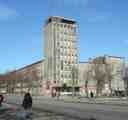
Hold up - let's take a look around! To spot the Klaipėda State Musical Theatre, cast your eyes upward. You’ll see a tall, rectangular tower with many windows stacked neatly above each other, standing much taller than its neighbors. The building is mostly a soft grey, but each window is lined with a warm reddish trim. Above the top floor, the national flag of Lithuania waves proudly in the wind. If you’re near the street, the main entrance is at the foot of the tower, right next to a bus stop. Now, as you stand here, imagine a world of music swirling around you. The Klaipėda State Musical Theatre isn’t just a building - it’s like a time machine made of song, dance, and drama. It was born on a very specific date: January 1, 1987. But its roots go deeper, back to the days of the Klaipėda People’s Opera. The very first performance here, “Mažvydas,” echoed with excitement and nerves as a whole new chapter in Klaipėda’s culture began. Over the years, there’s been a whole parade of directors, conductors, and composers - honestly, you might start to think that every time you blinked, someone new was waving the conductor’s baton. And talk about multitasking! This place has seen more than 100 different performances - operas, ballets, modern dance, children’s shows, musicals, you name it. At times, it must've felt a bit like a backstage circus, with singers, dancers, and musicians all preparing to leap into the spotlight. And if you can feel a hint of fresh energy in the air, that’s not just your imagination. The theatre recently finished a five-year renovation - so what you see now is shinier and more inviting than ever. Every August, the whole region buzzes with excitement as the “Musical August” festival brings opera and symphony music not just here, but to cities all across the West of Lithuania. And there’s always the sweet sound of young talent. Since 1993, local music students have taken the stage to show off their dreams and skills - you never know if you might be hearing the next big star trying out their first aria on this very spot! So, take a moment here and just imagine what it must feel like to step onto that stage - it’s more than a building; it's a place that pours music straight into the heart of Klaipėda.
Abrir página dedicada →As you’re coming closer, look ahead for a tall, light-grey building with a big, wide face and three towering arched windows welcoming you from the front. At the top, you’ll spot a…Leer másMostrar menos
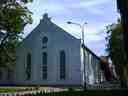
As you’re coming closer, look ahead for a tall, light-grey building with a big, wide face and three towering arched windows welcoming you from the front. At the top, you’ll spot a little cross peeking up into the sky. That’s Klaipeda Evangelical Baptist Church. On your left, keep your eyes on the patch of green trees-this church nestles right at the corner, its simple, clean walls almost glowing against the street. If you see a building that looks a bit like it’s wearing its Sunday best but still modest, you’re in the right place. Now, let’s step into the story. Imagine standing here over 170 years ago, hearing the first Baptist voices come alive in Klaipeda. This isn’t just any church-it’s the oldest still-standing Baptist church building in all of Europe! And believe it or not, it survived the great Klaipeda fire, standing tall when almost everything else turned to ashes. If walls could talk, these ones would definitely brag a little. The church’s story kicks off in 1841, with a community led by Eduardas Grimas-if you’ve ever wondered what it’s like to be a pioneer, that would be him! At first, it was mostly German Baptists gathering here, but it didn’t take long before local Lithuanians joined in, bringing a mix of songs, language, and spirit. In 1851, they built this very building for worship. Back then, there were 234 members-impressive for a group without social media! The twist comes in 1854, when a fire swept through the city, burning down churches, schools, and big buildings-everything except this humble church. Suddenly, everyone wanted to be friends with the Baptists. This church transformed into a school during the week, a Lutheran sanctuary for Lithuanians and an Anglican one on Sundays, sheltering the faithful of many stripes. By the 1860s, even believers from Latvia came here-to be baptized and to find community, all because back in Latvia, things weren’t so friendly for Baptists. For 20 years, Latvian names stayed on Klaipeda’s church list. Baptists became more Lithuanian over the years, especially between the World Wars, and the Sunday school network spread through the city like a cheerful whisper. But, just when things seemed calm, World War II hit. In 1944, everything stopped-the front lines were near, and Soviet times began. The church building was taken away: first a sailor’s club, then abandoned with sealed windows and a leaky roof, and finally, a teachers’ club. The Baptists had to meet in little apartments, and for over 30 years, in a fisherman’s cottage at the city’s edge. Imagine squeezing in, wrapped in coats, the sound of prayer rising over the scent of salt and fish. Finally, in 1991-after five decades of wandering-the Baptists got their church back. The first service after that, I bet there wasn’t a dry eye in the house. The church was made holy again, celebrating not only the return of a building but 150 years of faith, endurance, and some honestly stubborn hope. So, as you stand here outside, listening to the breeze rustle the leaves, give a little nod to Klaipeda’s most resilient church-a place where history, heart, and a little bit of luck have worked together for almost two centuries. And hey, if you listen closely, maybe you’ll hear the echoes of their very first hymn drifting out to greet you. Shall we see where faith carried the city next? Let’s keep moving!
Abrir página dedicada →Right as you come to this corner, look to your left for a pale yellow building with a slanted dark roof, a simple cross up top, and a row of tall arched windows that seem to watch…Leer másMostrar menos
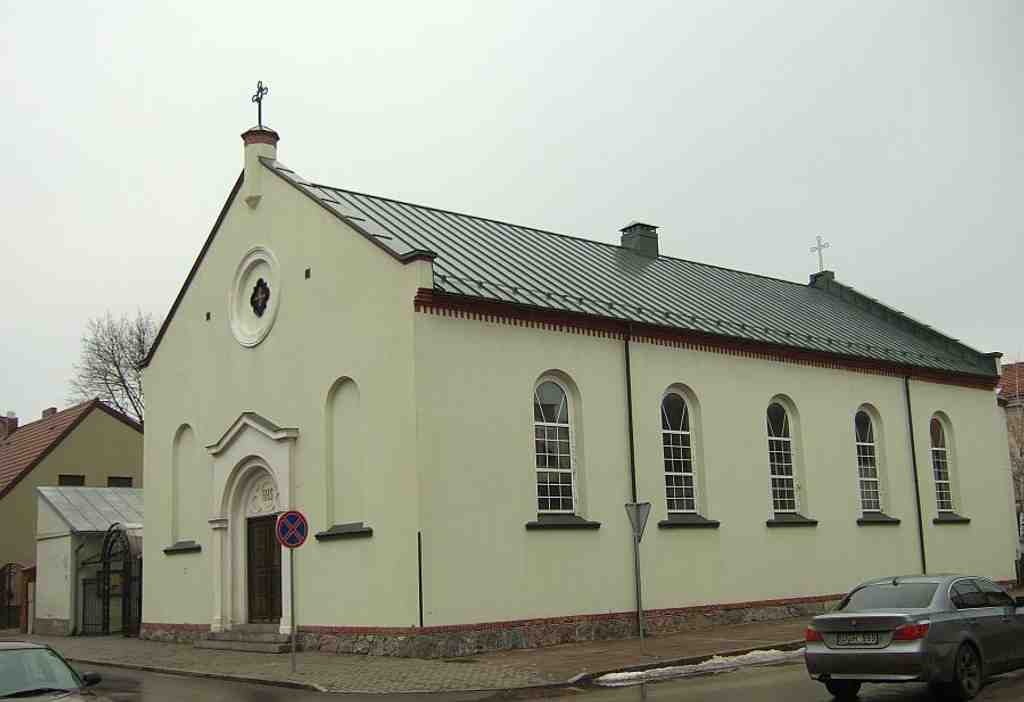
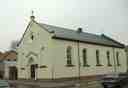
Right as you come to this corner, look to your left for a pale yellow building with a slanted dark roof, a simple cross up top, and a row of tall arched windows that seem to watch the street. There’s a modest entrance with the year “1945” etched above the door, and the whole church sits sturdy on a rough, stone base-like it’s been planted here for centuries, holding secrets. So, here we are, in front of the Klaipėda Church of Christ the King-doesn’t it look peaceful? Don’t let this calm vibe fool you: this church has lived through its share of drama. Imagine the year 1945-just after World War II-the city’s old Holy Trinity church was left in ruins, so the local Catholics took over this simple stone building, which used to be a Baptist prayer house. But Klaipėda’s love affair with churches goes way back. The very first ones popped up in 1258, but back then, things were not so peaceful. These churches were burnt again and again-clearly, medieval insurance was not up to the job! Even after fires and wars, generation after generation kept rebuilding. This very spot was restored in 2001, and the church inside is now decorated with icons painted by Franciscan friars-giving the inside a warm, glowing light that would make even the darkest Lithuanian winter feel cozy. Picture the echo of old footsteps against the stone, and the smell of burning candles. For years, this was the only Catholic church left in Klaipėda. So if these walls could talk, they’d probably have some advice about persistence-or maybe just laugh and say, “Come on in, at least it’s warmer inside!” Ready for the next stop? Just try not to start humming church hymns as we go!
Abrir página dedicada →If you look ahead and just a little to your right, you’ll spot a towering giant with a thick, rough trunk and wide-reaching branches dressed in bright green leaves. That’s the…Leer másMostrar menos
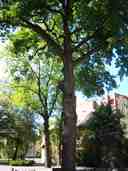
If you look ahead and just a little to your right, you’ll spot a towering giant with a thick, rough trunk and wide-reaching branches dressed in bright green leaves. That’s the Square Oak-truly hard to miss! Its crown stretches like a giant green umbrella over the square, casting cool, dappled shadows on the ground. Right beside it, you'll see a memorial for Klaipėda’s political prisoners and exiles, adding a sense of quiet importance to this peaceful scene. Now, let me introduce you properly to this grand old oak. The Square Oak isn’t just any tree-it’s a local superstar! Standing here for over 220 years, it’s survived storms, wars, and surely more than a few curious squirrels. Imagine: when this oak was just a sapling, carriages were still trundling through Klaipėda’s muddy streets. Today, its trunk measures a solid 3.65 meters around, and it reaches up an impressive 24 meters, like it’s trying to tickle the clouds. They say it could be as old as some of the stories whispered through town squares at midnight. This mighty oak is protected by the city, and for good reason-its branches are more than just wood and leaves. Some people believe trees like this hold centuries of secrets, memories, and maybe, just maybe, a few friendly ghosts from Klaipėda’s past. Standing under its broad green crown, you might almost hear the city’s history rustling in the leaves above you-a shuffle of boots, laughter from old markets, or even a hidden love story or two. Don’t worry, the only thing planning to drop on you is the odd acorn. So take a deep breath, feel the cool shade, and enjoy the sense that you’re sharing a moment with one of Klaipėda’s oldest and wisest residents. Ready for our next stop?
Abrir página dedicada →Look straight ahead-your destination is towering right in the middle of the courtyard, reaching boldly into the sky. You can spot it easily: an enormous oak tree, with a thick,…Leer másMostrar menos
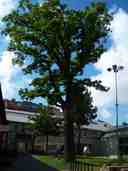
Look straight ahead-your destination is towering right in the middle of the courtyard, reaching boldly into the sky. You can spot it easily: an enormous oak tree, with a thick, dark trunk rising powerfully out of the grass. Its wide-spreading branches are bursting with a lush green crown that seems to brush the clouds. To help you out, there’s a library building in the background-just look for the lovely blend of old oak and modern architecture. Now, let’s take a closer look at this giant. Meet the Library Oak-Klaipėda’s living treasure and a true local celebrity, though luckily it’s never let its fame go to its branches. Standing here, you’re not just seeing any old tree. Imagine: this oak has been enjoying sea breezes and soaking up sunlight for nearly 220 years! When Napoleon marched across Europe, this very oak was sprouting new leaves. When the first trains arrived in Klaipėda, its roots were stretching just a little deeper. The city decided this oak deserved VIP treatment back in 2006, making it a protected botanical heritage object. Its Latin name is Quercus robur, but you and I can stick with “mighty oak.” Take a few steps closer and try to stretch your arms around its trunk-spoiler alert: you’re going to need a few friends. At chest height, the trunk is over 3 meters around-and the crown covers nearly 23 meters, as if hoping to catch every passing sunbeam. Just think-if trees could whisper secrets, the Library Oak would have stories to fill a whole library. Maybe that’s why it chose to grow right here, beside Klaipėda’s regional library, keeping watch over generations of book lovers and late-night readers sneaking a look at forbidden novels. These days, this oak stands as a symbol of endurance and wisdom, sheltered by the protective laws of Klaipėda’s municipality. So, while you’re here, listen for the gentle rustle of its leaves. Who knows? You might just hear a tale from the past-or at least the sound of Klaipėda’s most famous tree enjoying another sunny day. Alright, feeling the oak’s ancient presence? Ready for our next stop?
Abrir página dedicada →Take a look ahead of you! To spot the Meridian, watch for a truly grand wooden sailing ship docked right along the left bank of the Danė River. Its tall white masts and neatly…Leer másMostrar menos
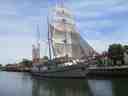
Take a look ahead of you! To spot the Meridian, watch for a truly grand wooden sailing ship docked right along the left bank of the Danė River. Its tall white masts and neatly furled sails rise high above the riverside trees and buildings, while the sleek wooden hull gleams in the sunlight. If you see lots of rigging, ropes, and a proud bow stretching over the water, you’re in the right spot-can’t miss it, unless you mistook it for a pirate party boat. Now, close your eyes for a second and imagine you’re standing on the deck. The salty wind brushing your face, the creaking sound of wood under your feet, and somewhere in the background, distant seagulls calling. The Meridian isn’t just a ship-it’s a floating page out of Klaipėda’s history books. Built way back between 1947 and 1948 in the Finnish city of Turku, this barkentine was designed as part of Finland’s way of paying off World War II debts to the Soviet Union. Yes, talk about owing someone big time: “You take gold, we’ll throw in a hundred wooden sailing ships!” It was first called Ship No. 5. Not the most romantic name, but it definitely got an upgrade once she set sail. Over the decades, the Meridian traveled all over Europe and Africa, even training young sailors who would one day brave the Baltic’s icy waters. You wouldn’t believe the adventures she’s seen-outrunning hurricanes, getting trapped in ice off the coast of Leningrad, and even surviving a pretty suspicious explosion attempt. This old girl’s been through it all. Of course, even a sturdy ship like this faces rough times. By 2012, the Meridian was nearly falling apart, and Klaipėda locals had to rally together to save her. People banded together, and after a heroic restoration (with some major repairs, new timbers, and, hopefully, a lot of wood polish), the ship came back to life. Today, she hosts a cozy nautical restaurant on her lower deck, exhibits ship equipment and wooden structure pieces (peek through the “windows” in the floor!), and kids even come here for hands-on sea lessons. So as you stand beside the Meridian, think of all the hands that pulled her sails, the storms she battled, and the townsfolk who refused to let her sink into memory. Today, she’s one of Klaipėda’s proudest symbols-a ship that sailed through history and anchored in the heart of the city. And hey, if you get a chance, pop into the restaurant below deck. I promise it’s safer than a winter storm on the Baltic… and probably warmer, too!
Abrir página dedicada →
Preguntas frecuentes
¿Cómo empiezo el tour?
Después de la compra, descarga la app AudaTours e ingresa tu código de canje. El tour estará listo para comenzar de inmediato - solo toca play y sigue la ruta guiada por GPS.
¿Necesito internet durante el tour?
¡No! Descarga el tour antes de empezar y disfrútalo completamente sin conexión. Solo la función de chat requiere internet. Recomendamos descargar en WiFi para ahorrar datos móviles.
¿Es un tour guiado en grupo?
No - esta es una audioguía autoguiada. Exploras de forma independiente a tu propio ritmo, con narración de audio reproduciéndose en tu teléfono. Sin guía, sin grupo, sin horario.
¿Cuánto dura el tour?
La mayoría de los tours toman 60–90 minutos para completar, pero tú controlas el ritmo completamente. Pausa, salta paradas o toma descansos cuando quieras.
¿Qué pasa si no puedo terminar el tour hoy?
¡No hay problema! Los tours tienen acceso de por vida. Pausa y continúa cuando quieras - mañana, la próxima semana o el próximo año. Tu progreso se guarda.
¿Qué idiomas están disponibles?
Todos los tours están disponibles en más de 50 idiomas. Selecciona tu idioma preferido al canjear tu código. Nota: el idioma no se puede cambiar después de generar el tour.
¿Dónde accedo al tour después de comprarlo?
Descarga la app gratuita AudaTours desde App Store o Google Play. Ingresa tu código de canje (enviado por email) y el tour aparecerá en tu biblioteca, listo para descargar y comenzar.
Si no disfrutas el tour, te reembolsamos tu compra. Contáctanos en [email protected]
Paga de forma segura con 


