Audioguía de Berlín: Relatos del Tiergarten y Viaje por Hitos Históricos
Bajo el reluciente horizonte de Berlín y la frondosa extensión del Tiergarten, el latido de la ciudad resuena con historias tanto deslumbrantes como peligrosas. Este audioguía autoguiado te sumerge en lugares y momentos que otros visitantes pasan por alto, donde torres de cristal, protestas rebeldes y amores secretos rozan los bordes más afilados de la historia. ¿Por qué Potsdamer Platz quedó en silencio durante décadas, transformándose de la Times Square de Europa en un páramo embrujado? ¿Quién tramó revueltas encubiertas dentro de las curvas modernistas de Columbushaus, incluso mientras las llamas rugían en sus propios escalones? ¿Qué debates ocultos giran en torno a un tranquilo cubo de hormigón que ahora exige recuerdo, y que una vez dividió a parlamento y artistas por igual? Recorre estos bulevares y fronteras, siguiendo disturbios, resiliencia, vida nocturna escandalosa, rebeliones sombrías y finalmente esperanza; cada paso revela un nuevo giro en la historia de Berlín. Pasa de las superficies brillantes a momentos que conmocionaron, dividieron o redimieron la ciudad. Comienza a explorar ahora: descubre lo que espera justo debajo de la superficie de Berlín, donde cada piedra tiene una historia que contar.
Vista previa del tour
Sobre este tour
- scheduleDuración 30–50 minsVe a tu propio ritmo
- straighten3.4 km de ruta a pieSigue el camino guiado
- location_on
- wifi_offFunciona sin conexiónDescarga una vez, úsalo en cualquier lugar
- all_inclusiveAcceso de por vidaReprodúcelo en cualquier momento, para siempre
- location_onComienza en Potsdamer Platz
Paradas en este tour
To spot Potsdamer Platz, look for the cluster of ultra-modern buildings and the striking white, tent-like roof of the Sony Center, rising from the middle of a busy intersection…Leer másMostrar menos
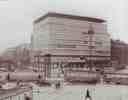
To spot Potsdamer Platz, look for the cluster of ultra-modern buildings and the striking white, tent-like roof of the Sony Center, rising from the middle of a busy intersection right next to the greenery of Tiergarten park. Welcome to Potsdamer Platz! Take a deep breath-right now, you’re standing at one of Berlin’s busiest crossroads, both in place and in history. Picture this square just a couple centuries ago: instead of glass towers and the futuristic Sony Center before you, there was the city wall, with the dusty Potsdam Gate welcoming travelers. Back in the 18th century, this was the “edge of town.” Soldiers marched here for drills, and farmers set up little stalls hoping their apples would tempt Berlin city folk. Don’t let the shiny buildings fool you-this spot has seen everything. Imagine the road bustling with people: by the late 1800s, Potsdamer Platz had turned from a calm, villa-lined suburb into the pulsing heart of Berlin. Some even called it the Times Square of Europe. Trams clanged, cars and horse-drawn carts rattled, and every street led somewhere important. At its busiest, over 100,000 people and a wild mix of cars, bikes, and trams swirled through the intersection every day. Even traffic lights made their bold debut here in 1924, with a policeman perched in a little glass tower like an owl controlling the mayhem below-not sure if he ever felt like blinking red out of sheer stress. Dig a little deeper into the streets and you’d find some of Berlin’s most legendary addresses. The Wertheim department store stretched along Leipziger Strasse, glitzy and bustling, with a floor space double the size of the Reichstag. Hungry? Just next door, Haus Vaterland could treat you to Bavarian beer, Viennese pastries, or even a Wild West bar, all under one roof. It was like a theme park for grown-ups: eight orchestras played nightly, and waiters zipped between Hungarian wine bars and Turkish cafés. Sometimes, even a young Alois Hitler Jr. served wine here-bet you didn’t see that on the menu. Culture buzzed all around. The Hotel Esplanade and Café Josty drew stars-Charlie Chaplin tipped his hat here, Greta Garbo glided through, and Berlin’s great writers, thinkers, and even revolutionaries-like Karl Liebknecht-plotted their next moves over coffee. Imagine Erich Kästner, pen in hand, scribbling parts of “Emil and the Detectives” on the café terrace outside. And what’s a German city hub without beer halls? The massive Weinhaus Rheingold could seat 4,000 revelers, its rooms themed after grand Wagnerian operas. Over at Bierhaus Siechen, locals and travelers alike could raise a glass-honestly, Berliners take their beer just as seriously as their traffic. But not all was glitter and merriment. The square’s fortunes could swing as suddenly as a tram bell. The area was bombed to rubble in World War II; its busy streets and neon nightlife turned to empty silence and shattered stone. The Berlin Wall sliced Potsdamer Platz in two, leaving it a ghostly no-man’s land for decades, watched over by border guards. Yet, this crossroads never forgot its purpose. After reunification, it became a symbol of Berlin’s rebirth. Architects and builders flooded in, designing these bold new buildings you see today-each one a promise that the beating heart of Berlin would never be silenced for long. Even the Tiergarten park still sits nearby, refreshed by the same landscape architect who tamed the city’s wildest corners all those years ago. So, as you stand here beside the grand towers and glimpse the flowing crowds, remember-you’re on ground that has seen kings and refugees, millionaires and revolutionaries, lovers, dreamers, soldiers, and shoppers. Potsdamer Platz is where Berlin’s past and present meet, swirling together like the trams and traffic did long ago. Keep an eye out-you just might spot a ghost from a glamorous past whispering a secret into the city wind! Exploring the realm of the historical background, the railways arrive or the interwar years? Feel free to consult the chat section for additional information.
Abrir página dedicada →To spot the Columbushaus, look right ahead for a sleek, nine-story building with smooth, horizontal bands of glass, a curved corner following the street, and the name…Leer másMostrar menos
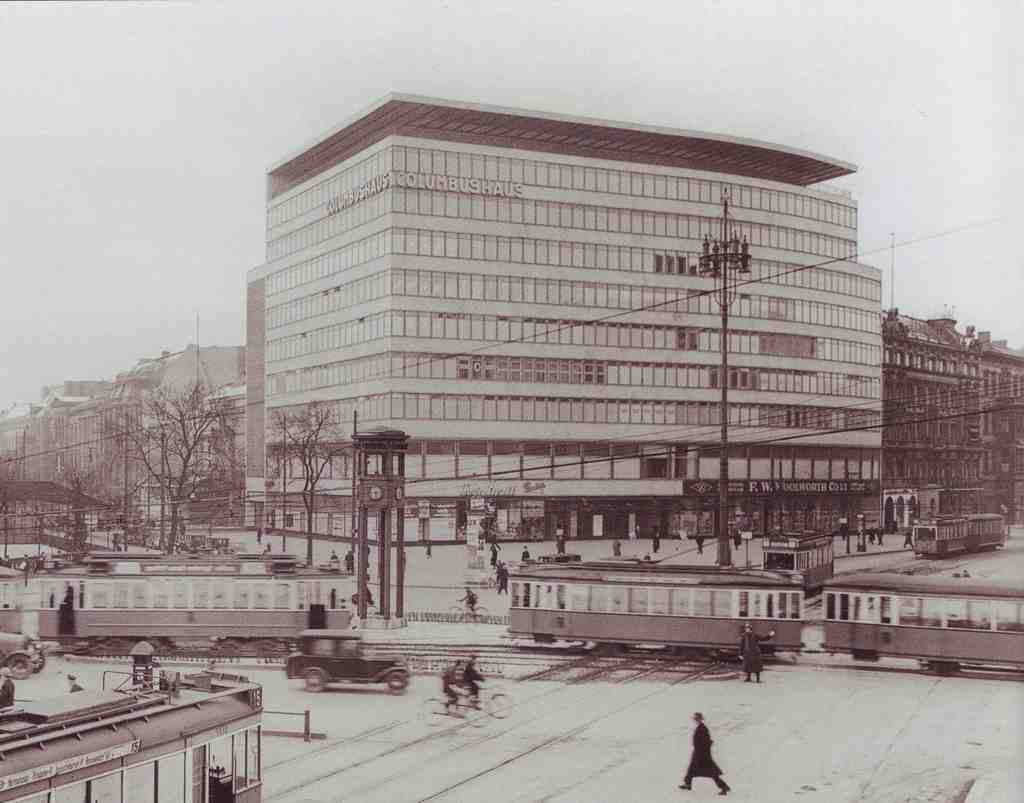
To spot the Columbushaus, look right ahead for a sleek, nine-story building with smooth, horizontal bands of glass, a curved corner following the street, and the name “COLUMBUSHAUS” proudly perched at the very top. Welcome to where modern Berlin once reached for the sky! Picture it: the early 1930s, the city still buzzing with city trams, purring automobiles, and smartly dressed Berliners striding across Potsdamer Platz. And suddenly-rising like a lighthouse of glass and steel-is the Columbushaus. Imagine the house-sized neon sign on top flickering to life as the sun sets, while bustling shoppers duck into the Woolworth’s below, and the upper floors quietly hum with office workers, all packed into Berlin’s trendiest new address. Erich Mendelsohn, the architect, was out to make a statement. The Columbushaus wasn’t just a building, it was a dare: a nine-story modernist marvel with horizontal stripes of windows and curving lines that seemed to slice through the drab, boxy buildings around it. Mendelsohn wanted flexible, airy spaces and as few interior supports as possible, so the whole building could adapt to any future, from department stores to office beehives. And let’s not forget those neon lights-so bright he said he had to add masonry just to support them! It was so forward-thinking that the Columbushaus became known as Berlin’s “little skyscraper” and, fun fact, boasted Germany’s very first office building ventilation system. So not only was it cool to look at, it was literally cooler on the inside-quite the selling point in those stuffy 1930s summers. You might expect a place this modern to last forever, but fate had other plans. The Columbushaus wasn’t just about fashion and commerce; it was history’s guesthouse. In the 1930s, its halls bustled with travel agencies and steel companies, and from its roof, a massive neon ad blinked for the Nazi newspaper, Braune Post, while the Olympic Organising Committee ran their 1936 headquarters a floor below. In whispered corners, you could almost catch the secret steps of resistance: the Leninist Neu Beginnen group hid their archive in these rooms, plotting against the rising tide of dictatorship. And later, beneath innocent office signs, plans for the horrific Action T4 program took root-one of the darkest chapters in the building’s story. When World War II raged, bombs fell and bullets flew, but the Columbushaus, built of modern steel, refused to collapse. Somehow, it survived, its skeleton standing among Berlin’s ruins like a lone, determined sentinel. When the city split, it fell into East Berlin’s hands: shops downstairs buzzed with customers, a police station opened above. But June 1953 changed everything. As workers across East Germany rose up against oppression, chaos broke out outside. The mayor pleaded for peace, the police hurled out their uniforms and waved a surrender flag, but the crowd, electrified and furious, set the Columbushaus ablaze. Its steel frame stood but its heart was gutted by fire. By 1957, the Columbushaus was just a ruin-soon demolished, its metal bones sold for scrap, its memory fading as the Berlin Wall slashed across the city. Instead of shoppers and office workers, its old square saw barbed wire, border guards, and daring graffiti artists like Wolfram Hasch dodging arrest to mark forbidden walls. In a bizarre twist, activists in the late 1980s turned its old patch of ground into ‘Norbert Kubat Corner’, declaring it a rebellious zone and building a radio station on-site. When the police came to clear them out, hundreds dashed over the Wall-not escaping from the East, but running from West Berlin into East Berlin, dogs, bicycles, and all! The border police on the other side just shrugged and served them breakfast-an event so strange you couldn’t make it up. Today, Potsdamer Platz has outgrown its scars and old secrets, bustling again with glass towers and luxury hotels. The Marriott and the Ritz-Carlton now stand where the Columbushaus once flipped the skyline upside down. But if you listen carefully, you might still hear the echoes-a distant tram rumble, a faint flicker of neon, and the laughter of Berliners as they dared to build a brighter future, one floor at a time.
Abrir página dedicada →To spot the Memorial to Homosexuals Persecuted Under Nazism, look ahead for a large, solemn concrete cube with a small rectangular window set into its front, standing quietly…Leer másMostrar menos
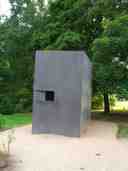
To spot the Memorial to Homosexuals Persecuted Under Nazism, look ahead for a large, solemn concrete cube with a small rectangular window set into its front, standing quietly among the trees. Now, take a deep breath and let’s step into a story of hidden defiance, painful silence, and late but powerful remembrance. Right in front of you stands a simple gray block-so unassuming, you might almost walk past it if you weren’t looking for the secrets it keeps. But come a bit closer, peek into that little window, and you’ll find a bold message playing in a short film: two men share a kiss. As far as statements go, it’s not loud, but it’s incredibly brave-especially when you know what this monument is all about. This concrete cuboid, designed by artists Michael Elmgreen and Ingar Dragset, opened in May 2008 after a long, winding road of debate and discussion. Remember, for decades after World War II, the story of homosexual victims was largely ignored. Germany kept a law called Paragraph 175 on the books throughout the 1950s and 1960s-imagine that! Even after the horrors of the Nazis, same-sex love was still outlawed. Gay men and, to a lesser-known extent, lesbian women were forced into silence, their suffering brushed out of view like dust under a rug. It wasn’t until the 1980s that people started speaking up for what historians called these “forgotten victims.” A powerful moment came in 1985, when German president Richard von Weizsäcker officially recognized homosexuals as a victim group for the first time-a kind of public apology long overdue. By 1993, groups like Der homosexuellen NS-Opfer gedenken and the Lesbian and Gay Association were knocking on the door, pushing for a memorial here in Berlin. The Bundestag, Germany’s parliament, debated it fiercely-proving that remembrance can be political, and healing is rarely simple. But in 2003, they gave the green light. Artists submitted their visions, and Elmgreen and Dragset’s concrete cube won. Its blunt shape nods to the harshness of discrimination; the window, meanwhile, hints at a world that had to stay hidden-but no longer. This monument broke new ground in more ways than one. At first, the window film showed only men kissing, sparking heated debate about whether lesbian women should be included. Some argued there wasn’t enough documentation of their persecution, but after a lively back-and-forth (and yes, protests from the feminist magazine EMMA), it was decided that the video would change every two years to honor lesbian love as well. Nothing like a little drama at the art committee, right? Not everyone was comfortable with its location, either-some said it was too close to the Jewish Holocaust Memorial, worried that visitors might blur the differences in suffering. It’s a tough conversation, but one worth having. The world isn’t neat, history is rarely fair, and this gray block shows both Germany’s dark past and its still-unfinished journey toward truth and justice. If you listen, you can almost hear the whispers of all those silenced lives, and maybe, just maybe, a touch of pride that their love is finally stepping into the daylight, right here in the Tiergarten. And if anyone ever asks you what a monument is for, you can start by telling them about a concrete cube, a window, a kiss-and the courage it takes to remember. Yearning to grasp further insights on the design, controversies or the literature? Dive into the chat section below and ask away.
Abrir página dedicada →
Mostrar 6 paradas másMostrar menos paradasexpand_moreexpand_less
In front of you, you’ll spot a long, straight avenue lined with tall trees, and peeking through the greenery are white marble statues on pedestals, standing proudly along either…Leer másMostrar menos
In front of you, you’ll spot a long, straight avenue lined with tall trees, and peeking through the greenery are white marble statues on pedestals, standing proudly along either side of the broad walkway-just look for the rows of sculptures under the leafy canopy. So, you’ve made it to the spot where grandeur and a little bit of controversy once strolled hand in hand-welcome to the Siegesallee, or as Berliners joked, the “Avenue of the Dolls.” Imagine it’s the late 1800s, and Kaiser Wilhelm II is having a pretty good birthday-so good, in fact, that he decides to commission a staggering 96 white marble statues as a personal gift to Berlin. Not a box of chocolates or a nice card-no, he went with nearly one hundred sculptures! He was determined to make Berlin the envy of the world, so starting in 1895, the city’s sculptors-well, actually, mostly Italian sculptors working from German artists’ designs-set about bringing his vision to life. By 1901, the grand avenue had transformed into a marble parade, lined with 32 larger-than-life Prussian royals, each flanked by busts of their most loyal advisors. The boulevard stretched about 750 meters through the Tiergarten, running north from Kemperplatz and slicing across what is now the major Straße des 17. Juni. Picture the scene-this leafy park avenue suddenly brimming with statues of kings, dukes, and one very pious queen on her knees. The Emperor hoped everyone would be impressed, but oh, did Berliners have opinions. Locals and critics alike ridiculed the new “neobaroque” display, calling it “Monument Billy” after Wilhelm himself, and even giving it nicknames like “Avenue of the Puppets” and “Plaster Avenue.” Apparently, all this marble was a bit much, even for a city used to grandeur. Even Augusta Viktoria, Wilhelm’s wife, wasn’t a fan-imagine trying to talk your spouse out of putting 96 statues in the middle of the park! The critics didn’t hold back, comparing the whole thing to an out-of-tune brass band concert. But despite the mockery, many people couldn’t resist strolling here-maybe to admire the craftsmanship, maybe to giggle at “Plaster Avenue.” Teachers brought their students to the avenue, using the statues as a quirky (and very expensive) history lesson. Legend has it, the Kaiser himself even graded the students’ essays about the statues’ poses-now that's what I call “extra credit” from the top. Yet, if you look around, you’ll notice that most of the original Siegesallee has vanished. When the monarchy fell in 1919, there were debates about smashing the statues, but most survived-until the 1930s, when Adolf Hitler and his chief architect, Albert Speer, had even bigger plans. They needed room for huge military parades and a new world capital called Germania, so they moved the Siegesallee and made space for even grander spectacles. The Victory Column, which had marked the north end of this boulevard, was uprooted and installed at the Großer Stern-don’t worry, it didn’t mind a little extra height while it was at it. The Second World War battered the Tiergarten. Bombs shattered nearly every tree, and many marble royals lost noses, arms, or worse to flying shrapnel. When peace arrived, the victorious Allies saw these statues as reminders of Germany’s imperial past. In 1947, British forces decided the best solution was to erase the avenue entirely and replant the gardens. Most of the surviving statues were supposed to end up buried in the rubble hills around Berlin, but in a twist worthy of a detective novel, a city curator hid them underground near Schloss Bellevue. Years passed, memories faded, and then-surprise!-in 1979 workers digging in the park unearthed Wilhelm’s army of statues. Once again, Berliners marveled at the city’s ability to keep old secrets beneath their feet. Today, some of those rediscovered royal heads and rulers are displayed in the Spandau Citadel, telling their own strange chapter of Berlin history. And the Siegesallee? It’s now a quiet footpath, lined with trees once more-but still a place where, if you listen for echoes and peek at the photos, you might just spot a lineup of marble ghosts keeping watch over Berlin’s historic heart. Talk about leaving a mark, even if nobody could ever agree on whether it was a masterpiece or a marble mess!
Abrir página dedicada →Look straight ahead for a sweeping, stone-curved wall crowned by a towering bronze Soviet soldier, arms outstretched, and flanked by old tanks and artwork-the Soviet War Memorial…Leer másMostrar menos
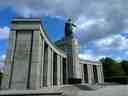
Look straight ahead for a sweeping, stone-curved wall crowned by a towering bronze Soviet soldier, arms outstretched, and flanked by old tanks and artwork-the Soviet War Memorial is impossible to miss! Alright, time to step into some living history! Here in front of you, rising from the heart of Tiergarten, is the mighty Soviet War Memorial-one of Berlin’s most imposing reminders of World War II, and a story just bursting with drama, heroism, tension, and a touch of Cold War spy-thriller vibes. You’re standing where, almost eighty years ago, the world changed forever! Let’s set the scene. Imagine Berlin in 1945: shells exploding, fires raging, and the Tiergarten itself nothing but a barren stretch-burnt and stripped bare by desperate Berliners searching for firewood. Right here, just weeks after the last shots of the Battle of Berlin echoed through the city’s ruined skyline, the victorious Soviet forces began building this memorial to honor the 80,000 Soviet soldiers who died taking the city. If you look at the stones, you might wonder where they came from. Well, I have to admit, these bricks have more secrets than a Berlin spy: a huge chunk of the stone was actually taken from the ruins of Hitler’s own Reich Chancellery! So, not only does this place mark a Soviet victory, it’s literally built from the ashes of the regime they helped topple. History has a sense of irony, don’t you think? Now, look at how the design isn’t just grand-it’s bold. The memorial mimics the semicircular stoa style seen across the old Soviet bloc. Red Army artillery, real T-34 tanks and ML-20 howitzers are parked right here-a little bonus for any budding tank spotters! But the true centerpiece is the soldier up above: resolute, expectant, almost as if he’s ready to walk right off the monument and keep marching west. His arm stretches over the graves of more than 2,000 soldiers, making this both a monument and a sacred resting place. In those tense Cold War days, this wasn’t just a place for quiet reflection. Oh no! This memorial stood in the British sector of the divided city, literally steps from the wall of communism. Every day, Soviet honor guards from East Berlin marched into West Berlin to stand watch, while British infantry kept an eye on West Berliners who sometimes, let’s say, weren’t thrilled about a Soviet monument in their backyard. In the ’70s, tensions even turned tragic-an extremist shot one of the honor guards. If these pillars could talk, they’d have a few hair-raising stories to tell. After reunification, the memorial’s fate was debated-especially the tanks-after Russia annexed Crimea. Some locals and newspapers demanded they be towed away, saying enough was enough. But the German government held firm, keeping everything in place as a sign of respect and remembrance-and perhaps as a reminder that history is a bit more complicated than simply moving the tanks into storage. But don’t think it’s all politics and solemn ceremonies! On May 8th, Victory Day, the place comes alive with flowers, veterans in uniform, and the sounds of laughter and memory. To this day, it draws not just tourists and historians, but families and old comrades, each leaving little marks of remembrance in the shade of these stone columns. So, as you stand on this spot, surrounded by leafy canopy and the echoes of the 20th century, realize that you’re in a place where worlds collided, soldiers stood guard through freezing winters and sizzling summers, and history got decided. Keep your eyes open-Berlin loves to hide its greatest stories in plain sight, especially here, where a bronze soldier still seems to watch over the city’s endless march toward tomorrow. Want to explore the site, design or the the memorial today in more depth? Join me in the chat section for a detailed discussion.
Abrir página dedicada →If you're trying to spot the Kroll Opera House from where you’re standing, look through the trees for a grand, pale building with rows of arched windows and a square, theatrical…Leer másMostrar menos
If you're trying to spot the Kroll Opera House from where you’re standing, look through the trees for a grand, pale building with rows of arched windows and a square, theatrical silhouette rising above the quiet street. Welcome to the long-lost world of the Kroll Opera House, where echoes of applause and political drama once mingled in the Berlin air! Imagine yourself here in the mid-1800s, the ground beneath your feet once nicknamed the “Sahara” for its dusty, sandy stretches-hardly the romantic opera setting, unless you enjoy a little grit in your shoes. But Joseph Kroll, a determined restaurant owner from Breslau, had a vision: his grand entertainment palace would be a sparkling social hotspot for Berlin’s elite, complete with flower-decked halls, three massive chambers, and even a “Tunnel” where folks could smoke indoors. That was quite a novelty back then! Picture it: gas lamps flickering to life, forty waiters rushing trays of food, and sixty musicians tuning up for an evening that might even tempt a king. Now, life in the Kroll Opera house wasn’t always a grand waltz. The early days were dazzling, with legendary acts like Johann Strauss Jr., the “Waltz King,” sweeping in to charm Berlin’s dancers. But just as Joseph’s dream was flourishing, disaster struck-in 1851, fire broke out as the lamps were lit, sending curtains up in smoke. Don’t worry, Joseph’s daughter Auguste wasn’t the type to go down without a fight. Before you could say “bravo!” she’d pocketed the insurance money and reopened with a brand new theatre just weeks later. Yet the backstage drama never ended. Performing wild animal shows, summer operas beneath the stars, and even fireworks, Auguste and her conductor husband Jakob Engel kept pushing boundaries-sometimes too far, leaving their finances dancing on a tightrope. They even introduced Berlin’s very first electric “Edison system” lighting, setting the stage ablaze with innovation-but, unfortunately, not always with profits. The Kroll’s fortunes rose and fell with Berlin’s tastes, sometimes packed for Italian opera sung by stars like Marcelle Lembuch and at other times so stuffy and hot, as an American visitor once wrote, guests escaped outside into a refreshingly cool, lantern-lit garden during every intermission. What an atmosphere-a cocktail of culture, a whiff of smoke, and a garden glowing under electric and gas lighting! In the early 20th century, the Kroll Opera House attempted a dazzling encore. It was rebuilt as the splendid Neues Königliches Operntheater, hosting everything from Stravinsky’s bold new sounds to the golden throats of Caruso and cutting-edge stage design by art legends like Moholy-Nagy and Schlemmer. For a while, it looked like the Kroll Opera House had finally struck a high note. But the financial strains of the time kept it wobbling-the Berliners, perhaps, had too many other amusements to choose from! As the shadows of war crept closer, the drama turned political. After the Reichstag fire in 1933, with the Reichstag building damaged, politicians crossed the street and took their seats inside the Kroll Opera House. It became the unlikely, tragic stage for some of history’s darkest decisions: here Adolf Hitler secured massive new powers in the famous Enabling Act, giving him control over Germany and ultimately sealing the fate of millions. As the world teetered on the brink, the opera house saw not arias but angry speeches and declarations. Hitler gave chilling warnings to thunderous applause-a far cry from the sweet notes of “Romeo and Juliet.” The opera house’s days were numbered. Warplanes howled overhead and bombs rained down, gutting the grand halls in 1943, leaving only blackened ruins. Then, in the chaos of Berlin’s final days, the Red Army swept past what little remained. By 1951, the Kroll Opera House was finally demolished, its ghostly presence lingering only as memories and a whisper of music over the lawns where voices once soared. So next time you walk by this quiet patch of green, listen closely-you might just hear a snatch of Strauss’s waltz or the hammering of history’s gavel echoing through time. The stage lights are gone, but what a show it was!
Abrir página dedicada →Look ahead for a truly gigantic domed building with a traditional columned entrance-a structure so enormous, it seems to swallow the sky and dwarf everything around it. Welcome…Leer másMostrar menos
Look ahead for a truly gigantic domed building with a traditional columned entrance-a structure so enormous, it seems to swallow the sky and dwarf everything around it. Welcome to the Volkshalle-or, as it was grandly known, the “People’s Hall,” the “Great Hall,” or, if you prefer your history with a dash of melodrama, the “Hall of Glory.” But don’t strain your neck trying to find it in real life. This is an architectural ghost-just a design, a colossal “what if?” floating above Berlin, conjured up by Adolf Hitler and his favorite architect, Albert Speer, in the darkest days of the Third Reich. Imagine standing outside, feeling a faint rumble in the air as if the very ground is uneasy beneath this massive vision. The story of the Volkshalle springs from dangerous dreams. Hitler and Speer wanted to transform Berlin into “Germania,” a world capital, and in the heart of their plans was this vast dome-so gigantic it would’ve made the city’s other buildings look like matchsticks. Picture a granite podium as wide as three football fields square, rising higher than most apartment blocks. Atop it, a glittering dome climbs into the sky, capped with a lantern-where, perched triumphantly, a German eagle clutches the globe, like it’s playing the world’s most intense game of catch. This “Monster Building,” as people sometimes called it, was meant to tell you: There’s nowhere bigger, nowhere grander, nowhere more important. Size really does matter-at least, if you’re an egomaniacal dictator. Now, you might wonder where on earth Hitler got the idea for something so over-the-top. The answer traces all the way back to Rome, to the ancient Pantheon-Hitler’s “Roman Impression,” as he called it. After standing under the great oculus of the Pantheon, staring up at the sky framed by the rotunda, Hitler fell in love not just with the look-but with the power an ancient temple could command. The original plans for the Volkshalle? They even had a secret walkway, a cryptoporticus, connecting Hitler’s own palace straight into the heart of this mighty hall, so he could sneak in and out like some paranoid Roman emperor. The sheer numbers involved are dizzying. The dome alone would have stretched some 250 meters across-one and a half times bigger than St. Peter’s in Rome, and apparently only just pipped in width by a rival dome dreamed up in Munich. The oculus at the dome’s top would have been big enough to swallow an entire rotunda. Inside, the space would have held 180,000 people-enough to fill a small city, or, let’s face it, to host one giant karaoke night if the mood ever struck. The interior was as bombastic as the outside. Imagine three tiers of seats, marble pillars so tall you’d get a nosebleed just looking up, and, at the far north wall, a vast golden mosaic niche topped by a monstrous eagle almost 80 feet high. Below it, Hitler’s jade tribunal-the dictator’s personal stage-ready for ranting, raving, or whatever despots get up to. “Subtle” wasn’t really the mood here. But there’s more to this story than just scale and spectacle. The symbolism ran deep. The eagle clutching the globe-classic imperial Roman imagery-made it clear: This was meant to be the pulpit from which Hitler would rule not just Germany, but the world. Even the sculptures chosen to flank the entrance, Atlas with the heavens and Tellus with the Earth, hammered home the message: the sky and the earth, all under his sway. Hitler wanted this building to gain a kind of religious significance over the centuries, to become a shrine to National Socialism-like St. Peter’s in Rome, but for a much darker faith. Some people, like Albert Speer, later claimed it was all about world domination; others, still scraping traces of concrete off their shoes, dismissed it as “nonsense” and “Speer rubbish.” In the end, the Volkshalle only ever existed in drawings, in scale models, and in the imaginations of fiction writers and filmmakers. You can spot it looming in alternate history novels and TV shows-always vast, always vaguely sinister. One novel even joked that, with so many sweaty, breathing bodies inside, the dome would develop its own weather-clouds forming over political rallies, as if the building itself was sighing with boredom. So as you stand here, picture the impossible: a building so huge it conjured clouds, bones chilled by echoes of ambition and hubris that, thankfully, never made it past the drawing board. The Volkshalle-Berlin’s ultimate ghost, looming forever in the fog of what might have been.
Abrir página dedicada →You’re now standing at a spot shadowed by one of the world’s darkest chapters. Imagine Berlin in the early 1930s: the streets are full of tension. There’s shouting, stuttering…Leer másMostrar menos
You’re now standing at a spot shadowed by one of the world’s darkest chapters. Imagine Berlin in the early 1930s: the streets are full of tension. There’s shouting, stuttering radios, flashing torches at rallies, and everyone’s worried about jobs as the Great Depression bites deep. Grocery prices are high, money is nearly worthless, and almost every conversation ends with a worried sigh or a muttered complaint about politicians-classic coffee shop pessimism, but with real consequences. Along comes a party promising everything: a strong government, full employment, shiny new highways, and-most dangerously-a scapegoat for every problem. The Nazi Party, led by Adolf Hitler, won people’s hearts not with hugs, but with fiery speeches, propaganda posters plastered everywhere, and the chilling brownshirted Storm Detachment-their paramilitary muscle-marching through the city. Once appointed Chancellor in 1933, Hitler wasted no time. Political opponents? Outlawed, imprisoned, or worse. With the Reichstag fire blazing in the night, a new era of fear was born-Hitler blamed Communist saboteurs, cracked down, and, as they say, “never let a good crisis go to waste.” Rights disappeared, and soon, Germany was a one-party state. If democracy had a "missing" poster, it would've been all over Berlin. The Nazi state quickly became a totalitarian machine. Everything revolved around “the Führer,” and his word became law, faster than you can say “unconstitutional.” The government wasn’t exactly one happy family; it was a collection of ambitious men, each struggling to get Hitler’s attention-picture a power-hungry reality TV show, but with terrifying consequences. Tension was always simmering, mixed with relentless parades, torch-lit rallies, and synchronized swastika flags fluttering in the wind. To get the sluggish economy roaring, the Nazis steered money into rearmament, secret tank factories, and building the famous German Autobahnen. Unemployment dropped-on paper, at least-and the regime’s popularity soared. For some, it felt like “order had returned.” But behind the spectacle, entire communities were being crushed. Jews, Romani people, Slavs, political opponents, and anyone deemed “undesirable” faced persecution, imprisonment, or death. The Nazis rejected everything “un-German”: art, music, literature. If you wrote poetry about peace, you’d better start practicing for a sudden, one-way trip to nowhere. As the 1930s ticked on, the Nazi ambitions grew bigger-and scarier. Austria was swallowed up in 1938, and then came Czechoslovakia. Each land grab was trumpeted with noisy rallies and even noisier propaganda films. The “Thousand-Year Reich” promised by the Nazis lasted only twelve years but caused damage that will echo for centuries. When Hitler launched the invasion of Poland in 1939, World War II exploded across Europe. German armies stormed through country after country, from France to Norway and Greece. Even the skies grew heavy with the drone of bombers as the Battle of Britain raged above London. But from the start, this war wasn’t just fought in trenches-with every victory, Nazi policies grew more brutal, especially toward those caught in their racial fantasies. The Holocaust became the regime’s ultimate horror, with genocide and forced labor-murder on an unimaginable scale. Then, on an early June morning in 1941, Operation Barbarossa shattered the uneasy pact with the Soviet Union as millions of troops thundered eastward. The Nazis seized land-but not for long. Russia’s forests and icy roads turned from playground to graveyard. You know you’re in trouble when your tanks freeze before your soldiers do. Inside Germany, by 1943, the tide was turning. Soviet forces pushed west, Allied bombers pounded cities, and morale collapsed. Hitler clung to power, ordering “stand and fight” as Berlin’s buildings crumbled, trains clogged with refugees, and sirens wailed nightly. Rumor has it, even the rats wanted to surrender first. By 1945, as Soviet soldiers closed in, Hitler and his inner circle hid in the Führerbunker beneath Berlin. He finally admitted defeat by taking his own life-a dramatic, if cowardly, exit stage left. The next days saw chaos, desperate civilians, and the absolute end of Nazi Germany. Soviet flags unfurled over the ruins, and silence returned, heavy as history itself. Standing here today, you can almost sense the echoes-the boots, the shouting, the sirens. Nazi Germany is proof that democracies, freedoms, and futures can be stolen when fear is louder than hope. So, while Berlin stands rebuilt and alive, let’s just say this chapter is one the world must never “repeat.” But if you’re looking for a silver lining: at least the “Thousand-Year Reich” had a way shorter warranty than advertised! For further insights on the name, background or the geography, feel free to navigate to the chat section below and inquire.
Abrir página dedicada →Take a good look around, because you’re now standing outside the Federal Chancellery of Germany-what some Berliners affectionately call the Kohllosseum, the Bundeswaschmaschine,…Leer másMostrar menos
Take a good look around, because you’re now standing outside the Federal Chancellery of Germany-what some Berliners affectionately call the Kohllosseum, the Bundeswaschmaschine, or even the “Elephant Loo.” Can you guess why? If the massive size doesn’t give it away, maybe the quirky, giant round windows will. Don’t worry, Germany didn't actually build a government office as a laundry service for elephants-though wouldn't that be a spin cycle to see? This is no ordinary office building. In fact, it’s the largest government headquarters in the world. That’s right-at twelve thousand square meters, the Chancellery is literally ten times the size of the White House in Washington, DC. If the White House blinked, it might just disappear behind the Bundeskanzleramt like a mouse hiding from a very bureaucratic cat! Imagine yourself here back in the spring of 2001, when the building first opened its doors, fresh from the drawing boards of architects Charlotte Frank and Axel Schultes. Some Berliners gasped, others scratched their heads, but all agreed: the new Chancellery looked like nothing Germany had seen before. Built by a German-Spanish alliance (don’t worry, everyone got along), its cubic form and sheer scale made other world leaders eye their own homes with a hint of envy. But before Berlin became the home of the Chancellery, Bonn was in charge. Yes, the unassuming city of Bonn hosted the government after the Federal Republic of Germany was founded in 1949, with the first chancellor, the legendary Konrad Adenauer, setting up his office in the city’s Museum Koenig. Then, for a while, he moved into the slightly fancier Palais Schaumburg, a building whose elegance gave officials a taste for luxury-just not quite as much luxury as the new Chancellery boasts. It wasn’t until 1999, after the Berlin-Bonn Act, that plans fired up to make Berlin the government’s main stomping ground again. For a couple of years, staff worked from the imposing, old Staatsratsgebäude before setting up shop here on the Spreebogen. Just imagine the hum and buzz in Berlin back then, the sense of a city reuniting with its place at the heart of German decision-making. But let’s wind the clock even further back. The Chancellery’s roots are entangled with some of the most dramatic moments in German history. In 1867, Germany wasn’t quite Germany yet-just a North German Confederation with its first Bundeskanzler, Otto von Bismarck, hunched over paperwork in his original Bundeskanzleramt. No ministries, no vast halls-just Bismarck, a desk, and dreams of uniting German lands. As Bismarck’s empire grew, so did the administrative needs, and buildings changed as fast as governments. With the German Empire’s birth in 1871, the Chancellery became the Reichskanzleramt, taking up residence in the Radziwiłł Palace. Through wars and revolutions, the office evolved until, in 1938, the infamous Neue Reichskanzlei rose with imposing Nazi grandeur-only to be bombed in World War II and later flattened by Soviet bulldozers. The stone and steel you see today, then, carry the echoes of drama, hope, and devastation. Speaking of history-let’s not forget the people. Today, Chancellor Friedrich Merz commands the federal government from within these sleek walls, aided by an able hand: the head of the Chancellery, currently Thorsten Frei. This top advisor is either a cabinet minister or a powerful secretary of state-a role requiring nerves of steel and the stamina to survive an endless supply of meetings, reports, and, I suspect, very strong German coffee. If those walls could talk, they’d tell you about sticky moments, bold decisions, and the laughter and headaches of Germany’s greatest leaders. And if you’re keen to look inside, you’ll have to be patient-each August, for just one weekend, the general public gets a peek behind the curtain at how the country is run. The rest of the year? Sorry, it's top secret-unless you’re an elephant in need of a quick wash. So that’s the Chancellery: an office, a symbol, and a little bit of architectural mischief in the heart of Berlin. If you listen closely, you just might hear the clink of coffee cups, the shuffling of files, and maybe-just maybe-the whisper of history echoing across the river Spree.
Abrir página dedicada →
Preguntas frecuentes
¿Cómo empiezo el tour?
Después de la compra, descarga la app AudaTours e ingresa tu código de canje. El tour estará listo para comenzar de inmediato - solo toca play y sigue la ruta guiada por GPS.
¿Necesito internet durante el tour?
¡No! Descarga el tour antes de empezar y disfrútalo completamente sin conexión. Solo la función de chat requiere internet. Recomendamos descargar en WiFi para ahorrar datos móviles.
¿Es un tour guiado en grupo?
No - esta es una audioguía autoguiada. Exploras de forma independiente a tu propio ritmo, con narración de audio reproduciéndose en tu teléfono. Sin guía, sin grupo, sin horario.
¿Cuánto dura el tour?
La mayoría de los tours toman 60–90 minutos para completar, pero tú controlas el ritmo completamente. Pausa, salta paradas o toma descansos cuando quieras.
¿Qué pasa si no puedo terminar el tour hoy?
¡No hay problema! Los tours tienen acceso de por vida. Pausa y continúa cuando quieras - mañana, la próxima semana o el próximo año. Tu progreso se guarda.
¿Qué idiomas están disponibles?
Todos los tours están disponibles en más de 50 idiomas. Selecciona tu idioma preferido al canjear tu código. Nota: el idioma no se puede cambiar después de generar el tour.
¿Dónde accedo al tour después de comprarlo?
Descarga la app gratuita AudaTours desde App Store o Google Play. Ingresa tu código de canje (enviado por email) y el tour aparecerá en tu biblioteca, listo para descargar y comenzar.
Si no disfrutas el tour, te reembolsamos tu compra. Contáctanos en [email protected]
Paga de forma segura con