
Tour de audio de Aschaffenburg: Ecos de castillos, claustros y curiosidades
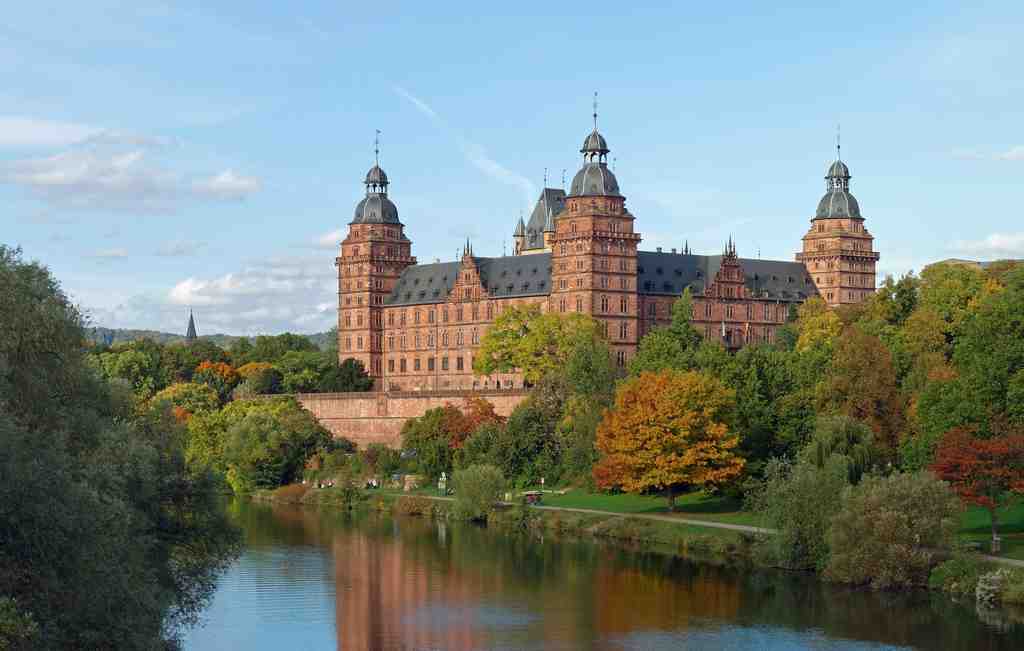
Torres de arenisca roja se alzan sobre el río Meno, custodiando secretos que han moldeado Aschaffenburg durante siglos. Bajo estas murallas y agujas, las historias esperan en pasillos sombríos y capillas silenciosas; algunas resuenan con triunfo, otras manchadas por la traición. Este viaje de audio autoguiado te lleva a través de calles serpenteantes y santuarios imponentes, desvelando relatos susurrados que pocos visitantes llegan a escuchar. Explora las dramáticas historias del Castillo de Johannisburg y adéntrate en iglesias donde leyendas perdidas aún perduran silenciosamente. ¿Por qué una única reunión secreta dentro de San Pedro y Alejandro casi cambió el destino de todo un reino? ¿Qué artefacto desaparecido de la Visitación de la Virgen María todavía persigue a los historiadores hoy? ¿Y qué sucedió realmente durante el incendio de medianoche que dejó ambiciones nobles en cenizas? Pasa de antiguas murallas a altares dorados. Sé testigo del pulso de Aschaffenburg bajo su superficie. Cada paso saca a la luz nuevos dramas y maravillas ocultas. Pulsa reproducir y deja que estas piedras históricas revelen sus verdades.
Vista previa del tour
Sobre este tour
- scheduleDuración 40–60 minsVe a tu propio ritmo
- straighten4.1 km de ruta a pieSigue el camino guiado
- location_onUbicaciónAschaffenburg, Alemania
- wifi_offFunciona sin conexiónDescarga una vez, úsalo en cualquier lugar
- all_inclusiveAcceso de por vidaReprodúcelo en cualquier momento, para siempre
- location_onComienza en Santa Ágata
Paradas en este tour
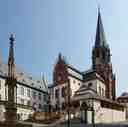
To spot St. Agatha, just look for a large, pale church with a tall, square clock tower topped by a needle-like spire and golden clock faces, along with a welcoming row of arched…Leer másMostrar menos
To spot St. Agatha, just look for a large, pale church with a tall, square clock tower topped by a needle-like spire and golden clock faces, along with a welcoming row of arched windows, right on the corner of a busy intersection. Now, let’s let your imagination run wild here at St. Agatha! Right where you’re standing, nearly 900 years ago in the late 1100s, this patch of land was just beyond the protective city walls of medieval Aschaffenburg. Picture this: local townsfolk, priests, and merchants gathering around a modest church made of heavy stone, the air buzzing with news and rumors, perhaps someone complaining about the cold-some things never change. St. Agatha gets its name from the time when popes wrote about this very spot, calling it the “parish outside your city walls.” Back in the 12th century, the original church was small, but soon they started building out-imagine the clatter of stonemasons at work and the echo as new side aisles went up in the 1300s. By the 15th and 16th centuries, the community flourished so much, they raised the walls and built higher still, fashioning a church tower that stood as a beacon to the faithful and maybe, let’s be honest, a pretty good spot for birds to hang out and judge everyone below. Life at St. Agatha was never dull-weddings, baptisms, funerals all playing out here, while on the surrounding grounds, the Annakapelle (Chapel of St. Anna) was built, offering a quieter, more secluded spot among gravestones and whispering trees. Over centuries, wars came and went, tastes changed, and the church itself was expanded and renovated, from baroque glory to the clean, striking lines of Neo-Gothic style. Fast forward to the late 1800s, and the parish decided it was time to dream big. Plans were drawn to transform St. Agatha into the largest church in Aschaffenburg-imagine a church almost as long as an Olympic pool! But as fate would have it, the outbreak of World War I put those ambitious blueprints on an indefinite coffee break. The dream never materialized, and the people settled instead for more gradual changes. Things got dicey again during World War II. One November night in 1944, the distant thunder of bombs broke more than just windows-columns cracked, woodwork splintered, and a good section of the church lay in ruins. Then, just as everyone was catching their breath, artillery hit again the next spring, and fire swept through, leaving only charred remnants. But hope is made of strong stuff here. After the war, Professor Boßlet and his team led a complete rebuild. In 1949, on All Saints' Day, St. Agatha reopened its doors-new tower, new halls, and even a new home for its rescued artifacts. See the giant stone figure over the front door? Installed in the 1960s, that’s St. Agatha herself, and she’s nothing if not dramatic-a 12-ton guardian keeping watch on Aschaffenburg. In her shadow, a new modern tower arose, with a baptistery and a little Mary chapel tended with quiet devotion. Not everything survived fire and war, but many treasures did. Epitaphs line the walls outside, and inside, the “baker’s altar,” carved from Spessart oak in 1950, cheers for the city’s industrious bakers. There’s even the phrase, “The bread we prepare, give us always,”-a prayer for loaf-lovers everywhere. And if you listen during certain hours, you’ll hear St. Agatha’s four bells tolling out, the oldest rescued from the scrappers’ fate in a WWII bell graveyard in Hamburg. Step inside, and you’ll see vibrant stained glass in the choir and a soaring white ceiling that folds overhead-modern art meets ancient faith. The altar cross, floating and bright, is a work of two master craftsmen, showing Christ risen, with each corner marked by gilded emblems of the Four Evangelists: a man, a lion, an ox, and an eagle. So, whether you’re a lover of architecture, a seeker of stories, or just here to rest your feet, know that St. Agatha stands as proof that no matter how many times life knocks you down, you can always be built up again-preferably with a nice clock tower, a little humor, and maybe the smell of fresh bread in the air. Ready to head to our next stop?
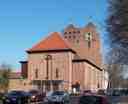
Abrir página dedicada →To spot the Capuchin Church of St. Elisabeth, look for a pale, simple church with reddish stone trim, a steeply-peaked roof, a small tower at the top, and a round stained-glass…Leer másMostrar menos
To spot the Capuchin Church of St. Elisabeth, look for a pale, simple church with reddish stone trim, a steeply-peaked roof, a small tower at the top, and a round stained-glass window above the main entrance, just to your left on the quiet street. You’re now standing in front of a church that could tell enough stories to fill a century-long confession. Let’s take you back in time-picture the year 1626: horse hooves on cobblestones, the scent of wood smoke, and an eager group of Capuchin monks arriving at the invitation of Elector Archbishop Johann Schweikhard von Cronberg. He thought Aschaffenburg needed a boost of spiritual energy-maybe the monasteries had gone a bit “stale,” you know? So, with a stroke of generosity, he gave the monks this very ground, right “by the castle garden,” and soon, both monastery and church began to rise. The original foundation was laid in 1626, and by the next year, a simple but meaningful church was standing. It quickly became not only a local anchor of faith but, as you’ll soon discover, a magnet for drama. Fast forward to October 1813: outside, the chaos of the Napoleonic Wars rages. Following the nearby Battle of Hanau, the monks’ peaceful realm suddenly becomes a bustling military hospital. Then-oh dear-some careless hospital workers, a little too fond of open flames, sparked a devastating fire in the dead of night. The entire monastery and church were left in ruins. Although every wounded soldier escaped, an incredible library of 4000 books was reduced to ash. Yet thanks to quick-thinking townsfolk, a city-wide fire was avoided by tearing down neighboring homes as a barrier. But this building wasn’t going to let disaster win. The church and monastery were rebuilt in 1814, though it would be more than 30 years before proper consecration could be celebrated-it always takes longer when you’re aiming for perfection! The church did double duty as a hospital again in the 1866 war, suggesting this was the place everybody turned to in tough times. In 1908 and 1909, architect Friedrich Ritter von Thiersch led the charge on a new design, cleverly building in parts of the old sanctuary, so that some walls here have watched centuries of stories unfold. Notice the structure’s mix: a blend of neo-Romanesque and neobaroque, with a splendid interior-imagine the grand altar built from solid stone and adorned with all the artsy flair Munich could muster! Glance up at the old north entrance, where a statue of St. Elisabeth, carved in the 1600s, gently offers a drink to a beggar. And let’s not forget music-beneath that peaked roof, the organ was a masterpiece in itself: built over decades, it boasts pipes and controls worthy of a small spaceship (or at least a very ambitious monk). World War II brought more hardship: in a 1944 air raid, the entrance and roof were blasted apart, and two patres lost their lives in bombing raids. But again, this church dusted itself off, patched up the damage, and looked to the future. Its barrel vault became a wooden ceiling, and over the entrance, a gorgeous round window was installed-a fiery “burning bush” in colored glass, glowing at sunset. As you stand here, imagine the echoes of singing, prayers, and maybe a few grumbling builders, as well as the comforting clang of a bell-cast in Passau and inscribed, “Elisabeth the Good, hear us from heaven.” Even today, after a grand renovation that finished in 2015, a new generation of brothers and sisters fill the halls, now caring for the Italian community. So if the walls feel alive, it’s because they’ve survived fire, war, cracked jokes by mischievous monks, heavenly music, and nearly 400 years of bustling Aschaffenburg life! Interested in a deeper dive into the reconstruction after 1945, renovation and modernization from 2011 to 2015 or the organ? Join me in the chat section for an insightful conversation.
Abrir página dedicada →
Mostrar 9 paradas másMostrar menos paradasexpand_moreexpand_less
To spot Johannisburg Castle, just look ahead for a massive, square Renaissance palace made of red sandstone, with four soaring octagonal towers at each corner, looming proudly…Leer másMostrar menos
To spot Johannisburg Castle, just look ahead for a massive, square Renaissance palace made of red sandstone, with four soaring octagonal towers at each corner, looming proudly above the Main River and framed by a patchwork of garden paths and lush green trees. Welcome to Johannisburg Castle-Aschaffenburg’s unmistakable showstopper! If you listen carefully, you might almost hear the echoes of centuries past drifting out from those fortress-like walls, as if the castle itself is clearing its medieval throat, ready to tell you a tale or two. Built from 1605 to 1614, right atop the ruins of an older medieval stronghold, this gigantic palace became the second residence for the powerful Archbishops and Prince-Electors of Mainz, rulers with enough influence to make even emperors jealous. Close your eyes for a moment, and picture the scene back in 1614: fountains bubbling, horses clopping across the castle bridge, the scent of red sandstone heating in the sun. Archbishop Johann Schweikhard von Cronberg had just ordered the castle's construction as the shiny new headquarters for the Mainz court. The architects were determined-no leaning towers or gloomy dungeons here! Instead, they built perfect symmetry, tall towers, three stately floors, and windows with ornate details that even today seem to wink at you with every step you take. Legends swirl here like autumn leaves. My personal favorite: In 1631, during the Thirty Years’ War, a Swedish king was on the verge of burning the castle to the ground. A clever local Capuchin friar, Father Bernhard, handed over the city keys and joked that the king could always just roll the castle away to Sweden-after all, there are little carved stone wheels (actually part of the Mainz coat of arms) above all the windows! The king let out a roar of laughter and spared the castle. Sometimes a dad joke can save the day. Step inside and you’ll find this was never just a fancy house. Imagine servants hustling through kitchens and wine cellars on the ground floor, bishops and emperors pacing in lavish apartments upstairs, and grand feasts in enormous halls gleaming with candlelight. The chapel sparkles with intricate marble and carved alabaster figures, and legends say that over 150 little statues keep silent watch over the altar, telling stories of saints, kings, and betrayal. But wait-the adventure doesn’t stop! The castle was plundered in 1552, nearly destroyed in the 1945 bombings of World War II, then lovingly rebuilt stone by stone, though if you’re a real castle “window counter,” you might spot a few more here than in the original. Some corners were never the same-inside, the modern museum shines, with paintings by Lucas Cranach, Rubens, and treasures from centuries of Mainz’s grandest churchmen: sparkling robes, ancient ceramics from all over Europe, and even the world’s largest cork model collection, including a model of the Roman Colosseum that could fit most classrooms inside. If you’re feeling especially lucky, keep your ears open for the castle’s carillon, a bell tower with 48 massive bells that rings out three times every day-it’s not exactly quiet, but then again, Johannisburg Castle has never been one for whispering. Wander through the castle gardens and you’ll see why Aschaffenburg is called “the Bavarian Nice”: cypress and fig trees, winding paths, pavilions peeking from behind ancient walls. Once, noblemen in powdered wigs wandered these gardens searching for a little shade-or maybe a little gossip. So here you are, standing outside a castle that watched over kings and survived wars, where laughter and danger have echoed between the towers. Johannisburg Castle isn’t just a building; it’s a spectacular guardian of stories, waiting to share them with anyone curious-and just a bit daring. Go on, see what secrets those red stones hold!
Abrir página dedicada →To spot St. Peter and Alexander, look for the grand church atop the hill in front of you, with its tall Gothic steeple and the wide, sweeping double staircase guarded by statues,…Leer másMostrar menos
To spot St. Peter and Alexander, look for the grand church atop the hill in front of you, with its tall Gothic steeple and the wide, sweeping double staircase guarded by statues, all overlooking the square below. Welcome to a spot where centuries rub elbows! Right in front of you stands the oldest church in Aschaffenburg, majestically perched atop this hill. The story of St. Peter and Alexander begins in the 10th century, when Otto of Swabia decided he wanted something grander than the old rectangular Carolingian chapel that once stood here. He had big dreams-and honestly, who doesn’t want a church with a panoramic city view? So, imagine the clang of hammers as builders laid out a Romanesque basilica that would go on to absorb layers of Gothic flair and later influences as ambitious generations continued its transformation. This church is basically Aschaffenburg’s version of a Swiss Army knife-packed with stories, treasures, and drama. It was here, under the direction of Duke Liudolf, son of Emperor Otto I, and his wife Ida, that the future of Aschaffenburg was quietly rewritten. Built around 950, it got its official collegiate status by 974, with a full-fledged school attached. A place of scholarship, power, and-judging from an incident in 976 where the cantor might have accidentally killed a student with a writing tablet-some pretty intense classroom management! (Don’t worry, it’s all quill pens and gentle lectures now.) Through centuries, as Aschaffenburg rose to importance alongside mighty Mainz, this church became more than spiritual headquarters; it was the city's biggest landowner, holding vineyards, farms, and even the odd mill. Its canons lived in a cluster of houses and strolled through the lush Romanesque cloister-64 carved capitals on columns all in intimate U-shaped embrace, built in the 1240s and lovingly restored in the 1800s. Just imagine the bustle, the rustle of cloaks, and the scent of wax and incense drifting through the halls. Walk up that broad baroque staircase-built in the 17th century-and you pass two sandstone guardians: statues of Peter and Alexander from 1723. At the crown of the steps, look out for the 1699 crucifixion group by local sculptor Antonius Wermerskirch. The entrance is as much pilgrimage as arrival. Step inside, and you’re under the gaze of legendary stained glass and soaring pillars-some possibly recycled from the old predecessor of Castle Johannisburg nearby. The church’s main hall, a Romanesque marvel, supports 16 stone columns with richly decorated capitals that hold up the organ loft. Inside, treasures abound: the mighty Aschaffenburg Triumph Cross, hanging high, was donated in the 10th century in memory of Otto of Swabia. Meanwhile, the early baroque pulpit by Hans Juncker tells Biblical tales with a twist-where Samson parallels Christ and Jonah’s whale adventure hints at resurrection. There’s even a red-and-gold silk umbrella in the choir, marking its elevation to Basilica minor status by Pope Pius XII in 1958-a nod straight from the Vatican. The high altar is a dazzling spectacle with marble columns because, well, why let Rome have all the fun? And the artwork-oh, the artwork! Matthias Grünewald painted “Lamentation of Christ” here, still kept in a chapel off the nave, while Lucas Cranach and his workshop filled the church with masterworks now housed in the local museum and the city’s castle. Of course, life wasn’t always tranquil. Fires, wars, and squabbles over taxes shaped its walls. An angry uprising in 1304 against the canons’ tax exemption was struck down by court-proving, as always, that arguing with church property is a bit like arguing with gravity. Even the church bells carry a chronicle, their oldest cast in the 1300s, ringing out a medley of centuries. So whether you’re here for spiritual wonder, the legends embedded in stone, or just admiring gargoyles and artworks, St. Peter and Alexander stands as Aschaffenburg’s time machine-where every echo and carved face has a tale waiting in the wings. For a more comprehensive understanding of the architecture, equipment or the organ, engage with me in the chat section below.
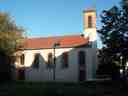
Abrir página dedicada →Straight ahead, you’ll spot the Hospital Church of St. Katharina with its creamy white walls, five tall arched windows, and a small square tower peeking up at the corner-look for…Leer másMostrar menos
Straight ahead, you’ll spot the Hospital Church of St. Katharina with its creamy white walls, five tall arched windows, and a small square tower peeking up at the corner-look for the simple, elongated building with the red-tiled roof just beyond the trees. Now, while you’re standing here, let’s take a leap back in time together. Imagine Aschaffenburg in the year 1848-a city wrapped in a soft morning mist, carriages clattering over cobblestones, the air tinged with the scent of fresh bread and maybe, just maybe, a whiff of medicinal herbs floating from the nearby hospital. The townsfolk were buzzing with excitement (and perhaps confusion): a new church was rising beside the main hospital, built in the restrained yet elegant style mixing Romanesque and classical influences. Not exactly a party palace, but trust me, this place has seen its share of drama. Why here, and why then? Well, long before Netflix, Aschaffenburg’s excitement revolved around charity, faith, and a pinch of mysterious philanthropy. Picture a certain Juliane Betz, a woman with a heart as generous as her purse. In 1846, she donated a hefty 3,000 gulden to build a hospital chapel, but with three curious conditions: the city had to raise the rest of the money within a year, her name was not to be spoken of in connection with the gift (oops-cat’s out of the bag now!), and, just so she wouldn’t be forgotten in the afterlife, she requested endless memorial masses for her and her loved ones. Not bad for a woman who wanted to stay incognito, right? Thanks to Juliane and a royal top-up (yes, His Majesty the King chipped in 200 gulden-maybe he liked the style), the church became a reality. The building echoed with the footsteps of nurses and sisters, especially the Sisters of Mercy from Munich, who arrived here in 1837. Under the rather stern-sounding Sister Ignatia Jorth, these women devoted over a century to caring for the sick, working quietly and selflessly. Locals adored them-their gentle dignity left a mark not just on the hospital, but on the whole city. Imagine-at their peak, sixty sisters bustling through wards, offering comfort, and perhaps sneaking the odd cookie to a patient. For 132 years they served, until 1969, when their work here was done and they returned to Munich. Now, let’s talk treasures: in 1833, a carved wooden Madonna from the early 16th century came to the church, already legendary because it survived a whack on the forehead by a Swedish soldier’s saber during the Thirty Years’ War. Let’s face it, if that statue could talk, it would have some wild stories. For safekeeping, it’s now at the museum-but imagine the awe and inspiration it must’ve given to those kneeling in prayer. The interior has transformed, too. In 2015, the building, now home to the Romanian Orthodox parish, began a dazzling makeover. Enthusiastic parishioners with hammers, brushes, and maybe more glitter than you’d expect, got to work. They sculpted a wooden iconostasis, added eight glittering chandeliers, painted the walls, laid new floors, and swapped the old benches for intricately carved chairs-turning this simple hall into a gleaming, colorful oasis fit for centuries-old traditions. Even the art and music have layers here. The soaring late-Gothic altar inside features not just the Virgin Mary but also St. Katharina and St. Elisabeth, and check out the dramatic terracotta Stations of the Cross along the south wall-carved in the 1930s, each one is a frozen, heartfelt moment in clay. Above, there’s a wood-carved crucifix by Ludwig Sonnleitner, oddly shaped and gripping-a reminder of suffering and hope in equal measure. Whether for healing, refuge, music, or worship, St. Katharina’s has always been a place where the city’s soul comes to rest. And if you listen closely, perhaps in the hush between traffic and birdsong, you might just catch an echo of the prayers, music, or even the soft laughter of the sisters who walked here long before you. Ready to keep exploring? Let’s move on to our next stop! For a more comprehensive understanding of the hospital chapel, church renovation or the equipment, engage with me in the chat section below.
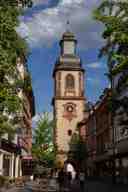
Abrir página dedicada →To spot the Visitation of the Virgin Mary, or "Sandkirche," look straight ahead for a tall, sandy-rose church tower with a bulbous, silver-gray roof peeking over the shopfronts;…Leer másMostrar menos
To spot the Visitation of the Virgin Mary, or "Sandkirche," look straight ahead for a tall, sandy-rose church tower with a bulbous, silver-gray roof peeking over the shopfronts; the entrance is set right at the end of this busy street, under the archway in the tower. Now, as you’re standing here, imagine yourself hundreds of years ago. This was once a wild, wooded area-certainly not the place for a town stroll or an afternoon coffee. The story begins with a local shepherd-some say he was a wandering soldier-who spotted an out-of-place lily, white as snow, blooming right here. And, eager for a gift for the garden, he dug it up-but instead of roots, he found a striking image of the Sorrowful Virgin Mary hidden in the soil. This was no ordinary flowerbed! Word spread quickly: this spot was holy ground, and soon everyone wanted to honor that miracle. By 1517, the town council wrote to a powerful cardinal, requesting to build a chapel right at this spot-“under the Sand Gate.” Apparently, there’d already been a roadside shrine here for years, but Aschaffenburg’s people wanted an official place of pilgrimage, a beautiful church they’d dedicate to the Virgin Mary-plus Saint Martin, Saint Boniface, and the Holy Cross. The altar’s first caretaker was a local son named Johann Faust, and the big dedication party was always scheduled for the Tuesday after Pentecost. The church became the town’s place of hope, especially during tough times. In the early 1600s, plague swept through Aschaffenburg, hitting the Damm suburb hard. Almost three hundred people died in a single month, and nothing-not even the biggest bonfires-could drive the sickness away. The few survivors made an emotional promise: every year, on a special Friday, they would walk in procession to this chapel, praying for relief. The tradition stuck; whenever times got tough, people would walk here, seeking the Virgin’s help. By the 1700s, so many people were showing up for prayers and festivals that the old chapel practically burst at the seams. The townsfolk, determined to build something grander, literally passed around a collection box from house to house. Even local nobles, bound to Aschaffenburg through family ties, chipped in when they heard about the effort. With all these donations and a lot of collective elbow grease, building kicked off in 1756. Two years later, a shining new Sandkirche stood here, with the ancient Sand Gate-dating all the way back to 1381-transformed into the church’s tower. Inside, things sparkle even more. The main altar is a festival of late Baroque style: gold and stucco everywhere, plump angels, a glass shrine to the Virgin Mary, and a book sealed seven times supporting the Lamb of God. The side altars showcase dramatic old paintings and wooden saints-Saint Martin, Saint Anna, and more. The organ, replaced several times but always full of warm, baroque sound, has music that echoes through the stone even today. And the bells! Cast specially in 1952, they each have a secret: listen for the Marienglocke, ringing out prayers to Maria for protection, or the “Christ the King” bell, with the words-yes, in German-reminding everyone: “Christ the King reigns over us.” The old bells are kept in the nearby city museum, so don’t try to sneak one out as a souvenir, okay? Locals still swap stories about how, if you ever got yourself in trouble, you’d end up “behind the Sand Church”-where the town jail once lurked for over a century. And in case you’re wondering what happened to the old churchyard, well, at one point it was actually used for city firewood! So as you look up at that remarkable baroque tower, feel free to breathe in that sense of survival, hope, and local spirit-plus a pinch of mystery. Who knows what you’ll dig up in Aschaffenburg’s next chapter?
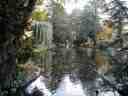
Abrir página dedicada →Right in front of you, you’ll spot Schöntal Park by its shimmering pond edged with weeping willows and dense, leafy trees-just look for the water glimmering through the branches…Leer másMostrar menos
Right in front of you, you’ll spot Schöntal Park by its shimmering pond edged with weeping willows and dense, leafy trees-just look for the water glimmering through the branches and the lush greenery hugging its banks. Welcome to Schöntal, a true oasis right in the middle of Aschaffenburg, where the city’s past and nature’s beauty blend so smoothly you might just forget you’re moments from busy streets. Step closer and listen-you might hear the gentle splash of ducks paddling on the pond. But don’t be fooled by its peaceful presence; Schöntal’s roots reach deep into centuries of drama, mystery, and even a touch of royal flavor. Way back in the 15th century, when knights were still a pretty popular career choice, the area you’re standing on was a grand hunting ground, walled in to keep the game safe-well, safe until dinner time at the castle! Imagine the sound of deer and wild boar rustling through undergrowth, waiting to be served up for a grand feast at Johannisburg Castle. The mighty Mainzer prince-elector Dietrich Schenk von Erbach had the place built, and if you look up, you can spot the sturdy old Schenkenturm-locals sometimes call it the Ghost Tower, though ghosts, sadly, are not guaranteed. The tower once held tireless watchmen, keeping an eye out for danger or, perhaps, sneaky wildlife attempting a great escape. Fast forward to the 16th century and things get even more interesting. Archbishop Albrecht von Brandenburg, a man who never did things by half measures, built a church right here for a group of Beginen-religious women who lived and worked together in faith. He even put his life companion Agnes Pless in charge-talk about a workplace romance! But war wasn’t far off. The church was burned in 1552, battered by battles, and finally turned into a makeshift hospital for epidemic patients. Today, its haunting ruins stand as an atmospheric centerpiece in the park. If you’re lucky, you might catch the bright blue flash of a resident peacock strutting near the stones, making every stroll feel just a little bit royal. By 1776, the Schöntal was transformed again, thanks to some landscaping wizardry ordered by yet another prince-elector, Friedrich Carl Joseph von Erthal. He wanted the space to resemble trendy English gardens-think sweeping lawns, picturesque ponds, and winding footpaths. As you walk, imagine elegant ladies and gentlemen in old-timey hats and dresses, strolling among the magnolia blooms in springtime or, on a fine Sunday morning, enjoying the sweet notes of a Schöntal concert drifting from near the ruins. Don’t be surprised if you stumble upon a few statues-Hercules flexing here, Diana keeping watch there-and a large, lively playground where kids can splash and climb to their hearts’ content. The grand Orangerie, once home to citrus trees and even a cinema, now hosts cozy beer gardens and a cabaret-a transformation worthy of a game show makeover! One last peek back-on maps from the 1800s, the Schöntal was even bigger, winding from the Main River with green city moats stretching under castle shadows. The city later filled some moats, built new roads, and transformed even more of this space into the lush green you see today. Local authorities have recently declared some areas as “tricky after dark,” but by daylight, with peacocks, concerts, old walls, and that unmistakable park magic, Schöntal remains one of Aschaffenburg’s best-kept secrets. So breathe in the fresh, leafy air, keep an eye out for plumes of peacock feathers, and lose yourself-just for a moment-in the stories that have soaked into every stone, tree, and ripple on this peaceful pond. Ready for the next adventure?
Abrir página dedicada →You’ll spot the Sacred Heart Church right in front of you by its imposing reddish stone walls, its fortress-like twin towers with a large clock, and a bold wooden cross above the…Leer másMostrar menos
You’ll spot the Sacred Heart Church right in front of you by its imposing reddish stone walls, its fortress-like twin towers with a large clock, and a bold wooden cross above the entrance-just look for the biggest, most solid building on the block with a roof as red as a fox’s tail! Now, imagine yourself back in the wild days after World War I-Aschaffenburg’s east side is hustling and growing, with new houses sprouting up and a neighborhood called Österreicher Kolonie buzzing with life. Folks needed a place to pray (and maybe escape the kids for a while), so Father Max Jäger stepped up with a plan. With a twinkle in his eye, he asked Bishop Ehrenfried for permission to build a new church. Next thing you know, he’s got a church-building club rolling, land is bought, and architect Albert Boßlet is sharpening his pencils for something ambitious. The plan? Not just any old church, but a “church fortress,” solid as a castle, with twin towers ready to watch over the faithful. The cornerstone goes down in chilly November 1928-imagine the clink of stone, the buzz in the air-and less than a year later, in October 1929, the whole community gathers for Bishop Ehrenfried’s grand opening. I wouldn’t be surprised if someone brought cake. Inside? Ooh la la! There’s a shiny marble altar, a golden tabernacle, and the image of Christ as the good shepherd up in the choir. Check out that grand organ loft and the dramatic wooden cross outside. But life wasn’t always peaceful for the Sacred Heart Church. In the stormy year of 1944, bombs rained down on Aschaffenburg. The west wall, the entrance, the loft, the organ-shattered. Even the roof caved in. The rectory? Reduced to rubble, with the parish priest buried in the basement, tickled by a bit of good luck and quick rescuers. After the war, the community wasted no time, rolling up their sleeves and rebuilding. And what about the sound of bells? Pay attention-they’re special. After all but one bell was lost in the war, five new bronze bells were cast in Bremen in the 1950s. Altogether they weigh more than 14 tons and their deep, sonorous “Te Deum” ring is the deepest in all of Aschaffenburg-like a bear with a fine singing voice! And inside, since 1995, you’ll find a concert organ that’s the pride of the city. So next time you hear those bells or catch a concert drifting through the streets, remember: This church is a survivor, a gathering place, and the keeper of stories both grand and (sometimes) quite noisy!
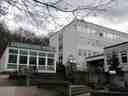
Abrir página dedicada →Look for a pale, modern concrete building with lots of square windows towering above you to spot Kronberg-Gymnasium Aschaffenburg-it’s up ahead, surrounded by terraced steps and…Leer másMostrar menos
Look for a pale, modern concrete building with lots of square windows towering above you to spot Kronberg-Gymnasium Aschaffenburg-it’s up ahead, surrounded by terraced steps and trees. So here you are, standing right in front of Kronberg-Gymnasium Aschaffenburg-not just any old school, but a survivor with a story bigger than its modern walls let on. Imagine the year is 1620, it’s the second year of the Thirty Years’ War, and Aschaffenburg is full of distant church bells and the clatter of wooden carts rolling past the Jesuit complex, nestled right near the castle. This school was the brainchild of Johann Schweikhard von Cronberg, the Archbishop of Mainz, who called the Jesuits to teach here. In June of that same year, he made it official-converting a humble Latin school into what would one day become this iconic institution. Now, don’t let today’s plain architecture or the students checking their phones fool you: Kronberg-Gymnasium's journey has been full of drama. Back in the autumn of 1631, Aschaffenburg saw unexpected “school holidays”-not because of snow, but because Swedish troops invaded the town. The Jesuits? Gone in a flash! Their classrooms were suddenly commandeered, but rumored lessons somehow continued. When the Swedes left three years later, regular lessons returned-well, almost. The very next year, the plague swept through, and students found their fall holidays much less fun than expected, with several succumbing along with two teachers. Just when things seemed to calm, the Swedes stormed back, bringing chaos and, heartbreakingly, the death of the school’s rector. Standing here, it’s hard to can picture the chaos, yet pieces of that early era echo on-especially in the name “Kronberg,” a nod to the school's Jesuit founder, and a distant reminder of those cloistered, Latin-murmuring halls. For two centuries, the Jesuits ran the show, but after 1773, a new cast of secular clerics took charge. The building you see today, though, isn’t the original. The former school stood on Pfaffengasse until 1944, when bombs in World War II leveled Aschaffenburg’s heart. Only a carved stone portal and a coat of arms survived-like something out of a detective film! For years, students bounced from one temporary home to another: the Dalberg-Gymnasium, Maria-Ward-Schule, the Kolpingschule, and even a set of postwar huts on what locals called the Grandmother’s Meadow. Not quite the five-star campus experience. Finally, in the 1960s, the city and the state of Bavaria had a tug-of-war-should the new building be by the Main River, or in Fasanerie Park? Munich won, and here the Kronberg-Gymnasium finally put down roots again. In 1965, they laid the cornerstone. By 1968, students were trekking up these very steps you’re standing on, excited for the grand opening, which even the Bavarian Minister President attended (his own son was a recent graduate). But even modern walls can’t contain everything this school stands for. Kronberg-Gymnasium has a proud tradition of both humanities and languages-Latin and Greek for the old-school brains, natural sciences and tech for the modern tinkerers. It’s produced thinkers, scientists, and even a few pranksters, I’m sure! Did you know Alois Alzheimer, the doctor who first uncovered the disease that now bears his name, once strolled these halls? Or historian Franz Bopp, who pretty much turned the science of languages on its head? There have been politicians, bishops, philosophers, comedians-Urban Priol, for example, no one ever accused him of being boring-and so many more bright minds. Imagine all the chatter, debates, and laughter layered across the decades. That’s Kronberg-Gymnasium for you-a place that’s rebuilt itself through wars, plagues, and politics, but never lost sight of lighting up a curious mind.
Abrir página dedicada →
Preguntas frecuentes
¿Cómo empiezo el tour?
Después de la compra, descarga la app AudaTours e ingresa tu código de canje. El tour estará listo para comenzar de inmediato - solo toca play y sigue la ruta guiada por GPS.
¿Necesito internet durante el tour?
¡No! Descarga el tour antes de empezar y disfrútalo completamente sin conexión. Solo la función de chat requiere internet. Recomendamos descargar en WiFi para ahorrar datos móviles.
¿Es un tour guiado en grupo?
No - esta es una audioguía autoguiada. Exploras de forma independiente a tu propio ritmo, con narración de audio reproduciéndose en tu teléfono. Sin guía, sin grupo, sin horario.
¿Cuánto dura el tour?
La mayoría de los tours toman 60–90 minutos para completar, pero tú controlas el ritmo completamente. Pausa, salta paradas o toma descansos cuando quieras.
¿Qué pasa si no puedo terminar el tour hoy?
¡No hay problema! Los tours tienen acceso de por vida. Pausa y continúa cuando quieras - mañana, la próxima semana o el próximo año. Tu progreso se guarda.
¿Qué idiomas están disponibles?
Todos los tours están disponibles en más de 50 idiomas. Selecciona tu idioma preferido al canjear tu código. Nota: el idioma no se puede cambiar después de generar el tour.
¿Dónde accedo al tour después de comprarlo?
Descarga la app gratuita AudaTours desde App Store o Google Play. Ingresa tu código de canje (enviado por email) y el tour aparecerá en tu biblioteca, listo para descargar y comenzar.
Si no disfrutas el tour, te reembolsamos tu compra. Contáctanos en [email protected]
Paga de forma segura con 


