
Tour de Audio de Tampere: Un Viaje Sonoro a Través de la Historia y el Arte
Alas de bronce surcan el cielo de Tampere mientras columnas de piedra recuerdan batallas de arte, poder y visionarios obstinados bajo ellas. Hay mucho más en estas calles de la ciudad de lo que pasa deprisa en una tarde lluviosa. Este tour de audio autoguiado revela dramas no contados, escándalos silenciados y momentos que reescribieron la historia local, justo más allá del sendero turístico. ¿Qué secreto desató feroces discusiones a gritos en el ayuntamiento dentro de Laikku? ¿Por qué la inauguración de dos cisnes de bronce casi terminó siendo una historia sobre cementerios, y no sobre grandes premios? ¿Y de quién son los pasos que aún resuenan en los bastidores del Teatro de Tampere después de medianoche cuando las cortinas de terciopelo finalmente caen? Recorre parques y plazas que cobran vida con ecos de rebelión y arte. Observa cómo los puntos de referencia familiares cambian ante tus ojos mientras historias de ambición, percances y transformación se derraman por las calles. Deja que estas historias te eleven como alas hacia el corazón oculto de Tampere; pulsa reproducir y comienza tu descubrimiento ahora.
Vista previa del tour
Sobre este tour
- scheduleDuración 30–50 minsVe a tu propio ritmo
- straighten1.5 km de ruta a pieSigue el camino guiado
- location_on
- wifi_offFunciona sin conexiónDescarga una vez, úsalo en cualquier lugar
- all_inclusiveAcceso de por vidaReprodúcelo en cualquier momento, para siempre
- location_onComienza en Cisnes
Paradas en este tour
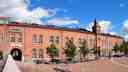
To spot Laikku House of Culture, look ahead for a grand pale yellow building with tall, white columns and a wide staircase right in front-it stands out just off the edge of the…Leer másMostrar menos
To spot Laikku House of Culture, look ahead for a grand pale yellow building with tall, white columns and a wide staircase right in front-it stands out just off the edge of the Central Square. Alright, pause here for a second and take it in! You’re standing in front of a building that’s seen more drama than a soap opera marathon-Laikku House of Culture. Fun fact: once upon a time, this was actually Tampere’s main library, but now it’s a hub where art, music, and lively events are always around the next corner! Let’s set the scene: the year is 1925, the city’s buzzing, and on these very steps, townsfolk in their finest hats marvel at this brand new, modern wonder. At that time, Tampere had wrestled with different ideas over where to put the new library for years. It took a shoe factory owner-yes, you heard that right, a shoe magnate named Emil Aaltonen-to finally light a fire under everyone with a huge donation. People argued for ages about the location, and the city council meetings must have sounded like a family dinner with too many cooks. Eventually, they picked this scenic spot near the Old Church park, and the brothers Jussi and Toivo Paatela designed the final four-story, rectangular building you see here. Originally, Laikku wasn’t just for books-imagine passing through these doors and hearing the echoes of city council debates, art exhibitions, and lectures filling the halls. Back then, it was the most modern library in the country, and cost a jaw-dropping 3.5 million marks. Even after the library moved out and the new Metso library was built elsewhere, this building found a second life. In the eighties, it was transformed into offices and cultural spaces, embracing everything from city education to art galleries and kid’s puppet theaters. Speaking of second acts, a huge renovation finished in 2018 gave Laikku its latest makeover-turning it into a vibrant cultural center with gallerias, meeting rooms, a cozy café, and a music hall with a massive Tampere fresco. With its stately steps and monumental columns, Laikku stands as a classic symbol of 1920s architecture-simple but grand, welcoming anyone who loves art, culture, or just a good cup of coffee. So if these walls could talk, they’d probably invite you in for a gallery tour…and maybe share a library joke or two-like, what’s a book’s favorite snack? Page chips!
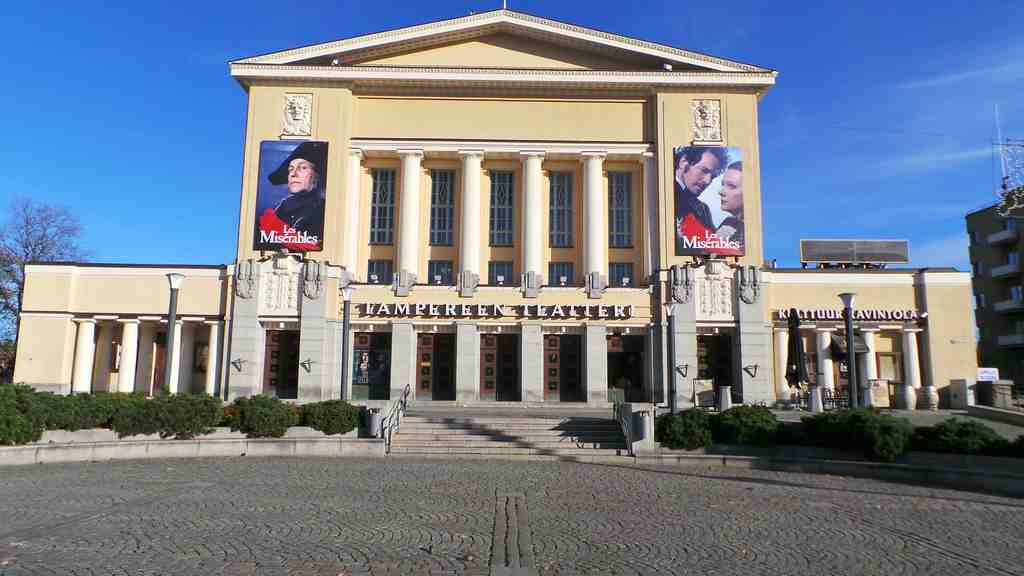
Abrir página dedicada →To spot the Tampere Theatre, look straight ahead for a grand, cream-colored building crowned with tall, white columns and banners showing dramatic scenes-right in the heart of the…Leer másMostrar menos
To spot the Tampere Theatre, look straight ahead for a grand, cream-colored building crowned with tall, white columns and banners showing dramatic scenes-right in the heart of the city opposite the municipality hall. Now, as you stand here in front of the Tampere Theatre, imagine yourself stepping back in time over a hundred years. The year is 1913: carriages rattle by, hats and coats flutter in the breeze off the nearby Tammerkoski rapids, and there's an electric buzz in the air. This beautiful building, built in the style of National Romantic architecture, has just opened its doors. People from across Tampere gather outside, craning their necks to see who will walk up those stately steps first. Will it be the star of tonight’s play, or maybe a mysterious guest who likes to cause a bit of drama themselves? The theatre was a dream come true for the city, after nearly a decade of careful planning-it started in 1904 but took years of anticipation and, let's be honest, probably a few cups of strong Finnish coffee. Today, the theatre still stands as a beacon of culture, laughter, and maybe the occasional bad audition (even the best theatres have them, trust me!). There’s even a second spot nearby-the Frenckell Hall-tucked into an old brick mill, where more intimate plays bring the riverside to life at night. If these walls could talk, who knows what backstage secrets they’d whisper to you?
Abrir página dedicada →
Mostrar 8 paradas másMostrar menos paradasexpand_moreexpand_less
To spot the Old Church of Tampere, just look for the charming pale wooden building with a classic clock tower and a welcoming dome roof, right next to the big square-if you see…Leer másMostrar menos
To spot the Old Church of Tampere, just look for the charming pale wooden building with a classic clock tower and a welcoming dome roof, right next to the big square-if you see the towering, lit Christmas tree nearby, you're in the right place! Welcome to a spot filled with whispers from Tampere’s earliest days! The Old Church, in front of you, has stood here since 1825-though if you could smell time, you’d catch just a whiff of sawdust and old pine, as this is the oldest surviving building in central Tampere. Picture it: before this church, Tampere folks bounced between distant chapels and even an old vodka distillery for worship-yes, nothing like a little spirit before a sermon! Imagine carriages rolling up over crunching gravel, people wrapped in heavy coats, and the bell’s echo through the frosty air. The land for the church was planned way back in 1779, but nothing happened for ages-like waiting for your toast to pop up, but for almost 50 years! When they finally started building, arguments flew about whether the church should be made of wood or stone. Wood won, and thanks to architect Charles Bassi, in 1824 the doors finally opened for Advent Sunday. Later, Carl Ludvig Engel (the same guy who helped shape Helsinki!) designed the clock tower right behind you. Now, here’s a twist: the church’s first bell tower was just a temporary wooden thing on stilts, but a generous grant from Emperor Alexander I led to the mighty steeple you see today, along with a shiny bell from Stockholm. Over the years, the church survived wars, slow fundraisers, and even some heated renovations, the most dramatic one in the 1950s that brought it back to its original glory. Even today, you might hear echoes of past prayers or the sound of the old organ pipes filling the air. So, as you stand here, surrounded by history, just imagine all the weddings, funerals, and life stories this little wooden church has seen-isn’t it amazing what one building can witness over 200 years?
Abrir página dedicada →Look for a long row of striking red-brick buildings right by the river, with an impressive octagonal tower and tall brick chimney-once you spot those classic factory windows and…Leer másMostrar menos
Look for a long row of striking red-brick buildings right by the river, with an impressive octagonal tower and tall brick chimney-once you spot those classic factory windows and the bridge leading up to it, you've found the Frenckell Paper Mill. Welcome to the beating heart of old industrial Tampere! Imagine you’re standing here in the 1800s: the air is thick with the scent of wet paper and wood, and the steady hum of machinery rolls from the windows. This site has a secret claim to fame. While it might just look like another sturdy red-brick building, it was here in 1842 that Finland’s very first continuous paper machine, an invention called the fourdrinier, started rolling out sheets faster than you can fold a paper airplane. But hold on-let’s rewind even further. It’s the late 1700s. Abraham Häggman, a copper smith from Ostrobothnia, starts Tampere’s first paper factory right on this spot. Back then, paper was made by hand, one wet, pulpy sheet at a time, with rags as the main ingredient. It took a lot of muscle and a bit of magic (well, skill and sweat). Fast forward to the 1860s: not only did the Frenckell family take over with their fancy new machines, they got so ambitious that by the 1870s, they needed a chimney taller than anything in Finland. Did Finns build it? Nope, they had to bring in Russian bricklayers. There just weren’t enough daredevil builders in town-imagine those workers, bracing against the wind, stacking bricks without scaffolding! By the 1900s, this place was a sprawling, stylish industrial palace, thanks to architect Birger Federley. It boomed until the 1920s, churning out newsprint and even power paper for export, before the machines finally fell silent and the city of Tampere took over. Today, where engines whirred and paper flew, actors now perform and offices buzz with quieter tasks. Take a deep breath, look up at that chimney, and let history sweep over you. You’re standing in a patch of living memory-protected, preserved, and thrumming with stories!
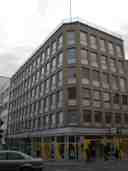
Abrir página dedicada →Look for a tall, light-brown building with rows and rows of square windows set at a sharp corner right at the intersection of Satakunnankatu and Aleksis Kiven katu-the Textile…Leer másMostrar menos
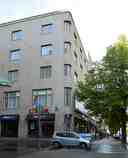
Look for a tall, light-brown building with rows and rows of square windows set at a sharp corner right at the intersection of Satakunnankatu and Aleksis Kiven katu-the Textile House is hard to miss! Now, let’s spin you a yarn (get it?) about the Textile House! Picture Tampere in the late 1950s: the streets hum with the clatter and whoosh of textile factories, everyone rushing off to work, collars crisp and scarves fluttering. Right on this spot, people used to talk about the old Frestadius house, where a little boy named J. K. Paasikivi-future president of Finland, no less-once played and dreamed. But in 1958, things changed. Architect Jaakko Tähtinen, no stranger to sharp lines and modern vibes, designed this very building where you’re standing now. The Textile House wasn’t just any apartment block. Oh no! This was the headquarters for textile titans-Finlayson and Tampella-who basically dressed half of Finland! The apartments went to their collar-and-tie crew, so you can bet there were some lively laundry days and plenty of factory gossip whispered behind those windows. If you listen closely, maybe, just maybe, you’ll catch an echo of a manager hurrying out the door, tie askew, or the satisfied sighs of workers returning home after a day of weaving and spinning. Today, Textile House stands as a monument to Tampere’s proud industrial past-imagine all the stories, dreams, and threads woven into its walls! Keep your eyes peeled; every window here has its own little secret.
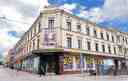
Abrir página dedicada →To spot Sandberg House, look straight ahead at the corner of Kauppakatu and Aleksis Kiven katu for a large cream-colored, three-story building, marked by a shop sign that says…Leer másMostrar menos
To spot Sandberg House, look straight ahead at the corner of Kauppakatu and Aleksis Kiven katu for a large cream-colored, three-story building, marked by a shop sign that says "Kekäle" above the entrance and large modern banners in the windows. Alright, time to take you back in time at Sandberg House! Imagine yourself here in the late 1800s. Instead of the rush of bicycles and window shoppers, you’d hear the clip-clop of horses and the whispers of business deals through open windows. The house was born in three stages, like a cake with extra layers-a grand idea from city architect F. L. Calonius, but brought to life by an ambitious pharmacist and city councillor, Thomas Wilhelm Clayhills. Finished with its newest slice in 1897, the building soon buzzed with excitement: not just because it looked fancy, but because it housed Tampere’s first-ever telephone exchange! Just picture a handful of people, very seriously connecting a tiny handful of calls, probably hoping for some good gossip between the apothecary and Pyynikki restaurant. And it didn’t stop there: Sandberg’s hardware store opened here in 1882, and stayed in business so long the whole house kept the name! There was a real mix-hardware, apothecaries, and later the Kekäle store you see today. Oh, and there’s a legend that the oldest stairwell inside looks almost exactly like it did over a century ago-ceiling paintings and all! So, next time you use your phone, give a little mental nod to this corner where Tampere’s first phone call once rang out. Who knew history could dial up such a story?
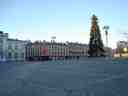
Abrir página dedicada →To spot Tampere Central Square, just look ahead for a wide, open cobblestone area surrounded by elegant stone buildings and, if it's the right season, a towering Christmas tree…Leer másMostrar menos
To spot Tampere Central Square, just look ahead for a wide, open cobblestone area surrounded by elegant stone buildings and, if it's the right season, a towering Christmas tree right in the middle-it's hard to miss! Now that you’re standing in Tampere’s beating heart, imagine the air swirling with the scent of roasted nuts, the clatter of carriage wheels, and the sound of laughter echoing between grand old buildings. Long ago, this was called the Market Square, and from dawn until dusk, it buzzed like a beehive with farmers, fishmongers, and anyone with a clever bargain to make. It was so busy, if a potato fell to the ground, it might start its own adventure just rolling across the square. In 1936, the square was given its fancier name-Keskustori, the Central Square-maybe because nobody wanted their postal address to sound like a veggie stand. But this spot is more than just markets and meetings; it’s framed by some of Tampere’s most important buildings: the City Hall, the Old Church, the theatre, all watching quietly as history unfolds, from grand parades to summer festivals and even a winter ice-skating show or two. Picture yourself in the center, with city life whirling all around-the past, present, and maybe, if you listen closely, a whisper of a bargain echoing on the breeze. And hey, if you spot the Christmas tree sparkling here, just know this square hosts magic in December too!
Abrir página dedicada →To spot the House of Production, look for a large, light-grey, five-story building with rounded corners and big windows right on the busy corner of Hämeenkatu, above several…Leer másMostrar menos
To spot the House of Production, look for a large, light-grey, five-story building with rounded corners and big windows right on the busy corner of Hämeenkatu, above several lively storefronts. You’re now standing in front of the House of Production, but don’t let its calm, functional style fool you-this building has seen more action than a soap opera marathon! Back in 1914, architect Birger Federley drew up this impressive place in what was then a fashionable late Jugend style. Just imagine bustling crowds, sharp-dressed locals, and the whirr of early telephones, since it was originally made for the Tampere Telephone Company. The place even hosted one of Finland’s earliest telephone centers, and believe it or not, when a fire broke out here in 1920, it melted a whole cable leading all the way to Pyynikki! That knocked out about 200 phones, and let’s just say, there were some very disconnected conversations that day. But this old box of drama wasn’t done-during the Winter War in 1940, bombs and fire tore through its top like a bad haircut, leaving scars that architect Bertel Strömmer later patched up with crisp, clean lines in a new functionalist style. There’s a certain poetry in how it went from elegant curves to sharp corners, don’t you think? If you had stepped inside in the roaring twenties, you would have found the famous Villensauna restaurant. Downstairs, folks enjoyed intimate meals, while upstairs, the big hall came alive with music, laughter, and cabaret singers. Picture an Italian conductor waving his violin, and the clinking of glasses as the crowd cheered on the nightly show. And here's one for all you radio lovers: in 1923, Finland’s very first public radio broadcasts started right inside these walls. Walk around the corner, and you’ll see a plaque marking the birth of broadcast history. So whether you’re picturing lost phone calls, secret cabaret nights, or crackling radio waves, just know this sturdy building has survived fire, war, and wild nights-and it’s still standing strong, ready for its next chapter.
Abrir página dedicada →Look for a tall, modern building where Kauppakatu and Hämeenpuisto meet-imagine a much grander house, once standing where the apartment block is today, with three elegant floors…Leer másMostrar menos
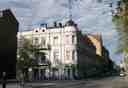
Look for a tall, modern building where Kauppakatu and Hämeenpuisto meet-imagine a much grander house, once standing where the apartment block is today, with three elegant floors dressed up in Renaissance style. Alright, take a deep breath and let’s turn back the clock. You’re now standing at the lively corner of Kauppakatu and Hämeenpuisto, but if you’d been here a hundred years ago, you’d be gazing at a true Tampere legend: the Spirit Factory Building, or as locals called it, Brander’s House! Designed back in 1891 by F. L. Calonius-who, frankly, had a thing for Renaissance flair-it looked almost royal with its decorative windows and detailed stonework. But don’t let its grand looks fool you: behind this stately façade, secrets bubbled away! That’s right, tucked in its courtyard, Granberg’s distillery brewed up spirits that kept Tampere’s parties lively (and maybe helped a few people forget the long Finnish winters). As if it wasn’t already charming, the roaring twenties brought Brander’s Confectionery into the mix-imagine the sweet scents drifting out onto the street, tempting everyone nearby. Not enough excitement? Well, between 1928 and 1933, floors two and three transformed into Hotel Astoria (later, a private hospital-because apparently, after enough pastries and parties, you might need a doctor). In 1962, in the name of progress and profit, this beloved building was replaced by the modern apartment block you see now. Some say Tampere lost a jewel, and a famous local author even mourned its passing, calling it a masterpiece that absolutely should have been saved. If only these walls could talk-or pour a drink-they’d certainly have stories worth toasting!
Abrir página dedicada →
Preguntas frecuentes
¿Cómo empiezo el tour?
Después de la compra, descarga la app AudaTours e ingresa tu código de canje. El tour estará listo para comenzar de inmediato - solo toca play y sigue la ruta guiada por GPS.
¿Necesito internet durante el tour?
¡No! Descarga el tour antes de empezar y disfrútalo completamente sin conexión. Solo la función de chat requiere internet. Recomendamos descargar en WiFi para ahorrar datos móviles.
¿Es un tour guiado en grupo?
No - esta es una audioguía autoguiada. Exploras de forma independiente a tu propio ritmo, con narración de audio reproduciéndose en tu teléfono. Sin guía, sin grupo, sin horario.
¿Cuánto dura el tour?
La mayoría de los tours toman 60–90 minutos para completar, pero tú controlas el ritmo completamente. Pausa, salta paradas o toma descansos cuando quieras.
¿Qué pasa si no puedo terminar el tour hoy?
¡No hay problema! Los tours tienen acceso de por vida. Pausa y continúa cuando quieras - mañana, la próxima semana o el próximo año. Tu progreso se guarda.
¿Qué idiomas están disponibles?
Todos los tours están disponibles en más de 50 idiomas. Selecciona tu idioma preferido al canjear tu código. Nota: el idioma no se puede cambiar después de generar el tour.
¿Dónde accedo al tour después de comprarlo?
Descarga la app gratuita AudaTours desde App Store o Google Play. Ingresa tu código de canje (enviado por email) y el tour aparecerá en tu biblioteca, listo para descargar y comenzar.
Si no disfrutas el tour, te reembolsamos tu compra. Contáctanos en [email protected]
Paga de forma segura con 


