AudaTours logoAudaTours

Tour de audio de Tallin: Escenarios, historias y monumentos secretos revelados

Guía de audio15 paradas

Los rincones silenciosos y las grandes fachadas de Tallin ocultan revoluciones, escándalos y tempestades creativas que pocos viajeros llegan a vislumbrar. Aquí, la historia parpadea bajo la superficie como si esperara a un oyente audaz para desvelar sus capas. Pasea con este tour de audio autoguiado para descubrir el verdadero pulso de Tallin, uno que late entre bastidores en un teatro rebelde, bajo banderas islandesas que ondean por la libertad, y dentro de bibliotecas silenciosas donde se guardan secretos ancestrales. ¿Por qué el Teatro NO99 provocó un alboroto y puso al público de pie antes de desaparecer casi de la noche a la mañana? ¿Qué alianzas ocultas persisten en las sombras de la Plaza de Islandia, y qué disputa convirtió una estatua en una víctima del cambio? ¿Qué libro de valor incalculable desapareció de los estantes de la biblioteca más antigua de Tallin sin dejar rastro? Muévete a través de historias de levantamientos dramáticos y traiciones susurradas. Deja que cada calle te atraiga más profundamente, cada monumento desbaratando lo que creías saber sobre la capital de Estonia. Adelante, el drama oculto de Tallin está listo para tu primer acto.

Vista previa del tour

map

Sobre este tour

  • schedule
    Duración 40–60 minsVe a tu propio ritmo
  • straighten
    2.7 km de ruta a pieSigue el camino guiado
  • location_on
    UbicaciónTallinn, Estonia
  • wifi_off
    Funciona sin conexiónDescarga una vez, úsalo en cualquier lugar
  • all_inclusive
    Acceso de por vidaReprodúcelo en cualquier momento, para siempre
  • location_on
    Comienza en Teatro NO99

Paradas en este tour
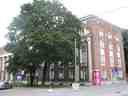
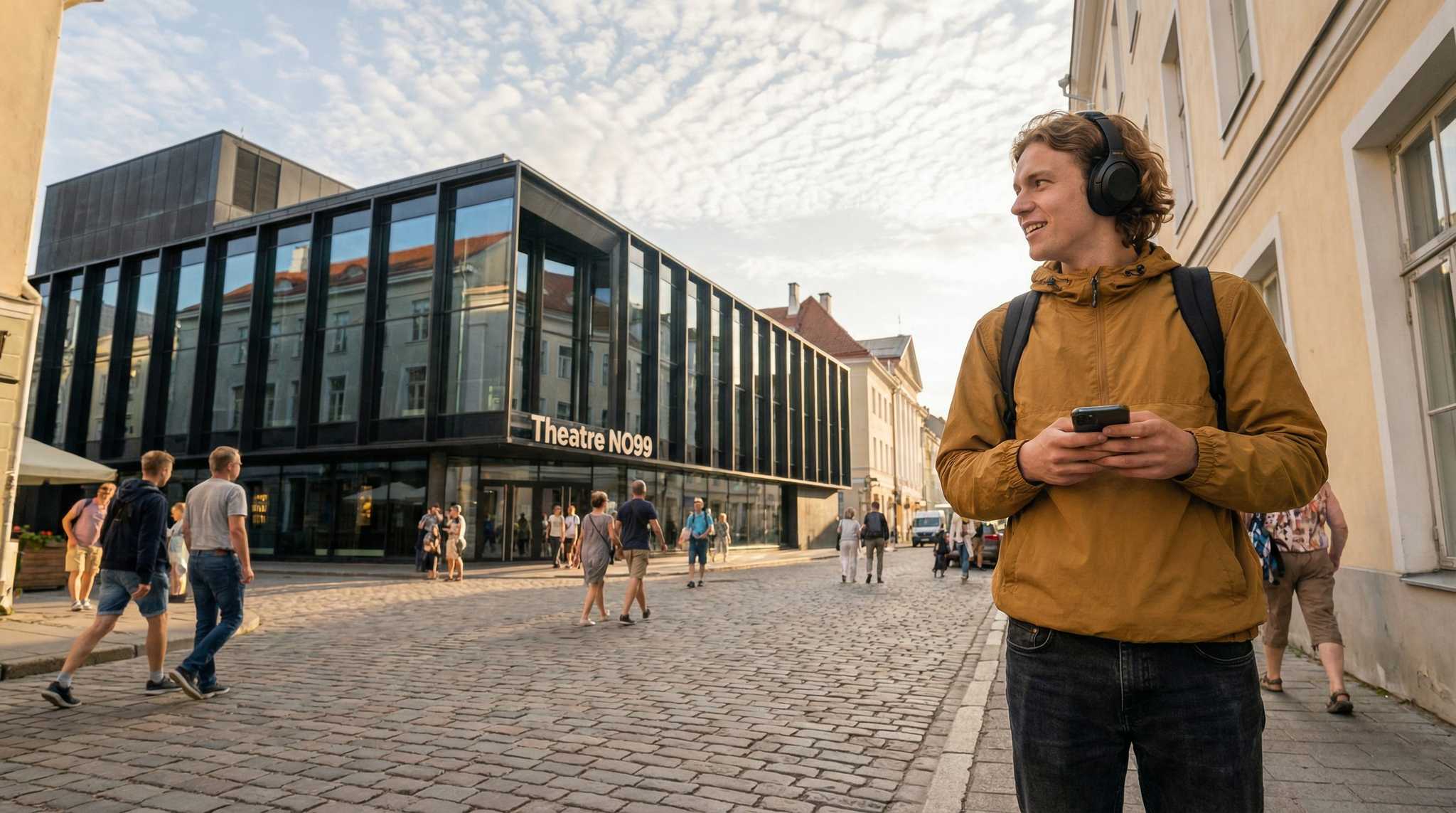
  1. Theatre NO99 stands on the corner as a classic, square brown building with tall columns, wide windows, and bright pink banners-look for the building half-hidden behind a towering…Leer másMostrar menos

    Theatre NO99 stands on the corner as a classic, square brown building with tall columns, wide windows, and bright pink banners-look for the building half-hidden behind a towering leafy tree near the crossroads. Welcome to Theatre NO99, a place where the spirit of creativity used to burst out almost as dramatically as the shows themselves! Imagine you’re standing right now where actors once gathered, hearts pounding, waiting for the curtain to rise. The building looks a bit formal, but don’t let the stately columns fool you-inside, Theatre NO99 was more unpredictable than an actor’s dream journal. It all started in 2005, when this space transformed almost overnight into a playground for Tallinn’s boldest theatre-makers. Led by Tiit Ojasoo and Ene-Liis Semper, the theatre assembled a crack team of 10 actors-eight men, two women-who were determined to light up Estonia’s cultural scene. And just between us, there was always a whiff of mischief in the air. The name ‘NO99’ is a riddle itself; “NO” isn’t for dramatic effect, it just means “Number.” And the number 99? After each production, it ticked down by one. So, the first show was NO99, the second was NO98, and so on-like a creative countdown to who knows what. Maybe a theatrical doomsday, or just a director’s way of never running out of new beginnings. The shows weren’t your run-of-the-mill plays, either. One minute you’d be sitting in the grand upstairs hall watching a fierce drama based on Chekhov or Shakespeare, the next you’d find yourself lured into a wild adaptation inspired by film legends like Kurosawa or Tarkovski. Even the scripts were often homegrown, composed right here by directors and actors in a creative stew that sometimes boiled over into passionate arguments and laughter. If you’d wandered in on a summer evening, you might have discovered a performance in the most unlikely place-a drained swimming pool for a samurai epic or three abandoned airplane hangars serving as the stage for “King Ubu.” And if the weather was right, beware! You might have stumbled into one of their legendary “actions”-one-time events so madcap that even the cast wasn’t always sure they’d pull it off. Theatre NO99 always pressed up against the limits of what theatre could be. Some nights the actors might go toe-to-toe about artistic vision, with real tension thickening the backstage air. But don’t worry; after the dust settled, they’d still band together for the next piece of theatrical wizardry. NO99’s magic didn’t stay hidden in Tallinn for long. Shows, stage design, and even the actors themselves began winning awards at home and abroad. Audiences clapped and cheered for their efforts at festivals in Vienna, Berlin, Moscow, and beyond. Their boldness was finally recognized in 2017, when they snagged the Europe Prize Theatrical Realities in Rome-a fancy way of saying “You shook things up!” And just so you know, the theatre not only dazzled on stage, but also ran a jazz lounge and one of Tallinn’s best hidden restaurants. Not bad for a place that thrived on mayhem and ideas. Today, even though Theatre NO99 closed in 2019, its legend lingers. You’re standing on the threshold of what was really a creative rollercoaster. If you listen closely, you might just hear the echoes of applause, the hushed excitement, and the spirit of possibility still swirling in the air. Now, ready for your next stop? Let’s keep this theatrical stroll going! If you're curious about the description, awards or the europe theatre prize, the chat section below is the perfect place to seek clarification.

    Abrir página dedicada →
  2. To spot Iceland Square, look ahead for an open, paved area bordered by trees and modern buildings, where large blue-and-red Icelandic flags flutter proudly by the Ministry of…Leer másMostrar menos

    To spot Iceland Square, look ahead for an open, paved area bordered by trees and modern buildings, where large blue-and-red Icelandic flags flutter proudly by the Ministry of Foreign Affairs-if you see a crowd gathering or a celebration, you’ve definitely found the right place! Welcome to Iceland Square, the little patch of Tallinn that says “Takk fyrir!” to Iceland in the biggest way possible. Now, imagine you’re standing where thousands once celebrated not just a place, but a friendship strong enough to melt even the iciest Nordic breeze. Let’s rewind! The square itself appeared after a grim chapter-here once stood buildings until the roaring thunder of bombs in March 1944 left only memories and rubble. By the late 1940s, the city smoothed over the scars with Harald Aarman’s forward-looking “Tallinn Culture Center” project, and what was once chaos became a crossroads for modern Tallinn-although nobody bothered to name it, perhaps too busy polishing their granite statues. Oh, did I say statue? Yes, in 1950, smack-dab in the center, a grand statue of Vladimir Lenin appeared-imagine a stern bronze leader looking out, probably wondering where to find a good Estonian pastry. That statue stood for decades, but then, in 1991, the winds of history swept it away, almost as if Tallinn was tidying up before honored guests arrived. The real magic begins in August 1991, when Estonia declared its independence restored-and who was the first to reach out with a handshake? Not a Baltic neighbor, but the mighty Iceland! Tallinn never forgot that. In 1998, with a flourish of paperwork, the square got its new name: Islandi väljak, Iceland Square, in honor of the first nation to recognize Estonia’s new beginning. That might sound simple, but, oh, what a bureaucratic rollercoaster followed-with ministries, city governments, and embassies locked in a tug-of-war over what address to write on their business cards. Even when the city said “Wait!” the Ministry of Foreign Affairs (and President Lennart Meri, always quick with news) said “Too late!”-everyone who mattered from Reykjavik to Riga already had the new address. In 2000, the city made peace with paper and politics by officially expanding Iceland Square, stamping the name into Tallinn’s map at last. And the bond only grew: On the square’s anniversary in 2006, Iceland’s Prime Minister himself came to unveil a commemorative plaque-a little gleam of friendship set in stone. Reykjavik even promised, years later, to return the honor by naming its own streets after the Baltic nations. Don’t miss the memory of Iceland Day, August 21, 2011, when the square pulsed with celebration, Iceland’s president shook hands with Estonians, and the air was full of clapping and cheers-a true festival of freedom and gratitude. So here you are, standing on a square that’s anything but square-it's a puzzle of history, a meeting place of resilience and gratitude. And who knows, maybe the wind that tugs at those Icelandic flags carries the echo of friendship? Now, onward-Tallinn has more stories just around the corner!

    Abrir página dedicada →
  3. To spot the Tallinn University Academic Library, look for a tall, rectangular building made of tan stone and orange brick, with many rows of big windows and a modern glass…Leer másMostrar menos

    To spot the Tallinn University Academic Library, look for a tall, rectangular building made of tan stone and orange brick, with many rows of big windows and a modern glass entrance right beside the sidewalk. Welcome, book adventurer! You’re now standing before the Tallinn University Academic Library, but don’t be fooled by its cool, modern facade; the story inside is bursting with centuries of secrets and a whiff of old book dust. If you close your eyes, you can almost hear the shuffling of pages and the faint hum of students in search of wisdom. The story of this remarkable place goes back much further than you might guess from the building’s clean-cut 1960s look. While the current library opened its doors here on Rävala boulevard in 1966, its roots poke deep down into Tallinn’s past. Imagine, if you will, the chill of the sixteenth century. In 1552, within the Olevist Church, Tallinn’s very first public library welcomed curious townsfolk, their arms laden with worn tomes. Some of those rare treasures, saved from fire and time, now rest quietly in this very building! Leap ahead to April 5th, 1946, a day that’s quietly momentous-a bit like opening a book to find a secret map inside. That’s when the library, as we know it today, was officially founded as the Central Library for the Academy of Sciences under Soviet Estonia. At first, it lived in just four small rooms on Sakala street. Can you picture librarians tiptoeing with stacks of musty books as they served readers? In 1948, the first reading hall opened-with a grand silence that was probably broken now and then by a poorly timed sneeze. As the years rolled on, the library grew-and grew-and grew. By the 1950s, new shelves bowed under the weight of ancient and rare collections. In the ups and downs of Estonian history, the library survived changes in government and even exchanged hands between ministries. It kept up with the times, too-say goodbye to card catalogs and hello to all-digital search magic by the late ‘90s. Now, with more than 2.5 million books and a treasure trove of electronic resources, the Tallinn University Academic Library is more than just a storehouse of knowledge. It’s an official national archive-a place where every new Estonian book must send a copy, like a writer reporting in for literary duty. So, as you look up at those neat rows of windows and that bold modern canopy above the doors, imagine the centuries of ideas swirling through the halls behind them. Who knows-open the right book, and you just might unlock a little Tallinn magic for yourself!

    Abrir página dedicada →
Mostrar 12 paradas másMostrar menos paradasexpand_moreexpand_less
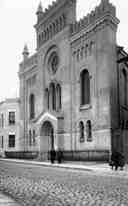
  1. Look for a tall, castle-like building with pointed towers and arched windows towering above the old cobblestone street on your right-its unique silhouette really stands out! Now,…Leer másMostrar menos

    Look for a tall, castle-like building with pointed towers and arched windows towering above the old cobblestone street on your right-its unique silhouette really stands out! Now, imagine you’re standing here in the late 1800s, and the Great Synagogue of Tallinn is the new star on Maakri Street. Built in 1884 by the skilled hands of architect Nikolai Thamm senior, it wasn’t just a building-oh no-it was the heart of Tallinn’s Jewish community! Picture bustling crowds, hats and scarves, laughter mingling with the prayers that echoed from inside. The synagogue’s impressive towers and grand entrance felt like something out of a fairytale. And believe me, for those who walked beneath its arches, every festival, wedding, and gathering inside felt magical. But life isn’t always a celebration. Fast forward to World War II, and Tallinn faced a nightmare-raining bombs and chaos in the streets. In the firestorm of 1944, the synagogue’s walls saw flames dancing where there were once bright candles. By 1947, what little was left of this beautiful place was torn down. It’s almost as if the stones themselves wanted to whisper their stories before they disappeared. And though you won’t see the synagogue here today, if you close your eyes for a second, maybe you’ll hear the faint echoes of ancient songs, or the quiet hope of a community that continues just a few streets away at the new Tallinn Synagogue. Sometimes, history’s greatest treasures are the memories you can’t quite see.

    Abrir página dedicada →
  2. To spot the Tallinn Department Store, just look ahead for bright orange signs with a bold white “K” in a circle and the name “kaubamaja” - you really can’t miss it! Alright, hope…Leer másMostrar menos

    To spot the Tallinn Department Store, just look ahead for bright orange signs with a bold white “K” in a circle and the name “kaubamaja” - you really can’t miss it! Alright, hope you brought your imaginary shopping bags, because you’re standing in front of the legendary Tallinn Department Store! Picture this: it’s 1960, Estonia is still in the Soviet era, and suddenly, this place bursts onto the scene as the go-to spot for everything a modern city dweller could ever want. Back then, a trip to Kaubamaja was almost like stepping into another world-rows and rows of exciting goods, the scent of new clothes mixed with fresh pastries drifting from the food counters, and maybe a secret mission to snag a new pair of shoes before anyone else did. In 1973, the store doubled in size with a brand-new extension, so the shopping adventures only got bigger! Fast forward to 2008, and Kaubamaja was kicking up dust in the city as its shoe empire grew-thanks to the famous ABC King, those shoe lovers among us have never looked back. If you ever hear someone in Tallinn say, “I got it at Kaubamaja,” you know they mean the one and only. And the best part? The city held an ambitious architectural competition for an entirely new store building, and with a name like “CITY BREAK” for the winning design, you know it’s going to be epic. So, take a deep breath, let your inner shopper come alive, and imagine the buzz and excitement that’s filled these walls for over half a century.

    Abrir página dedicada →
  3. To spot Tammsaare Park, look just ahead for a wide green space filled with tall trees and lampposts lining the broad paths, with benches where people relax and a tall white…Leer másMostrar menos

    To spot Tammsaare Park, look just ahead for a wide green space filled with tall trees and lampposts lining the broad paths, with benches where people relax and a tall white building rising behind the greenery. Welcome to Tammsaare Park, Tallinn’s peaceful heart not far from the Old Town-take a breath and listen to the gentle rustle of the leaves and the distant buzz of city life. If you stood here over a hundred years ago, you would have found yourself in the middle of the New Market, a lively covered market that echoed with the shouts of merchants and the clatter of horses pulling carts. The market was demolished in 1944, leaving space for something new-a park, planned in 1947 and finished just a few years later. Imagine local workers transforming this spot from market stalls to a lush oasis of winding paths and forty different kinds of plants all around you. But Tammsaare Park wasn’t always called by the name you see today. For a time, it was known as "Park of the 16th of October,” to remember a tragic day in 1905 when peaceful demonstrators were shot right here. The echoes of those times seem to whisper among the trees, don’t they? Yet over the decades, the park has changed with the city-it even gained a bit of glamour during the 1980 Moscow Olympics when the Sea Maiden sculpture was placed here, perhaps hoping she’d catch a medal for best pose. Wander through and you’ll spot statues and memorials, from a tribute to classic Estonian writer A. H. Tammsaare to the monument for Estonia’s first president, Konstantin Päts. In summer, the air is full of laughter, the aroma of pizza from the café pavilion opened in 2020, and the promise that history is both all around you and somehow beneath your feet. So stroll, munch, and listen-Tammsaare Park is full of stories whether you’re here for the poetry or simply a patch of sunshine!

    Abrir página dedicada →
  4. To spot the Sokos Hotel Viru, look ahead for a large, rectangular high-rise with the words "SOKOS HOTEL VIRU" in bold letters across the very top, peeking above the…Leer másMostrar menos

    To spot the Sokos Hotel Viru, look ahead for a large, rectangular high-rise with the words "SOKOS HOTEL VIRU" in bold letters across the very top, peeking above the trees. Welcome to Sokos Hotel Viru, where the walls really did have ears! Picture Tallinn in 1972. The city was buzzing as Estonia’s very first high-rise opened its doors-so tall and modern, you couldn’t miss it if you tried. But building it wasn’t a smooth ride. Just as construction began, a fire broke out on the 10th floor--forcing the original Finnish team to abandon the project, nearly leaving behind a ruined giant. But don’t worry, another brave Finnish company swooped in and finished the job. Inside, Hotel Viru glistened with Soviet-era glamour. But here's the twist: above the 22nd floor dining and dancing, the mysterious 23rd floor hid a KGB listening center. Imagine the tense hush as secret agents crept up those stairs--eavesdropping on hotel guests by slipping bugs into over 60 rooms and even some tables in the restaurant. For decades, unsuspecting visitors enjoyed their holidays while their secrets were quietly whisked away. When the Iron Curtain fell, the KGB vanished, but their hideout wasn’t uncovered until a few years later, almost as if the spies left their own ghostly whispers trapped in the walls. Now, you can visit the old KGB radio room, safely open as a museum-but remember not to tell any secrets too loudly-just in case the walls are still listening.

    Abrir página dedicada →
  5. To spot Kalevi Aed, look ahead for an old photograph showing a grand entrance with a high pointed roof, a flag on top, and crowds gathering outside; imagine this once stood right…Leer másMostrar menos

    To spot Kalevi Aed, look ahead for an old photograph showing a grand entrance with a high pointed roof, a flag on top, and crowds gathering outside; imagine this once stood right where you are, but today you’ll find Viru Keskus on its historic grounds. Alright, let’s step back in time-but watch your step, or you’ll trip over a century of stories! Imagine standing here in Tallinn, but the year is 1923: the air buzzes with excitement, people are chattering in anticipation, and flags flap wildly in the breeze. Right where you are now, there’s a striking stadium with a sharp, proud roof and doors thrown wide to thousands of spectators. Johann von Gonsior may once have walked this very ground, back when it belonged to him, before a singing club called Lootus set up shop and filled the air with song. By the 1920s, the baton passed to a sports club with big dreams and little patience-Tallinna Kalev, hungry to carve out their own home for football glory. On June 10, 1923, they finally did it: a new stadium, sparkling in the summer sun, doors flung open for fans from every corner of Tallinn. Can you hear the crowds? Just a month later, the national football team of Estonia steps out onto the field for the first time, the grass fresh under their boots, and pull off a tense 1-1 draw against Latvia, with 4,000 spectators holding their breath with every pass. But the real drama unfolds later that autumn. Picture this: it’s the Estonian Football Championship semi-final, Kalev against their fierce rivals-Sport. Not a single ticket is left. The stands groan under the weight of 5,000 excited fans as the teams clash. Tensions soar. The whistle blows, the crowd erupts, and Kalev snatches a 1-0 victory, setting a record that still hasn’t been matched! Kalevi Aed’s cheers echoed through years of local football, athletics, and bandy, until its final bow after World War II. Today, while the stadium is long gone and Viru Keskus sits here instead, close your eyes and listen-perhaps you’ll still hear a distant roar of victory, carried on the Tallinn wind. And if you don’t? Well, don’t worry, I won’t judge your hearing!

    Abrir página dedicada →
  6. To spot the Alexander Nevsky Chapel, look to the center of the square for a small, round stone building with a golden onion-shaped dome and a cross on top, surrounded by a low…Leer másMostrar menos

    To spot the Alexander Nevsky Chapel, look to the center of the square for a small, round stone building with a golden onion-shaped dome and a cross on top, surrounded by a low iron fence. Now, let your imagination take you back to 1888, when the Alexander Nevsky Chapel shone like a little gem in the heart of the bustling Russian Market. Picture the crisp November air, church bells ringing joyfully, and a crowd gathering as proud priests in grand robes sprinkle holy water, blessing a brand new stone chapel clad in bright dolomite. This wasn’t just any small building; it was topped with a shining, golden dome that sparkled in the sunlight, watched over by a noble cross and encircled by an ornate iron fence-so fancy, it could almost make you feel underdressed just standing nearby! Inside, the marble bowl glistened, ready to hold water for sacred rituals, and outside, pipes carried the blessed water so everyone could fill their bottles and take a bit of holiness home. People marveled at the elegant icon of St. Nicholas on the wall, painted with such grace it looked like it could wink at you if you stared too long. Built from generous donations, the chapel was a proud symbol of faith. But in 1922, the authorities declared that it had to go-supposedly, it was blocking tram traffic! Yet, even today, trams curve around the flowerbed that marks where it once stood, as if they still remember it. So, while the chapel itself is gone, its story is still very much alive in this very spot.

    Abrir página dedicada →
  7. To spot the Monument to the Revolution of 1905, look for a bold stone pedestal with the numbers “1905” carved into it, topped by two dramatic bronze figures-one standing tall with…Leer másMostrar menos

    To spot the Monument to the Revolution of 1905, look for a bold stone pedestal with the numbers “1905” carved into it, topped by two dramatic bronze figures-one standing tall with an arm raised high, the other kneeling beside. Now, as you stand here, try to imagine Tallinn over a hundred years ago-a city buzzing with restless voices, the chill of uncertainty in the air, and a sense that big changes are just around the corner. The year was 1905-a year that thundered with hopes and heated debates! This very spot marks the revolution that swept not just through Estonia, but through much of the Russian Empire. People gathered in streets like this, daring to dream of freedom and shouting for change. It wasn’t easy-there was fear, confusion, and danger lurking around every corner-but the people stood up anyway. Just look at the monument: the figure raising a fist isn’t just striking a pose; it’s capturing that bold moment when ordinary people decided to stand tall and speak out, even if their knees were shaking (I mean, who wouldn’t be a little nervous in a revolution?). There’s very little written on this monument-just “1905”-as if the story is meant to echo in your imagination. Think of it as Tallinn’s way of saying, “Remember what courage looks like. And also, don’t forget the year or you’ll never win at local trivia nights!”

    Abrir página dedicada →
  8. Look ahead for a tall, pale stone building with a grand entrance framed by thick stone columns and vertical windows, topped with a large decorative crest. Take a deep breath-can…Leer másMostrar menos

    Look ahead for a tall, pale stone building with a grand entrance framed by thick stone columns and vertical windows, topped with a large decorative crest. Take a deep breath-can you smell the hint of autumn leaves and popcorn in the air? You’re standing before the Estonian Drama Theatre, and believe me, this building knows a thing or two about putting on a show! Imagine the year is 1910: Tallinn was buzzing with energy, the city crackling with the excitement of a brand-new German theatre, being built by the sharpest minds from Saint Petersburg. The building before you was once a sparkling example of Art Nouveau-though here in Estonia, they called it National Romantic style, so you know even the architecture enjoys a good plot twist! Fast forward a decade-now picture rows of young Estonian actors, full of dreams and nervous energy, lining up for their first lessons at Paul Sepp’s drama school. By 1924, those wild-eyed dreamers had become the first company of the Estonian Drama Theatre-but back then, they had to rent the very stage that stood behind these doors! I bet you never thought drama could be so practical. By 1939, the troupe had finally bought the building outright, and let’s just say there were probably as many happy tears as there were tragic monologues that night. Over the years, this theatre has hosted legendary Estonian playwrights-imagine the clap of applause for modern classics or the captivated hush during political plays that bravely stood up to Soviet rule in the 1980s. During those years, each play felt like rebellion! Today, the Estonian Drama Theatre remains at the heart of Estonian culture. People line up for new shows and old favorites-even the ghosts of yesterday’s actors might peek from behind the curtains, making sure the show goes on! And there you are, at the best seat in town, right on the sidewalk.

    Abrir página dedicada →
  9. To spot the Tallinn Central Library, look for a stately corner building ahead of you, painted a soft, charming pink with bold white-gray trim and tall windows that peek out from…Leer másMostrar menos

    To spot the Tallinn Central Library, look for a stately corner building ahead of you, painted a soft, charming pink with bold white-gray trim and tall windows that peek out from behind the leaves of nearby trees. Alright, let’s dive into the magic behind these grand pink walls! Imagine it’s 1907: the streets are quieter, horses clop past, and the idea of a town library feels almost like a wild dream for most people here. Yet, out of that dream, the very first public library in an Estonian town was born right here-think of it as the superhero origin story of reading in Tallinn! Back then, books weren’t just difficult to come by, they were precious, almost like secret treasures, and to have a place like this was a true wonder for the city’s folks. Now, this library didn’t just stick with the simple stuff-it became the guardian of knowledge for all of Estonia for a decade, collecting legal deposit copies of every Estonian publication. If a book was printed in Estonia, chances are it found a home among these shelves-some 40,000 archival materials at one point! You could almost hear the library sigh with relief each time a new book arrived. For a while, it even had an archival department buzzing like a busy beehive with researchers, librarians, and the occasional lost poet drifting through. Fast forward to the twenty-first century, and the library is keeping things fresh with its very own bookmobile! Meet Katarina Jee, the rolling library with enough books onboard to get stuck in a traffic jam just from the weight of reading. Katarina Jee brings books wherever branch libraries are missing-no library left behind! And it doesn’t stop there: Tallinn Central Library was not only the first to let you borrow Estonian e-books from anywhere in the world, but also expanded to include English, Russian, and even streaming classical music-so you can enjoy Beethoven while borrowing a novel. Standing here, you’re not just looking at a regular old building-you’re seeing a living treasure chest of stories, an open invitation for anyone, anywhere, to discover the joy of reading. Now, try not to get swept away and wander inside for hours-we still have more of Tallinn to see!

    Abrir página dedicada →
  10. To spot the Estonia Theatre, look for the large cream-colored building across the street with round domes and impressive white pillars flanking both wings. Welcome to the…Leer másMostrar menos

    To spot the Estonia Theatre, look for the large cream-colored building across the street with round domes and impressive white pillars flanking both wings. Welcome to the shimmering heart of Tallinn’s culture! Standing in front of you is the magnificent Estonia Theatre, a place where history, music, and drama come alive. Picture it: it’s 1913, and the city is buzzing with excitement. Crowds gather outside this brand-new theatre, marveling at its grand dome roofs, tall white colonnades, and the elegant Jugendstil design-straight from the creative minds of Finnish architects Armas Lindgren and Wivi Lönn. The building was paid for with help from ordinary Estonians who held bake sales, raffles, and likely squeezed their piggy banks just for this moment. Back then, this was the biggest building in Tallinn-a real jaw-dropper! More than just a pretty facade, this theatre quickly became the soul of Estonian identity. Just a few years after opening, when Estonia became independent, history happened right inside-as in 1919, the newly elected parliament made decisions in its halls, and perhaps did a few victory dances between debates. But peaceful days wouldn't last. World War II rolled in like thunder, and in 1944, Soviet bombers flew overhead. The building took a terrible hit, catching fire and almost falling forever into silence. Yet, Estonians don't give up easily! During the Soviet era, the southern facade was saved, but the inside was rebuilt with classical and Stalinist touches. After years of hammering, painting, and maybe a dash of Soviet arguing, it rose again and reopened in 1947. Years later, the theatre became a symbol of freedom too-a meeting place for Estonia’s grassroots parliament before independence was fully restored. Today, you can hear the rustle of playbills and the echo of an orchestra tuning up in two grand auditoriums, a modern concert hall, and a charming chamber hall, all alive with laughter and applause. So, if these walls could talk, they’d belt out an opera, whisper wartime secrets, and crack a joke about Estonian punctuality!

    Abrir página dedicada →
  11. Let’s paint the scene. The year is 1561, and Tallinn-then known as Reval-along with the counties of Harjumaa, Western Virumaa, Raplamaa, and Järvamaa, found itself knee-deep in…Leer másMostrar menos

    Let’s paint the scene. The year is 1561, and Tallinn-then known as Reval-along with the counties of Harjumaa, Western Virumaa, Raplamaa, and Järvamaa, found itself knee-deep in the chaos of the Livonian War. With German knights, Polish guards, and Russian musketeers all battling for power, the townsfolk looked to the West and sent up a Swedish flag. “Take us under your wing!” they pleaded. And Sweden agreed... probably hoping for fewer plagues and less paperwork. Sweden set up shop and ruled this land for a century and a half. Overseeing it all was a parade of colorful governors with names like Lars Ivarsson Fleming, Klas Horn, and Pontus De la Gardie. Fancy names, right? Some even ran the duchy three different times! With that amount of job-hopping, LinkedIn would've crashed daily. Across the centuries, Swedish rulers and local German nobles played a never-ending game of “who’s really in charge?” Meanwhile, ordinary Estonians went about their days, living off the land, raising families-maybe even sneaking into town for fresh bread, or the latest news whispered on market mornings. This period became known as “vana hea Rootsi aeg”-the “good old Swedish times.” But, here’s the twist: people only started calling it that after the Russians arrived in 1721. Under the new regime, life got harder for the Estonian peasants, because Russia offered more power to the Baltic German nobility at the expense of everyone else. Suddenly, those times under Swedish rule seemed a lot rosier-a bit like how winter makes us miss autumn. Speaking of change, what finally ended Swedish Estonia? A one-two punch: war and pestilence. During the Great Northern War, as Russia pushed westward, Tallinn and much of Estonia were battered by armies and devastated by plague. By 1721, the Treaty of Nystad officially handed over the duchy to Russia. Just imagine the bells tolling, echoing throughout Tallinn as the news spread across the rooftops and courtyards. But the story doesn’t end with treaties and change of flags. Historians today can rattle off a list of governors and generals as long as your arm, each with their own ambitions and quirks. These stones around you, silent witnesses, kept all their secrets-whispers about Swedish law, Baltic nobility intrigues, and hopeful dreams of better days. So, as you stand here, beneath the sky that has seen Swedes, Russians, and more, remember: Tallinn has always been a city shaped not just by rulers, but by the resilience, wit, and imagination of its people. And now, of course, by the gentle footsteps of curious travelers like you. Keep your ears open-you never know when history might have something new to whisper!

    Abrir página dedicada →
  12. In front of you is a sturdy, dark gray building with tall, narrow windows arranged in neat rows and the words “EESTI PANK” etched above a grand doorway-just look for the Estonian…Leer másMostrar menos

    In front of you is a sturdy, dark gray building with tall, narrow windows arranged in neat rows and the words “EESTI PANK” etched above a grand doorway-just look for the Estonian flags on either side of the entrance to spot the Bank of Estonia. Alright, get ready, because this is not just any ordinary bank-this is the nerve center of Estonia’s entire financial adventure! Imagine it’s 1919. The snow’s still melting from the streets after winter, the air feels fresh with independence, and right here, the government says, “Let’s start printing our own money!” With a bold new plan, the Bank of Estonia is born to give Estonia its first currency, the Estonian mark, and soon after, the kroon-a name that rhymes with “spoon” and jingled in pockets all across the land. Through the roaring 1920s, the Bank becomes a symbol of trust, managing money, handing out loans, and doing everything to keep those kroons as shiny and stable as a brand-new coin. They even got help from the League of Nations in the 1920s to boost their gold reserves and learn how to be a top-tier central bank! But history isn’t always so cooperative. In 1940, the Soviet army arrives and the Bank’s doors slam shut. Suddenly, all that Estonian money is out and the Soviet ruble takes over. If these gray walls could talk, they’d probably sigh at the mystery and tension of those days-when bank ledgers were hidden and gold was sent far away, meant to be forgotten. Fast forward to 1990. The world is changing again. The Berlin Wall has just come down, excitement zips through the air, and-guess what?-the Bank of Estonia re-opens! But it’s not all smooth sailing. Estonia is still tangled in the Soviet money system, with rubles flying everywhere, and Moscow controlling the wires. The “new” Bank of Estonia is tiny-barely 25 people with big dreams huddled together, trying to figure out how to move money, keep track of their own gold, and invent a system for the free market. They’re so scrappy, they even start running auctions for currency and counting rubles, making lists by hand. And they sneakily start preparing to bring back the kroon, Estonia’s beloved currency, once freedom comes knocking again. Freedom bursts in the door in August 1991, and the Bank of Estonia finally takes charge. Now they control their old branch, claim their heritage, and set out for a wild financial ride. Only a few months later, they make a courageous-and sort of nerve-wracking-decision: let’s peg the kroon to the German mark with a currency board, inspired by a sudden visit from the famous economist Jeffrey Sachs. That's right, the fate of the nation's money is being shaped by a brainwave and plenty of coffee, probably. So, in June 1992, the new kroon is launched. People line up to exchange piles of old rubles for crisp Estonian koomikrons-okay, they're just kroons, but they spark so much excitement the banks must have sounded like casinos! The gold that had been lying “sleeping” in England and Switzerland for decades finally comes home in the form of $97 million in shiny bars-the real treasure of a national story. Suddenly, Estonia isn’t just independent-it’s rich! Alright, maybe not as rich as a dragon hoarding gold, but still, those reserves help back the new money and win trust at home and abroad. Oh, but the drama’s not quite over yet! Later in 1992, a banking crisis threatens the system-several local banks run into problems because of lost assets in Russia. Yet the Bank of Estonia steps in, sorts things out, and the country’s financial confidence barely takes a wobble. Before the euro, the Bank even creates its own interbank rates-TALIBOR and TALIBID-sort of like Estonia’s own little Wall Street right here in Tallinn. And then, on a frosty January morning in 2011, history turns a new page again. Estonia becomes a proud member of the Eurozone, and the kroon bows out like a veteran performer, leaving the stage to the euro, though the Bank of Estonia continues to steer the country’s financial ship as part of the mighty Eurosystem. So next time you hear about gold, markets, or even a simple euro coin jingling in your pocket, just remember-you’re standing at the epicenter of a century-old story of suspense, survival, and plenty of well-counted coins! And that, my friend, is exactly why bank buildings are so solid-they have to keep all these adventures safe!

    Abrir página dedicada →

Preguntas frecuentes

¿Cómo empiezo el tour?

Después de la compra, descarga la app AudaTours e ingresa tu código de canje. El tour estará listo para comenzar de inmediato - solo toca play y sigue la ruta guiada por GPS.

¿Necesito internet durante el tour?

¡No! Descarga el tour antes de empezar y disfrútalo completamente sin conexión. Solo la función de chat requiere internet. Recomendamos descargar en WiFi para ahorrar datos móviles.

¿Es un tour guiado en grupo?

No - esta es una audioguía autoguiada. Exploras de forma independiente a tu propio ritmo, con narración de audio reproduciéndose en tu teléfono. Sin guía, sin grupo, sin horario.

¿Cuánto dura el tour?

La mayoría de los tours toman 60–90 minutos para completar, pero tú controlas el ritmo completamente. Pausa, salta paradas o toma descansos cuando quieras.

¿Qué pasa si no puedo terminar el tour hoy?

¡No hay problema! Los tours tienen acceso de por vida. Pausa y continúa cuando quieras - mañana, la próxima semana o el próximo año. Tu progreso se guarda.

¿Qué idiomas están disponibles?

Todos los tours están disponibles en más de 50 idiomas. Selecciona tu idioma preferido al canjear tu código. Nota: el idioma no se puede cambiar después de generar el tour.

¿Dónde accedo al tour después de comprarlo?

Descarga la app gratuita AudaTours desde App Store o Google Play. Ingresa tu código de canje (enviado por email) y el tour aparecerá en tu biblioteca, listo para descargar y comenzar.

verified_user
Satisfacción garantizada

Si no disfrutas el tour, te reembolsamos tu compra. Contáctanos en [email protected]

Paga de forma segura con

Apple PayGoogle PayVisaMastercardPayPal

AudaTours: Audioguías

Tours a pie autoguiados entretenidos y económicos

Probar la app arrow_forward

Amado por viajeros de todo el mundo

format_quote Este tour fue una excelente manera de ver la ciudad. Las historias fueron interesantes sin parecer demasiado guionadas, y me encantó poder explorar a mi propio ritmo.
Jess
Jess
starstarstarstarstar
Tour de Tbilisi arrow_forward
format_quote Esta fue una forma sólida de conocer Brighton sin sentirme como un turista. La narración tenía profundidad y contexto, pero no se excedía.
Christoph
Christoph
starstarstarstarstar
Tour de Brighton arrow_forward
format_quote Empecé este tour con un croissant en una mano y cero expectativas. La app simplemente vibra contigo, sin presión, solo tú, tus auriculares y algunas historias geniales.
John
John
starstarstarstarstar
Tour de Marsella arrow_forward

Audioguías Ilimitados

Desbloquea el acceso a TODOS los tours del mundo

0 tours·0 ciudades·0 países
all_inclusive Explorar Ilimitado