
Tour de audio de Saskatoon: Arte, fuego y leyendas del núcleo central
En el corazón de Saskatoon, relucientes torres de cristal proyectan sombras sobre túneles secretos y salones históricos, donde el arte se atreve a chocar con la política y los ríos susurran los escándalos olvidados de la ciudad. Este es un tour de audio autoguiado diseñado para exploradores curiosos listos para mirar más allá de lo obvio. Descubre la vibrante cultura de Saskatoon y su dramática historia oculta justo debajo de la superficie, desde audaces obras maestras en Remai Modern y la bulliciosa energía de Midtown Plaza hasta las grandes tradiciones que resuenan en el Delta Bessborough. ¿Qué pasó una medianoche en el salón de baile de Bessborough que casi cambió el destino de Saskatchewan? ¿La obra de qué artista improbable estuvo a punto de ser prohibida en Remai Modern? ¿Por qué los veteranos todavía hablan de la zapatería en Midtown que desapareció de la noche a la mañana? Siente el pulso de la ciudad mientras te mueves de galerías con fachada de cristal a leyendas junto al río. Siente la energía de Saskatoon en cada paso, cada vista y cada secreto descubierto. Pulsa reproducir y deja que Saskatoon revele sus historias más salvajes justo debajo de tus pies.
Vista previa del tour
Sobre este tour
- scheduleDuración 40–60 minsVe a tu propio ritmo
- straighten3.6 km de ruta a pieSigue el camino guiado
- location_on
- wifi_offFunciona sin conexiónDescarga una vez, úsalo en cualquier lugar
- all_inclusiveAcceso de por vidaReprodúcelo en cualquier momento, para siempre
- location_onComienza en Remai Modern
Paradas en este tour
Mostrar 12 paradas másMostrar menos paradasexpand_moreexpand_less
Look for an eight-story office block with a striking red granite base and fancy white terra cotta trimming its lower floors and the roofline-if you spot large bison heads flanking…Leer másMostrar menos
Look for an eight-story office block with a striking red granite base and fancy white terra cotta trimming its lower floors and the roofline-if you spot large bison heads flanking the main doorway, you’ve found the Canada Building! Standing here in front of the Canada Building, you can almost imagine it rising out of the prairie dust back in 1913-right in the middle of a city full of hope and hustle. Picture businessmen in bowler hats, their voices echoing off the polished red granite as they step briskly through those very doors, no doubt watched over by the building’s rather stern-looking bison guardians. The builder behind this eight-story wonder, Allan Bowerman, was a bit of a city super-producer-he was also the mind behind the Bowerman House. Now, take in the terra cotta flourishes near your feet and high above near the rooftop cornice; in their day, they were something to brag about. The Canada Building was Saskatoon’s tallest office block in its prime, flirting with the sky at 35 meters tall. Through harsh winters and roaring booms, it's seen plenty of deals-and, I’d bet, more than a few coffee spills in those long hallways
Abrir página dedicada →Straight ahead, you’ll spot the Midtown Plaza with its grand brick façade, triangular glass roof peaks, and the tall Midtown Tower rising behind-it sits right at the end of the…Leer másMostrar menos
Straight ahead, you’ll spot the Midtown Plaza with its grand brick façade, triangular glass roof peaks, and the tall Midtown Tower rising behind-it sits right at the end of the street, nestled between lines of leafy trees and parked cars. You’re standing in front of Midtown, Saskatoon’s shopping marvel and a place where the scent of cinnamon pretzels has battled for decades with the distant, hopeful whiff of popcorn from long-gone movie nights. It might look like just a modern mall now, but this spot has traveled through time more than a superhero with a forgetful sidekick! Picture 1960s Saskatoon-steam engines rumbling in, the clang of iron wheels on rails, and pigeons scattering as the city’s main railway station sits where Midtown is today. But change was coming on a freight train of its own, part of a sweeping plan that gave Saskatoon not just a new bridge and an arts centre, but its crown jewel of commerce: the Midtown shopping mall. Ground was broken, steel went up, and soon, the click of suitcases on the station platform was replaced by the jingle of coins and the squeak of shopping carts. The doors of Midtown opened on July 30, 1970, and the place had just 51 stores and services-though, let’s be honest, with an underground parking garage you didn’t have to shovel, people would’ve shopped here even if the best deal was on socks. There was excitement in the air and plenty of polyester. Long before the age of “anchor” tenants closing like dominos, Simpsons-Sears planted its flag in 1968, beating everyone else to the punch. Eaton’s followed, and shoppers flocked like birds chasing spilled popcorn. The 1970s and 80s brought flavors of their own, with the city’s first-ever mall cinema popping up here-imagine the thrill as folks watched blockbusters, not far from where shoppers tried not to trip over each other at the Dominion grocery store or zipped in for last-minute shoes. The cinema doubled its screens, calling itself a “multiplex”-a fancy word for “now you can lose your friends twice as fast trying to find the right movie!” Eventually, the lights dimmed for good by 2000, and the space turned into pop-up shops and exhibits before giving in to the hunger for more stores (and let’s face it-more parking). But Midtown was always changing its outfit. In 1990, a second storey blossomed atop the original building, while architects gave the façade a clever nod to that old 1900s train station with charming peaked roofs and vertical lines. Rumor has it, some sighs of nostalgia floated through the air with the cement dust. Around the same time, a new toy superhero landed in the parking lot-Saskatoon’s first Toys "R" Us, still there today, possibly haunted by the ghosts of forgotten teddy bears. And, let’s not forget Midtown’s towering sidekick-the Midtown Tower-once the tallest office building around! From the 1970s to early 2000s, the fifth floor buzzed as the home of CBKST, the CBC TV station-somewhere in the archives, there’s probably a clip of a newscaster struggling with their tie while thousands of shoppers strolled below. Over the years, Midtown added, lost, and reshuffled stores like a gambler shuffling cards. Dominion’s grocery carts rolled away in the 80s. Eaton’s fell in 1999. Sears abandoned ship in 2018. Hudson’s Bay just closed in 2025-the mighty have fallen and taken their winter coat sales with them. And through it all, flashier retailers sprang up. H&M opened its doors in 2020, a second chance for fashionistas. A new wing promised a sparkling future, with a food court called Midtown Common bringing the smell of fries and chatter of teenagers back into the spotlight. There’s humor here too-the fate of MEC, the outdoor store, became a whole mall soap opera: opening delayed, corporate drama, and as of 2025, still nothing but dreams and maybe a squirrel living in the construction dust. So as you gaze at Midtown Plaza, you’re not just looking at a shopping centre. You’re standing where trains gave way to escalators, where blockbusters became bargains, and where change is always on sale-sometimes at half price, sometimes a little more.
Abrir página dedicada →Look just above eye level for a big round sign with the bold red CBC logo hanging off a brick-and-stone building, and you’ve found the Hutchinson Building right beside…Leer másMostrar menos
Look just above eye level for a big round sign with the bold red CBC logo hanging off a brick-and-stone building, and you’ve found the Hutchinson Building right beside you. Welcome to a spot where hardware, handicrafts, and TV cameras all share some real estate! Picture yourself back in the early 1900s, walking through these doors as the scent of sawdust and tools hits you-this was Saskatoon Hardware Store Ltd, the go-to place for everything from nails to maybe your neighbor’s best DIY advice, all the way up to 1970. Fast forward a bit, and suddenly it’s all about creative flair inside-paintbrushes, wool, and craft supplies took over when Saskatoon Handicraft Supplies moved in, filling the space with colors and the buzz of imagination until 1995. But wait-there’s more! The building had another secret life: the studios of CBC Television sat right above you before they went quiet in 2012. Imagine the whispers of late-night news anchors and the lights of TV cameras-who knows, maybe you just stepped on a spot where history was broadcast to thousands! In 1999, Saskatoon made things official, designating this place a heritage property. So while it’s seen a lot, the Hutchinson Building stands steady, keeping stories and secrets right here on the sidewalk.
Abrir página dedicada →To spot the Hotel Senator, just look for a beige brick building on the corner with a bold sign reading "Senator" above the entrance and several flags waving above its…Leer másMostrar menos
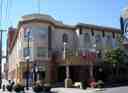
To spot the Hotel Senator, just look for a beige brick building on the corner with a bold sign reading "Senator" above the entrance and several flags waving above its doorway. Welcome to the historic Hotel Senator! Imagine the year is 1907: horse-drawn carts clatter down the street, and the brand-new Flanagan Hotel stands proudly behind you, gleaming with luxury unheard of at the time-steam heating, phones in every room, and marble everywhere you look. James Flanagan, Saskatoon's own ambitious dreamer, made this place sparkle with the finest marble, wood, and all the modern wonders a guest could desire. Tragically, Mr. Flanagan didn't get to enjoy it for long-he passed away just two years after the grand opening, leaving the hotel to be sold for the princely sum of $150,000 in 1910, which, back then, was enough to buy a small fleet of mansions! Today, the building is protected as a local treasure and has transformed into a charming boutique hotel, with 38 rooms giving guests a taste of European flair. And if you listen closely, maybe you’ll hear a faint echo of laughter and clinking glasses, a ghostly toast to old James Flanagan’s vision.
Abrir página dedicada →To spot the Delta Bessborough, look straight ahead for a grand, castle-like building made of warm, brownish stone with tall turrets, a steep slate roof, and surrounded by lush…Leer másMostrar menos
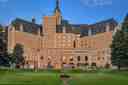
To spot the Delta Bessborough, look straight ahead for a grand, castle-like building made of warm, brownish stone with tall turrets, a steep slate roof, and surrounded by lush gardens and tall trees-trust me, you can’t miss it! Now, close your eyes for a moment and breathe in the atmosphere of Saskatoon’s grand hotel-the mighty Delta Bessborough! Imagine you’re stepping into the 1930s, when the world felt full of uncertainty, hope, and a touch of glamour. It’s 1930, and Saskatoon’s business leaders are buzzing with excitement and nerves, determined to put their city on the map with a new chateau-style hotel. Picture the ground rumbling as workers with steam thawers and clanking gasoline excavators break the Saskatoon winter frost--making way for the dream rising before your eyes. Fast forward and see the silhouette of this stunning Châteauesque castle emerge, designed first by John S. Archibald and then carried forward by John Schofield after Archibald’s death. Its turrets, oriel windows, and dormers brought a sense of fairytale wonder to the prairies, inspired by the Bavarian castles you'd expect to find in the pages of a storybook. Canadian pride is carved into its very bones: Tyndall stone shipped from Manitoba, bricks fired at the Claybank plant in Saskatchewan, and tiles glowing from Estevan-every corner proudly homegrown. But this was more than a feat of engineering; it was a symbol of hope during dark times. The Great Depression nearly kept its doors locked shut even after it finished construction in 1932. The city gave the railway a sweet deal: no property tax for 25 years-as long as they built their grand hotel with at least 200 rooms. And who was given the honor of its name? His Excellency, The 9th Earl of Bessborough, who visited the site with the Countess while it was still a skeleton of stone and wood, waving regally to curious onlookers. The grand doors finally swung open in December 1935, the very first guest, Horace N. Stovin, stepping onto terrazzo floors that glistened like a promise kept. Through its ten floors, the Bessborough quickly became the beating heart of Saskatoon’s high society. The ballroom’s laughter echoed with parties, the restaurants-like today’s Garden Court Café-served meals crafted from the riches of the prairies, and the riverside gardens buzzed with secret rendezvous and jazz music, especially during the now-famous Saskatchewan Jazz Festival. Yet, the “Bess” as locals call her, wasn’t left untouched by time. The Baltzan family gave it new life in the 1970s, and then another massive revitalization was undertaken in 1999-imagine $9 million worth of chandeliers, ornate plaster, and the sparkle of history lovingly restored, all without losing an ounce of charm. Today, she’s managed by Delta Hotels under Marriott, but is still the same old castle-full of stories and maybe even a few mischievous ghosts (but don’t worry, they’re rumored to just rearrange the furniture and enjoy room service). With 225 guest rooms, a Vice Regal Suite facing the city, fitness spots, spa, a pool, and event spaces so grand they make anyone feel like royalty, the Bessborough is ready for another hundred years of memories. So, whether you’re gazing at the gothic dormers, the gleaming oriel windows, or simply enjoying the breeze from the river in its magnificent gardens, remember: you are standing before the castle that made Saskatoon dream bigger. And if you listen closely, you might still catch the sound of a 1930s jazz band drifting through the evening air.
Abrir página dedicada →Look for a stately, beige-brick building with big upper windows and bright red awnings right across the front, peeking out just behind the leafy branches. Standing here in front…Leer másMostrar menos
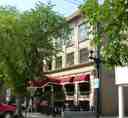
Look for a stately, beige-brick building with big upper windows and bright red awnings right across the front, peeking out just behind the leafy branches. Standing here in front of the Odd Fellows Temple, it’s easy to picture a grand old ball roaring to life inside, with folks dressed to the nines, laughter bubbling up as music drifted through those lofty windows. Built by the mysterious-sounding Independent Order of Odd Fellows, the temple was part secret society clubhouse, part social hotspot, and even had its own ballroom-imagine the swish of dresses and the squeak of polished shoes on a wooden floor. From 1913 to 1923, Saskatoon's very first public library set up shop here, so the place once buzzed with the turning of pages and the shushing of librarians. In 1959, the torch passed to the Saskatoon Labour Council, so the building kept busy hosting passionate debates and loud union meetings. The city thought it so important, it became an official heritage property in 1983. With each layer of history, the Odd Fellows Temple has been a place for books, for dancing, and for people fighting for change-so who says you can't squeeze a whole soap opera into a block of bricks?
Abrir página dedicada →Look for a tall, modern office tower with sleek curved windows and bright signage that reads "Vendasta Square" at the corner of 22nd Street and 4th Avenue-if you spot the…Leer másMostrar menos
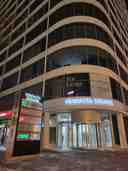
Look for a tall, modern office tower with sleek curved windows and bright signage that reads "Vendasta Square" at the corner of 22nd Street and 4th Avenue-if you spot the revolving doors, you're in the right place! Now, picture yourself standing before one of Saskatoon's downtown giants-a shimmering glass tower reaching for the sky, originally called Saskatoon Square when it popped up in 1979. Back then, it was the cool new kid, quickly becoming the second-tallest office tower around. Imagine the buzz when it was built: business folks hustling in, phones ringing, and important meetings on every floor. Several big names owned slices of this tower, but SaskTel was boss, holding a whopping 70%! In 2010, the building made headlines by selling for a whopping $50 million-just imagine lugging that around in loonies. In 2014, the suspense skyrocketed during a wild windstorm; gusts hit 115 kilometers per hour, and a window on the seventh floor popped out and crashed onto the street below (don’t worry, no flying paperwork was reported). And just recently, renovations gave two top floors a facelift-imagine rooftop patios, fancy dining rooms, and fresh air with your coffee. In 2022, the name changed to Vendasta Square, marking a new era but keeping the heart of downtown beating strong as ever.
Abrir página dedicada →To spot St. Paul’s Cathedral, look for a tall, slender brick church with a striking striped bell tower and a pointy spire reaching toward the sky, right at the corner of 22nd…Leer másMostrar menos
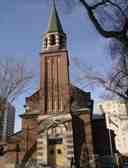
To spot St. Paul’s Cathedral, look for a tall, slender brick church with a striking striped bell tower and a pointy spire reaching toward the sky, right at the corner of 22nd Street East and Spadina Crescent. Here you are, standing in front of one of Saskatoon’s oldest and most spirited landmarks-St. Paul’s Co-Cathedral, which technically is a cathedral, except...well, it’s a bit on the cozy side for that title. Close your eyes and imagine the year is 1910: people gather by the river, their shoes crunching on gravel as none other than Prime Minister Sir Wilfrid Laurier sets the first stone of this church in place, setting the stage for both grandeur and humble warmth in Saskatoon’s heart. Only a year later, Archbishop Adelard Langevin made it official-so you could say this little church came out swinging, or maybe singing, thanks to its famous Casavant organ installed in 1912. St. Paul’s stained glass windows set the mood year-round, but they shimmer with especially moving stories: some panes memorialize those who bravely served in World War II, while others were added after a tragic fire in 1976, their colors casting a kaleidoscope of emotion across the pews. On June 29, the feast day of Saints Peter and Paul, you can even spot paintings by celebrated German artist Berthold Imhoff, proudly carried here all the way from Blaine Lake! Not all stories here sparkle, though. In the summer of 2021, this cathedral-like many churches across Canada-became a site of protest and mourning as red handprints appeared on its walls, echoing discoveries of unmarked graves from residential schools. It was a moment that made the whole city pause and remember its responsibilities. Today, St. Paul’s stands as both a sanctuary and a place of reckoning-smaller than some, but bursting with history, echoing music, and the sounds of voices still calling for justice and healing. Not bad for a little church that never meant to be a big cathedral, right?
Abrir página dedicada →Straight ahead you'll spot a tall, reddish-brick building with large, pointed neo-Gothic windows trimmed in tan stone, peeking out between tidy evergreens and a wooden sign…Leer másMostrar menos
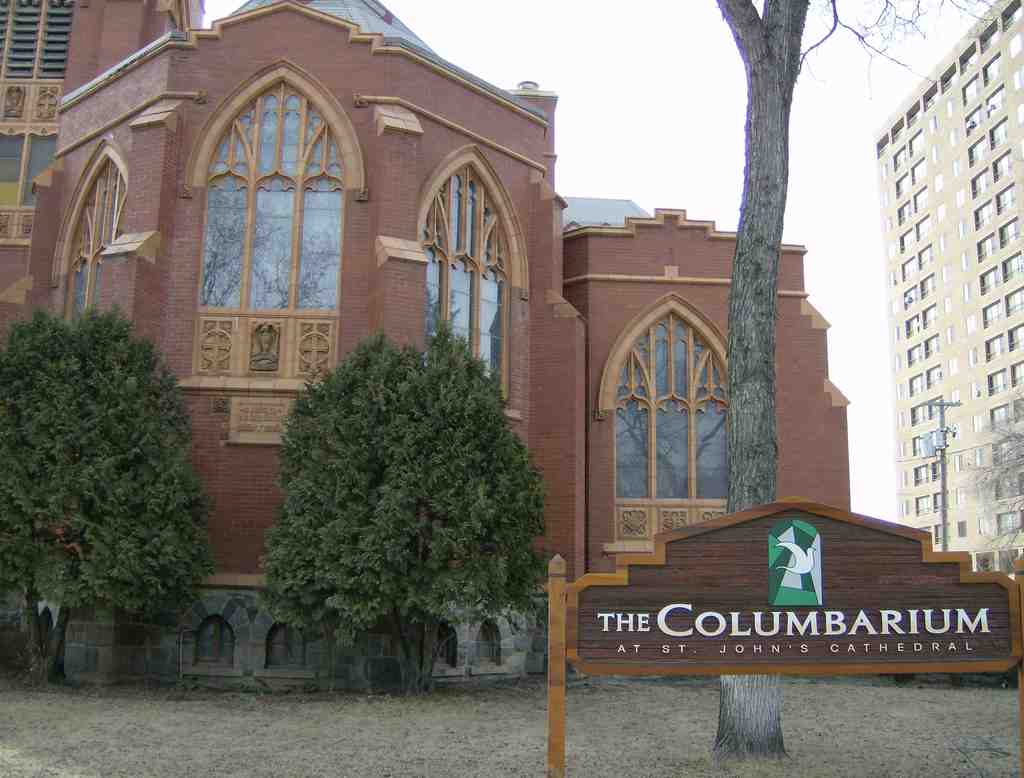
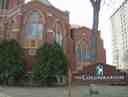
Straight ahead you'll spot a tall, reddish-brick building with large, pointed neo-Gothic windows trimmed in tan stone, peeking out between tidy evergreens and a wooden sign reading "The Columbarium at St. John's Cathedral"-just follow the shape of the windows! Ready for a tale that’s packed with tradition and a dash of royal drama? Here at the Cathedral of St. John the Evangelist, you’re standing in front of a building that’s seen Saskatoon grow from a plucky temperance colony into the vibrant city it is today. Picture this: back in 1902, this patch of land was buzzing with mostly Methodists and Presbyterians, and the first Anglicans built a humble wooden church, probably creaking every time someone opened the door. By 1912, Saskatoon was ready for a grander vision. That year, none other than the Governor General of Canada, Prince Arthur, showed up to lay the cornerstone, with the city no doubt a flurry of hats, horse-drawn wagons, and excitement. The cathedral that rose was no ordinary church. Built of brick, solid Tyndall stone, and decorated with creamy terra cotta, it boasts a soaring neo-Gothic style-notice how those tall windows and pointed arches draw your eyes upward. Inside, the rood screen, pulpit, and altar are made of Carrara ware, so convincing that you might think it’s real Italian marble. For years, music floated through the air from a modest reed organ, until the mighty Hill, Norman and Beard organ rumbled to life in 1956, later replaced by a Casavant Frères organ-still the pride of the cathedral. With room for 800 today, St. John’s holds a royal distinction: It has welcomed Queen Elizabeth II herself, three times no less, alongside the Duke of Edinburgh, and dignitaries like Governor General Viscount Alexander. The sunlight that streams through its documented stained glass fills the space with color, whispering stories from nearly every era of the city’s past. Imagine all the footsteps, the hymns, and the hopeful prayers that have echoed here-this spot is a living timeline, right in the heart of Saskatoon.
Abrir página dedicada →To spot Knox United Church, just look for a grand brick building with towering walls, huge arched windows filled with stained glass, and a bold entrance right along Spadina…Leer másMostrar menos
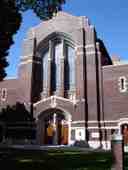
To spot Knox United Church, just look for a grand brick building with towering walls, huge arched windows filled with stained glass, and a bold entrance right along Spadina Crescent East. Standing here today, imagine arriving in 1885 when Saskatoon was just a fledgling settlement and folks gathered in homes, a stone schoolhouse, and even the railway roundhouse-who knew prayer meetings could double as locomotive inspections? Fast forward to 1912, and you get Brown and Vallance, architectural wizards from Montreal, waving their magic Gothic wands on this spot. Suddenly, a magnificent two-storey sanctuary rises up, dark red bricks gleaming in the prairie sun and tall stained-glass windows sparkling like jewel boxes. As you gaze up, you can almost sense the buzz of 1,200 parishioners squeezing onto those original wooden pews, marvelling at the building’s acoustics-so good, every whisper and high note found an audience, whether at a spirited sermon or a refined chamber music concert. Many tales swirl around these windows, their colored glass carefully documented by the Institute for stained glass in Canada. Knox has witnessed generations laughing, singing, and even the odd off-key hymn-a place where the echoes of community and culture continue to shimmer through every pane and brick.
Abrir página dedicada →
Preguntas frecuentes
¿Cómo empiezo el tour?
Después de la compra, descarga la app AudaTours e ingresa tu código de canje. El tour estará listo para comenzar de inmediato - solo toca play y sigue la ruta guiada por GPS.
¿Necesito internet durante el tour?
¡No! Descarga el tour antes de empezar y disfrútalo completamente sin conexión. Solo la función de chat requiere internet. Recomendamos descargar en WiFi para ahorrar datos móviles.
¿Es un tour guiado en grupo?
No - esta es una audioguía autoguiada. Exploras de forma independiente a tu propio ritmo, con narración de audio reproduciéndose en tu teléfono. Sin guía, sin grupo, sin horario.
¿Cuánto dura el tour?
La mayoría de los tours toman 60–90 minutos para completar, pero tú controlas el ritmo completamente. Pausa, salta paradas o toma descansos cuando quieras.
¿Qué pasa si no puedo terminar el tour hoy?
¡No hay problema! Los tours tienen acceso de por vida. Pausa y continúa cuando quieras - mañana, la próxima semana o el próximo año. Tu progreso se guarda.
¿Qué idiomas están disponibles?
Todos los tours están disponibles en más de 50 idiomas. Selecciona tu idioma preferido al canjear tu código. Nota: el idioma no se puede cambiar después de generar el tour.
¿Dónde accedo al tour después de comprarlo?
Descarga la app gratuita AudaTours desde App Store o Google Play. Ingresa tu código de canje (enviado por email) y el tour aparecerá en tu biblioteca, listo para descargar y comenzar.
Si no disfrutas el tour, te reembolsamos tu compra. Contáctanos en [email protected]
Paga de forma segura con 


