
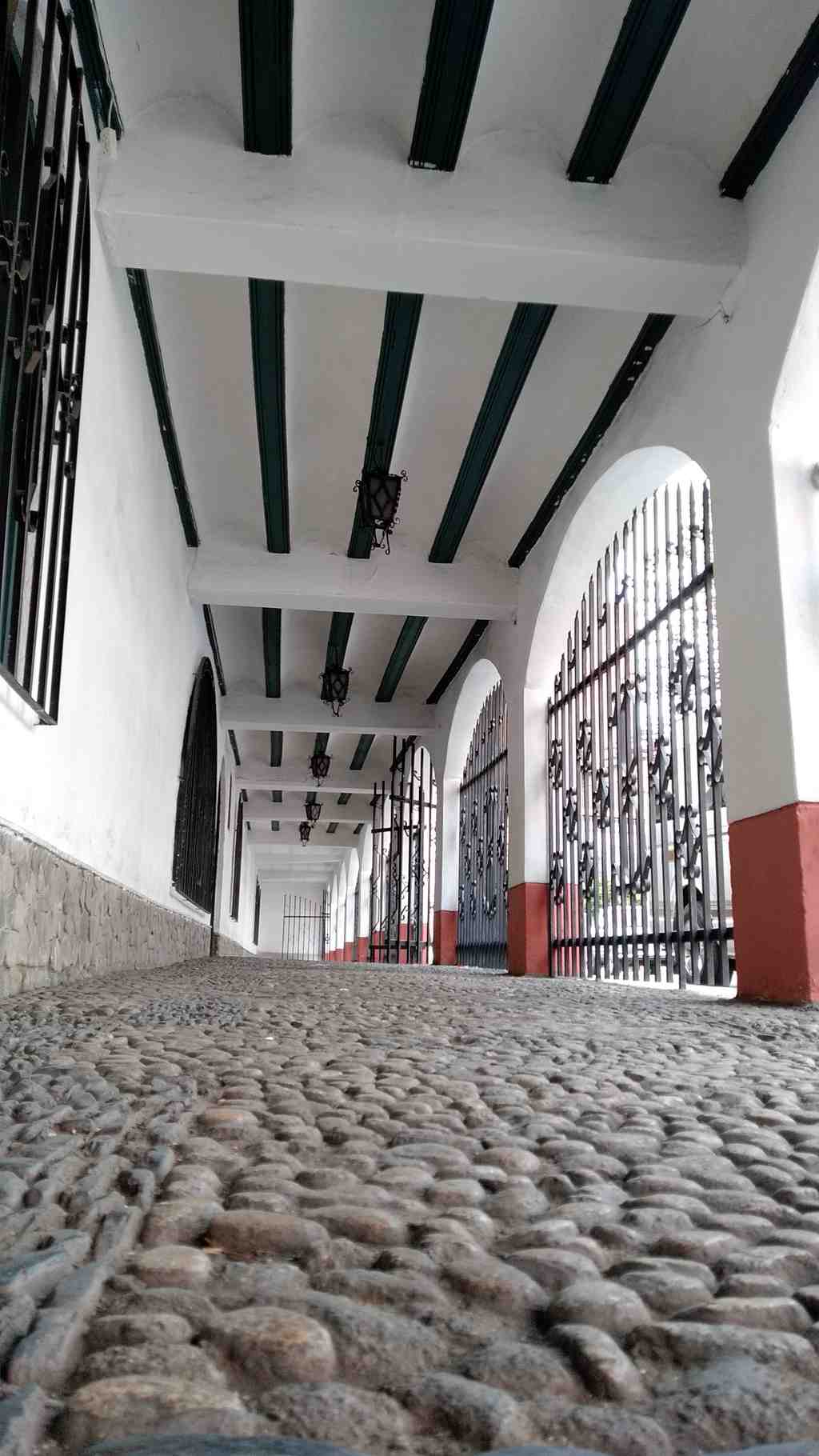
Audioguía de La Paz: Ecos a través del tiempo
Bajo el vertiginoso cielo de La Paz, algunas calles esconden secretos empapados de sangre y arenas desaparecidas, mientras que una fortaleza de paredes rosadas resuena con risas y miedo en igual medida. Este audioguía autoguiado desvela las historias no contadas detrás de la calle Harrington, la legendaria Plaza de Toros Olímpica y la prisión de San Pedro. Recorre manzanas de la ciudad vivas con una historia que pocos visitantes llegan a ver o imaginar. ¿Cómo una tranquila calle escolar se convirtió en la zona cero de asesinatos políticos? ¿Qué desapareció bajo el rugido de las corridas de toros y los elefantes de circo en un pedazo de tierra ahora olvidado? ¿Quién orquestó escándalos internacionales —y más— en una prisión donde los reclusos se autogobiernan? Sigue los pasos a través de la rebelión, el escándalo y la cruda supervivencia mientras cada giro revela otro capítulo enterrado. Examina los ecos de cánticos de protesta y celebraciones perdidas. Siente cómo tu pulso se sincroniza con el corazón salvaje de la ciudad mientras te mueves de la luz a la sombra, y viceversa. ¿Listo para descubrir lo que yace bajo la superficie de La Paz? Comienza el viaje: su espíritu inquieto te espera.
Vista previa del tour
Sobre este tour
- scheduleDuración 30–50 minsVe a tu propio ritmo
- straighten3.6 km de ruta a pieSigue el camino guiado
- location_on
- wifi_offFunciona sin conexiónDescarga una vez, úsalo en cualquier lugar
- all_inclusiveAcceso de por vidaReprodúcelo en cualquier momento, para siempre
- location_onComienza en Calle Harrington
Paradas en este tour
If you’re searching for San Pedro prison, just look for a long, pinkish-beige wall with tall, barred windows and a large sign out front-plus an unmissable arched doorway usually…Leer másMostrar menos
If you’re searching for San Pedro prison, just look for a long, pinkish-beige wall with tall, barred windows and a large sign out front-plus an unmissable arched doorway usually buzzing with activity along the roadside. Alright, brace yourself-what you’re looking at isn’t just any old prison! San Pedro is like a city within a city, a truly bizarre place that’s bustled with secrets and stories for over a century. Close your eyes for a moment and picture life unfolding just behind that wall: nearly 3,000 inmates-plus wives, kids, and the odd family dog-walking freely through open courtyards, shopping at mini-markets, and cooking together as if they’re in a quirky neighborhood rather than a locked institution. But don’t be fooled: security here is like a joke with a punchline missing. There are no uniformed guards patrolling the inside. Instead, police simply patrol the outer walls-think of them as extremely passive babysitters, only concerned with making sure no one escapes, not what’s happening inside. That’s left up to the inmates themselves-who elect their own leaders, manage markets, organize football tournaments, fix sidewalks, and even form their own sporting committees. It’s like mixing “Survivor” with “The Sims,” but where the penalty for breaking rules isn’t being voted off the island…it’s being sent to an isolation cell, or occasionally, dealt with more sharply-often enforced by a dreaded form of inmate justice: stabbing. The prison’s sections-Posta, Pinos, Alamos, and more-are like exclusive neighborhoods in a surreal real-estate market. Want a three-floor cell with a hot tub and cable TV? If you’ve got the cash (a few thousand bucks could get you more luxury than most outside the walls), it’s yours. If money’s tight, you might be sharing a tiny, crumbling space with five others-no hot tub, but on the bright side: plenty of company! The real estate here is so official, each cell comes with its own property title, like you’re buying a studio apartment in a mysterious, slightly dangerous alternate universe. There are restaurants, little shops, even a hotel for guests-which, yes, used to be open to backpackers. Not joking! In the wild days before 2009, enterprising inmates (like the legendary Thomas McFadden, whose adventures fill the pages of the bestseller “Marching Powder”) led daring tourists inside, sometimes letting them sleep over in the hotel. Instead of campfires, guests shared stories with men who’d seen the city from the toughest side. Some inmates made their fortune not just by selling homemade crafts but something a little more… stimulant. If you ever wondered where La Paz’s most lucrative (and illegal) cocaine could be sourced, for a time the answer was, nervously, “Try inside San Pedro.” Guards were often bribed to look the other way or even lend a hand-let’s say the only thing stricter than the rules here was how to creatively bend them. Children grew up here, darting past the stalls while mothers shared gossip and traded candies. These days, about 200 children and their families live inside, attending school nearby and running wild in lunchtime games-imagine a kindergarten where nap time is traded for street football. Most of the wives and mothers came out of necessity, unable to survive in the city alone; the prison’s two nurseries are full of laughter, and the occasional shouts of celebration when the games begin. Elections aren’t just for the outside world-prisoners here vote for their leaders, campaign for committee spots, and even cast ballots in national elections. (Can you picture a candidate making stump speeches next to a stall selling soda and handmade bags?) One thing the residents agree on: crimes against women or children are strictly punished-not by police, but by the inmates themselves, making sure grim justice is doled out when needed. If you stayed until September, you might hear the pounding rhythm of a live band: every Prisoner’s Day, leaders throw a barbecue party-because even the harshest communities need their celebrations. Sometimes you’ll spot a cell extension on the hardened old building: a new floor, a glimpse of La Paz’s rooftops, a reminder that life here-odd and harsh as it is-never stops evolving. Now, although the wild tours and famous nights have ended, the walls still echo with stories from every corner of Bolivia. Like I always joke, San Pedro is the only place where you can buy real estate, run a shop, raise a family, and still not make parole. A city behind bars, and as you can probably tell-it’s never, ever quiet. Seeking more information about the prison layout, prison guards or the section committees? Ask away in the chat section and I'll fill you in.
Abrir página dedicada →
Mostrar 6 paradas másMostrar menos paradasexpand_moreexpand_less
To spot the Church of Saint Peter, just look for the large cream-colored building with a single bell tower topped with a reddish dome and a grand arched stone entrance, right in…Leer másMostrar menos
To spot the Church of Saint Peter, just look for the large cream-colored building with a single bell tower topped with a reddish dome and a grand arched stone entrance, right in front of you on the corner of Colombia Street and Avenida 20 de Octubre. Alright, get ready to step into a time machine-this spot has seen more drama than a telenovela! As you stand before this beautiful church, picture yourself back in the 1500s, on the edge of the city where the river Choqueyapu marked the line between the Spanish side and what was called the “Indian” neighborhood. This church, second oldest in La Paz, was first built by a determined Spanish friar named Francisco de la Cruz Alcocer in 1549. His mission? To teach and guide the local indigenous community in the new faith brought by the Spanish. Imagine the hustle and bustle right here in Plaza Sucre as people from different cultures crossed paths, not always easily-sometimes with hope, sometimes with tension. But don’t let the peaceful look of those carved lions and swirling shells on the façade fool you! This church has survived disaster after disaster. In 1781, the city was under siege by Túpac Katari and his forces, fighting for indigenous rights against Spanish colonial rule-during the chaos, the church was burned down! It was like the set of a blockbuster, with flames and shouting echoing off the stone. They rebuilt, finishing up in 1790, only for the building to face destruction again in a rebellious uprising in 1857. This place just can’t catch a break! Even the stones down at your feet are like a guest list, bearing the names of past priests who watched over the neighborhood (hopefully with less fire involved). So, while the view might seem calm today, listen closely-can you hear the echo of all those centuries of prayers, struggles, and triumphs circling above the single bell tower? If only those carved lions could talk, I bet they’d have quite a few stories and maybe a few smoky whiskers!
Abrir página dedicada →To spot Linares Street, look ahead for a charming, narrow cobblestone lane lined with old pastel buildings, bright awnings, and shops overflowing with colorful crafts and textiles…Leer másMostrar menos
To spot Linares Street, look ahead for a charming, narrow cobblestone lane lined with old pastel buildings, bright awnings, and shops overflowing with colorful crafts and textiles on both sides. Welcome to the famous Linares Street! Now, don’t blink, because you’re standing at the heart of one of the oldest-and perhaps most mysterious-spots in La Paz. Take a deep breath; the air here buzzes with history, tradition, and just a bit of magic. Linares Street, or “The Witches’ Market” to those in the know, is nestled in the ancient San Sebastián neighborhood, still boasting that city-grid charm from centuries ago. Each building here has its own story, with many structures standing strong for over a hundred years, quietly watching the city change around them. Now, get ready to use your senses. As you walk, the stones beneath your feet seem to whisper secrets of the past. To your left and right, you’ll notice shopfronts spilling out onto the street with vibrantly woven llama wool, haunting Bolivian melodies whispering from panpipes, and rows upon rows of handmade jewelry. But what’s that you smell? Somewhere between incense and earthy herbs, there’s the distinctive aroma of centuries-old rituals. Linares isn’t just for souvenirs; it’s a living market of traditions-especially the spiritual kind! Drawn here like moths to a flame, travelers and locals come hunting not just for keepsakes, but for a bit of luck, love, or even protection from bad vibes. Some stands specialize in trinkets and amulets-tiny chachawarmi figures promised to help unlucky hearts, magical packets to boost fortune, and all the gear for “challa” tables, Bolivian offerings made to entice the spirits of the land. But here’s where it gets even more intriguing: look closely and you’ll find stalls stacked with fresh and dried medicinal plants, bundled and ready for anything from a rough cough to a broken heart. Sometimes, if you’re lucky, you might catch a Kallawaya, a traditional healer clad in colorful garb, who’s come down from the mountains bringing knowledge passed from family to family for generations. The advice will be as unique as the herb bundles themselves. Imagine the city centuries ago, the same rituals, the same market, but instead of phones and cameras, there was superstition thick in the air-can you feel a tingle on the back of your neck, or is that just the wind? Linares Street is not just a place to find the perfect souvenir; it’s where La Paz’s spirit, past and present, weaves its magic right before your eyes!
Abrir página dedicada →Look to your left at the busy corner of Avenida Mariscal Santa Cruz and Sagárnaga, and you’ll spot a grand white building with three elegant stories, rows of tall windows, and a…Leer másMostrar menos
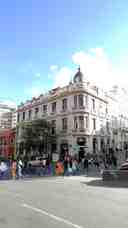
Look to your left at the busy corner of Avenida Mariscal Santa Cruz and Sagárnaga, and you’ll spot a grand white building with three elegant stories, rows of tall windows, and a domed turret crowned with a pointy spire. Welcome to the Republic Gallery Building! Before you stands not just an ordinary building, but a true star of La Paz’s architectural world. Imagine the city in the early 1900s-dusty streets, horse-drawn carts clattering by, and merchants selling their wares where you’re now standing. At that time, this beautiful corner didn’t even look the same! There was no grand avenue-just the narrow, lively Calle Recreo. Then came the Hinojosa family, who decided they would put their mark on the city’s skyline. So, in the first decades of the twentieth century, they built this very building, wrapping three elegant floors around a central skylight to let in the crisp Bolivian sun. The elaborate circular corner was crowned with a bulbous dome and a sharp needle at the top-almost as if to say, “Hey, you can’t miss me!” The Republic Gallery Building watched as La Paz changed around it. Wide avenues replaced smaller streets-one of its twin buildings across the way was demolished to make way for modern traffic. But this one survived, a determined architectural survivor with Corinthian columns flanking its balconies, original forged iron on its main doors, and Oregon pine windows that creak when the wind blows just right. Feel the hush of history echoing from the walls. For decades, locals lived upstairs while the lower floors buzzed with shops and small businesses. But time marches on, and in the twenty-first century, the inside was transformed-updated into seven full floors, now full of offices and local craft shops. There’s even a cozy café at the top, offering breathtaking views of the city’s east and west hills, the busy Pérez Velasco walkway, the Lanza Market, and more. Yet, the carefully restored front has hardly changed since those grand opening days: the orderly series of windows and balconies-seven looking onto Mariscal Santa Cruz, three onto Sagárnaga-create a sense of harmony, history, and pride. It’s a treat for your eyes, and you’re far from alone in admiring it-the city of La Paz officially declared this building a historic monument in 2014. Its exterior retains all the original plaster moldings and ornamental details, each balcony inviting daydreams of the past. Today, the Republic Gallery Building keeps the spirit of its original days alive, buzzing with crafts, travelers, laughter, and perhaps the occasional secret whispered over coffee on the terrace overlooking the square. Not just a building-a living piece of La Paz’s heart, blending the old with the new, and shining proudly for anyone who looks up.
Abrir página dedicada →
Preguntas frecuentes
¿Cómo empiezo el tour?
Después de la compra, descarga la app AudaTours e ingresa tu código de canje. El tour estará listo para comenzar de inmediato - solo toca play y sigue la ruta guiada por GPS.
¿Necesito internet durante el tour?
¡No! Descarga el tour antes de empezar y disfrútalo completamente sin conexión. Solo la función de chat requiere internet. Recomendamos descargar en WiFi para ahorrar datos móviles.
¿Es un tour guiado en grupo?
No - esta es una audioguía autoguiada. Exploras de forma independiente a tu propio ritmo, con narración de audio reproduciéndose en tu teléfono. Sin guía, sin grupo, sin horario.
¿Cuánto dura el tour?
La mayoría de los tours toman 60–90 minutos para completar, pero tú controlas el ritmo completamente. Pausa, salta paradas o toma descansos cuando quieras.
¿Qué pasa si no puedo terminar el tour hoy?
¡No hay problema! Los tours tienen acceso de por vida. Pausa y continúa cuando quieras - mañana, la próxima semana o el próximo año. Tu progreso se guarda.
¿Qué idiomas están disponibles?
Todos los tours están disponibles en más de 50 idiomas. Selecciona tu idioma preferido al canjear tu código. Nota: el idioma no se puede cambiar después de generar el tour.
¿Dónde accedo al tour después de comprarlo?
Descarga la app gratuita AudaTours desde App Store o Google Play. Ingresa tu código de canje (enviado por email) y el tour aparecerá en tu biblioteca, listo para descargar y comenzar.
Si no disfrutas el tour, te reembolsamos tu compra. Contáctanos en [email protected]
Paga de forma segura con 


