
Hanoi Audio-Tour: Legenden, Seen & Wahrzeichen von Quan Hoan Kiem
Eine goldene Schildkröte erhob sich einst aus Hanois tiefsten Gewässern und trug ein Schwert, das das Schicksal eines Reiches entscheiden sollte. Diese Stadt verbirgt ihre wildesten Legenden offen – Echos französischer Ambitionen, flüchtige Revolutionäre und Gelehrte, die Geheimnisse hinter vergoldeten Türen hüten. Diese selbstgeführte Audio-Tour verwandelt einen Spaziergang durch Hoan Kiem in eine Jagd nach Geschichten, die die meisten Touristen nie hören. Wandern Sie unter Türmen, neben nebligen Seen und durch Hallen, die von ungesprochener Geschichte erfüllt sind. Was machte den Schildkrötenturm zur stillen Bühne für imperiale Machtspiele und hinterhältige Familienskandale? Welche verbotenen Texte in der Nationalbibliothek zogen unerwünschte Blicke – und riskante Mitternachtsbesuche – auf sich? Wer riskierte alles, um in der St.-Josephs-Kathedrale zu singen, als ihre Türen gewaltsam verschlossen waren? Bewegen Sie sich vom Sonnenlicht in den Schatten und wieder zurück, während sich Stadtmythen unter Ihren Füßen entfalten. Hanoi verwandelt sich – ein Drama, das von Glocken, flüsterndem Papier und Wellen auf altem Wasser begleitet wird. Beginnen Sie Ihre Reise in den verborgenen Puls Hanois. Das Geheimnis der Schildkröte wartet.
Tourvorschau
Über diese Tour
- scheduleDauer 30–50 minsEigenes Tempo
- straighten4.0 km FußwegDem geführten Pfad folgen
- location_on
- wifi_offFunktioniert offlineEinmal herunterladen, überall nutzen
- all_inclusiveLebenslanger ZugriffJederzeit wiederholen, für immer
- location_onStartet bei Nationalbibliothek von Vietnam
Stopps auf dieser Tour
To spot the National Library of Vietnam, look for a grand three-story cream-and-pink building with a red-tiled roof, tall arched entrance, and a golden sign with Vietnamese text…Mehr lesenWeniger anzeigen
To spot the National Library of Vietnam, look for a grand three-story cream-and-pink building with a red-tiled roof, tall arched entrance, and a golden sign with Vietnamese text right above the main doors, all framed by manicured gardens and tall stone planters leading your eyes up the central pathway. Welcome, traveler, to the grand gateway of Vietnam’s wisdom vault! Here you stand in front of the National Library of Vietnam-a building that feels part palace, part temple, and 100% a treasure chest of knowledge. Imagine it’s 1917, and the busy city around you is buzzing with the energy of colonial Hanoi. This spot was chosen to be the central library of all Indochina, a place where tales from centuries past and visions of the future would all be carefully guarded. At first, the library’s doors were firmly shut to the everyday dreamer. It wasn’t until September 1919-can you sense the anticipation in the air?-that these gates swung open to everyone, inviting Hanoi to explore worlds captured in books: Western archives, thrilling maps, ancient scrolls, and more. Over the years, the library has worn many hats-a name here, a new sign there, constantly shifting with the turbulent winds of history. Sometimes it was Pierre Pasquier, sometimes just “The National Library,” and for a short time, the Central Library of Hanoi. But since November 1958, the name you see gleaming above you became official, like a crown settled comfortably on the head of a wise elder. Here, the past is alive-over 30,000 Vietnamese doctoral theses, age-old Indochina books, and mysterious sinewy Sino-Nom texts wait to whisper secrets to patient listeners. Click-clacks of researchers’ footsteps echo through its halls, while digital treasures hum silently online, opening the collection to the world. Want to read a French classic, or maybe a guide to Hanoi’s lost streets? You’ll find it. Somewhere, there's an old CD-ROM spinning data about the Communist Party, and perhaps, a language lesson or two for a modern explorer like you. So, take a whiff of the old paper, listen for stories floating in the morning air, and tip your imaginary hat to a building that’s been collecting human dreams, dust, and laughter for over a century. Don’t worry-you don’t need a library card to soak in the magic right from here!
Eigene Seite öffnen →Look straight ahead for two towering, weathered stone spires rising above the trees, with tall arched windows and a large cross on top - that's the magnificent St. Joseph's…Mehr lesenWeniger anzeigen
Look straight ahead for two towering, weathered stone spires rising above the trees, with tall arched windows and a large cross on top - that's the magnificent St. Joseph's Cathedral standing proudly at the end of the street. Now, as you stand here, close your eyes for a moment and imagine Hanoi in the late 1800s - the city was buzzing with the sounds of traders, carts creaking through narrow streets, and the steady beat of construction hammers echoing through the dawn. The French colonial government had just gained full control, and, eager to put their symbolic stamp on the heart of Hanoi, they chose this very spot - once home to the ancient and mysterious Báo Thiên Pagoda, which had collapsed centuries earlier and never been repaired. Suddenly, the sturdy stone towers you see before you began to rise from the ground, designed to look just like the mighty Notre Dame de Paris. Locals probably looked up in awe and thought, “Are those two towers stretching all the way to the clouds, or have I had too much morning tea?” But it was no illusion - the Gothic Revival or Neo-Gothic style, stone slabs, and pointed arches were all imported ideas, courtesy of the French. This grand cathedral was named for St. Joseph, the patron saint of Vietnam, and consecrated on Christmas Eve, 1886 - just in time for the holidays! The finishing touch? Twin bell towers, each fitted with five bells, ready to ring out across the Old Quarter. Mass would echo, not just inside, but out over the crowds that spilled into the street, prayers and hymns filling the air above the bustling markets and tiny boutiques. If you look up close, you’ll notice the walls are weathered and aged - time and bustling city life have left their mark. But don’t be fooled by appearances! Between 2020 and 2022, the cathedral underwent a facelift, carefully restoring the stone and renewing its powerful presence. Step inside (well, at least in your imagination for now). You’d see stained glass windows high above, their colors painted by sunlight, some shipped all the way from France. Pointed arches rise overhead like the ribs of a giant stone whale. The sanctuary glows with polished wood, trimmed in gold, a nod to traditional Vietnamese styles and imperial flair. To the left, like a local celebrity, stands a statue of the Virgin Mary resting in a palanquin. (Don’t worry, she’s not going anywhere!) But it wasn’t always peaceful here. After the turmoil of the 1950s, when the Viet Minh took control of North Vietnam, the Catholic Church suffered years of suppression. The cathedral’s doors stayed locked for over thirty years, silent and empty, until Christmas Eve 1990, when prayers and music once again echoed within these walls. There were even protests nearby as recently as 2008, a reminder that history here is very much alive and sometimes a little dramatic. Recently, a brand new pipe organ was installed, shipped in from Belgium as part of a friendly cultural exchange between Japan and Belgium. This instrument, with its 1,850 pipes, now fills the soaring nave with haunting music at every grand mass and special event. So take another look at these towers, listen for the echoes of bells, and imagine a city swirled in a mix of ancient legends, colonial ambitions, and spiritual hope. If these walls could talk - well, I bet they’d say, “Don’t just stand there staring, come in and listen to the choir!” Ready for the next stop? Just don’t try to out-sing the organ - it’s had more practice!
Eigene Seite öffnen →


7 weitere Stationen anzeigenWeniger Stationen anzeigenexpand_moreexpand_less
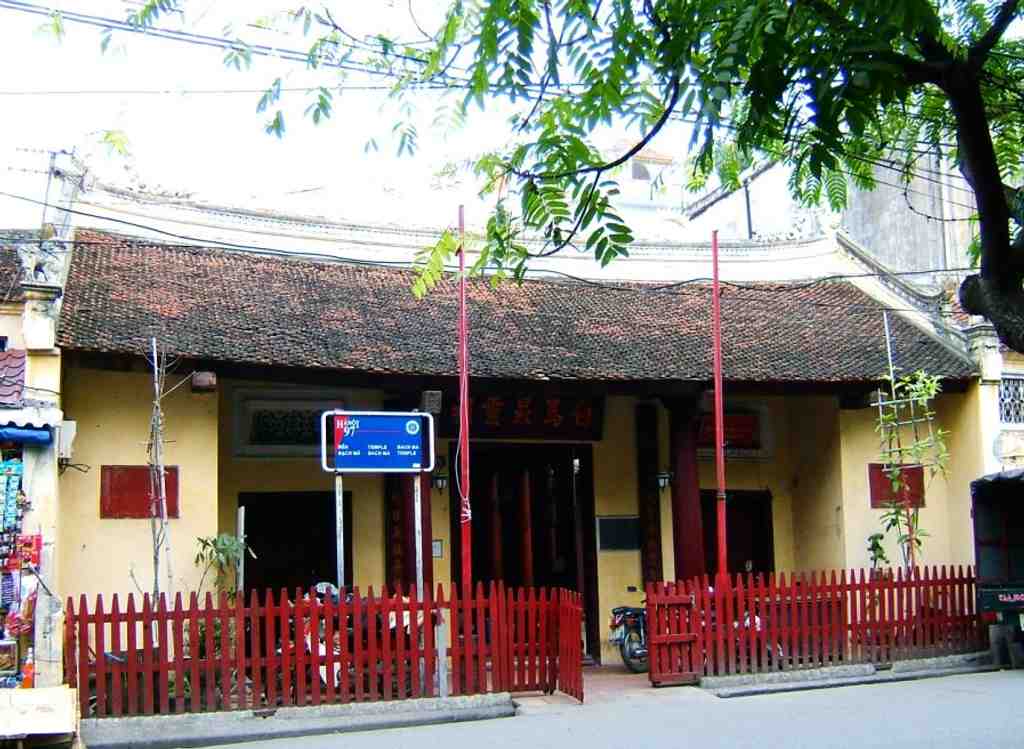
To spot Bach Ma Temple, just look for a low, yellow building with a worn red tile roof and a bright red picket fence directly in front of you-trust me, that fence is hard to…Mehr lesenWeniger anzeigen
To spot Bach Ma Temple, just look for a low, yellow building with a worn red tile roof and a bright red picket fence directly in front of you-trust me, that fence is hard to miss! Alright, ready for a legendary tale? You’re standing now at Bach Ma Temple, a spot that’s been guarding the eastern side of ancient Thang Long Citadel for over a thousand years. Imagine-long ago, this area wasn’t bustling with motorbikes and street vendors, but covered with the mysteries of old Hanoi. If you close your eyes for a moment, you might hear the echoes of chanting monks or the floating from inside. Back in the ninth century, it was right here that people began worshipping the powerful deity Long Do, the “Dragon’s Navel”-the original guardian spirit of ancient Hanoi. But the story gets juicier! Fast forward to around the 10th century, and here comes the mighty general Dinh Bo Linh. He’s got a country to save and enemies everywhere. When his army was facing chaos, what did he do? Not call for reinforcements, but come to this very temple to pray. He promised the local god a grand ceremony and honors if he could just help out a bit. Spoiler alert: the god delivered, Dinh Bo Linh won every battle, and became known as the “King of Ten Thousand Victories.” Now if only my phone’s battery lasted as long as his luck! Ah, but the saga isn’t over! As legend tells, after uniting the country, Dinh Bo Linh had a dream-one of those classic “peel-your-eyes-open-at-3am” dreams. In it, a god appeared and said, “Hey, I’ve helped the country, and you haven’t even said thank you!” Well, even kings have to mind their manners, so the Emperor quickly awarded all sorts of majestic titles to the spirit-Hộ Quốc Bảo Cảnh Linh Thông Tế Thế, which is a very fancy way to say “Super Protector Extraordinaire.” He made sure grand temples like this one were built or rebuilt, not just in Hanoi but also in his queen’s hometown. Talk about family loyalty! We’re still not done-turn the clock to 1010, when Emperor Ly Thai To moved the capital here and tried to build a massive citadel. The trouble was, the walls kept collapsing and no one could figure out why. So he came to this temple to beg for a bit of supernatural help. Suddenly, a dazzling white horse burst out the front doors-no, it wasn’t a local parade-leaving hoofprints around the site. The emperor took the hint, marked out the building plan by tracing the horse’s path, and voilà! The walls finally stood solid. If only all construction projects got that kind of magical help… This temple has gotten more facelifts than a movie star over the centuries-just look at those bold wooden columns and the delicate roof beams inspired by the Nguyen dynasty’s artistry in the 1800s. The structure is precise and elegant, the wooden frames and giant ironwood pillars holding up history itself, decorated with bold patterns and carvings fit for a god. On festival days, those supports double up as lantern hangers, bathing the whole place in a warm, otherworldly glow. Inside, you’ll spot shrines to ancient queens, mountain spirits, ancient censers, and wooden sedan chairs that could tell a thousand tales themselves if only they had tongues. The temple even preserves artifacts and stone steles-fragile, engraved records of Hanoi’s incredible past. They’re kind of like ancient Wikipedia pages, but with a lot more style and less suspicious editing. So here you are, standing where emperors pleaded, gods delivered miracles, and powerful spirits watched over a growing, thriving city. Even today, Bach Ma isn’t just a building-it’s a guardian, a witness, and a link to the wild stories that shaped Hanoi. When you walk past, try not to step on any invisible horse hoofprints, just in case the spirit is still around, keeping an eye-and an ear-on those who walk these timeless streets.
Eigene Seite öffnen →Right in front of you is a low, graceful building with a tiled orange roof, gray stone walls, and rich decorative details along the top-just look for the entrance at number 22…Mehr lesenWeniger anzeigen
Right in front of you is a low, graceful building with a tiled orange roof, gray stone walls, and rich decorative details along the top-just look for the entrance at number 22 Hàng Buồm, framed by intricate carvings and a red flag fluttering outside. Welcome to the Viet Dong Association, a place that’s seen more history and hair-raising drama than most soap operas! Now, before you step in, take a deep breath and imagine Hanoi in 1803-a city bustling with merchants, chatter in Chinese dialects, and the sweet aroma of steamed buns and lotus tea drifting down narrow lanes. This grand building was born from the dreams and determination of the Cantonese community, who weren’t just eager to make money, but also needed a home-a place for gatherings, worship, business deals, and a bit of gossip about whose dumplings were best. The community first built their meeting hall next to the thrumming Red River, but rivers, you know, have a mind of their own. So, as the water slowly shuffled its way elsewhere, the building was carefully moved here to Hàng Buồm street-right where you’re standing. Step closer, and you’ll notice the architecture is something of a shapeshifter. The hall is built in the “mouth” shape, like a welcoming square that hugs four sides around an open sky well. Imagine, hundreds of years ago, rain splattering through that central courtyard while merchants debated prices over lantern-light and the newest gossip about distant Guangzhou. The roof, with its green ceramic tiles and elaborate sculpted details, is pure Guangdong style-look up and you’ll spot mythical creatures, flowers, and swooping dragons, all perched like they’re gossiping about passersby. Oh, but drama loved this place. In the early 1900s, the revolutionary Sun Yat-sen himself slipped into these very rooms, hiding out from the Qing dynasty’s secret police. If these old granite columns could speak, they’d whisper stories of whispered plots, urgent appeals for funds, and the electric tension of revolution thick in the air. Somewhere inside, there’s even a stone plaque testifying to his legendary visits-a little celebrity signature, 1904 style. But the Viet Dong Association wasn’t just a rebel hideout! It was where the pulse of Cantonese life could be felt-disputes were settled, trade deals hammered out, alliances formed, and on quieter afternoons, children in the community sat cross-legged, learning the Four Books and Five Classics from a Chinese scholar hired by proud parents. The hall soon hosted its own Chinese school, growing so much that the echo of students reading Confucius could probably be heard in the noodle shops nearby. Fast forward through war, revolution, and change-and suddenly, you’re in 1945. Imagine triumphant crowds, flags waving, and a mess of different accents-after Japan’s surrender, Chinese and Vietnamese leaders, including Ho Chi Minh, gathered here for celebrations ringing with hope, tension, and more than just a few dumplings. Over the years, this space became central to not just the Cantonese, but all overseas Chinese in Hanoi-handling everything from business disputes to lion dances. No wonder the Vietnamese government took over its care when the community’s time here began to wane. Of course, this poor old hall also had some awkward decades-at one point it was a kindergarten, with golden-painted doors covered in industrial paint and sacred spaces hidden behind heavy curtains (I have it on good authority the ghosts were quite miffed about that). But persistence pays off! Thanks to a massive restoration effort that finished in 2021, the hall’s original glory is back: glittering ceramics, slate-grey floors, and those unique granite columns you won’t find anywhere else in Hanoi’s Old Quarter. Even French steel beams-added during colonial renovations-remain as a quirky international touch. Now, it’s a center of creativity. Walk inside and you’ll find the air still humming with art: exhibitions of calligraphy, avant-garde music bouncing off ancient walls, video art flickering next to stories of old river traders. It’s a collision of Cantonese, Vietnamese, and French cultures-so much so, you almost expect to spot an ancient artist and a futuristic robot arguing about brush techniques in the hallway. Today, this is a living heritage site-the place where old spirits meet new creativity. Young artists come to display their work, and sometimes, if you stand quietly, you might just hear the echo of a merchant closing a deal, a revolutionary whispering plans, or a schoolgirl memorizing lines of poetry. How’s that for a building with a thousand stories and maybe just as many secrets? Don’t forget to take a look at the detailed carvings outside-the dragons might not bite, but they are awfully good at eavesdropping!
Eigene Seite öffnen →Just ahead of you, look for a gray stone gate topped with dragons, vivid painted creatures, and bold Chinese calligraphy, nestled beneath swaying tree branches, right where the…Mehr lesenWeniger anzeigen
Just ahead of you, look for a gray stone gate topped with dragons, vivid painted creatures, and bold Chinese calligraphy, nestled beneath swaying tree branches, right where the bright red bridge ends. Alright, traveler, as you stand here by the entrance to Ngoc Son Temple, let’s invite your imagination back through the centuries-don’t worry, I promise there are no pop quizzes at the end, only stories! Now, close your eyes for a moment and picture the gentle lap of lake water and the rustle of old banyan leaves that have watched over this temple for generations. Ngoc Son Temple sits on a jewel of an island in Hoan Kiem Lake, and its story is one that has evolved with every ruling dynasty, every legendary hero, and, yes, even a few turtles. The tale begins long ago, when King Ly Thai To moved the capital to Thang Long-today’s Hanoi. Back then, there was already a shrine here, known as Ngoc Tuong, later renamed Ngoc Son in the era of the Tran dynasty. This spot became hallowed ground for those who sacrificed themselves resisting Mongol invasions. Imagine solemn ceremonies, incense drifting in the cool air, and the glow of lanterns reflecting off the dark lake. But nothing lasts forever! Over the years, the ancient temple crumbled, only to be revived and rebuilt again and again. Fast forward to the 18th century-during the Le dynasty-Trinh Giang, a powerful lord, constructed a pleasure palace called Khanh Thuy nearby and even sculpted hills of earth to enhance its beauty. When the winds of politics shifted and the Trinh family fell, the palace didn’t survive, but local villagers rebuilt a new shrine on the old ground. Even a charitable soul named Tin Trai chipped in, building the original Ngoc Son pagoda that became the core of today’s temple. Before long, it wasn’t a pagoda for Buddhist worship anymore, but a proper temple honoring both Tran Hung Dao-the iron-hearted general who booted the Mongols in the 13th century-and Van Xuong, the star-deity of scholars and exams. Imagine generations of students pausing here, hopes high and hands trembling, leaving prayers for luck before the imperial test. And trust me, if ancient shrines are a bit hard to keep track of, you’re not alone-I once tried mapping out all the renovations and nearly lost my sense of direction! Newspaper headline: “Tour guide disappears under pile of old blueprints.” In the 19th century, the temple got a polish thanks to Nguyen Van Sieu, a wise scholar and real-life multitasker. He built not only the temple’s main hall, but also the surrounding walls, and installed stone embankments. Right here, the two buildings-the main shrine and covered bridge-create that magical connection between land, water, and sky that Hanoi locals cherish. The stone square pavilion you see to the lake’s south? That’s Tran Ba Pavilion, its eight sturdy columns symbolizing a steadfast guard, like a guardian watching over the waves of both water and culture. Now, as you look up above the entrance, you’ll spot the fanciful “Moon Embracing Pavilion” and painted scenes of dragons and phoenixes dancing across panels. Stroll across the brilliant red The Huc Bridge-the name means “where sunlight lingers.” The bridge itself is famous; the first version eventually collapsed during the French colonial period, and the version you see today was rebuilt under the watchful eye of Trương Văn Đa, who was part architect, part philosopher-because in Vietnam, even your architect might write you poetry! Beyond the gate lies the main sanctuary: two shrines, one honoring Tran Hung Dao and Van Xuong, where statues rise on high stone pedestals. Here, the scent of burning incense seems to float through walls and centuries all at once. There are more deities worshipped inside, including Laozi, Guan Yu, Buddha Amitabha, and more-a celebration of Vietnam’s spirit of religious harmony, with Confucian, Taoist, and Buddhist ideas living together under one roof. Nifty, right? And don’t miss the oddest treasure: in the rear hall you’ll see the preserved body of a legendary Hoan Kiem turtle-yes, a giant turtle, who once swam these waters and now shares the temple with the gods and heroes. So as you stand here, listen to the wind in the trees and try to imagine the centuries of voices, prayers, schoolchildren, and victorious generals whose spirits mingle in the air. Ngoc Son Temple doesn’t just tell a story; it sings it, rippling out across the lake in waves of history, myth, and hope. Ready for your next adventure at Hoan Kiem Lake?
Eigene Seite öffnen →To spot Hoa Phong Tower, look just beside the lakeside pavement for a small three-tiered brick tower with arched doorways on every side and mysterious calligraphy decorating its…Mehr lesenWeniger anzeigen
To spot Hoa Phong Tower, look just beside the lakeside pavement for a small three-tiered brick tower with arched doorways on every side and mysterious calligraphy decorating its upper levels, shaded by thick leafy trees. Alright, take a deep breath-do you feel that warm humid air curling around you, with the sounds of scooters whizzing by and the soft reflection of Hoan Kiem Lake shimmering nearby? That’s the perfect setting for the last legend of our journey: the story of Hoa Phong Tower. Imagine yourself standing here in the early morning mist, more than 180 years ago. In this very spot, there wasn’t just one solitary tower but a majestic and sprawling Buddhist temple called Báo Ân, or “Temple of Gratitude.” Built in 1842 under the Nguyen dynasty, this temple wasn’t just a home for prayers and monks-it was an architectural marvel! It was massive, boasting 180 intricate rooms, built with the finest craftsmanship of the era. It sat with its back against the tranquil lake, and its face turned toward the fast-flowing Red River, catching every sunrise and sunset. Picture the busy sounds from those days-clattering wooden sandals, merchants shouting, monks chanting, the occasional fish vendor sneakily offering a quick snack (because, let’s be honest, monks need snacks too). Báo Ân Temple was constructed thanks to the efforts of Nguyen Dang Giai, the governor of Ha Ninh, who inspired people all across the land to chip in. It was a community affair, and the spirit of gratitude ran through its halls. But-cue the dramatic music-trouble arrived in 1888, when the French colonists marched in, looking for a place to build the Hanoi Post Office. Apparently, they had a thing for prime real estate! In a move that would make any preservationist break out in tears, they tore down almost the entire temple, leaving only one survivor, peering out over the ruins like the last chess piece on the board: Hoa Phong Tower. The rest of the splendid temple disappeared beneath the construction of the post office, but the tower stood strong, perhaps with a bit of temple magic holding its bricks together through all the chaos. Now, let’s take a closer look at what survived. Hoa Phong Tower is a three-story structure, each layer with its own secrets. The first level is known as the “Four Gate Tower,” because, naturally, it’s got four arched doorways, one on each side, as if inviting travelers and spirits alike to come in from every direction. It’s a familiar sight in Buddhist architecture, meant to welcome everyone, no matter where they wander in from (well, except maybe the French, in this case-too soon?). And as your eyes climb up from those heavy old bricks, faded with time, you’ll notice the second tier, where a bold Sanskrit character is displayed, etched into the stone with all the ancient dignity the original builders could muster. Just above the arches, you can spot the old names of the gateways: Bao Ân, Bao Nghia, Bao Duc, and Bao Phuc. Each name boasts a wish-gratitude, justice, virtue, and blessing-all the essentials for a good life. Now, you might be wondering: what’s the third story for? Up there, if you’re sharp-eyed or happen to have binocular vision, you’ll see the words “Hoa Phong” on the east and west faces. But turn around to the north or south-surprise!-it reads “Bao Thien Tower” instead. Was it confused about its own name? Or just showing off? The answer is lost to history; maybe the wind knew once, but it’s not telling. Think about this: nearly every brick you see here is original. Maybe if you press your ear to them, you’d hear whispers from old monks, playful cackling of temple kids, or echoes of worried architects as the post office walls rose ominously close… and yet Hoa Phong stood strong. It’s not a grand tower-no dramatic spires, no gilded decorations-but it’s a survivor, a humble keeper of the past right in the bustle of modern Hanoi. And so, as you stand here now, a traveler among many, take a moment to appreciate this little tower’s stubborn spirit. Through invasions and new generations and all the changes of Hanoi street life, Hoa Phong continues to look out over Hoan Kiem Lake, guarding a piece of gratitude, a slice of mystery, and a whole heap of history-one brick, one tier, one legend at a time.
Eigene Seite öffnen →


Häufig gestellte Fragen
Wie starte ich die Tour?
Laden Sie nach dem Kauf die AudaTours-App herunter und geben Sie Ihren Einlösecode ein. Die Tour ist sofort startbereit – tippen Sie einfach auf „Play“ und folgen Sie der GPS-geführten Route.
Benötige ich während der Tour Internet?
Nein! Laden Sie die Tour vor dem Start herunter und genießen Sie sie vollständig offline. Nur die Chat-Funktion benötigt Internet. Wir empfehlen den Download über WLAN, um mobiles Datenvolumen zu sparen.
Handelt es sich um eine geführte Gruppentour?
Nein – dies ist ein selbstgeführter Audioguide. Sie erkunden unabhängig in Ihrem eigenen Tempo, wobei die Audioerzählung über Ihr Telefon abgespielt wird. Kein Reiseleiter, keine Gruppe, kein Zeitplan.
Wie lange dauert die Tour?
Die meisten Touren dauern 60–90 Minuten, aber Sie kontrollieren das Tempo vollständig. Pausieren Sie, überspringen Sie Stopps oder machen Sie Pausen, wann immer Sie wollen.
Was, wenn ich die Tour heute nicht beenden kann?
Kein Problem! Touren haben lebenslangen Zugriff. Pausieren Sie und setzen Sie sie fort, wann immer Sie möchten – morgen, nächste Woche oder nächstes Jahr. Ihr Fortschritt wird gespeichert.
Welche Sprachen sind verfügbar?
Alle Touren sind in über 50 Sprachen verfügbar. Wählen Sie Ihre bevorzugte Sprache beim Einlösen Ihres Codes. Hinweis: Die Sprache kann nach der Tour-Generierung nicht mehr geändert werden.
Wo greife ich nach dem Kauf auf die Tour zu?
Laden Sie die kostenlose AudaTours-App aus dem App Store oder von Google Play herunter. Geben Sie Ihren Einlösecode (per E-Mail gesendet) ein, und die Tour erscheint in Ihrer Bibliothek, bereit zum Download und Start.
Wenn Ihnen die Tour nicht gefällt, erstatten wir Ihnen den Kaufpreis. Kontaktieren Sie uns unter [email protected]
Sicher bezahlen mit 


