

San Jose Audiotour: Geschichten und Innovationen der Innenstadt-Ikonen
Unter der glänzenden Skyline von San Jose liegen unerzählte Geheimnisse und kühne Erfindungen, die das Silicon Valley für immer verändert haben. Diese Straßen haben rebellische Künstler, Tech-Revolutionen und Momente des Chaos erlebt, die die Geschichte vergessen hat. Diese selbstgeführte Audiotour führt Sie durch das Herz der Innenstadt von San Jose und enthüllt verborgene Geschichten und faszinierende Wahrzeichen, an denen viele Besucher einfach vorbeigehen. Machen Sie sich bereit, die tiefen Strömungen von Kreativität und Intrigen der Stadt zu erleben. Was löste einen aufsehenerregenden Protest direkt vor Adobes Haustür aus? Welche schillernde Ausstellung im The Tech Interactive wurde beinahe aus der Öffentlichkeit verbannt? Wie löste ein einziger Pinselstrich im San Jose Museum of Art eine stadtweite Debatte über Zensur aus? Folgen Sie den Spuren von Visionären und Außenseitern, während Sie sich durch Plätze, Gassen und Glastürme schlängeln. Jede Ecke summt vor Drama und Entdeckung und enthüllt ein San Jose, das Sie noch nie gesehen haben. Beginnen Sie Ihre Reise jetzt und entdecken Sie das geheime Rückgrat der Stadt.
Tourvorschau
Über diese Tour
- scheduleDauer 40–60 minsEigenes Tempo
- straighten3.7 km FußwegDem geführten Pfad folgen
- location_onStandortSanta Clara, Vereinigte Staaten
- wifi_offFunktioniert offlineEinmal herunterladen, überall nutzen
- all_inclusiveLebenslanger ZugriffJederzeit wiederholen, für immer
- location_onStartet bei Adobe Inc.
Stopps auf dieser Tour
To spot Adobe Inc., look up for two tall, angular silver-and-glass towers with rows of perfect, blue-green windows, and check for the bold red and white Adobe logo perched high up…Mehr lesenWeniger anzeigen
To spot Adobe Inc., look up for two tall, angular silver-and-glass towers with rows of perfect, blue-green windows, and check for the bold red and white Adobe logo perched high up on the building’s corner. Welcome to Adobe Inc., the digital wizard's castle of San Jose! Take a moment and imagine you’re stepping right up to the gleaming glass towers where ideas become images and creativity zips through the windows faster than spilled coffee on a Monday morning. This is where it all begins-or, perhaps more accurately, where pixels go to party. Picture it: the early 1980s, a garage in Los Altos with computer parts scattered everywhere, and two dreamers named John Warnock and Charles Geschke tinkering with what would become the backbone of modern digital publishing. The name “Adobe”? It wasn’t inspired by a designer’s whim, but rather by the humble Adobe Creek, a little ribbon of water with muddy banks that meandered right behind Warnock’s house. Makes you wonder if their software would’ve felt different if they’d started next to, say, Mosquito Swamp. Now fast-forward a few years-Steve Jobs swoops in, hungry to buy their startup, flashing a $5 million check. But no dice. Warnock and Geschke held their ground, agreed to a partnership instead, and with Jobs’ help, Adobe became the first Silicon Valley business to turn a profit in year one. Pretty soon, the world couldn’t print a letter without something called PostScript, the clever coding language that turned digital scrawls into smooth, perfect print on laser pages everywhere. By the 1990s, Adobe was on a creative rampage: digital fonts, photo magic, and a growing suite of tools. Illustrator helped artists wield vectors like digital brushes, while Photoshop-well, you know you’ve made it when your brand name becomes a verb. “Can you Photoshop my vacation?”-who hasn’t heard that one? And that now-ubiquitous PDF? Born right inside these towers, under the mysterious code name “Camelot Project,” it promised to be the Holy Grail of digital documents. If you start catching the scent of nostalgia, that’s just the waft from the timeline: think of the switchover from clunky desktop boxes to cloud subscriptions. At first, designers grumbled; folks online protested the price, and let’s just say Adobe’s customer service rep probably had a stress ball under every desk. But Creative Cloud stuck around, and suddenly nearly every creative professional on the planet was saving their masterpieces on the cloud-and sometimes, their passwords in places they shouldn’t. Oops! One notorious hack meant more than 150 million Adobe accounts (and who knows how many embarrassing drawings) made it onto the Internet. Yet even as the creative world rode the Adobe Express, controversy seemed to hop aboard too. From hefty cancellation fees that made breaking up with Adobe feel like splitting up with a pricy gym, to tangled legal spats over who could use what software, there’s never been a dull moment in this digital fortress. Once, they even tried to buy up a rival company called Figma-regulators said, “Nice try, but your monopoly muscles are showing,” and the billion-dollar deal fizzled away. But the story doesn’t end with drama-walk among the towers, and you’re surrounded by the place where animation, illustration, motion graphics, and movies all get their start. As digital marketing and artificial intelligence entered the scene, Adobe’s tools got even smarter. Yet, as with any tech giant, they’re still learning to balance world-changing creativity with the not-so-fun parts-like security breaches or, more recently, customer outcry over tricky subscription rules. You can almost hear the keyboards click away as lawyers and engineers race to get things right. So here you are, standing before the shimmering glass headquarters of Adobe: ground zero for the creative revolutions of yesterday, today, and tomorrow. Maybe stop and snap a photo-but fair warning, you’ll probably want to Photoshop it later.
Eigene Seite öffnen →

10 weitere Stationen anzeigenWeniger Stationen anzeigenexpand_moreexpand_less
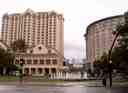
Look straight ahead and you'll spot a towering cream-colored building with a uniquely postmodern design-tall, angular, and hard to miss, with a smaller round tower beside it and a…Mehr lesenWeniger anzeigen
Look straight ahead and you'll spot a towering cream-colored building with a uniquely postmodern design-tall, angular, and hard to miss, with a smaller round tower beside it and a splashy fountain out front. You’re standing outside what is now the Signia by Hilton San Jose, but if you’re a local, you might still call it the old Fairmont. This impressive high-rise, with its 22 stories of glass and stone, has seen more twists and turns than a late-night Silicon Valley code sprint. The story begins long before the first guests checked in: this spot was once the heart of San Jose’s first Chinatown. Imagine, the year is 1866-lanterns swinging outside crowded shops, the spicy aroma of stir fry in the air-until, sadly, a devastating fire set by arson in 1887 wiped the community away. If you stroll around the outside, you’ll find a plaque honoring those who once called this block home. By the late 1980s, city planners were eager for change. They wanted a modern marvel to anchor their urban renewal dreams, so they teamed up with designers who didn’t believe in blending in-note those bold geometric shapes and the way the whole place seems to reach confidently for the clouds. When the Fairmont opened in 1987, celebrities and tech titans mingled in its vast lobby, and suddenly Downtown San Jose felt just a bit fancier. And if you’ve ever wanted to swim on a rooftop with a custom windscreen to keep your hairdo intact, this is your place-now that’s luxury you won’t catch in just any hotel. But this building never likes to stay the same for long. In 2002, a glassy new tower popped up next door, built after an entire historic hotel was actually rolled down the street, like a game of architectural musical chairs. Fast forward to the pandemic-occupancy dipped lower than the water in the rooftop pool and, for a while, the doors closed. Yet like a Silicon Valley startup, resilience is key, and by 2022, Hilton swooped in to give the place a fresh start, new rooms, and a shiny new name. That second tower? It’s now buzzing with college students from San Jose State-imagine the world’s fanciest dorm. Through business booms, a three-day labor strike, and downtown’s ever-shifting energy, the Signia stands-glamorous, slightly dramatic, and always ready for its next chapter. San Jose never does boring, does it?
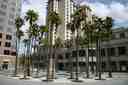
Eigene Seite öffnen →Look ahead and you’ll spot a dramatic ring of tall palm trees rising in a perfect circle, right in the center of a paved plaza, just between a sleek high-rise and the grand façade…Mehr lesenWeniger anzeigen
Look ahead and you’ll spot a dramatic ring of tall palm trees rising in a perfect circle, right in the center of a paved plaza, just between a sleek high-rise and the grand façade of the Fairmont hotel. Alright, you’re now standing at the famous Circle of Palms Plaza, where history swings around you like a carousel. Picture this: back in 1850, there were no palm trees or ritzy hotels here, just dusty streets, horses, and a brand new state excited to figure out the future. This spot was the heart of it all-San Jose, the very first capital of California! Imagine lawmakers in boots and broad hats hurrying into a two-story adobe hotel that stood right about where you’re standing. That humble hotel, built in the 1830s, became command central for California’s first state legislature. Forget marble columns and gold domes-they worked out the future of the state in a building that was a mix between a community inn and a sturdier-than-average mud pie! Now, fast-forward a bit. Once Sacramento became the capital, this place saw a total transformation-in 1866, it became the core of the bustling Market Street Chinatown. This block was noisy, colorful, and tasty, a center of Chinese-American life-until a shocking tragedy struck in 1887 when it was destroyed by arson. But San Jose kept reinventing itself. In the 1980s, out of loss and change, came this plaza you see today: a ring of palm trees encircling the huge California State Seal on the ground. If you peek down, you’ll spot words etched in the concrete: quotes from the 1849 state constitutional convention where-surprise!-San Jose won the capital sweepstakes. In winter, this place even transforms into a magical ice rink. So, Circle of Palms is a living memory, a place where old California dreams still echo between these palms-just don’t try to climb any. They’re not as comfy as they look! Want to explore the description, public activities or the photo gallery in more depth? Join me in the chat section for a detailed discussion.
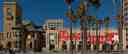
Eigene Seite öffnen →To spot the San Jose Museum of Art, look for a grand sandstone building with a clock tower on your left and a bold red banner reading "SAN JOSE MUSEUM OF ART" stretching across a…Mehr lesenWeniger anzeigen
To spot the San Jose Museum of Art, look for a grand sandstone building with a clock tower on your left and a bold red banner reading "SAN JOSE MUSEUM OF ART" stretching across a modern beige wing, all surrounded by a row of tall palm trees. Alright, you’re standing in front of the San Jose Museum of Art-where art, history, and a dash of drama all meet right in downtown San Jose! Imagine a time before smartphones, before Silicon Valley took over, when this striking sandstone building-designed by Willoughby J. Edbrooke and built back in 1892-was echoing with the patter of footsteps and the clatter of typewriters, serving as the city’s main post office. Picture carriages rattling down dusty roads outside, as people brought hand-written letters in and out of this grand Richardsonian Romanesque masterpiece, crafted from nearby Greystone Quarry sandstone. But San Jose is a city that’s always flipping the script! After a 1906 earthquake rattled its tower and damaged the original steeple and clock, the place transformed again-this time into the bustling city library from 1937 to 1969. Imagine rows of dusty books and quiet scholars hunting for answers in the sunlight streaming through these tall, arched windows. Then came 1969, the Summer of Art! A group of local artists-spearheaded by Ann Marie Mix and Susan Hammer-banded together, determined to save this building from becoming just a memory. What better way to keep it alive than to fill it with creative energy? They turned it into the Civic Art Gallery, and, trust me, “art gallery” meant anything from quirky community shows to wild art happenings. If you listen close, maybe you’ll catch the ghost of a jazz saxophone from an opening night! The gallery quickly evolved, earned a shiny new name-the San Jose Museum of Art-and just kept growing. In 1991, an ultra-modern wing soared beside the historic post office, like an old book next to a brand-new tablet. This “New Wing,” designed by Skidmore, Owings, and Merrill, added bold glass and angles to the mix, and now the museum houses not only paintings, but also sculpture, digital media, prints, photographs, and so many wild and wonderful ideas from more than 2,600 pieces in the permanent collection. But the Museum isn’t just about collecting dust or impressing art critics. Nope-it’s the biggest force for arts education in Santa Clara County, reaching over 45,000 kids every year! From workshops to classes, the building hums with young voices learning to think, dream, and make some creative messes. And let’s not forget the big exhibitions! The place has staged everything from visionary women artists and large-scale photo shows to a wild exhibition about “where and how we walk”-to a road-trip-inspired video called “Giant Artichoke.” Yes, you heard that right. It nabbed a major award for rolling through the landscape with jokes about summer trips and art-loving travelers. Of course, the museum has had its share of triumphs. Over the years, it’s racked up national accolades, from MUSE awards to honors for its programs in four languages, mirroring the diverse crowd you’ll find around San Jose itself. Even outside, the museum brings the art to the city-like the mural “Sophie Holding the World Together” painted by El Mac and The Propeller Group, a larger-than-life celebration of youth, hope and activism, commissioned in partnership with local galleries and the Children’s Discovery Museum. So, as you stand here in the sunny plaza, surrounded by palm trees, look up at this fusion of old and new, and imagine it pulsing with the energy of endless reinvention-sort of like San Jose itself. And who knows? Maybe, somewhere among the sculptures and the paintings, you’ll find your own spark of creativity! Yearning to grasp further insights on the about, architecture or the collections? Dive into the chat section below and ask away.
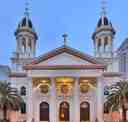
Eigene Seite öffnen →Right ahead, you’ll see a grand white building with tall columns, two domed towers topped with crosses, and palm trees at either side of its entrance-just look for the most…Mehr lesenWeniger anzeigen
Right ahead, you’ll see a grand white building with tall columns, two domed towers topped with crosses, and palm trees at either side of its entrance-just look for the most majestic, classical façade on the block. Standing before the Cathedral Basilica of St. Joseph, you’re about to discover a story worthy of a Hollywood drama, set right here in the heart of San Jose. Now, picture the early 1800s: Spanish settlers gather at a humble adobe church, the first non-mission parish in all of California, where farmers, traders, and families sought comfort, faith, and a bit of Spanish gossip. But then-earthquakes! In 1818 and 1822, tremors rumbled through the pueblo, shaking walls and nerves alike. Undaunted, the community rallied. By 1835, Antonio Suñol-think of him as the ultimate helpful neighbor-donated the very ground you stand on now and, together with his brother-in-law and other locals, began work on a much larger adobe church. Eight years of labor, celebration, and maybe a few arguments over paint colors later, the newer church stood proud, complete with precious religious items personally requested from the Bishop miles away. But fate wasn’t done meddling. The infamous Hayward earthquake of 1868 sent the second church crumbling, and when the townsfolk built a third one, a fire in 1875 decided it preferred the spot vacant. Can’t catch a break, can they? Refuge was found in a temporary church, but their spirit never wavered. What rose next was nothing short of breathtaking-the structure before you, completed over a decade, with its grand entrance finished in 1884, and its central dome in 1885. Step inside, and you’ll catch the glow of stained glass windows that wrap you in stories of saints and epic biblical moments-every window tells a tale, from the Agony in the Garden to the Resurrection, plus a few surprise appearances from saints like Patrick and Francis Xavier. Above you, Latin biblical verses about Joseph run like a ribbon around the dome, and if you listen during a concert, you’ll hear the powerful Odell pipe organ-built in 1886, packed with 40,000 parts, and still going strong after all these years. Today’s cathedral was crowned a minor basilica by none other than Pope John Paul II in 1997. Now it’s the spiritual heart of San Jose and a treasure chest of stories-earthquake survival, fiery setbacks, relentless hope, and the music of one mighty organ. If this isn’t divine resilience, I don’t know what is!
Eigene Seite öffnen →Look up and to the corner of South Market and Post Street, and you’ll spot a towering glass building with golden reflections shimmering across its 15 stories. Standing here,…Mehr lesenWeniger anzeigen
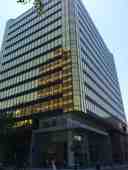
Look up and to the corner of South Market and Post Street, and you’ll spot a towering glass building with golden reflections shimmering across its 15 stories. Standing here, you’re right next to the building that locals once jokingly called “the Gold Building”-and not because there’s treasure hidden inside (unless you count high-speed internet)! Back in 1985, when this place opened as the Market Post Tower, its gleaming gold-colored glass had people squinting and chattering about sun glares and heat reflections. Tenants didn’t exactly line up in the early days, and things got tense; the owners even had to put it up for sale in 1987. But just as you might not expect to find a digital superhighway inside a sparkling glass box, this building found its calling as a hub for telecom giants. The 13th floor buzzed with activity from MAE-West-one of the world’s oldest Internet exchange points-where entire networks connected, faster than the express elevator. Later, The Carlyle Group gave the place a high-tech glow-up, cementing its rep as a carrier-neutral telecom hot spot. Even the IRS moved in, and rumor has it they never miss a deadline here! If you’re looking for San Jose’s first nude public sculpture, it once graced the lobby-but alas, it vanished during renovations.
Eigene Seite öffnen →Look just ahead for a simple white-walled house with a wooden porch and a dome-shaped outdoor oven right next to it-that’s the Peralta Adobe, nestled beneath nearby trees and…Mehr lesenWeniger anzeigen
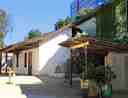
Look just ahead for a simple white-walled house with a wooden porch and a dome-shaped outdoor oven right next to it-that’s the Peralta Adobe, nestled beneath nearby trees and dwarfed by modern city buildings behind it. Now, close your eyes for a second and pretend you’re stepping out of your sneakers and straight into the world of 1797. San Jose isn’t skyscrapers, honking cars, or trendy coffee shops-it’s open land, wild grasses, and the sounds of families settling a brand new town. Right here, José Manuel Gonzeles, his wife, and their five children built this little adobe, with walls so thick you could probably take a nap on them. Picture him-a founding father of San Jose, an Apache Indian who walked all the way here with the Spanish Anza Party, determined to make a fresh start. This was actually the second spot he called home, after he realized the first site tended to flood every time it rained (and nobody likes waking up with wet socks). When José passed away, the adobe became the home of Sergeant Luis María Peralta, a real local legend-a leader, a landowner, and a guy who believed two rooms were always better than one. He gave the home its second life, splitting it into two cozy chambers, adding a porch for shade, a kitchen that probably smelled like tortillas, and a chimney to warm cold valley mornings. Over the years, the adobe went from family haven, to grain warehouse, to almost being chopped up for a neighboring building. Even then, the city saved it just in time, restoring it so you could stand here today. This humble house is more than mud and wood-it’s San Jose in its earliest days, packed with the echoes of three centuries of stories, laughter, tears, and maybe a burnt loaf or two in that oven outside. If these old walls could talk, oh, the dinner parties you’d hear about!
Eigene Seite öffnen →To spot the San Jose electric light tower, just look for a bold iron structure stretching high into the sky, with a strikingly bright cluster of lights at the very top-impossible…Mehr lesenWeniger anzeigen
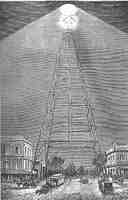
To spot the San Jose electric light tower, just look for a bold iron structure stretching high into the sky, with a strikingly bright cluster of lights at the very top-impossible to miss as it dominates the intersection and pours shining beams over the city below. Now, let’s step right into the heart of old San Jose, to a moment when electricity felt like pure magic. Imagine yourself in 1881-horses clip-clopping down Market Street, dusty carriages rolling by, and townsfolk craning their necks to gawk at an enormous iron tower that seemed like something out of science fiction. This was Owen’s Electric Tower, a wild experiment dreamed up by J. J. Owen, the bold publisher of the San Jose Mercury. He wanted to light up the city not just block by block, but all at once, with one gigantic, brilliant beacon in the center of town. Walk under this colossal structure with your head tilted back-it soared 207 feet above the street, with a flagpole making it 237 feet tall overall. Its iron pipes were braced by hoops, and at night, six blazing arc lamps lit the city with 24,000 candlepower. When those lamps flickered on for the first time, people gasped in wonder as the whole area burst into a silvery glow, as dazzling as a full moon. The light stretched out so far that a farmer complained his hens stopped laying eggs-seems like even the chickens got confused at midnight! Businesses nearby quickly named themselves after this electric marvel, and the local police made a little extra cash selling stunned birds that crashed into the beams to local restaurants. Hey, nothing like a free-range pigeon on the menu, right? The crowds below loved the spectacle, but the city’s birds weren’t the only ones losing their bearings. Businesses hung Christmas decorations and banners from the tower, photographers clambered up to snap panoramic shots, and at night the shadowy glow reached as far as San Francisco-no one had ever seen anything quite like it before. It was so famous it even got gushed about in a French electrical journal. But San Jose’s claim that it was the first city west of the Rockies to be lit by electricity? Well, let’s just say that even back then, some folks were a bit too eager for bragging rights-San Francisco had already beaten them to the switch. But being first doesn’t always mean being peaceful. Soon, San Jose had its own electric-light soap opera. Two sparring power companies-San Jose Light and Power, and the rival Electric Lighting Company-fought tooth and nail over who’d light up the tower. Wires were cut, lights snuffed out, and on one storm-battered night, electricians risked life and limb rewiring the tower just before midnight to bypass a pesky legal injunction. When both companies were charged in court, the judge threw out the injunction, scolded both sides, and fined them fifty bucks each-a small price for keeping the city in the spotlight. As time went on, the iron pipes of the tower slowly crystallized and rusted, their strength hidden by coats of paint. By 1915, after decades of storms, birds, beetles, and even the odd mob of cats (attracted by electrocuted prey at the base), a powerful December wind swept in at 56 miles per hour and finished what time had started-down it came with a mighty crash. Miraculously, no one was hurt, though the clean-up bill was almost as steep as the original construction fund. Today, a half-size replica stands at History Park, shining with hundreds of bulbs, and though new dreams for a modern landmark have come and gone, the spirit of San Jose’s electric light tower lives on in every ambitious idea that dares to light up the city’s future. Here’s to moonlight by wire, and the city that tried to outshine the moon!
Eigene Seite öffnen →To help you spot the Sarah Knox-Goodrich landmark, look for a historic building with sturdy rusticated stone walls, massive stone pillars out front, and detailed decorative…Mehr lesenWeniger anzeigen
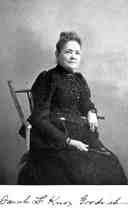
To help you spot the Sarah Knox-Goodrich landmark, look for a historic building with sturdy rusticated stone walls, massive stone pillars out front, and detailed decorative carvings-a touch of elegance among the city’s buzz; if you’re unsure, check above the second story windows for the intertwined letters “K” and “G” and the date “1889” carved right in the stone. Imagine you’re surrounded by the clatter of horses and carriages, the streets alive with the wind of change. Here, more than a century ago, Sarah Knox-Goodrich was San Jose’s beacon of boldness. She was the kind of woman who didn’t just break rules-she rewrote them, and sometimes rode right through them in a horse-drawn carriage! Sarah’s journey began far away, on a farm in Virginia, before she trekked across America and dove straight into the heart of California’s Gold Rush madness. She married William Knox, an adventurer who didn’t just chase gold-he sold water to the gold hunters and soon found himself a leader in business and politics. In fact, he helped start San Jose’s first bank and even fought to give married women the right to control their own property. Picture Sarah and William in their elegant home, him drafting bills by candlelight and her already dreaming bigger. But Sarah’s story wasn’t only lived in quiet parlors. After William’s death, she married Levi Goodrich, one of California’s very first architects. Levi left his mark on the city-designing the courthouse, the bank, even the jail (because, you know, every city needs a good jail!). The very sandstone that built this building you’re looking at came from Levi’s own quarry. With her two husbands’ legacies winding together, Sarah Knox-Goodrich decided to create something lasting right here-a building with stone as strong as her spirit, and her initials forever carved high above the street. But stone and mortar were only half the story. Sarah was a fighter for women’s rights in a time when women couldn’t vote, couldn’t run for office, and sometimes couldn’t even leave their husband’s shadow. Did that stop her? Not a chance! In 1869, Sarah didn’t wait for an invitation-she launched San Jose’s very first Women’s Suffrage Association, gathered 200 members, and started marching for justice. On the Fourth of July in 1876, Sarah loaded her carriage with friends and defiantly carried banners reading, “We are the disfranchised Class” and “We are Taxed without being Represented.” She was so bold she actually asked to ride at the back of the parade, just to make a point about how women were placed in society, but organizers put her right up front. Talk about stealing the show! Sarah wasn’t just noisy-she was clever. She helped pass a law so women could run for school office, even if they couldn’t yet vote. She wrote petitions to the state assembly, arguing that as a real estate owner and taxpayer she deserved a say in government. One year, she even ran for assembly herself-voting or no voting! And here’s a twist: she hosted none other than Susan B. Anthony in her own home, strategizing right in her front room, and then marched arm-in-arm to Sacramento to demand the vote. When the campaigns got expensive, Sarah reached into her own pocket, donating what today would be thousands of dollars to fund rallies, speeches, and even the travel expenses for other suffragists. If anyone in town needed a boost, you knew where to turn! Even after she died in 1903, with an enormous estate and a lifetime’s worth of stories, Sarah Knox-Goodrich was still surrounded by family-she’s buried right between her two husbands. And today, her building stands as a reminder that sometimes you need a little stone, a lot of stubbornness, and maybe a carriageful of good friends to change the world. So as you stand here, near her distinctive building-look up at those initials forever linked in stone, and tip your hat to a woman who helped shape San Jose from the shadows into the spotlight. The next time you hear a parade, just imagine Sarah Knox-Goodrich, leading from the front, banners waving, never waiting politely for permission. Exploring the realm of the biography, suffragist activities or the knox-goodrich building? Feel free to consult the chat section for additional information.
Eigene Seite öffnen →
Häufig gestellte Fragen
Wie starte ich die Tour?
Laden Sie nach dem Kauf die AudaTours-App herunter und geben Sie Ihren Einlösecode ein. Die Tour ist sofort startbereit – tippen Sie einfach auf „Play“ und folgen Sie der GPS-geführten Route.
Benötige ich während der Tour Internet?
Nein! Laden Sie die Tour vor dem Start herunter und genießen Sie sie vollständig offline. Nur die Chat-Funktion benötigt Internet. Wir empfehlen den Download über WLAN, um mobiles Datenvolumen zu sparen.
Handelt es sich um eine geführte Gruppentour?
Nein – dies ist ein selbstgeführter Audioguide. Sie erkunden unabhängig in Ihrem eigenen Tempo, wobei die Audioerzählung über Ihr Telefon abgespielt wird. Kein Reiseleiter, keine Gruppe, kein Zeitplan.
Wie lange dauert die Tour?
Die meisten Touren dauern 60–90 Minuten, aber Sie kontrollieren das Tempo vollständig. Pausieren Sie, überspringen Sie Stopps oder machen Sie Pausen, wann immer Sie wollen.
Was, wenn ich die Tour heute nicht beenden kann?
Kein Problem! Touren haben lebenslangen Zugriff. Pausieren Sie und setzen Sie sie fort, wann immer Sie möchten – morgen, nächste Woche oder nächstes Jahr. Ihr Fortschritt wird gespeichert.
Welche Sprachen sind verfügbar?
Alle Touren sind in über 50 Sprachen verfügbar. Wählen Sie Ihre bevorzugte Sprache beim Einlösen Ihres Codes. Hinweis: Die Sprache kann nach der Tour-Generierung nicht mehr geändert werden.
Wo greife ich nach dem Kauf auf die Tour zu?
Laden Sie die kostenlose AudaTours-App aus dem App Store oder von Google Play herunter. Geben Sie Ihren Einlösecode (per E-Mail gesendet) ein, und die Tour erscheint in Ihrer Bibliothek, bereit zum Download und Start.
Wenn Ihnen die Tour nicht gefällt, erstatten wir Ihnen den Kaufpreis. Kontaktieren Sie uns unter [email protected]
Sicher bezahlen mit 


