

Sacramento Audio-Tour: Geschichten unter den verwitterten Mauern von Midtown
Eine vergrabene Goldrauschmünze tauchte einst unter den Gehwegen Sacraments auf – was verbirgt sich hier sonst noch offensichtlich? Erkunden Sie Midtown mit dieser selbstgeführten Audio-Tour, um die dramatischsten Intrigen, geheimen Ecken und Relikte der Stadt zu entdecken, die die meisten Karten ignorieren. Welches geflüsterte Argument in Sutter's Fort veränderte über Nacht das Schicksal einer Nation? Wer verschwand im Schatten der Trinity Episcopal Kathedrale und hinterließ nur eine Spur skandalöser Gerüchte? Warum birgt ein einzelner Raum im Sutter Medical Center eine unerwartete Verbindung zu Hollywood? Bewegen Sie sich von sonnigen Innenhöfen zu Kathedralschatten und spüren Sie Echos von Rebellionen, politischen Wagnissen und Momenten, die fast in der Geschichte verloren gingen. Jeder Schritt enthüllt neue Perspektiven und schockierende Wendungen, die gewöhnliche Augen übersehen. Lassen Sie sich vom Puls Midtowns tragen – Vergangenheit, Gegenwart und das ungewisse Dazwischen. Bereit, unter die Oberfläche zu graben und Sacramento durch die Augen seiner rastlosen Vergangenheit zu sehen? Beginnen Sie die Reise jetzt.
Tourvorschau
Über diese Tour
- scheduleDauer 30–50 minsEigenes Tempo
- straighten2.9 km FußwegDem geführten Pfad folgen
- location_onStandortSacramento, Vereinigte Staaten
- wifi_offFunktioniert offlineEinmal herunterladen, überall nutzen
- all_inclusiveLebenslanger ZugriffJederzeit wiederholen, für immer
- location_onStartet bei Thomas Jefferson Schule
Stopps auf dieser Tour
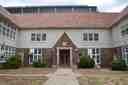
To spot the Thomas Jefferson School, just look for a building with a steep reddish-brown tile roof, lots of big white-trimmed windows, and a brick entryway with a pointy peak…Mehr lesenWeniger anzeigen
To spot the Thomas Jefferson School, just look for a building with a steep reddish-brown tile roof, lots of big white-trimmed windows, and a brick entryway with a pointy peak right in the middle. Alright, take a deep breath and imagine you’re a kid in Sacramento back in 1870, running toward the oldest school in the city, your shoes kicking up dust as sunlight struggles through tiny windows. That was the original Jefferson School-too small, too dark, and made of wood that would make any firefighter nervous! By the 1920s, the city was bursting with energy and kids, and so was the need for a bigger, brighter, safer school. Picture city leaders sitting down, scratching their heads, and finally saying, “Let’s build something completely new!” Thanks to a huge bond-over two million dollars back then, no small potatoes-the whole school district got upgraded, and Jefferson was first in line for a makeover. Local architects argued about money and design-one even insisted, “If you want every school to look like its own, you’ll save money in the end!” The new Jefferson School popped up in the stylish Tudor Revival look you see now, all sturdy bricks and charming windows. Not only that, but during World War II, this peaceful place buzzed with activity as folks hurried in and out, picking up sugar rations. Then, in 1949, the student chatter faded, replaced by the shuffle of administrators and the thunk of boxes- because it was turned into offices and storage. By the last school year here, the building’s insides had been practically gutted, with a new addition stuck on the back. Now, in a plot twist, this classic spot might soon be modern housing. So as you stand here, remember-you’re surrounded by over a century of changing times, from crowded classrooms to wartime ration lines, and now, maybe, to someone’s brand-new home. Talk about a building with a lot of stories inside and out!
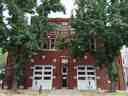
Eigene Seite öffnen →Directly in front of you, you’ll spot a big, bold red brick building with bright white details, a pair of old-fashioned garage doors, and “1893” cheekily peeking out from the top…Mehr lesenWeniger anzeigen
Directly in front of you, you’ll spot a big, bold red brick building with bright white details, a pair of old-fashioned garage doors, and “1893” cheekily peeking out from the top beneath a leafy tree canopy. Alright, put yourself in the shoes of a Sacramento firefighter from the late 1800s: horse-drawn fire wagons clang along dirt streets, bells ring out urgently, and the smell of smoke and excitement mingles in the air. This building, Firehouse No. 3, was the pride of the neighborhood when it first opened its doors back in 1893. With its crisp symmetry, stately pediments, and little touches of Classical Revival style, it almost looks too elegant-a firehouse that wanted to dress up for the job interview! For nearly a century, Engine Company 3 was always ready behind those big white doors, racing to emergencies rain or shine-accidentally waking up half the street with those bells, I’d bet. Over the years, it became such a local legend that it earned a permanent spot on the National Register of Historic Places in 1991. So, while it stands quietly now, you can imagine the generations of firefighters who have lived, laughed, and worked inside these walls, making it a true Midtown Sacramento hero.
Eigene Seite öffnen →
5 weitere Stationen anzeigenWeniger Stationen anzeigenexpand_moreexpand_less
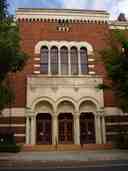
To spot the Eastern Star Hall, look for a large, reddish-brick building ahead with three grand arched entrances and tall windows above, just across from Sutter's Fort. Standing…Mehr lesenWeniger anzeigen
To spot the Eastern Star Hall, look for a large, reddish-brick building ahead with three grand arched entrances and tall windows above, just across from Sutter's Fort. Standing here, imagine it’s 1928-bright dresses, short haircuts, and the sound of laughter drifting from a shiny new automobile parked outside these very doors. This striking hall wasn’t just another meeting spot; it was built especially for the Order of the Eastern Star, a women’s Masonic group, making it a real rarity-one of only four ever built for the organization, and now the only one still buzzing with life. The architects, Coffman, Salsbury & Stafford, went full Romanesque Revival, giving it that dramatic, almost castle-like look that sets it apart from its neighbors. The hall quickly became a beacon on K Street’s eastern end, hosting everything from school dances with swirling gowns in the ballroom, to secret meetings and public celebrations. Even a fire in 1936 couldn’t stop it-just a short pause, then the doors reopened stronger than before. While you stand here, you’re looking at a living monument to the changing role of women, the sparkle of 1920s Sacramento, and the unstoppable energy of a community that always finds a reason to gather.
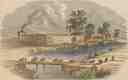
Eigene Seite öffnen →You’re looking for a massive, pale adobe fort with tall, thick walls and square watchtowers, standing solidly on level ground among scattered trees - just ahead is the sturdy…Mehr lesenWeniger anzeigen
You’re looking for a massive, pale adobe fort with tall, thick walls and square watchtowers, standing solidly on level ground among scattered trees - just ahead is the sturdy structure you can’t miss, with its earth-toned exterior and fortress-like presence. Now, imagine it’s 1839. The Sacramento Valley isn’t humming with city sounds-no cars honking or phones pinging-just endless land, fields as far as you could see, and a hush that’s only broken by the rustle of cottonwoods and the squawk of a distant hawk. Suddenly, Captain John Sutter arrives from the riverbanks, hauling dreams as big as California itself. With a land grant from the Mexican governor, he carved out a whopping 50,000 acres here and named it “New Helvetia”-New Switzerland. But don’t pack your ski gear just yet; this place was more about wheat fields than snowy slopes. Construction of the fort began in 1841, with walls so thick (about two and a half feet!) they could make even a stubborn mule feel safe from bandits and gold-crazed fortune hunters. The irony is, much of this building was shaped by hands that didn’t choose this job-local Miwok, Nisenan, and Native Hawaiian workers, some brought here from as far as the Pacific islands under heavy contracts, and many more Indigenous Californians who were forced into harsh labor. Sutter’s colony was a mix of ambition and exploitation, with European rules and a strict caste system that kept Sutter’s men in charge. Within a few years, Sutter’s Fort blossomed into the first non-Indigenous community in all the Central Valley. It had the character of a wild frontier-thick adobe walls, a two-story main building with wooden beams, and bustling activity. Picture livestock roaming the grounds, blacksmiths pounding metal, and farmers hauling bushels of wheat through wide gates. But the calm didn’t last. One fateful January day in 1848, James Marshall burst into the fort clutching a little glimmer of something in his palm. He drew Sutter aside and opened his hand-gold! The discovery at Sutter’s Mill just up the river fired the starting gun on the California Gold Rush-and let me tell you, after that news spread, this fort was as busy as a beehive at breakfast. Pioneers poured down trails like the old Coloma Road, which led straight to the gold fields-and almost all of them passed through these thick gates. The Donner Party also arrived battered and desperate, using the fort as their lifeline after a nightmare in the Sierras. For a brief moment, Sutter’s Fort was the center of the world. But fortune’s a fickle friend: almost overnight, everyone raced off to dig up dreams in the hills, and the fort became a ghost of its former self. By the 1850s, tumbleweeds could have rolled through these courtyards without bumping into a soul. Fast forward a little, and Sutter’s once-grand vision was crumbling, quite literally. The city thought about bulldozing it, but the Native Sons of the Golden West swooped in like caped history heroes, fixed up the ruins, and handed it over to the state. Since 1947, the fort’s been part of California’s parks-restored close to how it looked when Sutter’s boots first stomped inside. Today, if you squint at the fort and listen, just for a second, you might picture the whistle of the first California stagecoaches rolling in on dusty Coloma Road, the laughter and shouts in different languages, and the clang of hopes-along with a few broken dreams-echoing off these sturdy adobe walls. Every stone and beam here has seen the best and worst of California's wild ride. So go ahead, give the fort a solid look-it’s not every day you meet the foundation of a city and the birthplace of a legend.
Eigene Seite öffnen →
Häufig gestellte Fragen
Wie starte ich die Tour?
Laden Sie nach dem Kauf die AudaTours-App herunter und geben Sie Ihren Einlösecode ein. Die Tour ist sofort startbereit – tippen Sie einfach auf „Play“ und folgen Sie der GPS-geführten Route.
Benötige ich während der Tour Internet?
Nein! Laden Sie die Tour vor dem Start herunter und genießen Sie sie vollständig offline. Nur die Chat-Funktion benötigt Internet. Wir empfehlen den Download über WLAN, um mobiles Datenvolumen zu sparen.
Handelt es sich um eine geführte Gruppentour?
Nein – dies ist ein selbstgeführter Audioguide. Sie erkunden unabhängig in Ihrem eigenen Tempo, wobei die Audioerzählung über Ihr Telefon abgespielt wird. Kein Reiseleiter, keine Gruppe, kein Zeitplan.
Wie lange dauert die Tour?
Die meisten Touren dauern 60–90 Minuten, aber Sie kontrollieren das Tempo vollständig. Pausieren Sie, überspringen Sie Stopps oder machen Sie Pausen, wann immer Sie wollen.
Was, wenn ich die Tour heute nicht beenden kann?
Kein Problem! Touren haben lebenslangen Zugriff. Pausieren Sie und setzen Sie sie fort, wann immer Sie möchten – morgen, nächste Woche oder nächstes Jahr. Ihr Fortschritt wird gespeichert.
Welche Sprachen sind verfügbar?
Alle Touren sind in über 50 Sprachen verfügbar. Wählen Sie Ihre bevorzugte Sprache beim Einlösen Ihres Codes. Hinweis: Die Sprache kann nach der Tour-Generierung nicht mehr geändert werden.
Wo greife ich nach dem Kauf auf die Tour zu?
Laden Sie die kostenlose AudaTours-App aus dem App Store oder von Google Play herunter. Geben Sie Ihren Einlösecode (per E-Mail gesendet) ein, und die Tour erscheint in Ihrer Bibliothek, bereit zum Download und Start.
Wenn Ihnen die Tour nicht gefällt, erstatten wir Ihnen den Kaufpreis. Kontaktieren Sie uns unter [email protected]
Sicher bezahlen mit 


