
Pueblo Audio-Tour: Riverwalk-Träumereien & Innenstadt-Juwelen
Im Herzen Pueblos verweilen Geisterzeichen auf verwittertem Ziegelstein, während Geheimnisse unter dem Summen jedes vorbeifahrenden Zuges widerhallen. Die Geschichte verbirgt sich hier im Verborgenen, tief unter Ihren Füßen. Diese selbstgeführte Audio-Tour enthüllt die Geheimnisse der Innenstadt, führt Sie durch den Union Avenue Historic Commercial District und vorbei am El Pueblo History Museum und verbindet Orte, an denen die meisten ohne einen zweiten Blick vorbeigehen. Entdecken Sie Geschichten, die Außenstehende übersehen, und das Drama, das in jeder Ecke eingraviert ist. Warum hätte eine feurige Rebellion diese Stadt im Schatten ihres geschäftigen Handelszentrums beinahe auseinandergerissen? Wer verschwand spurlos hinter den Mauern von El Pueblo? Welches scheinbar unschuldige Gebäude war einst Schauplatz eines Skandals, der sich über ganz Colorado ausbreitete? Wandern Sie durch belebte Alleen und stille Seitenstraßen. Lassen Sie jeden Schritt Geschichten von Unruhen, Triumphen und verblasstem Ruhm aufdecken. Erleben Sie eine wiedergeborene Stadt, während Sie sich durch Schichten ihrer unerzählten Vergangenheit bewegen. Drücken Sie auf Wiedergabe und entdecken Sie das Pueblo, das sich im Verborgenen verbirgt.
Tourvorschau
Über diese Tour
- scheduleDauer 40–60 minsEigenes Tempo
- straighten6.6 km FußwegDem geführten Pfad folgen
- location_onStandortPueblo, Vereinigte Staaten
- wifi_offFunktioniert offlineEinmal herunterladen, überall nutzen
- all_inclusiveLebenslanger ZugriffJederzeit wiederholen, für immer
- location_onStartet bei Quaker Getreidemühle
Stopps auf dieser Tour
To spot the Quaker Flour Mill, look for a sturdy red brick building with huge arched windows and a grand entrance right at the front, facing the street. Now, let’s step back in…Mehr lesenWeniger anzeigen
To spot the Quaker Flour Mill, look for a sturdy red brick building with huge arched windows and a grand entrance right at the front, facing the street. Now, let’s step back in time together! Picture this spot in 1869, as dust swirls around the very foundation stones and workers wipe sweat from their brows. These sandstone walls, thicker than your grandma’s favorite dictionary, kept the hum of grinding wheat going strong for the Quaker Flour Mill. Just imagine the chugging and clanging of milling stones filling the air here, as flour sacks piled up to feed a young, hungry Pueblo. Fast forward just a few decades, and the scent of fresh flour faded-replaced by the tang of beer brewing, thanks to the Joseph Schlitz Brewing Company. The building buzzed with new life, with beer bottles clinking and delivery wagons waiting outside, ready to carry the town’s favorite drink before prohibition slammed the doors on the party. Over time, this place shapeshifted-part flour mill, part brewery, once even a theatre, and now, a historic treasure. It’s seen laughter, hard work, and maybe the occasional actor forgetting their lines on stage! So as you stand here, listen close, and maybe-just maybe-you’ll catch an echo of spinning millstones and the distant cheer of a thirsty miner celebrating a long day’s work.
Eigene Seite öffnen →Look for a grand, reddish-brown brick building with a steep, slate-gray roof and dormer windows rising dramatically above the nearby parking lot and railroad tracks-this…Mehr lesenWeniger anzeigen
Look for a grand, reddish-brown brick building with a steep, slate-gray roof and dormer windows rising dramatically above the nearby parking lot and railroad tracks-this impressive structure signals you've reached the historic heart of Union Avenue. Welcome to the Union Avenue Historic Commercial District-Pueblo’s very own time machine, though thankfully, without the risk of running into any wild west shootouts. As you stand here, take a deep breath and let those century-old bricks whisper some secrets into your ear. The bricks and stones around you have seen so much-more than one wild night and more than a couple of disasters! Back in the 1880s, Union Avenue buzzed with the hopeful energy of two growing cities, South Pueblo and Central Pueblo, before they married their neighbors Pueblo and Bessemer to finally create present-day Pueblo. Picture dusty roads, horse-drawn wagons, tough railroad men, and the ever-watchful eyes of Bat Masterson himself-yes, the same Bat who ran with Wyatt Earp and Doc Holliday-keeping the peace as a sheriff while the railroad crept through town. Imagine walking these same streets and bumping into legendary lawmen. Or running away from them, depending on your luck! Now, let’s go back even further-if you squint, you might still see 5th Street in the haze, because that’s what this area was called as early as 1872, before Union Avenue was officially born in 1880. City Hall itself was woven into the fabric of this place by law, anchoring Pueblo’s government right here where the energy of trade, trains, and tales flowed thick. But even the bravest city can have a rainy day-or in Pueblo’s case, a very wet one. The biggest drama hit in 1921, when the Arkansas River, likely tired of its banks, decided to visit town. With waters up to 18 feet deep, the flood tore through this district, sweeping away buildings, dreams, and, sadly, many lives. You’re standing on the bones of resilience. Maj. Paul Newlon called the devastation “beyond description,” and he wasn’t kidding-virtually every building from the post office to the square past the station vanished under water. Pueblo was the economic jewel of southern Colorado, and this watery misfortune set the city back for years. But Puebloans are nothing if not determined, and with time, things rebuilt-but not without some quirks. Many of the sturdy old buildings you see today date to the 1880s, though a lot were remodeled after floods to suit newer styles of the day. And talk about a colorful history: Union Avenue soon became notorious far and wide as a lively Red Light District full of taverns and, let’s just say, enthusiastic nightlife. Gossip has it the folks in the mesa junction area got so tired of the stories that, by 1939, they literally renamed part of the street to Colorado Avenue to avoid the reputation. Through good times and “unsightly” decline, the district saw everything-scenes straight from a gangster movie, mobsters like Jo Jo Concialdi and The Branch Inn explosion in 2008, where a sudden blast shattered windows and lives, shaking Pueblo’s heart. Years later, the lot found new hope, as neighbors looked forward to fresh starts and safer nights. Those floods and booms weren’t the end, though. In the 1990s, as buildings faced decay and jobs dried up after the steel mill layoffs, Pueblo came together and chose revival. The Historic Arkansas Riverwalk was born, adding water back in-this time on purpose!-tracing the river that once ran wild here, and marking an area where national borders once shifted like card tricks: France, Spain, Mexico, the US, and even a sprinkle of the Republic of Texas. And still, Union Avenue is where Pueblo celebrates, mourns, and rallies. From “B Street Bash” in June to Oktoberfest in September, and the always spicy Chile and Frijoles Festival in autumn, locals and visitors fill the air with music, laughter, and a lot of roasted peppers. Famous politicians have come to make their mark here, too-like Woodrow Wilson’s final great speech at Memorial Hall, immortalized by a plaque just steps away. So, as you look around, remember: you’re not just walking past pretty old bricks-you’re stepping through layers of grit, glamour, and Pueblo pride, where every echo under your step has its own wild story to tell.
Eigene Seite öffnen →To spot the Historic Arkansas Riverwalk, just glance ahead and look for the curving waterway lined with shady trees, red-brick buildings, and café patios-all stretching out along…Mehr lesenWeniger anzeigen
To spot the Historic Arkansas Riverwalk, just glance ahead and look for the curving waterway lined with shady trees, red-brick buildings, and café patios-all stretching out along peaceful, winding sidewalks. Now, take a deep breath and listen to the gentle splash of water right here-can you imagine what it used to be like? About a century ago, the Arkansas River used to run wild straight through downtown Pueblo, weaving right through busy streets and markets. But then, in 1921, a massive flood rolled through like an uninvited guest at a summer picnic, leaving destruction in its wake and forcing the city to reroute the river to prevent future disasters. For years, Pueblo watched its old river path turn quiet and empty, but in the early ‘90s a group of dreamers popped up-citizens who looked at this empty stretch and thought, “Why not bring a little San Antonio magic to Colorado?” Long story short, they worked together like a big family project, and after almost a decade of planning, digging, and fundraising (and probably a few coffee-fueled late-night arguments), the riverwalk finally opened in 2000. Since then, new attractions, parks, and even a stunning bridge for veterans have made their debut here. Now, you’re standing on a spot where the city found new life-where laughter, paddleboats, and patio diners have replaced floodwaters. Soak it in: you’re walking along the heartbeat of Pueblo’s modern revival. And hey, keep an eye out for ducks with attitude-they like to act like they own the place!
Eigene Seite öffnen →
10 weitere Stationen anzeigenWeniger Stationen anzeigenexpand_moreexpand_less
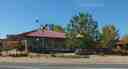
To spot the El Pueblo History Museum, just look ahead for a one-story, modern building with a large red roof and glass walls, partially hidden behind trees and surrounded by a…Mehr lesenWeniger anzeigen
To spot the El Pueblo History Museum, just look ahead for a one-story, modern building with a large red roof and glass walls, partially hidden behind trees and surrounded by a brick plaza with landscaping and a quirky wind sculpture out front. Alright! Imagine stepping onto a spot where layer after layer of Pueblo’s wild and colorful past sits just below your feet. Right here, the El Pueblo History Museum tells the tangled, tasty, and sometimes tough story of Pueblo’s people-and let me tell you, this ground is full of secrets! Let’s rewind to the early 1800s. Picture President Thomas Jefferson making a giant real estate purchase-the Louisiana Purchase-which threw a whole new chunk of the West into the hands of the young United States. Adventurers like Lewis and Clark and, soon after, Zebulon Pike were sent out to poke around and draw maps. Now, Pike, always the overachiever, didn’t just wander; he built Pike’s Stockade nearby, marking the spot where the first American boots-and logs-touched this land. Jump to 1842, and you’ll hear the thunk of adobe bricks being stacked as the El Pueblo trading post rises by the river. It wasn’t some sleepy little outpost-no, it was a buzzing hub, full of trappers, traders, Native Americans, and settlers, bartering everything from beaver pelts to biscuits. Life was lively, but it wasn’t all high-fives and happy hour here. When gold was discovered in California, folks vanished faster than you can say “Eureka!” Then came trouble-an attack in 1854 forced everyone to flee, and the old adobe walls watched their people scatter. After that, the fort sat crumbling in silence while a whole new city grew up, its bricks even borrowed to build some of Pueblo’s first homes. By the 1880s, El Pueblo trading post had disappeared completely… or had it? On this very spot, you’d have found the grand Farriss Hotel, standing tall atop the bones of history. Fast-forward to the late 1900s. Imagine archaeologists dusting off their Indiana Jones hats. Teams from the University of Southern Colorado launched a treasure hunt under the old hotel’s basement. And what did they discover? The hidden footprint of El Pueblo! Suddenly, what folks thought was long gone was poking its head back through the centuries. Today’s museum, managed by History Colorado and even affiliated with the mighty Smithsonian, is all about connecting you with every flavor of Pueblo’s past-Spanish, Mexican, Anglo, Native American-this was always a crossroads. Wander through replica plazas, peek down at the real archaeological site itself, or lose yourself in exhibits about everything from city neighborhoods to the American West’s oldest football rivalry. Who knew high school football could get so historic-or so dramatic? Don’t miss stories like the Children of Ludlow, all about kids bravely enduring the Colorado Coalfield War, or the gripping tale of redlining in Pueblo. The museum’s “Hands on History” program even gives local kids a place to explore and play when school’s out-so if you hear giggles or the echo of tiny feet, that’s just the next generation of history-makers in action! So, you’re not just standing outside any old building-you’re at a living layer cake of Colorado’s history, with ghosts of traders, gold-seekers, settlers, students, and maybe even a few football fans, all woven together right beneath your shoes. If only adobe bricks could talk… though they’d probably just argue about whose side of the city is better!
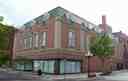
Eigene Seite öffnen →Look for a big, square, red-brick building with large white-trimmed windows and a stone base, sitting right on the corner-just follow the row of elegant upper-floor windows, and…Mehr lesenWeniger anzeigen
Look for a big, square, red-brick building with large white-trimmed windows and a stone base, sitting right on the corner-just follow the row of elegant upper-floor windows, and you can’t miss it! Here’s a spot you wouldn’t want to overlook on your Pueblo adventure-the Montgomery Ward Building! Picture yourself traveling back to 1936, when the world was still dusting off from the Great Depression and shoppers in neat hats and polished shoes hurried by, eager to enter this sparkling new department store. The building’s Georgian Revival style was the “fancy suit” of corporate America-classy, solid, and proud. With its crisp red bricks and stone trim, it stood out as the most stylish shop in town. Inside, you’d have heard the clinking of cash registers, the hum of conversation, and maybe caught a whiff of fresh fabric. Over the decades, this building has worn many hats-hosting QualMed’s headquarters, then welcoming the Pueblo Work Force Center and the Colorado Lottery. Imagine the whispers of anticipation each time a lottery ticket gets checked inside! Today, it’s all business on the inside, but outside, it’s still the only Montgomery Ward Georgian Revival building in the whole state. So take a moment, let your eyes trace those clean lines and tall windows, and you’ll be seeing Pueblo’s history standing tall, right before you!
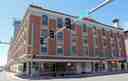
Eigene Seite öffnen →To spot the Colorado Building, look for a big, four-story, dark red brick building with rows of tall windows divided by light-colored bricks-it stretches impressively along the…Mehr lesenWeniger anzeigen
To spot the Colorado Building, look for a big, four-story, dark red brick building with rows of tall windows divided by light-colored bricks-it stretches impressively along the corner of North Main Street and 4th Street, right in front of you. Now, let’s step back in time-imagine Pueblo in 1925: jazz floating out of radios, Model T Fords puttering by, and this very building rising like a castle of business dreams! The Colorado Building was the toast of Main Street, freshly built for the Southern Colorado Investment Company, and it became one of the busiest spots in town. Just picture folks in snazzy hats and fine suits rushing in and out of those doors, climbing the grand staircase beneath a ceiling decorated with detailed terra cotta friezes-maybe hoping their next big deal would be made here. With 160 offices once packed inside, the air must have buzzed with excitement… and maybe a little nervous sweat! This place was designed by the William N. Bowman Co., which meant it stood out. Look at its dramatic off-white columns, the neat white rectangles under each window, and, right at the top, that parapet-like a fancy crown for a hard-working king. The best part? Even almost a century later, the Colorado Building still stands strong, listed proudly on the National Register of Historic Places. It’s like Pueblo’s own brick-and-mortar time capsule, right on this corner-can you feel its old-school energy echoing around you? And don’t worry, there are definitely fewer paper cuts these days!
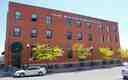
Eigene Seite öffnen →To spot the Rood Candy Company Building, just look for a big, bright red-brick building with crisp black window frames and bold white letters across the top that spell out THE…Mehr lesenWeniger anzeigen
To spot the Rood Candy Company Building, just look for a big, bright red-brick building with crisp black window frames and bold white letters across the top that spell out THE ROOD CANDY CO. Now, let’s step back to the early 1900s-imagine the sweet, rich smell of caramel and chocolate drifting through the air as busy workers scurry in and out of this very building. This was the magical world of Aaron Rood, who, after a journey that took him from Connecticut to fighting in the Civil War, all the way out west to Colorado, decided he wanted to do something that brought smiles to faces-make candy! Rood wasn’t just another businessman; he was a determined dreamer with a knack for a good snack. His passion turned this spot into one of the leading candy manufacturers in Colorado, and for decades, people young and old eagerly waited for Rood’s irresistible treats to hit the shelves. And here’s a fun twist-the building didn’t just house row after row of candy machines, it even had its own gable-roofed stable out back. Horses helped make deliveries, probably with the sweetest jobs in town-imagine their horse friends being jealous! The Rood Candy Company was built in 1909 and thrived until the late 1930s. So next time you crave something sweet, remember this spot, where candy history was made. Don't worry, I promise I won't sugarcoat any of the tour facts from here on out!
Eigene Seite öffnen →To spot the Pueblo County Courthouse, just look ahead for a grand, tan sandstone building with massive columns and a shining double dome perched right in the center-you can’t miss…Mehr lesenWeniger anzeigen
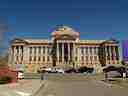
To spot the Pueblo County Courthouse, just look ahead for a grand, tan sandstone building with massive columns and a shining double dome perched right in the center-you can’t miss its palace-like presence! Now, take a deep breath and imagine you’ve stepped back over a hundred years, standing in front of a courthouse so grand, people probably double-checked they were still in Colorado and not in Washington, D.C.! This building was dreamed up by Albert Ross, a New Yorker with big ideas and a taste for impressive entrances. He wanted Pueblo’s third courthouse to drop jaws, and if you notice that giant dome, here’s a secret: it’s actually two domes, one sneaky dome hiding inside the other! It’s the architectural equivalent of wearing two fancy hats just in case one blows away-talk about being prepared for Colorado weather. The courthouse isn’t just mighty on the outside; peek through the windows (without looking suspicious) and you’d see walls and ceilings bursting with gold leaf, swirling murals, and vibrant patterns, all thanks to J. Charles Schnorr. He was a local artist with a passport full of stamps-New York, Vienna, Paris-yet he brought his magic home to Pueblo. Every curve, stroke, and shimmer inside the rotunda tells a story of ambition, artistry, and a city eager to shine just as bright as its golden dome. So go ahead, soak it in-this is a piece of Pueblo’s pride, standing tall and serious… but just fancy enough for a little courthouse waltz if you’re feeling brave!
Eigene Seite öffnen →To spot the Cathedral of the Sacred Heart, just look ahead for the tall, red-roofed spire topped with a cross, and the big circular stained-glass window above three pointed arch…Mehr lesenWeniger anzeigen
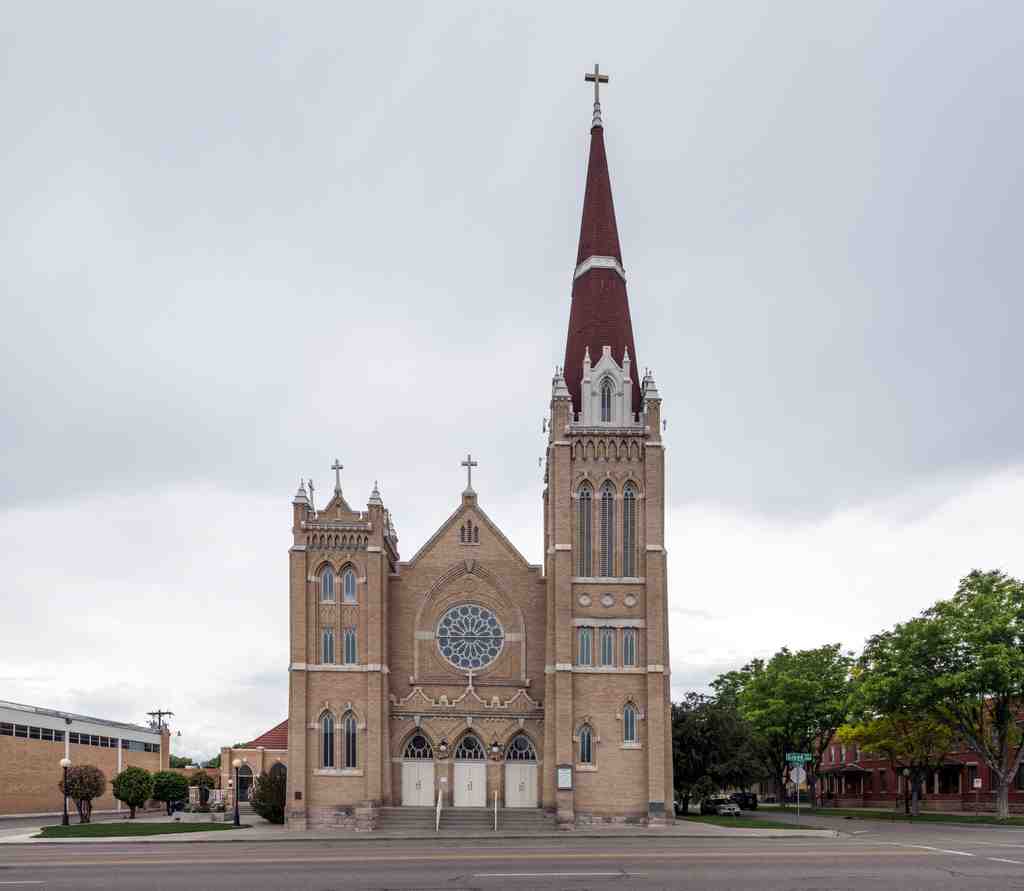
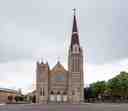
To spot the Cathedral of the Sacred Heart, just look ahead for the tall, red-roofed spire topped with a cross, and the big circular stained-glass window above three pointed arch doorways-all set in a pale stone facade. Now, let’s travel back in time together-imagine you’re standing here in 1860 under a wide Colorado sky, maybe even hearing the distant jingle of wagon wheels. Fr. Projectus Machebeuf and Fr. J.B. Raverdy have slogged 300 miles from Santa Fe, their boots kicking up the Arkansas River dust. There’s no church, no grand spire-just the hope of worship, held in living rooms and the old courthouse down the street. Little did they know, they were planting the first parish seeds that would one day grow into this Gothic Revival masterpiece before you. Fast-forward to 1873-St. Ignatius is built, but disaster strikes! Sparks fly, flames roar, and in 1882, a fire devours the church and rectory. But the Jesuit priests and the Pueblo community are tough; faith can’t be burned away. A new St. Ignatius rises near the city’s bustling heart, becoming a parish hall once Msgr. Thomas Wolohan dreams even bigger. Here comes the cathedral era! It’s 1912, and as the cornerstone is laid, it must have seemed like the entire town was holding its breath. The new Sacred Heart church soars above Pueblo for just $48,000-can you imagine trying to build this for that price today? The spire was like a finger pointing to hope itself, while stunning stained glass and skyward arches invited everyone in. Msgr. Wolohan led the flock for thirty-six years, and he’s still here-buried in a crypt beneath your feet, watching over the parish that grew from 190 to over 1,200 families. In 1941, it became a cathedral-a place where bishops preached and the people of Pueblo found their spiritual home. There’s a motto from its 125th anniversary: “Strong at Heart after 125 Years.” And trust me, this heart is tough! In 2008, a bolt of lightning zapped the steeple right off, flames leaping in the night sky. But Pueblo folks just said, “Not today!” and rebuilt with a new cross and a lightning rod, because even the thunder can’t keep this cathedral down. From humble beginnings beside the river to a beacon for all who wander by, the Cathedral of the Sacred Heart is a testament to persistence, hope, and a little bit of divine drama!
Eigene Seite öffnen →To spot Temple Emanuel, look for the building with bright red brick walls, a large stone base, two castle-like towers, and a grand arched doorway right ahead, with a sign that…Mehr lesenWeniger anzeigen
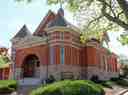
To spot Temple Emanuel, look for the building with bright red brick walls, a large stone base, two castle-like towers, and a grand arched doorway right ahead, with a sign that reads “Temple Emanuel.” You’re standing in front of Pueblo’s oldest synagogue, where the warm red brick practically glows in the Colorado sun, and the two whimsical polygonal towers look like they could be plucked straight from a storybook. Picture the year 1900: the streets of one of Pueblo’s oldest neighborhoods are alive with laughter and conversation. The Jewish community, about forty or fifty families strong back then, has just banded together to build this striking temple designed by Jacob Gile, mixing Queen Anne charm with some bold Neoclassical and Romanesque touches-sort of like putting fancy frosting on a sturdy cake. As you gaze at the Syrian archway, imagine elegant footsteps echoing on these old steps for over a century. Inside, the community gathered to welcome new babies, whisper prayers, and celebrate holidays with lots of song and a little bit of nosh-because honestly, what’s a celebration without snacks? That education building nearby? It was built in 1963 in the actual shape of a Star of David! Take a peek, but know it wasn’t part of the original vision, just evidence of a growing, adapting community. But not every chapter is joyful. In 2019, Temple Emanuel faced a dark cloud: a plot against its safety by someone with hate in their heart. Thanks to the speedy work of the FBI, the danger was stopped before any harm could come. The community stood together, unbowed-as it always has. Now listed on the National Register of Historic Places, Temple Emanuel is more than brick and stone; it’s a symbol of resilience. As you stand here, you’re part of a living story, full of hope, humor, and the indomitable spirit that’s made this little gem endure.
Eigene Seite öffnen →Straight ahead, you can spot the Rosemount Museum-a grand, castle-like mansion built from pink stone, with a deep porch and a towering chimney reaching high above the lush green…Mehr lesenWeniger anzeigen
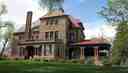
Straight ahead, you can spot the Rosemount Museum-a grand, castle-like mansion built from pink stone, with a deep porch and a towering chimney reaching high above the lush green lawn. Take a moment to look up at those sturdy pink rhyolite walls and just imagine-you’re standing where John A. Thatcher’s dreams literally grew from the ground up. Picture it: We’re back in the 1890s, and the rattling of horse-drawn carriages echoes around this corner of Pueblo. John Thatcher, after making it big in dry goods, banking, mining, and ranching, decides he needs a home befitting a titan of industry-and voila, Rosemount is born! Now, the Thatcher family didn’t just build a mansion, they built a masterpiece-nearly 24,000 square feet with 37 rooms, filled with wood so rich and warm, you’d think the trees themselves wanted to live here: cherry, mahogany, maple, and oak. Imagine being a guest, gliding through the grand rooms, hearing the laughter echo up the marble staircase, or maybe sneaking off to the top floor where, today, you could investigate the Andrew McClelland collection. Bet you didn’t expect to find an actual Egyptian mummy hiding up there! For decades, the Thatchers called this fortress home. After the last Thatcher, Raymond, passed away in 1968, the family decided this beauty was too grand to keep a secret. They generously donated it to the city, which meant curious history hunters like us could wander its halls by 1969. And if these walls could talk, they might just drop a “Hollywood” hint! The Rosemount’s interiors starred in Terrence Malick’s film Badlands, and it even glimmered with Christmas cheer on HGTV’s “Christmas Castles.” Every corner here whispers stories from a century ago-of grand dinners, coal-heated winters, and footsteps down creaky hallways. As you stand on this high spot in Pueblo, let your imagination run wild. Who knows? Maybe you’ll hear the faint giggle of a Thatcher child, or catch a glimpse of Victorian grandeur in the glint of glass-just don’t challenge the mummy to a staring contest… it always wins.
Eigene Seite öffnen →
Häufig gestellte Fragen
Wie starte ich die Tour?
Laden Sie nach dem Kauf die AudaTours-App herunter und geben Sie Ihren Einlösecode ein. Die Tour ist sofort startbereit – tippen Sie einfach auf „Play“ und folgen Sie der GPS-geführten Route.
Benötige ich während der Tour Internet?
Nein! Laden Sie die Tour vor dem Start herunter und genießen Sie sie vollständig offline. Nur die Chat-Funktion benötigt Internet. Wir empfehlen den Download über WLAN, um mobiles Datenvolumen zu sparen.
Handelt es sich um eine geführte Gruppentour?
Nein – dies ist ein selbstgeführter Audioguide. Sie erkunden unabhängig in Ihrem eigenen Tempo, wobei die Audioerzählung über Ihr Telefon abgespielt wird. Kein Reiseleiter, keine Gruppe, kein Zeitplan.
Wie lange dauert die Tour?
Die meisten Touren dauern 60–90 Minuten, aber Sie kontrollieren das Tempo vollständig. Pausieren Sie, überspringen Sie Stopps oder machen Sie Pausen, wann immer Sie wollen.
Was, wenn ich die Tour heute nicht beenden kann?
Kein Problem! Touren haben lebenslangen Zugriff. Pausieren Sie und setzen Sie sie fort, wann immer Sie möchten – morgen, nächste Woche oder nächstes Jahr. Ihr Fortschritt wird gespeichert.
Welche Sprachen sind verfügbar?
Alle Touren sind in über 50 Sprachen verfügbar. Wählen Sie Ihre bevorzugte Sprache beim Einlösen Ihres Codes. Hinweis: Die Sprache kann nach der Tour-Generierung nicht mehr geändert werden.
Wo greife ich nach dem Kauf auf die Tour zu?
Laden Sie die kostenlose AudaTours-App aus dem App Store oder von Google Play herunter. Geben Sie Ihren Einlösecode (per E-Mail gesendet) ein, und die Tour erscheint in Ihrer Bibliothek, bereit zum Download und Start.
Wenn Ihnen die Tour nicht gefällt, erstatten wir Ihnen den Kaufpreis. Kontaktieren Sie uns unter [email protected]
Sicher bezahlen mit 


