Olympia Audio-Tour: Von bronzenen Kuppeln zu Uferwundern
Unter Olympias glänzenden Kuppeln und gepflegten Rasenflächen haben Machtkämpfe und geflüsterte Geheimnisse das Schicksal eines Staates geprägt. Diese selbstgeführte Audio-Tour führt Sie durch das Herz der Innenstadt und enthüllt das verborgene Drama hinter geschichtsträchtigen Hallen wie dem Senat des Staates Washington, dem Repräsentantenhaus und der Gouverneursvilla – und offenbart Geschichten, die die meisten eiligen Besucher nie hören. Hat eine einzige hitzige Debatte hier wirklich den Verlauf der Bürgerrechte verändert? Welcher Geheimcode ist in den Kunstwerken verborgen, an denen Sie vorbeikommen? Und wer kletterte einst um Mitternacht über den Zaun der Villa, um nie wieder gesehen zu werden? Durchstreifen Sie prächtige Korridore und schattige Gärten, wo Ehrgeiz, Rebellion, Skandal und Triumph in jedem Stein widerhallen. Spüren Sie den Herzschlag der Geschichte, während Sie Olympias politisches Zentrum aus der Perspektive eines Insiders erkunden. Entdecken Sie die unsichtbare Seite der Stadt. Beginnen Sie Ihre Reise und lassen Sie Olympia enthüllen, was es verborgen hält.
Tourvorschau
Über diese Tour
- scheduleDauer 40–60 minsEigenes Tempo
- straighten3.8 km FußwegDem geführten Pfad folgen
- location_onStandortOlympia, Vereinigte Staaten
- wifi_offFunktioniert offlineEinmal herunterladen, überall nutzen
- all_inclusiveLebenslanger ZugriffJederzeit wiederholen, für immer
- location_onStartet bei Senat des Staates Washington
Stopps auf dieser Tour

To spot the Washington State Senate, look for the grand dome of the Legislative Building rising above the trees, with stately columns and a bold presence that really makes it hard…Mehr lesenWeniger anzeigen
To spot the Washington State Senate, look for the grand dome of the Legislative Building rising above the trees, with stately columns and a bold presence that really makes it hard to miss. Welcome to the home of democracy, drama, and a dash of good old-fashioned debate! As you stand here, imagine the clink of footsteps echoing through these halls, where 49 senators from all corners of Washington gather to make decisions for nearly eight million folks. Each senator represents a massive district-about 160,000 people each-which means it’s not just fancy speeches inside, but some serious responsibility as well. No one here has to worry about term limits, so the faces might be familiar for decades, but their debates are anything but boring. Every four years, half the Senate gears up for reelection, so expect a bit of drama every other year. The Senate isn’t just for passing bills-they have the power to confirm or reject the Governor’s picks for state jobs, which can get as tense as a reality TV elimination night. Picture the Lieutenant Governor, Denny Heck, presiding over the room-unless he’s out, then the president pro tempore, currently Steve Conway, steps in. And let’s not forget those lively majority and minority leaders battling it out-it’s practically an ongoing tug-of-war over lawmaking. So next time you hear the hum of voices from inside, know you're listening to history in the making. The actions in this building have shaped Washington State since 1889, through the fights, the friendships, and even the occasional coffee spill. Now that’s a Capitol story worth telling!
Eigene Seite öffnen →To spot the Washington House of Representatives, look for the grand domed building with bold columns and a broad staircase out front-it's just ahead, standing proudly as part of…Mehr lesenWeniger anzeigen
To spot the Washington House of Representatives, look for the grand domed building with bold columns and a broad staircase out front-it's just ahead, standing proudly as part of the majestic State Capitol complex. Now, take a good breath of that Capitol air, and imagine the electric buzz that fills this place every time the House is in session. Picture a mighty crowd-98 representatives, two from each of Washington’s 49 districts, all crammed with purpose and maybe just a hint of coffee breath. The House is the lower half of Washington’s Legislature, but don’t let “lower” fool you-there’s nothing low energy about lawmakers squabbling over policies, rallying for their districts, and rushing to bring bright ideas to the table. The real captain steering this ship is the Speaker of the House. Chosen by their fellow House members and given a gavel that could double as a wizard’s wand, the Speaker not only leads the room but also controls what issues get the spotlight. It’s not just about bossing people around, though-if the Speaker needs a breather, the Speaker Pro Tem swoops in, ready like a superhero sidekick. And just when things seem to settle, the majority and minority leaders start huddling, scheming, and, let’s be honest, probably negotiating snack breaks as hard as they negotiate legislation. History here is never bland: in 1912, Frances Cleveland Axtell and Nena Jolidon Croake marched bravely into these halls as the first women ever elected, sending shockwaves all the way through Olympia. Over the years, you can almost taste the anticipation before a big vote-political tides shifting, deals struck in whispered corners, and passionate debates echoing off those marble walls. So next time someone says, “How do they make the laws?” you can point right here, where democracy buzzes louder than a swarm of bees-and the people of Washington get their voices heard, two energetic years at a time. Keep your eyes (and ears!) tuned, because history never sits still on these Capitol steps!
Eigene Seite öffnen →To spot the Washington Governor’s Mansion, just look ahead for a grand red-brick house set high above the hedges, with tall white columns and a fancy balcony at the center,…Mehr lesenWeniger anzeigen
To spot the Washington Governor’s Mansion, just look ahead for a grand red-brick house set high above the hedges, with tall white columns and a fancy balcony at the center, perched right at the top of the hill with trees framing each side. Now, take a deep breath and picture yourself back in Olympia in the early 1900s. You’re standing before this stately Georgian-style mansion, freshly built in 1908. Imagine the bustling noise as dignitaries and townsfolk gathered for the cornerstone ceremony, their voices echoing across Capitol Point. The excitement was thick in the air as Governor Albert E. Mead attended the celebration-but, plot twist, poor Mead never actually got to live here! He lost the Republican primary that same year, and the next governor, Samuel G. Cosgrove, only served for a single day before illness struck. In fact, the first family to ever move in was that of Lieutenant Governor Marion E. Hay, who took over after Cosgrove’s passing. Sometimes real estate really is all about timing! Inside, Governor Hay’s wife, Elizabeth, got straight to work turning this mansion into a true showpiece, buying $15,000 worth of fancy furniture-imagine mahogany tables and stately grandfather clocks-pieces you’d still spot if you were to peek in the windows today. But not everyone found the mansion cozy. Just seven years later, Governor Ernest Lister and his family packed up and left, complaining that they simply couldn’t keep the house warm during the Olympia winters. Gas lights flickered in the halls until electricity finally arrived. Time wasn’t always kind to the mansion. Despite renovations in the 1950s, clanking radiators and drippy ceilings kept making mischief. There was so much trouble at one point that the state considered tearing the whole place down to put up a brand-new office building! But in 1972, Nancy Evans, wife of Governor Daniel J. Evans, stood her ground, rallying preservationists to save and restore the home instead. With her zeal, a group called the Governor’s Mansion Foundation formed-imagine 47 women and 5 men gathered in the elegant Great Hall, plotting the mansion’s glorious comeback. And oh, what treasures the mansion holds! The Great Hall glimmers with marble-topped Empire tables thanks to Charles Lannuier of New York, and a pair of gold-silk chairs gifted from Clallam County adds a splash of sparkle. Wander farther, and you’d find a collection of American-made Federal and Sheraton furniture: delicate Pembroke tables, a stately eagle-footed sofa, a regal piano, and even a fine mahogany sewing stand from the early 1800s. The library holds not just stately bookshelves, but also rare rosewood and brass furniture-a gift in memory of the ill-fated Governor Cosgrove himself. In the State Dining Room, you’d hear the whispers of history in the painted wall panels, reminiscent of murals once chosen for the White House. Here are the dining chairs embroidered by volunteers from across Washington, each one stitching their initials and a story into the mansion’s fabric. Would you believe there’s a shimmering silver service once made for the USS Olympia after the victory at the Battle of Manila Bay? It was custom-crafted in San Francisco, sailed with Commodore George Dewey, and is now right at home in the mansion-a glimmering link between state and nation. But every stately home has its wild tales: in 1997, Governor Gary Locke had to battle a bat infestation, leading to midnight chases through moonlit halls and, for safety, rabies vaccinations for the whole family-cats included! In 2001, the Nisqually earthquake rattled the mansion’s bones. And in 2021, the mansion faced yet another trial as crowds breached the gates during a tense moment in history, forcing the governor into hiding. So, as you stand here before these elegant red bricks and white columns, imagine all those voices-of governors, families, guests, and even the odd bat-echoing through 19 rooms, each adding a layer to the ever-growing story of Washington’s own house on the hill.
Eigene Seite öffnen →
11 weitere Stationen anzeigenWeniger Stationen anzeigenexpand_moreexpand_less
To spot the Du Pen Fountain, look ahead for a striking bronze sculpture-complete with playful salmon-perched above a wide pool, right in front of the Joel M. Pritchard Library's…Mehr lesenWeniger anzeigen
To spot the Du Pen Fountain, look ahead for a striking bronze sculpture-complete with playful salmon-perched above a wide pool, right in front of the Joel M. Pritchard Library's modern façade. Standing here, you’re not just looking at any old fountain-you're near a 900-pound piece of history crafted from bronze, green terrazzo, and cement, made by Everett Du Pen, a Northwest sculptor with a big reputation and, apparently, strong arms! In the mid-1950s, when Eisenhower was president and rock and roll was just taking off, Du Pen dreamed up this lively work. Just imagine Olympia half a century ago: a city buzzing as the Capitol campus was adding both books and beauty to its grounds. The sculptor, known for his leadership at the University of Washington, decided to have a little fun-a pair of bronze salmon forever caught mid-leap, spitting water into the air. I guess this is what salmon do when they know no bears are around! Now, those salmon aren’t just popular with passing kids-a lot of adult visitors have probably tried to dodge a surprise spray or two. But in summer droughts, when water gets scarce, the state has to turn off the show-even salmon need to save water sometimes! Du Pen’s playful spirit didn’t stop here; he also made the Fountain of Creation at the Seattle World’s Fair. Clearly, when it comes to fountains in Washington, this artist’s creations keep making a splash. So why not stick around for a moment, lean in, and listen for the sound of history, art, and a well-aimed burst of water.
Eigene Seite öffnen →To spot the Medal of Honor Memorial, look ahead for a tall, pointed granite obelisk rising from a circular base, set against the lush greenery and with a stately fountain just…Mehr lesenWeniger anzeigen
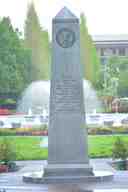
To spot the Medal of Honor Memorial, look ahead for a tall, pointed granite obelisk rising from a circular base, set against the lush greenery and with a stately fountain just behind it. Alright, take a deep breath and imagine for a second that you’re back in 1976, right here on the Capitol campus, where the air buzzes with excitement and pride as a crowd gathers. Before you stands this solid, dignified obelisk-cool granite shimmering under the open sky-gently echoing the voices and footsteps of those who’ve come to remember. Dedicated on November 7th, this monument isn’t just a chunk of stone; it’s a powerful “thank you” in the shape of an obelisk, saluting the bravest of the brave. Close your eyes for a second and try to hear a bugle in the background, or maybe a little kid asking his dad, “What’s a Medal of Honor, anyway?” It commemorates those who showed almost superhuman courage-folks who probably would’ve shaken off any claim to fame with a humble shrug. Built by the hands and hearts of Washington’s citizens, veteran groups, laborers-just about every kind of community you can imagine-it’s a reminder that sometimes, real-life heroes walk right beside us, mostly unnoticed. And if you listen carefully, this memorial seems to whisper a story about unity, courage, and how powerful gratitude can be-no superhero cape required.
Eigene Seite öffnen →To spot the Washington Supreme Court, look for the grand, classical building known as the Temple of Justice, with stately columns and stone steps right in front of you-if you see…Mehr lesenWeniger anzeigen
To spot the Washington Supreme Court, look for the grand, classical building known as the Temple of Justice, with stately columns and stone steps right in front of you-if you see something that looks like it belongs in ancient Greece, you’ve found it! Now, let’s dive into the dramatic and delightful tale of the Washington Supreme Court. Picture this: you’re standing before the mighty Temple of Justice, where big decisions echo down marble hallways and history is still being written. Imagine the crisp Olympia air, the low murmur of conversation as justices in black robes glide up the steps, and the feeling that behind those heavy doors, something important is about to happen. The Washington Supreme Court is the top legal powerhouse in the state-a place where nine justices, including a chief justice, settle all sorts of legal puzzles and questions. Their terms are six years long, just long enough to grow the perfect confident stare, and with every job comes a deadline: justices have to retire at the end of the year they turn 75. You know, even judges need to take a break eventually! There’s a little bit of magic in how the chief justice is picked. Long ago, a complicated system rotated the honor among justices close to finishing their terms-kind of like musical chairs, but more serious and with more paperwork. Then, the brilliant Barbara Durham came along in the 1990s, said, “Let’s do a secret vote!” and created the system we use today. Now, the chief is chosen by a secret ballot among the justices for a four-year stretch. The current chief is Debra L. Stephens-she’s held the gavel more than once and is known for her steady hand during big cases. The cases that echo out of this building don’t just shape Washington-they often ripple across the whole country. In fact, legal scholars say Washington’s Supreme Court decisions are some of the most followed by other states, second only to California. Not bad for a state known for rain and coffee! The court’s history is packed with colorful characters and surprising firsts. When Washington first became a state, judges “drew lots” to decide who’d serve the shortest term-imagine picking your fate out of a hat to see if you’d be in charge. Over the years, changes came fast: judges resigned, new ones got appointed, and in 1905 the court grew from five to seven, then eventually to its present size of nine. When Carolyn Dimmick sat on the bench in 1981, she made history as the first woman justice, and soon after, Barbara Durham broke another ceiling as the first female chief justice. Charles Z. Smith became the first African American member in 1988, and Mary Yu checked three boxes at once-LGBT, Asian American, and Latina-when she joined in 2014. And don’t worry-this court isn’t just about tradition. With the recent appointment of Helen Whitener, the Washington Supreme Court has been called one of the most diverse high benches in America. Picture nine judges, each bringing a unique background and a fresh perspective to the bench. Of course, some cases here have been true blockbusters: They decided the state wasn’t funding education enough in McCleary v. Washington, and recently, the court even tossed out the death penalty because it was applied unfairly. And in 2021, the court said that Washington’s tax on capital gains was just fine. Sometimes their rulings are so big you can almost hear the news reporters typing up a storm. So next time you hear about a huge decision “from the Temple of Justice,” you’ll know exactly where it happened-and just what kind of lively, legendary history walks these halls. Now, ready to keep exploring? Let’s make history ourselves, one stop at a time!
Eigene Seite öffnen →Now, you’re standing in front of the new, much bigger home on East Bay. When they opened these doors in 2012, the crowds nearly doubled overnight-300,000 visitors in the very…Mehr lesenWeniger anzeigen
Now, you’re standing in front of the new, much bigger home on East Bay. When they opened these doors in 2012, the crowds nearly doubled overnight-300,000 visitors in the very first year! The energy here practically hums. It’s like someone bottled childhood wonder and sprayed it everywhere. Step inside and you’ll find eight fantastical galleries. There’s “Good For You!”-where kids can pretend to be chefs, nutritionists, or maybe just sneak a few imaginary veggies onto their plate. Or “Our Puget Sound,” where watery mysteries are just waiting to be uncovered. And if anyone’s a fan of tiny emergencies, there’s even “Emergency!” where kids tackle the town’s pretend disasters. The “Our Fabulous Forest” gallery lets everyone go a little wild in the woods. And if you hear excited shrieks, they’re probably coming from the “Tides-to-Trees Climber”-a two-story jungle gym crossed with a science experiment. But let’s not stop at the front door-the Outdoor Discovery Center is the stuff of muddy dreams. There’s a Mud Pie Pit (bring your bravest washing machine!), Driftwood Forts, a real live Beach, and Raccoon Run-a sculpture tangled with sticks and stories. It’s all about letting kids go a little wild. Not to mention, after the museum was chosen as one of only three places in the country to show off new ways to connect kids to nature, Olympia became a secret headquarters for pint-sized adventurers. And at the heart of it all? The belief that every child deserves to explore-no matter their background. With free family passes, classes, support programs, and their huge “Sand in the City” festival, everyone gets to play. Oh-and before I forget-this is the first children’s museum in the country to earn three Green Globes and LEED certification, so you can feel good about all that fun, too. Ready to ignite your curiosity? If you’re not careful, you might have so much fun, you’ll want to come back tomorrow-maybe even borrow a kid as your excuse!
Eigene Seite öffnen →To spot Sylvester Park, look for a spacious grassy square with crisscrossing paths, shading trees, and a distinctive white gazebo standing proudly in the center-right across from…Mehr lesenWeniger anzeigen
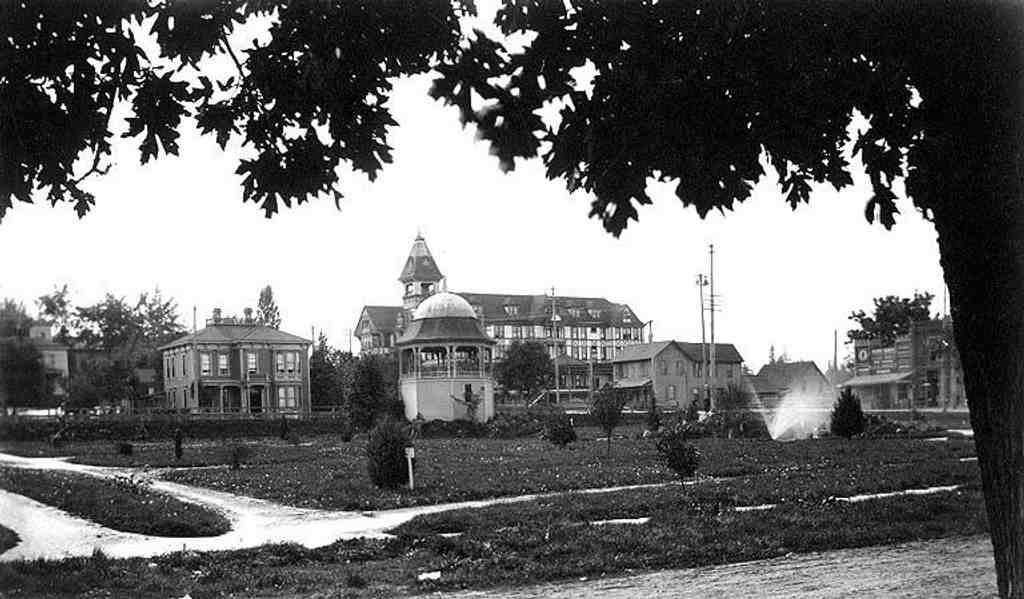
To spot Sylvester Park, look for a spacious grassy square with crisscrossing paths, shading trees, and a distinctive white gazebo standing proudly in the center-right across from the impressive old Victorian building. Welcome to Sylvester Park, the heart and soul of downtown Olympia! Imagine, if you will, it’s 1850: you’re walking through wild, uncleared land that Edmund Sylvester himself just gifted to the city. Now, at first, nothing but a tangle of brush and maybe a blockhouse-nothing much to picnic on, unless you like sitting on logs or, worse, prickly bushes! Back then, this open space was more than just a park. When the Puget Sound War brought fear to Olympia, folks crowded here, building a 15-foot-high blockade along what’s now Legion Way SE, with a cannon aimed and ready. Can you picture hundreds of worried townspeople keeping watch at night-yet, in a twist, the attack they dreaded never came. Leap forward to 1893, and the transformation is almost magical. With the Old Capitol Building now peering across the street, Sylvester Park becomes the city’s proud plaza: a Victorian bandstand pops up, a pond full of fish shimmers under leafy maple and beech trees, and all the paths crunch underfoot with clamshell gravel. There’s even a decorative iron fence-pretty fancy for those days. Then, in 1903, the park really draws a crowd. President Theodore Roosevelt himself strides onto the bandstand-that’s right, the Rough Rider!-to give a rousing 40-minute speech to thousands. But every garden has its changes; the bandstand vanishes in 1928, and the pond dries up after World War II. In 1955, the state says, “Let’s turn it into a parking garage!”-but Olympians vote to save their green sanctuary instead. Today’s gazebo, built in 1975, stands as a cheerful nod to all those lively days past. As you wander, look for the historic markers and picture the park’s long parade of picnics, protests, and parades, echoing through time right beneath your feet. Quite a journey for a patch of grass!
Eigene Seite öffnen →To spot the American Legion Hall, just look for a big, sturdy building with light gray stucco walls and bold red brick trim, topped with an American flag waving proudly…Mehr lesenWeniger anzeigen
To spot the American Legion Hall, just look for a big, sturdy building with light gray stucco walls and bold red brick trim, topped with an American flag waving proudly above. Now, standing here in front of this historic hall, can you imagine Olympia back in 1921? This place was brand new, sparkling with pride, and echoing with the buzz of folks gathering on Armistice Day-November 11th-for its grand dedication. Picture the spirit in the air, with veterans, families, and city folks all celebrating peace and hope after World War I. Designed by Joseph Wohleb, the building’s strong concrete, brick, and stucco bones have seen a century of laughter, memories, and more than a little mischief. And here’s the twist-between 1939 and 1946, the first floor transformed into an indoor ice rink, about 8,500 square feet of good, chilly fun right in downtown Olympia! You’d have heard the clatter of skates, the cheers from impromptu hockey matches, and maybe a few woeful yelps from someone landing on their backside-no worries, dignity heals faster than tailbones! Imagine community festivals filled with music, lights glinting off fresh ice, and the soft thud of snow boots against the floor outside. Every brick holds a memory, and even now, this building still stands ready to welcome new stories-like yours, right now.
Eigene Seite öffnen →To spot Heritage Park, just look for a lush green area with wide open lawns, lakeside trails, and a bright blue “State of Washington Heritage Park” sign-plus, you’ll spot Capitol…Mehr lesenWeniger anzeigen
To spot Heritage Park, just look for a lush green area with wide open lawns, lakeside trails, and a bright blue “State of Washington Heritage Park” sign-plus, you’ll spot Capitol Lake sparkling right behind it and the grand dome of the Capitol peeking over the trees. Now, take a deep breath and soak in the scene! You’re standing on a 24-acre green treasure right next to Washington’s Capitol-the perfect backyard party for democracy! Heritage Park runs alongside Capitol Lake, wrapping visitors in Pacific Northwest views where ducks lounge by the shore and the city hums softly behind the trees. Lace up your shoes, because two scenic trails loop around the lake and connect all the way to the Capitol Campus. Step off the path, and there’s the amphitheater, quietly waiting for music, rallies, or the big cheers of the annual Lakefair festival-where July bursts into color and sounds with laughter, food, and the joyous chaos of a small-town fair. And if you’re looking for some splashy fun, follow the squeals of delight to the Heritage Park fountain-the city’s own sprayground-perfect for cooling off on warm days. But be careful-Mother Nature has a wild sense of humor here. In January 2022, a monster king tide rolled in, almost 18 feet tall, and flooded parts of the park! Imagine a lake so bold it tries to join the picnic. Whether you’re here for quiet walks, funky festivals, or the surprises only nature can throw, Heritage Park promises a little bit of everything-and a whole lot of fresh Olympia air.
Eigene Seite öffnen →To spot the Sand Man, look out over the water at Percival Landing-you’ll see a charming white tugboat with bold black letters spelling out “SAND MAN” on her bow, and a wooden…Mehr lesenWeniger anzeigen
To spot the Sand Man, look out over the water at Percival Landing-you’ll see a charming white tugboat with bold black letters spelling out “SAND MAN” on her bow, and a wooden wheelhouse that gives her a classic, sturdy look. Now, imagine yourself back in 1910 as the docks around you hum with industry and hard work. The air smells of salt and wood, and the Sand Man sits at the pier, gleaming with her fresh Douglas fir planks, ready to rumble across the waters of Puget Sound. She wasn’t just any boat-her first task was towing scows loaded with sand and gravel all over the Sound, making Olympia’s booming construction possible. Not exactly a glamorous job, but someone had to do the heavy lifting! Her name says it all: built tough to haul more than just the occasional daydream. If you step closer, imagine the wheel-house-crafted by Olympia’s own Long family-buzzing with activity, doors and windows hand-built by Jake Frisch way back at the start. Over the decades, Sand Man swapped engines and owners, each one adding their own stories. From hauling sand for Arthur Weston’s Olympia Sand & Gravel Company to spending decades with Delta Smyth and then Fred Chadwick, this boat was Olympia’s hardest worker. She even got a taste for speed, joining her first tugboat race at the Olympia Harbor Days Festival in 1974! But she’s not just all muscle-Sand Man is a survivor. She’s sunk twice, with hulls rotting and water rising, but like any true maritime legend, she patched herself up-sometimes thanks to hundreds of thousands of dollars and dedicated volunteers. At one point, she had ancient copper sheathing to fend off hungry sea life, later swapped for tough ironbark wood. She’s still got her original Stanley Steamer engine, if you can believe it, now running with compressed air just for kicks. Today, the Sand Man is a floating museum, a living memory of Olympia’s waterfront grit and resilience. She’s earned her spot on the National Register of Historic Places, even if she does occasionally flirt with disaster-latest gossip says she was impounded, up for auction, and in need of some TLC. But that’s all part of her salty, stubborn charm. Take a moment to soak in the history-she’s one of the last of her kind!
Eigene Seite öffnen →Look just ahead for a charming gray-blue boathouse with "Percival Landing, City of Olympia" written across its front and a backdrop of sailboat masts-you're in the right place to…Mehr lesenWeniger anzeigen
Look just ahead for a charming gray-blue boathouse with "Percival Landing, City of Olympia" written across its front and a backdrop of sailboat masts-you're in the right place to start your adventure! Welcome to Percival Landing Park, where Olympia's maritime magic comes alive! Imagine you’re back in the 1800s-the bustling steamship wharf, built by Sam Percival in 1860, creaked with busy feet and echoed with the shouts of workers. Over the years, this spot went through more comebacks than a retired rock star, being torn down and rebuilt multiple times. As you stroll along the boardwalk, you might hear the gentle slap of water against boat hulls, just as sailors did long ago. The park’s story doesn’t end in the past, though. In 1996, what once was an oil tank farm was transformed into a green lawn-goodbye, oil, hello picnics! Step a little farther and you’ll see local sculptures perched throughout the park, including a beautifully carved Orca by Joe Tougas, connecting Olympia with its Japanese sister city. On festival days, the laughter and music of Harbor Days and "Sand in the City" bounce between boat masts and playground swings. And who can miss the historic Sand Man tugboat, always ready for its closeup? Take a breath, soak in the salty air, and let the whispers of dockworkers and festival-goers past fill your imagination. Welcome to a living piece of Olympia’s waterfront history!
Eigene Seite öffnen →To spot the Mottman Building, look for a tall, three-story corner structure at Capitol Way and 4th, with large street-level windows, a classic cornice along the roof, and rows of…Mehr lesenWeniger anzeigen
To spot the Mottman Building, look for a tall, three-story corner structure at Capitol Way and 4th, with large street-level windows, a classic cornice along the roof, and rows of bare trees right up against its pale façade. Welcome to the legendary Mottman Building! Right here, you’re standing in front of a building that’s witnessed over a century of Olympia’s hustle and bustle. Imagine it’s 1888: the air smells of fresh-cut timber and horse-drawn carriages clatter by. Samuel Williams owned this corner, but Gallewski Kaufman and Ferdinand Toklas had outgrown their little shop across the street and decided, let’s make something BIG! So, the old Williams family house was rolled away and-voilà!-a two-story marvel in Italianate style rose up. With iron cornices and a special skyway to a two-story brick restroom, it was the talk of the town. People couldn’t stop gossiping: “Did you see the Olympic Block?” (That’s what they called it back then-maybe not the catchiest, but hey, it stuck for a while.) But business in Olympia was fierce. In swept George Mottman, an ambitious young German who started as a clerk for Toklas & Kaufman-he worked hard, made friends, and rolled up his sleeves. Eventually, he became so successful he bought them out, and the Mottman Mercantile was born. By 1911, Mottman wasn’t just running the top department store; he was giving Olympia its most lavish, updated building. He hired big-city architects from Tacoma who brought swooping modern storefronts, an extra floor, and-get ready for this-Olympia’s very first elevator! Think of the excitement: neighbors riding up and down, dizzy with delight. Even after the 1949 earthquake rattled town, the Mottman Building stood tall. Meanwhile, the department store buzzed until 1967, making this place the heart of Olympia shopping for generations. Try to picture the windows full of hats, shoes, and every imaginable treasure, with chatter and laughter pouring out onto the street. Snap to today, and you’re now part of this storied corner’s long saga. So take a moment-peek at the ironwork, imagine the whir of old elevators, and marvel at the fact that Olympia’s pulse has been beating right here for over 130 years. Now, onto our next downtown adventure!
Eigene Seite öffnen →To spot Artesian Commons, look for a small fenced area with a teal-blue structure and colorful benches just ahead, next to a black brick wall, near a red Olympia sign pointing to…Mehr lesenWeniger anzeigen
To spot Artesian Commons, look for a small fenced area with a teal-blue structure and colorful benches just ahead, next to a black brick wall, near a red Olympia sign pointing to the Artesian Well. You’ve made it to Artesian Commons-Olympia’s little pocket park with quite a big story! Imagine standing right here back in 2014, as city workers put the finishing touches on the park, fresh paint shining in the sun, street artists adding bursts of color to the walls, and the first trickles of spring water whispering through the pipes. This spot isn’t just any corner of downtown-it sits atop an artesian spring, a natural well that’s been serving Olympia’s thirst since long before smartphones told us how to find it. Back in the beginning, the city imagined this as the first real urban park for Olympia: a true urban oasis of just 0.2-acres, open to everyone, with food trucks lined up, neighbors chatting, and folks filling jugs of pure water straight from the earth. They even dreamed of a place bustling with activity, and, of course, a little bit of art-all thanks to the local maestro Jennifer Kuhns, who brightened the area with local murals full of Olympia’s personality. But the plot thickens, as all the best city stories do. With so many people drawn to the well’s magic, things got wild-sometimes a little too wild. Olympians from every walk of life gathered here, some just for a sip, others seeking shelter, company, or a safe bathroom. Even with a “well host” on duty (shout-out to Army veteran Garrett Cooper) and a park ranger trying everything, including basketball tournaments, trouble found a way in. Police calls soared, and the trash? Let’s just say, for every acre, this spot could out-trash any park in the city. By 2018, the city threw in the towel and closed the park-at least, the benches, murals, and main gathering area. But here’s the twist: the artesian well stayed open, along with the public loo, so anyone could still come for a drink straight from the spring. And here’s a legend for you: they say if you drink water from Olympia’s artesian springs, you’ll always come back. Is it magic, minerals, nostalgia? Who knows-but I wouldn’t bet against it. All these years later, the Commons is quieter, but you can still see echoes of its wild little heartbeat in every mural and swirling drop of water. So go ahead-take a sip, look around, and maybe start your own legend here at the end of our tour!
Eigene Seite öffnen →
Häufig gestellte Fragen
Wie starte ich die Tour?
Laden Sie nach dem Kauf die AudaTours-App herunter und geben Sie Ihren Einlösecode ein. Die Tour ist sofort startbereit – tippen Sie einfach auf „Play“ und folgen Sie der GPS-geführten Route.
Benötige ich während der Tour Internet?
Nein! Laden Sie die Tour vor dem Start herunter und genießen Sie sie vollständig offline. Nur die Chat-Funktion benötigt Internet. Wir empfehlen den Download über WLAN, um mobiles Datenvolumen zu sparen.
Handelt es sich um eine geführte Gruppentour?
Nein – dies ist ein selbstgeführter Audioguide. Sie erkunden unabhängig in Ihrem eigenen Tempo, wobei die Audioerzählung über Ihr Telefon abgespielt wird. Kein Reiseleiter, keine Gruppe, kein Zeitplan.
Wie lange dauert die Tour?
Die meisten Touren dauern 60–90 Minuten, aber Sie kontrollieren das Tempo vollständig. Pausieren Sie, überspringen Sie Stopps oder machen Sie Pausen, wann immer Sie wollen.
Was, wenn ich die Tour heute nicht beenden kann?
Kein Problem! Touren haben lebenslangen Zugriff. Pausieren Sie und setzen Sie sie fort, wann immer Sie möchten – morgen, nächste Woche oder nächstes Jahr. Ihr Fortschritt wird gespeichert.
Welche Sprachen sind verfügbar?
Alle Touren sind in über 50 Sprachen verfügbar. Wählen Sie Ihre bevorzugte Sprache beim Einlösen Ihres Codes. Hinweis: Die Sprache kann nach der Tour-Generierung nicht mehr geändert werden.
Wo greife ich nach dem Kauf auf die Tour zu?
Laden Sie die kostenlose AudaTours-App aus dem App Store oder von Google Play herunter. Geben Sie Ihren Einlösecode (per E-Mail gesendet) ein, und die Tour erscheint in Ihrer Bibliothek, bereit zum Download und Start.
Wenn Ihnen die Tour nicht gefällt, erstatten wir Ihnen den Kaufpreis. Kontaktieren Sie uns unter [email protected]
Sicher bezahlen mit