
New Brunswick Audiotour: Zeitlose Geschichten vom Campus zur Kapelle
Einst färbte Blut die Kopfsteinpflaster von New Brunswick, während Prediger, Magnaten und Rebellen um die Seele dieser unerwarteten Stadt rangen. Entdecken Sie auf einer selbstgeführten Audiotour die polierten Fassaden und enthüllen Sie die Geheimnisse und Geschichten, die die meisten Passanten übersehen. Welcher Skandal brach hinter den imposanten Steinmauern der Christ Church während einer nationalen Krise aus? Warum löste eine wichtige Erfindung bei Johnson & Johnson sowohl Reichtum als auch heftige Kontroversen aus? Welche Gerüchte hallen lange nach Mitternacht durch die Gänge des New Brunswick Theological Seminary, und wer hinterließ eine kryptische Nachricht in seiner Bibliothek? Wandeln Sie zwischen den Jahrhunderten, während geflüsterte Verschwörungen wirbeln und der Geist der Stadt unter Ihren Füßen knistert. Jedes Wahrzeichen enthüllt eine Geschichte von Ehrgeiz, Geheimnis und Trotz und lädt Sie ein, New Brunswick nicht so zu sehen, wie es ist, sondern wie es wirklich war. Tauchen Sie ein und lassen Sie das verborgene Herz der Stadt sich offenbaren.
Tourvorschau
Über diese Tour
- scheduleDauer 40–60 minsEigenes Tempo
- straighten4.3 km FußwegDem geführten Pfad folgen
- location_onStandortMiddlesex, Vereinigte Staaten
- wifi_offFunktioniert offlineEinmal herunterladen, überall nutzen
- all_inclusiveLebenslanger ZugriffJederzeit wiederholen, für immer
- location_onStartet bei Geologie-Halle, New Brunswick, New Jersey
Stopps auf dieser Tour
Look for a large, imposing brownstone building with tall, arched windows and an entryway framed by a flight of steps-the Geology Hall sits confidently at the edge of campus, right…Mehr lesenWeniger anzeigen
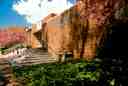
Look for a large, imposing brownstone building with tall, arched windows and an entryway framed by a flight of steps-the Geology Hall sits confidently at the edge of campus, right between Van Nest Hall and Old Queens. There’s something almost theatrical about Geology Hall, rising up out of the ground like it’s been here since the dawn of time-fitting for a place dedicated to rocks and the deep history of the Earth. But don’t be fooled by all that serious stonework; for a building that looks like it should house a secret society of alchemists, its story is actually as lively as student prank wars and as layered as the sediment in its exhibits. It all started with a treasure hunt... or rather, one man’s growing obsession with the natural world. Back in the 1830s, Lewis Caleb Beck roamed fields and streambeds, collecting odd rocks, minerals, and even the occasional mastodon bone. When he passed away, Rutgers gladly bought his trove, thinking, naturally, "Sure, nothing says collegiate prestige like a mammoth femur in the hallway." When George Hammell Cook took over, he convinced the university to wrangle some federal land-grant money-a real windfall that would turn Rutgers from a struggling college into New Jersey’s go-to science school. Suddenly, they needed space for all this learning, and Cook’s expanding fossil collection was practically begging for a home of its own. Enter Henry Janeway Hardenbergh-a local who’d go on to design the Plaza Hotel and Waldorf Astoria, but here, he’s just a young architect, sketching up plans. The original idea? Red brick. But at the last minute, they went big: solid stone, Gothic flair, chunky columns. In 1871, the governor himself showed up to lay the cornerstone, tucking away a time capsule packed with newspapers and Rutgers lore. I can’t promise it holds buried treasure, but it’s about as close as New Jersey gets. When the doors opened in 1872, there was a lot more than science bubbling beneath the surface. The basement wasn’t just for rocks-it doubled as an armory because, apparently, college students with muskets was totally fine in the 19th century. And you thought rival schools just prank called each other; in 1875, some Princeton students broke in and stole 25 muskets, settling the score over a stolen cannon. Over the decades, the labs and classrooms drifted out, and the museum expanded like a curious fungus, swallowing up every floor. Curators wrangled tens of thousands of specimens-fossils, minerals, a mastodon skeleton, even a new chunk of precious minerals swiped from a zinc mine. By the 1970s, Geology Hall was declared historic, bundled up with its neighbors as an official landmark district. In the 2010s, rumors swirled the museum would close its doors, but a flood of passionate letters from alumni and public fans kept it alive-to the relief of everyone who likes their dinosaurs close to home. So as you stand in the sun, gazing at this stodgy old building, imagine all the discoveries inside, the odd mix of fossils and feuds, and the steady march of curious minds... all under this weathered stone roof.
Eigene Seite öffnen →To spot Kirkpatrick Chapel, just look for the sturdy brownstone building ahead with its pointed Gothic arches, dramatic stonework, and striking stained glass windows, all sitting…Mehr lesenWeniger anzeigen
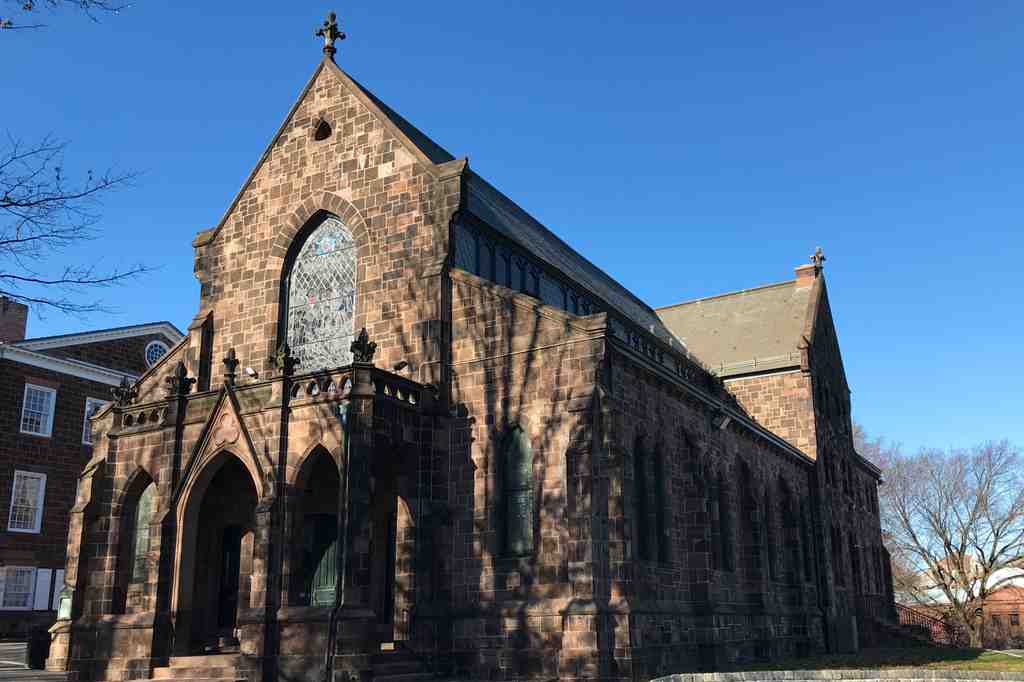
To spot Kirkpatrick Chapel, just look for the sturdy brownstone building ahead with its pointed Gothic arches, dramatic stonework, and striking stained glass windows, all sitting proudly at the edge of the historic Queens Campus-unmistakable against the sky. So here you are, standing right where countless Rutgers students have lingered over the years-gazing up at a piece of living history that’s just as much about endurance as it is about architecture. If these old stones could talk, they’d probably start with a deep sigh and tell you that Kirkpatrick Chapel was built in 1872, back when Rutgers was a small, church-affiliated college rather than the bustling, public university it is today. Take a breath and let yourself be transported- imagine the sound of iron being shaped and the scent of fresh-cut wood drifting out over the Queens Campus. Picture a young architect, Henry Janeway Hardenbergh, sketching up his ambitious vision here. At the time, he was just launching his career-he’d go on to design New York icons like the Plaza Hotel and The Dakota, but this striking Gothic Revival beauty was his third act for Rutgers. And no pressure-his great-great-grandfather was the first president of Rutgers… so, you know, family expectations and all that. But Kirkpatrick Chapel isn’t just about architecture, it’s about legacy. Its namesake, Sophia Astley Kirkpatrick, left Rutgers the rather tidy sum of $61,054.57 in her will-more than a million bucks in today’s money. That was enough to earn the university the distinction of being New Jersey’s first institution to become a direct heir to an estate. If you think your family squabbles are interesting, imagine a college waiting to see if it made the will. As you take in the deep browns and subtle reds of the stone, note how Hardenbergh’s design pulled inspiration from fourteenth-century German and English churches, but went easy on the decorative “fripperies”-no gargoyle overload here, just timeless Gothic restraint and those sharp verticals drawing your eye up. Step a little closer and you might just catch the glint from the chapel’s remarkable stained glass windows-some of the first opalescent and multicolored sheets ever made in America. Four of them came straight from the legendary Louis Comfort Tiffany’s studios; their rainbow hues flicker across the wooden pews when the afternoon light is right. One window, donated by the class of 1899, might even hold a secret or two about forgotten students and their stories. Beyond ceremony and spirituality, this place once played double duty-it housed the college library. Imagine the scramble as librarians squeezed some 45,000 books into rooms and onto floors, struggling to stave off the specter of a collapse or a good old-fashioned fire hazard. It was only when the books threatened to burst through the seams that the Voorhees family swooped in and built a new library next door. This chapel also doubled as the site of intense student debates-you know, the kind where everyone’s convinced they’re right, and half accuse the other of not understanding the reading. In 1881, the walls echoed with hot debate about voting rights, back when the stakes were nothing short of American democracy. And if late-night poetry is more your style, well-legendary poet Robert Frost once read his work here, his words rolling off these high ceilings. Today, Kirkpatrick Chapel is as much a symbol of Rutgers’ evolution as it is a relic-it’s hosted Capitol-worthy convocations, brassy organ concerts (the original pipe organ itself a minor miracle of engineering), weddings, and even a royal degree presentation to Queen Beatrix. It stands as a kind of spiritual and cultural anchor, engraved yearly with each graduating class. So, as you stand here, take a moment-this isn’t just a building. It’s the beating heart of Rutgers history, echoing with generations of hopes, debates, and maybe the occasional off-key rehearsal from the university Glee Club. Not bad for a “side project” from a young architect named Hardenbergh, right?
Eigene Seite öffnen →Straight ahead, you’ll spot a crisp white, octagonal brick building with a dark brown, columned porch-almost like a mini Greek temple tucked under the trees, with its round…Mehr lesenWeniger anzeigen
Straight ahead, you’ll spot a crisp white, octagonal brick building with a dark brown, columned porch-almost like a mini Greek temple tucked under the trees, with its round windows peering out like curious eyes. Ah, here we are... the Daniel S. Schanck Observatory. Don’t let its size fool you-this humble, two-story structure has seen more celestial drama than your average Netflix binge. Built in 1866, it stands as Rutgers’ original science building, a time capsule from an era when measuring the heavens meant standing right here-on George Street, just a streetlamp away from college foot traffic and the wafting aroma of pizza by the slice. Let’s go back to the mid-1800s. The United States was busy launching westward and upward, but Rutgers... was just discovering the stars. In 1864, the college got a major upgrade: federal funding thanks to the Morrill Act. Suddenly, a school built on the classics-Latin, Greek, and philosophy-needed a place for telescopes, clocks, and the whirring gears of science. Enter Professor David Murray, who championed this observatory as Rutgers’ bold step into scientific education. Now, Murray had a dream, but not a checkbook-so that’s where Daniel S. Schanck, a New York businessman with Monmouth County roots, comes in. He wasn’t a Rutgers alum. In fact, he probably couldn’t pick the Scarlet Knight out of a lineup, but when friends tapped him for cash, Schanck opened his wallet... and his son later walked onto campus as a student-two investments for the price of one. The observatory you see was designed by Willard Smith in an ancient Roman Revival style... inspired by the Tower of the Winds in Athens, which, back in 50 BC, was sort of Google Maps and the Weather Channel rolled into a marble tower. Picture the hustle on dedication day, 1866: Joseph P. Bradley, destined to sit on the Supreme Court, gives a rousing speech, students buzz with excitement, and astronomers peer through what's now tied for the country’s seventh oldest observatory. Inside, it was every Victorian science nerd’s dream. There were telescopes, a sidereal clock for tracking star time, and donations from campus literary societies so they’d never miss a comet-or a deadline. The grandest of these gadgets was a 6.5-inch equatorial refractor telescope, a contraption that could make a student feel like Galileo without the risk of house arrest. But the observatory’s story isn’t a straight shot into the stars. Through the decades, it fell into periods of quiet and neglect-a victim of vandalism, stolen telescope parts, and the fickle tides of university funding. One professor after another tried to revive it, and in the ‘70s, students with big dreams and probably bigger bell-bottoms dusted off the dome. Still, by 1979, Rutgers’ astronomers had migrated to new pastures-specifically, the shiny Schommer Observatory over on Busch campus, boasting a fancier telescope and fewer bats. There’s a happy twist, though: In 2012, a top-to-bottom restoration made this little octagon shine again, and by 2016, the venerable Georges Prin telescope-now over a century old-was rescued from obscurity and pieced back together by alumni and dedicated volunteers. Today, the Schanck is run by the Cap & Skull Society and the School of Arts and Sciences, who open its doors for guided tours during special events. Imagine standing here at midnight back in 1866, the air cool, the city’s gaslights flickering below, as a student marks the transit of the sun with just a brass telescope and a steady hand. So as you stand before its weathered brick walls and watch the light slant across that classical brownstone porch, remember: beneath its modest roof, stars and scientists once mingled, and the very idea of “Rutgers science” took flight. That’s a lot of glory for a building you could easily miss if you blinked on your walk to class.
Eigene Seite öffnen →
11 weitere Stationen anzeigenWeniger Stationen anzeigenexpand_moreexpand_less
Look just ahead for a modern, almost fortress-like white building-its sharp angles and glassy windows rise above a sprawling base, catching the sun while towering over the…Mehr lesenWeniger anzeigen
Look just ahead for a modern, almost fortress-like white building-its sharp angles and glassy windows rise above a sprawling base, catching the sun while towering over the surrounding trees. So here you are, standing at the nerve center of health care itself: Johnson & Johnson’s global headquarters. Step back for a moment and imagine New Brunswick in 1886-a gritty little American city pulsing with railroad tracks, horse carts, and factory whistles. It was here, in a humble red-brick building not far from where you’re standing, that three brothers-Robert, James, and Edward Johnson- rolled up their sleeves, brought in a team of just fourteen workers, and set out to revolutionize medicine. Back then, surgery was a gamble, and infection was practically a coin toss-until J&J started cranking out packs of ready-to-use sterile dressings. You could say they were the original “clean freaks.” Picture railroad construction crews, working miles from the nearest doctor, clutching the world’s first commercial first aid kits-packed right here, with instructions for what to do when someone inevitably banged a thumb or… much worse. The Johnsons saw a world longing for safety and healing, so they made baby powder, Band-Aids to patch up the world’s scrapes, Tylenol for headaches, even maternity kits for families giving birth at home-serious multipurpose problem-solvers in a cardboard box. As New Brunswick grew noisier and busier, Johnson & Johnson’s campus grew too. By 1894, they’d gone from a back-room startup to a local empire, churning out goods from 14 buildings and putting hundreds of women and men to work. When doctors faced the devastating Spanish-American War or the deadly 1918 flu, J&J loaded up trains and trucks with surgical dressings, epidemic masks-even a trauma stretcher for field medics-sometimes giving it all away to help save lives. Now, flash ahead to the roaring ‘20s-one of the Johnsons’ employees mixes tape and gauze, a simple idea that becomes the Band-Aid. By the time World War II erupts, the company is global, and its workers are churning out supplies for soldiers around the world, while J&J calls for dignity on the home front: better pay, fairer hours, a belief that businesses should answer to their communities as much as their shareholders. Hard to imagine a Fortune 500 CEO today penning letters to the President on workers’ rights, but there you go. And still, they kept inventing-baby oil, allergy medicine, the first disposable contact lenses-while surviving the ups and downs of American business. But this shiny white tower, towering above New Brunswick today… well, it hasn’t seen only sunshine. J&J faced its crucibles-the infamous Tylenol tampering crisis in the 1980s, when poisoned bottles forced the first-ever nationwide recall, changed packaging forever, and made corporate America rethink responsibility. Lawsuits over hip implants, mesh products, and talcum powder kept their lawyers busy through the new millennium. But the company always found a way to brush off the dust. Today, Johnson & Johnson stands as one of the world’s largest and most valuable health care companies-138,000 employees, $88 billion in annual revenue, and a credit rating as rare as a unicorn: AAA. They make high-tech surgery robots and breakthrough medicines, and their COVID-19 response reached across the globe-with plenty of drama, scientific race, and government contracts in tow. As you look up at those sleek glassy windows and the sharp white corners, remember: this building grew from the modest dreams of three brothers whose greatest invention, perhaps, was a sense of duty to the world beyond their walls. In this city, and across the globe, millions are patched up, soothed, and healed thanks to a company born right on these streets. Not too shabby for what was once a small headcount in a dusty New Jersey factory-now a giant, still grappling with cures and with conscience. To delve deeper into the business segments, finance or the corporate governance, simply drop your query in the chat section and I'll provide more information.
Eigene Seite öffnen →Right ahead, you’ll spot the Zimmerli Art Museum by its modern blocky brick facade, broad stairway, and the words “JANE VOORHEES ZIMMERLI ART MUSEUM” standing out above a…Mehr lesenWeniger anzeigen
Right ahead, you’ll spot the Zimmerli Art Museum by its modern blocky brick facade, broad stairway, and the words “JANE VOORHEES ZIMMERLI ART MUSEUM” standing out above a landscaped entrance flanked by cherry trees-the perfect mark if you’re aiming for a dose of culture with a whiff of fresh blooms. Picture this: it’s 1966-Rutgers is turning 200, everyone’s into revolutionary art AND bell bottoms, and right here, the university decides to celebrate the milestone with a serious gift to itself-the Rutgers University Art Gallery. Fast forward to the booming 1980s, when shoulder pads and art budgets were large. In swoop Ralph and Alan Voorhees with a generous expansion gift, ensuring the museum is not just bigger, but forever linked to their mother, Jane. The Jane Voorhees Zimmerli Art Museum, as we now know it, emerges-a spacious, 70,000 square foot art beacon smack in the heart of the New Brunswick campus, where the tastes of centuries and continents meet under one brick roof. Inside, more than 60,000 works huddle together-think of it as Thanksgiving dinner with artists from every corner of history and geography. The collection is a true smorgasbord: 19th-century French elegance, portraits and caricatures that once lampooned society’s elite, a robust lineup of American art from George Washington’s era to present day, and an internationally renowned trove of Russian and Soviet nonconformist art. Yes, tucked in sleepy New Jersey is the United States’ LARGEST collection of Soviet nonconformist works, thanks to the indomitable Professor Norton Dodge-a man so committed he smuggled rebellious art out of the USSR like he was running the world’s least glamorous spy ring. His collection, now a centerpiece here, tells stories of artists who risked everything to make pictures not approved by the watchful eyes of the Kremlin. You’ll find art by the likes of Irina Nakhova, a trailblazer who would go on to become Russia’s very first female solo representative at the Venice Biennale. But there’s more than defiance here-look for rare books, children’s book illustrations that probably colored more than a few childhoods, photographs, and prints that blend American optimism with every flavor of global inspiration-French, Japanese, even ancient Greek and Pre-Columbian works. Maybe you’re thinking this all sounds a bit…lofty? Zimmerli’s not just for the *cultured elite*-the museum is free for everyone. Local kids stream in for their first taste of Picasso, university students nervously sketch in the corner, professors from sciences argue about art over coffee in the little café inside, and, somewhere in the stacks, an aspiring historian finds a caricature from 1860 that looks suspiciously like their roommate. Zimmerli wears its academic hat proudly; it’s a teaching museum. From curatorial training for passionate grad students, to drawing sessions for preschoolers and day trips for aspiring adult connoisseurs, the museum’s always buzzing-sometimes with actual schoolkids, sometimes with the hush of discovery. And for those who like their art on-demand, Zimmerli lends pieces to museums around the world and partners with Google Arts & Culture so you can piqué your curiosity from your couch. But hey--nothing beats standing right here, on the Voorhees Mall, surrounded by spring blossoms and brick, letting centuries of artistry, rebellion, and creativity spark around you. Art history’s never been more inviting…or more conveniently located on your afternoon walk.
Eigene Seite öffnen →Take a moment here, right in front of Rutgers University, and let the bricks and bustling sidewalks soak in. Rutgers isn’t just another college campus-it’s a living, evolving…Mehr lesenWeniger anzeigen
Take a moment here, right in front of Rutgers University, and let the bricks and bustling sidewalks soak in. Rutgers isn’t just another college campus-it’s a living, evolving patchwork of American history, higher education, and more than a little drama. Picture the scene: New Brunswick, 1766. It’s colonial America, and the locals are busy jockeying for power-and for the right to train ministers their way, thank you very much. Two Dutch Reformed ministers, Theodorus Frelinghuysen and Jacob Rutsen Hardenbergh, finally manage to secure a charter for Queen’s College from the last royal governor of New Jersey-William Franklin, who, by the way, was Benjamin Franklin’s not-so-famous son. The college is named for Queen Charlotte, and-this part always gets me-the first classes are held in a tavern called the Sign of the Red Lion. Because nothing says “preparing for the pulpit” quite like learning your Latin declensions next to someone downing an ale. It wasn’t all fun and barrels, though. Like many early American institutions, Rutgers has to own up to a messy past: benefits from slave labor, land taken from the Lenape people, funds from less-than-noble sources. For years, the university existed precariously-briefly closing a couple times, almost merging with Princeton, and at one point even eyeing a move to New York City. Yet it persisted-usually just scraping by. It was only when a certain Colonel Henry Rutgers donated a $200 bell and a $5,000 bond (worth a pretty penny today) that the school hit firmer ground, and decided to slap his name on everything. Today, Old Queens, with that original bell, stands as a sort of academic fortress up the street-a reminder of a time when all three institutions, the college, grammar school, and seminary, squeezed themselves into one building. That would make for some… interesting class scheduling. If you walk the College Avenue campus, you’re on the flagship and historic heart of Rutgers-home of student protests, late-night food runs, and quite a few marathon study sessions. At its core, Rutgers has always been about serving New Jersey’s ever-growing and ever-more-diverse population. From the creation of Douglass College-a women’s college linked with Rutgers-through the years of admitting part-time commuters, immigrants, the children of factory workers, and waves of first-generation college-goers. And yes, for much of its early existence, Rutgers only admitted men. That changed in 1970, when the doors finally opened to everyone. Took us long enough. Today, Rutgers boasts nearly 70,000 students across three campuses: New Brunswick, Newark, and Camden. It’s no longer a sleepy liberal arts college on the banks of the Raritan, but the massive, research-fueled State University of New Jersey. The New Brunswick campus alone is a maze of brick walks, 19 schools, and all sorts of odd traditions. Look for students avoiding the Rutgers seal on Old Queens’ walkway-stepping on it is rumored to doom your graduation date. Superstition runs deep around here. The layers keep piling on. Rutgers is a land-grant, sea-grant, AND space-grant university. There are even oceanography labs out on the Jersey Shore and a golf course and stadium over in Piscataway. Over centuries, the place absorbed other colleges-like the University of Newark and the College of South Jersey-to form the huge network you see now, all while keeping an odd mix of private and public university DNA. There’s still a board of trustees that harks back to the original, colonial-era days, as well as the more modern board of governors. Still, for all the size and grandeur, Rutgers is deeply tied to its home state-training scientists, artists, nurses, business leaders, and of course, those still-mysterious humanities majors. Rutgers even changed its alma mater in 2013 to reflect a place for all, not just “men.” On its 250th anniversary, President Barack Obama came down to give the commencement speech-it’s not every day you get a sitting U.S. President to mark your birthday. So, as you stand here, you’re surrounded by ghosts of revolutionaries, reformers, dropouts, and a downright astonishing collection of characters. You’re at the crossroads of old-world tradition and new-world ambition. And you’re also steps from a solid slice of pizza-some traditions never change. Take a deep breath, enjoy the view, and remember, chances are, someone in this crowd is soon to make history-or at least pull an all-nighter trying. For a more comprehensive understanding of the organization and administration, locations and divisions or the academics, engage with me in the chat section below.
Eigene Seite öffnen →Right in front of you, you’ll spot a modern, reddish-brown building with a set of curved, green-tinted windows stacked neatly in the center-just look for the sign over the…Mehr lesenWeniger anzeigen
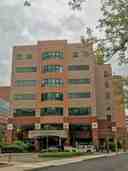
Right in front of you, you’ll spot a modern, reddish-brown building with a set of curved, green-tinted windows stacked neatly in the center-just look for the sign over the entrance that reads “Clinical Academic Building.” Take a second to soak it in. Behind those glassy, brick-wrapped walls beats the heart of Rutgers’ Robert Wood Johnson Medical School-a place where white coats blend with big ambitions and, occasionally, the frantic search for caffeine. Now, you might be wondering: Who was Robert Wood Johnson? Imagine-president and chairman of Johnson & Johnson, so yes, the man who helped fill America’s medicine cabinets. His name now presides over this institution, a cornerstone of medical training and discovery. This isn’t just one school, but the flagship of Rutgers’ health education, joined at the hip with Robert Wood Johnson University Hospital-just next door, ready to field every possible medical emergency and a few dramatic TV moments. On any given day, you might spot hundreds of students cramming facts, researchers pondering the secret life of cells, or seasoned doctors walking briskly to their next breakthrough. The numbers are, honestly, staggering-over 2,450 faculty and nearly 2,530 staff, all powering through lectures, experiments, and clinics. That’s a small city of scrubs and lab coats, right here in New Brunswick. But here’s where things get really interesting: The medical school is in many ways a hub with spokes that spin out across the state-34 hospital affiliates, 500 faculty physicians, and more than 200 clinical programs. The reach stretches from the Jersey Shore to the farmlands, from children’s hospitals to psychiatric units. Name an ailment, and odds are there’s a Rutgers doc tackling it somewhere in New Jersey. And at the Chandler Health Center? Over 60,000 patient visits a year-think about that heartbeat of humanity pulsing right through these doors. Research is also in their DNA. Almost ninety million dollars in grants back in 2012-and a lion’s share from the National Institutes of Health. Rutgers teams here drill down on cancer, child health, neuroscience, and all the strange, beautiful mysteries tucked away in our bodies. Cutting-edge programs like the Cardiovascular Institute and the Cancer Institute call this place home, where students chase cures and professors try to outwit disease. The story of Robert Wood Johnson Medical School is also one of resilience and reinvention. It started under the old University of Medicine and Dentistry of New Jersey-quite the mouthful-but by 2013, it had merged with Rutgers, stepping boldly into new territory. So take a deep breath. Listen. You can almost hear the echo of lectures, the hopeful buzz of students who might soon save lives, and the rolling wheels of progress. No wonder admissions are tough-they even added a special test from Canada. Only the most persistent (and maybe most caffeinated) make it through. Medicine’s future is being written right inside these walls... and who knows, maybe the next big breakthrough starts with someone gazing up at this very building, just like you are now.
Eigene Seite öffnen →You’re looking for a handsome brownstone church with tall, arched windows and a piercing spire that reaches above the trees-just scan for the old gravestones scattered in the…Mehr lesenWeniger anzeigen
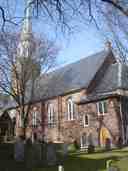
You’re looking for a handsome brownstone church with tall, arched windows and a piercing spire that reaches above the trees-just scan for the old gravestones scattered in the grass and the striking greenish steeple towering overhead. Step up closer to Christ Church-there’s something quietly electric in the air around here, isn’t there? Maybe it’s that crisp hush you get from centuries-old stones, or perhaps it’s the thought that the little plot of grass beneath your feet once doubled as the stage for revolution, relief, and a bit of juicy drama. Let me take you back to the early 1700s. Picture a band of Anglicans-dusty shoes, hopeful souls-trying to worship in a run-down townhouse in Piscataway, side-by-side with Baptists. It’s not quite the Woodstock of interfaith harmony, but it’s earnest. In time, under the guidance of William Skinner, they manage to build a church in 1724. As the congregation swelled-New Brunswickers craving a spiritual home-a new site was plotted across the river in 1742. There’s always a twist: they didn’t actually have the land. The biggest landowner in town, Philip French, was not keen on selling, but if your project benefitted the public, he’d lease you land for the grand sum of “one peppercorn a year, only if asked.” And you thought New Brunswick rent was bad now. That peppercorn lease is still on display in the church office-a spicy little artifact from the colonial playbook. But life here was never just hymns and handshakes. As the Revolution rolled around, the parish was about as united as Thanksgiving at a divided table. Patriots like Col. John Neilson and General Anthony White showed up, eager to swap vines and fig trees for the cause of liberty. But right there in the pews were die-hard Loyalists too, like John Antill, fighting for the Crown. The rector himself, Abraham Beach, was stuck in a moral muddle. He admired the Patriots’ aims but just couldn’t ignore those Anglican oaths or toss out prayers for the King. The threats he got for praying for His Majesty? Let’s just say, for his own safety, church was closed for the duration of the war-though he quietly continued services, trimming or removing prayers when things got too spicy. After the war, Beach helped lay the groundwork for a whole new American Episcopal Church-writing, gathering, and finally meeting right here at Christ Church in 1784 to plant the seeds for a uniquely American religious tradition. That means this building wasn’t just a witness to history... it helped shovel the dirt. The church itself has long been a hub for music and community. By 1788, they had a pipe organ-$100 well spent. Choirs of men, boys, and eventually women belted out harmonies, their voices echoing through the stone. Over time, they built and rebuilt, expanded the spaces, survived debt, depression, and war, and still managed to turn out enough music and outreach to make the place feel alive. The “Johnson and Johnson Church,” as it’s sometimes jokingly called-yes, the co-founder and half the city’s movers and shakers once filled these pews-became a sort of power broker’s sanctuary. But Christ Church’s story isn’t only comfort and harmony. For much of its past, it was a white church, with Black members relegated to the gallery. As pew rents fell and the organ migrated, they moved out, starting their own parish-evidence of the upheavals and reckoning with its own history that took many decades and, yes, a good deal of courage and change. Today, the church hums with a more inclusive soul. It’s known for its music, for opening doors, for lending a hand to new arrivals and newcomers, whether from the neighborhood or the world over. Its organs are famous-the 2001 Richards, Fowkes and Company instrument is a magnet for recitalists. And if you wander among the gravestones, you’ll find heroes and trailblazers-Abraham Beach, John Croes, and Brigadier General Anthony White, who fought under George Washington, all resting under this sheltered sky. So stop for a moment. Imagine generations gathering, grieving, celebrating, singing. The sounds of war, the whispers of secret worship, the friendly laughter of church socials drifting out the big wooden doors-all right here, where New Brunswick’s very heart skips a beat. Exploring the realm of the pre- and post-american revolution, 19th century or the the modern era? Feel free to consult the chat section for additional information.
Eigene Seite öffnen →To spot the First Reformed Church, look for a stately stone building with tall arched windows and a dramatic white multi-tiered clock tower that rises above the neighboring roofs,…Mehr lesenWeniger anzeigen
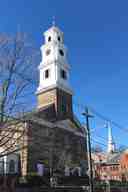
To spot the First Reformed Church, look for a stately stone building with tall arched windows and a dramatic white multi-tiered clock tower that rises above the neighboring roofs, right at the edge of the street. So here you are, standing before the First Reformed Church-though if you’d wandered by in 1812, you might’ve called it the Dutch Reformed Church. Dutch names were all the rage back then, and this spot on Neilson Street has been at the city’s heart for over 200 years. Imagine the early 1700s: a handful of settlers building a faith community, dodging British redcoats and... probably bickering over who brought the best pie to church socials. The current sanctuary was built in 1812 with that poised Georgian and Federal look-classic columns, stately symmetry. The steeple, reaching for the sky, arrived in 1835, giving New Brunswick its own piece of drama every time a thunderstorm rolled through. It’s also where a rather stubborn fire broke out in 1971, though thankfully the church survived-charred, but not defeated. And underfoot, among mossy stones, you’ll find some big names in New Jersey’s history: three past presidents of Queen’s College (that’s Rutgers to you), and even a U.S. senator. Stand here and you can almost feel the stories layered deep in the bricks... just mind the lingering scent of old books and maybe, a faint whiff of church potluck dinners past.
Eigene Seite öffnen →If you’re looking for the George Street Playhouse, just let your gaze travel across this wall of shimmering glass - you’ll spot it tucked behind the sleek, modern facade of the…Mehr lesenWeniger anzeigen
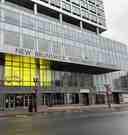
If you’re looking for the George Street Playhouse, just let your gaze travel across this wall of shimmering glass - you’ll spot it tucked behind the sleek, modern facade of the New Brunswick Performing Arts Center, right across the street from those bright red Rutgers banners and underneath that bold marquee. Here we are, standing before the George Street Playhouse - or, as locals affectionately call it, the GSP. Now, look at this place… all steel, glass, and modern attitude, sitting confidently in downtown’s Civic Square. Hard to believe that just a few decades ago, this celebrated theater company was performing in an abandoned supermarket over on George Street. Yes, really. There’s nothing like great plays between the potato bins and the checkout lanes, right? Since its scrappy beginnings back in 1974, founded by the unstoppable Eric Krebs, GSP has been a launchpad for new and established theater talent. If your phone’s picking up the city’s hum and the patter of rain on the sidewalk, just imagine the artistic energy thrumming inside these walls - actors running lines, set crews adjusting lights, that unmistakable smell of sawdust, paint, and adrenaline that sneaks backstage right before curtain. Under the leadership of Artistic Director David Saint and Managing Director Edgar Herrera, this place has become a magic factory. Each season, somewhere between the applause and the exits, GSP gives both Broadway-bound shows and undiscovered gems a place to shine. On any given night, you might catch the premiere of a show like The Trial of Donna Caine, or a stirring musical tribute like Little Girl Blue: The Nina Simone Musical. And once in a while, as with Proof back in ’99, you might even witness the birth of a show destined for a Pulitzer - developed right here before leaping to worldwide acclaim. Not too shabby for a former grocery store. What’s especially clever about the Playhouse is its double life. Not only do they present bold new works for their main stage, but their Touring Theatre jumps into action, bringing issue-driven productions to over 250 schools around the tri-state area. That’s more than 30,000 students a year forming their first memories of live theater - and probably a few teachers nervously making sure no one falls asleep in the back row. Their resume reads like a highlights reel: Broadway runs launched from little New Brunswick; famous faces like Kathleen Turner and Idina Menzel (yes, Elsa herself) gracing the stage; box office records shattered with shows like Lady Day at Emerson’s Bar and Grill. When I say records, I mean people couldn’t cram in fast enough. And with hits ranging from the riotous Inspecting Carol to the thoughtful American Son, GSP's stages have hosted everything from slapstick to soul-searching. In 2019, after a brief detour in Rutgers’ old Agricultural Museum (where I imagine the actors had to compete with the ghosts of dusty tractors), the Playhouse made its triumphant homecoming to this snazzy new venue, officially taking its place in the New Brunswick Performing Arts Center. So as you stand here soaking in the city’s energy - and maybe catching a whiff of coffee from a nearby café - know that the George Street Playhouse is proof that a little bit of grit, a lot of passion, and maybe some help from a daring artistic director can transform any street corner into a cradle for New Jersey’s greatest stories. And frankly, I think the supermarket’s loss was definitely theater’s gain.
Eigene Seite öffnen →To spot the Mason Gross School of the Arts, just look for the bold red sign over the glassy entrance at 33 Livingston Avenue-the modern windows and sharp metal canopy above the…Mehr lesenWeniger anzeigen
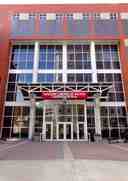
To spot the Mason Gross School of the Arts, just look for the bold red sign over the glassy entrance at 33 Livingston Avenue-the modern windows and sharp metal canopy above the doors make it pop right in the heart of the plaza. Go ahead, take a moment. You’re standing at the front lines of Rutgers’ creative forces, where the air has a faint but determined whiff of fresh paint, stage makeup, and maybe just a dash of coffee-fueled artistic ambition. This is the Mason Gross School of the Arts-often called MGSA for those in the know-a place that churns out theater kids, filmmakers, dancers, musicians, and artists who have something to say and aren’t afraid to say it with style, sincerity, or maybe a cleverly choreographed interpretive dance. Named after Mason W. Gross, the sixteenth president of Rutgers, this school first opened its doors in 1976, creating a home for every kind of expressive soul. But let me hand you a little secret-Rutgers was already making art history long before that. It started as a hot experimental mess in the 1960s, right around the time of the Fluxus movement. Rutgers actually invented the first fine arts graduate program in the country that refused to stick to one discipline. Picture the spirit of open jazz-an explosion of ideas, a gathering of painters, sculptors, wild thinkers, and probably more than a few chaotic professors. Honestly, a faculty meeting back then might’ve looked more like a surrealist art show. From there, everything just got… well, a whole lot bigger. Mason Gross branched out, scooping up every fine arts department across Rutgers by 1981 and merging them under one ambitious roof. The result? Pretty much the academic version of “Avengers, assemble!” with departments for art, design, dance, music, filmmaking, and theater, all in spirited competition and collaboration. And if you think just anyone can sashay in here… think again. MGSA is famous for its tiny acceptance rates. Only about 9% of drama hopefuls get handed a ticket, and overall, maybe one in five make the cut. It’s like trying to squeeze a tuba case through a doggie door. Now, look just past the glass, and imagine the tucked-away chaos and magic: rehearsal studios echoing with “To be, or not to be,” dance floors alive with the staccato tap of shoes and the occasional controlled, graceful fall, editing rooms where film students are busy assembling the next indie hit-and at any hour, someone’s probably muttering about deadlines. Over 500 performances flood these halls and plazas every year, covering everything from jazz quartets knocking out Miles Davis standards to modern art installations that could range from deeply inspiring… to just plain weird. The outdoor Bettenbender Plaza, just behind you, is sacred ground for spontaneous performance-once dedicated with the help of actor Avery Brooks. Step onto the plaza at the wrong time and you might find yourself in the middle of a play or an impromptu dance number. Up the block, the busy Civic Square houses even more Mason Gross activity, wedged right between Rutgers and New Brunswick’s theater district. The nearby State Theatre echoes with the ghosts of silent film, now home to the kind of performances that make local critics swoon or scratch their heads. Every detail here rewards curiosity, and Mason Gross loves to play with boundaries. The acting program, grounded in the Meisner technique and even offering the chance to study at Shakespeare’s Globe in London, has a touch of stardust. The film program, despite being new as far as history goes, landed itself on national ranking lists, and has rubbed elbows with filmmakers like Robert Eggers. Documentary film labs, printmaking collaboratives, dance research centers-this is the sort of place where art and science actually do get coffee together on a regular basis. And let’s not forget the music: from doctoral programs in theory to choirs that make concert halls ring, the school hums with sound. The Laurie Music Library is stacked with thousands of scores and recordings-enough to keep even the most devoted music lover busy until their lease is up. So while this glass and brick building might look neat and composed, don’t be fooled. There’s a steady current of creative electricity running through these walls. People come here to take big risks, dare a little, and sometimes-in front of a crowd or all alone-find something utterly new in themselves. That, my friend, is the magic that keeps Mason Gross endlessly alive.
Eigene Seite öffnen →Look directly ahead for a sturdy, brown sandstone house with white columns, green shutters, and a plaque out front-it stands out with its classic Georgian symmetry right on the…Mehr lesenWeniger anzeigen
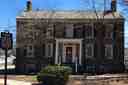
Look directly ahead for a sturdy, brown sandstone house with white columns, green shutters, and a plaque out front-it stands out with its classic Georgian symmetry right on the corner by the library. There’s something timeless in the thick stone walls of the Henry Guest House, isn’t there? Built back in 1760-when lightning rods were still a novelty-it was the pride of Henry Guest, who knew John Adams and traded thoughts with Thomas Paine. He once boasted, “Just keep a roof on it, and it’ll outlast the angels,” -clearly, he had faith in both his masons and his descendants. You can almost picture him in his tannery coat, out front, welcoming guests while cartwheels rumbled down what’s now New Street. By 1817, people called this one of New Jersey’s finest stone houses. But, wouldn’t you know it, the 20th century brought bulldozers instead of carriages... The house nearly met its end-until 1924 when it took a rather unglamorous trip up Livingston Avenue on rollers, as if deciding, “Hey, I think I’ll live by the library now.” These days, after a major makeover in the '90s, it’s still standing-as promised-hosting meetings, proudly stubborn, and weathering every new century with a certain old-school charm.
Eigene Seite öffnen →You’ve made it. Standing here, the First Presbyterian Church of New Brunswick looks stately and serene, but its past is anything but quiet. Picture this: it’s the early…Mehr lesenWeniger anzeigen
You’ve made it. Standing here, the First Presbyterian Church of New Brunswick looks stately and serene, but its past is anything but quiet. Picture this: it’s the early 1700s-horse hooves on muddy streets, chilly brick walls, and a pastor named Gilbert Tennent, one of the firebrands of early American Presbyterianism, stepping up to the pulpit. Tennent would go on to ruffle more than a few feathers here from 1726 to 1743. Call it holy unrest. Now, this church has handled more drama than most modern TV shows-wars, fires, and, believe it or not, a cemetery on the move. During the American Revolution, British troops made themselves a bit too comfortable right here, in the manse. In their wake? The church records vanished-lost to history, burned, or perhaps lining some Redcoat’s boots -which, frankly, is one of the less dignified ends for centuries-old paperwork. Fast forward: the congregation rebuilds, only to face another test in 1947-a fire that caused damage equal to a couple of million dollars today. What’s a bit of flame after a war and lost archives? They rebuilt. Again. And about that cemetery... Around 1966, the church was expanding, and someone had the delicate job of quietly removing over 500 bodies from their resting place to Van Liew Cemetery. That’s a lot of haunting paperwork. Make no mistake-this is no ordinary graveyard. Among the souls once resting here was John Bayard, a mayor of New Brunswick, who no doubt gets the best seats on any ghost tour. Through every era, the church stood as the seat of the Presbytery of New Brunswick-only to have that honor shift to Trenton, but you know, cities always want the spotlight. So, as you look at this church, remember: you’re looking at centuries of resilience, a revolving cast of preachers, and just a touch of spectral intrigue. Standing here, you’re in the shadow of New Brunswick’s living-and occasionally restless-history.
Eigene Seite öffnen →



Häufig gestellte Fragen
Wie starte ich die Tour?
Laden Sie nach dem Kauf die AudaTours-App herunter und geben Sie Ihren Einlösecode ein. Die Tour ist sofort startbereit – tippen Sie einfach auf „Play“ und folgen Sie der GPS-geführten Route.
Benötige ich während der Tour Internet?
Nein! Laden Sie die Tour vor dem Start herunter und genießen Sie sie vollständig offline. Nur die Chat-Funktion benötigt Internet. Wir empfehlen den Download über WLAN, um mobiles Datenvolumen zu sparen.
Handelt es sich um eine geführte Gruppentour?
Nein – dies ist ein selbstgeführter Audioguide. Sie erkunden unabhängig in Ihrem eigenen Tempo, wobei die Audioerzählung über Ihr Telefon abgespielt wird. Kein Reiseleiter, keine Gruppe, kein Zeitplan.
Wie lange dauert die Tour?
Die meisten Touren dauern 60–90 Minuten, aber Sie kontrollieren das Tempo vollständig. Pausieren Sie, überspringen Sie Stopps oder machen Sie Pausen, wann immer Sie wollen.
Was, wenn ich die Tour heute nicht beenden kann?
Kein Problem! Touren haben lebenslangen Zugriff. Pausieren Sie und setzen Sie sie fort, wann immer Sie möchten – morgen, nächste Woche oder nächstes Jahr. Ihr Fortschritt wird gespeichert.
Welche Sprachen sind verfügbar?
Alle Touren sind in über 50 Sprachen verfügbar. Wählen Sie Ihre bevorzugte Sprache beim Einlösen Ihres Codes. Hinweis: Die Sprache kann nach der Tour-Generierung nicht mehr geändert werden.
Wo greife ich nach dem Kauf auf die Tour zu?
Laden Sie die kostenlose AudaTours-App aus dem App Store oder von Google Play herunter. Geben Sie Ihren Einlösecode (per E-Mail gesendet) ein, und die Tour erscheint in Ihrer Bibliothek, bereit zum Download und Start.
Wenn Ihnen die Tour nicht gefällt, erstatten wir Ihnen den Kaufpreis. Kontaktieren Sie uns unter [email protected]
Sicher bezahlen mit 


