
Lynchburg Audio-Tour: Echos von Ziegeln, Gerichten und kulturellen Juwelen
Unter Lynchburgs friedlichen Straßen brodeln Geheimnisse – einige in eleganten Fassaden gemeißelt, andere auf kampfgezeichneten Plätzen eingraviert. Diese selbstgeführte Audio-Tour führt direkt in dieses verborgene Herz und enthüllt fesselnde Geschichten und übersehene Legenden in der ganzen Stadt. Welche hitzigen Gerüchte hallten einst hinter den Türen des Dicks-Elliott House während eines politischen Umbruchs um Mitternacht wider? Könnte eine verlorene Trophäe auf Dr. Robert Walter Johnsons Tennisplatz der Funke für eine nationale Bewegung gewesen sein? Und warum wirkte sich ein einziger verlegter Brief im Carter Glass House auf die Finanzgeschichte der Nation aus? Wandeln Sie auf den Spuren von Rebellen, Visionären und unbesungenen Helden. Jede Wendung bringt Skandal, Wunder und Momente mit sich, die Sie jeden Ziegelstein und jeden Schatten hinterfragen lassen. Erleben Sie Lynchburg enthüllt, lebendig mit Ehrgeiz und Intrigen. Sind Sie bereit, Lynchburgs Geheimnisse von Stein zu Geschichte zu verfolgen? Drücken Sie auf Play und lassen Sie sich von der Stadt in ihren Bann ziehen.
Tourvorschau
Über diese Tour
- scheduleDauer 40–60 minsEigenes Tempo
- straighten2.8 km FußwegDem geführten Pfad folgen
- location_onStandortLynchburg, Vereinigte Staaten
- wifi_offFunktioniert offlineEinmal herunterladen, überall nutzen
- all_inclusiveLebenslanger ZugriffJederzeit wiederholen, für immer
- location_onStartet bei Dr. Robert Walter Johnson Haus und Tennisplatz
Stopps auf dieser Tour
To spot the Dr. Robert Walter Johnson House, look for a sturdy square-shaped house with a red shingled top floor, a wide front porch, and white wooden siding, standing right at…Mehr lesenWeniger anzeigen
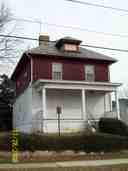
To spot the Dr. Robert Walter Johnson House, look for a sturdy square-shaped house with a red shingled top floor, a wide front porch, and white wooden siding, standing right at the edge of the sidewalk. Now, standing outside this historic house, imagine the year is 1911-fresh paint, bright eyes, and big dreams. The front porch, solid and proud, has welcomed legends. First, this home belonged to Frank Trigg, a black educator and college president-his footsteps echoing on the porch. After him, Dr. Robert Walter Johnson moved in, a trailblazing physician and barrier-breaker as the first black doctor to practice at Lynchburg General Hospital. But Johnson was just as famous in tennis as in medicine. Right next door sat his clay tennis court: just picture a young Arthur Ashe and Althea Gibson serving up a storm, the thwack of balls and quick laughter floating over the hedge. Johnson used his own money to start a tennis program for Black youth, shaping future champions who would one day rule Wimbledon. Meanwhile, when African-American celebrities like Duke Ellington or Jackie Robinson passed through Lynchburg, they weren’t allowed in hotels-so this house became a warm and secret haven for them. The original clay court was buried for decades, but in 2018, it sprang back to life with fresh clay, a green carpet for new dreams. Today the house looks a bit tired, but every corner still hums with hope, hard work, and a good backhand.
Eigene Seite öffnen →To spot Lynch's Brickyard House, look for a small, weathered, one-story house with faded wood siding, a big red brick chimney, and a rusty metal roof right along the corner of…Mehr lesenWeniger anzeigen
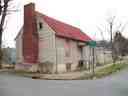
To spot Lynch's Brickyard House, look for a small, weathered, one-story house with faded wood siding, a big red brick chimney, and a rusty metal roof right along the corner of Jackson Street and Seventh. Now, take a deep breath and imagine it’s the year 1849-horses clatter down these roads, and the tangy scent of fresh clay drifts up from the brickyards. That humble little house right in front of you was once the pride of skilled artisans and hard-working tradesmen, their laughter echoing on Saturday nights as they bustled in to escape the cold. Built with simple wooden boards, it stands stubbornly on stone piers, tough as an old mule, with its chimneys poking out like a pair of red ears. When the garages arrived in 1922, they snuggled up close, happy just to be included in the action. These walls have seen countless family dinners, quiet dreams, and probably a few pranks between neighbors. You’re looking at one of the rare survivors of Lynchburg’s middle-class past-no grand mansions here, just honest sweat and modest hopes. This spot was recognized on the National Register of Historic Places in 2002, so instead of fading away, it keeps the memory of those everyday folks alive-a little stubborn, a little rough around the edges, and absolutely essential to Lynchburg's story.
Eigene Seite öffnen →Look for a black and gold sign proudly announcing "Federal Hill Historic District" with classic brick houses just peeking out behind it on the hillside to your left. Now, as you…Mehr lesenWeniger anzeigen
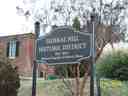
Look for a black and gold sign proudly announcing "Federal Hill Historic District" with classic brick houses just peeking out behind it on the hillside to your left. Now, as you stand here, take a deep breath and imagine the chatter of families and the clatter of horse hooves echoing up these streets back when Federal Hill was Lynchburg’s showpiece neighborhood. Stretching out before you, this district holds about a dozen blocks of charming houses, each one with its own story stitched into the walls. You’ll spot brick and wood-frame homes all dressed up in different period styles, yet somehow they all get along-like a neighborhood block party where the Federalists, the French Second Empire crowd, and some Edwardians decided to mingle. Those tall, elegant roofs you see on Harrison Street belong to three French Second Empire mansions, standing together like they’re gossiping in Paris rather than in Virginia! And if you look around, there’s an impressive lineup of early Federal-style townhouses, each one as crisp as a freshly pressed suit. It’s no wonder this spot was added to the National Register of Historic Places in 1980. Imagine the locals of the 1800s, proud as peacocks, showing off their lovely homes and looking over the city from atop the hill-just like you are now, but with fewer cars and maybe more goats. Each home here is a little time machine, so enjoy the view and let your imagination wander.
Eigene Seite öffnen →
10 weitere Stationen anzeigenWeniger Stationen anzeigenexpand_moreexpand_less
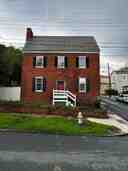
To spot the Dicks-Elliott House, look to your left for a sturdy, two-and-a-half-story brick building with a slate roof and green shutters, set right up against the sidewalk on a…Mehr lesenWeniger anzeigen
To spot the Dicks-Elliott House, look to your left for a sturdy, two-and-a-half-story brick building with a slate roof and green shutters, set right up against the sidewalk on a slight rise-its small porch and unique mid-bay front door set it apart from neighboring homes. Welcome! As you stand here, imagine the year is 1813. The air smells of wood smoke and fresh brick, and right before you, Agatha Terrell Dicks-widow and daughter of respected Quakers-oversees the final touches on her new Federal-style home. She bought this very plot from her uncle John Lynch, the man who founded the city, for the grand sum of one dollar. Now, I know property values have gone up a bit since then-today, you’d be lucky to get a parking space for that price! This house was special from day one. Built from brick laid three courses deep, it has a side-gabled slate roof that’s weathered over two centuries of Virginia sun and rain. Step closer, and you’ll see tall, double-hung windows and a doorway-smack in the middle, which was quite the fashion risk for Lynchburg in the 1810s. If you listen for a moment, you might catch the echo of shoes climbing up the wooden steps--and the creak of the small porch as Agatha welcomes guests. Inside, history breathes through a layout borrowed from Quaker homes in North Carolina. Instead of a formal hallway, visitors step directly into the main room-a warm, bright space where friends and family would share news and laughter. A mysterious winding stair snakes up through all three floors, bypassing the need for grand foyers in favor of practical, cozy living. For a while, there was a brick wing on the northwest side, but that was lost to time, and a tiny outbuilding now stands guard in the corner. Agatha didn’t live here long. Just a year after building, she sold the house to Peter Elliott, a builder and part-time blacksmith with a knack for adventure-and apparently for moving, because he traveled from Richmond to Lynchburg, then to Kentucky, and finally all the way to Indiana! After Agatha left, seeking freedom from Virginia’s slaveholding laws with her children, the house began its journey through many hands: Irish tobacconist James V. Knight, merchant John T. Murrill, and countless renters who called these brick walls home for over a century. And this place isn’t short on secrets. During a five-year renovation in the 21st century, new owners found marbles, carpenter tools, old wedding rings-even a bullet mold from the 1800s-tucked away behind floors and fireplaces. Some even say they spotted curious good luck symbols engraved into the hearth, left by owners hoping to ward off bad spirits or, perhaps, to keep the house in their favor. With a Merit Award from the Lynchburg Historical Foundation and guest appearances on TV shows, the Dicks-Elliott House has become a true local star
Eigene Seite öffnen →Standing here on Clay Street, soak in the sight of the Carter Glass House-a stately red brick mansion that’s been part of Lynchburg’s story since 1827. It almost demands respect,…Mehr lesenWeniger anzeigen
Standing here on Clay Street, soak in the sight of the Carter Glass House-a stately red brick mansion that’s been part of Lynchburg’s story since 1827. It almost demands respect, with its raised foundation, dignified hipped slate roof, and those elegant Ionic columns out front. Picture this spot nearly 200 years ago: horses clopping and carriage wheels crunching down the street, while John Mill, a lawyer/architect, proudly unveiled his handiwork. The house started as a family home, and by 1907, it had passed through several hands before landing in the lap of Carter Glass. Now, if you’re wondering why that name sounds familiar, let’s just say-whenever your bank account isn’t being pillaged by a wild 1930s banker, you sort of have Carter Glass to thank. Glass, who lived here for decades, was a titan of American finance. As Congressman, he co-authored the Glass-Owen Bill-yes, the very one that ushered in the Federal Reserve in 1913. Suddenly, America had a central bank, and bankers everywhere were forced to take weekends off. Glass didn’t stop there. In 1933, as a U.S. Senator, he introduced the Glass-Steagall Act, drawing a line between your grandma’s savings and a Wall Street poker game. He was also known for locking horns with President Franklin Roosevelt over the New Deal. You could say there was a fair bit of heated conversation in these very rooms. Over the years, Glass modernized the house, even adding dormers to peek out over his beloved Lynchburg. After his death in 1946, his home was turned over to St. Paul’s Church next door, and it now serves as their parish hall. So, as you gaze at this nearly square, proud structure, imagine the many decisions-financial, political, even stubborn-that shaped the country, all sparked by a man with a keen sense of home and a talent for ruffling feathers.
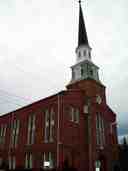
Eigene Seite öffnen →To spot the Court Street Baptist Church, just look ahead for a towering red-brick building with tall arched windows and a dramatic steeple pointing towards the clouds. Imagine…Mehr lesenWeniger anzeigen
To spot the Court Street Baptist Church, just look ahead for a towering red-brick building with tall arched windows and a dramatic steeple pointing towards the clouds. Imagine standing here in downtown Lynchburg, feeling the cool breeze swirling around the tallest spire you can see for blocks. This mighty church was born back in 1843, when a group of determined Black worshippers set out to form the very first African Baptist congregation in the city-a decision that brought both hope and, at times, secret midnight meetings as they built their own spiritual home. Fast-forward to 1880, and you’d have seen the new building designed by R.C. Burkholder taking shape, its Gothic windows gleaming in the morning sun. Just imagine-generations have stood where you’re standing, gathering for worship, shelter, and vital community meetings during moments that shaped history in Lynchburg. People used to joke that if you were ever lost, just “head for the steeple!”-it’s the one landmark nobody could miss, even on a foggy day. Even today, Court Street Baptist Church proudly serves the Black Baptist community, a living reminder of resilience, unity, and reaching for something higher.
Eigene Seite öffnen →To spot the Academy of Music in front of you, look for a grand, pinkish three-story building boasting tall white columns and ornate windows, with a bold red “ACADEMY” sign…Mehr lesenWeniger anzeigen
To spot the Academy of Music in front of you, look for a grand, pinkish three-story building boasting tall white columns and ornate windows, with a bold red “ACADEMY” sign standing out on the right. Here you are, standing right in front of the Academy of Music-looking just about as dramatic as the building itself! Imagine it’s 1905, and the doors swing open to a night alive with anticipation. The soft golden glow spills from the entrance, and you’re met with the Beaux Arts elegance of the interior, all high ceilings and intricate neoclassical details. In those days, the proudest names of Europe and America took to the stage here: famed pianist Ignace Paderewski’s fingers flew across the keys, world-renowned ballerina Anna Pavlova danced with grace, and the legendary Sarah Bernhardt’s voice carried to the rafters. And, of course, actors like DeWolf Hopper brought more than a touch of humor-good thing the ghosts of this old theater love a good laugh! It nearly faded into history, but in 2008, a generous grant helped rescue it, so laughter, drama, and music could echo here once more. Since its listing on the National Register of Historic Places in 1969, the Academy has survived to share countless stories-kind of like a theater version of “the show must go on.”
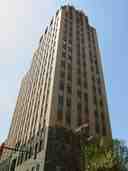
Eigene Seite öffnen →Look for a towering yellow-brick skyscraper with striking greenstone at its base, rising dramatically above Church Street-it’s so tall you might risk a stiff neck if you try to…Mehr lesenWeniger anzeigen
Look for a towering yellow-brick skyscraper with striking greenstone at its base, rising dramatically above Church Street-it’s so tall you might risk a stiff neck if you try to see the top without stepping back, so your safest bet is to gaze straight up from the sidewalk! Right in front of you stands the Allied Arts Building, a real show-off in Lynchburg’s skyline ever since it first burst onto the scene back in the days of jazz and speakeasies. When construction started in 1929, imagine all the hustle: steel beams rising, bricklayers racing against gravity, and people below craning their necks, just like you are now! By 1931, this Art Deco beauty-complete with yellow brick and flashy greenstone, straight out of a movie set-became the tallest building around, towering 17 stories high. For over forty years, no other building in Lynchburg could catch up. It must have been Lynchburg’s skyscraper version of “King of the Hill,” at least until the Bank of the James arrived in 1972. Designed by the adventurous duo Stanhope S. Johnson and Addison Staples, it even shares its dashing looks with the Central National Bank in Richmond. Nowadays, the old offices and studios are getting a new life as apartments. Not too shabby for a landmark that’s witnessed nearly a century of change, laughter, and, probably, a few wild rooftop stories!
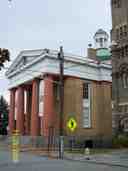
Eigene Seite öffnen →To spot the Lynchburg Courthouse, look for a grand building ahead with tall reddish-brown columns and a green domed cupola peeking above the roof, rising just past the steps of…Mehr lesenWeniger anzeigen
To spot the Lynchburg Courthouse, look for a grand building ahead with tall reddish-brown columns and a green domed cupola peeking above the roof, rising just past the steps of Monument Terrace. Now, take a deep breath and imagine yourself in 1855, standing at the foot of this imposing Greek Revival courthouse-its three Doric columns soaring above you and the shallow dome shimmering in the sunshine. Behind those stately walls, the business of justice once echoed off stucco and granite, while townsfolk hurried over the steep steps that tumble down Monument Terrace. If you listen closely, you might even hear the. But don’t worry, these days you won’t have to defend yourself before a judge! Now, the courthouse holds the Lynchburg Museum, featuring galleries about the city’s art, military history, and even tales of haunted cradles-yes, there’s a real spooky cradle inside that once rocked the babies of a famous Methodist bishop. It’s said strange things can happen near it, so just remember: if you hear any mysterious creaks or whispers, blame it on history... or maybe just the old wooden floors. This grand old building has watched over downtown for centuries and, in 1972, officially earned its spot in the National Register of Historic Places. There’s no better place to explore Lynchburg’s stories-brave souls and ghost stories included!
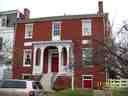
Eigene Seite öffnen →To spot the John Marshall Warwick House, look for a sturdy red-brick home with white trim, bold red doors, and a decorative white porch standing toward the crest of the…Mehr lesenWeniger anzeigen
To spot the John Marshall Warwick House, look for a sturdy red-brick home with white trim, bold red doors, and a decorative white porch standing toward the crest of the hill. Imagine it’s 1826: the air smells faintly of tobacco and the cool river breeze brushes your face as you gaze out from Lynchburg’s tallest point, just as John Marshall Warwick-tobacco baron, mayor, and bold dreamer-once did atop this very hill. In those days, building here was quite the power move; you could see the James River winding by and every bit of the bustling young city. Warwick’s new home, with its sturdy Federal style and just a hint of flashy Greek Revival, was the architectural talk of the town. It’s silent now, but, oh, the chatter inside! Family stories, city secrets, and maybe even a mayor’s joke or two-if these walls could laugh! Years later, little John Warwick Daniel was born under this roof, destined to become a U.S. Senator. And as he played on these steps, perhaps he imagined leading more than just pillow fights. Now listed on the National Register, the house is more than brick and wood: it’s a monument to ambition, family legacy, and the ever-changing spirit of Lynchburg. Still sure you want to keep walking, or are you tempted to ring the doorbell and ask for a slice of history?
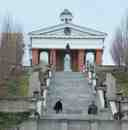
Eigene Seite öffnen →To spot the Court House Hill-Downtown Historic District, look up the wide stone staircase lined with lamps and climb your gaze to the stately white courthouse with a green dome…Mehr lesenWeniger anzeigen
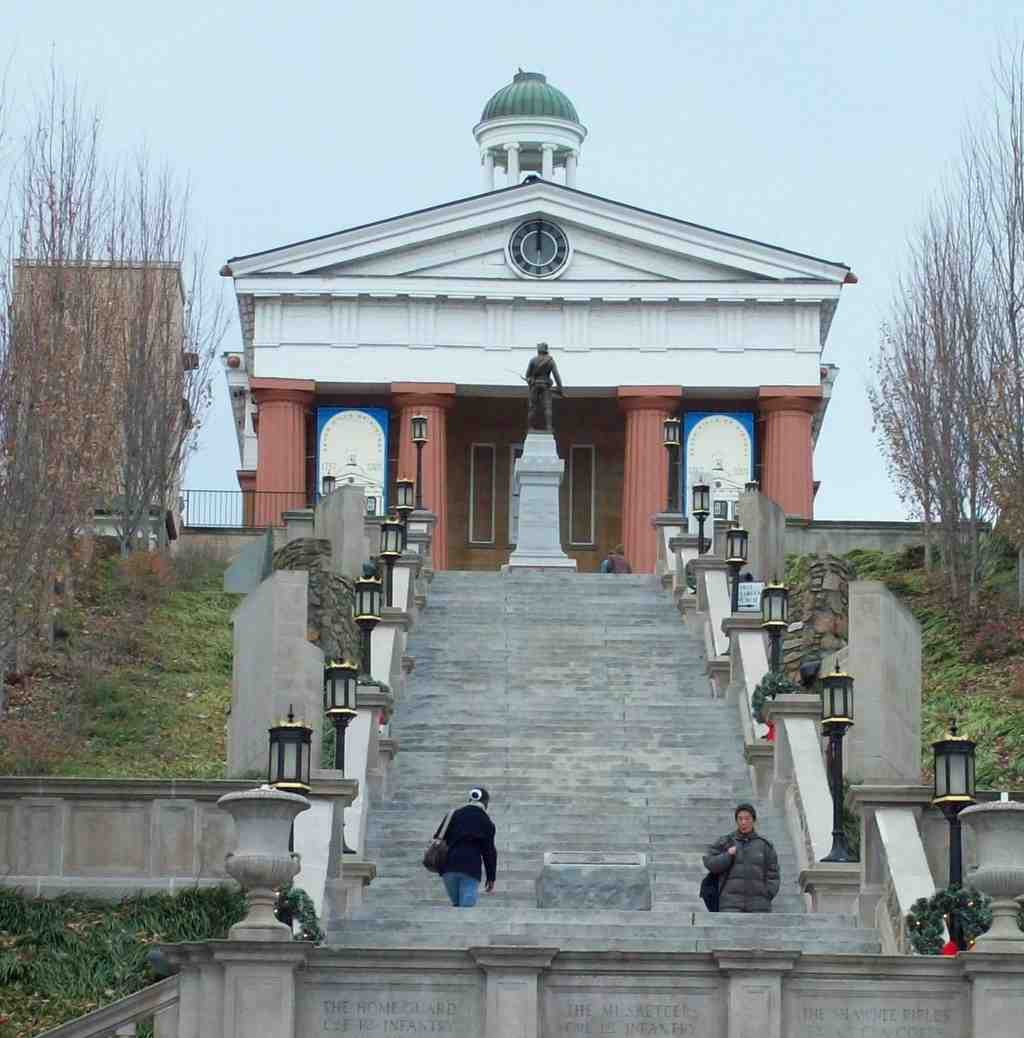
To spot the Court House Hill-Downtown Historic District, look up the wide stone staircase lined with lamps and climb your gaze to the stately white courthouse with a green dome perched at the top-like the cherry on a very historic sundae! Alright, step right up and take in the panorama-you're standing in the heart of Lynchburg's Court House Hill-Downtown Historic District, where history has danced, debated, and sometimes left a little dust on its shoes. Imagine the swish of long-skirted dresses, the clop of horse hooves, and merchants shouting about fresh produce or hot gossip well over a hundred years ago. This 50-acre stretch bursts with character, holding religious, commercial, residential, and government buildings-each sporting its own style, like Federal’s buttoned-up jackets, Greek Revival’s togas, Gothic Revival’s pointed arches, and even Art Deco’s jazz-age flair. On this promontory above the James River, influential folks once lived, preached, judged, and made deals in buildings like the Carter Glass House, the elegant First Baptist Church, and the ever-imposing Lynchburg Courthouse. They kept growing-a little expansion here, a few more city blocks there. Some might say this neighborhood is like a time machine, letting you experience the drama, hope, and flavor of every decade from the early 1800s onward. If you listen closely, you might even hear a judge’s gavel echoing from long ago!
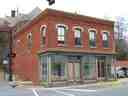
Eigene Seite öffnen →Look for a sturdy, two-story red brick building on the corner with tall, arched windows upstairs and big, old-fashioned plate glass display windows at street level-just ahead of…Mehr lesenWeniger anzeigen
Look for a sturdy, two-story red brick building on the corner with tall, arched windows upstairs and big, old-fashioned plate glass display windows at street level-just ahead of you. Imagine the year is 1875, and as you step closer, the sweet smell of candy and excitement of children’s laughter would have poured out from this very spot-welcome to the Bragassa Toy Store! Francisco Bragassa, an adventurous Italian immigrant, built this place with dreams as big as his mustache. Here, he created the first shop in Lynchburg to show off its toys and treats behind sparkling plate glass windows-the kind of innovation that turned every kid’s nose into a little foggy mess as they pressed close, desperate for a better look. Upstairs, the family lived with the subtle sounds of city hustle below, and at night, you could almost hear the echoes of children pleading for “just one more sweet, Mama!” While many buildings of that era have vanished, this cheerful storefront survived, outlasting fire, fashion changes, and fierce competition-kind of like a toy that never falls apart. The Bragassa family kept shop right here until 1987, before passing the torch to the Lynchburg Historical Foundation. And today, it’s Kid’s Haven, offering comfort and hope. So, as you stand here, you’re really peeking into a place where joy, family, and memories have held center stage for almost 150 years. Now, that’s what I call a real-life toy story!
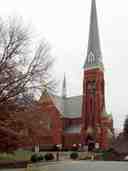
Eigene Seite öffnen →Look for the tall, narrow gray spire rising high above a dramatic red brick church with arched windows and a large circular rose window on its main facade-it’s right ahead,…Mehr lesenWeniger anzeigen
Look for the tall, narrow gray spire rising high above a dramatic red brick church with arched windows and a large circular rose window on its main facade-it’s right ahead, sitting proudly at the corner. Standing in front of this grand building, imagine the sharp ring of church bells bouncing off the red brick and granite foundation. Built in 1884, this Gothic Revival church has watched over Lynchburg for generations-its rose windows glowing in the morning sun, casting colorful patches on the steps where folks from all walks of life have gathered for nearly a century and a half. In the 1920s, a local architect named Stanhope S. Johnson added a Sunday School annex, careful not to let the new kid outshine the old sanctuary. Of course, like any grand old building, a bit of a makeover happened in 1941, giving the inside a brand-new chancel-because, who doesn’t like to shake things up after 55 years? It was home to Lynchburg’s oldest Baptist congregation, founded in 1815, but don’t let the history fool you: the story’s not finished yet. In 2024, the church became home to the Church of the Good Shepherd, a growing Anglican congregation who started meeting here in 2022, filling the space with new voices and stories.
Eigene Seite öffnen →


Häufig gestellte Fragen
Wie starte ich die Tour?
Laden Sie nach dem Kauf die AudaTours-App herunter und geben Sie Ihren Einlösecode ein. Die Tour ist sofort startbereit – tippen Sie einfach auf „Play“ und folgen Sie der GPS-geführten Route.
Benötige ich während der Tour Internet?
Nein! Laden Sie die Tour vor dem Start herunter und genießen Sie sie vollständig offline. Nur die Chat-Funktion benötigt Internet. Wir empfehlen den Download über WLAN, um mobiles Datenvolumen zu sparen.
Handelt es sich um eine geführte Gruppentour?
Nein – dies ist ein selbstgeführter Audioguide. Sie erkunden unabhängig in Ihrem eigenen Tempo, wobei die Audioerzählung über Ihr Telefon abgespielt wird. Kein Reiseleiter, keine Gruppe, kein Zeitplan.
Wie lange dauert die Tour?
Die meisten Touren dauern 60–90 Minuten, aber Sie kontrollieren das Tempo vollständig. Pausieren Sie, überspringen Sie Stopps oder machen Sie Pausen, wann immer Sie wollen.
Was, wenn ich die Tour heute nicht beenden kann?
Kein Problem! Touren haben lebenslangen Zugriff. Pausieren Sie und setzen Sie sie fort, wann immer Sie möchten – morgen, nächste Woche oder nächstes Jahr. Ihr Fortschritt wird gespeichert.
Welche Sprachen sind verfügbar?
Alle Touren sind in über 50 Sprachen verfügbar. Wählen Sie Ihre bevorzugte Sprache beim Einlösen Ihres Codes. Hinweis: Die Sprache kann nach der Tour-Generierung nicht mehr geändert werden.
Wo greife ich nach dem Kauf auf die Tour zu?
Laden Sie die kostenlose AudaTours-App aus dem App Store oder von Google Play herunter. Geben Sie Ihren Einlösecode (per E-Mail gesendet) ein, und die Tour erscheint in Ihrer Bibliothek, bereit zum Download und Start.
Wenn Ihnen die Tour nicht gefällt, erstatten wir Ihnen den Kaufpreis. Kontaktieren Sie uns unter [email protected]
Sicher bezahlen mit 


