AudaTours logoAudaTours

Cincinnati Audio Tour: Zeitlose Geschichten der Ikonen & Innovationen der Innenstadt

Audioguide13 Stopps

Hier werfen steinerne Riesen ihre Schatten, wo Millionengeschäfte geflüstert wurden und geheime Allianzen das Schicksal Cincinnatis für immer veränderten. Lassen Sie sich von dieser selbstgeführten Audiotour durch das geschäftige Herz der Stadt führen und entdecken Sie verborgene Gänge, stille Innenhöfe und Geschichten, von denen die meisten Passanten nie erfahren. Welche Krise im Carew Tower brachte Cincinnati an einem stürmischen Abend plötzlich zum Stillstand? Welche Intrige braute sich hinter den feierlichen Mauern der Erzdiözese zusammen und erschütterte den Frieden der Stadt mit Gerüchten über Rebellion und Skandal? Und warum bemerken so wenige das kuriose Detail im Lytle Park Historic District, das den Ort eines verschwundenen Duells markiert? Biegen Sie um die Ecke und spüren Sie den Puls des historischen Dramas. Bewegen Sie sich zwischen Geschichten von Macht, Verschwörung und Transformation. Mit jedem Schritt lösen sich Schichten ab und Cincinnatis Geheimnisse blicken von den Kopfsteinpflasterstraßen herauf. Beginnen Sie Ihre Reise jetzt. Die Schatten warten.

Tourvorschau

map

Über diese Tour

  • schedule
    Dauer 40–60 minsEigenes Tempo
  • straighten
    3.5 km FußwegDem geführten Pfad folgen
  • location_on
  • wifi_off
    Funktioniert offlineEinmal herunterladen, überall nutzen
  • all_inclusive
    Lebenslanger ZugriffJederzeit wiederholen, für immer
  • location_on
    Startet bei Arnold's Bar and Grill

Stopps auf dieser Tour

  1. To spot Arnold’s Bar and Grill, look for the distinctive old brick building with its quirky bathtub cart out front-just keep your eyes peeled for a spot that looks like it jumped…Mehr lesenWeniger anzeigen

    To spot Arnold’s Bar and Grill, look for the distinctive old brick building with its quirky bathtub cart out front-just keep your eyes peeled for a spot that looks like it jumped out of Cincinnati’s past and threw a party for the present! Now as you stand outside Arnold’s, imagine the rattle of old streetcars rolling by, and let me pull you into nearly two centuries of stories… This is Cincinnati’s oldest operating bar, and honestly, it’s seen more wild nights, secret deals, and strong drinks than just about anywhere else in town. The adventure all started back in 1838, when Susan Fawcett opened these doors-but not as a bar, mind you, unless you count a rather “colorful” kind of nightlife! Then along came Simon Arnold in 1861, who turned the place into a good old tavern and moved his family upstairs. From then on, the Arnold clan kept this spot running for almost a century-each generation adding their own chapter to the legacy. Imagine little Hugo Arnold dashing upstairs for dinner after tending the bar with his folks, or his son Elmer scheming away during Prohibition. Word on the street was that Elmer’s famous gin was made right upstairs, in a bathtub-easy to pull the plug and dump the evidence whenever the law came knocking. But there’s more to Arnold’s than secret gin-through booms, busts, and the not-so-great times of Prohibition, it never closed its doors. Some say that resilience drew a few spirits to hang around; ghost hunters have even spent nights here, tracking flickering shadows and unexplained noises. If you feel a shiver, you’ll know why people still claim Arnold’s is haunted! After the Arnold family, the place bounced through wild owners like a former pro wrestler who also happened to be a “mob collector.” Arnold’s became the classic neighborhood bar: the kind of spot with stories in every brick and laughter echoing out into the street. And if you think it’s just for a cheap beer, think again-these walls have seen gourmet burgers, wild parties, and crowds from all across the country. Arnold’s has collected so many awards, you’d think it was training for the Cincinnati Olympics: “Best Bar in America,” “Most Iconic Bar in Ohio,” “Best Dancing Pig Burger”-yes, that’s a real thing! The walls themselves are dressed up in street art, so take a moment to check out the massive murals. In 2010, the famous Shepard Fairey put up a piece called “Global Warning.” Since then, street artists like JR, Hargo, Vhils, and even L’Amour Supreme (with his graffiti superhero Czarface) have left their marks, making the outside just as interesting as the inside. This bar has also been the star in TV and movies. Arnold’s is so beloved, a full replica was built on the set of NBC’s “Harry’s Law,” and you might catch a glimpse of its legendary courtyard in films like “Carol” or “Marauders.” Even celebrity chefs have come here to compete, win prizes, and maybe sip a bit of legal-or slightly haunted-gin. Right now, if you pause and listen, you can almost hear the clink of glasses, the murmur of secrets, and maybe even the footsteps of an old bartender hurrying upstairs for supper. Arnold’s isn’t just a bar; it’s the heart of Cincinnati’s stories, a living scrapbook with a twist of mystery and a sense of humor stronger than its bathtub gin. So, ready for the next stop? Let’s keep the adventure rolling!

    Eigene Seite öffnen →
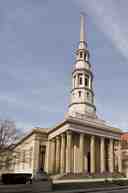
  2. Look ahead for a stately, pale-stone building crowned with a soaring steeple and bold columns at the entrance-a true beacon reaching up into the Cincinnati sky. Now that you’re…Mehr lesenWeniger anzeigen

    Look ahead for a stately, pale-stone building crowned with a soaring steeple and bold columns at the entrance-a true beacon reaching up into the Cincinnati sky. Now that you’re standing in front of the Archdiocese of Cincinnati, just imagine the swirl of history and faith that’s passed through these very doors! Picture it: hundreds of years ago, when Ohio was still wilderness-first under French, then British rule-there wasn’t a Catholic church in sight. French missionaries never set up shop, so this land waited in silence while the world’s powers shifted, like chess players trading pieces. Fast forward to the early 1800s, and a small band of determined Catholics built Cincinnati’s first church, led by the adventurous Reverend Emmanuel Thienpont. Can you see the wagons, the muddy streets, and the hope on people’s faces as they gathered for prayer? In 1821, Pope Pius VII carved the entire state out of Kentucky’s diocese and gave it the name: Diocese of Cincinnati. Talk about a promotion! Bishop Edward Fenwick, the first leader here, was a real go-getter who traveled to Europe in 1823 for fundraising. He came back, pockets jingling, and helped build the city’s very first cathedral and parochial schools. He even opened up the region’s first Catholic orphanage and founded the country’s oldest seminary west of the Appalachians-St. Francis Xavier-in 1829. Imagine all the lively debates and hopeful young scholars within those walls! The Cathedral Basilica of St. Peter in Chains, just around the corner, has stood as the mother church all along. And believe me, it’s seen a bit of drama: from American nuns setting up convents, to the founding of influential newspapers, to the architectural grandeur you see before you now-every stone whispers a secret. Back in the 1840s, fiery debates flared up as Catholic immigrants-many German and Irish-poured into Ohio, sparking the growth of new parishes and churches rapidly. Bishop Purcell, another colorful character, launched the first German-language parish after leading lively processions through the city. He also built this city’s first orphanages for boys and girls, and even tangled with local Protestants after criticizing taxes on Catholic families to pay for public schools. And on Christmas Day 1853? Protesters gathered right outside his residence, furious over a Papal visitor. The angry crowd and police soon clashed, adding a dash of danger to Cincinnati’s snowy winter. In 1850, with a flourish from Pope Pius IX, Cincinnati leveled up again-becoming an archdiocese, reshaping the religious map of Ohio and beyond, and even launching the region’s very first Catholic hospital. Over the years, new archbishops continued to leave their mark by organizing schools, publishing newspapers, and guiding the city through times of economic hardship and scandal. By the 20th century, Cincinnati’s archdiocese was a Catholic powerhouse-running one of the nation’s largest systems of parochial schools, staffed by all manner of sisters and brothers, many beckoned from across the ocean by the generous Sarah Peter. But, as with many vibrant stories, there were shadows too. You’ll find moments of sorrow-the financial panic of 1877 where the church nearly collapsed under a bank run, and more recent controversies over leadership decisions and tragic scandals. Yet, through every conflict and triumph, the Archdiocese has endured and adapted, connecting communities across 19 counties and guiding the spiritual life of Ohio. Today, as you gaze at this proud, sunlit building, remember: you’re not just looking at stone and glass, but centuries of lively, sometimes stormy, always fascinating history-a tale as tall and spirited as the steeple rising right above you! Wondering about the geography, religious orders and congregations or the churches? Feel free to discuss it further in the chat section below.

    Eigene Seite öffnen →
  3. You’re standing in front of the Cincinnati and Hamilton County Public Library-yes, that big modern building with enough books inside to keep you busy for the next several…Mehr lesenWeniger anzeigen

    You’re standing in front of the Cincinnati and Hamilton County Public Library-yes, that big modern building with enough books inside to keep you busy for the next several lifetimes, give or take a few years! Imagine, behind those glass doors, more than 9.6 million volumes are patiently waiting for readers like you to crack open their mysteries. Talk about a literal page-turner! But let’s imagine it’s the mid-1800s. Back then, Cincinnati’s quest for knowledge was just getting started. In 1802, it began humbly as a subscription library, with books crammed wherever space could be found, including the Central School and later, above the Ohio Mechanics’ Institute. Of course, those book lovers grew fast-so fast, they needed a new home! In 1868, they snatched up a half-finished opera house, transforming it into the city’s first grand library. Sorry, opera singers-a chorus of bookworms took center stage instead! The old “Main Hall” had checkered marble floors, sky-high iron book alcoves, and dramatic spiral staircases, so imagine the echo of footsteps and the hush of readers moving through four stories of books. By the 20th century, the library was bursting at the seams, with books stacked everywhere, even in the basement where moisture threatened to turn them into papier-mâché. Paint peeled, ventilation wheezed, and city leaders agreed: it was time to break ground on the new structure you see today. The old building was sold and razed in 1955, but its legacy lives on-walk through the library’s current garden and spot the stone heads of Shakespeare, Milton, and Benjamin Franklin, once the gatekeepers of that dreamlike old space. You might’ve noticed this library’s not just any library. It’s the second-largest public library collection in the country, topping even New York in lending electronic books. You want an audiobook, a CD, a microfiche, or maybe just a Wi-Fi hotspot to surprise your phone? They’ve got that covered! In fact, in 2019 alone, over 21 million items-yes, million-were checked out across the city and 5 million visitors passed through the doors. It’s so busy, they should install a revolving door just for excited readers! And don’t think it’s all just bookish silence: the Main Library holds 17,000 free programs a year-everything from storytimes that would make any toddler giggle, to MakerSpaces buzzing with 3D printers, sewing machines, and even laser engravers. Somewhere right now there’s probably a kid printing a tiny model of Carew Tower. But wait, there’s more mystery hidden in the stacks. CHPL boasts one of the largest genealogical collections in America. Folks come from all over, squinting at yearbooks or old maps, searching for relatives or weird distant cousins who may or may not have been pirates. One click and you’re soon lost in online exhibits, like haunting photos of the 1937 Ohio River flood, or city directories from another age. Who knew history could be just around the corner-or maybe buried in the card catalog? The library’s story hasn’t all been tranquil reading and the faint whirr of microfilm machines. Over the decades, it’s weathered everything from budget cuts and labor fights, to digital revolutions and the wild shift from card catalogues to computerized systems (say goodbye to those old browning cards-and a special tip of the hat to “CINCH,” the vintage computer system that once beeped and blinked its way through millions of records). And in a true twist, CHPL’s dedication to serving everyone has led them to offer services in dozens of languages, loan books-by-mail, and even help folks get their passports to the world beyond Cincinnati. What hasn’t changed, though, is the sense of welcome-maybe that’s why the library wins five-star ratings year after year, and why its doors stand open most days from early morning to late at night. Legend goes, even in 1871, when Sunday reading was considered shocking, every seat was filled by young men who traded street wandering for the adventures between pages. So, whether you’re here to solve a family mystery, record the next big podcast, or just find a cozy nook with a good book, you’re part of a living story-and in this temple of knowledge, everyone gets a starring role. Now, time to check out your next destination-no overdue fines, I promise!

    Eigene Seite öffnen →
10 weitere Stationen anzeigenWeniger Stationen anzeigenexpand_moreexpand_less
  1. To spot the Doctors' Building, just look across Garfield Place and you'll see an eight-story structure with tan brick and ornate, pale terracotta details, crowned by an American…Mehr lesenWeniger anzeigen

    To spot the Doctors' Building, just look across Garfield Place and you'll see an eight-story structure with tan brick and ornate, pale terracotta details, crowned by an American flag waving from the roof-it's right next to the statues in Piatt Park. You’re standing in front of a building that was truly ahead of its time-back in 1923, Cincinnati’s skyline welcomed a brand-new high-rise, but this one was special: it was built solely for doctors’ offices! Imagine a sea of physicians in white coats bustling inside, hopeful patients making their way through sleek marble-clad halls, and the gentle hum of typewriters clicking away behind wooden doors. The Doctors' Building was like a medical mall before malls were even cool. The creative minds behind this Gothic Revival beauty were Tietig and Lee, the city's superstar architects of the era. While downtown Cincinnati was awash in Art Deco and neoclassical blocks, this eight-story marvel stood out like a dapper physician at a picnic-it was not just practical, but seriously stylish! Its facade is sheathed in intricate terracotta tiles, giving the building an almost cathedral-like appearance. If you squint, you might imagine gargoyles peeking out just above the arched windows. The marble, brick, and just enough metal accents to make you think of a shiny stethoscope tie together this icon of medicine and ambition. But for as calm and stately as it looks now, this building has weathered many a storm in the wild world of Cincinnati real estate. Fast-forward to 1984; city planners had dollar signs in their eyes and big ideas for the area. They wanted to fill Garfield Place with gleaming new high-rises and hundreds of homes, dreaming of knocking out part of the Doctors' Building for a parking garage. In swept Ameritas Inc., buying the place for a cool $3 million, but talks with the city hit a brick wall faster than you can say “malpractice insurance.” Drama wasn’t done yet! In the late ‘80s the building was renamed Presidential Plaza to honor the neighboring statues of U.S. Presidents Harrison and Garfield. Imagine the presidents looking on approvingly-or maybe suspiciously-at all the hustle below. But even big names and starry plans couldn’t keep the finances healthy. Renovations ballooned in cost like a hospital bill, and construction was followed by a rapid shuffle of owners, lawsuits, and unpaid contractors. Star Bank jumped in with millions in loans, but by the early 1990s, it all tumbled into foreclosure, leading to auction drama and a parade of partners and suitors. Eventually, the groups Wolf Blumberg Krody and LPK stepped in, eager to make their mark (and maybe stop the revolving door of owners). Over the years, the building evolved, office by office, into a creative and business hub, with LPK eventually occupying over half the space. And just when things seemed to settle, in 2024 the story picked up speed again. LPK sold this iconic landmark to Ashley Builders Group, who aimed to sprinkle a little bit of everything in here: 52 sparkling apartments, offices for dreamers and doers, and a café for morning caffeine emergencies. The city pitched in with a tax break and construction began again in winter 2024, even as Ashley Builders Group crossed its fingers for $1.3 million in historic tax credits. By 2025, costs had nearly tripled to $12.9 million, but the transformation of this building from medical mecca to modern mixed-use marvel was finally moving into its newest chapter. So as you stand here, gaze up at a building that’s survived medicine, money, and mayhem-with a little bit of Gothic swagger and a dash of presidential company. It’s living proof that if you keep your architectural heart beating, you’ll never fall out of style!

    Eigene Seite öffnen →
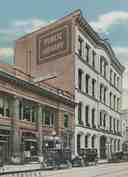
  2. Look to your right for a grand, cream-colored four-story building with tall arched windows and a huge “PUBLIC LIBRARY” sign painted boldly up high - you really can’t miss its…Mehr lesenWeniger anzeigen

    Look to your right for a grand, cream-colored four-story building with tall arched windows and a huge “PUBLIC LIBRARY” sign painted boldly up high - you really can’t miss its solid rectangular shape next to the more ornate facade of the Cincinnati Enquirer. Now, let’s travel back to old Cincinnati: imagine the clang of horseshoes on brick, the rattle of streetcars, and the proud sight of book lovers lining up outside this stately library on Vine Street and 6th, a beacon for the curious, the scholarly, and the just-plain-nosey! It all began with a bit of good fortune - or misfortune, if you were longing for opera - because this very building was meant to be an opera house. But after the owner’s money ran out in 1868, the city swept in and transformed fresh ambition (and a half-built stage) into a library for the people. Picture architect James W. McLaughlin and the ever-creative librarian William Frederick Poole huddled over blueprints, making decisions that would shape Cincinnati’s future and leave a checkerboard marble floor under your feet and spiral staircases swirling up to whispering domes above. The library’s grand opening spread over years, first in late 1870 and finally completed in 1874. The main hall became legendary: imagine stepping inside under sunlight streaming past a huge skylight, the air cool against polished cast-iron alcoves brimming with book spines. The busts of Shakespeare, Milton, and Benjamin Franklin watched from on high, eager perhaps to see who would borrow which tales or test which lofty thought. Newspapers raved about this modern marvel with its bright reading room, making sure every corner got a fair share of sunshine. The cost? A pretty penny: more than $9 million in today’s money. But for a city hungry for knowledge, every cent felt well-spent. But just like my favorite pair of old jeans, the space started feeling tight-fast! Built to house 300,000 treasures, the shelves groaned with 1.5 million books by 1955! Books peered three-deep on every ledge, some banished to the fears of a flooded sub-basement. Down there, the air was so thick with the scent of wet paper that librarians weren’t allowed in for more than twenty minutes, and sometimes the wait for a rare volume stretched for days. As book after book squeezed through, the floors bent with the weight, and building inspectors nervously eyed the lantern slide collection-45,000 glass slides!-as it threatened to tumble through the third floor. You’d need a laugh at this point: there was so much coal soot from the ancient furnaces, they hired book cleaners whose entire job was to wipe the grime off the stacks! Summers turned the place into a gently roasting sauna and, with only a sprinkle of small windows, the reading rooms sometimes resembled medieval dungeons more than scholarly havens. Even the elevators came with a warning: only library pages (the bravest souls) were allowed in the stacks, but even they sometimes met with tragic accidents. And so, by the 1920s, the chorus began: “We need a new library!” Decades later, in 1955, the march of progress finally caught up, and a grand move was made to a new site just two blocks away. Imagine the flurry-staff taping, labeling, packing books by the inch, the city’s literary soul boxed overnight and reborn in fresher air. The old building, tough as the characters it housed, “died hard”-taking a hundred days and dozens of workers to come down, leaving behind not just bricks and rubble, but memories of heated debates, quiet dreams, and discovery after discovery. Today, an office building and parking garage claim the spot, but if you listen quietly, you might catch the faint rustle of pages, or maybe the distant laughter of a librarian still dusting off the soot. And if you’re jealous of those long-vanished book lovers-don’t be! The busts of Shakespeare, Milton, and Franklin made the trip to the new home, ready to welcome the next generation of reading enthusiasts. No ghosts here-just the spirit of Cincinnati’s thirst for knowledge, echoing across the ages. Yearning to grasp further insights on the background, construction and design or the challenges? Dive into the chat section below and ask away.

    Eigene Seite öffnen →
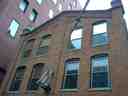
  3. Look for a humble two-story brick building tucked tightly between taller structures; its simple arched windows and triangular roof detail make it stand out right here on Ruth…Mehr lesenWeniger anzeigen

    Look for a humble two-story brick building tucked tightly between taller structures; its simple arched windows and triangular roof detail make it stand out right here on Ruth Lyons Lane. Now, picture yourself back in 1860, standing in this bustling alleyway as the city’s streets echoed with the clatter of carriages and the excited chatter of a growing Cincinnati. Right here, a group of Orthodox Jewish families, determined to preserve their traditions, gathered to build the Sherith Israel Temple-now the oldest existing synagogue building west of the Allegheny Mountains! Imagine the smell of fresh-baked bread drifting from nearby homes, while prayers and songs in Hebrew carried out through these very brick walls. Though the temple thrived for only a couple of decades-until 1882-its job was far from done. Over the years, this unassuming building did everything from storing plumbing supplies to whirring with machines as a workshop. At one point, the city almost demolished it-cue the dramatic music-but after a flurry of debate and a heroic preservation effort, it was saved and transformed. Since 2003, people have actually lived here in condos! It’s proof that history can sneak up on you, hiding centuries of stories right among the shops and theaters. So as you stand here, remember: behind these walls lie echoes of faith, resilience, and a city that loves to argue over old buildings!

    Eigene Seite öffnen →
  4. Right in front of you, you’ll see a bold, futuristic structure of stacked concrete and black forms, cutting sharp angles into the sky-look for the dramatic gray and black blocks…Mehr lesenWeniger anzeigen

    Right in front of you, you’ll see a bold, futuristic structure of stacked concrete and black forms, cutting sharp angles into the sky-look for the dramatic gray and black blocks that make it stand out from the more traditional brick buildings around it. Get ready-this is no ordinary box of paintings! The Contemporary Arts Center, or CAC for short, is the kind of place that’s always several steps ahead of the artistic curve. Picture this: it all started back in 1939, when three visionary women-Betty Pollak Rauh, Peggy Frank Crawford, and Rita Rentschler Cushman-teamed up to bring cutting-edge art to Cincinnati. Instead of working with dusty old masterpieces, they believed in the thrill of the new: painting, sculpture, photography, even performance and media-art forms that sometimes made the polite folks of Cincinnati spit out their morning coffee! The CAC didn’t always have this eye-popping, space-age headquarters. Originally, it was called the Modern Art Society and was tucked away in the Cincinnati Art Museum. Their first show, “Modern Painting from Cincinnati Collections,” opened just as the world was about to tumble into World War II. Back then, the art was so modern people thought it might melt if you looked at it too long! The group spent decades without a home of its own, bouncing around from one borrowed corner to the next: the Taft Museum, the Women’s Exchange building, even the Carew Tower-which, between you and me, probably had fewer robots and more elevators. In the 1970s, the CAC finally landed in the heart of Cincinnati at the Mercantile Center, overlooking a busy bus terminal. You can imagine it-a whole new gallery, 12,000 square feet, with fresh exhibitions every few weeks. By the time the CAC was getting itchy feet again about thirty years later, it had put on over 400 art shows. The city itself pitched in and secured a permanent lease, making it clear that Cincinnati wasn’t going to let this creative spark fizzle out. Yet, the CAC always dreamed bigger. By the late ‘90s, with modern art more at home in Cincinnati than ever, the Center launched a nearly cinematic worldwide search for an architect. The list of design legends who wanted the job reads like a who’s who of the art world-Herzog & de Meuron, Rem Koolhaas, Jean Nouvel-but ultimately, it was Dame Zaha Hadid, the queen of bold, futuristic forms, who won over the judges. Her design for the CAC was her first project in America. When the building finally opened in 2003, The New York Times architecture critic called it “the most important American building to be completed since the cold war.” I’d try telling a joke about cold war architecture, but it might come off a little... stony! The building itself? It’s seven floors of adventurous space. Glass walls and smooth, chalky concrete break up the skyline, and angular shapes jut out in wild directions-Hadid wanted every visitor to feel like they were setting foot in the future, not just walking into a museum. Even the floor plan got its own name: the “Urban Carpet,” as if art should spill right off the street and carry you into an entirely new world. The “Jigsaw Puzzle” spaces are constantly shifting to fit each new wild and wacky show. There’s no permanent collection here-every visit is a leap into the unknown. Some of the world’s most daring artists have debuted here, like Andy Warhol, long before his face was wallpapered everywhere. The center’s never shied away from a little scandal, either. In 1990, the CAC landed in court over a controversial Robert Mapplethorpe photography show. It was the first time a museum in America faced criminal charges because of art, but the jury agreed-the CAC could go on as Cincinnati’s playground for brave new creation. Oh, and if you spot a robot hanging around outside, give it a smile! That’s Metrobot-a massive steel sculpture by Nam June Paik, which once wowed crowds at the old Fifth Street site and now guards this incredible fortress of invention, inviting everyone inside to see what the future of art looks like-today! Ready to delve deeper into the projects and exhibitions, controversies or the location? Join me in the chat section for an enriching discussion.

    Eigene Seite öffnen →
  5. Look up and straight ahead-you can’t miss its shining glass surface and the sparkling “crown” on top that makes it look like Cincinnati’s own royal palace in the sky. So here it…Mehr lesenWeniger anzeigen

    Look up and straight ahead-you can’t miss its shining glass surface and the sparkling “crown” on top that makes it look like Cincinnati’s own royal palace in the sky. So here it is: The Great American Tower at Queen City Square! Go ahead, take it all in-41 stories of shimmering glass and aluminum, slicing into the skyline like a silver spear, and up at the very top, what do you see? That tiara-shaped crown! You’re not imagining things. Inspired by the elegance of Princess Diana’s own sparkling headpiece, architect Gyo Obata wanted this building to wear its nickname loud and proud, for after all, Cincinnati has long been called the Queen City. Standing here, you can almost picture a red carpet unrolling down the front steps-fit for royalty or at least everyone who loves an epic view. Let’s rewind to the late 2000s. The city buzzed with anticipation. For decades, Western & Southern Financial Group dreamed about a tower like this, but it wasn’t until 2008 that construction finally got underway. While most cities in America pressed the pause button due to the Great Recession, Cincinnati said, “Nah, we’re building something amazing!” By 2011, at a cost of more than $322 million-with $65 million courtesy of local taxpayers, thank you very much-this mammoth opened its doors. For 81 years, the Carew Tower reigned supreme as Cincinnati’s tallest building, but as you see, the Great American Tower now looks down from a full 91 feet higher-though, in a twist that only architects could dream up, Carew’s roof is actually higher than this one. Go figure! Inside, half the space bustles with the Great American Insurance Company, but this stately tower is home to lawyers, financial groups, and some of the city’s biggest movers and shakers. But wait, don’t just admire the outside-imagine the atmosphere within those walls: the glittering lobby interiors, the everyday rush of Cincinnati’s professionals hustling to meetings, and the pride of being in the state’s third-tallest building, the tallest one outside Cleveland. And here’s a little secret: Stand here at dusk when the sky glows pink, and watch the crown light up atop the skyline. It’s part modern marvel, part nod to Cincinnati’s grand past, and part Cinderella story-no magic, just sheer determination staking its claim on the clouds.

    Eigene Seite öffnen →
  6. To spot the Lytle Park Historic District, look ahead for elegant, historic red brick buildings with pale blue shutters and classical entrances, set back against the backdrop of…Mehr lesenWeniger anzeigen

    To spot the Lytle Park Historic District, look ahead for elegant, historic red brick buildings with pale blue shutters and classical entrances, set back against the backdrop of larger downtown structures-it's like a charming oasis framed by the city. Welcome to the Lytle Park Historic District, where the spirit of old Cincinnati is alive and well, even as the city buzzes around it! Picture this: you’re standing on ground that’s seen just about everything-lush forests, battle-hardened soldiers, grand parties, ambitious city planners, and even a beardless Abraham Lincoln. Yes, you heard me right. Beardless! That statue inside the park is the only public monument where Lincoln’s chin is as bare as a bowling ball. Let’s step back into the late 1700s. Instead of honking cars and the occasional food truck, imagine dense hardwood trees and the distant echo of axes as settlers carved out their futures. Right here, Major John Doughty picked this spot for Fort Washington, safeguarding early Cincinnati-then just a little-known village called Losantiville-from dangers along the Ohio River. If these trees could talk, they’d tell tales of brave Dr. Richard Alison, the fort’s doctor, riding through with his trusty horse, Jack, who once took a bullet in the head and kept going! Jack was a local legend. Dr. Alison used to joke, “My horse has had more in his head than some doctors I’ve known,” every time they passed by. Talk about horsepower with extra mileage! The land then became home to the Lytles-one of Cincinnati’s founding families. William Lytle II’s house stood nearby as the neighborhood’s heartbeat. Lytle wasn’t just any old resident-he helped start the first Cincinnati bank and was a founder of the University of Cincinnati. You could say he was making history while everyone else was just making breakfast. A bit further along, Martin Baum-the guy who turned gardens into paradise-built the estate that’s now the Taft Museum of Art. This wasn’t just any backyard. He hired a German gardener named Staubler, and together they created what was once the most beautiful garden in the city, filled with arbors, blooming grapes, and vibrant flowers. Unfortunately, money trouble forced him to sell it, but the garden’s beauty lingered, whispering stories to every artist and dreamer who wandered through. Next, the legendary Nicholas Longworth took up residence. He grew vineyards, made sparkling wine, and, legend has it, once gave Abraham Lincoln a personal tour around the garden, not even realizing he was future president material. Can you imagine Lincoln wandering these gardens, quietly being snubbed by local lawyers but finding peace among the grapes and roses? Then came 1905, when the city scooped up this land and opened it as Lytle Park in 1907. Soon after, in 1917, Cincinnati got its now-famous bronze statue of a beardless Abraham Lincoln, pointing right at the entrance-you can't miss it! The park became Cincinnati's own "urban oasis," with flower beds bursting with tulips and chrysanthemums every season, just a little pocket of quiet in the heart of downtown. But every good story has some drama. In the ‘60s and ‘70s, the park was almost bulldozed for an expressway. Enter ex-mayor Charles P. Taft and everyday citizens who fought tooth and nail to save it. Eventually, the Lytle Tunnel was built UNDER the park, making this the first green space in America to sit atop an interstate. Above your feet, city life blooms. Below, cars scurry unseen. Today, Lytle Park Historic District is surrounded by a patchwork of historic buildings-think elegant clubs, old police stations, and hotels reinvented from former inns-making this square a living scrapbook of architecture and ambition. So, as you stand here, know you’re walking in the footsteps of soldiers, doctors, poets, presidents, and even the occasional heroic horse! Quite the lineup, right?

    Eigene Seite öffnen →
  7. Look for a striking mix of modern tan stone and red-brick buildings with a tall, pointy green spire and a gothic clock tower-it's right ahead of you, with its dramatic geometric…Mehr lesenWeniger anzeigen

    Look for a striking mix of modern tan stone and red-brick buildings with a tall, pointy green spire and a gothic clock tower-it's right ahead of you, with its dramatic geometric lines and stained glass catching the sunlight at 318 East Fourth Street. Now, picture this: it’s 1817, muddy streets, horse-drawn wagons clattering past, and a determined Rev. Philander Chase, future bishop and eventual church superstar, is rallying Cincinnati’s early movers and shakers-including none other than William Henry Harrison (yep, the future President with the impressively short tenure). Together with Dr. Daniel Drake, they’d just planted the seeds of what would become Cincinnati’s Episcopal heart. Fast-forward to 1835 and the congregation hauls themselves to this very spot-though back then, it looked more like an English country church than the geometric marvel before you. Now, every corner tells a tale: peek left for the 1907 Gothic Revival Parish House with its sneaky hidden gymnasium (church dodgeball, anyone?) and swing your gaze north for the 1917 Centennial Chapel, built for quieter moments-perfect for deep thoughts or escaping Aunt Mildred’s casseroles. Don't let that sharp modern edge of the main cathedral fool you; beneath its clean lines and sky-reaching spire are echoes of stained glass history from the original 1835 church, glass that’s seen more than a few prayers and probably the occasional nervous wedding speech. By 1957 they’d swapped out the old, crumbling bricks for this bold new structure, which today buzzes with the hum of a community two centuries strong. And talk about historic firsts: in 2021, the cathedral welcomed its first African American dean, Rev. Owen C. Thompson (whose dad was a bishop here), and embraced the thunderous glory of a brand-new pipe organ. So if you listen carefully, maybe you'll catch the distant notes of the past mingling with today’s city sounds-the constant hymn of history marching on, right where you stand.

    Eigene Seite öffnen →
  8. You’ll spot the Tyler Davidson Fountain right in front of you, rising from the heart of Fountain Square-a shimmering bronze sculpture of a woman with arms outstretched, pouring…Mehr lesenWeniger anzeigen

    You’ll spot the Tyler Davidson Fountain right in front of you, rising from the heart of Fountain Square-a shimmering bronze sculpture of a woman with arms outstretched, pouring streams of water from her fingers, all perched atop a grand, multi-tiered base surrounded by lively figures and glistening splashes. Alright, get comfortable and take a look at Cincinnati’s very own superstar: the Tyler Davidson Fountain, also known as The Genius of Water! With her outstretched arms, the central figure is 9 feet tall and looks like she’s showering the city with rain-though unless you’re in for a splash zone moment, don’t stand too close! This fountain has been the pride of Cincinnati since 1871, serving as the grand centerpiece of Fountain Square. Right now, it’s surrounded by high rises, busy streets, restaurants, and a parade of locals and visitors, but just imagine what stood here nearly 150 years ago-a bustling market full of shouts, horses, and wagons clattering by. Let’s rewind to the origin story. This isn’t just a decorative fountain; it’s a heartfelt memorial. After the unfortunate passing of Tyler Davidson, his brother-in-law and business partner, Henry Probasco, went on a very determined quest. We’re talking across-the-ocean determined-all the way to Munich, Germany. There, he discovered a pair of artists, August von Kreling and Ferdinand von Miller, who had designed a fountain to rival those in Europe, but with humanity, not mythical monsters, at its heart. He thought their work had potential but made one quirky request: he wanted animals on the drinking fountains. The result? Four adorable bronze boys-one with a dolphin, one with ducks, one with a snake, and the bravest of them all, riding a turtle! The fountain is a marvel even by today’s standards. Cast from 24 tons of cannon bronze-yup, the same stuff old cannons were made of, bought from Denmark-and 85 tons of granite, assembled piece by piece and shipped overseas. Probasco convinced the city to clear away an old, run-down market on Fifth Street just for this project. I bet the neighbors were both excited and a little confused at the time! When dedication day came in 1871, more than 20,000 people gathered. Cheers, music, and probably a few “Is that really water coming from her hands?” echoed through the plaza. Architect William Tinsley, famous for grand designs around town, made sure the fountain would be the first thing travelers saw as they passed through. For over 130 years, our Genius of Water was in the center of 5th Street, right where lifeblood buses and carriages once flowed by. But cities change, and so does our fountain’s address! In 1969, it was turned to face west, so drivers heading east on the new one-way street got the best view. Then, in 2006, as part of a $42 million makeover-no, that’s not a typo-the whole thing was moved again, to the north side of the square, farther from city traffic and a little closer to modern Cincinnati life. As part of the renovations, the fountain got an extreme makeover at the Cincinnati Art Museum. Bet she enjoyed the air conditioning! And if you thought this beauty stood here humming old-timey tunes to herself, think again! The fountain is switched off for winter, but it’s brought dramatically back to life each spring to mark the Cincinnati Reds’ opening day-talk about a grand slam! The inscription carved into the green granite base, “To the People of Cincinnati,” reminds everyone that this fountain is for the whole city. She’s seen movies on the square, hockey games in winter, fireworks, hip-hop, opera, and, most famously, starred in the opening credits of TV’s “WKRP in Cincinnati.” Not bad for a 43-foot-tall watery wonder who weighs more than a city bus. So, whether you’re admiring the intricate basso-relievo panels showing steam, water-power, navigation, and fisheries, or watching kids drink from the animal fountains, remember you’re standing at the very heart of Cincinnati. The Genius of Water hasn’t just quenched thirst-she’s witnessed a city grow, celebrate, even reinvent itself again and again. And she still manages to look fabulous.

    Eigene Seite öffnen →
  9. The Terrace Plaza Hotel stands in front of you as a tall, boxy brick building with very few windows on its lower floors and a cluster of square windows higher up-just look for the…Mehr lesenWeniger anzeigen

    The Terrace Plaza Hotel stands in front of you as a tall, boxy brick building with very few windows on its lower floors and a cluster of square windows higher up-just look for the big reddish block rising between Sixth, Vine, and Race Streets. Alright, welcome to one of Cincinnati’s most surprising landmarks! Imagine it’s 1948-you’re standing where Cincinnati meets the future. Towering 18 stories above the street, the Terrace Plaza Hotel isn’t just another building. This was the early dawn of modern skyscrapers in America, born from a post-war energy that buzzed with new ideas. The brick behemoth before you once dazzled everyone; magazines even claimed, “If you want to discover what your grandchildren will think of as elegance of this postwar era, you will have to go to Cincinnati.” Talk about bragging rights! Underneath that rigid, almost mysterious façade, the hotel broke all the hotel rules at the time. Picture walking into the J.C. Penney department store or the Bond clothing shop in those huge, windowless lower levels. And then, if you could get past the checkerboard tile and linoleum, there was the real twist: the main hotel lobby wasn’t even at street level. Fast elevators zipped guests up to the 8th floor, where winter brought ice skating, and above it all sat a five-star French restaurant with wall-to-wall windows that looked out over the city. The story gets bolder-Skidmore, Owings & Merrill, now legendary architects, were just getting started when they created this place, and they handed the design job to Natalie de Blois, who was only 24 at the time. When most men were off at war, she engineered the future, right down to the matchbook covers. The Terrace Plaza became one of the first hotels designed by a woman, and every inch was carefully thought out, from the custom furniture to the artwork by Joan Miró, Saul Steinberg, and Alexander Calder. Now, that’s what I call hotel décor-your average chain hotel carpet would be jealous! The building launched with style, immediately famous for being the first hotel after WWII to offer self-operated elevators and, get this, an individual climate-control thermostat in every room! It’s the little luxuries, right? After its grand opening, ownership bounced around a bit-John Emery developed the place, then Hilton took over, renaming it The Terrace Hilton, and later it cycled through Crowne Plaza and even AT&T, who turned whole floors into a call center. You could say this building has worn more hats than your local theater troupe. At one point, renovations were promised and plans for a “Next Hotel” and sparkling glass facades were drawn up, but fate-or maybe Cincinnati’s stubborn brick-had other ideas. The hotel finally closed in 2008, lingering in limbo for years, even landing on America’s most endangered historic places list. It survived asbestos removal and narrowly dodged landmark status, as city leaders wrangled over the costs of saving it. Now, it’s getting another chance. An Indiana developer bought the building and peeled away the soft walls in 2024, revealing the building’s steel skeleton-ready for the next reinvention. One day soon, The Terraces may become the toast of Cincinnati living… again. So as you stand here, just remember: even in its quietest moments, this building has always been a conversation starter. And who knows-you might be looking at the oldest “new” address in town!

    Eigene Seite öffnen →
  10. Look up and ahead for a massive, tan-colored Art Deco skyscraper with a tiered design rising high above everything else-Carew Tower’s bold geometric lines and height should make…Mehr lesenWeniger anzeigen

    Look up and ahead for a massive, tan-colored Art Deco skyscraper with a tiered design rising high above everything else-Carew Tower’s bold geometric lines and height should make it easy to spot towering over the square. You’ve arrived at the mighty Carew Tower-standing tall at 49 stories and stretching 574 feet toward the Cincinnati sky, it’s a real heavyweight champ of Ohio architecture! When this skyscraper first opened in 1930, it absolutely dwarfed everything else around it, much like a pro-wrestler showing up at a chess tournament. Now, just imagine Cincinnati in the late 1920s: jazz music drifting out of downtown clubs, shopkeepers in crisp aprons, and the steady rattle and hum of construction teams transforming the city’s dreams into reality. The tower’s story starts with ambition. Industrialist John J. Emery had a wild vision-not just for another office block, but for a whole “city within a city,” with offices, shops, a glamorous hotel, and even a parking garage (which, back then, was the height of modern convenience-sort of like putting Wi-Fi on a horse-drawn carriage). With famous architects Walter W. Ahlschlager and Delano & Aldrich on the project, inspiration came from the luxurious Jazz Age, and the building’s design shows it, with dramatic setbacks and colored terracotta stone glowing warm gold as the evening sun hits it. But the fun wasn’t all smooth jazz and martinis. Just as the first buildings on this site crumbled under the demolition crew’s picks, the 1929 stock market crashed and the Great Depression began. That might have stopped a lesser project, but Emery had already cashed out his stocks to fund the tower, dodging disaster by a hair. As workers swarmed the site-by day and by night-they smashed demolition speed records, tore down thirteen buildings, and then poured concrete around the clock for 30 hours straight. Construction ran into more drama as striking ironworkers walked out in solidarity with their New York peers; weeks ticked by and nerves frayed, but then, finally, hundreds of sweat-soaked steelworkers raced through to raise a floor a day, setting a world record for fast steelwork. When the Carew Tower and its fancy sister, the hotel Netherland Plaza, finally opened, the city gathered for opening dinners and swinging band music. The hotel itself had to change names in a flurry-the original “St. Nicholas Plaza” clashed with a hotel across town, so a frantic search led to the more mysterious “Netherland.” And just down below, department stores bustled, newspapers hit the stands, and Cincinnatians came for a taste of luxury and speed. The tower drew everyone from baseball commissioners to radio station moguls, and it saw high times and low. There was a massive fire in the hotel during the early ‘40s, a parade of department stores over the decades, and plenty of debates about skywalks, which once let you float across downtown above the traffic until they were ultimately taken down. Shopping malls came and went inside, and for a time, the view from the 49th floor observation deck became a must-see for tourists and locals alike. Though for decades the Carew Tower ruled as Cincinnati’s tallest, the Great American Tower eventually stole its crown. By the 2000s, it faced rough weather-office vacancies rose, ambitious mall ventures faded, and the tower changed hands. In 2022, after financial turbulence, new owners set out on an audacious plan to fill these storied halls with apartments, with renovations set to bring a fresh buzz by 2029. So here stands Carew Tower, called “one of the finest examples of skyscraper modernism in America,” a monument to determination, jazz, and just a bit of Cincinnati’s flair for wrestling with history-literally and figuratively-high above the city streets. And trust me, that’s no tall tale… or actually, maybe it is!

    Eigene Seite öffnen →

Häufig gestellte Fragen

Wie starte ich die Tour?

Laden Sie nach dem Kauf die AudaTours-App herunter und geben Sie Ihren Einlösecode ein. Die Tour ist sofort startbereit – tippen Sie einfach auf „Play“ und folgen Sie der GPS-geführten Route.

Benötige ich während der Tour Internet?

Nein! Laden Sie die Tour vor dem Start herunter und genießen Sie sie vollständig offline. Nur die Chat-Funktion benötigt Internet. Wir empfehlen den Download über WLAN, um mobiles Datenvolumen zu sparen.

Handelt es sich um eine geführte Gruppentour?

Nein – dies ist ein selbstgeführter Audioguide. Sie erkunden unabhängig in Ihrem eigenen Tempo, wobei die Audioerzählung über Ihr Telefon abgespielt wird. Kein Reiseleiter, keine Gruppe, kein Zeitplan.

Wie lange dauert die Tour?

Die meisten Touren dauern 60–90 Minuten, aber Sie kontrollieren das Tempo vollständig. Pausieren Sie, überspringen Sie Stopps oder machen Sie Pausen, wann immer Sie wollen.

Was, wenn ich die Tour heute nicht beenden kann?

Kein Problem! Touren haben lebenslangen Zugriff. Pausieren Sie und setzen Sie sie fort, wann immer Sie möchten – morgen, nächste Woche oder nächstes Jahr. Ihr Fortschritt wird gespeichert.

Welche Sprachen sind verfügbar?

Alle Touren sind in über 50 Sprachen verfügbar. Wählen Sie Ihre bevorzugte Sprache beim Einlösen Ihres Codes. Hinweis: Die Sprache kann nach der Tour-Generierung nicht mehr geändert werden.

Wo greife ich nach dem Kauf auf die Tour zu?

Laden Sie die kostenlose AudaTours-App aus dem App Store oder von Google Play herunter. Geben Sie Ihren Einlösecode (per E-Mail gesendet) ein, und die Tour erscheint in Ihrer Bibliothek, bereit zum Download und Start.

verified_user
Zufriedenheit garantiert

Wenn Ihnen die Tour nicht gefällt, erstatten wir Ihnen den Kaufpreis. Kontaktieren Sie uns unter [email protected]

Sicher bezahlen mit

Apple PayGoogle PayVisaMastercardPayPal

AudaTours: Audioguides

Unterhaltsame, budgetfreundliche, selbstgeführte Stadtrundgänge

App ausprobieren arrow_forward

Beliebt bei Reisenden weltweit

format_quote Diese Tour war eine großartige Möglichkeit, die Stadt zu sehen. Die Geschichten waren interessant, ohne zu konstruiert zu wirken, und ich liebte es, in meinem eigenen Tempo erkunden zu können.
Jess
Jess
starstarstarstarstar
Tbilisi-Tour arrow_forward
format_quote Das war eine solide Art, Brighton kennenzulernen, ohne sich wie ein Tourist zu fühlen. Die Erzählung hatte Tiefe und Kontext, übertrieb es aber nicht.
Christoph
Christoph
starstarstarstarstar
Brighton-Tour arrow_forward
format_quote Habe diese Tour mit einem Croissant in der einen Hand und null Erwartungen gestartet. Die App schwingt einfach mit einem mit, kein Druck, nur man selbst, Kopfhörer und ein paar coole Geschichten.
John
John
starstarstarstarstar
Marseille-Tour arrow_forward

Unbegrenzte Audioguides

Schalten Sie Zugriff auf JEDE Tour weltweit frei

0 Touren·0 Städte·0 Länder
all_inclusive Unlimited erkunden