
El Paso Audio-Tour: Kunst, Türme und zeitlose Echos der Innenstadt
Im Herzen von El Paso verbergen sonnenbeschienene Straßen Geheimnisse, die älter sind als die meisten amerikanischen Städte, und Geschichten, die so dramatisch sind wie die Berge, die den Horizont umgeben. Diese selbstgeführte Audio-Tour blickt hinter die Fassaden von Ikonen wie dem Plaza Theatre, La Nube und der Kathedralpfarrei St. Patrick, um Geschichten aufzudecken, die dem alltäglichen Blick verborgen bleiben. Entdecken Sie die Geschichten, die nur Einheimische flüstern. Welches skandalöse Debüt im Plaza Theatre veränderte das kulturelle Schicksal der Stadt für immer? Welche verborgene Botschaft ist in den Buntglasfenstern der Kathedrale verborgen? Warum haben Ingenieure bei La Nube jahrzehntelang obsessiv den Wüstenwind aufgezeichnet? Verfolgen Sie Rebellion, Wunder und Intrigen mit jedem Stadtblock. Eine Leinwand, gemalt in Sonnenlicht und Schatten, jede Ecke ist eine neue Offenbarung, die unter Ihren Füßen wartet. Bewegen Sie sich von Ehrfurcht zu Offenbarung, während Geschichten von Größe und Geheimnis aus dem Staub von El Paso aufsteigen. Hören Sie jetzt zu und entdecken Sie, was wirklich unter der Oberfläche liegt.
Tourvorschau
Über diese Tour
- scheduleDauer 40–60 minsEigenes Tempo
- straighten3.2 km FußwegDem geführten Pfad folgen
- location_onStandortEl Paso, Vereinigte Staaten
- wifi_offFunktioniert offlineEinmal herunterladen, überall nutzen
- all_inclusiveLebenslanger ZugriffJederzeit wiederholen, für immer
- location_onStartet bei Southwest University Park
Stopps auf dieser Tour
To spot the El Paso Museum of History, just look ahead for a modern tan and light gray building with sharp, angular lines and large blue-tinted windows-its entrance and sign are…Mehr lesenWeniger anzeigen
To spot the El Paso Museum of History, just look ahead for a modern tan and light gray building with sharp, angular lines and large blue-tinted windows-its entrance and sign are right beneath a slanted rooftop, facing the wide grassy area. All right, you’re standing right where hundreds of years of stories come to life! Imagine the dry desert breeze mixing with a whisper of history here, where the past dances just behind those glass doors-now, picture this: it’s 1974, and instead of hearing stories of people and progress, you’d be listening to the thunder of hooves, because this place first opened as the Cavalry Museum! Back then, it was all about “the mounted history of the West”-think horses, boots, and the jingle of spurs. But as El Paso changed, so did this museum. By 1980, all those horses made way for a much bigger story: 400 years of life along the United States-Mexico border. It grew, gathering tales from soldiers to street vendors, from communities changing hands to neighbors becoming family. For a while, it was even run from the El Paso Museum of Art-talk about multitasking! The original building didn’t do this treasure justice, though-it was too small and tucked away. So, in 2007, with the help of a bond and a determined city, the museum got a brand-new home right here downtown. Visitors poured in, and suddenly, history was the cool kid in town, helping to bring new life and excitement to the heart of El Paso. But wait, you’re about to meet a real star-Digie, the enormous digital wall inside. It’s forty feet long, six feet high, made of five massive touchscreens, and it’s the first digital wall in the entire United States! Here, you can time travel back to the 1600s or even see your own family photos displayed-if you’re feeling brave, submit one and let your selfie be part of El Paso history. Digie connects El Paso to walls around the globe-imagine swiping through centuries with just a tap! And then there’s the Wall of Giants, an annual tribute to local legends-coaches, companies, historic missions, and more. Each year, someone or something’s unforgettable story goes up there. So, as you gaze at this building, know you’re standing at the crossroads of past, present, and even a little digital future. Careful-you might just leave with more stories than you came with!
Eigene Seite öffnen →Look to your left-you’ll spot a bright, modern building with a curvy, cloud-shaped roof and tall, arched windows, making it look like someone just plopped an enormous marshmallow…Mehr lesenWeniger anzeigen
Look to your left-you’ll spot a bright, modern building with a curvy, cloud-shaped roof and tall, arched windows, making it look like someone just plopped an enormous marshmallow right in the middle of downtown. Ready for a story that swirls together science, creativity, and a dash of drama? Welcome to La Nube, which means “The Cloud” in Spanish-not just because of its roof, but because it’s all about imagination floating sky-high. Let’s rewind to 2012, when El Paso’s voters surprised the city with a thunderous yes-76% approved a huge bond for parks, museums, and libraries to make life more fun. A children’s museum was in the plans, and folks hoped it would be a place where bright minds could soar. At first, the city bought an old Greyhound bus facility right here. It took a bit of teamwork-Greyhound removed their leftover fuel tanks and asbestos, and the city even gave them a place to park their buses for a decade. Picture construction workers with hard hats scratching their heads, trying to make space in busy downtown-rumor has it, they nearly needed bus driver’s patience to keep everyone happy. Soon, it was time for the dreamers: three big-name architecture teams battled for the chance to design this landmark. The community gathered like judges on a reality show, voting for their favorite, and in the end, Snøhetta’s design won-part building, part floating cloud, with loads of glass and an open garden below, all glowing with possibility. But costs kept growing-not unlike a storm rolling in-with delays, tough decisions, and even a council vote that hiked taxes by three dollars a year. Some folks grumbled-a few might’ve needed umbrella drinks to process the price tag. In 2020, things got real. The plans became bolder: an undulating rooftop that looked more like a cloud than ever, covering four stories full of sun and science. The outside is wrapped in glass so day or night, sparks of curiosity can shine right through. But every grand tale has a twist-a fire broke out in 2023, sending plumes into the desert sky. Firefighters rushed to tame it, but the oddly shaped roof turned the rescue into a puzzle. Luckily, all was safe in the end, though the water from the firefight did a bit of unplanned swimming through the new building. Workers quickly patched up the damage, and local chisme tells that only the cloud-shaped roof could survive both fire and water before even opening. Naming the place was its own whirlwind. Hundreds of people sent in ideas, hoping for the prize: lifetime entry to the biggest, brightest science playground in El Paso. After much debating, “La Nube” floated to the top and became the name you see now, announced with a swirl of excitement at a local school-free T-shirts and all. Finally, after more delays than a border crossing at rush hour, La Nube opened in 2024 with as much fanfare as a rocket launch. This place is enormous-77,000 square feet. It can hold 1,200 people and it’s stuffed with nine interactive zones, works by local artists, and a massive climber inside that stretches all four floors. Even entering is an event: you’ll get a special wristband to track your explorations, photos, and memories. And because everyone should feel welcome, it’s loaded with features for sensory-friendly fun, accessibility, and even cool-down misters outside to beat that El Paso sun. Today, families and future scientists from both El Paso and Juárez can explore in English and Spanish, supported by local artists and a crowd that believes every kid is a scientist at heart. Even the local Chihuahuas baseball team pitched in, wearing Star Wars jerseys and raising money to help La Nube open its doors. So, while you stand in the shadow of this shimmering, whimsical cloud, imagine all the ideas and discoveries that are rising up inside right now. Who knew that a bus depot could bloom into a castle made of clouds? If that’s not a magic trick, I don’t know what is. Curious about the architecture, exhibits or the location? Don't hesitate to reach out in the chat section for additional details.
Eigene Seite öffnen →
9 weitere Stationen anzeigenWeniger Stationen anzeigenexpand_moreexpand_less
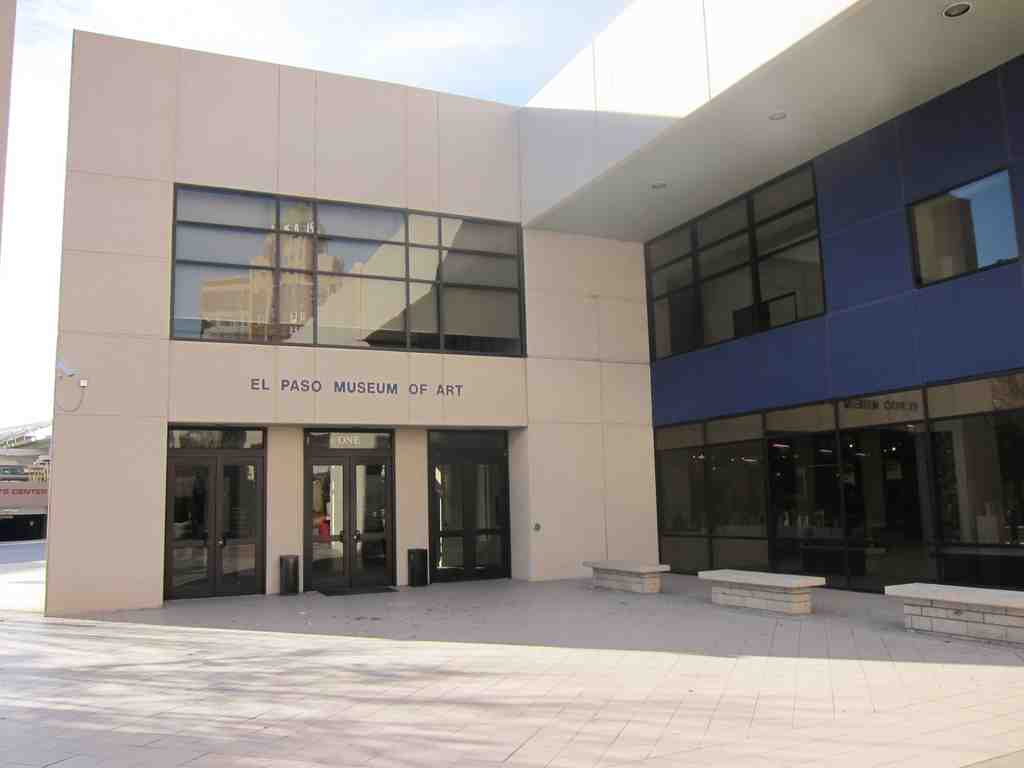
To spot the El Paso Museum of Art, look ahead for a modern, geometric cream-and-blue building with large windows and its name written right above the entrance doors. Now, let’s…Mehr lesenWeniger anzeigen
To spot the El Paso Museum of Art, look ahead for a modern, geometric cream-and-blue building with large windows and its name written right above the entrance doors. Now, let’s imagine yourself here in downtown El Paso back in 1959, when a group of dreamers opened this museum-at a time when the idea of a world-class collection this far west might’ve seemed a bit like trying to paint the desert green! Fast forward to 1998, and the museum moved into this handsome building you see, offering a creative home only a hop away from the Mexican border, welcoming over 100,000 art lovers every year. Inside, it’s like a treasure hunt through centuries: the museum is famous for its 57-piece Samuel H. Kress collection, where you’ll get to meet the likes of Gentileschi, Murillo, and van Dyck-not in person, sadly, but in brushstrokes vivid enough you might feel like they could jump out and ask you for directions! There’s a swirl of history here, from 12th-century European masterpieces all the way to Southwestern artists with names as colorful as their canvases-Manuel Gregorio Acosta, Carmen Lomas Garza, and Luis Jiménez, just to name a few. If you feel a little border magic in the air, you’re not imagining things; the museum brings together traditions and stories from Texas, New Mexico, and Ciudad Juárez, celebrating creativity that knows no limits…or international fences. And it’s not just about staring at paintings. You might stumble on storytelling sessions, a film series, or even a class that lets you put paintbrush-or maybe just marker-to paper. Around here, everyone picks up a little inspiration. So while the art inside might seem timeless, the experience is always something new! Ready to be amazed?
Eigene Seite öffnen →Directly across from you, look for a long, one-story building with a classic wooden cornice peeking above a bold red storefront sign-it’s nestled right on the corner with Geneva…Mehr lesenWeniger anzeigen
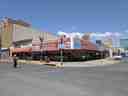
Directly across from you, look for a long, one-story building with a classic wooden cornice peeking above a bold red storefront sign-it’s nestled right on the corner with Geneva Loan & Jewelry painted big and bright, making it hard to miss! Now, get ready to travel back-no time machine required-as you stand in front of the Montgomery Building, the stubborn survivor of El Paso’s wild frontier days. Picture this street about 140 years ago: not a shiny car in sight, but horses hitched up under a wooden awning, dust swirling in the air, and the fresh sound of a distant train whistle as the Southern Pacific Railroad pulled into town for the very first time in 1881. The city was buzzing with changes, slowly transforming from adobe huts to busy blocks with brand-new brick and lumber. Suddenly, old El Paso started looking like those “big city” towns back east-or at least that was the plan. This building, put up in 1882 by William J. Montgomery, is a real trickster-it’s got a ‘false front’ designed to make it look taller and grander than it really is. That’s right, old Montgomery just needed a roof, a floor, and two new walls, and he borrowed the sides from his neighbors on both ends. He split it into two addresses-216 and 218 S. El Paso Street. Can you imagine the owners of those original side buildings, peeking over to see a whole new place pop up like an overzealous sandwich filling between their bread? This western architectural style, kind of like wearing a fancy hat to seem taller, was all the rage for making new businesses look impressive, even if they were only one story high. Back then, you’d find a bustling pharmacy and a bookstore in here, and folks probably argued about the latest snake oil remedies or which dime novel hero was the bravest. Over the years, the building has been everything from a shoemaker’s workshop to a restaurant and, now, today, a pawn shop and a clothing store cram themselves beneath those vintage cornices. Underneath the modern signage, the original wooden façade still hides, while the cornice-decorated like a piece of fancy architectural icing-remains proudly on display. This odd little building is more than just old wood and tin-it's a living slice of El Paso’s wild, dusty, get-rich-or-try-trying spirit, standing stubborn against the glassy towers around it. Think of it as the last poker player still at the table from a hand dealt back in the 1880s, keeping the city’s frontier heart alive with every century that rolls by!
Eigene Seite öffnen →To spot the Plaza Hotel, look up for a tall, brown-brick Art Deco skyscraper towering above the corner of Mills Avenue with the word “PLAZA” shining bright near the green-tiled…Mehr lesenWeniger anzeigen
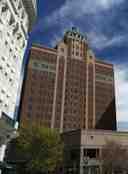
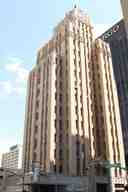
To spot the Plaza Hotel, look up for a tall, brown-brick Art Deco skyscraper towering above the corner of Mills Avenue with the word “PLAZA” shining bright near the green-tiled rooftop. Now, let’s set the scene-imagine the year is 1929, and you’re standing in the middle of a dusty, bustling El Paso. Right where this skyscraper rises, the famous Sheldon Hotel had just burned down, leaving behind nothing but ashes and wild stories of revolutionaries plotting inside its walls. That’s right, this was once the unofficial headquarters for both sides of the Mexican Revolution! Talk about hot historical gossip, huh? Suddenly, a man named Conrad Hilton-yes, that Hilton-swoops in, bursting with ambition. Just nineteen days after construction began, the stock market crashed and the Great Depression hit. But did that stop Hilton? Not a chance. Against all odds, the hotel shot up, a sparkling Art Deco beacon faced with brown brick and crowned with a dramatic pyramidal roof-like a cake topper for the city. By the time it opened in 1930, it was the tallest building in El Paso. Conrad Hilton himself lived here for years, and his mother too. In a twist straight out of Hollywood, Elizabeth Taylor, married to Hilton’s son Nicky at the time, called the penthouse home while filming the classic movie Giant. Imagine running into her in the hallway! Over the years, the hotel saw parties, secrets, changing hands, and finally closed its doors in 1991. But in true El Paso spirit, it wasn’t down for good. After a splashy $78 million renovation, the Plaza reopened in 2020, keeping its original elegance-brown brick, grand setbacks, and all. So as you look up at those nineteen stories, know you’re gazing at a survivor with style, stories, and a dash of movie-star sparkle.
Eigene Seite öffnen →To spot San Jacinto Plaza, just look for a wide pathway lined with smooth pale bricks leading up to a rust-colored metal sign with cut-out images of alligators and the letters…Mehr lesenWeniger anzeigen
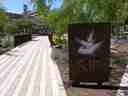
To spot San Jacinto Plaza, just look for a wide pathway lined with smooth pale bricks leading up to a rust-colored metal sign with cut-out images of alligators and the letters “SJP”-that’s your clue you’ve arrived at the heart of downtown El Paso! Now, take a deep breath and imagine yourself stepping right into the historic core of El Paso-the sun’s warming your face, the breeze rustling through the leafy elms, and the city’s hustle and bustle all around. San Jacinto Plaza has always been the beating heart of this town, and if these trees could talk, boy, would they spill some stories! Picture it: long before selfie sticks and iced lattes, this patch of earth was part of a ranch belonging to Juan Maria Ponce de Leon, who bought the land way back in 1827. For years, this was all just sandy ground with scruffy mesquites and corrals for livestock. But everything changed in 1881 when El Paso bought the spot from William T. Smith, and suddenly, the city had a new centerpiece up its sleeve. The city cleared things up, and a man named J. Fisher Satterwaite decided this place needed a little flair-less desert, more delight! Soon, 75 Chinese elms popped up, a new pond shimmered in the sun, and a shiny gazebo stood ready for local bands or maybe just a few lovestruck couples. But what would make an ordinary plaza become legendary in El Paso? Alligators! Yes, you heard me right-real, live alligators, paddling around their own walled pond. The news spread fast. Families gathered on the pond’s stone wall, peering down at those snappy stars, while pranksters sometimes gave professors a surprise by leaving an alligator right in their campus offices. Folks fell in love with the alligators-there were contests for guessing their weight, a gator named Oscar became an unexpected college guest, and even a motherly Minnie once charged to protect her precious egg. They became so iconic, people still lovingly call this place “La Plaza de los Lagartos”-Alligator Plaza. But not everyone played nice, and after some dangerous mischief, the gators eventually packed up and moved to the El Paso Zoo. Still, the spirit lives on: if you spot a giant alligator sculpture here, you can thank artist Luis Jiménez for keeping the legend alive in fiberglass! There’s more to this plaza than reptiles. Did you know that in the 1950s, a statue called “The Boy with the Leaking Boot” stood here, watched over by-you guessed it-those famous alligators? And the Plaza has always been a crossroads, echoing with sounds of from olden days, later replaced by trolley bells and the chatter of locals waiting for their bus rides home. Sometimes, the Plaza turned into a theater of life: preachers sang out warnings to cut down on evil and drunkenness, crowds swelled for Christmas tree lightings, and festive music filled the air. People have always flocked here to celebrate, protest, socialize, or just enjoy the shade on a hot afternoon. Even as time went on and the city changed-with new concerns and face-lifts-the Plaza stayed steadfast, a gathering spot for all. Those renovations you see now? They’re just the latest chapter. A recent $5.3 million overhaul has spruced things up with new benches, clean pathways, sweet landscaping, and-ready for it-a splash pad! Sure, there were some hiccups along the way (the city even billed the contractors for being slowpokes), but on April 16, 2016, a jubilant crowd watched as they reopened the new San Jacinto Plaza for everyone to enjoy. So, as you stand here in “La Plaza de los Lagartos,” imagine the parade of people who’ve strolled these paths, the wild tales of alligator pranks, and the echoes of music and laughter bouncing through El Paso’s history. And don’t forget-if you see a suspiciously still alligator, don’t worry, it’s just art. Probably.
Eigene Seite öffnen →Directly ahead, you’ll see the Plaza Theatre’s cream-colored Spanish Colonial Revival façade, topped with a scalloped parapet and shining with a bold marquee, nestled right…Mehr lesenWeniger anzeigen
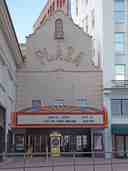
Directly ahead, you’ll see the Plaza Theatre’s cream-colored Spanish Colonial Revival façade, topped with a scalloped parapet and shining with a bold marquee, nestled right between a bright white building and a tan one-just follow the bursts of color over the entrance! Welcome to the fabulous Plaza Theatre-truly, the “Showplace of the Southwest!” Imagine yourself shaking off the Texas sun, and stepping through those gilded doors as the air conditioning-one of the first in public theaters in the United States-greets you with a chill you might have only dreamed about in 1930. But let’s travel even further back: before dazzling lights and marquee letters, this spot was just an unassuming produce warehouse, run by the Schuster brothers. Now, you’d hardly find a more glamorous transformation-unless you found a pumpkin that turned into a carriage! In 1927, theater mogul Louis L. Dent bought this plot, promising to build something the whole city could be proud of. He kept his word: just a year later, construction started on what would soon become a western palace for films and live performances, designed by W. Scott Dunne, whose ghost must be delighted knowing his masterpiece survived when so many others vanished. By September of 1930, El Pasoans crowded the Plaza’s seats-2,410 of them!-for the theater’s grand opening, dazzled by the twinkling ceiling that echoed the actual Texas night sky, and floating clouds projected overhead that must’ve made some people briefly wonder if they’d wandered outside again. Patrons marveled at lush carpets, intricate mosaics, Spanish-style parapets, and wrought iron fixtures. Even the humble popcorn felt fancy in this setting! The Plaza called itself the finest and largest theater between Dallas and Los Angeles, and it had big stars to back that up: names like John Wayne, the Marx Brothers, Tallulah Bankhead, and even the legendary Rita Moreno all graced its stage. For moviegoers, there was always one special treat: the Mighty Wurlitzer Organ, a $60,000 marvel that could sound like galloping horses one minute and the ocean surf the next. It would rise up dramatically from the orchestra pit to serenade patrons before and after films, making every evening feel magical. But as the decades rolled on, the winds of change brought clouds. Television arrived, drive-ins lured folks away, and suburban neighborhoods grew far from downtown. The Plaza’s grandeur faded and, by the 1970s, the once-showstopping theater fell into disrepair. Seats went empty, the lavish furnishings were auctioned off-someone out there is probably still bragging about that antique sconce hanging in their hallway. Even the Mighty Wurlitzer traveled to Dallas for a while. The darkest moment nearly came in 1989, when demolition loomed. The Dipp family, eager to create a parking lot (every city’s favorite fate for historic buildings!), planned the theater’s end. But El Pasoans rallied: fundraising swept across the city and, at the eleventh hour, Rita Moreno herself took to the stage for a finale no one could forget. The news flashed: the Plaza was saved. It would take another $38 million and years of loving restoration-plus a few headaches only historic buildings can deliver-before the Plaza’s doors swung open wide again in 2006 with multiple sold-out shows of Riverdance. Today, with the 2,050-seat Kendall Kidd Performance Hall, the cozy Philanthropy Theatre, a rooftop garden, and even meeting spaces, the Plaza is once again the place to be. Oh, and don’t worry-the one-of-a-kind Mighty Wurlitzer has come home and is still ready to fill the hall with wonder. As you gaze at those glittering lights and that whimsical Spanish-style front, take a deep breath and soak in the energy of throwback glamour, community triumph, and just a touch of West Texas magic. Now, who’s ready for showtime?
Eigene Seite öffnen →Look up to see a tall, tan-brick skyscraper with elegant Art Deco lines and sculpted accents rising across the intersection-this is the O. T. Bassett Tower! Now, picture yourself…Mehr lesenWeniger anzeigen
Look up to see a tall, tan-brick skyscraper with elegant Art Deco lines and sculpted accents rising across the intersection-this is the O. T. Bassett Tower! Now, picture yourself in 1930, the streets buzzing with the sounds of hopeful footsteps and excitement for the city's newest-and briefly tallest-skyscraper. Charles N. Bassett, wanting to honor his father, brought this tower to life, with the talented Trost & Trost designing every stylish setback you see. As you stand here, wind whipping between modern traffic, imagine a time when this 15-story beauty soared over El Paso, shading the city with its tan brick and sharp, geometric designs. There’s a sense of playful competition-the Bassett Tower had barely finished basking in the spotlight before the Hilton next door reached even taller heights that same year! Look closely at the entrance; there’s a face carved above the doorway. Many say it’s Henry Trost himself, silently keeping an eye on the city he helped shape. Over the decades, while other giants grew around it, the Bassett Tower claimed its own kind of immortality by joining the National Register of Historic Places in 1980. If only buildings could get a trophy-or maybe just a nice hat for that famous face.
Eigene Seite öffnen →To spot the Church of St. Clement, look for a grand, stone building dressed in deep, dark blocks, with pointed Gothic arches and a tall, square bell tower that rises proudly above…Mehr lesenWeniger anzeigen
To spot the Church of St. Clement, look for a grand, stone building dressed in deep, dark blocks, with pointed Gothic arches and a tall, square bell tower that rises proudly above the street corner. Welcome to the Church of St. Clement, a place where El Paso’s spiritual history crackles with the energy of pioneers, gunfighters, railroad tycoons, and-believe it or not-fossilized sea creatures! As you stand here, imagine the year is 1870. El Paso is less a city and more a dust-blown frontier outpost, wide open, wild, and waiting for its first Protestant congregation. The story begins in the humble parlor of Gaylord J. Clarke, a fresh-faced lawyer from New York with a heart full of hope and, apparently, a parlor big enough for every Episcopalian in town-which, at the time, might’ve been about five people and one dusty cat. Clarke’s friend, Albert Jennings Fountain, wasn’t just anyone. He’d later be a senator and lieutenant governor, but back then, he and Clarke were dreamers, riding hundred-mile trails to Austin just to ask the Bishop for a priest to bring a little peace to El Paso’s gun-toting nights. And so, the Reverend Joseph Wilkin Tays arrived on a cloud of prayers and railway dust. On October 9, 1870, he held El Paso’s very first Protestant service-not here, but in a rented chapel, sending echoes of hymns drifting over cactus fields. They named their new congregation after both Clarke’s late son and the ancient Saint Clement of Rome. But fate in El Paso loved drama: only two months later, Clarke heroically stepped between two feuding lawyers, guns drawn. The ensuing gunfight claimed his life, and the little flock he had nurtured fell temporarily silent. When you look at the stones of St. Clement’s, imagine the echo of those early struggles-grief, hope, and determination mixed right in. Things went quiet during the devastating Panic of 1873, but then, with the iron song of the railroads, the town revived. Tays and the Episcopal spirit returned, eventually building a wood-framed church across from bustling San Jacinto Plaza. But the congregation outgrew the little building, and with every passing decade-belfry added here, new chancel added there-it became clear: El Paso wasn’t just surviving, it was thriving. Now, take a look at this remarkable building before you. The cornerstone was laid in 1907, and with it, St. Clement’s set down Gothic Revival roots right here. The church’s shape follows a cruciform floor plan, and that bell tower is more than just a perch for pigeons-it is a beacon of history, its walls made of Upham dolostone, mined locally. Here’s a quirky fact: if you stare at the walls long enough, you just might see the whorled outlines of ancient marine fossils, proof that this tough, sunbaked desert was once an ocean floor, teeming with life unfathomable to nineteenth-century churchgoers. Talk about a rock-solid connection to the past! The decades rolled on, bringing growth, new chapels, a parish school in 1958, and a booming membership that made St. Clement’s the heart of Anglican life in El Paso. The congregation didn’t just stick with one building, either. St. Clement’s helped plant churches all over town-an ecclesiastical green thumb, you could say. The twentieth and twenty-first centuries brought big decisions and a bit of tension with the national Episcopal Church. In 2007, more than 450 members voted to strike out on their own, keeping the building after a multimillion-dollar settlement. It was bold, dramatic, and uniquely Texan, much like everything that’s happened inside these fossil-laden walls. Today, St. Clement stands proud as part of the Anglican Church in North America, guardian of ancient stone and new stories. So give a little wave to the stone fish and ancient snails under your fingers, and remember: every brick here holds a century and a half of courage, community, and the dusty spirit of El Paso. Now, let’s quietly step onward-unless you think the fossils want to follow along!
Eigene Seite öffnen →In front of you stands a stately two-story brick building with tall white columns framing its entrance-just look across the street for those grand arches and bright white trim and…Mehr lesenWeniger anzeigen
In front of you stands a stately two-story brick building with tall white columns framing its entrance-just look across the street for those grand arches and bright white trim and you’ve found the Woman’s Club of El Paso! Now, get ready to meet a clubhouse that’s packed more punch into El Paso history than a whole library full of dusty books. Picture a time when ladies’ clubs weren’t just about tea and polite conversation-no, this club was more like the engine room powering progress for women in West Texas. It all began with Mary Hamilton Mills, who arrived in El Paso in 1869 and started pulling together a circle of remarkable women. They called themselves the Child Culture Study Circle at first, meeting in parlors and each other’s homes long before group chats or coffee shops existed. By 1894, they were officially organized, and soon became known as the Woman’s Club of El Paso. This very building, now towering above the busy intersection, was a real trailblazer in 1916-it became the first free-standing woman’s clubhouse in Texas. Picture it: the lot buzzing with anticipation, the air thick with sawdust and hope as the architect Otto H. Thorman’s designs turned into reality. All those dues, all those bake sale cookies-they finally paid off when the doors swung open in November 1916, and the presidents of the club over the years read like the all-star team of El Paso: Olga Kohlberg, Eugenia Schuster, Kate Moore Brown-each steering the club through waves of civic triumphs and challenges. Don’t be fooled by those dignified bricks and graceful columns-the women inside were rebels in their own right. They championed El Paso’s very first public school kindergarten, set up the city’s first hospital, and even helped create the first children’s library in the country. They got their hands dirty campaigning for sanitation laws, and when refugees from the Mexican Revolution arrived, the club’s doors were open wide. Every year, this building rings with laughter during the Fall Festival fundraiser, the holiday Wassail party, and the Spring Celebration-all to keep these historic walls standing strong. Auxiliary groups, like the Arts and Crafts Study Club and even a Junior Woman’s Club, keep the legacy moving forward. With art, books, and a dash of determination, this spot at 1400 N. Mesa Drive remains just what it set out to be: a beacon of community, courage, and creativity for generations. Now that’s what I call some serious girl power-no secret handshake required!
Eigene Seite öffnen →
Häufig gestellte Fragen
Wie starte ich die Tour?
Laden Sie nach dem Kauf die AudaTours-App herunter und geben Sie Ihren Einlösecode ein. Die Tour ist sofort startbereit – tippen Sie einfach auf „Play“ und folgen Sie der GPS-geführten Route.
Benötige ich während der Tour Internet?
Nein! Laden Sie die Tour vor dem Start herunter und genießen Sie sie vollständig offline. Nur die Chat-Funktion benötigt Internet. Wir empfehlen den Download über WLAN, um mobiles Datenvolumen zu sparen.
Handelt es sich um eine geführte Gruppentour?
Nein – dies ist ein selbstgeführter Audioguide. Sie erkunden unabhängig in Ihrem eigenen Tempo, wobei die Audioerzählung über Ihr Telefon abgespielt wird. Kein Reiseleiter, keine Gruppe, kein Zeitplan.
Wie lange dauert die Tour?
Die meisten Touren dauern 60–90 Minuten, aber Sie kontrollieren das Tempo vollständig. Pausieren Sie, überspringen Sie Stopps oder machen Sie Pausen, wann immer Sie wollen.
Was, wenn ich die Tour heute nicht beenden kann?
Kein Problem! Touren haben lebenslangen Zugriff. Pausieren Sie und setzen Sie sie fort, wann immer Sie möchten – morgen, nächste Woche oder nächstes Jahr. Ihr Fortschritt wird gespeichert.
Welche Sprachen sind verfügbar?
Alle Touren sind in über 50 Sprachen verfügbar. Wählen Sie Ihre bevorzugte Sprache beim Einlösen Ihres Codes. Hinweis: Die Sprache kann nach der Tour-Generierung nicht mehr geändert werden.
Wo greife ich nach dem Kauf auf die Tour zu?
Laden Sie die kostenlose AudaTours-App aus dem App Store oder von Google Play herunter. Geben Sie Ihren Einlösecode (per E-Mail gesendet) ein, und die Tour erscheint in Ihrer Bibliothek, bereit zum Download und Start.
Wenn Ihnen die Tour nicht gefällt, erstatten wir Ihnen den Kaufpreis. Kontaktieren Sie uns unter [email protected]
Sicher bezahlen mit 


