

Amherst Audio Tour: Dichter, Fossilien & Vergessene Straßen
Unter dem ruhigen Charme der Universitätsstadt Amherst verbergen sich Geheimnisse in verwitterten Ziegeln und sonnigen Gärten – Geschichten von Dichtern, verborgenen Rebellionen und wissenschaftlichen Wundern, die Generationen geprägt haben. Erkunden Sie Amherst in Ihrem eigenen Tempo mit dieser selbstgeführten Audiotour und entdecken Sie fesselnde Geschichten, die sich durch seine Straßen und Wahrzeichen ziehen – Details, die die meisten Besucher nie erfahren. Was trieb Emily Dickinson dazu, ihre Worte und ihre Fenster mit solcher Besessenheit zu bewachen? Wer waren die Visionäre hinter der Goodwin Memorial AME Zion Church, die alles riskierten, um für Freiheit und Glauben zu kämpfen? Warum birgt ein Mammutzahn im Beneski Museum den Schlüssel zu einem prähistorischen Geheimnis, von dem nur wenige Einheimische wissen, dass es existiert? Gehen Sie dort, wo die Geschichte unter jedem Schritt knistert, und setzen Sie Momente des Protests, der Brillanz und des Opfers zusammen. Während Sie sich von Gärten zu Galerien bewegen, erleben Sie Amhersts dramatische Vergangenheit auf unerwartete Weise lebendig werden. Bereit, das unerzählte Amherst zu entdecken, das sich direkt vor Ihren Augen verbirgt? Ihre Reise beginnt jetzt.
Tourvorschau
Über diese Tour
- scheduleDauer 30–50 minsEigenes Tempo
- straighten3.9 km FußwegDem geführten Pfad folgen
- location_onStandortAmherst, Vereinigte Staaten
- wifi_offFunktioniert offlineEinmal herunterladen, überall nutzen
- all_inclusiveLebenslanger ZugriffJederzeit wiederholen, für immer
- location_onStartet bei Amherst Westfriedhof
Stopps auf dieser Tour
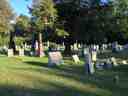
You’re looking for a spread of old gravestones in a green, shaded field, with a striking wrought-iron-fenced plot tucked beneath large trees-stand anywhere near that and you’ve…Mehr lesenWeniger anzeigen
You’re looking for a spread of old gravestones in a green, shaded field, with a striking wrought-iron-fenced plot tucked beneath large trees-stand anywhere near that and you’ve found Amherst West Cemetery. Alright, you’ve arrived at Amherst West Cemetery, a patch of history right beneath your feet, sprinkled with centuries-old gravestones that capture the tales and secrets of Amherst’s earliest days. This peaceful four-acre spot first came to life in 1730, when Hadley folks decided their eastern precinct needed a place to say goodbye to its own. Fast-forward to 1786-Amherst became its own town, and this cemetery became the final resting place for generations of townsfolk. Picture it: back in the 1700s, the ground here was bare and simple, dotted with slate headstones etched by nearly two dozen local carvers, and between the shadows of hefty maples, you’ll spot the oldest marked grave from 1737. Now, don’t trip over history-markers from the grand Victorian era look dramatically different. Limestone and brownstone gave way to tough, weather-defying granite, especially for the well-to-do families. Things didn’t get fancy until the 19th century when the cemetery’s winding figure-eight paths took shape. In the southeast corner, you’ll find stones marking African American burials-modest, unadorned, quietly dignified. Not everyone here is anonymous though. In the Dickinson family plot, behind a proud wrought iron fence, lies the poet Emily Dickinson, her parents, and other notables like Civil War veterans and U.S. Representative Ebenezer Mattoon. Picture family and friends, dressed in black, slipping through the gates-first the plain granite piers of the old Gaylord Gates, and later, the stately ashlar stone Burnham Gates added in 1954. So, as you stand in the dappled sunlight, feel the history-centuries of love, loss, and poetry all share space under these trees. And hey, I promise, none of the ghosts bite.
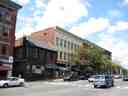
Eigene Seite öffnen →Right ahead, you'll spot the Amherst Central Business District by its charming lineup of old brick buildings and some interesting wooden storefronts, all stretched out along a…Mehr lesenWeniger anzeigen
Right ahead, you'll spot the Amherst Central Business District by its charming lineup of old brick buildings and some interesting wooden storefronts, all stretched out along a busy junction with trees and a mix of small shops. Imagine the sound of footsteps clattering on the sidewalks over two hundred years ago, as horse-drawn carts rumbled past and townsfolk gathered at this very crossroads. Right where you’re standing, at the corner of Main and Pleasant, early settlers of Amherst once clustered together, trading gossip, goods, and probably the secret to surviving those harsh New England winters. The funny thing is, while this place has always been Amherst’s center of action, there’s not a single building here left from the very beginning-turns out a few stubborn fires in the 1800s had other plans! When flames swept through the downtown, they wiped out the oldest structures, leaving the town to rebuild. That’s why the buildings you see, mostly made of brick, have that solid, handsome look from the late 1800s and early 1900s. So, while the ground you’re on once saw colonial shoe leather, the blocks themselves are more like something out of a Victorian novel. The district’s story is one of constant reinvention-from farmland and general stores to bustling town center, powered by the arrival of Amherst College and the Massachusetts Agricultural College. Now, the area includes not just storefronts but landmarks like the Strong House, churches that have weathered centuries, Amherst Town Hall, and even a famous fountain in the northern stretch of the green. Oh, and the Lord Jeffery Inn at the corner nods to the most recent update in 2011-because even history can’t resist a good renovation. So, whether you’re grabbing a coffee or pondering the area’s many historic hat changes, you’re at the heart of a town that rebounds stronger-and a little more stylish-after every challenge.
Eigene Seite öffnen →
8 weitere Stationen anzeigenWeniger Stationen anzeigenexpand_moreexpand_less
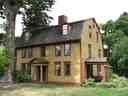
Right in front of you, you’ll spot a big yellow house with dark red trim, a steep gambrel roof, and two little dormer windows peeking out from the attic-just look for the building…Mehr lesenWeniger anzeigen
Right in front of you, you’ll spot a big yellow house with dark red trim, a steep gambrel roof, and two little dormer windows peeking out from the attic-just look for the building set well back from the street with twin porches and plenty of character. Now, imagine you’re standing here over 275 years ago, when Nehemiah Strong first built this sturdy, wooden house in what was really just a very new settlement-only six years after Amherst got started! In those early days, it looked a bit different-more like a classic saltbox. But Strong’s son, Simeon, who wasn’t just anyone but a local lawyer with a flair for leadership, decided the old place needed a little more pizzazz, so he gave it a stylish gambrel roof and those porches in the late 1790s. Simeon went from town meetings to the Massachusetts Supreme Judicial Court-talk about climbing to the top, both literally and figuratively! After Strong’s family let it go in 1845, stories from fairs, family gatherings, and Amherst’s first days still lingered in its rooms. Since 1916, the Amherst Historical Society has kept the secrets of this house safe, and today, it’s your portal to the Amherst History Museum. It’s not every day you get to stand where history had such a strong start-pun absolutely intended!
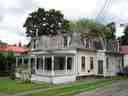
Eigene Seite öffnen →Look for a charming light-yellow house with a shingled Mansard roof and a large, inviting front porch-it sits right by the sidewalk and practically waves at you with its unique…Mehr lesenWeniger anzeigen
Look for a charming light-yellow house with a shingled Mansard roof and a large, inviting front porch-it sits right by the sidewalk and practically waves at you with its unique roofline. Standing here in the Prospect-Gaylord Historic District, you’re surrounded by a lively chapter of Amherst’s story. Imagine the late 1800s: fresh paint, sounds of hammers, smells of new wood-when most of these homes popped up, some fancy like the Queen Anne styles, others as practical as the hard-working families who lived in them. Prospect Street was nothing but a dusty line between farmland and the growing town center, changing from humble Greek Revival cottages to Victorian homes with a few more flourishes. Stroll just a bit and you’ll spot the Hope Community Church, still standing with a confidence first earned in 1912-built for an African American congregation who, with help from legendary W.E.B. Du Bois, scraped together the funds, nickel by nickel. Streets like Gaylord began as private lanes, eventually filling with cozy houses as more families sought a new start. By 1993, the whole area snagged a spot on the National Register-so every porch and picket fence you see is now officially “historic,” even if sometimes the squirrels still treat the place like an acorn amusement park.
Eigene Seite öffnen →You’re looking for a lovely, large white house with classic wood siding and a wide porch tucked behind leafy trees-just look straight ahead, and you’ll spot it nestled among…Mehr lesenWeniger anzeigen
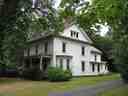
You’re looking for a lovely, large white house with classic wood siding and a wide porch tucked behind leafy trees-just look straight ahead, and you’ll spot it nestled among generous green lawns and mature shade trees. Welcome to the Lincoln-Sunset Historic District, the grand “Millionaire’s Row” of Amherst! Picture yourself walking these quiet, tree-canopied streets back in the late 1800s-crisp autumn leaves crunching underfoot -where newly wealthy merchants and esteemed university professors strolled home, tipping their hats and perhaps quietly bragging about whose house was the fanciest of all. This was one of Amherst’s first planned neighborhoods, created for folks who wanted a bit more space-far from the smoke and, let’s say, “unique” smells of the bustling factories to the east. Here, houses pop up from the 1870s to 1930s, many showing off Queen Anne towers or stately Colonial Revival columns, all sitting comfortably on large, manicured lawns. Even back then, the developers got clever-selling lots with strict rules that homes had to be grand and neighborly, so even now you’ll notice they share a certain proud dignity. If you listen closely, you can almost hear old carriage wheels rumbling by and the cheerful voices of families enjoying a Sunday stroll. Some of these homes, like the oldest one dating back to 1751-the legendary Solomon Boltwood House-have watched Amherst change from open farmland and sleepy college town to the vibrant community you see today. With each step, you’re actually living in a story that’s been building for over a century. Next time you hear about “Millionaire’s Row,” just wink-you’ve seen its leafy secrets and timeless beauty for yourself. Keep walking, and who knows, maybe the next breeze will carry a forgotten whisper from Amherst’s most fashionable days.
Eigene Seite öffnen →To spot the Goodwin Memorial African Methodist Episcopal Zion Church, look ahead for a small white chapel with shingled walls, a bright red door, and a cross perched on its peak,…Mehr lesenWeniger anzeigen
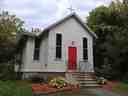
To spot the Goodwin Memorial African Methodist Episcopal Zion Church, look ahead for a small white chapel with shingled walls, a bright red door, and a cross perched on its peak, nestled among trees at the top of a short set of steps. Here you are, right in front of the Goodwin Memorial AME Zion Church! Imagine Amherst about 150 years ago: quieter streets, horses clopping, and the distant sounds of families emerging from Sunday services. Now, picture this spot transforming into a beacon for those seeking hope and belonging-a place where music spills out the windows and warm laughter greets newcomers at the door. After the Civil War, many African Americans journeyed north, searching for a fresh start and a taste of freedom’s promise, but even here, true equality remained out of reach. Still, they banded together, building a new life and a special kind of strength. In 1869, the first congregation gathered in a modest chapel on Amherst College property-Zion Chapel. They came mostly from an area called Westside, and their dreams quickly outgrew the little building. As the African American congregation flourished and the white congregation dwindled, the Zion members dreamt even bigger. They wanted a church of their own. College officials said no, but the determined members-led by Moses and Anna Goodwin-didn’t take no for an answer. They dubbed themselves the Union Church, held services in Amherst Town Hall, and started passing the hat around town. Even Booker T. Washington paid a visit in 1904 to help shake loose some donation dollars-imagine that fundraising speech! With $611.10 in their pockets (which was a LOT back then-they probably counted every penny more than once), the church community bought this piece of land in 1907. By 1910, the church was up-a sturdy little building with exposed rafter ends, a shingled roof, and a real sense of welcome. The cornerstone you see on the foundation bears the date 1910, chiseling their story into Amherst’s landscape forever. Moses Goodwin was the sort of person you’d want fixing your bike-or running your church. Born in South Carolina, he moved here after the war and opened a bicycle repair and locksmith shop downtown. Together with his wife Anna-her apple pie was so famous it might have had its own zip code-the Goodwin family became the heart of the congregation. On Sundays, the church would buzz with activity all day long: services, choir practice (their daughter Amy led the choir for a while), and, if you were lucky, one of Anna’s homemade meals. The church never lost its spirit. It became the Goodwin Memorial AME Zion Church in 1967, honoring Moses and his family’s decades of devotion. Today, it’s still a lively hub: a place for worship, gospel music, bell choir festivals, weddings, baptisms, family potlucks, and Sunday school classes for kids. Each year, the fried chicken cooked up in the basement goes so fast it’s almost a local legend. Step closer and peek through the windows: inside, sunlight streams through a stained glass window that honors a dedicated parishioner, Pearl Hawkins, with diamond panes and the letters “PH.” The building’s design is simple and sturdy-just as it was when folks poured every ounce of determination and hope into its walls. And the legacy keeps growing. In 2014, the church welcomed Bishop Mildred B. Hines-the first female bishop of the African Methodist Episcopal Zion Church-for a hugely anticipated visit. The service was buzzing with excitement and, if you walked by, you’d have heard hymns rising up through the trees and laughter drifting down Woodside Avenue. Listed on the National Register of Historic Places since 2000, the Goodwin Memorial AME Zion Church isn’t just a building-it’s a living testament to the power of community, self-determination, and a little bit of stubborn “yes we can” spirit when everyone else says “no you can’t.” Intrigued by the goodwin family, church today or the historic building? Make your way to the chat section and I'll be happy to provide further details.
Eigene Seite öffnen →To spot the Mead Art Museum, look for a modern red-brick building set low and wide, with a dramatic stone tower rising up beside it-almost as if someone parked an old Gothic…Mehr lesenWeniger anzeigen
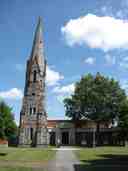
To spot the Mead Art Museum, look for a modern red-brick building set low and wide, with a dramatic stone tower rising up beside it-almost as if someone parked an old Gothic church spire right next to an art gallery! Now, as you stand here in front of the Mead Art Museum, imagine the doors swinging open and a faint, echoey footstep on polished floors. You’re about to enter one of the liveliest collections of art in Western Massachusetts. This museum isn’t just about dusty paintings and old statues-though it does have plenty of those! Opened in 1949, the Mead is named after William Rutherford Mead, a big deal in the world of architecture-you could say he put the “Mead” in “McKim, Mead & White.” Thanks to his wife, Olga, who left her fortune to Amherst College, the collection keeps growing, and-good news for your wallet-this place is always free! Inside, the Mead holds about 19,000 items-yes, you heard right, that’s enough art to fill your average castle, or at least several very large closets. You’ll find everything from American and European paintings to colorful Mexican ceramics, mystic Tibetan scrolls, and bold West African sculptures. There’s even a slice of 17th-century England right here: don’t miss the Rotherwas Room, complete with carved wood and paneling from an actual parlor that once sat in an English manor. Picture a crackling fire, nobles sipping tea, and maybe the awkward silence when someone mentions the weather for the thousandth time. But if you want a real adventure, you have to check out the Assyrian reliefs. Back in the 1850s, Amherst’s third president Edward Hitchcock decided that what the college truly needed was some walls… from 9th-century BCE Iraq! So he arranged to have panels shipped all the way from King Ashurnasirpal II’s palace at Nimrud. These slabs traveled by mule, by boat, and, at one point, were even shaved thinner and chopped into squares just so they’d fit on the ships. The carvings show the king himself, decked out in royal robes, doing his best to look heroic while pouring offerings to the gods. He’s flanked by genii-no, not the genie from the lamp, but fierce winged spirits-and the walls are covered with cuneiform that basically says, “Look how awesome I am.” Just imagine ancient craftsmen in bustling Nimrud, dust swirling, the clang of chisels against stone, surrounded by 60,000 people in a city that never slept-quite the commute compared to Amherst’s quiet quad. Fast-forward to 1945, and a whole English room gets waltzed across the Atlantic, courtesy of the collector Herbert Pratt, who decided the Rotherwas Room deserved some new fans. Besides the art, the Mead buzzes with life in the present: student-led tours, community programs where you might catch a pop-up drawing session, and even study breaks with snacks during Finals-because everyone needs a cookie with their Caravaggio. It’s a space that tosses you between centuries, continents, and cultures faster than you can say, “Can I touch that? Oh wait, probably not.” Here at Mead, art isn't just on the walls-it's alive in the stories, the people, and the history waiting for you behind every corner. And all you have to do is walk inside. Ready to delve deeper into the collection, points of interest or the programs? Join me in the chat section for an enriching discussion.
Eigene Seite öffnen →Imagine yourself nearly 200 years ago, when Amherst College was still young and full of curiosity. Edward Hitchcock, scientific explorer and third president of the college,…Mehr lesenWeniger anzeigen
Imagine yourself nearly 200 years ago, when Amherst College was still young and full of curiosity. Edward Hitchcock, scientific explorer and third president of the college, believed the world’s wonders belonged right here in Amherst. You might hear mailbags bursting open as alumni from every corner of the globe sent back strange minerals, fossils, and even the occasional jaw-dropping dinosaur footprint. Amherst’s first natural history collection was housed in the Octagon-just picture all those weird relics squeezed into a tiny, eight-sided building. Eventually, the collection outgrew its home. With the Appleton Cabinet in 1855 and later the Pratt Museum in the 1940s, the specimens migrated from building to building, sort of like academic nomads. It wasn’t until 2006 that all 200,000 objects-yes, you heard right-settled here in the magnificent Beneski Earth Sciences Building. Now, let’s dive into the heart of the collection: the Hitchcock Ichnological Cabinet, boasting more than 1,700 slabs with dinosaur footprints. This is the world’s largest stash of dinosaur tracks, gathered mostly by Hitchcock himself, who must have set a world record for “Most Muddy Boots Worn Out While Chasing Fossils.” One legendary piece is called “Noah’s Raven,” the very first dinosaur fossil ever found in North America, discovered in 1802-long before anyone knew what a dinosaur was. Imagine the confusion: “Hey, what sort of giant bird left that behind?” Spoiler alert: not a raven. As you head inside, three floors await you like a natural history sandwich. The first floor brings ancient giants back to life-an Ice Age mastodon that’s been here since 1869, and a mammoth found in 1923. There’s even an exhibit on the evolution of the horse in North America-so if you ever longed to see a horse before its stylish mane days, you’re in for a treat. The second floor is packed with sparkling minerals and invertebrate wonders, all organized so you can trace the history of life and our ever-changing planet. And then there’s the basement-growing up, you probably hid socks under the bed, but in this basement? Dinosaur skeletons, including the world’s best Dryosaurus and a pair of massive Dyslocosaurus legs. There’s even a jaw from the legendary “Alamotyrannus,” discovered way back in 1924. The building itself is a scientific wonder. Designed to spur hands-on learning, it’s won more awards than most celebrities. Southern windows open up to the dramatic Holyoke Range, and if you’re using the bathrooms, take a look-each floor’s countertops are made from a different type of rock. Geology, even when you wash your hands. The Beneski Museum’s story is about curiosity, discovery, and the excitement of piecing together the world’s past using the tools of today. Inside, students and researchers handle specimens that have traveled continents and centuries. Now, you’re part of their story-just don’t leave any strange footprints on the floor, or they might end up in the next exhibit!
Eigene Seite öffnen →To spot the Emily Dickinson Museum, just look ahead for a large, sunny yellow brick house with green shutters and a porch stretching across the front-this stately building will be…Mehr lesenWeniger anzeigen
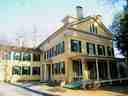
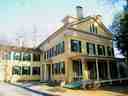
To spot the Emily Dickinson Museum, just look ahead for a large, sunny yellow brick house with green shutters and a porch stretching across the front-this stately building will be hard to miss on your right! Now, take a deep breath-imagine the scent of old paper, blooming flowers, and maybe the faintest whiff of mystery. You’re standing in front of the birthplace and lifelong home of America’s famously reclusive poet, Emily Dickinson. “Hope” is the thing with feathers-and here’s the place where hope perched among stacks of poems, tucked away in a quiet upstairs room. But first, picture the 1800s: horse-drawn carriages rattling along Main Street, voices from the garden, and the sharp sound of a pen scratching out lines of verse. The Homestead, as this house is called, was built in 1813 by Samuel Fowler Dickinson, Emily’s grandfather-a bigwig lawyer with big dreams. Back then, this brick house was the talk of the town: the first of its kind, with walls painted red to cover up brick’s imperfections. But, no family is ever just a happy portrait; the Dickinsons had their share of drama. Money problems threatened their dream home more than once, and by the time Emily was born here in 1830, the house had passed through ownership like a literary plot twist. Edward Dickinson, Emily’s father-a man both proud and prudent-bought the house again and, with his wife and children, moved in for good in 1855. Just to keep things lively, in 1856 he built the elegant house next door, the Evergreens, as a wedding gift for Emily’s brother Austin and his wife Susan. Now, imagine a path winding through the lawn, “just wide enough for two who love,” where siblings traded secrets and poems were passed like treasure. Edward Dickinson liked sprucing things up. He turned this house into a mix of old Federal style and elegant Greek Revival trimmings. He added a veranda on the west, painted it ochre and off-white, and even topped it with an Italianate cupola-which is basically the 19th-century version of saying, “Check out my fancy new roof!” Meanwhile, Emily was busy tending the garden with her mother and sister Lavinia, sending flowers and poetic notes to friends. You can almost hear the rustle of skirts among the blooms, and imagine the family’s cow mooing in the barn behind the house. As Emily grew older, life became stranger-and a bit spookier. She grew more and more private, limiting visits to her brother’s house next door and often communicating through closed doors. Amherst locals’ eyebrows must have nearly disappeared into their hairlines at the stories: Emily, the almost invisible poet, tending her garden by moonlight! But inside, her room was filling up, drawer by drawer, with hundreds of poems written in secret. When she died in 1886, her funeral was held right here in the library, and her sister Lavinia, following Emily’s wishes, burned her letters. But then-plot twist!-Lavinia unlocked a chest to discover Emily’s poems. The poetry that had never seen sunlight became a literary sensation, thanks to a sister’s curiosity and a stubborn old lock. After Emily and Lavinia were gone, the family home passed through various hands, from relatives to renters, even hosting college professors. Generations later, Amherst College and the Martha Dickinson Bianchi Trust teamed up to finally restore the Homestead and the Evergreens as a united museum. Today, the two houses stand together, preserving the peculiar magic of the Dickinson family’s lives-secrets, heartaches, laughter, and the wild, beautiful verses born right here. And here you are, standing on ground once mapped by pioneers, softened by generations of footsteps, and haunted-in the best way-by the quiet voice of Emily Dickinson. If these yellow bricks could talk, I’m sure they would have some pretty poetic things to say.
Eigene Seite öffnen →You’re looking for a big, yellow house with green shutters and a wide porch, right ahead of you-its tall chimneys and square cupola make it hard to miss among the trees. Imagine…Mehr lesenWeniger anzeigen
You’re looking for a big, yellow house with green shutters and a wide porch, right ahead of you-its tall chimneys and square cupola make it hard to miss among the trees. Imagine this spot in the early 1800s, with carriages rattling along dusty Main Street and neighbors pausing to chat in the shade of towering elms. The air is thick with both poetry and the scent of fresh ink, because you stand at the heart of the Dickinson Historic District, where creativity and ambition shaped Amherst’s story. The grand house before you was built in 1813 by Samuel Dickinson, who wasn’t just Emily’s grandfather-he was a founder of Amherst College, a political mover, and a man probably stubborn enough to think hats made of palm leaves could catch on in New England (spoiler: that was actually his neighbor Leonard Hills, who stirred up his own bit of history here). Emily’s father, Edward, and her brother Austin kept the household busy with law and politics, while Emily herself ducked the spotlight, quietly writing poems that would eventually make this home famous worldwide. Look around: the Victorian houses, Sweetser Park’s green lawns, the Italianate railroad depot, and the First Congregational Church’s pointed spire all belong to this district, added to the National Register in 1977 to honor not just one poetic genius, but a whole family-and a whole town-driven by big dreams and, sometimes, interesting hat choices. You never know, maybe some of that inspiration will rub off on you too!
Eigene Seite öffnen →

Häufig gestellte Fragen
Wie starte ich die Tour?
Laden Sie nach dem Kauf die AudaTours-App herunter und geben Sie Ihren Einlösecode ein. Die Tour ist sofort startbereit – tippen Sie einfach auf „Play“ und folgen Sie der GPS-geführten Route.
Benötige ich während der Tour Internet?
Nein! Laden Sie die Tour vor dem Start herunter und genießen Sie sie vollständig offline. Nur die Chat-Funktion benötigt Internet. Wir empfehlen den Download über WLAN, um mobiles Datenvolumen zu sparen.
Handelt es sich um eine geführte Gruppentour?
Nein – dies ist ein selbstgeführter Audioguide. Sie erkunden unabhängig in Ihrem eigenen Tempo, wobei die Audioerzählung über Ihr Telefon abgespielt wird. Kein Reiseleiter, keine Gruppe, kein Zeitplan.
Wie lange dauert die Tour?
Die meisten Touren dauern 60–90 Minuten, aber Sie kontrollieren das Tempo vollständig. Pausieren Sie, überspringen Sie Stopps oder machen Sie Pausen, wann immer Sie wollen.
Was, wenn ich die Tour heute nicht beenden kann?
Kein Problem! Touren haben lebenslangen Zugriff. Pausieren Sie und setzen Sie sie fort, wann immer Sie möchten – morgen, nächste Woche oder nächstes Jahr. Ihr Fortschritt wird gespeichert.
Welche Sprachen sind verfügbar?
Alle Touren sind in über 50 Sprachen verfügbar. Wählen Sie Ihre bevorzugte Sprache beim Einlösen Ihres Codes. Hinweis: Die Sprache kann nach der Tour-Generierung nicht mehr geändert werden.
Wo greife ich nach dem Kauf auf die Tour zu?
Laden Sie die kostenlose AudaTours-App aus dem App Store oder von Google Play herunter. Geben Sie Ihren Einlösecode (per E-Mail gesendet) ein, und die Tour erscheint in Ihrer Bibliothek, bereit zum Download und Start.
Wenn Ihnen die Tour nicht gefällt, erstatten wir Ihnen den Kaufpreis. Kontaktieren Sie uns unter [email protected]
Sicher bezahlen mit 


