York Audio-Tour: Echos durch die Zeit
Unter Yorks mittelalterlichen Steinen verweilen Schatten von königlichen Intrigen und zerbrochenen Mauern. Jeder Turm, jede Ruine und jede Gasse verbirgt ein geheimes Flüstern von Rebellion oder Verrat. Begeben Sie sich auf eine selbstgeführte Audio-Tour, die Sie durch Jahrhunderte von Turbulenzen und Intrigen führt – und Geschichten in versteckten Ecken und hallenden Gängen enthüllt, an denen die meisten Besucher einfach vorbeigehen. Welcher verborgene Code wurde einst nachts in der St. Mary's Abbey eingraviert? Welcher verurteilte Gefangene verschwand während eines bewaffneten Aufstands spurlos aus York Castle? Wer hat wirklich einen Schuh in der dunkelsten Ecke des York Castle Museums zurückgelassen und damit einen stadtweiten Skandal ausgelöst? Folgen Sie den Spuren von Macht, Gefahr und unerwartetem Wunder, während die Kopfsteinpflasterstraßen dramatische Geschichten enthüllen. Blicken Sie hinter bröckelnde Mauern und sehen Sie York auf eine Weise, die das Gefühl der Geschichte unter Ihren Füßen verändert. Nehmen Sie Ihren Platz unter den Legenden der Stadt ein – die Geschichte wartet dort, wo Sie sie am wenigsten erwarten.
Tourvorschau
Über diese Tour
- scheduleDauer 40–60 minsEigenes Tempo
- straighten3.8 km FußwegDem geführten Pfad folgen
- location_onStandortYork, Vereinigtes Königreich
- wifi_offFunktioniert offlineEinmal herunterladen, überall nutzen
- all_inclusiveLebenslanger ZugriffJederzeit wiederholen, für immer
- location_onStartet bei Kriegerdenkmal der North Eastern Railway
Stopps auf dieser Tour
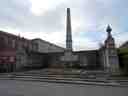
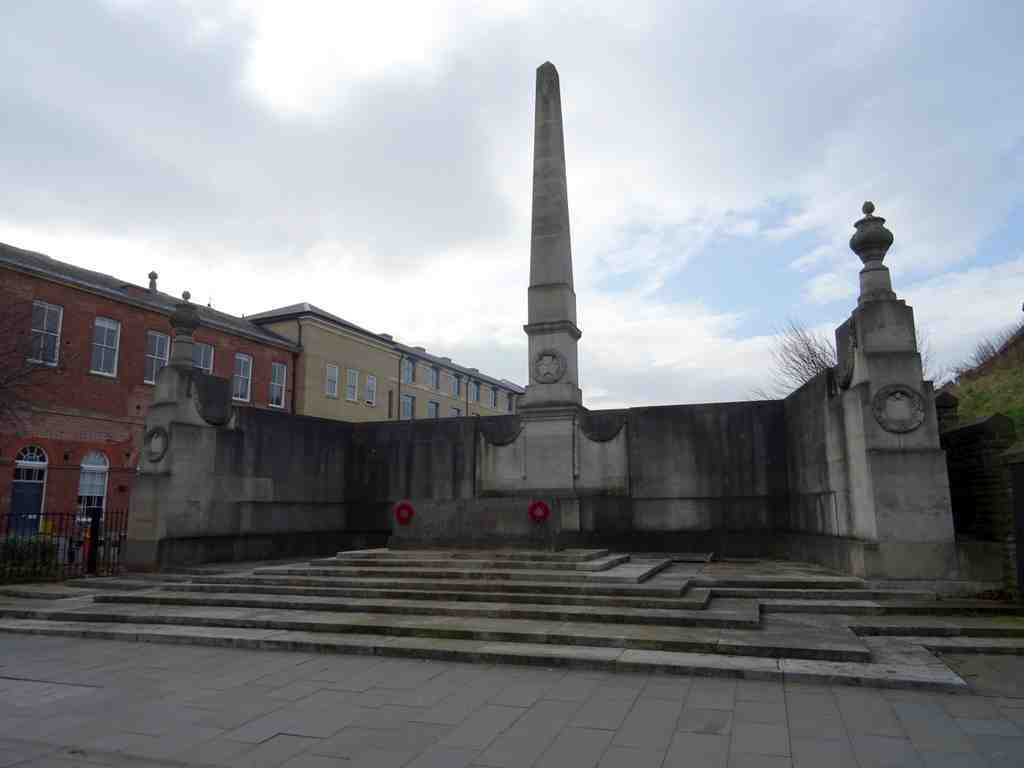
Look directly ahead for a massive, pale Portland limestone structure, featuring a soaring central obelisk rising from a three-sided screen wall flanked by carved stone urns at its…Mehr lesenWeniger anzeigen
Eigene Seite öffnen →
A full view of the North Eastern Railway War Memorial, standing tall with its central obelisk against the backdrop of the historic York City Walls (2017).Photo: Voice of Clam, Wikimedia Commons, Public domain. Cropped & resized. Look directly ahead for a massive, pale Portland limestone structure, featuring a soaring central obelisk rising from a three-sided screen wall flanked by carved stone urns at its outer edges. When the First World War broke out, over eighteen thousand men from the North Eastern Railway company left their jobs to fight. They formed the seventeenth Battalion of the Northumberland Fusiliers, affectionately known as the Railway Pals. This was a completely unique military experiment, as it was the only Pals Battalion-a unit made entirely of friends and colleagues enlisting together-raised by a single commercial company during the entire war. To honor the staggering loss of over two thousand of those men, the company commissioned the renowned architect Sir Edwin Lutyens. He was the mastermind behind this towering obelisk of memory, creating a solemn space for an entire community to process their profound collective grief.

Wreaths laid by railway companies and the British Transport Police sit along the railings, honoring the enduring sacrifice and grit of the local community (2022).Photo: Nick-D, Wikimedia Commons, CC BY-SA 4.0. Cropped & resized. The sheer scale of this sacrifice meant the local railway network faced a massive labor shortage. With their men using their engineering skills to build railways and communication trenches on the Western Front, the company recruited thousands of women to keep the country moving. They worked as porters and engine cleaners, even causing a minor societal stir by wearing practical trousers instead of skirts in the sheds. Meanwhile, danger found the railway workers who stayed behind, too. During terrifying airship raids on York in nineteen sixteen, bombs rained down, but workers like W.T. Naylor, a local bricklayer, bravely rushed into the fires to save lives. That unyielding grit, pushing forward through devastating loss and constant threat, defined this entire community.

The altar-like Stone of Remembrance sits quietly at the center of the memorial's recess, offering a focused space for reflection (2022).Photo: Nick-D, Wikimedia Commons, CC BY-SA 4.0. Cropped & resized. In nineteen twenty, the railway board allocated twenty thousand pounds for this monument, which is roughly one million pounds today. They wanted a grand architectural vessel for their mourning. At the center of the wall recess, you will see a large, altar-like monolith known as a Stone of Remembrance. It is deliberately simple, bearing only the words: Their Name Liveth For Evermore.

Time and the elements have softened the original inscriptions carved into the delicate Portland limestone panels, showing the natural weathering of the monument (2017).Photo: Voice of Clam, Wikimedia Commons, Public domain. Cropped & resized. Originally, the names of the fallen were carved directly into the stone panels. But over decades, the soft limestone deteriorated. Rather than re-carving and further damaging the fragile monument, the names were preserved in a special book at the National Railway Museum.
The immense budget for this memorial actually caused quite a local scandal. The railway's funding was ten times larger than the budget for the official city memorial, sparking fears that this monument would completely overshadow the city's tribute, and the tension over where to place them both dragged on for years. Since this public space is open twenty four hours a day, you can always return to reflect quietly. For now, let us take a three minute walk to see exactly how that local political drama played out, as we head over to the York City War Memorial next.
Look to your left and you will spot a pale Portland stone monument shaped like a tall tapering shaft that finishes in a short-armed cross resting on a wide, tiered square base.…Mehr lesenWeniger anzeigen
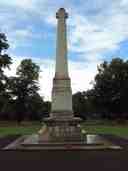
Eigene Seite öffnen →Look to your left and you will spot a pale Portland stone monument shaped like a tall tapering shaft that finishes in a short-armed cross resting on a wide, tiered square base. This is the York City War Memorial, and its creation was anything but peaceful. You might think that mourning a monumental tragedy would unite a city in quiet reflection, but not in York. Here, the drive to honor the fallen sparked a fierce, years-long battle of wills.

The memorial's carved inscription dedicating the monument to the citizens of York who served in the World Wars (2010).Photo: Mtaylor848, Wikimedia Commons, CC BY-SA 3.0. Cropped & resized. Just a few minutes ago, we saw the North Eastern Railway War Memorial. Believe it or not, the famed architect Sir Edwin Lutyens was hired to design both that railway monument and this civic one at the exact same time. Lutyens was the premier architect of his generation, the mastermind behind London's famous Cenotaph. But taking on two monuments in one city put him right in the crosshairs of local drama. The railway company was incredibly wealthy, giving Lutyens that staggering budget we discussed to build their massive fifty-four-foot obelisk. Meanwhile, the city's war memorial committee had scraped together just over one thousand, one hundred pounds from public donations, or about fifty-five thousand pounds today.

A street sign for Leeman Road, where the memorial was ultimately relocated after fierce public outcry over its original placement (2010).Photo: Mtaylor848, Wikimedia Commons, CC BY-SA 3.0. Cropped & resized. The people of York were fiercely protective of their city. Prominent conservationists were absolutely outraged that the massive railway monument was going to be shoved right up against York's ancient defensive walls. One local leader even publicly blasted the railway's design as a pagan erection. The citizens were deeply anxious that their own city memorial, originally planned to sit right next to the railway's, would be completely overshadowed, both financially and physically. So, they pushed back. The public outcry grew so intense that Lutyens had to completely abandon his original location. He had to navigate this incredible local controversy, eventually moving the city's memorial here to a plot on Leeman Road. But the drama did not stop there. When the construction bids came in, the city simply did not have the cash for Lutyens' full vision. He was forced to adapt his design, stripping away the signature Stone of Remembrance we saw earlier, and scaling it back to just this solitary War Cross.

The stone base of the solitary War Cross within the peaceful Memorial Gardens, which secretly houses a 1925 time capsule (2018).Photo: Chabe01, Wikimedia Commons, CC BY-SA 4.0. Cropped & resized. Yet, the final result is incredibly powerful. Unveiled in 1925, it honors the over one thousand local military volunteers and citizens who gave their lives, standing as an equal testament of sacrifice alongside the railway workers we learned about earlier. Hidden right inside the stone base you are looking at is a secret time capsule containing a bottle, coins, and a daily newspaper, quietly preserving the exact moment this city finally laid its fiery six-year debate to rest. This entire saga proves something incredible about the spirit of this place. The people here do not just accept what they are handed. They challenge, they debate, and they fiercely guard their landscape and their legacy, standing firm no matter what historical weight is pressing down on them. Since these memorial gardens are open twenty-four hours a day all week, you can always take your time reflecting here. When you are ready, let us shift our focus from the battlefields of the twentieth century to the ancient, blood-soaked legends of the Vikings, as we take a nine-minute walk toward our next stop, St Olave's Church.
Look to your right to spot saint-ol-ivz Church, pronounced Olive, easily recognizable if you peek inside the glass doors at its sturdy stone pillars and soaring pointed arches…Mehr lesenWeniger anzeigen
Eigene Seite öffnen →
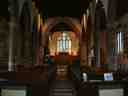
The beautiful historic exterior of Saint Olave's Church on Marygate in York, serving as a gateway to centuries of history (2024).Photo: Tilman2007, Wikimedia Commons, CC BY-SA 4.0. Cropped & resized. Look to your right to spot Saint Olave's Church, pronounced Olive, easily recognizable if you peek inside the glass doors at its sturdy stone pillars and soaring pointed arches leading to a brilliantly illuminated stained glass window at the far end.
This historic parish was originally founded in the eleventh century by Siward, Earl of Northumbria, a famously fierce Viking warrior who loyally served the English King Edward the Confessor. He dedicated the building to Saint Olaf, the patron saint of Norway, to proudly honor his own Scandinavian roots.

The impressive interior of Saint Olave's Church, featuring sturdy stone pillars and a brilliantly illuminated stained glass window at the far end (2005).Photo: James@hopgrove, Wikimedia Commons, Public domain. Cropped & resized. When Siward fell fatally ill in the year ten fifty five, he was deeply disgusted by the prospect of dying peacefully in a bed, complaining bitterly that he was fading away like a mere cow. So, in the ultimate act of fierce defiance, he commanded his men to lift his frail body and strap him tightly into his heavy battle armor. Fully equipped to meet his maker as a true warrior, he forged a bold, unyielding attitude that would echo through the generations of this city.
If you look closely at the surrounding area, you will notice that Saint Olave's Church sits squarely within the ruined, jagged stone walls of the once mighty Saint Mary's Abbey. After the Norman Conquest, ambitious Benedictine monks abandoned this smaller parish building to construct a colossal abbey right next door, completely absorbing Saint Olave's revenues. This brazen takeover sparked a bitter legal feud over neglect and finances that raged between the abbey and the local parishioners for centuries.

The rugged exterior stonework of Saint Olave's on Marygate, which stands amidst the jagged, ruined walls of the neighboring Saint Mary's Abbey (2024).Photo: Tilman2007, Wikimedia Commons, CC BY-SA 4.0. Cropped & resized. The locals finally won a compromise in fourteen sixty six, forcing the monastery to provide twenty large oak trees and ten pounds, which is about eight thousand pounds today, to repair the church.
But that hard won roof did not survive the city's next major conflict... During the sixteen forty four Siege of York, Parliamentary armies audaciously mounted heavy cannons directly onto the roof of Saint Olave's to bombard the King's nearby headquarters. The devastating return artillery fire completely destroyed the medieval roof and the clerestory, which is the upper level of high windows designed to flood the central hall with light.

The welcoming front door of Saint Olave's Church, a building that has remarkably survived legal feuds, medieval sieges, and heavy artillery fire (2021).Photo: EriedgenArc, Wikimedia Commons, CC BY-SA 4.0. Cropped & resized. You can feel that intense, layered history walking through the tranquil churchyard. It is the final resting place of William Etty, a renowned Victorian painter who fiercely campaigned to save York's medieval walls from being demolished. Etty begged to be buried in the grand York Minster, but bureaucratic rules blocked him. Undeterred, his friends strategically positioned his tomb here so it could be seen straight through a ruined arch of the abbey, keeping him as close to his beloved Minster as legally possible.
The yard also holds a much darker hidden history, containing the unmarked graves of men hanged at York's infamous Tyburn gallows, a brutal public execution site outside the city, as well as countless quietly interred patients from the nearby York Asylum.

The peaceful grounds surrounding Saint Olave's Church today, inviting visitors to explore the deep, complex history hidden within its yard (2024).Photo: Tilman2007, Wikimedia Commons, CC BY-SA 4.0. Cropped & resized. The grounds are wonderfully accessible, open twenty four hours a day, every day of the week. So take a moment to explore the ruins of the abbey that swallowed Siward's original church, and as you do, we will begin the short three minute walk over to Saint Mary's Abbey itself.
11 weitere Stationen anzeigenWeniger Stationen anzeigenexpand_moreexpand_less
On your right, you will see the striking ruins of St Mary's Abbey, a long row of pale stone arches stretching across the grass with a single, towering gothic window frame still…Mehr lesenWeniger anzeigen
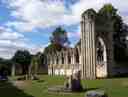
Eigene Seite öffnen →On your right, you will see the striking ruins of St Mary's Abbey, a long row of pale stone arches stretching across the grass with a single, towering gothic window frame still standing at the far end.
Welcome to what was once the absolute powerhouse of northern England. Before these walls crumbled, St Mary's was an unimaginably wealthy Benedictine monastery. By the time it was dissolved in the sixteenth century, it was pulling in over two thousand pounds a year, an astronomical sum equivalent to millions of dollars today. This place was practically a separate kingdom. They had their own prison, their own gallows, and total immunity from the city's jurisdiction, creating a vast independent zone known as the Liberty of St Mary. The abbot was essentially a medieval lord who did not have to answer to the local mayor.
But absolute comfort often breeds complacency. And where there is complacency, there is usually a spark of resistance waiting to catch fire. In the year 1132, an intense ideological battle erupted right where you are standing. A monk named Prior Richard looked around at the lavish lifestyle under Abbot Geoffrey and decided his brothers had grown entirely too soft. The strict Benedictine rule... a religious code demanding absolute poverty, obedience, and hard work... had morphed into a life of aristocratic ease.
Richard and a group of reform minded rebels demanded a return to their spiritual roots. They absolutely refused to compromise their inner grit for a comfortable life. Naturally, the abbot did not take kindly to this challenge of his authority. Tensions boiled over, sparking a full blown riot within these very walls. The rebels, refusing to back down or be silenced, appealed directly to the Archbishop of York, a man named Thurstan. Surprisingly, Thurstan sympathized with their cause and offered them safe refuge.

ST Mary's Abbey Remains .Museum Gardens.YorkPhoto: HMcpherson, Wikimedia Commons, CC BY-SA 4.0. Cropped & resized. On December 26, Thurstan personally helped thirteen of these expelled monks escape the abbey. They fled into the remote, rugged wilderness of the River Skell valley to start completely over. Their bold rebellion paid off in a spectacular way. Prior Richard and his men founded Fountains Abbey, establishing a Cistercian monastery... a distinct monastic order famous for its extreme austerity and rigorous physical labor. Ironically, that very discipline eventually made Fountains one of the wealthiest and most powerful monasteries in the entire country.
The fierce spirit of those thirteen monks, their steadfast refusal to accept the status quo, and their drive to carve out a harder but truer path, perfectly captures the unyielding backbone of the people who have shaped this city through the centuries.
You can explore the sprawling grounds of these ruins from nine in the morning until six in the evening every day of the week. Now, as we leave this monastic powerhouse behind, we are heading toward the King's Manor, the former house of the abbot. Today, that ancient brick building is where the abbey's legacy meets the digital age. Let us take a quick four minute walk over to our next stop at the Archaeology Data Service.
Look to your left at the magnificent facade of King's Manor. Stand right here, about eight meters back, and just take in this incredible fifteenth-century architecture. We just…Mehr lesenWeniger anzeigen
Eigene Seite öffnen →Look to your left at the magnificent facade of King's Manor. Stand right here, about eight meters back, and just take in this incredible fifteenth-century architecture. We just explored the ruins of St Mary's Abbey a few minutes ago, and this building was originally constructed to house its powerful abbots. Over the centuries, it survived countless upheavals. It became the seat of the Council of the North, a powerful regional government, and even hosted King James the First in 1603. It still endures modern chaos... just in April 2022, vandals smashed these historic windows, leaving behind literal blood on the broken glass.
But the most fascinating thing about King's Manor is what happens inside today. This medieval stone building houses a cutting-edge digital fortress. It is the home of the Archaeology Data Service.
We tend to think of history as something carved in stone, but modern archaeological data is incredibly fragile. Decades of irreplaceable excavation records were once trapped on degrading punch cards, magnetic tapes, and obsolete floppy disks, threatening to plunge us into a digital dark age. To combat this, pioneering experts established this service to safeguard history electronically, recognizing that you simply cannot go back and re-excavate a site that has already been dug up.
When Professor Julian D. Richards founded the service in 1996, the academic establishment was heavily skeptical. But Richards and his team refused to back down. Their stubborn determination paid off dramatically in 2008. The government controversially withdrew funding for digital humanities centers, shutting down four major institutions. The Archaeology Data Service was the sole survivor. They stood their ground, proving that erasing digital records means erasing history forever. Richards was even awarded an OBE, a highly prestigious British order of chivalry, in 2024 for his brilliant foresight.
The scale of their work is staggering. A recent survey revealed that sixty-seven percent of archaeological repositories have lost data to corrupted media, human error, and in one incredibly bizarre case, an actual lightning strike. To outsmart these technological disasters, a team of digital archivists manually updates files before old formats die out. Today, they protect over three thousand collections, securing everything from Roman coin data to the archaeology of Easter Island. Their rigorous standards are so flawless that in November 2023, they became the very first digital-only archive to be officially accredited by The National Archives.
The service's time in these ancient walls is coming to an end, with the University of York planning to vacate the building in September 2025 so York St John University can take over. If you happen to be passing by on a weekday between 9 AM and 5 PM, their offices are operating, though they are closed on weekends.
Now, let us continue our journey to the York Art Gallery, which is just a brief one-minute walk away and sits right on the ancient footprint of the abbey's original walls.
Look slightly to your right, and you will spot the York Art Gallery, a grand sandstone building defined by its three deep ground-floor arches, overseen by a prominent white stone…Mehr lesenWeniger anzeigen
Eigene Seite öffnen →Look slightly to your right, and you will spot the York Art Gallery, a grand sandstone building defined by its three deep ground-floor arches, overseen by a prominent white stone statue of a man holding a painter's palette. Just steps away from where we learned about the Archaeology Data Service preserving ancient fragments in digital vaults, this physical vault guards centuries of human creativity. It stands as a powerful testament to this city's remarkable habit of enduring devastating blows and stubbornly rebuilding what was lost.

York Art Gallery - Front mosaic1Photo: Zakhx150, Wikimedia Commons, CC BY-SA 4.0. Cropped & resized. Long before this was an art gallery, this very plot of land was part of the medieval grounds of Saint Mary's Abbey, a lush area known as Bearparks Garden. But in eighteen seventy-nine, the people of York decided they needed something bolder. They envisioned a spectacular showcase for the second Yorkshire Fine Art and Industrial Exhibition. They hired a local architect who dreamed up a magnificent Italian-style palace, inspired by the grand, classical architecture of Rome and Florence. Of course, grand dreams often collide with tight budgets. The planned majestic facade, originally designed to hold eighteen stone statues and fourteen glittering mosaics, was quietly scrapped. But what they built behind those arches was spectacular. They constructed a sprawling, massive timber-framed Great Exhibition Hall. It was huge, about six times the size of the current main gallery space. It was only meant to stand for three years, but the locals loved it too much to tear it down. They kept it standing for decades, hosting everything from refined symphony concerts to raucous boxing matches under its vast wooden beams.

1257852 City Art Gallery, Exhibition Square York 20240520 0048Photo: Tilman2007, Wikimedia Commons, CC BY-SA 4.0. Cropped & resized. That great hall survived until the darkest nights of the Second World War. During the devastating Baedeker Blitz of nineteen forty-two, a series of German bombing raids specifically targeting Britain's most culturally significant cities, bombs obliterated the rear exhibition hall entirely. Yet, miraculously, the stone facade standing right in front of you held firm. The gallery could have been abandoned. Instead, the community slowly and painstakingly restored it, building up a staggering collection of ceramics, fine art, and thousands of historical works. The building has seen some wild modern reimagining, too. The app has a neat side-by-side showing what this place looked like back in two thousand and seven, compared to a dramatic twenty twenty-two art installation that sprouted giant, vibrant inflatable spikes right out of these historic arches.
If you want to explore the remarkable collections inside, the gallery is open Wednesday through Sunday from ten in the morning until five in the evening. Now, let us continue our journey from the preservation of visual art to the cutting edge of sound. We are heading a short four-minute walk away to the BBC Radio York studios, where we will uncover a story of modern broadcasting ingenuity.
Look to your slight right for the rectangular brick building featuring the unmistakable crisp lettering of the BBC logo near its main glass entrance. You are standing about five…Mehr lesenWeniger anzeigen
Eigene Seite öffnen →Look to your slight right for the rectangular brick building featuring the unmistakable crisp lettering of the BBC logo near its main glass entrance. You are standing about five meters from the facade of BBC Radio York, a place where local voices have been beaming out across North Yorkshire for decades. Now, you might assume a major broadcasting institution like the BBC always launches with polished perfection, but the birth of this station was an absolute, glorious scramble. In May 1982, more than a year before the station was officially supposed to go live, Pope John Paul the Second decided to visit York. The BBC suddenly needed a way to cover the massive crowds. Their solution? A twenty-four-hour pop-up station built on sheer willpower. They had absolutely no significant resources of their own. Instead, they relied on borrowed engineering kit and a ragtag, patchwork crew of staff pulled from other stations in Cleveland, Humberside, Leeds, and Sheffield. It was a massive outside broadcast held together by metaphorical duct tape.

The unmistakable crisp lettering of the BBC Radio York signage on Bootham Row, seen in 2021.Photo: Sebastiandoe5, Wikimedia Commons, CC BY-SA 4.0. Cropped & resized. To help cover the event, they brought in a local history teacher and part-time sports reporter named Harry Gration. As a complete radio novice, Gration was sent out into the massive crowds at the Knavesmire racecourse with nothing but a microphone and instructions to just keep talking. Up in the control room, the station manager was terrified of dead air. So, whenever things got chaotic, the instruction was simply, go to Harry. Gration essentially ad-libbed for hours, and he was so good he ended up leaving teaching for a highly successful full-time radio career. That scrappy, do-it-yourself energy became the lifeblood of this station. Station manager John Jefferson specifically set out to hire bold personalities, deliberately avoiding what he called little grey men. He hired a recent university graduate named Victor Lewis-Smith to host a Sunday morning show called Snooze Button. Lewis-Smith brought an anarchic, surreal style of comedy that amazed his colleagues and launched his career as a notorious satirist. Even Richard Hammond, who later became famous on the television show Top Gear, started his career here in 1989. He called himself a wandering radio nomad, though his time here was short-lived, as he was actually fired in 1990 before bouncing to another local station.

The Radio York studios on Bootham Row, photographed in 2021.Photo: Mtaylor848, Wikimedia Commons, CC BY-SA 4.0. Cropped & resized. That fierce independent streak flared up again just recently. In 2023, the BBC announced massive cuts to local programming to shift focus to digital content. The staff here absolutely refused to back down. Journalists staged walkouts and formed picket lines right outside the doors you are looking at, fighting for their older, loyal listeners who rely on traditional radio for companionship. They rallied massive community support, including twenty-six members of parliament and the Archbishop of York himself. It was a classic stand of local defiance, pulling together to protect the community they serve. By the way, if you need to pop inside, the public hours are incredibly specific, opening Monday through Wednesday from six PM to two AM, Thursday from six PM to midnight, and staying open twenty-four hours from Friday through Sunday. Now, let us leave the airwaves behind and turn our attention toward the skyline, where our next destination, the towering majesty of York Minster, awaits just an eight minute walk away.
Look to your right and you will spot a colossal structure made of creamy white limestone featuring towering square spires and a massive circular window shaped like a delicate…Mehr lesenWeniger anzeigen
Eigene Seite öffnen →
The imposing exterior of York Minster, viewed from the northwest, showcasing its creamy limestone and Gothic architecture (2024).Photo: Tilman2007, Wikimedia Commons, CC BY-SA 4.0. Cropped & resized. Look to your right and you will spot a colossal structure made of creamy white limestone featuring towering square spires and a massive circular window shaped like a delicate geometric flower. This is York Minster, and while we left the modern broadcasts of BBC Radio York just 8 minutes ago, this site has been projecting power for nearly two millennia.

The atmospheric undercroft of York Minster, where remnants of the Roman fortress of Eboracum lie hidden beneath the medieval pavement (2024).Photo: Tilman2007, Wikimedia Commons, CC BY-SA 4.0. Cropped & resized. The word Minster is an ancient Anglo Saxon title that originally meant a missionary teaching church, but the real story of this ground goes much deeper than the medieval walls you see today. Far below the modern pavement lies the buried ruins of the Roman principia, the central military headquarters of the fortress of Eboracum. The air is tense in the year 306. The Roman Emperor Constantius has just died suddenly. The empire is vulnerable. Right in that underground headquarters, the soldiers make a bold, history-altering move. They proclaim his son, Constantine the Great, as the new Roman Emperor. That moment changed the world, because Constantine would eventually become the first Roman emperor to convert to Christianity, legalizing the faith across the entire empire. Today, there is a bronze statue of Constantine sitting just outside the South Transept to mark the exact location of his rise to power. Though in a rather bizarre modern twist, a thief stole the statue's bronze sword in 2016 and threw it down a drain, costing the local civic trust nearly 800 pounds to replace.

A beautifully preserved section of stained glass from the St Cuthbert Window, miraculously spared from destruction during the English Civil War (2022).Photo: Charc2018, Wikimedia Commons, CC BY-SA 4.0. Cropped & resized. But that statue also represents an unbreakable grit that has protected this place through endless wars and violent upheavals. The survival of this majestic building, especially its breathtaking medieval stained glass, is nothing short of a miracle. During the English Civil War in 1644, the city fell to the Parliamentarian forces. All over the country, Puritan soldiers were smashing church windows and destroying religious art. But the commander who conquered York, a Yorkshireman named Sir Thomas Fairfax, flat out refused to let his men touch the Minster. He issued strict protective orders, completely defying the destructive trend of his own army, ensuring those fragile glass panels remained entirely untouched.

The grand interior nave of York Minster, stretching towards the historic West Window (2014).Photo: Diliff, Wikimedia Commons, CC BY-SA 3.0. Cropped & resized. If you want to explore the grand interior, the cathedral is generally open from 9:30 in the morning to 4:00 in the afternoon Monday through Saturday, with a shorter window on Sunday afternoons. But right now, turn your attention to the smaller church sitting directly opposite the Minster. It was there that a notorious local rebel was actually baptized. We will head to that very building, St Michael le Belfrey, which is just a 4 minute walk away. Let us go.
Stand to the left and look at that pale stone facade, dominated by a massive central arched window and crowned by an ornate open-work bell tower perched right on the roof peak. We…Mehr lesenWeniger anzeigen
Eigene Seite öffnen →Stand to the left and look at that pale stone facade, dominated by a massive central arched window and crowned by an ornate open-work bell tower perched right on the roof peak. We are right next door to York Minster, which we walked past just a few minutes ago, but St Michael le Belfrey holds a distinct energy all its own.

West door St Michael-le-Belfry YorkPhoto: Malcolmxl5, Wikimedia Commons, CC BY-SA 4.0. Cropped & resized. In April 1570, a baby was carried through those doors for his baptism, a local boy named Guy Fawkes, whose family leased a house just down the street. It grounds the infamous figure, the man who would later try to blow up Parliament in the 1605 Gunpowder Plot, right here in the everyday life of this parish. His father, Edward, was a prominent lawyer for the church courts, and an enlarged copy of the parish register reading Guye fawxe is still proudly displayed inside today. The trajectory of his life shifted dramatically when his father died. His mother later married a Catholic man who introduced the young Guy to the outlawed faith that would ultimately lead him to his explosive destiny.

St. Michael-Le-Belfrey plaque - High Petergate York YO1 7ENPhoto: Spudgun67, Wikimedia Commons, CC BY-SA 4.0. Cropped & resized. But Fawkes is not the only rebel tied to this building, because inside the east window sits a hidden relic of rebellion, secretly preserved in plain sight. When this ambitious Tudor Gothic church was rebuilt between 1525 and 1537, replacing a crumbling thirteenth-century structure that parishioners were quite literally terrified to enter, the builders kept some spectacular fourteenth-century stained glass. One of those historic glass panels prominently depicts the martyrdom, or the execution for religious beliefs, of Thomas Becket.

St Michael le Belfrey (21st October 2010) 004Photo: Mtaylor848, Wikimedia Commons, CC BY-SA 3.0. Cropped & resized. Here is where the story gets incredibly tense. In 1538, King Henry the Eighth issued a strict, terrifying royal decree. He viewed Thomas Becket as a traitor to the crown and ordered that all images of the saint be completely destroyed and his name erased from the English church calendar entirely. To disobey Henry the Eighth was usually a quick way to face the executioner. Yet, the congregation here had a profoundly stubborn streak. Amazingly, the Becket window at St Michael le Belfrey escaped the King's destruction. The locals simply defied the most powerful man in the country, refusing to smash their beautiful glass, and that magnificent window remains entirely intact today. It is a stunning visual reminder of how fiercely this community has always defended its own heritage, quietly resisting absolute authority from afar.

1257228 Church of St Michael le Befrey York 20240521 0212Photo: Tilman2007, Wikimedia Commons, CC BY-SA 4.0. Cropped & resized. If you want to step inside to look for that window or the Fawkes registry, the church is generally open to visitors most days from mid-morning until early afternoon, and all day Sunday, though it is closed on Saturdays. Now, let us take a short two-minute walk down the road to the York Oratory, where we will meet another stubbornly defiant historical figure.
On your left, peering past any delivery vans parked in your line of sight, you will spot the York Oratory, an imposing light brick church with a steep, pointed front and a massive…Mehr lesenWeniger anzeigen
Eigene Seite öffnen →
1257869 Church of St Wilfrid, Duncombe Place York 20240520 0021Photo: Tilman2007, Wikimedia Commons, CC BY-SA 4.0. Cropped & resized. On your left, peering past any delivery vans parked in your line of sight, you will spot the York Oratory, an imposing light brick church with a steep, pointed front and a massive square bell tower rising on its right side. Built in 1864, it is officially the Oratory Church of Saint Wilfrid. And let me tell you, Wilfrid was a total firebrand. He was a highly controversial seventh-century bishop who absolutely refused to back down from what he believed. During the Synod of Whitby, a major early church council, he stubbornly championed the Roman method of dating Easter over the local traditions.

Entrance Church of St Wilfrid YorkPhoto: Malcolmxl5, Wikimedia Commons, CC BY-SA 4.0. Cropped & resized. Wilfrid had a habit of completely ignoring local politics. If he did not like what the local rulers said, he just went over their heads and appealed directly to the Pope in Rome. This completely infuriated local leaders like King Ecgfrith of Northumbria. The King's wife, Queen Iurminburg, supposedly stirred the pot by whispering stories to her husband about Wilfrid's vast riches and his heavily armed entourage. The result of all this drama was that the king repeatedly exiled and imprisoned the stubborn bishop. That absolute refusal to bow to local authority is just another classic example of the fiercely independent, push-back spirit that runs so deep in this city's history.

Tympanum Church of St Wilfrid YorkPhoto: Malcolmxl5, Wikimedia Commons, CC BY-SA 4.0. Cropped & resized. Even the building you are looking at is an act of sheer boldness. After centuries where Catholic worship was driven underground, local architect George Goldie designed this magnificent French Gothic masterpiece. He squeezed its imposing 147-foot bell tower into a highly restricted site right across the street from the mighty York Minster, loudly announcing a renewed Catholic presence. Today, it is thriving, drawing large crowds of young people to traditional services like the Latin Mass, which is conducted entirely in Latin with the priest facing the altar.

St Wilfrid RC ChurchPhoto: Mdbeckwith, Wikimedia Commons, CC BY-SA 3.0. Cropped & resized. If you want to peek inside, the church is open every day of the week from eight in the morning until six in the evening. Now, let us head to the Mansion House, a quick three-minute walk away, where we are going to uncover a truly bizarre secret hidden right inside its walls.
Look to your left at that striking early Georgian building, a bold mix of red brick and towering white stone columns, topped with a triangular pediment, the classical gable above…Mehr lesenWeniger anzeigen
Eigene Seite öffnen →
The striking early Georgian facade of the Mansion House, a historic staple of York's city center since 1732. (2019)Photo: Malcolmxl5, Wikimedia Commons, CC BY-SA 4.0. Cropped & resized. Look to your left at that striking early Georgian building, a bold mix of red brick and towering white stone columns, topped with a triangular pediment, the classical gable above the columns, displaying a vividly painted coat of arms. This is the Mansion House, the working home of the Lord Mayors of York since 1732. Yes, York built theirs a full two decades before London even broke ground on theirs.

A close-up view of the building along Coney Street, where major restorations revived the intricate stonework and bright crest. (2024)Photo: Tilman2007, Wikimedia Commons, CC BY-SA 4.0. Cropped & resized. The man who really made this place sing was John Carr. He was a celebrated eighteenth-century architect famous for designing sprawling country estates, and he actually served as York's Lord Mayor. He completely overhauled the kitchens and basements, transforming them into a high-powered culinary engine capable of churning out the massive, lavish civic banquets the city was famous for. By the way, the app has a neat side-by-side showing what this gorgeous facade looked like back in 2006, before a major restoration revived its stonework and that bright crest.
But when conservationists peeled back the floorboards during that exact restoration, they found something John Carr and his elite guests likely knew nothing about. Hidden in the upper rooms, where the domestic servants slept, was a perfectly preserved mummified cat. It was deliberately buried under the floor, surrounded by a careful ring of hazelnut shells. Examinations proved the cat died of natural causes before it was placed there, so it was not a cruel act. But why hide it? It was an old superstitious practice. The working-class people of York were fiercely protective of their spaces, using these bizarre hidden relics to ward off evil spirits and bad luck.

Looking down at the Mansion House from the York Minster Central tower, showing how the building is woven into the very fabric of the city. (2024)Photo: Tilman2007, Wikimedia Commons, CC BY-SA 4.0. Cropped & resized. They did not just stop at the cat. On the third floor, workers found a heavily repaired leather shoe sealed inside a wall. Giving up a leather shoe was a tremendous financial sacrifice for a servant back then, given up entirely to buy a little supernatural insurance. And down in the basement? A secret cavity filled with animal bones, a bottle, and a glass goblet. This was left by the original builders as part of a topping out ceremony, an ancient construction tradition to bless the building once the structural framework was complete. It is a brilliant reminder of how the everyday people of York have always fiercely guarded their city, cementing their own stubborn survival directly into the very framework of its grandest structures. The Mansion House is open Wednesday through Sunday from 10:30 AM to 5 PM if you want to say hello to the mummified guard cat yourself. But speaking of things dug up from York's soil, let's head about seven minutes down the road to our next stop, the Jorvik Viking Centre, to see what else has been hiding just out of sight.
Look to your left for a red brick building featuring a series of large archways along the ground floor and a hanging sign depicting a fierce Viking warrior right above the main…Mehr lesenWeniger anzeigen
Eigene Seite öffnen →Look to your left for a red brick building featuring a series of large archways along the ground floor and a hanging sign depicting a fierce Viking warrior right above the main entrance. Welcome to the Jorvik Viking Centre.
Back in the late nineteen seventies, this area was just the demolished site of an old candy factory. But beneath the dirt lay a staggering secret. The York Archaeological Trust began a massive excavation ahead of a new shopping center development. Because the soil here was thick, oxygen deprived wet clay, the organic remains of a ninth century Viking settlement did not rot away. They were practically frozen in time. Wood, leather, textiles, and even plant remains survived for a thousand years. The dig uncovered over forty thousand objects, revealing the stubborn, brilliant survival of the early people who forged this city.
But out of all those thousands of artifacts, the most famous is... well, it is incredibly gross. Found nearby in nineteen seventy two, it is known as the Lloyds Bank Coprolite. A coprolite is the scientific term for fossilized human feces. And this one is the largest ever found, measuring a massive eight inches long and two inches wide. As disgusting as it sounds, it is the ultimate hidden relic. By studying it, researchers discovered intimate details about an ancient Viking's daily life, proving that its creator survived mostly on a diet of meat and bread, and unfortunately suffered from a very severe intestinal worm infection.
The archaeologists knew these discoveries were too incredible to lock away in a dusty academic hall. Project designer John Sunderland wanted to make history feel like a feature film. So, in nineteen eighty four, they opened this center. Visitors sit in moving time capsule carriages that glide through a life size, incredibly detailed reconstruction of the Viking city. They even brought in an expert to engineer authentic historical smells like rotting fish, wood smoke, and raw sewage.
That commitment to keeping history alive was truly put to the test in December two thousand fifteen. Contaminated water from the nearby River Foss surged toward the building. Museum staff acted frantically, even ripping off a toilet door to use as a makeshift flood barrier. They managed to rush all forty thousand original artifacts up to the safety of the first floor before the power failed. The basement, along with all the animatronics and life size dioramas, was submerged in murky floodwater for days and completely destroyed.
But the people here refused to be washed away. Through sheer grit, community fundraising, and an incredible sixteen month restoration, they rebuilt the dioramas and reopened the center better than ever. It is that exact same unyielding spirit that has carried the people of York through centuries of turmoil and change.
If you want to experience the sights and smells of the tenth century for yourself, the center is open every day from ten in the morning until four in the afternoon. Now, let us walk three minutes over to the Tower Street drill hall to uncover how this city's fighting spirit carried into more modern military history.
On your right, look for the two-story red brick building capped with a steeply pitched slate roof, standing out with its modern, pale stone entryway framing the glass doors.…Mehr lesenWeniger anzeigen
On your right, look for the two-story red brick building capped with a steeply pitched slate roof, standing out with its modern, pale stone entryway framing the glass doors. This is the Tower Street drill hall, and its foundations are practically built on the grit of everyday citizens. Remember the World War One Pals battalion we talked about earlier? That same spirit of locals stepping up to defend their home has echoed through this exact spot for over a century. When this hall opened in 1885, it was swarming with local artillery volunteers learning how to haul and fire massive cannons. Soon after, it became the home of the york-sher Hussars. They were a volunteer cavalry unit originally formed way back in 1794 to fend off potential French invasions. It must have been quite a spectacle on this street... ranks of proud cavalrymen on horseback, sabers rattling, hooves clattering against the cobblestones as they paraded outside these very doors. When the Second World War erupted in 1939, those same Hussars mobilized right here, eventually trading their horses for steel tanks to fight in the brutal desert battles of El Alamein. That fierce adaptability is a cornerstone of the regiments headquartered here. Take the legendary fifteenth Regiment of Foot. In 1777, during the American Revolutionary War at the Battle of Brandywine, they completely ran out of musket balls. Instead of retreating, they kept aggressively firing blank gunpowder volleys to create blinding smoke and deafening noise, bluffing the enemy into thinking they were still fully armed. That desperate, brilliant gamble worked, earning them the nickname The Snappers. Today, all that phenomenal history is preserved inside the York Army Museum. You can check your screen to see a photo of this building from 2014, before a major redevelopment modernized that grand entrance you see now. Inside, you can find deeply moving relics of war, from the oldest surviving British cavalry standard... which is a large ceremonial flag carried into battle in 1743... to a mechanical arm used by an amputee soldier from the First World War, a stark reminder of the heavy human cost of these conflicts. If you want to explore the exhibits, the museum is open Monday through Saturday from ten in the morning to five in the evening, but closed on Sundays. Now, we march on to our final destination, just a three minute walk away. We are heading to York Castle, where centuries of fortified history culminate in stories of ultimate defense and heartbreaking tragedy. Let us go.
Eigene Seite öffnen →Look to your left, where you will see a massive, steep grassy mound topped by a pale stone fortress shaped like a four-leaf clover, with a long, straight flight of steps slicing…Mehr lesenWeniger anzeigen
Eigene Seite öffnen →
York Castle Sept 2020Photo: Sandra Atkinson, Wikimedia Commons, CC BY-SA 4.0. Cropped & resized. Look to your left, where you will see a massive, steep grassy mound topped by a pale stone fortress shaped like a four-leaf clover, with a long, straight flight of steps slicing right up the middle to the dark entrance. Just a short walk from the drill hall we saw a few minutes ago, this towering earthwork has watched over the city for nearly a thousand years. We are looking at Clifford's Tower, the stark, ruined heart of York Castle. It is an incredible sight, but beneath that picturesque stone lies a history dripping with extreme tension and an unbreakable will to resist.
In the year eleven ninety, the original wooden fortress, or keep, that stood on this very hill became the site of an unimaginable tragedy. Local noblemen, heavily in debt to Jewish moneylenders, incited a violent, angry mob to erase what they owed. The terrified Jewish community, led by their religious leader Rabbi Yomtob, fled up this steep mound and barricaded themselves inside the timber tower. But as the vicious crowd laid siege outside, the refugees realized their terrifying reality. They faced being ripped apart or forcibly converted to another faith. So, they made a heartbreaking choice. In an act of ultimate, tragic refusal to yield to their attackers, they chose collective suicide. Fathers took the lives of their own families, and then themselves, before burning the wooden tower to the ground so the mob could not desecrate their bodies. It is a profoundly powerful legacy, a devastating stand of people who chose to dictate their own ending rather than surrender their faith and identity to the violence of a mob.

Cliffords Tower York 2Photo: Amourgirl1, Wikimedia Commons, CC BY-SA 4.0. Cropped & resized. The tower was later rebuilt in the rare, four-lobed stone shape you see today, known as a quatrefoil. Centuries later, during the English Civil War in the sixteen forties, this fortress became the northern capital for Royalist forces loyal to King Charles the First. They strengthened the walls for heavy cannons and endured a brutal siege by over thirty thousand Parliamentary soldiers, holding out fiercely for months before eventually surrendering. The ruinous state we see now came in sixteen eighty four when a massive explosion blew out the interior. Officially, it was an accident from a ceremonial cannon salute. But the locals, who absolutely despised the cruel military garrison living inside, noted that not a single soldier was hurt, and many had conveniently moved their personal belongings out just hours before. The garrison basically blew up their own hated headquarters to escape their miserable posting.
As our tour comes to a close, take a moment to look out over the ancient rooftops. Think about the incredible, unyielding spirit woven into every stone and street you have explored on this journey. If you want to explore the tower's interior and see the new roof deck, the site is open daily until five in the evening. Thank you for walking with me, and enjoy the rest of your time in this magnificent city.
Häufig gestellte Fragen
Wie starte ich die Tour?
Laden Sie nach dem Kauf die AudaTours-App herunter und geben Sie Ihren Einlösecode ein. Die Tour ist sofort startbereit – tippen Sie einfach auf „Play“ und folgen Sie der GPS-geführten Route.
Benötige ich während der Tour Internet?
Nein! Laden Sie die Tour vor dem Start herunter und genießen Sie sie vollständig offline. Nur die Chat-Funktion benötigt Internet. Wir empfehlen den Download über WLAN, um mobiles Datenvolumen zu sparen.
Handelt es sich um eine geführte Gruppentour?
Nein – dies ist ein selbstgeführter Audioguide. Sie erkunden unabhängig in Ihrem eigenen Tempo, wobei die Audioerzählung über Ihr Telefon abgespielt wird. Kein Reiseleiter, keine Gruppe, kein Zeitplan.
Wie lange dauert die Tour?
Die meisten Touren dauern 60–90 Minuten, aber Sie kontrollieren das Tempo vollständig. Pausieren Sie, überspringen Sie Stopps oder machen Sie Pausen, wann immer Sie wollen.
Was, wenn ich die Tour heute nicht beenden kann?
Kein Problem! Touren haben lebenslangen Zugriff. Pausieren Sie und setzen Sie sie fort, wann immer Sie möchten – morgen, nächste Woche oder nächstes Jahr. Ihr Fortschritt wird gespeichert.
Welche Sprachen sind verfügbar?
Alle Touren sind in über 50 Sprachen verfügbar. Wählen Sie Ihre bevorzugte Sprache beim Einlösen Ihres Codes. Hinweis: Die Sprache kann nach der Tour-Generierung nicht mehr geändert werden.
Wo greife ich nach dem Kauf auf die Tour zu?
Laden Sie die kostenlose AudaTours-App aus dem App Store oder von Google Play herunter. Geben Sie Ihren Einlösecode (per E-Mail gesendet) ein, und die Tour erscheint in Ihrer Bibliothek, bereit zum Download und Start.
Wenn Ihnen die Tour nicht gefällt, erstatten wir Ihnen den Kaufpreis. Kontaktieren Sie uns unter [email protected]
Sicher bezahlen mit