
Northampton Audio-Tour: Northamptons Teppich aus Glaube, Musik und Erinnerung
Blut befleckte einst diese Pflastersteine und Musik erschüttert immer noch ihre Steine – Northampton verbirgt Jahrhunderte des Dramas unter seiner Oberfläche. Hinter dem alltäglichen Trubel verweilen Geheimnisse in vergessenen Abteigräbern und alten Kirchenmauern. Entdecken Sie Northamptons vielschichtige Geschichte auf dieser selbstgeführten Audio-Tour und tauchen Sie ein in Legenden aus den Hinterhöfen, politische Intrigen, skandalöse Neuerfindungen und Geschichten, die selbst Einheimische übersehen. Welche verschwundenen Schätze sind unter den Ruinen der St. James Abtei begraben? Warum baute ein normannischer Graf ein Stück Jerusalem auf englischem Boden – und was ging in seinen runden Mauern verloren? Welcher Rockstar-Zusammenbruch hätte Roadmenders Erbe beinahe für immer beendet? Folgen Sie diesen Fragen durch verwinkelte Gassen und schattige Kirchenschiffe, während jeder Schritt ein weiteres Jahrhundert enthüllt. Die Reise wirbelt von mittelalterlichen Mysterien zu elektrischen Nächten, die unter den Lichtern der Nachtclubs pulsieren – und verwandelt jedes Wahrzeichen in ein Abenteuer. Beginnen Sie Ihre Erkundung jetzt und entdecken Sie den Herzschlag – und die verborgenen Geister – von Northampton.
Tourvorschau
Über diese Tour
- scheduleDauer 30–50 minsEigenes Tempo
- straighten2.2 km FußwegDem geführten Pfad folgen
- location_onStandortNorthampton, Vereinigtes Königreich
- wifi_offFunktioniert offlineEinmal herunterladen, überall nutzen
- all_inclusiveLebenslanger ZugriffJederzeit wiederholen, für immer
- location_onStartet bei St. James Abtei, Northampton
Stopps auf dieser Tour
Looking ahead, you'll see a striking church with warm, reddish stone walls that almost glow, even on a grey Northampton day. The main detail to help you spot it? That tall, pointy…Mehr lesenWeniger anzeigen
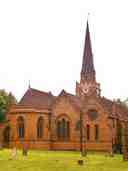
Looking ahead, you'll see a striking church with warm, reddish stone walls that almost glow, even on a grey Northampton day. The main detail to help you spot it? That tall, pointy spire stretching high above the rooftops, as if it’s waving for your attention. The windows are deep-set and arched, and around the base, you’ll notice the walls gently curve, hinting at the church’s unusual round design. Don’t forget to peek at the sturdy old wall and the stone gravestones nearby-they seem to guard stories of centuries past. So, here you are standing before the Holy Sepulchre. Imagine the year is 1100 and the air is thick with the scent of woodsmoke and the lively chatter of Norman townsfolk. This round church isn’t just any old building. It’s one of only four medieval round churches still in use in all of England-a rare breed! Legend has it, Simon de Senlis, the Earl of Northampton, was so inspired by what he saw on his travels to Jerusalem during the First Crusade that he wanted to bring a bit of that sacred magic back home. He saw the mighty Church of the Holy Sepulchre, with its grand pillars and ancient tomb, and maybe he thought, “Why should Jerusalem have all the fun?” So, he built this church-like a little slice of Jerusalem right here in Northampton. If you walk around, you’ll spot three original Norman windows: one on your left at a low height, and two up high if you peer around the north side. Not only does this give you a peek into medieval craftsmanship, but it’s a reminder that this building is almost a thousand years old. Seriously-if these stones could talk, they’d probably ask for a nice, long nap. Over time, new aisles were added and builders tinkered with towers and arches, giving the church the shape you see now. Once, worshippers would step in through the mighty round doorway and look up at arches with zig-zag Norman decoration-sort of like stone doodles from people who were bored during very long sermons. Soak in the atmosphere for a moment. You’re standing on ground that’s seen crusaders, pilgrims, and… probably more than a few Sunday naps. All thanks to one man’s inspiration, and a town with a passion for epic stories and beautiful buildings. Ready to head off to the next stop, or do you want to walk a circle or two yourself-just to keep up the tradition? Wondering about the inspiration, original building or the alterations? Feel free to discuss it further in the chat section below.
Eigene Seite öffnen →
7 weitere Stationen anzeigenWeniger Stationen anzeigenexpand_moreexpand_less
Look straight ahead-can you see that big glass entrance with a bold sign that reads "Grosvenor Centre" in gold lettering? Above it, there’s a shiny golden helmet perched like it’s…Mehr lesenWeniger anzeigen
Look straight ahead-can you see that big glass entrance with a bold sign that reads "Grosvenor Centre" in gold lettering? Above it, there’s a shiny golden helmet perched like it’s ready for a shopping battle. The entrance is edged in green glass and neon red, all attached to limestone walls that make it look like you’re about to walk into a castle crossed with a stylish department store. Right here, between historic stone buildings and the buzz of shoppers, you’ve found the heart of Northampton’s retail world. Now, let’s set the scene. Imagine the year is 1976. You’re striding past what was once the site of a medieval monastery, but instead of chanting monks, you hear the distant call of bargains and the rolling squeak of shopping trolleys. The Grosvenor Centre popped up as a modern beacon right in the town centre, as if to shout, “Shopping is the new religion!” And in many ways, it still is. Today, you can stand here and smell the freshly baked pastries wafting from inside, mix with the scent of new clothes from Primark and the unmistakable whiff of beauty supplies from Superdrug. It’s a two-level playground for both savvy deal-hunters and casual browsers-over 320,000 square feet of pure shopping adventure. If you listen closely, you might just hear the ghostly echoes of old bus engines, because this centre was once linked to the famous Greyfriars bus station. These days, it has its very own multi-storey car park and a direct door to Market Square and Abington Street, so whether you arrive by foot, bus, or shopping spree adrenaline, you’re covered. Grosvenor Centre has had a makeover too-new floors, brighter lights, and entrance canopies that make it feel like you’re walking onto a stage. And honestly, sometimes with those shopping bags, don’t you feel you’re the star of your very own show? Big names like Next and Primark have set up shop here, taking over from House of Fraser, and there are more than 50 options for food and fashion... so no matter what you forgot at home, chances are good you’ll leave here fully supplied (and maybe a little lighter in the wallet!). Who knows-maybe under your feet, a medieval monk is peeking up, a bit bewildered by Boots and baffled by bubble tea. But Northampton keeps moving forward, and right now, so are you. Ready to discover the next stop?
Eigene Seite öffnen →Look ahead for a majestic building with pale stone walls, tall pointed arches, and rows of elegant statues standing proudly in niches above the windows. It has a dramatic clock…Mehr lesenWeniger anzeigen
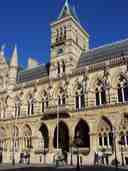
Look ahead for a majestic building with pale stone walls, tall pointed arches, and rows of elegant statues standing proudly in niches above the windows. It has a dramatic clock tower rising from the center, complete with a steep, slate roof and a clock that keeps watch over Northampton’s busy heart. If you see a structure that looks like it jumped out of a Gothic fairytale, with its rows of arches and stone figures, you’ve found the Guildhall. You’re standing in front of the magnificent Northampton Guildhall, and honestly, who wouldn’t want this as their office? The building is so majestic it might even intimidate your email inbox. Imagine St Giles’ Square in the 1800s-the air full of the clatter of horse-drawn carriages, and here before you, the shiny new Guildhall bursting onto the scene in 1864. The clock up there-still ticking today-was once the most high-tech feature around. If you look up, notice the fourteen statues lining the façade. Monarchs, local legends, and a cast of Northampton’s finest stone celebrities. I’ll bet more people have photos with these statues than with any living local! The arches you see below the statues are perfect for a dramatic entrance; whenever you walk through, try to resist humming your own theme music. Inside, the tales continue: grand murals by Colin Gill and Henry Bird sweep across the walls, painting history in rich color. And tucked away is the statue of Spencer Perceval, the only British Prime Minister to have been assassinated-talk about entering history with a bang, though maybe not the happiest ending. There’s also a modern twist; a more recent extension and a plaque marking the day Diana, Princess of Wales, became a Freeman of Northampton. Imagine Princess Diana herself gracing these steps-a real Cinderella moment, but with less pumpkin carriage and more civic pride. And if you wander into the courtyard, you’ll meet Northampton’s “history makers:” local icons immortalized in bronze, probably still waiting for someone to invent the selfie stick. So, as you stand here, breathe in the town’s energy. Who knows-maybe you’ll be the next statue up there someday. Now, let’s keep exploring!
Eigene Seite öffnen →You’re just about to spot the Northampton War Memorial right ahead of you. Look for two tall stone obelisks standing upright in a small, quiet garden. Each one is draped on the…Mehr lesenWeniger anzeigen
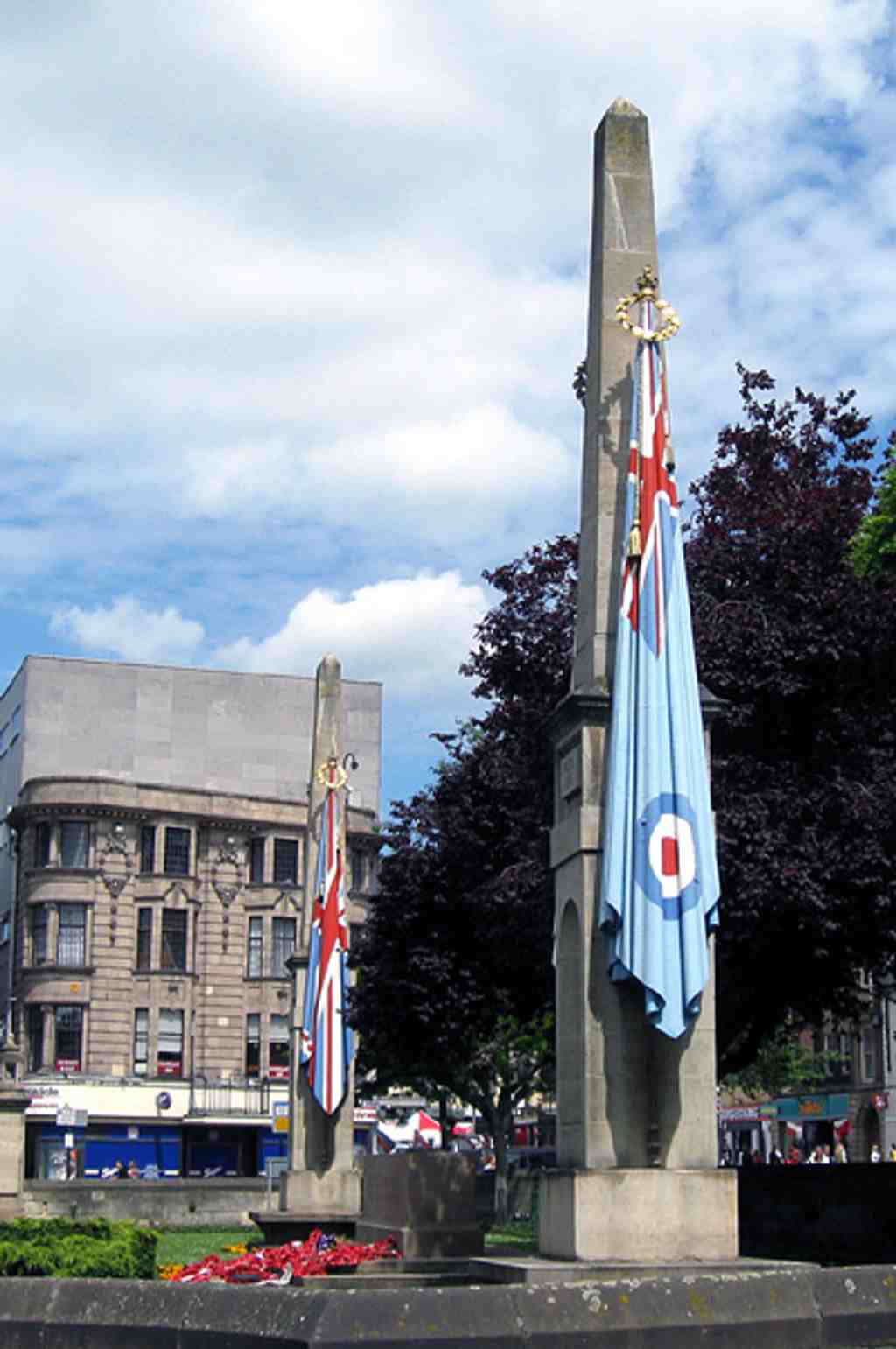
You’re just about to spot the Northampton War Memorial right ahead of you. Look for two tall stone obelisks standing upright in a small, quiet garden. Each one is draped on the side with a painted stone flag, almost as if time has frozen mid-breeze. The pale stone contrasts with the green of the grass and the dark leaves of trees nearby, making the whole scene feel both grand and reflective. Alright, now that you’re standing here, take a deep breath-you’re right in the heart of Northampton’s history. Imagine, if you will, the crowded square in 1926, a chilly November day, the air filled with anticipation and the sound of marching feet as local schoolchildren and civic leaders arrived for the grand unveiling of this memorial. This is more than just a monument. Officially called the Town and County War Memorial, it remembers the men from every corner of Northamptonshire who gave their lives in the First World War. It’s built on what used to be part of the All Saints’ churchyard, and its design is the work of one of Britain’s greatest architects: Sir Edwin Lutyens. This fellow Lutyens was a master of memorials-he even designed the famous Cenotaph on Whitehall in London! Now, check out those two proud obelisks, crowned with colourful flags carved in stone. Lutyens wanted these flags on his London memorial, but here in Northampton he got just what he envisioned. At the centre, you’ll spot the solemn Stone of Remembrance. That’s his signature mark, meant to echo the timelessness of stone itself-a steadfast tribute to lives lost but not forgotten. Back after the war, there was a big debate: Should Northampton’s memorial be a grand arch, a concert hall, or something simple? In the end, the people decided they wanted a monument that told a story-a peaceful place to remember and reflect. They all pitched in to pay for it, too, even chipping in coins and one generous £50 note from Lord Lilford. Not a small sum back then! The memorial finally found its permanent home after a bit of a mix-up buying land from the Church of England-imagine the paperwork!-but it was all worth it. When it was unveiled, the whole town fell silent for a moment that stretched into history. Today, this spot is a Grade I listed building-top tier for historic importance. It’s not just for remembering the fallen, it’s also a place where generations come to reflect on what courage, sacrifice, and community really mean. So, before you head on, look up at those flags and obelisks, and imagine the voices, footsteps, and stories that echo off the stone. Who knows? You might just hear a whisper of the past in the breeze. Ready to delve deeper into the background, commissioning or the design? Join me in the chat section for an enriching discussion.
Eigene Seite öffnen →To spot the Cultural Quarter, look straight ahead at the broad street lined with handsome old brick and stone buildings. On your left, you'll see a large brick building with tall…Mehr lesenWeniger anzeigen
To spot the Cultural Quarter, look straight ahead at the broad street lined with handsome old brick and stone buildings. On your left, you'll see a large brick building with tall arching windows-just past the corner with the hair salon. There’s a big vertical sign that proudly says “Cultural Quarter” in bold white lettering. This is the heart of Northampton’s arts and entertainment scene, so keep your eyes open for banners announcing the theatre, museum, and gallery all along the street. Welcome to Northampton’s Cultural Quarter! Take a moment-can you feel that? It’s the creative heartbeat of the town, pulsing right through the bricks and cobblestones beneath your feet. If you listen carefully, you might even catch the distant echoes of clapping from a standing ovation at the Royal & Derngate Theatre. Just a little over a decade ago, Northampton decided this patch of the town centre needed something special-and now, it’s bursting with life. You’re surrounded by more than just beautiful buildings; you’ve got the Northampton Museum to one side, the Royal & Derngate Theatre glimmering ahead, and the Errol Flynn Filmhouse tucked nearby, named after the swashbuckling actor himself-who, believe it or not, once strutted his stuff right here in town. Look around and you’ll spot a patchwork of old and new: the elegant 78 Derngate, stunning with its quirky design by Charles Rennie Mackintosh, waits just a stone’s throw from you. If you hear a burst of laughter or smell coffee wafting through the doors, that’s probably the NN Contemporary Art gallery-always bubbling with artists and new ideas. It hasn’t always been this lively. The ruins of an old fish market gave way to this art scene, and every wall here whispers stories of transformation: from schoolgirls at the now-gone high school, playwrights backstage, to artists splashing colour on the blankest of canvases. Today, you could stumble upon a film screening, a pop-up art show, or even a bit of street theatre-all in one stroll. So keep your eyes peeled, your ears open, and who knows? You might just catch inspiration yourself. This is Northampton’s Cultural Quarter, where everything ordinary could suddenly turn extraordinary! Interested in a deeper dive into the errol flynn filmhouse, nn contemporary art or the royal & derngate? Join me in the chat section for an insightful conversation.
Eigene Seite öffnen →



Häufig gestellte Fragen
Wie starte ich die Tour?
Laden Sie nach dem Kauf die AudaTours-App herunter und geben Sie Ihren Einlösecode ein. Die Tour ist sofort startbereit – tippen Sie einfach auf „Play“ und folgen Sie der GPS-geführten Route.
Benötige ich während der Tour Internet?
Nein! Laden Sie die Tour vor dem Start herunter und genießen Sie sie vollständig offline. Nur die Chat-Funktion benötigt Internet. Wir empfehlen den Download über WLAN, um mobiles Datenvolumen zu sparen.
Handelt es sich um eine geführte Gruppentour?
Nein – dies ist ein selbstgeführter Audioguide. Sie erkunden unabhängig in Ihrem eigenen Tempo, wobei die Audioerzählung über Ihr Telefon abgespielt wird. Kein Reiseleiter, keine Gruppe, kein Zeitplan.
Wie lange dauert die Tour?
Die meisten Touren dauern 60–90 Minuten, aber Sie kontrollieren das Tempo vollständig. Pausieren Sie, überspringen Sie Stopps oder machen Sie Pausen, wann immer Sie wollen.
Was, wenn ich die Tour heute nicht beenden kann?
Kein Problem! Touren haben lebenslangen Zugriff. Pausieren Sie und setzen Sie sie fort, wann immer Sie möchten – morgen, nächste Woche oder nächstes Jahr. Ihr Fortschritt wird gespeichert.
Welche Sprachen sind verfügbar?
Alle Touren sind in über 50 Sprachen verfügbar. Wählen Sie Ihre bevorzugte Sprache beim Einlösen Ihres Codes. Hinweis: Die Sprache kann nach der Tour-Generierung nicht mehr geändert werden.
Wo greife ich nach dem Kauf auf die Tour zu?
Laden Sie die kostenlose AudaTours-App aus dem App Store oder von Google Play herunter. Geben Sie Ihren Einlösecode (per E-Mail gesendet) ein, und die Tour erscheint in Ihrer Bibliothek, bereit zum Download und Start.
Wenn Ihnen die Tour nicht gefällt, erstatten wir Ihnen den Kaufpreis. Kontaktieren Sie uns unter [email protected]
Sicher bezahlen mit 


