
Chichester Audio-Tour: Eine Odyssee durch Zeit und Schätze
Ein einsamer Steinturm durchbohrt Chichesters Skyline und deutet auf Jahrhunderte des Umbruchs und verborgene Geschichten unter seiner ruhigen Oberfläche hin. Diese selbstgeführte Audio-Tour führt durch verwinkelte Gassen und geheime Ecken und enthüllt Geschichten, die die meisten Besucher nie hören – dramatische Brände, verschwundene Schätze, rebellische Schuljungen und unerwartete Wunder, die sich hinter alten und modernen Mauern verbergen. Welche Katastrophe ließ den mächtigen Kathedralturm am helllichten Tag einstürzen? Welches verlorene römische Bad schlief Jahrtausende lang unter der Stadt, bis moderne Bauherren es ausgruben? Warum verschwand eine jahrhundertealte Schule beinahe nach einer Krise, nur um in Gesang und Lachen wieder aufzuerstehen? Schreiten Sie von hoch aufragenden Bögen zu eleganten Glasfassaden und zeitlosen Innenhöfen und bewegen Sie sich durch Episoden politischer Intrigen, skandalöser Reformen, temperamentvoller Chöre und atemberaubender Überlebensgeschichten. Dies ist Chichester, wie es nur wenige erleben – ein lebendiger Wandteppich, gewebt aus Echos, Geheimnissen und Neuanfängen. Blicken Sie noch einmal zu diesem Turm auf – und lassen Sie Ihre Reise durch Chichesters Drama beginnen.
Tourvorschau
Über diese Tour
- scheduleDauer 40–60 minsEigenes Tempo
- straighten4.0 km FußwegDem geführten Pfad folgen
- location_onStandortChichester, Vereinigtes Königreich
- wifi_offFunktioniert offlineEinmal herunterladen, überall nutzen
- all_inclusiveLebenslanger ZugriffJederzeit wiederholen, für immer
- location_onStartet bei Kathedrale von Chichester
Stopps auf dieser Tour
You can spot Chichester Cathedral by looking for a tall, striking stone spire rising way above the trees and old brick walls-it’s the tallest thing for miles and almost seems to…Mehr lesenWeniger anzeigen
You can spot Chichester Cathedral by looking for a tall, striking stone spire rising way above the trees and old brick walls-it’s the tallest thing for miles and almost seems to touch the clouds, so just look up! Welcome to Chichester Cathedral, the grand old heart of the city, where every stone seems to whisper secrets from centuries past! Picture this: it’s 1075, and the people of Chichester are bustling around as the seat of the bishop is moved here from Selsey, probably wondering if their town will ever be the same again. You’re standing right in front of architecture that’s survived not just the whims of fashion-Norman, Gothic, take your pick-but actual fires, lightning strikes, and the odd collapsing tower. Now that’s what I call a dramatic history! The cathedral’s spire soars skyward, making it not only the third tallest in England but also the only medieval cathedral spire you’ll see from the sea. Sailors used it as a beacon long before GPS came along. At night, imagine a sea captain casting a shaky gaze-“Is that Chichester? Home at last!” The inside boasts double aisles-a bit of French flair for an English classic-along with a rare free-standing medieval bell tower, which had to be built separately after some unfortunate run-ins with sinking ground. I mean, the poor towers of this place have more ups and downs than a soap opera’s wedding episode! If you step inside, you’ll find yourself surrounded by ancient stone, cool air, and the scent of wax and old wood. Look for the 12th-century sculptures, marvels of medieval hands, and modern art like stunning tapestries and glimmering stained glass. Dean Walter Hussey in the 1950s was quite the art collector, roping in contemporary legends to fill these hallowed halls with color and wonder-there’s even a window by Marc Chagall! The floors hide a Roman mosaic visible through glass and, tucked under the seats in the choir, are thirty-eight old misericords ready to support the weary or the restless. Let’s not forget the cathedral’s brush with disaster: In 1187, a terrible fire tore through town, leaving both the cathedral roofless and the neighbours worried about whether there’d be a next Sunday service. Stones were hauled, sweat poured, and by 1199-ta-da!-the cathedral was reconsecrated and even grander. Not dramatic enough? The spire itself famously fell down in 1861, telescoping neatly inside itself, but by sheer luck not a single soul was squashed. They even say the sight inspired a novelist to write a whole book, “The Nebuly Coat.” Victorian hands, fueled by donations from even Queen Victoria and Prince Albert, rebuilt it six feet higher-just in case someone, somewhere, needed a little extra inspiration. What’s a cathedral without saints and secrets? St Richard of Chichester, bishop here in the 1200s, became a saint and drew crowds of medieval pilgrims. His shrine turned the cathedral into a lively crossroads, only to be torn down in the religious reformations that swept away saints and statuary alike. And let’s not forget the canons, the dignitaries, and the city’s ‘six or seven good families’ who once filled up the pews-if you believe Daniel Defoe, without them, the town would be nothing but whispered secrets among men in robes! You might even catch the wildest locals of all, peregrine falcons, nesting in the spire’s turrets and swooping out like feathery acrobats. On special days, the entire cathedral fills with glorious music; the choir’s daily voices drift through the ancient stone, echoing alongside pipe organs both modern and medieval. Gustav Holst, the composer himself, lies at rest inside, alongside the famously peaceful Arundel tomb whose story inspired Philip Larkin’s haunting poem about love outlasting even stone. Outside, the cathedral and its lush grounds have made their way into art and film: painted by Turner and Constable, even making a star appearance in Monty Python. So look up at those soaring arches, feel the weight of centuries and imagine all the music, mystery, and mayhem these stones have seen. Ready to continue? Chichester Cathedral has set the stage-onward to the rest of the city’s stories! Seeking more information about the architecture, treasures or the dean and chapter? Ask away in the chat section and I'll fill you in.
Eigene Seite öffnen →Look to your left for a striking, modern, cream-colored building with big windows on the ground floor-The Novium stands out from its traditional neighbors with its sharp,…Mehr lesenWeniger anzeigen
Look to your left for a striking, modern, cream-colored building with big windows on the ground floor-The Novium stands out from its traditional neighbors with its sharp, minimalist edges right along the street. Welcome, time traveller, to The Novium-Chichester’s very own vault of stories, treasures, and the odd Roman bath or two! No, you’re not imagining it; this sleek, bright building is quite the departure from the ancient stones and timber frames you’ve been passing. It was designed by the architect Keith Williams, who clearly had one thing in mind: let’s do history, but make it bold! At 1,300 square meters-almost two and a half times bigger than Chichester’s old museum over in Little London-it’s got room for all the drama, secrets, and curiosities you could possibly hope for. Officially opened in July of 2012, The Novium is named after Noviomagus Reginorum-the original Roman name for Chichester. The building stretches over three floors, each one packed to the rafters with exhibits that whisk you from Chichester’s geological roots right up through centuries of fascinating lives and stories. Downstairs is a real treat: the museum sits directly above Chichester’s actual Roman Bath House. Stand here and try to imagine the hustle and bustle from almost 2,000 years ago: the air heavy with steam, echoes of conversation bouncing off mosaics, and the heat of Roman engineering pulsing beneath your feet. Nowadays, that bathhouse is on proud display in the ground-floor gallery-a bit less steamy, but just as atmospheric. But let’s rewind the clock a bit further. The first seeds for Chichester’s museum were sown way back in 1831, thanks to Dr John Forbes and his Philosophical and Literary Society-a bit like a book club, but with more fossils and dead beetles. The earliest collections started with natural history, thanks to the generosity of local people. For a while, the museum moved all over town: from the Royal West Sussex Hospital to various houses and shops. In 1851, excitement peaked as the Great Exhibition wowed the world and the Archaeological Institute hosted its annual conference right here in Chichester. Suddenly, everyone was interested in their roots, and the region enjoyed a bit of a treasure-hunting frenzy. Sadly, by the late 1800s, the excitement had fizzled out. Times were tough, and many precious artefacts were sold off just to keep the lights on. When World War I arrived in 1914, the museum building was commandeered by the army, and rumor had it that the remaining treasures were not exactly treated with museum-level care. By 1924, Chichester’s collection was all but gone. But you can’t keep Chichester’s history down for long! The 1930s brought new enthusiasm, leading, eventually, to a sort of “pop-up museum” in Priory Park’s Guildhall. Volunteers collected artefacts here for a whole 25 years, waiting for their moment to shine. In 1961, a temporary exhibition in the Assembly Rooms sparked yet another revival, and a kind-hearted architect stepped up to transform a disused Corn Mill into a new home for the museum. When Chichester Museum reopened in 1962, it was filled with sparkling local art and gleaming finds. By 1974, swelling with finds from local archaeological digs, it claimed its larger district identity. Fast forward to today, and The Novium is the jewel in Chichester’s heritage crown. With over 350,000 objects in its collections-think everything from rare Roman mosaics to social snapshots of daily life in Sussex-it’s a time capsule overflowing with stories. Some highlights? The Jupiter Stone, the famous Chilgrove Mosaic, even a loaned bust of King Charles I recently joined the party. So as you gaze at this modern marvel, imagine how history kept slipping through Chichester’s fingers, only to be gathered up, lovingly restored, and proudly displayed-and you, my friend, are standing right where ancient Romans once wiped the steam from their brows! Step inside, and who knows what secrets you might uncover… just don’t try taking a bath in the exhibition. I promise the staff won’t find it nearly as funny as I do!
Eigene Seite öffnen →To spot The Prebendal School, look for the proud old schoolhouse right next to the cathedral precinct, with a narrow medieval tower-you’ll notice its elegant crest above the doors…Mehr lesenWeniger anzeigen
To spot The Prebendal School, look for the proud old schoolhouse right next to the cathedral precinct, with a narrow medieval tower-you’ll notice its elegant crest above the doors with red pelicans and a bishop’s mitre if you look closely. Now, as you stand here, imagine the centuries whispering around you. The Prebendal School is the oldest school in Sussex-older than your average birthday cake, and that’s saying something! It probably began all the way back in the 11th century, soon after Chichester Cathedral was built, as a ‘song school’ just for cathedral choristers. Picture young boys shuffling along these ancient stones, their voices echoing through the quiet morning streets, trying to remember every note for the day’s hymns. But this place wasn’t always just for singers! In 1497, the Bishop of Chichester, Edward Story (great name for a storyteller, right?), changed things up and made it a grammar school, opening its doors to local boys and even naming it after the Prebend of Highleigh. The funny thing about ancient schools is that while they had strict rules, you can bet the kids still sneaked the odd frog into class or launched a paper airplane when the teachers weren’t looking! Fast-forward a few centuries and more changes came along-they started welcoming girls in 1972, bringing a whole new energy to these old echoes. Today, The Prebendal is a lively, co-ed day and boarding school for students aged 3 to 13. And if you listen carefully as you stand here, you might almost hear the cheerful racket of children rushing off to their classes or choristers warming up their voices. Life at Prebendal is never boring. Though the pandemic gave the school a bit of a scare and they sought new support, they bounced back, joining the Alpha Schools Group and getting crowned “Excellent in all areas” by the most recent inspection. Oh, and according to The Telegraph in 2020, it’s one of the best-value schools in the country-proving you don’t need a dragon’s treasure to learn here. And who walked these halls? Poets, archbishops, politicians, artists, and even a Britain’s Got Talent finalist-imagine sharing a desk with the next famous name! So, as you stand outside, breathe in that mix of history, excitement, and maybe even the faintest whiff of old-school mischief. Welcome to Prebendal, where every day is a new chapter in a very long story.
Eigene Seite öffnen →

12 weitere Stationen anzeigenWeniger Stationen anzeigenexpand_moreexpand_less
To spot St Richard of Chichester Church, just look for the tall, modern brick tower topped with a cross, right on the corner where Market Avenue meets Cawley Road - it’s hard to…Mehr lesenWeniger anzeigen
To spot St Richard of Chichester Church, just look for the tall, modern brick tower topped with a cross, right on the corner where Market Avenue meets Cawley Road - it’s hard to miss! Welcome to St Richard of Chichester Church, a parish with a story stretching back to secret beginnings! Before there was ever a church on this spot, Mass was whispered in a single upstairs room at the old Bedford Hotel, with the faithful sneaking in under cover of rain and wind. Imagine the sound of hurried footsteps on wet cobblestones, as worshippers rushed for their makeshift chapel in the heart of 1800s Chichester. But in 1855, thanks to the generosity of the Countess of Newburgh (who clearly thought Chichester deserved a little less sneaking around and a lot more style), the first church appeared in proper Gothic Revival fashion, right on this very corner. But then, in true dramatic church fashion, the original building stepped aside for a bold new creation in 1958. The present church rose up, designed by Lawrence Tomei and John Maxwell, its brick tower and clerestory letting the light pour in from every angle. And oh, that light - inside you’ll find the UK’s largest stained glass scheme by the famous Gabriel Loire, shimmering with colours that dance across the pews, thanks to the magical dalle de verre style stained glass. It’s like stepping into a rainbow on a Sunday morning! And let’s not forget, St Richard’s is more than a landmark. It’s a living, breathing hub for the city’s Catholics, with a single parish that serves not only here but also the churches of Bosham, Selsey, and East Wittering. Three Sunday Masses fill these walls with voices, music, and sometimes even a little foot shuffling if the pews get crowded. So, as you stand here, picture the generations who’ve gathered, prayed, and laughed at the odd wobbling candle or off-key hymn. St Richard’s is where history meets colour, community, and-on a good day-the sun shining right through a masterpiece above your head!
Eigene Seite öffnen →To spot the Pallant House Gallery, just look ahead for a striking combination of classic red-brick Georgian townhouse and a bold, modern brick extension with large windows and-if…Mehr lesenWeniger anzeigen
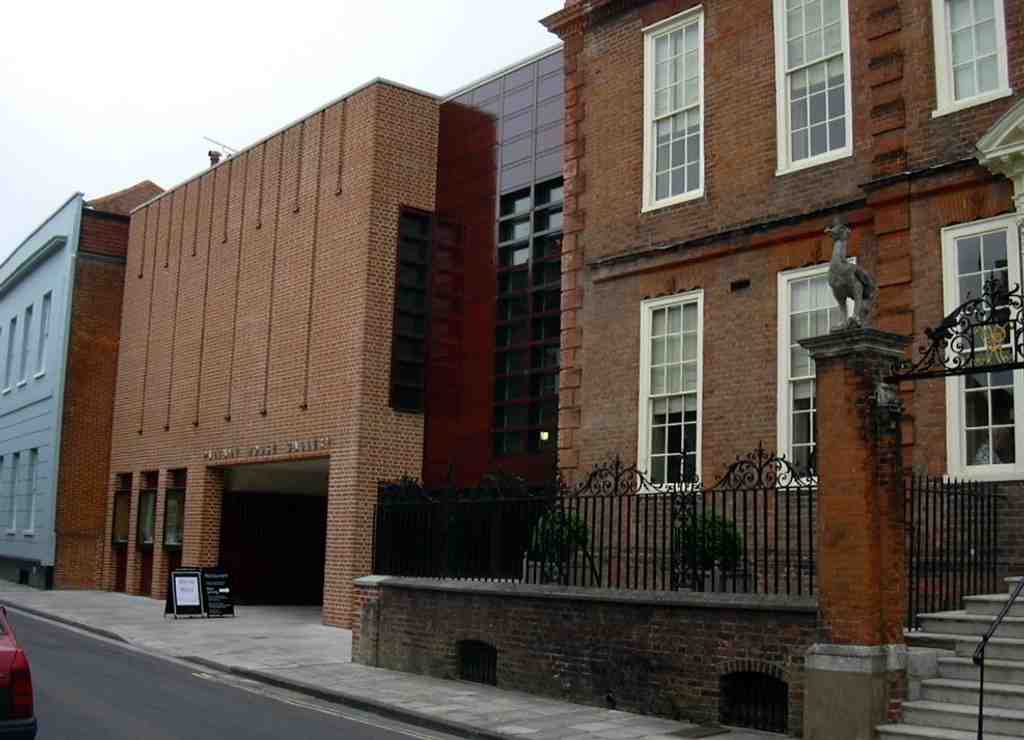
To spot the Pallant House Gallery, just look ahead for a striking combination of classic red-brick Georgian townhouse and a bold, modern brick extension with large windows and-if you’re eagle-eyed-a rather proud stone ostrich standing guard at the entrance gate. Alright, standing right here, you’re at the gateway to one of Britain’s true artistic treasure troves! Take a deep breath and imagine yourself stepping back in time to 1712. The air is full of whispers-dealings of merchants, the click of fancy buckles on shoes, and the swish of silk dresses. Pallant House itself was built for Henry “Lisbon” Peckham, a wine merchant so grand, he needed a house to match his ambition. Can you catch a glimpse of those two stone ostriches by the gate? Those are straight from the Peckham family arms. If they could talk, they’d probably tell you tales of spilled wine and grand feasts! But wait, we’re not just dealing with old bricks and proud birds. Fast forward to 1977, and the very soul of this building is about to change. Enter Walter Hussey, Dean of Chichester Cathedral and a man with an eye for genius. When he retired, he gifted his private collection of modern British masterpieces-think Barbara Hepworth, Henry Moore, John Piper-to the city. But there was a catch: they had to be displayed right here in Pallant House. I like to think Hussey wanted to make sure the old ostriches had something new to look at! Now, hold onto your hats, because the collection kept growing. In 1989, Charles Kearley, a property developer with a passion for art, left behind his own stash: vibrant treasures by John Piper, Ben Nicholson, and-wait for it-Paul Cézanne, André Derain, Fernand Léger, and Gino Severini. Imagine the collection as a lively family dinner: the grand old Henries and Barbaras chatting animatedly with the Césannes and Derains, all while the ostriches try to keep the peace. And then there was Sir Colin St John Wilson. Is there anything this man couldn’t do? Not only did he donate works by Michael Andrews, Peter Blake, Patrick Caulfield, Lucian Freud-and a whole roll call of modern masters-but he actually helped design the extension you see now. In 2006, that bold new brick-and-glass wing arrived, like a surprise guest at an old family reunion. Critics called the mix of old and new “a vibrant relationship”-a bit like bringing your arty friend to Christmas dinner and discovering you all love the same jokes. That new wing was so admired it even won the prestigious Gulbenkian Prize. Speaking of surprises, Pallant House has a secret below: it’s believed to be the UK’s first art gallery heated and cooled by a geothermal system. Picture this: 69 pipes dive deep under your feet, pumping water to keep the masterpieces comfortable and almost halving the building’s carbon emissions. Even the planet gets to take a deep breath in here! Through its doors have passed some amazing exhibitions. Imagine the drama in 2015, when 500 lost works by Evelyn Dunbar-missing for over fifty years-reappeared like a magician’s rabbit! Then textiles by John Piper, portraits by Glyn Philpot, and more Hockneys and Hamids than you could shake a paintbrush at. There’s always something new and unexpected behind these walls. The building itself is a tale of its own-a Grade I listed townhouse fit for a merchant (as long as he was willing to fight it out in court for the right architecture: the Peckhams skipped the local mason’s plan and went to London for “the London modell,” sparking a Chancery suit!). The house was even council offices for a while, only to be rescued, polished, and opened as a gallery in 1982. It’s now looked after by a dedicated independent trust, ensuring those artful ostriches keep their beady eyes on treasures for years to come. You can almost hear the gentle sound of the garden behind you-carefully designed by a Chelsea Flower Show winner-where you might spot an artist sketching, a visitor daydreaming, or maybe just a pigeon trying to impress those stone ostriches! So whether you come for the Hepworths or for hints of hidden history, remember: every brick, painting, and echo in this place is part of a story still unfolding, waiting for curious explorers-like you-to step inside and become part of it.
Eigene Seite öffnen →To spot St John the Evangelist's Church, look for an unusual octagonal building made of pale, yellowish-white brick, with tall arched windows and a curious small dome on top,…Mehr lesenWeniger anzeigen
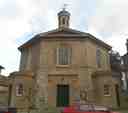
To spot St John the Evangelist's Church, look for an unusual octagonal building made of pale, yellowish-white brick, with tall arched windows and a curious small dome on top, right ahead of you. Welcome, wanderer, to one of Chichester’s most fascinating landmarks, where stories echo off these yellow-white brick walls like a good joke in a quiet library! Imagine it’s the year 1812, and this part of the city, called New Town, is bustling with change-yet oddly, there’s not an Anglican church in sight. The people here decide they want a new place to worship, but rather than waiting for the lottery (or divine intervention), they put their coins together and start a unique fundraising scheme. Instead of buying a ticket to paradise, you could buy your very own seat in church! That’s right, invest in a pew, and you’re guaranteed the best view for every Sunday sermon. Behind that plain, yet elegant stone doorway, you’d find a design unlike anything in Chichester. The man in charge? A young architect named James Elmes, though he was so unwell he handed most of the work off to his apprentice, John Haviland, who would later become a famous prison designer-let’s hope he didn’t get too inspired by his time here! The building that rose here was a bold response to the times: an elongated octagon in the Classical style, sprinkled with Greek Revival touches, and built to showcase the ideals of the Evangelical wing of the Church of England. Forget ornate altars and gilded screens-this church was all about the sermon. They installed an enormous three-decker pulpit front and centre, so high and proud it nearly blocked out the altar, which was said to resemble a kitchen table more than a holy relic. Step inside (use your imagination!) and picture the sunlight streaming through tall, round-arched windows. The galleries, made from American birch, sweep around the room in a rectangle, held aloft on columns shaped like ancient Egyptian obelisks. Climb those side staircases, and you’ll have a bird’s-eye view of everything-if you held the right ticket, of course. In those days, the rich could buy or even rent out pews, some visitors had to pay an entrance fee, but there was a handful of free seats kept aside for the poor. Men and women even had separate entrances and seating-talk about a strict guest list! And let’s not forget the odd sight at the very top: a mini ancient Greek monument, dangling like a cherry atop the building, with its own little bell forged in London the year the church opened-1813. Whenever it rang out, all of Chichester would know it was time to gather. Life here was never dull. The pulpit-considered the finest three-decker in Sussex-became the beating heart of the church. On the lowest level, the church clerk would respond to prayers; above him, the vicar would lead the service; and high atop, almost as if reaching for heaven, the preacher would boom out the sermon to all, watched over by a sea of attentive faces. The arrangement wasn’t to everyone’s taste, especially those who favored the fancier High church style that swept through the country later. Somehow, St John’s survived the fashion battles and the enthusiastic renovators of later generations-some say it’s a mystery it’s still here in its original form at all. But what of now? Well, the sermons stopped in 1973 when the church was declared redundant, but don’t let the name fool you-the building sprang back to life as a concert and festival hall. Every summer, the space fills with music and laughter, especially during the vibrant Chichester Festivities, keeping the spirit of this place very much alive. In 1950, the church earned a Grade I listing, cementing its place in history. So next time you pass by, picture not just a church, but a stage set for two centuries of drama, debate, song, and change. And if you ever long to hear echoes of the past, listen closely-perhaps you’ll catch the gentle clang of the old bell, or the memory of a preacher’s voice rising above the city’s ancient stones. On to our next stop!
Eigene Seite öffnen →To spot St Andrew-in-the-Oxmarket Church, look for a simple, small stone building with creamy, rendered walls, narrow arched windows, and a steep roof topped by a quaint wooden…Mehr lesenWeniger anzeigen
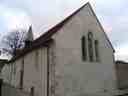
To spot St Andrew-in-the-Oxmarket Church, look for a simple, small stone building with creamy, rendered walls, narrow arched windows, and a steep roof topped by a quaint wooden bell-cot and a pointed spire, nestled down a quiet alley off East Street. Welcome to St Andrew-in-the-Oxmarket Church, a place with more lives than a cat that’s spent too much time in Chichester’s back alleys! Take a moment to imagine you’re standing here about 800 years ago-no cars, just the clip-clop of horses on cobblestones. The year is somewhere in the 1200s, and this little church isn’t so different from what you see now-built for the people of Chichester, with its solid stonework and flint walls, and windows that have watched over centuries of laughter, sermons, and probably a few pranks from local kids. Getting here might’ve felt a bit like a treasure hunt, since the church hides itself away down two old alleys-the sort of place you’d expect to stumble upon a riddle from a medieval monk. If you look closely at the east end, you’ll spot carefully dressed stone, a clue to its long story. The west wall leans firmly on its medieval buttresses, and if stones could talk, these ones could tell you tales all the way back to the city’s Roman walls-bits of which were recycled right into this building when the Romans had packed up and left. Inside, there’s no fancy separation between the nave and chancel-it’s just open, cozy, and full of wobbly wooden charm. Once, this was the territory of the Dean of Chichester, and the church was even richer than your average bishop-until the Reformers rethought those arrangements. Over the centuries, the church got new features like a north window with Saint Cecilia, patron of musicians-so if you suddenly feel inspired to hum a tune, blame her-and a south window that honors the poet William Collins, now resting nearby. There used to be a portrait of William Cawley here, but it moved up in the world, making its way to Chichester Cathedral. Not to brag, but this church has had some seriously artistic houseguests. By the late 1800s, it absorbed the congregation from All Saints-in-the-Pallant, another ancient church that closed its doors. But then, the Second World War swept through. In 1943, bomb blasts damaged the building so badly the congregation had to move out, and the little church fell eerily quiet, echoing only with the ghosts of old hymns. For decades, it stood empty-deconsecrated and forgotten. In the swinging ’60s, someone had a bright idea: why not turn this old church into something new-a hub for art, color, and imagination? Restoration began, and in 1976, the doors swung open as the Chichester Centre of Arts-later renamed the Oxmarket Centre of Arts. Artists and visitors have filled its spaces ever since, and even the 1989 extension kept its unique character, adding light and life without stealing its ancient soul. Today, it’s a Grade II* listed building, and artwork fills the space where prayers once echoed. If you listen carefully, you might just hear the gentle patter of modern footsteps mingling with the sounds of centuries past. The perfect place to experience Chichester’s layered history-where stone, art, and stories come together, and the only thing missing, perhaps, is you composing your own masterpiece!
Eigene Seite öffnen →

Häufig gestellte Fragen
Wie starte ich die Tour?
Laden Sie nach dem Kauf die AudaTours-App herunter und geben Sie Ihren Einlösecode ein. Die Tour ist sofort startbereit – tippen Sie einfach auf „Play“ und folgen Sie der GPS-geführten Route.
Benötige ich während der Tour Internet?
Nein! Laden Sie die Tour vor dem Start herunter und genießen Sie sie vollständig offline. Nur die Chat-Funktion benötigt Internet. Wir empfehlen den Download über WLAN, um mobiles Datenvolumen zu sparen.
Handelt es sich um eine geführte Gruppentour?
Nein – dies ist ein selbstgeführter Audioguide. Sie erkunden unabhängig in Ihrem eigenen Tempo, wobei die Audioerzählung über Ihr Telefon abgespielt wird. Kein Reiseleiter, keine Gruppe, kein Zeitplan.
Wie lange dauert die Tour?
Die meisten Touren dauern 60–90 Minuten, aber Sie kontrollieren das Tempo vollständig. Pausieren Sie, überspringen Sie Stopps oder machen Sie Pausen, wann immer Sie wollen.
Was, wenn ich die Tour heute nicht beenden kann?
Kein Problem! Touren haben lebenslangen Zugriff. Pausieren Sie und setzen Sie sie fort, wann immer Sie möchten – morgen, nächste Woche oder nächstes Jahr. Ihr Fortschritt wird gespeichert.
Welche Sprachen sind verfügbar?
Alle Touren sind in über 50 Sprachen verfügbar. Wählen Sie Ihre bevorzugte Sprache beim Einlösen Ihres Codes. Hinweis: Die Sprache kann nach der Tour-Generierung nicht mehr geändert werden.
Wo greife ich nach dem Kauf auf die Tour zu?
Laden Sie die kostenlose AudaTours-App aus dem App Store oder von Google Play herunter. Geben Sie Ihren Einlösecode (per E-Mail gesendet) ein, und die Tour erscheint in Ihrer Bibliothek, bereit zum Download und Start.
Wenn Ihnen die Tour nicht gefällt, erstatten wir Ihnen den Kaufpreis. Kontaktieren Sie uns unter [email protected]
Sicher bezahlen mit 


