
Zeitwächter und Titanen: Die gelehrte Saga von Cambridges majestätischer Meile
Eine Stadt, in der alte Türme digitale Revolutionen verbergen und Legenden in stillen Innenhöfen geflüstert werden, Cambridge ist mehr, als man auf den ersten Blick sieht. Diese selbstgeführte Audiotour lädt Sie ein, über die Postkartenansichten hinauszugehen, um die Geschichten, Skandale und Momente der Rebellion aufzudecken, die diese bemerkenswerten Colleges und Computerzentren geprägt haben. Wer riskierte königlichen Zorn, indem er heimlich den Schatz eines Nachbarn abzapfte, um St Catharine’s zu bauen? Welche verschwundene Tradition setzte einst Corpus Christi im Schatten des Schwarzen Todes mit Farbe und Silber in Brand? Warum verbindet ein seltsam benanntes E-Mail-System Millionen Menschen auf der ganzen Welt von einem versteckten Torbogen aus? Gehen Sie durch offene Grünflächen, wo Studenten verbotene Ideen debattierten, und schreiten Sie unter gotischen Bögen, die von geheimen Geschichten pulsieren. Jeder Schritt verspricht neue Enthüllungen – akademisches Drama, kühne Experimente, eigensinnige Stadtbewohner, sogar eine meisterhafte Selbstwahl zur Macht. Treten Sie ein in Cambridges schlagendes Herz. Drücken Sie Play und lassen Sie sich heute von Jahrhunderten verborgenen Ehrgeizes leiten.
Tourvorschau
Über diese Tour
- scheduleDauer 40–60 minsEigenes Tempo
- straighten3.7 km FußwegDem geführten Pfad folgen
- location_onStandortCambridge, Vereinigtes Königreich
- wifi_offFunktioniert offlineEinmal herunterladen, überall nutzen
- all_inclusiveLebenslanger ZugriffJederzeit wiederholen, für immer
- location_onStartet bei St Catharine's College, Cambridge
Stopps auf dieser Tour
Take a look ahead and you’ll spot St Catharine’s College by its wide, open court bordered by elegant red-brick buildings dotted with white-trimmed windows. There’s a classic…Mehr lesenWeniger anzeigen
Take a look ahead and you’ll spot St Catharine’s College by its wide, open court bordered by elegant red-brick buildings dotted with white-trimmed windows. There’s a classic old-fashioned lamp post right in the center of the tidy grass, and the whole place is edged by neat cobblestones and low steps. There’s no high wall shutting you out-just this friendly, open space facing Trumpington Street, which makes it easy to spot as you walk by. Now, imagine you’re here back in the 1400s. Instead of students typing on laptops, you’d see three nervous scholars in dark robes, clutching their books, hoping they understood enough theology and philosophy to make it another day. The college-then called Katharine Hall-was tiny, just a handful of people, all thanks to Robert Woodlark, who spent nearly all he had to build this place. Some say he secretly used money from King’s College next door, which must have made dinners a little awkward. The college is fondly called “Catz” by everyone in Cambridge, and it has some quirky claims to fame. Ever heard of “Hobson’s choice”? Just behind where you’re standing was once a stable, and the manager, Hobson, refused to let you pick any horse except the one nearest the door. It was his way or no way, which ended up giving us that phrase: take it or leave it. Even the college’s name has a story. It might have been named after Catherine of Valois, the mother of a king, or maybe after Catherine of Alexandria, the patron saint of knowledge. Cleverly, St Catharine’s celebrates its founding every November 25-St Catherine’s Day. If you look closely at the college crest, you’ll spot a spiky wheel, symbol of the saint herself. For a long while, no undergraduates were allowed here, just serious fellows, until suddenly the college turned into a lively teaching place. Over hundreds of years, these courts grew around you, shaped by luck, drama, and a little bit of scandal-like that one master who, faced with a tie in the election, voted for himself and won. So as you stand by these quiet lawns, close your eyes for a moment and imagine centuries of eager footsteps, nervous debates, secret ambitions, and the odd prank echoing off these red-brick walls. St Catharine’s is a mix of humble beginnings, academic dreams, and a dash of rebellion-right here, where it’s always been, open to the city and ready for the next story.
Eigene Seite öffnen →Right in front of you stands Corpus Christi College, and as you look at its stone walls, I invite you to travel back in time to 1352, when the world outside was very different.…Mehr lesenWeniger anzeigen
Right in front of you stands Corpus Christi College, and as you look at its stone walls, I invite you to travel back in time to 1352, when the world outside was very different. Picture the narrow, muddy streets of Cambridge, tense and quiet after the terrible sweep of the Black Death. Two local guilds, having lost many of their members, came together to create something new that would outlast even the darkest plague. The people who started this college weren’t wealthy lords or royal figures. They were everyday townsfolk-shopkeepers, bakers, tradespeople-who wanted to leave a mark bigger than themselves. With royal permission and the help of their patron, the Duke of Lancaster, they built the first simple courtyard near the old parish church. The very first students, just a handful of young men, stepped onto these grounds in 1356, with rules so strict that only the “fellows” had to follow them at first. The students? They ran about the place without much supervision for nearly two centuries. Can you imagine the grand Corpus Christi procession that once paraded through these winding streets? The college Master and fellows would hoist glittering silver treasures and walk through throngs of villagers, all led by a priest. They marched all the way to Magdalene Bridge and back, turning everyday Cambridge into a festival of color and noise. The parade ended almost 500 years ago, but even now, the college celebrates its founding day with a grand dinner, echoing the feasts of old. Each stone and window around you is part of a story that mixes loyalty, survival, a dash of mischief, and a fair amount of stubbornness. And while the college is now one of Cambridge’s richest and strongest in academics, it began with neighbors pooling their resources, hoping for something better. So as you stand here, imagine the layers of history under your feet-the laughter, the chimes, the secret hopes that once filled this courtyard. Even though the silver is locked away, and the processions are gone, the heartbeat of Corpus Christi, the college that townsfolk built, still pulses through Cambridge today. Fascinated by the buildings, student life or the traditions and anecdotes? Let's chat about it
Eigene Seite öffnen →Ahead of you stands a grand, pale stone gateway reaching upward, with tall windows framed in elegant gothic arches. Look for the detailed carvings above the archway-crests, leafy…Mehr lesenWeniger anzeigen
Ahead of you stands a grand, pale stone gateway reaching upward, with tall windows framed in elegant gothic arches. Look for the detailed carvings above the archway-crests, leafy designs, and a statue watching quietly from a niche above, as if it’s overseeing all who enter. Sunlight glancing off the smooth stone gives the whole building a gentle, golden glow. There’s a red post box on the left and a dark tunnel stretching through, leading you deeper into Cambridge’s secret heart. Pause for a moment and picture the computers humming quietly behind these dignified walls, a strange contrast to the old stone and gothic spires. Once, in this very spot, the buzz wasn’t just the pigeons fluttering overhead, but minds spinning with new ideas. The University of Cambridge Computing Service, right where you’re standing, was the nerve centre of Cambridge’s digital world from the 1970s until 2014. Imagine, not that long ago, the excitement and nervous tension: sparkling-eyed students and deep-thinking professors gathered here, puzzling over problems in computing when computers filled entire rooms and needed whole teams just to run. Close your eyes and hear the faint clacking of early keyboards, the whir of tapes spinning, the scent of coffee as dusk fell-nobody wanted to leave when deadlines loomed. Out of this unassuming building came machines so clever, so ahead of their time, that people from around the world took notice. The EDSAC, the Titan, and the mysterious-sounding Phoenix computer-they weren’t characters from a sci-fi novel, but real computers that helped launch the digital era. Once upon a time, someone working right here helped create the Exim mail system, a little bit of Cambridge that now quietly delivers emails for millions every day. This place holds secrets. It’s played its part in the digital age, from massive, clunky machines with flickering lights to web-based magic that lets Cambridge folk sign in from all across the world with just one password-Raven. Stand a moment longer and imagine the generations of students, heads bent in concentration, faces glowing in the light of their screens, quietly shaping the future from behind these ancient walls. It’s a simple stone arch, but for decades, it was the doorway to an invisible labyrinth of information, buzzing and rippling beneath your feet. And who knows-maybe the next wave of computing legends are just passing by.
Eigene Seite öffnen →


12 weitere Stationen anzeigenWeniger Stationen anzeigenexpand_moreexpand_less
You’re almost there-slow down for just a moment. Ahead of you, set into the corner of the Taylor Library, is a glass case. Inside it, you can’t miss the blazing, swirling disc of…Mehr lesenWeniger anzeigen
You’re almost there-slow down for just a moment. Ahead of you, set into the corner of the Taylor Library, is a glass case. Inside it, you can’t miss the blazing, swirling disc of gold. It’s enormous, shining in the daylight like a dropped sun, with three glowing blue rings marking out the time. And crouched above this golden surface, like something out of a dark fairy tale, is a creature: part locust, part prehistoric monster, gazing down with metal eyes, poised as if it’s about to pounce. Its legs are spiky, and its mouth even opens and closes as if it’s chewing invisible seconds from the air. If you’re not sure where to look, just follow the glint-the giant, round, rippled face will catch your eye, just above head height. You are standing in front of the Corpus Clock, a piece of Cambridge that’s as strange as it is unforgettable. This clock is not just for telling time-it’s telling the story of time itself, in a way that’s both beautiful and, perhaps, a little unsettling. Invented by John C. Taylor and unveiled by Stephen Hawking in 2008, the Corpus Clock made headlines around the world. Time Magazine called it one of the best inventions of the year-and it’s not hard to see why. There are no hands, no numbers, just those blue LED slits that flash through the gold every few seconds. But it’s the creature on top that steals the show. He’s called the Chronophage, which literally means “time eater.” Watch closely; you’ll see his jaws chewing up each second, as if he’s never quite satisfied. Sometimes, just when you think you know his rhythm, he blinks-a swift gold eyelid-so fast you might miss it if you’re not paying attention. Below, now and then, you’ll hear the clonk of a hidden chain falling into a wooden coffin, marking the hour passing into history. Everything about the Corpus Clock is designed to remind you of how slippery time can be. The Chronophage never moves quite evenly-sometimes he darts, sometimes he drags. The whole thing is always just a bit off, running perfectly only for a few seconds every five minutes. It’s playful, but there’s something a little bit haunting as well. John Taylor wanted you to feel this chase, because in Cambridge, surrounded by centuries of memory, time is always getting away from us all. So stand here a moment. Let the golden face reflect back the city, and listen to the soft grinding sound-the quiet, steady appetite of the Chronophage. Watch closely for a blink, or the ripple of blue lights marking another minute gone. The inscription below says, in Latin, “the world passes away, and the lust thereof.” It’s a gentle nudge to enjoy each second, because the Chronophage is always hungry, and every moment is already sliding into the past. To delve deeper into the appearance, mechanics of the clock or the funding and realisation, simply drop your query in the chat section and I'll provide more information.
Eigene Seite öffnen →Look directly ahead for a large, light-stone church rising above the busy street. Its tall, square tower is impossible to miss, with four castle-like turrets peeking above the…Mehr lesenWeniger anzeigen
Look directly ahead for a large, light-stone church rising above the busy street. Its tall, square tower is impossible to miss, with four castle-like turrets peeking above the rooftops. The entrance is below the towering windows, and if you notice the crowds gathering, the hum of voices and footsteps, you know you've arrived at Great St Mary's. Now, close your eyes for a second and breathe in the sense of history gathered here. Imagine standing here on a chilly morning in the midst of medieval Cambridge, when the huge church bells suddenly began to ring out over a near-empty street. This is Great St Mary's-known to locals as "GSM." More than just a parish church, it has also played a starring role as the heart of Cambridge University for centuries. Back in the day, university officers couldn’t stray more than 20 miles from here… and students were supposed to stay within three! Talk about keeping a watchful eye. More than eight hundred years ago, King John personally appointed the church’s rector. Centuries earlier, the spot may have already held a church, but the building you see today is a survivor, born from the ashes of a terrible fire in 1290. Townsfolk whispered rumors, blame was thrown, and the city changed forever. The Great St Mary's you see now was rebuilt patiently between 1478 and 1519, while the towers didn’t get their final touch until 1608. Try to imagine what it must have been like when, during the chaos of the Peasants’ Revolt in 1381, angry crowds stormed through these doors, tearing up precious university scrolls. Even the most important university debates and gatherings happened right here, echoed among the tall windows and stone arches, before the grand Senate House took over next door. Some of the greatest thinkers and rebels of the Reformation stood right where you are. The philosopher Erasmus lived only a short walk away. Martin Bucer, whose ideas helped spark the Book of Common Prayer, was buried here-then, in a dramatic twist, dug up and burned during Queen Mary’s reign. Years later, his remains were carefully brought back and hidden under a brass plate in the south chancel. A place of drama, defiance, and-eventually-hope. Listen out for the bells, known as some of the oldest continuously rung in Britain. The tune they play, the "Cambridge Quarters," is the very same melody you hear from Big Ben in London. So, as you stand here, let the centuries drift past you. Imagine lectures, protests, royal visits, wild rumors, and the steady thunder of those remarkable bells. Welcome to a living heart of Cambridge, pulsing with stories both hidden and loud, right before your eyes. Yearning to grasp further insights on the bells, organs or the architecture and features? Dive into the chat section below and ask away.
Eigene Seite öffnen →Right in front of you, Cambridge rises up with its iconic skyline. To spot it, look for the grand stone buildings stretching wide across a green lawn. In the center stands the…Mehr lesenWeniger anzeigen
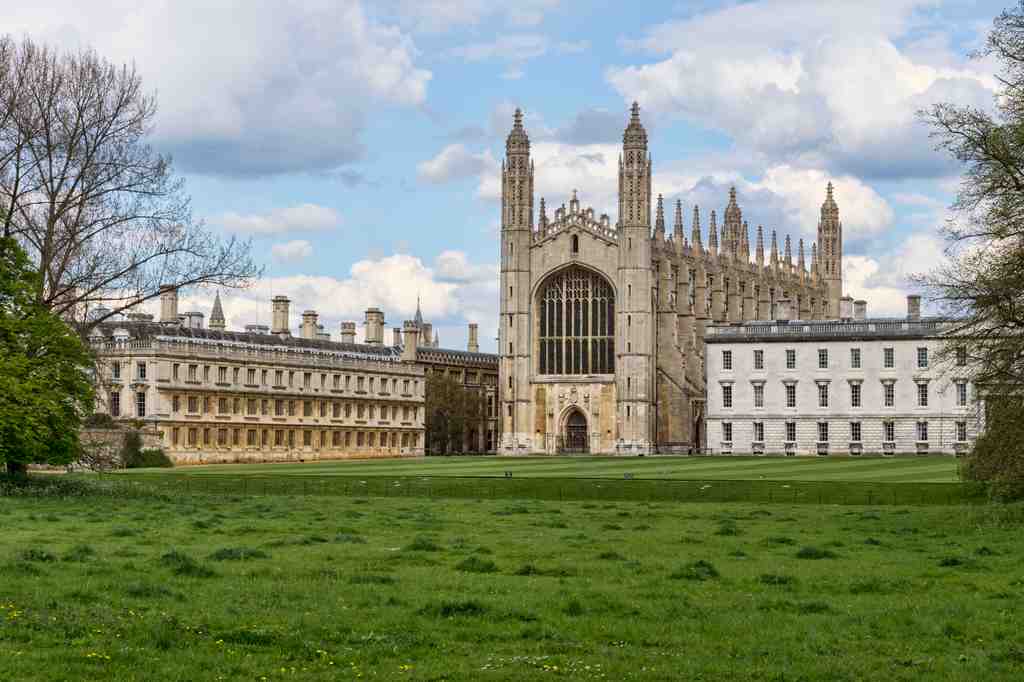
Right in front of you, Cambridge rises up with its iconic skyline. To spot it, look for the grand stone buildings stretching wide across a green lawn. In the center stands the chapel-massive, majestic, and framed by two tall, ornate towers, like open arms welcoming visitors. To the left and right, the long, rectangular college buildings line up with rows of tall windows and delicate stonework. If you look beyond the buildings, you’ll catch hints of distant rooftops and spires, all under a wide sky full of drifting clouds. Now, take a slow breath and listen. You’re standing at the heart of one of England’s most historic and enchanting cities-Cambridge. Imagine the muffled thump of distant footsteps and bicycle bells from students hurrying down ancient streets. People have wandered here for thousands of years-long before the first stone was ever placed for the university. Imagine, 3,500 years ago, the ring of a Bronze Age farmstead nearby, with the shouts of early settlers echoing down the river. As kingdoms rose and fell, this place saw Romans building their forts and Vikings trading their goods, the buzz of market stalls mixing with the clang of blacksmiths and the calls on the River Cam. But it wasn’t until the 12th century that Cambridge started getting its town charters, and even then, it was just a lively riverside place. It would be centuries before it became the city we know-a city officially recognized only in 1951. That’s modern history for Cambridge. Look up at those spires and chimneys, which belong to some of the world’s most famous university buildings-the mighty King’s College Chapel, the mysterious Cavendish Lab, and the treasure trove that is the Cambridge University Library. These have witnessed secret discoveries, wild student dreams, fierce debates, and many quiet moments of wonder. Over the years, Cambridge has become home to big ideas and bold inventions-where tech companies now jostle with old bookshops, and every second person you meet carries the spark of curiosity. On Parker’s Piece-the green not far from where you stand-the very first football rules were written, and the first game kicked off. Every summer, the Strawberry Fair fills the air with the sweet scent of fruit and the laughter of local artists. Imagine everything this grass has seen-Roman soldiers, Viking traders, scholars in flowing robes, and engineers hurrying to chase the next breakthrough. Cambridge hums with old secrets and new ambitions. And today, as you stand here, you’re part of a story that’s still being told. For further insights on the governance, geography and environment or the demography, feel free to navigate to the chat section below and inquire.
Eigene Seite öffnen →Look ahead and slightly to your left. You’ll see a breath-taking building rising up with tall, stone towers and hundreds of spiky finials along the roofline. The huge main…Mehr lesenWeniger anzeigen
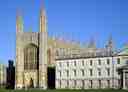
Look ahead and slightly to your left. You’ll see a breath-taking building rising up with tall, stone towers and hundreds of spiky finials along the roofline. The huge main entrance is framed by grand stonework, with an enormous stained glass window above it-bigger than most people’s living rooms! If you zoom in a little, you can spot statues and incredible carvings decorating the wall. The lawn in front seems to stretch forever, while ancient trees frame the view. This is King’s College, one of the jewels of Cambridge. Imagine the year is 1441. The grass under your feet is still wild meadow, and muddy tracks run where the polished stone paths do now. King Henry VI himself stands here, laying the first stone for a brand new college. The king is determined to surpass every other founder before him, dreaming of a place so impressive it would outshine all rivals. Henry’s ambitions, however, soon run into trouble. Wars break out, money dries up, and the king loses his throne. For years, the site is half-finished, haunted by the echo of plans gone awry. It isn’t until King Henry VII takes an interest-and perhaps wants to show the world that his family is truly in power-that work finally surges ahead again. Building King’s was like racing the clock, and the college chapel-right in front of you-was the ultimate prize. It took nearly a hundred years to finish, with three different kings laying claim to its glory. Step closer and picture hands chiseling these intricate stone carvings, or lords and scholars hurrying in and out under gray winter skies. The chapel behind those doors is famous for its fan-shaped ceilings that seem to float like lace overhead, and colored glass windows that glow in the light, telling silent stories. Every Christmas Eve, people all over the world listen to the voices of the King’s College choir floating from these very walls, a tradition started over a century ago. Imagine once upon a time, only boys from nearby Eton College could even dream of entering here, selected by hand to keep the founder’s vision alive. There was mystery, rivalry, and plenty of secrets inside these ancient halls. And today, as you stand on King’s Parade, the magic of centuries still lingers in the air-proof that dreams, even troubled ones, can shape the world. To expand your understanding of the buildings and grounds, academic profile or the intake and access profile, feel free to engage with me in the chat section below.
Eigene Seite öffnen →As you walk forward, look up ahead and you’ll see the great stone towers of King’s College Chapel rising high into the sky. Its tall, arched windows are filled with glass that…Mehr lesenWeniger anzeigen
As you walk forward, look up ahead and you’ll see the great stone towers of King’s College Chapel rising high into the sky. Its tall, arched windows are filled with glass that glitters when the sun hits just right. The chapel’s stonework is detailed, and the spiky pinnacles along the roof make it easy to spot-just follow the line of the lawn and look for the grand, almost fortress-like structure that stands out against the blue sky. Now, as you stand outside King’s College Chapel, take a moment to really feel the history around you. Imagine the air filled with the sound of chisels and hammers, as craftsmen worked for nearly a century, through wars and restless kings, to build this place. Started by King Henry VI in 1446, the chapel was the dream of a king who wanted something magnificent-something that would match Eton College, but even grander. Turn your eyes upward to the windows-some of the oldest and largest stained glass in Britain. These windows filled the chapel with light as the Wars of the Roses raged outside. The chapel was half-built, the roof just timber, when more trouble came, and work stopped. Time passed, new kings arrived, and finally, Henry VII himself visited, urging the builders on. The master mason John Wastell oversaw the crowning achievement-the hauntingly beautiful fan vault above your head, the largest of its kind in the world. Picture the inside: a space filled with flickering candlelight, voices of the King’s College Choir echoing off stone and glass. The site has held secrets, too-coffins hidden under the floor for centuries, only discovered when renovations unearthed old Tudor brick arches. And then there’s the painting above the altar, The Adoration of the Magi by Rubens, which caused quite a stir when it was installed. Some thought its vivid colors didn’t fit. Others argued over the very steps that led to the altar, only to find centuries-old graves below. But through every disagreement and every hidden mystery, King’s College Chapel stands as a symbol of Cambridge, a place where history, faith, and beauty all meet. It’s more than stone and glass-it’s a living memory of kings, craftsmen, and centuries of voices lifted in song. When you walk away, glance back at those grand towers, and remember you’ve stood in front of one of the world’s most extraordinary chapels. For further insights on the construction, great windows or the rood screen, feel free to navigate to the chat section below and inquire.
Eigene Seite öffnen →Just ahead of you, you'll see a long, golden stone building with dozens of broad windows set in straight lines. Clare College stretches elegantly alongside a sweep of perfect…Mehr lesenWeniger anzeigen
Just ahead of you, you'll see a long, golden stone building with dozens of broad windows set in straight lines. Clare College stretches elegantly alongside a sweep of perfect green grass, bordered by the winding River Cam. Keep an eye out to your right-beyond the meadows, you might spot people gliding past on punts, their laughter sometimes drifting your way on the breeze. The old stonework is softened by delicate touches of ivy and ancient trees. Now, imagine yourself standing here in 1326. The air feels charged with centuries of whispers. Clare College is the second-oldest surviving college in Cambridge, founded first as University Hall-but it nearly faded away due to money troubles. Then a powerful and determined lady named Elizabeth de Clare, granddaughter of King Edward I, rescued the college in 1338. Thanks to her generosity, the silence of these courts has been broken by eager footsteps and student chatter ever since. Look to your left, you might hear choir music echoing from the college’s famous chapel, where candlelight sometimes seems to flicker against stained glass even in daylight. If you stroll towards the back gardens, you'll find Clare’s bridge, the oldest one over the Cam. It’s decorated with stone balls-fourteen in total. But wait, one of them is mysteriously missing a slice! The old story goes that the builder, annoyed after not getting his full pay, took a chunk out as revenge. Other folks believe it simply slipped out over the years. Who knows? Maybe the truth is still waiting somewhere on the riverbank. During the war years, these walls saw both quiet sorrow and strength. The Memorial Court over the bridge lists students who never returned, and on a crisp morning, you might imagine the bell tolling, echoing across the lawns. Today, Clare’s lush gardens, echoing halls, and peaceful courts shelter a mix of old and new: songs from the choir pour into the dusk, students hurry to classes, and somewhere in the oldest shadows, the college’s stories linger. Let yourself feel the layers of history here-every step connects you to centuries of adventure, tradition, and a little bit of mystery. Yearning to grasp further insights on the buildings, student life or the academic performance? Dive into the chat section below and ask away.
Eigene Seite öffnen →Ahead of you is the grand sight of St John’s College. To spot it, look for a broad, perfectly green lawn stretched out in front of you, with a sturdy wooden bench nearby and old…Mehr lesenWeniger anzeigen
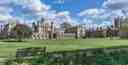
Ahead of you is the grand sight of St John’s College. To spot it, look for a broad, perfectly green lawn stretched out in front of you, with a sturdy wooden bench nearby and old stone buildings wrapped around the grass. The centerpiece is a large gothic gateway, with sharp spires and windows that look as if they’re watching you. Just behind this gate, towers rise, and off to the right you’ll see elegant red-brick buildings and the tall square chapel tower with four points. With the sunlight sparkling across the lawns and a scattering of blossoms at your feet, it feels almost like a painting. Imagine you’re standing here in the early morning mist of 1511. The stone walls are new, the wooden doors creak as the monastic community gets ready to close them at dusk every day. For centuries, this spot was a hospital, with sick and wounded people lying where now you see only grass and flowers. It was Lady Margaret Beaufort, the mother of Henry VII, who decided this should be a place of learning. But things didn’t go smoothly. After she passed away, it was left to her determined chaplain, John Fisher, to battle for approval from the King, the Pope, and the Bishop of Ely. It must have felt like a wild game of medieval chess. Only after much wrangling did the college finally open its doors. As you look up at the gatehouse now, imagine it holding strong through disagreements and royal edicts, always ready to welcome-or close itself off from-the world. St John’s became a place where history-makers walked: poets like Wordsworth, abolitionists who changed the entire British Empire, twelve Nobel winners, a future king-each left their footsteps on these stones. If you listen closely, you might even catch a snippet of the famous St John’s choir warming up, or laughter from the college’s May Ball echoing across the courts. And who knows, perhaps a ghost or two from those early, uncertain years is still peeking through an upstairs window. Nothing here ever stands still, not for long-not for 500 years! Interested in a deeper dive into the buildings and grounds, college choirs or the traditions and legends? Join me in the chat section for an insightful conversation.
Eigene Seite öffnen →Here you are, just in front of Trinity College, Cambridge. To spot it, look across the broad courtyard where a grand gatehouse stands tall, flanked by mighty old towers with…Mehr lesenWeniger anzeigen
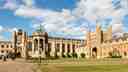
Here you are, just in front of Trinity College, Cambridge. To spot it, look across the broad courtyard where a grand gatehouse stands tall, flanked by mighty old towers with golden-yellow stone. To the left you’ll see a large clock and some gothic windows, and right in the middle sits a stunning fountain, topped with stone carvings that catch the sunlight. The long, low walls spread out on either side like arms stretching wide to welcome you. Now, let’s step back in time together. Imagine the heavy footsteps echoing on these stones as King Henry VIII decided to found this college in 1546. It began from two ancient colleges, merged at the king’s command-not with royal gold, but with the wealth from dissolved monasteries. Legend says the whole university held its breath, thinking Henry might shut Cambridge itself, until his last wife, Catherine Parr, sweet-talked him into creating Trinity instead. Look around-this is more than just a beautiful place. It’s a treasure chest of stories and secrets. The Great Court before you is said to be the largest enclosed courtyard in all of Europe. Just imagine students rushing across the court during the famous Trinity Great Court Run, trying to beat the clock’s chime! Trinity has a kind of magic, don’t you think? In these ancient rooms, Isaac Newton once puzzled over the laws of gravity, and Srinivasa Ramanujan scribbled dazzling formulas. The walls have whispered to six British prime ministers, legendary poets like Lord Byron, and thinkers like Francis Bacon and Bertrand Russell-well, Bertrand got expelled, but Trinity eventually took him back. Listen closely for the echoes of rowing oars on the Cam river, as the First and Third Trinity Boat Club prepares for a race. Picture a May Ball, lanterns glowing, and students dancing under the stars, each one dreaming of joining Trinity’s long line of legends. From the secret debates of the Cambridge Apostles to the first rules of football agreed right here, this isn’t just a college-it’s a stage for history, a place where world-changing ideas still begin. So, as you stand on these stones, you’re part of the living story of Trinity College. Curious about the buildings and grounds, academic profile or the traditions? Don't hesitate to reach out in the chat section for additional details.
Eigene Seite öffnen →Look ahead and you’ll see Christ’s College stretching out in front of you. The buildings are a golden stone, set around a perfectly round, green lawn. On your left, windows with…Mehr lesenWeniger anzeigen
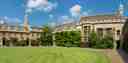
Look ahead and you’ll see Christ’s College stretching out in front of you. The buildings are a golden stone, set around a perfectly round, green lawn. On your left, windows with white frames peek out from sloping roofs, and bright red flowers spill from the window boxes. Straight ahead, the entrance is framed by lush, leafy wisteria climbing up the walls. To spot it, just look for the impressive clock tower rising above the rooftops and the sense of old-world calm that fills this tucked-away courtyard. Take a deep breath as you stand here. Imagine it’s the year 1505, and a gentle wind rushes past the wisteria vines. Only a handful of scholars hurry by, their heavy robes swishing on these very stones. Christ’s College began its story long before that, though-in 1437, William Byngham started it all, not knowing that his small “God’s House” would become a home for thinkers who would change the world. Picture the footsteps of John Milton, the great poet, as he wandered the yard, maybe searching for the right words. Or the clever young Charles Darwin, caught daydreaming about beetles and far-off islands instead of his studies. There’s a rumor that when Darwin was here, he kept jars of odd creatures in his rooms, always ready for the next curious experiment. This college is full of stories and secrets. For example, the front gate is a little odd-if you look closely, you’ll see its bottom is chopped off to fit the now higher street, making every entrance a tiny step back in time. In spring, the Fellows’ Garden just beyond the walls bursts into color, and a mulberry tree planted over four centuries ago still stands, its roots mingling with history. But it’s not all ancient mystery and solemn silence. The newest building, called "the Typewriter" because of its strange shape, pokes out along the north. Some love it, some don’t, and there’s always friendly debate about whether it’s a masterpiece or a headache. So, as you stand before Christ’s College, let the gentle buzz of the past wash over you. The cloistered courtyards, flower-laden walls, and ancient stones all whisper: here, dreams and discoveries have quietly bloomed for generations. For further insights on the buildings, academic profile or the student life, feel free to navigate to the chat section below and inquire.
Eigene Seite öffnen →



Häufig gestellte Fragen
Wie starte ich die Tour?
Laden Sie nach dem Kauf die AudaTours-App herunter und geben Sie Ihren Einlösecode ein. Die Tour ist sofort startbereit – tippen Sie einfach auf „Play“ und folgen Sie der GPS-geführten Route.
Benötige ich während der Tour Internet?
Nein! Laden Sie die Tour vor dem Start herunter und genießen Sie sie vollständig offline. Nur die Chat-Funktion benötigt Internet. Wir empfehlen den Download über WLAN, um mobiles Datenvolumen zu sparen.
Handelt es sich um eine geführte Gruppentour?
Nein – dies ist ein selbstgeführter Audioguide. Sie erkunden unabhängig in Ihrem eigenen Tempo, wobei die Audioerzählung über Ihr Telefon abgespielt wird. Kein Reiseleiter, keine Gruppe, kein Zeitplan.
Wie lange dauert die Tour?
Die meisten Touren dauern 60–90 Minuten, aber Sie kontrollieren das Tempo vollständig. Pausieren Sie, überspringen Sie Stopps oder machen Sie Pausen, wann immer Sie wollen.
Was, wenn ich die Tour heute nicht beenden kann?
Kein Problem! Touren haben lebenslangen Zugriff. Pausieren Sie und setzen Sie sie fort, wann immer Sie möchten – morgen, nächste Woche oder nächstes Jahr. Ihr Fortschritt wird gespeichert.
Welche Sprachen sind verfügbar?
Alle Touren sind in über 50 Sprachen verfügbar. Wählen Sie Ihre bevorzugte Sprache beim Einlösen Ihres Codes. Hinweis: Die Sprache kann nach der Tour-Generierung nicht mehr geändert werden.
Wo greife ich nach dem Kauf auf die Tour zu?
Laden Sie die kostenlose AudaTours-App aus dem App Store oder von Google Play herunter. Geben Sie Ihren Einlösecode (per E-Mail gesendet) ein, und die Tour erscheint in Ihrer Bibliothek, bereit zum Download und Start.
Wenn Ihnen die Tour nicht gefällt, erstatten wir Ihnen den Kaufpreis. Kontaktieren Sie uns unter [email protected]
Sicher bezahlen mit 


