
Murcia Audio-Tour: Das Herz von San Miguel entdecken
Eine stille Steinkirche lugt zwischen hoch aufragenden Stadtgebäuden hervor, während die Sonne über Schichten von Ruinen zu Ihren Füßen strömt. Hier in Murcia verbirgt sich die Geschichte offen – ihre Geheimnisse hinter alten Bögen und modernen Fassaden versiegelt. Dies ist Ihre Einladung, Murcia auf einer selbstgeführten Audio-Tour zu entdecken, die für die Mutigen und Neugierigen konzipiert wurde. Schlendern Sie durch Straßen, wo vergessene Schlachten und vergrabene Skandale knapp unter der Oberfläche pulsieren und Ecken enthüllen, die die meisten Reisenden übersehen. Warum wurde die Kirche von Santiago zu einem stillen Zeugen wechselnder Glaubensrichtungen und königlicher Befehle? Welche verbotenen Geschichten schlummern unter den sonnengebackenen Steinen von San Estebans mittelalterlichem Vorort? Und was trieb einen exzentrischen Murcianer dazu, der Logik zu trotzen, indem er neun schwindelerregende Stockwerke in den Himmel baute, um dem Fabrikrauch zu entkommen? Schreiten Sie von schattigen Kapellen zu archäologischen Wundern und avantgardistischen Wolkenkratzern und setzen Sie dramatische Geschichten zusammen, die Murcias Seele geformt haben. Entdecken Sie die Stadt neu als ein Labyrinth aus Geheimnissen, Flüstern und unerwarteten Triumphen. Bereit, den Schleier zu lüften? Lassen Sie Murcias verborgenes Herz sich enthüllen – eine Geschichte nach der anderen.
Tourvorschau
Über diese Tour
- scheduleDauer 40–60 minsEigenes Tempo
- straighten2.6 km FußwegDem geführten Pfad folgen
- location_on
- wifi_offFunktioniert offlineEinmal herunterladen, überall nutzen
- all_inclusiveLebenslanger ZugriffJederzeit wiederholen, für immer
- location_onStartet bei Kirche von Santiago
Stopps auf dieser Tour
If you’re just arriving, take a look around for a little stone building that doesn’t shout-more like quietly whispers tales of centuries gone by. The Church of Santiago looks like…Mehr lesenWeniger anzeigen
If you’re just arriving, take a look around for a little stone building that doesn’t shout-more like quietly whispers tales of centuries gone by. The Church of Santiago looks like a simple triangle of stone, with a small bell tower perched up top and an old, heavy wooden door that feels like it’s seen more stories than your grandmother’s attic. You’ll also spot a cross standing right outside, and the rough texture of the walls is a nice clue that you’re in the right place. To help you spot it: look for that blend of old stones tucked right between newer, taller buildings-it’s the “wise old neighbor” on the street! Now, imagine you’ve traveled back to medieval Murcia. The air is thick with the scent of earth and the sound of footsteps on pebbled streets. This church, one of the oldest in the whole city, has been standing here since the 1200s-talk about commitment! They say the building might even have started as a mosque long before it became a Christian church, back when King Alfonso X ordered that people from all walks of life settle this very neighborhood. At first, some prayed facing Mecca, some to the altar, but soon it became a place for Christian parishioners, with its own stories of hope and hardship. Inside, you’d find a wooden ceiling that makes you feel like you’re inside a treasure chest-this is the only mudéjar wooden roof of its kind still left in Murcia city. The church has played many roles: from parish, to hermitage, to a stop for tired travelers. Even its arches have the sharp, pointed look of mystery and tales untold. Over the years, the church has survived reforms and neglect, each repair like placing a bandage on an old friend. A noble statue of Santiago, carved in the 15th century, once stood at the altar, while paintings of the saint’s life are now safe in Murcia’s Fine Arts Museum-great art always finds a way to survive, even wars! If you listen carefully, maybe you’ll hear the ghosts of friars, solemnly walking the old “Pasos de Santiago” route, re-enacting an ancient journey that once wound through these very streets. And if you’re looking for a quieter moment, step close and imagine the cool shadow inside, with altars once dedicated to all sorts of saints. Who knows-you might even bump into a surprise painting of San Josemaría Escrivá, the modern saint with a local backdrop. So, take a deep breath and soak in the calm. This little church isn’t just a building. It’s a stubborn survivor, quietly holding the stories of Murcia’s past in each stone. And trust me-no one here will ask you to ring the bell… unless you’re really, really lucky!
Eigene Seite öffnen →If you’re standing here and looking ahead, you’ll spot a wide open area where the earth dips down in a giant rectangular pit, neatly fenced and surrounded by the modern city. The…Mehr lesenWeniger anzeigen
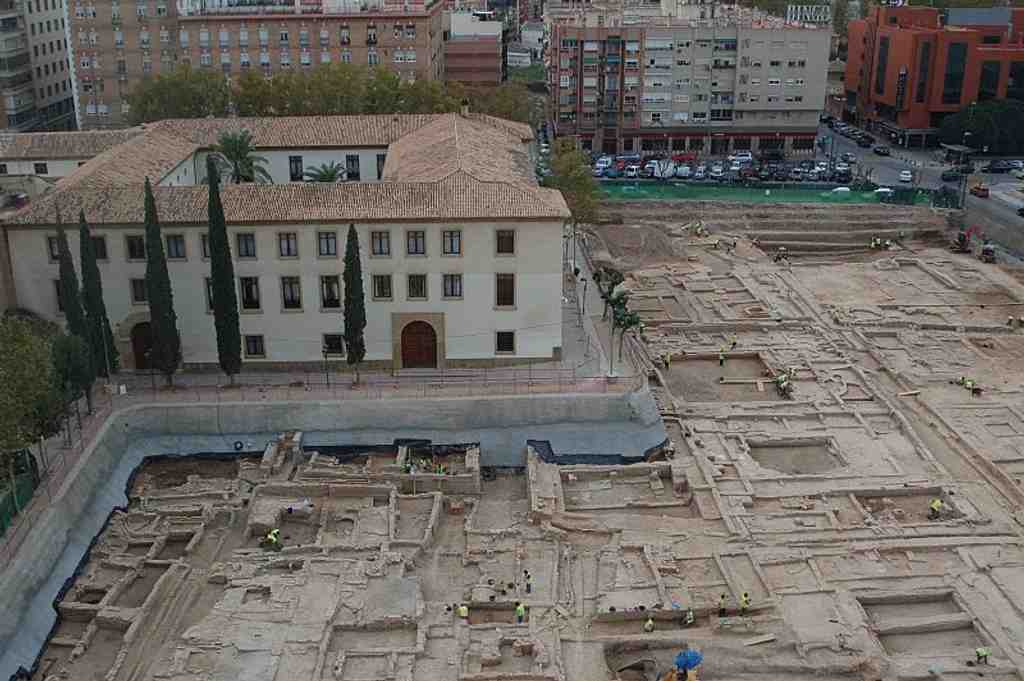
If you’re standing here and looking ahead, you’ll spot a wide open area where the earth dips down in a giant rectangular pit, neatly fenced and surrounded by the modern city. The ground here is all pale sand and stone, crisscrossed with walls and narrow passages-almost like a puzzle made out of what’s left of ancient houses and streets. Right behind the site is a solid, cream-colored building with a tiled roof and tall cypress trees guarding its entrance. On the city’s edge, you’ll see high-rise apartments and offices, but don’t let those distract you-keep your eyes on that tangle of ruins in the foreground. That’s where the magic happened. So, let’s travel back to the 12th and 13th centuries-imagine the air heavy with the scent of spices, voices chattering in Arabic, and the sound of water trickling through narrow channels. This was once part of the bustling medieval city of Murcia, and not just any part: you’re standing at what was called the Arrabal de la Arrixaca Vieja. Back then, instead of banks and busy streets, you’d see gorgeous gardens, grand country houses called almunias, and even palaces where powerful families relaxed away from the city’s noise. But things were about to change in dramatic fashion! When the Christian conquerors arrived, the city’s look and feel shifted almost overnight. Muslims moved out here to the suburbs, and the old center filled up with the new rulers. And would you believe it? Much of what you see around your feet-the twisty street grid, the solid old walls-it hasn’t moved for centuries! What makes this place so thrilling for archaeologists is that it’s one of Europe’s best preserved examples of a medieval Islamic city. Not just bits of pottery or a few lonely stones-here, you get an entire neighborhood! Buildings pop up right where they stood, connected by lanes and even a public sewage system. That’s right, folks, 800 years ago, they already had their own version of plumbing. Imagine carrying a chamber pot one step too far…well, at least they planned ahead! Experts are still piecing together the full story, since the dig isn’t finished. Maybe beneath your feet, another secret waits to be uncovered. So, as you stand here, you’re really in the heart of medieval Murcia-a place of gardens, palaces, and maybe even a dusty sandal or two left behind. And of course, be glad you don’t have to walk home through the ancient sewage system! Yearning to grasp further insights on the archaeological finds, historical context or the appearance of the complex? Dive into the chat section below and ask away.
Eigene Seite öffnen →Look just ahead and slightly to your left-see that tall, elegant building with brick walls, balconies, and those golden spheres perched on the roof? This is the famous House of…Mehr lesenWeniger anzeigen
Look just ahead and slightly to your left-see that tall, elegant building with brick walls, balconies, and those golden spheres perched on the roof? This is the famous House of Nine Stories, standing proud at the corner where Acisclo Díaz meets Luís Braille and Callejón Burruezo. With its height towering above the nearby rooftops, it’s hard to miss the two different heights that make up its unique structure and, of course, those grand balconies stretching up level after level. Now that you’re standing in front of the House of Nine Stories, let’s step into its story. Imagine Murcia in the early 1900s: the streets are lively, horse-drawn carts rattle by, and suddenly, in 1914, a true giant rises above the town. Designed by the bold architect José Antonio Rodríguez, this building was Murcia’s very first skyscraper! Not a New York City scene-no yellow taxis or blaring horns-but the inspiration definitely comes from across the Atlantic. People back then must’ve wondered if the clouds would bump into those fancy gold balls on the corners. Here’s a twist for you: the original owner, José García Martínez, only wanted four floors. But a nearby hat factory kept blasting smoke his way! Instead of giving up, he simply decided, “I’ll just build higher!” Nine stories tall-that’s some next-level problem-solving. The architect thought he was out of his mind and wouldn’t go along with the nine-story plan-he was worried the extra height might make the whole thing topple like a domino. But Martínez pressed on, and soon this modernist marvel became the talk of the town, outshining almost everything else in Murcia. It became home for factories producing silk, juice, sweets, Christmas nativity figures, and even toys-a whole world packed inside one set of walls. Once the factories moved out, poets, historians, and even language experts began to call it home. The building weathered the Spanish Civil War, changed hands, saw parties and tears, and dodged the wrecking ball by earning its “monument” title in 1982. So, as you look up at the House of Nine Stories, imagine the whispers, laughter, and bustling footsteps of over a hundred years. Today, it still stands as proof that sometimes, the only way to get above your problems is to build a few floors higher.
Eigene Seite öffnen →

12 weitere Stationen anzeigenWeniger Stationen anzeigenexpand_moreexpand_less
Right in front of you stands the Palacio de San Esteban-look for a grand stone entrance with two proud marble columns on each side, and a big wooden door arched over the top,…Mehr lesenWeniger anzeigen
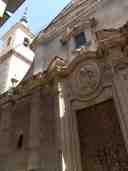
Right in front of you stands the Palacio de San Esteban-look for a grand stone entrance with two proud marble columns on each side, and a big wooden door arched over the top, decorated with iron studs. Above the door, you’ll spot the Spanish and Murcia region flags waving, flanked by stone shields. If you see these, congratulations-you've found the Palacio de San Esteban! Picture this place about 500 years ago. The year is 1555, and this wasn’t the impressive palace of power you see today, but one of the first Jesuit colleges in Spain, funded by the determined Bishop Esteban de Almeyda. Thanks to him, the building gets its name-San Esteban. The main stonework was finished in 1557, with the church next door wrapping up in 1569. Once inside these walls, you would’ve heard young minds buzzing with ideas-from grammar and philosophy to the art of elegant handwriting. Imagine the hum of voices debating deep questions, the scratch of quills on parchment. For two centuries, this place was a beacon of learning, growing future thinkers like the famous Francisco Salzillo. Now, history isn’t always peaceful. In 1767, the Jesuits were banished, and suddenly, these scholarly halls became the stomping ground for soldiers-Dragons of the Queen, to be exact! Later, it transformed into a House of Mercy for those in need, then even a provincial asylum, which, let’s be honest, must have made things a lot more lively at night. Declared a National Monument in 1931, the palace later became the official home of Murcia’s President and Government. These days, the grand church is used for art exhibitions, and the gardens nearby, once filled with vegetables, are now the perfect spots for a relaxing stroll. Don’t miss the entrance. The door’s “triumphal arch” style was all the rage in the 16th century, and if you peek above, you’ll see statues of San Ignacio and San Francisco Javier, along with figures of Saint Luke and Saint Catherine standing guard. Inside, the ceilings soar above your head with an ancient gothic twist, and the old Jesuit cloisters mix both Renaissance calm and baroque drama with their columns and decoration. Imagine all the secrets these stones have heard. If walls could talk, they’d likely start with: “Pull up a chair, I’ve got a story for you!” Ready for our next stop, or do you want a moment to picture a group of Dragones marching through here in full armor? That must have been quite a sight! Want to explore the architecture, archaeological site of san esteban or the gallery in more depth? Join me in the chat section for a detailed discussion.
Eigene Seite öffnen →Look around you for the building that seems to be showing off a little-a yellowish facade, lots of big curved windows on the corner, and a fanciful crown-like top, crowned by…Mehr lesenWeniger anzeigen
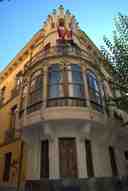
Look around you for the building that seems to be showing off a little-a yellowish facade, lots of big curved windows on the corner, and a fanciful crown-like top, crowned by several fluttering flags. If you spot a structure with grand iron railings and a round, elegant balcony wrapping the corner, you’ve found the Casa Díaz-Cassou. Don’t let the trees fool you-just look for that unique, castle-turret vibe that pops out over the street. Now, get ready for a splash of architectural drama! Picture the year 1900: horse carriages clattering by, the scent of oranges floating in from countryside orchards, and right here on Calle Santa Teresa, an architect and a writer are about to have a grand disagreement with the city council. This isn’t just any house-it’s the stage for one of Murcia’s oldest construction soap operas. As you stand in front of these splendid stone curves and swirling ironwork, imagine the passionate arguments, the dramatic pen strokes, the council meetings that probably needed popcorn. Finally, after six years of back-and-forth, both sides struck a deal. Casa Díaz-Cassou was finished-a triumph of fancy modernist style. Take a breath-do you feel that creative energy? That’s the spirit of Pedro Díaz Cassou, the erudite writer who ordered this building, and the inventive architect José Antonio Rodríguez, who made this beautiful corner twist and take flight. If you look at the central section, you’ll notice a clean, semicircular lookout, almost like a grand nose poking out to see what’s new in town. Topped with an artistic iron railing, it’s a balcony made for spying on neighbors or, let’s be honest, making them jealous. Inside, the décor is lush and colorful, with paintings added by Pedro García del Bosque after 1906. But today, the house belongs to the people-it’s used for exhibitions and events, so keep an eye on the windows; you never know when the next bit of Murcia excitement will burst out. So go ahead, give the Casa Díaz-Cassou a wink-it survived more than one city drama, and still looks stylish doing it. Now, let’s mosey on to our next stop, shall we?
Eigene Seite öffnen →Just in front of you rises the Iglesia de San Nicolás de Bari. To spot it, look for a grand, sandy-colored facade, decorated with swirling Baroque stonework. The main entrance is…Mehr lesenWeniger anzeigen
Just in front of you rises the Iglesia de San Nicolás de Bari. To spot it, look for a grand, sandy-colored facade, decorated with swirling Baroque stonework. The main entrance is framed by chunky columns and a massive wooden door with a geometric pattern, almost like a giant’s puzzle box. Above that, there’s a rounded window set in a dramatic, sculpted oval, crowned with ornate decorations. And off to the left, you’ll see the church’s tower, standing tall and topped with a quirky weather vane. Now that you’re here, let’s imagine the clock has spun backward a few centuries. Picture this street bustling with townsfolk, the stones under your feet echoing footsteps from long ago. This very spot has deep roots - after Murcia was taken by Christian forces way back in 1266, the old mosque standing here was replaced by the first version of San Nicolás. That’s right, you’re standing where two worlds once collided, and where history literally changed its clothes. The church you see now is a true Baroque beauty from the 1700s, a time when architecture got dramatic-think marble columns, dazzling curves, and enough flair to make anyone dizzy. But this wasn’t just for show. By the 1700s, the old church couldn’t handle any more rough times, so it was torn down and rebuilt with the help of a local hero: Diego Mateo Zapata, a doctor and philosopher who was always in trouble with the Inquisition. It seems he figured, “If life gives you lemons, sponsor a church!” He funded much of this place, and today he’s buried right inside, at the feet of the grand altar. Speaking of secrets, did you know this building hides a treasure trove of art? Tucked away inside, you’d find statues by some of Spain’s most famous artists, including a few by the legendary Francisco Salzillo-though, like all good mysteries, experts still argue about who really made some of them. Today, the church isn’t just about history. It’s alive every year with traditional Holy Week celebrations, with processions starting right here. The streets fill with emotion, music, and color as the community gathers in old Spanish style. So, as you stand before these mighty doors, imagine all the weddings, secrets, and celebrations that have unfolded under its watchful eyes. If these walls could talk, they’d have some stories to confess-and probably a joke or two about the Inquisition’s sense of humor. Ready to wander on to our next adventure? Seeking more information about the architecture, heritage or the image gallery? Ask away in the chat section and I'll fill you in.
Eigene Seite öffnen →You’re standing right at the entrance to Murcia’s grandest avenue, the Gran Vía Escultor Francisco Salzillo. Look straight ahead and you’ll see a broad street stretching wide,…Mehr lesenWeniger anzeigen
You’re standing right at the entrance to Murcia’s grandest avenue, the Gran Vía Escultor Francisco Salzillo. Look straight ahead and you’ll see a broad street stretching wide, lined with tall buildings on both sides. These aren’t just any buildings-they mix modern glass and steel with the sturdy, grand facades of old official structures. The sidewalks are roomy, shaded by leafy green trees, perfect for a relaxing walk. On your right, notice the impressive beige building with large columns and plenty of windows; this is one of the avenue’s most historic sights. If you glance up ahead, you’ll spot the street stretching all the way towards the river, framed by busy traffic lights and friendly groups of locals bustling past shop windows. Alright, time for a story! Just imagine you’re back in the 1950s. This peaceful, wide street was once a tangled mess of tiny medieval lanes. Picture hundreds of old houses crowding together, and the sounds of workers, their tools clanging as the city fathers decided it was time Murcia grew up! You probably wouldn’t expect a quiet city like this to have a moment of drama, but when Murcia’s leaders decided to make a grand new avenue, they had to tear down not only homes but even a few treasured monuments-like the ancient Arab baths, which had been declared a national monument! The very ground under your feet is a bit of a mystery too-families once lived, played, and even prayed here, until the city went “modern.” I bet there were a few ghosts around grumbling about their lost courtyard! The project dragged on for 20 years, as old buildings fell and arguments rose louder than the morning church bells. Even the rain joined the party-heavy storms caused walls to crumble, and every crash echoed through the newspaper headlines. When the dust settled and the construction finally finished, Murcia had a brand-new face. The avenue was first named for a political leader, but now it proudly carries the name of Francisco Salzillo, Murcia’s beloved sculptor. Today, as you hear the rumble of buses and cars, see those wide sidewalks and zip along the cycle lanes, remember: this isn’t just a street. It’s Murcia’s bold leap into the modern age. And if you’re lucky, you might feel the heartbeat of a city that chose to grow, even when it meant saying goodbye to a few old stones in the process. Shall we keep walking? There’s always another story waiting further down the road!
Eigene Seite öffnen →To spot the Iglesia de San Bartolomé, look for a pale stone facade right ahead of you, with a tall bell tower to the left. The front is quite striking: three big archways at…Mehr lesenWeniger anzeigen
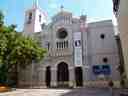
To spot the Iglesia de San Bartolomé, look for a pale stone facade right ahead of you, with a tall bell tower to the left. The front is quite striking: three big archways at ground level, a large round window framed by little columns above, and an interesting mix of sharp lines and curves. The upper part features tiny columns, a rose window, and a triangular pediment. There’s even a statue on the roof keeping watch over the square. You can’t miss it-the church almost looks like it’s trying to outdo the buildings on either side, standing proudly at the heart of this cozy plaza. Now, as you stand before San Bartolomé, imagine the city echoing with footsteps from hundreds of years ago. The story of this church is full of adventure! It started way back during the Christian conquest, and legend says it even sits on the site of a much older mosque. So if you feel a mysterious 'whoosh' of history here, that’s probably just the ghosts of the past giving you a gentle nudge. Back in the 1200s, this spot was already famous-you could say the church was trending before it was cool! Fast forward a few centuries, and Murcia’s townsfolk decided to build a grander place. They knocked down the old church in the 1600s. Imagine the noise and dust-hopefully, medieval hard hats were in style. But plans don’t always go smoothly. The builders started the current church in 1767, but it was like one of those DIY projects that never quite gets finished. For years, people prayed in a half-built church, dodging construction tools and maybe even the odd pigeon looking for a new home. Pieces of the church were finished bit by bit, and finally, in the late 1800s, architect Justo Millán gave it the grand entrance you see now. Take a closer look: those arches at the bottom are round and bold, while the top has a big circular rose window, flanked by slender columns and crowned with a sharp pediment-sort of an architectural crown. The style mixes neoromanesque and neobyzantine touches that make it look like it’s both ancient and brand new at the same time. Over to your left, the square bell tower still stands tall, as if it’s keeping one eye out for latecomers to mass. Inside, the church hides beautiful sculptures and, surprisingly, a hint of drama from the Spanish Civil War. The place was sacked, and many artworks disappeared, but some treasures survived thanks to quick-thinking locals. After the war, an artist from Lorca-Manuel Muñoz Barberán-came and painted new frescos, turning the church’s wounds into something beautiful. Today, San Bartolomé is a jewel in Murcia’s crown, declared a cultural heritage site in 1983, and still hosting ancient brotherhoods and vibrant parades. So as you gaze at this landmark, imagine it as both a survivor and a storyteller-if only those old stones could talk, who knows what secrets they’d whisper!
Eigene Seite öffnen →If you look ahead, you’ll spot Calle Trapería, one of Murcia’s most legendary streets. Just take in the scene: a long, relatively narrow walkway, lined with grand, elegantly…Mehr lesenWeniger anzeigen
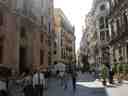
If you look ahead, you’ll spot Calle Trapería, one of Murcia’s most legendary streets. Just take in the scene: a long, relatively narrow walkway, lined with grand, elegantly detailed buildings on both sides. Look for the ornate balconies jutting out, the stone facades bursting with history, and the gentle curve of the street drawing your eyes forward. If you notice people strolling, chatting, maybe ducking into lively cafés or shops, you know you’re in the right place-welcome to the heart of Murcia’s old town. Now, let’s step back in time for a moment. Imagine it’s the year 1266 and this street isn’t quite as peaceful as it is now. This was once the line where Christian and Muslim Murcia met-literally! King Jaime I of Aragón ordered a wall to split the city, right along this axis. For a while, Christians lived on one side and Muslims on the other, until, as you might guess, this turned out to be a bit awkward for everyone. Eventually, Alfonso X came along, told everyone to move around, and had the wall knocked down-boom! Suddenly, a wide new street took its place. In the centuries after, Calle Trapería became the main north-south road through old Murcia, growing busier and busier as traders arrived from Malta, Genoa, and Catalonia. At the crossing with Calle Platería, travelers once stopped beside a stone altar dedicated to San Cristóbal, the patron saint of journeys. So if you suddenly get the urge to book a train ticket after this, I won’t blame you. Calle Trapería has seen it all-from medieval merchants in dusty cloaks, to Easter processions full of music and emotion, to cheerful 19th-century shopkeepers in stiff collars. Grand mansions and palaces sprang up here, although some have vanished, living on only in tales or replicas up in Barcelona. But don’t worry-the stunning Palacio Almodóvar stands tall, with its coat of arms guarded by statues that look like they’re about to leap off and join your tour. Even in the 20th century, this place kept reinventing itself. Murcia’s Casino, with its sparkling façade, decided it needed a proper entrance on Trapería and-voilà-here it is! Fancy balconies, elegant shops, and busy cafes make this street feel like the city’s living room. So as you stand here, imagine all those centuries of voices echoing down the street-processions, politics, laughter, and maybe even a few arguments about who was taking up the best table. You’re right in the middle of Murcia’s long story-a place where past and present meet with a smile. Don’t forget to look up; the best surprises are often above eye level, just waiting for you to spot them!
Eigene Seite öffnen →Look up ahead! To spot the Convent of Santo Domingo and the Chapel of the Rosary, just keep your eyes peeled for a grand, light brown brick church standing proud at the edge of…Mehr lesenWeniger anzeigen
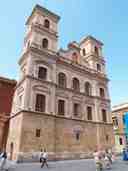
Look up ahead! To spot the Convent of Santo Domingo and the Chapel of the Rosary, just keep your eyes peeled for a grand, light brown brick church standing proud at the edge of the busy plaza. Its most striking features are the two tall square towers that rise up above the main entrance, topped with crosses and open belfries. The walls below seem solid and sturdy-almost like a fortress-while the top floors are decorated with more delicate arches and a special statue of the Virgin and Child nestled above the door. If you see a building that seems to wave “hello” with its twin towers and Renaissance-style details, you’ve found the right place. And now, let me bring this plaza to life for you! Imagine the air humming with chatter, the echo of footsteps on stone, and now, you’re standing in a spot that hasn’t just watched history-it’s been right in the middle of it. This church and chapel are all that’s left of a big old monastery built by the Dominican Order. The story begins way back in the 1200s. Picture knights, friars, and maybe even a rooster or two strutting by-back then, these were the teaching headquarters of the whole city, even before there were any universities around. After some centuries, these stones saw monks come and go, royal visitors, and, believe it or not, a bit of drama! In 1836, most of the monastery vanished by government order. There was a moment when the city council even moved in temporarily-imagine holding city meetings right next to the church, surrounded by echoing halls. Now, take a closer look at the chapel next door-built in the 1500s, it was paid for by a group with a lot of faith and, apparently, a flair for Renaissance style. Notice those fluted columns hugging the front door and the sweet sculpture above-Virgin Mary holding baby Jesus, gently watching everyone below like the world’s most peaceful bouncer. Back then, this plaza was so lively, the upstairs rooms over the chapel were rented out as the best seats in the house for markets and festivals. I bet you could hear laughter, music, and the squawk of market sellers calling out their wares. Oh, and the arch that links the chapel to the palace next door? That was added by a noble family-the local version of building your own VIP bridge to the church. If these stones could talk, they’d have some wild stories. From monks and mayors to processions at Easter, it’s never been a dull day by these doors. And hey, if you feel a little spark of wisdom as you stand here, don’t worry: maybe it’s just the old “studium” magic of Murcia still buzzing through the bricks! For a more comprehensive understanding of the chapel of the rosary, church of santo domingo or the heritage, engage with me in the chat section below.
Eigene Seite öffnen →Take a look straight ahead-can you see that grand, peach-colored building with its elegant ironwork entrance and curvy, silvery roof details? That is the Romea Theatre. It’s…Mehr lesenWeniger anzeigen
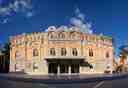
Take a look straight ahead-can you see that grand, peach-colored building with its elegant ironwork entrance and curvy, silvery roof details? That is the Romea Theatre. It’s standing proudly right at the edge of the wide plaza, “Teatro de Romea” written clearly across the front in big red letters. The building is surrounded by windows with ornate frames and crowned with three fancy round shapes at the top. To spot it, just look for the flair of old-world charm with a dash of theatrical drama-this is definitely not your average building! Now picture yourself transported back to the 1860s. The plaza is alive with expectant crowds, the air buzzing with excitement. Maybe you hear the jingle of horse-drawn carriages pulling up to this brand-new theatre, shining under the Mediterranean sun. This is the most important theatre in the city, and one of the country’s finest! But, like any great drama, its story is full of twists. Romea Theatre opened its doors in 1862, but fate wasn’t exactly kind. Built on land taken from monks of a nearby convent, there was a rumor-shh, don’t let the monks hear us!-that one of them actually cursed the site. He said that three fires would strike this place, and guess what? Not once, but twice, terrible flames swept through the building. After each disaster, the people of Murcia rebuilt it, making the theatre even grander. That’s persistence for you! From the outside, the facade is a blend of styles-look closely and you’ll notice hints of neoclassicism with a touch of art nouveau flair, especially the beautiful iron canopies and decorative fences above the entrance. If you peer up, you’ll see three stone faces gazing over the plaza: Beethoven, Mozart, and Liszt, watching over all the music and performances inside. And just above the windows, four round reliefs showing off famous playwrights from Murcia. It’s as if the building itself is saying, “Welcome! The arts live here!” Inside, the theatre dazzles with color and art. The ceiling is painted with scenes of artists and muses, and the horseshoe-shaped seating feels both glamorous and cozy-perfect for opera, ballet, flamenco, musicals, you name it. Imagine the buzz before the curtain rises: the old gold trim, the velvet, the hush of anticipation… and then magic on stage. Oh, and don’t worry about the curse-after the third reopening, it seems the theatre has made peace with history. Today, Romea is more alive than ever, staging everything from classic plays to modern dance. If these walls could talk, they’d have a lot of dramatic tales and probably a few showbiz jokes-though I admit, my sense of theatre humor is strictly for the birds! Take a moment to really soak in the scene-this isn’t just a building, it’s the heart of Murcia’s performing arts, a place born from conflict, rebuilt with stubborn passion, and now shining as a true local star. Ready for the next act on our tour?
Eigene Seite öffnen →Alright, look up ahead-you’ll spot the Vinader Palace standing out like the star of the show in Julián Romea Square. It’s easy to spot thanks to its handsome brick façade, dressed…Mehr lesenWeniger anzeigen
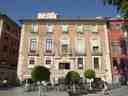
Alright, look up ahead-you’ll spot the Vinader Palace standing out like the star of the show in Julián Romea Square. It’s easy to spot thanks to its handsome brick façade, dressed up with pale stone accents around the doorway and the corners, almost like it put on its fanciest collar for you. See that grand doorway with the noble coat of arms right above it? That’s your clue you’ve arrived! Four levels rise above the old city walls, with tall windows on the main floor outlined in elegant moldings-just the right mix of stately and stylish. Now, let’s step back in time. Picture the hustle and bustle of 18th-century Murcia, right in this very square. Captain Salvador Vinader, a man of both nerves and noble taste, built this palace using pieces of the old Arab city walls-which means the foundation under your shoes has seen centuries of secrets! Back in his day, the city was undergoing a little facelift, with influences from those super-fancy rococo designs popping up. Vinader must’ve looked at the plans and thought, “A house fit for a captain needs a bit of that sparkle.” Imagine the stone under your feet-once part of a city gate called the Portillo de Santo Domingo-now holding up this striking palace. The bottom level you’re passing right now? Well, those old storage rooms are now little shops. The grand 'noble floor’ above you would’ve buzzed with family drama, laughter, and maybe the odd ghost story (because what’s a palace without a couple of ghosts, right?). And did you hear about the family Garcia Perea? They bought this palace in the 1800s-and yes, their descendants still hold the keys! The palace was officially named a Cultural Heritage Site in 1990, so the only thing not allowed here are boring days. So next time you stroll by, look for those fancy window frames and the proud Vinader shield over the entrance. It’s a relic of past glory, hidden in plain sight for those who know where to look-and now that’s you. Ready to keep exploring?
Eigene Seite öffnen →Look ahead and slightly to your right-you’ll see a pale beige building with a multi-level tower peeking out above, decorated with a clock and yellow trim. There’s a little arched…Mehr lesenWeniger anzeigen
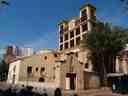
Look ahead and slightly to your right-you’ll see a pale beige building with a multi-level tower peeking out above, decorated with a clock and yellow trim. There’s a little arched entrance right next to some tall, rustling palms. This is the Monasterio de Santa Clara la Real! Take a deep breath. Imagine, just for a second, you’ve stepped back in time-no noisy traffic, but maybe the distant clatter of horse hooves and the quiet chanting of nuns. This place has seen more drama than a soap opera marathon! Way back in the 1200s, this was the site of grand Muslim palaces, where Moorish kings strolled through lush gardens and hidden courtyards. They built walls thick enough to hide secrets and treasures, and the most important piece left is right here-from the days of the Al-Qasr al-Sagir, the "Little Palace." In fact, some of the oldest remains of Islamic art in Murcia are beneath your feet. But history doesn’t slow down. As the city changed hands and empires clashed, the palace was claimed by Castilian royals. Picture Alfonso X, known as "the Wise," or even Jaime I of Aragón, drifting past gardens and fountains here. Maybe the air buzzed with royal gossip-where was the king’s hat, and who was brave enough to tell him he was wearing it backward? In the 1300s, the palace wasn’t just a palace anymore. It became a home for the Poor Clares, who moved in and built their peaceful monastery life around the bones and arches of the old Muslim palace. You can still catch a glimpse of this layered past if you peek into the Santa Clara Museum, or wander to the west wing, where the Las Claras Cultural Center awaits. Can you feel the whispers of centuries gone by? Every stone here has a secret, from hidden domes to mysterious paintings once covered up in times of strict rulers. The kings, queens, nuns, and even a few modern museum guides have all left a little bit of their story behind. Now, if you hear any ghostly palace music or spot a nun sneaking a cookie, don’t worry… you’re just experiencing the magic of Santa Clara’s living history! Ready to explore more? Let’s head to our final stop-Murcia’s Archaeological Museum! Interested in knowing more about the architecture, heritage or the museum hours
Eigene Seite öffnen →You’re approaching your final stop: the Museo Arqueológico de Murcia. To spot it, look for a modern, sturdy building set just off the busy Gran Vía Alfonso X. The museum’s name is…Mehr lesenWeniger anzeigen
You’re approaching your final stop: the Museo Arqueológico de Murcia. To spot it, look for a modern, sturdy building set just off the busy Gran Vía Alfonso X. The museum’s name is displayed boldly in large white letters, just like you see in the picture, against a rich red background. If you see that sign, congratulations-you've made it! Right inside, there’s a reception area, a terrace, and even a buzzing little café if you need a reward for a day of discovery. Now, let’s step into a time machine-no passport needed! Picture the city back in 1864, when someone decided all these ancient treasures needed a home. The museum has lived in three different places over the years, but this building, designed by Luis Moya Blanco and José Luis de León, has been its cozy home since 1953. It’s seen everything from dusty old stone tools to shiny Roman treasures, and if these walls could talk, they’d definitely have stories to tell. Inside, things kick off with a virtual journey across the region, showing the secrets hidden beneath Murcia’s hills. In the Paleolithic section, you’ll meet our ancient, wild-haired ancestors, lighting their first fires, chipping stone tools, and nervously glancing into dark caves. Imagine the sharp smell of smoke and the sting of cold air as they learn to survive-don’t worry, no mammoths jump out at you here. And just a few steps farther, you hit the Neolithic. Picture the first farmers of Murcia, squinting in the Mediterranean sun as they plant early crops and herd goats that never seem to behave. There’s even a reconstructed hut so you can see how these pioneers lived, probably bumping their heads more than once-hey, home design takes practice! Then comes the oldest art show in town: cave paintings. Imagine the flicker of torchlight, the scratch of a brush against stone, and the thrill as that first handprint appears on a cave wall. These ancient doodles were so good that UNESCO said, “Let’s make them a World Heritage Site.” If your feet are tired, save your energy for the Stone Age-those rock axes are heavier than they look! And if your stomach rumbles, remember: the first Murcians got by on wild berries, not tapas. Everything you see inside was discovered in the hills and caves nearby. This is more than a museum-it’s a doorway into the lives, dreams, and adventures of people who walked these lands long before us. So, step inside, and let the stories of Murcia’s past speak to you. The best part? Entry is free-making it the cheapest trip through time you’ll ever take!
Eigene Seite öffnen →


Häufig gestellte Fragen
Wie starte ich die Tour?
Laden Sie nach dem Kauf die AudaTours-App herunter und geben Sie Ihren Einlösecode ein. Die Tour ist sofort startbereit – tippen Sie einfach auf „Play“ und folgen Sie der GPS-geführten Route.
Benötige ich während der Tour Internet?
Nein! Laden Sie die Tour vor dem Start herunter und genießen Sie sie vollständig offline. Nur die Chat-Funktion benötigt Internet. Wir empfehlen den Download über WLAN, um mobiles Datenvolumen zu sparen.
Handelt es sich um eine geführte Gruppentour?
Nein – dies ist ein selbstgeführter Audioguide. Sie erkunden unabhängig in Ihrem eigenen Tempo, wobei die Audioerzählung über Ihr Telefon abgespielt wird. Kein Reiseleiter, keine Gruppe, kein Zeitplan.
Wie lange dauert die Tour?
Die meisten Touren dauern 60–90 Minuten, aber Sie kontrollieren das Tempo vollständig. Pausieren Sie, überspringen Sie Stopps oder machen Sie Pausen, wann immer Sie wollen.
Was, wenn ich die Tour heute nicht beenden kann?
Kein Problem! Touren haben lebenslangen Zugriff. Pausieren Sie und setzen Sie sie fort, wann immer Sie möchten – morgen, nächste Woche oder nächstes Jahr. Ihr Fortschritt wird gespeichert.
Welche Sprachen sind verfügbar?
Alle Touren sind in über 50 Sprachen verfügbar. Wählen Sie Ihre bevorzugte Sprache beim Einlösen Ihres Codes. Hinweis: Die Sprache kann nach der Tour-Generierung nicht mehr geändert werden.
Wo greife ich nach dem Kauf auf die Tour zu?
Laden Sie die kostenlose AudaTours-App aus dem App Store oder von Google Play herunter. Geben Sie Ihren Einlösecode (per E-Mail gesendet) ein, und die Tour erscheint in Ihrer Bibliothek, bereit zum Download und Start.
Wenn Ihnen die Tour nicht gefällt, erstatten wir Ihnen den Kaufpreis. Kontaktieren Sie uns unter [email protected]
Sicher bezahlen mit 


