
Lissabon Audio-Tour: Aufzüge, Espresso und Echos der Zeitalter
Eine auf sieben Hügeln erbaute Stadt verbirgt ihre größten Geheimnisse direkt vor unseren Augen. In Lissabon flüstert Graffiti an bröckelnden Mauern, steinerne Engel blicken aus schattigen Ecken und eiserne Aufzüge erheben sich wie viktorianische Träume. Entdecken Sie diese Geheimnisse mit einer selbstgeführten Audio-Tour durch die verwinkelten Gassen des Bairro Alto, vorbei an den triumphierenden Bögen des Santa Justa Lifts und hinter den vergoldeten Türen der Igreja de São Roque. Diese Reise enthüllt heftige Machtkämpfe, leise Revolutionen und verborgene Meisterwerke, die Einheimische kaum beachten. Warum erschütterten einst Mitternachts-Unruhen diese friedlichen Straßen? Welches seltsame Objekt wartet in den opulenten Kapellen der Kirche auf seine Entdeckung? Und wessen skandalöse Schritte hallen in den Gassen des Bairro Alto wider, wenn die Stadt schläft? Bewegen Sie sich Schicht für Schicht durch Geheimnisse und Skandale. Sehen Sie Lissabon mit neuen Augen, wo Rebellion Schönheit formte und jeder Kopfsteinpflasterstein eine unerzählte Geschichte bergen kann. Drücken Sie auf Play und treten Sie mutig ein in Lissabons lebendige Geschichte.
Tourvorschau
Über diese Tour
- scheduleDauer 30–50 minsEigenes Tempo
- straighten4.7 km FußwegDem geführten Pfad folgen
- location_on
- wifi_offFunktioniert offlineEinmal herunterladen, überall nutzen
- all_inclusiveLebenslanger ZugriffJederzeit wiederholen, für immer
- location_onStartet bei D. Pedro IV Platz
Stopps auf dieser Tour
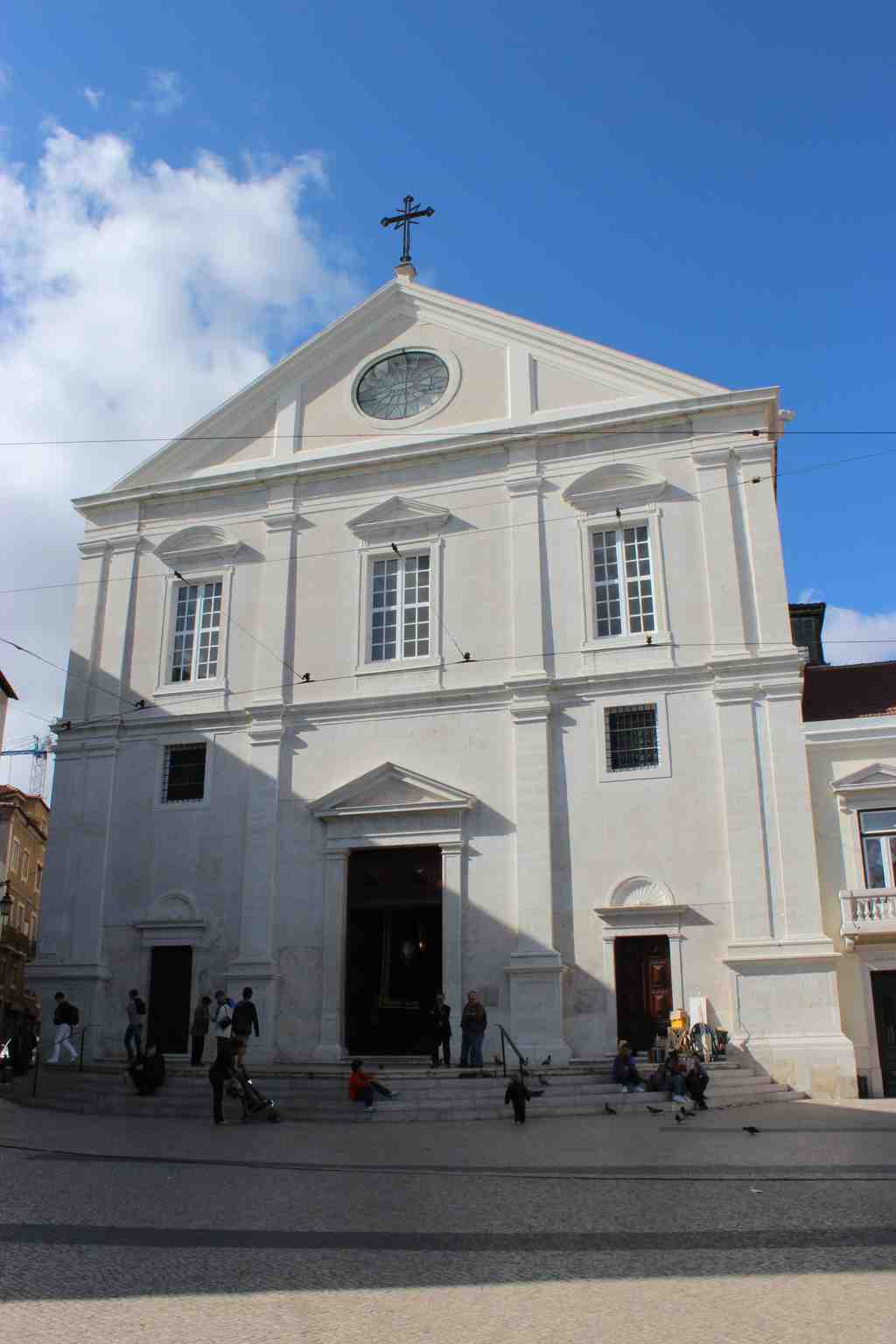
To spot the Igreja de São Roque, look for a large, elegant white church with tall windows and a simple triangular roof topped with a cross, standing proudly ahead in the open…Mehr lesenWeniger anzeigen
To spot the Igreja de São Roque, look for a large, elegant white church with tall windows and a simple triangular roof topped with a cross, standing proudly ahead in the open square. Now, let your imagination roam as we unlock the secrets of this remarkable place. The Igreja de São Roque doesn’t try to dazzle you from the outside-it’s rather plain, almost undercover! But don’t be fooled. Inside, it’s one of Lisbon’s most splendid treasures and, believe it or not, this is actually the first Jesuit church in Portugal. If walls could giggle, these would-they’ve survived plagues, earthquakes, royal drama, and even a contest to see just how much marble and gold can fit into one building. The story of São Roque starts in the early 1500s, when Lisbon was under siege by the plague. Imagine the grip of fear and the smell of incense and candles in the air. People were so desperate they sent all the way to Venice for a relic of Saint Roch, who was known for helping plague victims. The body part? His arm! The relic arrived by boat and was carried up the hill to this site which, back then, was outside the city and used as a plague cemetery. Somber, isn’t it? A small shrine was built over the cemetery, and by 1553, the shrine was handed to the Jesuits. These Jesuits, new to the scene, wanted something different: a church designed for booming sermons, not showy processions. So, they built this “auditorium-church”-and yes, you could say that São Roque became Lisbon’s hottest ticket! The King had grand ideas for three naves, but the Jesuits insisted on one wide, simple nave with huge side chapels, perfect for preaching and dramatic sound. Little did they know, they were also setting the architectural trend for Jesuit churches as far as Brazil and the Far East. Now, here comes one of my favorite parts-this church outwitted the fearsome 1755 earthquake that toppled most of Lisbon. While much of the city lay in ruins, São Roque stood strong, almost smug. So, when the Lisbon Holy House of Mercy lost their old headquarters in the disaster, they moved in and have called it home ever since. Step inside and it’s a gold-fest: Baroque woodwork dripping in gilt, dazzling tiles, and dramatic oil paintings everywhere you look. Each chapel tells its own tale, but the real showstopper is the Chapel of St. John the Baptist. Picture this-a chapel so posh it was built in Rome, taken apart, shipped to Lisbon in pieces, and reassembled like a giant religious jigsaw puzzle. At the time, it was the most expensive chapel in Europe, decked out with lapis lazuli, amethyst, and marbles from all over. Even the Pope himself gave it a test spin in Rome before it sailed to Portugal. But the church isn’t just about riches. There’s the quiet tomb of Francis Tregian, a brave Englishman who spent 28 years in prison for his faith and whose body was found “perfect and incorrupt” after 17 years underground. Just behind the grand altar rest the statues of the Jesuit saints-Ignatius of Loyola, Francis Xavier, and others-who watched over the city through storm and sunshine. Now, while it might look formal, São Roque was always a people’s place. The original Brotherhood of St. Roch, formed to care for the shrine and all kinds of folks, is still around today, making sure the old spirit of community lives on. So, from plague and prayer, to royal architects and secret chapels made like Lego sets, this church is packed with more surprises than a priest’s confession box. Ready for the next stop? Don’t forget to look back as you go-the simple outside and spectacular inside of São Roque is Lisbon’s ultimate magic trick! Seeking more information about the internal decoration, chancel, chapels and altars or the other burials? Ask away in the chat section and I'll fill you in.
Eigene Seite öffnen →To spot Café A Brasileira, look for the narrow building with its green and gold Art Deco entrance, a lively terrace full of white tables and umbrellas, and a bronze statue of a…Mehr lesenWeniger anzeigen
To spot Café A Brasileira, look for the narrow building with its green and gold Art Deco entrance, a lively terrace full of white tables and umbrellas, and a bronze statue of a man-Portugal’s poet Fernando Pessoa-seated outside at a table, as if waiting for you to join him for a coffee. Welcome to Café A Brasileira! Right here at number 120 Rua Garrett, you’re standing before one of Lisbon’s oldest and most iconic cafés. Let’s imagine it’s 1905 for a moment. The city was buzzing with horse carriages and this very spot was the site of a rather unremarkable shirt shop, until a Brazilian coffee enthusiast named Adriano Telles changed Lisbon’s streets forever. Telles had just opened his second “Brazilian” café in Portugal, insisting on serving “genuine Brazilian coffee” from Minas Gerais-a bold move at a time when Lisboetas typically thought coffee was only for brave souls or troublemakers. To introduce the magic of his strong new brew, Telles offered a free coffee to anyone who bought a kilogram of his precious beans. Suddenly, cups of dark “bica”-a shot as lively as the city itself-became the talk of the neighborhood. Can you picture the surprise of Lisbon’s locals, sipping their first sharp, aromatic espresso right here on this tiled pathway? But the magic doesn’t end with caffeine. As the First Portuguese Republic dawned in 1910, freedoms grew, and so did the café’s fame. With independence in the air, A Brasileira became a meeting ground for thinkers, poets, and rabble-rousers. If these tables could keep secrets, they’d tell you of fevered debates, whispered philosophies, and dreams scribbled onto napkins. By the 1920s, the café was known as a haunt for artists and writers, and even helped give birth to the literary magazine Orpheu-no wonder the ghost of creativity seems to linger here! Entry to this world was-and still is-a feast for the senses. The café’s elegant green and gold Art Deco entrance hints at treasures inside: mirrored walls give an endless sense of space, the bar shines with brass fittings, and every step on the marble mosaic floor adds to your own little Lisbon story. Try to picture the steady clatter of cups and saucers, the murmur of conversation flowing like the Tagus River, and maybe even the sweet scent of pastries flirting with the rich aroma of coffee. Among the café’s most famous regulars was the mysterious Fernando Pessoa. He’d nurse a glass of absinthe, puff on a cigarette, write poetry, and-legend has it-ponder the mysteries of life. Today, Pessoa’s bronze body waits right outside, always ready for a chat and never complaining about the weather! Café A Brasileira became so central to Lisbon’s artistic scene that artist José Pacheco even convinced the owners to display an ever-changing collection of paintings, turning the café into an informal art gallery. The tradition continued well into the twentieth century, with new works by José de Almada Negreiros, António Soares, and more, making every wall an accidental masterpiece. Of course, it hasn’t all been smooth sailing. In the 1950s and 60s, the café faced tough times and nearly closed for good-imagine a Lisbon without its most famous bica! But, like a proper hero in a Portuguese soap opera, A Brasileira made a comeback, remodeled with the help of cultural programs in the 1990s and determined never to let the aroma of its coffee fade away. So, here’s a spot where Lisbon’s past blends right into its present. The chatter of today’s tourists, the laughter of students from the nearby School of Fine Arts, and the silent poetry of Pessoa’s statue all remind us that great ideas-and great coffee-are always waiting for their next admirer. Shall we grab an imaginary espresso and toast to the generations who shared a dream here before us?
Eigene Seite öffnen →
7 weitere Stationen anzeigenWeniger Stationen anzeigenexpand_moreexpand_less
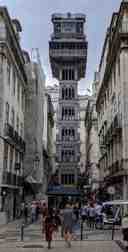
Look straight ahead up Rua de Santa Justa and you’ll spot a striking, ornate iron tower shooting straight up between the old buildings-a kind of steampunk castle with filigree…Mehr lesenWeniger anzeigen
Look straight ahead up Rua de Santa Justa and you’ll spot a striking, ornate iron tower shooting straight up between the old buildings-a kind of steampunk castle with filigree balconies and people peering down from above. Welcome to the incredible Santa Justa Lift! Or as locals might say, the “Elevador de Santa Justa.” This dazzling tower isn’t just an elevator-it’s Lisbon’s grand vertical shortcut between the busy Baixa streets below and the regal Carmo Square above. Can you feel that metallic heartbeat in the air? It’s been buzzing here for more than a century, defying the hills and making life a whole lot easier for the city’s steep-street wanderers. Now, let’s travel back in time a bit. Imagine Lisbon’s hills before smartphones, Ubers, or even reliable bus schedules. Getting from the lower levels of the city up to Carmo Square was, let’s face it, about as fun as hauling a suitcase up a never-ending staircase. So in the late 1800s, some very clever (and, I suspect, very tired) engineers began tossing around ideas. One wanted to use animals to pull carts up a slope. Maybe not the best idea for the poor animals-or the smells! Enter Raoul Mesnier du Ponsard, a man with a French name and a Porto birthplace, who got permission to try something completely new-mechanical, vertical, and powered by steam. It took a flurry of petitions, arguments, and mountains of paperwork, but eventually, Raoul won. Construction kicked off at the turn of the 20th century, with workers hammering, welding, and dreaming about what Lisbon could be. By 1901, even King Carlos popped by to cut the ribbon on the fancy metal bridge at the top-no pressure! The final elevator ride didn’t open to the public until 1902, but when it did, it wowed all of Lisbon. Once powered by billowing clouds of steam, the lift went electric just a few years later-out with the old, in with the shocking new! It was absorbed into the city’s tram network in the mid-20th century, then eventually handed over to the famous Lisbon transport company Carris, which still keeps it running. Now, you might be wondering: “Why all the fuss for one elevator?” Here’s the secret: the Santa Justa Lift is the only vertical lift in Lisbon still standing. Its rivals, like Gloria and Bica, roll along the ground like little funiculars, while its cousin, the Elevator of São Julião, completely vanished from the map. This one survived it all-wars, modernization, and the odd pigeon! Take a closer look at its jaw-dropping structure. The tower rises 45 meters-yes, seven stories-with Neo-Gothic ironwork that’s so intricate, you’ll spot details every time you blink. Once inside, the two original cabins are decked out in wood, mirrors, and windows, making every ride feel just a little bit royal. On top, a lookout platform offers some of the best panoramas in Lisbon: castles, the Tagus River glinting in the sun, and rooftops as far as your eyes can see. After more than a hundred years, the Santa Justa Lift is still one of Lisbon’s coolest rides. It’s been declared a National Monument-and is surely one of the few elevators in the world that gets more photos than a celebrity on the red carpet. So take it all in. Maybe ride to the top, feel the breeze, and give a little nod to Raoul for daring to dream upwards! And remember, buttons may come and go, but spectacular views never go out of style.
Eigene Seite öffnen →To spot the Capitol Theater, look for a striking white building with clean, geometric lines and a tall glass tower marked boldly with the word "CAPITOLIO" reaching up along the…Mehr lesenWeniger anzeigen
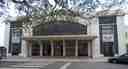
To spot the Capitol Theater, look for a striking white building with clean, geometric lines and a tall glass tower marked boldly with the word "CAPITOLIO" reaching up along the edge-if you see a shining glass structure popping up above a modern rectangular façade, you’ve made it! Now, let me invite you into the extraordinary world behind these sleek white walls. Imagine the year is 1931. The world’s changing, jazz is in the air, and here in Lisbon, something completely new is about to burst onto the scene at Parque Mayer. This is no ordinary theater-it’s the Cineteatro Capitólio. Designed by the visionary architect Luís Cristino da Silva, it was built as Portugal’s answer to the international modernist movement, a bold break from old traditions. The façade you see before you-its crisp lines, daring geometry, and that shining glass tower-used to whisper rebellion, modernity, and maybe just a little bit of mischief. When it first opened, Capitólio was a wonder: a place where theater, music-hall performances, and cinema collided. There’s a secret up top, too-the roof once held an open-air cinema! Imagine summer evenings with moviegoers lounging on the terrace, stars above, the hum of expectation rising with the music from inside. Technical innovations-like the extensive use of reinforced concrete-allowed for those spacious, flexible halls that could host anything from raucous concerts to elegant theater, and even, in later years, an ice skating rink that doubled as a roller disco. Yes, roller disco! I hope those dancers were careful on turns-one wrong move and that’s a performance no one would forget. Capitólio quickly became one of Lisbon’s most beloved venues. Its stage saw every kind of spectacle: thunderous dramas, concerts that shook the city, wrestling bouts, boxing matches, and even glamorous skating performances. Legendary films played here-like “A Severa” and “A Canção de Lisboa”-and you could always count on a debut that would get the city’s artistic crowd buzzing. When the Teatro Nacional D. Maria II burned down, its famous company performed right here, saving the show and giving the Capitólio another moment in the spotlight. As decades rolled by, trends changed, but Capitólio kept up. In the golden age of Portuguese theater revues, legends like Raul Solnado and Carlos Coelho stepped onto these boards. European cinema classics made their way to this screen, as well as blockbuster American hits-sometimes even controversial choices! After Portugal’s 1974 revolution, Capitólio was suddenly famous for something completely new: a run of “Deep Throat"-yes, THAT notorious film-marking the city’s embrace of newly-won freedom. The headlines practically wrote themselves, and for a little while, the program became a neon-colored parade of erotic films. The rooftop skating rink got a high-energy update in the early 1980s, transforming into "Roller Magic"-a disco where you could shimmy on roller skates beneath spinning lights. Admit it, you’re picturing giant eighties hair and neon leg warmers, right? Time wasn’t always kind to the building, but in 2016, the Capitólio was spectacularly reborn after an ambitious restoration led by architect Alberto de Souza Oliveira, restoring its Art Deco and Modernist magic. Today, it holds about 400 seats or can transform for standing crowds of up to 1,500! Its cultural spark is fully relit and, as of 2023, it’s managed by the city itself, promising vibrant shows and new stories for generations to come. So as you look at those giant windows and pristine lines, picture the dazzling lights, echoes of laughter, gasps from the balcony, and maybe even the faint rumble of roller skates-Capitólio isn’t just a building; it’s Lisbon’s chameleon of entertainment, forever reinventing itself for its audience.
Eigene Seite öffnen →To spot Bairro Alto, look for a cluster of charming, oddly-angled pale blue and patterned buildings with balconies and arched windows-just across the street in front of…Mehr lesenWeniger anzeigen
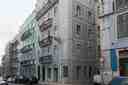
To spot Bairro Alto, look for a cluster of charming, oddly-angled pale blue and patterned buildings with balconies and arched windows-just across the street in front of you-stretching uphill along narrow lanes. Welcome to Bairro Alto, Lisbon’s beloved “Upper District,” where the streets crisscross like a tic-tac-toe board and even the buildings seem to whisper secrets! As you stand here, take in the tight grid of long, narrow houses, some covered in mosaic tiles, their balconies overflowing with potted plants, laundry fluttering, and just maybe a local peeking down at all the action. The Bairro Alto began life beyond the city walls in the late 1400s, during a time when Lisbon was bursting at the seams from new wealth and commercial energy. Picture this: It’s 1487, and the widow of an influential kingdom figure hands over these very lands for urban expansion. Soon after, royal letters start demanding that balconies invading the public space be chopped down. It’s an early attempt at “urban tidying”-imagine a medieval city inspector with a very grumpy face! By the early 1500s, plots were hawked off in a rush. First came the "Vila Nova do Olival" by the old Convent of the Trinity, and then a fever of house-building-by 1527, there were 408 buildings filled with 1,600 souls. The earthquake in 1531 would rattle these blocks and speed up even more growth, as people sought new homes. But Bairro Alto wasn’t done growing! In 1540, the first Jesuits arrived, bringing their dramatic robes and earnest faces-imagine the place buzzing with religious debate and the building of churches. By the late 1500s, the area had split into recognizable civil parishes, each one packed to the rooftops with people. The streets you see-Rua das Flores, Rua da Atalaia-sprung up over old lanes, with blocks organized in that distinctive, almost perfect grid, always two or three plots wide and much longer in the other direction. You might notice the curious mix of window shapes, odd building angles, and out-of-place staircases here. It’s a living record of every generation that’s ever lived or partied in these blocks! Some buildings, from the 16th century, are small and squat with sills so tiny you’d wonder how anyone fit in the windows. Others stretch up three or four storeys, narrow as a slice of bolo de arroz, but packed with apartments. They adapted over time-first built from wood, then later reinforced by solid stone, giving them the fortitude to withstand Lisbon’s famous 1755 earthquake (not that it did much damage here, but the Pombaline era left its architectural stamp). Now, let’s skip forward: The 19th and 20th centuries brought cafés, newspapers, even more blocks, and-yes-Lisbon’s nightlife magic. If these streets seem to hum after sunset, you’re not imagining it! By the 1980s, Bairro Alto’s bars, fado houses, and music clubs meant that you’d rarely hear crickets, but instead music and laughter echoing into the night. Not everyone was a fan of the fun-by 2008, legal curfews forced bars to close early, but that rule only lasted a year before the nightlife returned, just a bit quieter for the neighbors. Investment poured in to clean up graffiti and brighten the façades, though some might say the “artwork” never truly disappeared. Today, Bairro Alto is a dense patchwork of winding lanes, where the morning sunlight barely touches the lower floors, and new trends pop up beside centuries-old churches. Look around: almost every layer of history, from medieval plots to 20th-century renovations, is still here. The neighborhoods you see aren’t ruled by politicians but by energy and a dash of mischief-a perfect place to get lost or stumble on a surprise café. Watch your step-sometimes, a street here changes its name mid-block, just to keep you guessing!
Eigene Seite öffnen →You’ll spot the Palace of the Counts of Azambuja by its elegant yellow façade, large windows with stone balcony railings, and the grand central entrance topped with intricate…Mehr lesenWeniger anzeigen
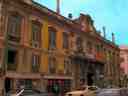
You’ll spot the Palace of the Counts of Azambuja by its elegant yellow façade, large windows with stone balcony railings, and the grand central entrance topped with intricate stonework-just look for the ornate triangular pediment right above the main doors. Now imagine standing on this very spot in 1755, when a powerful earthquake shook Lisbon so fiercely that the original palace collapsed into dust and rubble. But like a character from a good soap opera, this place was too dramatic to disappear. It rose again, rebuilt, and welcomed a cast of colorful residents. The family of the 1st Marquess of Valada brought noble flair; later, the Countess of Azambuja left her mark, and over the years, its halls echoed with the rumors of high society, the chitchat of couriers, and-rather surprisingly-the hustle of newspaper journalists. By the 1920s, could you picture journalists from A Lucta dashing in and out with hot news, maybe dodging a disgruntled noble or two who wasn’t ready for their close-up? If you could glimpse inside, you’d see stunning azulejo tile panels-one shows Saint Francis of Assisi looking like he’s pondering where all the birds went. The staircase? Marble, sweeping upward under a vaulted ceiling, decorated with stucco so delicate you might wonder if it was made from whipped cream. In recent years, the palace has transformed again; the grand halls have become chic apartments and probably witness a lot less royal drama and far more coffee mornings. From a site of tragedy to one of everyday life, the Palace of the Counts of Azambuja has worn many faces-and for a building that’s survived quakes, counts, and deadlines, it wears them all with style.
Eigene Seite öffnen →Directly ahead of you, you’ll spot a bold yellow building with a grand stone arch and the words “Ascensor da Bica” sweeping overhead-it’s almost hidden in plain sight, but just…Mehr lesenWeniger anzeigen
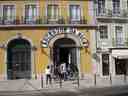
Directly ahead of you, you’ll spot a bold yellow building with a grand stone arch and the words “Ascensor da Bica” sweeping overhead-it’s almost hidden in plain sight, but just follow the crowd of eager faces stepping through its gates! Now, picture yourself standing here in the heart of Lisbon at the turn of the 20th century: imagine the hissing of steam, the whir and groan of pulleys, and neighbors cheering as the city unveiled a brand-new trick for conquering these famously steep hills. In 1892, after a few years of suspense and a fair bit of tinkering, the Ascensor da Bica started whisking passengers between Rua de São Paulo below and the hilltop above-powered, at first, by a hefty steam engine tucked away in the back. Back then, elegant ladies and dapper gentlemen crowded into the wooden cars, marveling at Raoul Mesnier du Ponsard’s clever design: two carriages bound together by a steel cable, always moving in perfect opposition-one rising, one falling, each balancing the other. But wait, the ride wasn’t always so smooth! After its steam days, the funicular made the leap to electricity, which should have been a delight-except during test runs, when things ran a little too wild. One car took off uncontrollably and smashed right through the lower station. The crash left the Bica quiet for years-Lisbon’s hills went back to making people sweat. Eventually in the 1920s, the city told the new owners at Carris “enough is enough,” and the funicular chugged back to life with fresh cars, thanks to a bit of international help from Theodore Bell. Today, the Ascensor da Bica is both a piece of living history and a practical way to avoid burning some serious calories. The bright yellow-and-cream building is framed in elegant stonework, and the rail cars still have their old-school wooden benches and classic charm. Inside, you’ll find beautiful Portuguese tiles on the walls and a sweeping view of the bustling Bica neighborhood as you glide upwards at just over an 11% incline. It’s so well-loved, the city even gave it protected status in 2011-it’s now officially a treasure, not just a shortcut! So, snap a photo, maybe crack a joke about skipping leg day, and get ready-Lisbon’s next story is just around the bend.
Eigene Seite öffnen →To spot the Cais do Sodré Train Station, look for a striking cream-colored building with a tall, arched glass facade, lots of geometric Art Deco details, and blue-and-white tiled…Mehr lesenWeniger anzeigen
To spot the Cais do Sodré Train Station, look for a striking cream-colored building with a tall, arched glass facade, lots of geometric Art Deco details, and blue-and-white tiled panels, all right across the big square as you stand near the zebra crossing. Welcome to Cais do Sodré Train Station, the final stop and, some would say, the most energetic gateway in Lisbon! Now, imagine the river breeze in the air and the steady clack of trains arriving and departing. This place isn’t just a building, it’s a living crossroads - the beating heart where Lisbon meets the sea, trains meet ferries, and dreams of a beach day meet their match in the “Linha de Cascais.” But things didn’t always run as smoothly as the timetables promise today. Transport schemes for this area began way back in 1855, when the ambitious Count Clarange du Lucotte envisioned a railway running right here… but back then, if your commute was delayed, you could blame battles in Parliament, legal disputes, and even grumpy business rivals. The rails finally started to snake along the Tejo in the late 1800s, and by 1895 the first humble station opened at this very spot-just a wooden hut! It stuck around so long, locals almost thought “temporary” meant “forever.” If we could rewind to the late 1800s, you'd see passengers crossing the river by steamboat to catch their train, dodging stacks of fish baskets and vegetable crates, and ducking under curious quayside kiosks selling everything from fruit to gossip. Then, as the 20th century arrived, the electric tram made its sparkling debut in 1901, rolling right up to the station, and Lisbon’s modern age started to sizzle. There’s a great slice of drama too: in the early days, politicians grumbled in Parliament about how this provisional building hardly seemed fit for a capital city-“a station shameful for Lisbon!” complained one. Upgrades took years as grand plans kept getting tangled by bureaucracy and even, at times, by World War I. But finally, in the roaring 1920s, engineer Pardal Monteiro stepped in and brought this glorious Art Deco building to life in 1928-with curving lines, eye-catching tiles, and enough glamour to rival any Parisian station. If you’re craning your neck, check out the patterned blue-and-white ceramic panels surrounding the windows-they come from the legendary Lusitânia Factory, and the motifs repeat across the station like a secret code known only to Lisbon’s commuters. And see how sunlight pours through the giant arched windows? It’s as if the building refuses to let travel ever feel gloomy, even on the rainiest Monday. Through the decades, Cais do Sodré has seen it all: from electrification triumphs (with much ado and public ceremonies), to passengers in the 1940s hurrying off with crates of Algarve fruit, and, sadly, to moments of disaster-like the roof collapse in 1963 that led to a wave of improvements in railway safety. If these walls could blush, they’d do it every time someone remembers the wild proposals to connect all of Lisbon’s stations underground, or the time the platforms were finally raised and modernized-sometimes years behind schedule! By the 1990s, this station was getting its Art Deco sparkle back, refreshed and restored for a bustling present. Today, it’s not just the final stop for the famous Linha de Cascais. It’s a tangled hub-trains, metro, buses, and the ferries all converge here. Step out, and you’re only minutes from the city’s grandest squares, the liveliest nightclubs, or a boat heading across the bright Tagus. So here’s to Cais do Sodré, where every arrival feels like a new beginning and every departure carries a whiff of salt air, old stories, and modern energy. If you listen closely, you might just catch the sound of a hundred years of footsteps, rolling luggage, and even-on a lucky day-the whisper of history in the tiles. Thank you for joining this Lisbon adventure. I hope you’ve enjoyed the walk, the wonders, and maybe even my jokes. Safe travels onward, wherever the rails (or your own two feet) may take you!
Eigene Seite öffnen →

Häufig gestellte Fragen
Wie starte ich die Tour?
Laden Sie nach dem Kauf die AudaTours-App herunter und geben Sie Ihren Einlösecode ein. Die Tour ist sofort startbereit – tippen Sie einfach auf „Play“ und folgen Sie der GPS-geführten Route.
Benötige ich während der Tour Internet?
Nein! Laden Sie die Tour vor dem Start herunter und genießen Sie sie vollständig offline. Nur die Chat-Funktion benötigt Internet. Wir empfehlen den Download über WLAN, um mobiles Datenvolumen zu sparen.
Handelt es sich um eine geführte Gruppentour?
Nein – dies ist ein selbstgeführter Audioguide. Sie erkunden unabhängig in Ihrem eigenen Tempo, wobei die Audioerzählung über Ihr Telefon abgespielt wird. Kein Reiseleiter, keine Gruppe, kein Zeitplan.
Wie lange dauert die Tour?
Die meisten Touren dauern 60–90 Minuten, aber Sie kontrollieren das Tempo vollständig. Pausieren Sie, überspringen Sie Stopps oder machen Sie Pausen, wann immer Sie wollen.
Was, wenn ich die Tour heute nicht beenden kann?
Kein Problem! Touren haben lebenslangen Zugriff. Pausieren Sie und setzen Sie sie fort, wann immer Sie möchten – morgen, nächste Woche oder nächstes Jahr. Ihr Fortschritt wird gespeichert.
Welche Sprachen sind verfügbar?
Alle Touren sind in über 50 Sprachen verfügbar. Wählen Sie Ihre bevorzugte Sprache beim Einlösen Ihres Codes. Hinweis: Die Sprache kann nach der Tour-Generierung nicht mehr geändert werden.
Wo greife ich nach dem Kauf auf die Tour zu?
Laden Sie die kostenlose AudaTours-App aus dem App Store oder von Google Play herunter. Geben Sie Ihren Einlösecode (per E-Mail gesendet) ein, und die Tour erscheint in Ihrer Bibliothek, bereit zum Download und Start.
Wenn Ihnen die Tour nicht gefällt, erstatten wir Ihnen den Kaufpreis. Kontaktieren Sie uns unter [email protected]
Sicher bezahlen mit 


