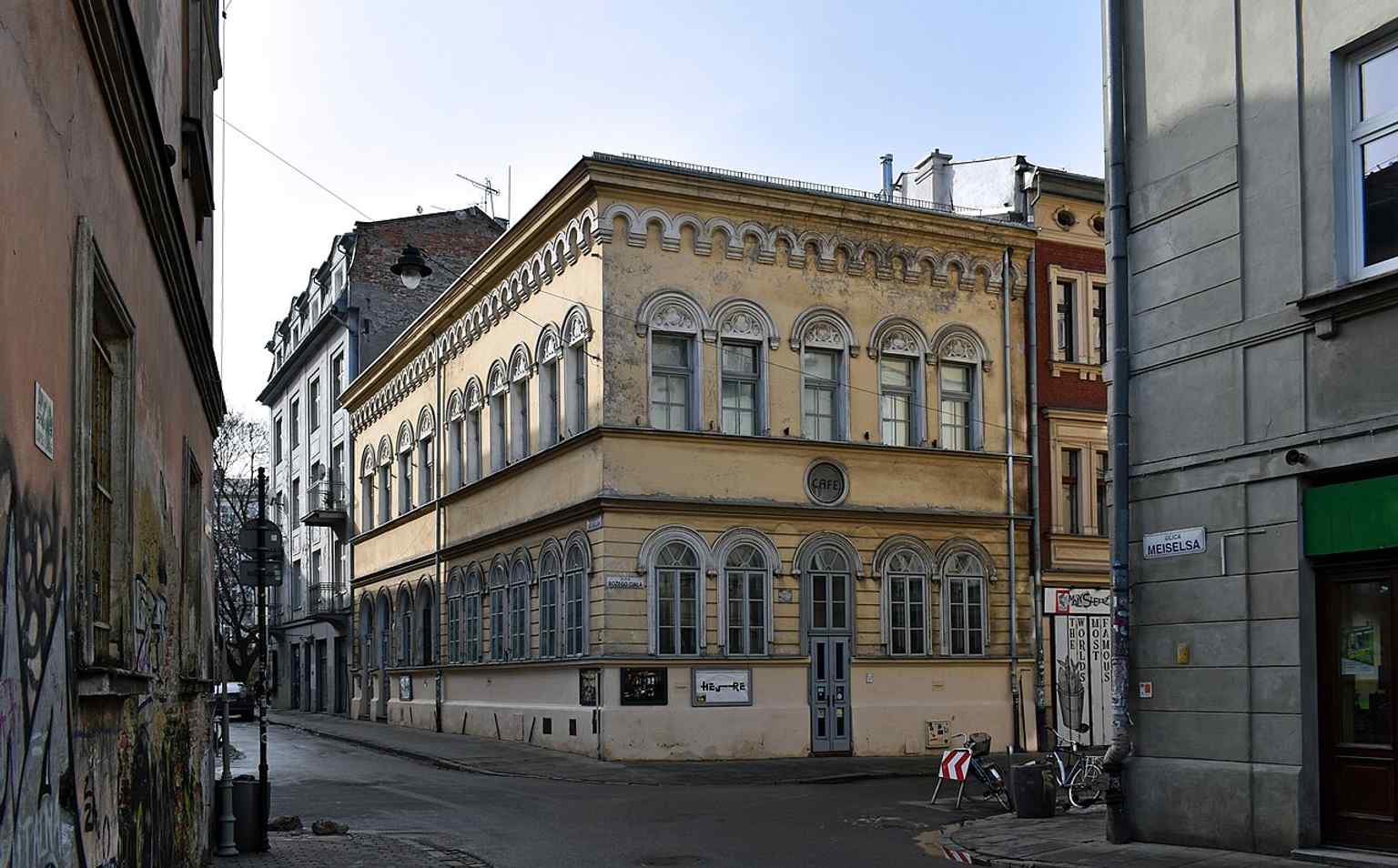
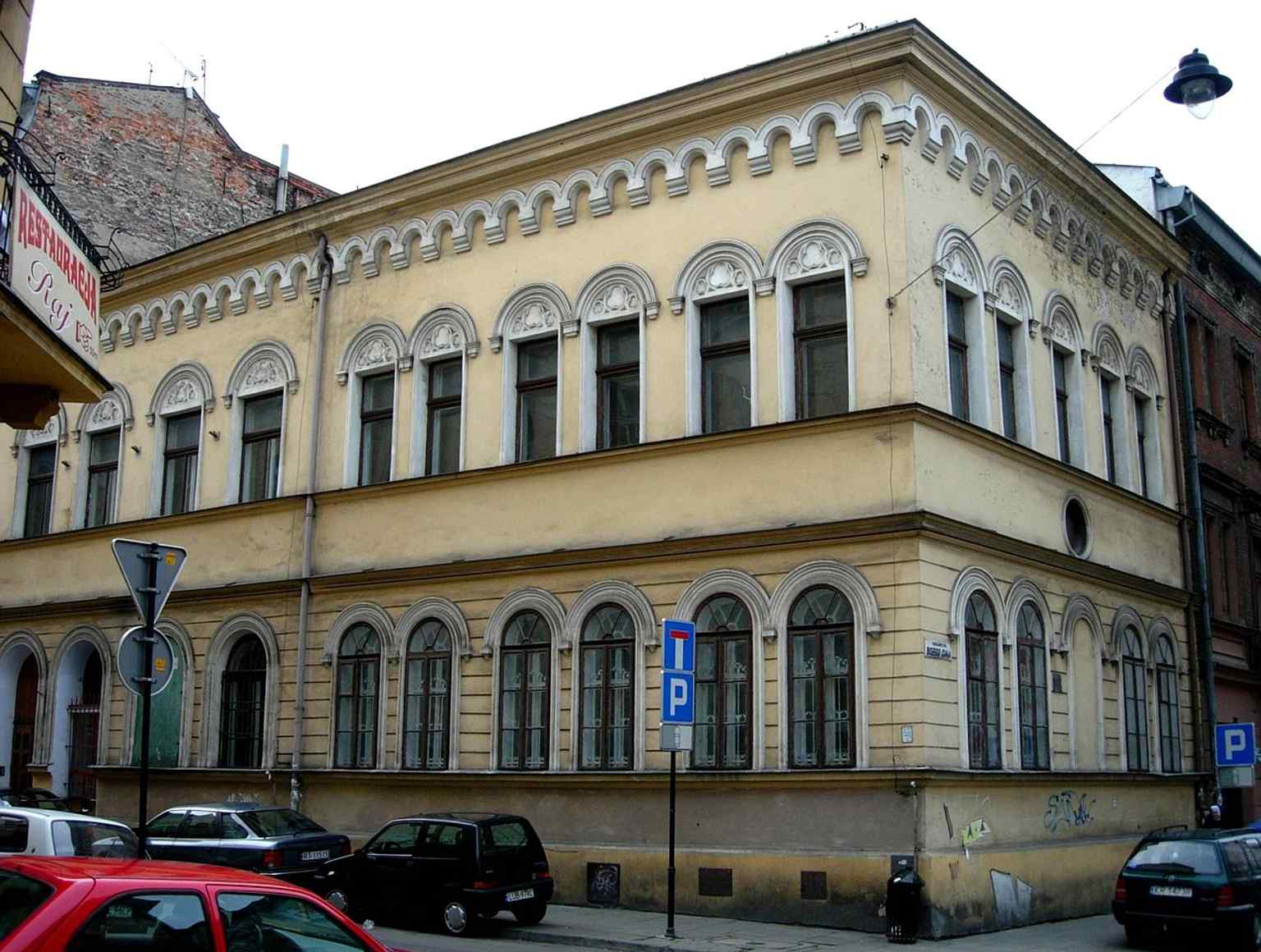
Auf den ersten Blick wirkt es zurückhaltend, fast schüchtern. Aber das ist Teil seiner Geschichte. Dies war nie eine der prächtigsten Synagogen von Kazimierz. Im Jahr 1896 gründete die Psalmbruderschaft sie als Chewra Thilim, wörtlich Psalm-Gesellschaft, und der Architekt Nachman Kopald gab ihnen ein praktisches Bethaus mit einem Hauch von Dekor des späten neunzehnten Jahrhunderts. Die abgerundeten Fenster und der Arkadenfries unter der Dachlinie lehnen sich an ältere Stile an und verleihen einem kleinen Gemeindegebäude eine gewisse Würde.
Hinter dieser Fassade stand eine ganze kleine religiöse Welt: der Gebetssaal für Männer im Erdgeschoss, eine Frauenempore im Obergeschoss und auch eine talmudische Schule. Wie einige der bescheideneren Betstuben, denen wir bereits begegnet sind, war dieser Ort wichtig, weil gewöhnliche Menschen ihn durch täglichen Gebrauch am Leben erhielten, nicht weil er das Stadtbild dominierte.
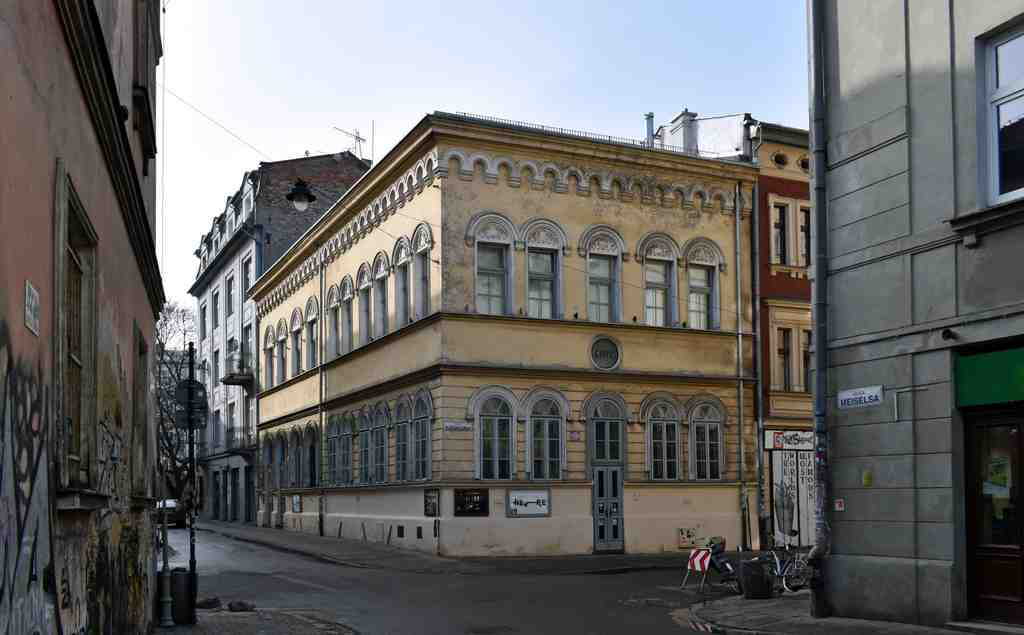
Wenn Sie auf das Bild auf Ihrem Bildschirm blicken, können Sie das Gebäude aus etwas größerer Entfernung sehen und schätzen, wie fest es an der Straßenecke steht und immer noch die Umrisse seines ursprünglichen Zwecks trägt. Im Jahr 1931 baute Salomon Jonkler die Synagoge um. Dann kamen die Deutschen, und während der Besatzung zerstörten sie das Innere. Die Hülle überlebte, aber Überleben bedeutete hier selten Frieden. Nach dem Krieg beherbergte das Gebäude die Jüdische Sozialistische Partei. 1951 zog das Volkslied- und Tanzensemble Krakowiacy ein. Diese Entscheidung klingt seltsam, bis man sich an das größere Problem erinnert: Viele jüdische Gebäude in Krakau blieben stehen, nachdem die Menschen, die sie belebten, ermordet, vertrieben oder auf winzige Gemeinschaften reduziert worden waren.
That brings us to Tadeusz Jakubowicz, head of Kraków’s Jewish community after the building returned to communal ownership in two thousand and one under the restitution law. He faced a miserably practical question: how do you keep a former synagogue in Jewish hands when the community is small and the building needs constant care? His answer was a very local compromise. He allowed the ensemble to stay, but only on condition that it improve the building and prevent further decay.
Most tourists never notice that this synagogue’s fate turned not on a dramatic restoration campaign, but on that compromise between ownership and use. The ensemble said the condition was good enough and that the city funded occasional interior repairs. But they could not afford a major roof repair or new windows, and the city did not want to pay for a property it did not own. By two thousand and six, they left.
Then came a startling discovery. In two thousand and eight, conservators uncovered wall paintings inside: mostly blue and green, with biblical scenes, a lion, a tiger, part of an eagle, and a deer; views of Jerusalem and Rachel’s Tomb; and, near the wooden women’s gallery, Hebrew words meaning “the candle of the soul.” Fragments of the red curtain around the Aron ha-Kodesh, the holy ark niche where Torah scrolls were kept, also survived.
And yet discovery did not settle the building’s future. In two thousand and thirteen, a lease to the Mezcal nightclub provoked outrage. Scholar Jonathan Webber wrote publicly of his horror. Critics pointed to a bar installed in the former prayer hall, directly before exposed paintings that still lacked proper protection. Even after the building entered the heritage register, later alterations cut a new passage near the old ark niche. Activists answered with the RememberChewra actions, insisting that preservation means more than leaving the walls standing.
So here you are before a building that still exists because people kept finding uses for it, and yet each use asked a painful question. When the original world cannot simply be restored, what does respectful care actually look like?
When you are ready, continue to Corpus Christi Street. It is about a two-minute walk from here.