Turin Audio-Tour: Ein historischer Wandteppich
Ein einzelner Turm durchschneidet den Turiner Himmel, trotzt den Wolken, während Schatten maskierter Adliger und geheimer Erfinder in stillen Innenhöfen verweilen. Dies ist nicht nur Italiens königliches Herz – es ist eine Stadt, in der jeder Palazzo unter seiner eleganten Fassade Skandale und Rebellionen flüstert. Begeben Sie sich auf eine selbstgeführte Audio-Tour durch das Centro und entdecken Sie Geschichten, die Einheimische hüten und die die meisten Besucher übersehen. Streifen Sie in Ihrem eigenen Tempo durch versteckte Ecken und hören Sie, wie Wahrheit mit Legende verschwimmt und Geschichte unter Ihren Füßen pulsiert. Welcher berühmte Philosoph brachte den Gipfel der Mole Antonelliana mit Lob beinahe zum Einsturz, bevor das Unglück geschah? Wer schlüpfte durch die Bögen der Königlichen Akademie, als fremde Armeen näherdonnerten – Freund oder Verräter? Warum riskierten Aristokraten im Palazzo Cacherano di Bricherasio den Ruin, nur um ein eigenartiges Automobilunternehmen in völliger Geheimhaltung zu gründen? Verfolgen Sie verschlungene Pfade von hoch aufragenden Türmen zu prächtigen Salons. Erleben Sie Blitze der Revolution, künstlerisches Fieber, verfolgten Ehrgeiz und vergrabene Geheimnisse, während jeder Schritt Turin in eine lebendige Bühne der Macht und Leidenschaft verwandelt. Bereit, durch die Stadt zu gehen, wo Wagemut wirklich die Wolken berührt? Beginnen Sie jetzt.
Tourvorschau
Über diese Tour
- scheduleDauer 40–60 minsEigenes Tempo
- straighten3.6 km FußwegDem geführten Pfad folgen
- location_on
- wifi_offFunktioniert offlineEinmal herunterladen, überall nutzen
- all_inclusiveLebenslanger ZugriffJederzeit wiederholen, für immer
- location_onStartet bei Mole Antonelliana
Stopps auf dieser Tour
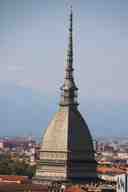
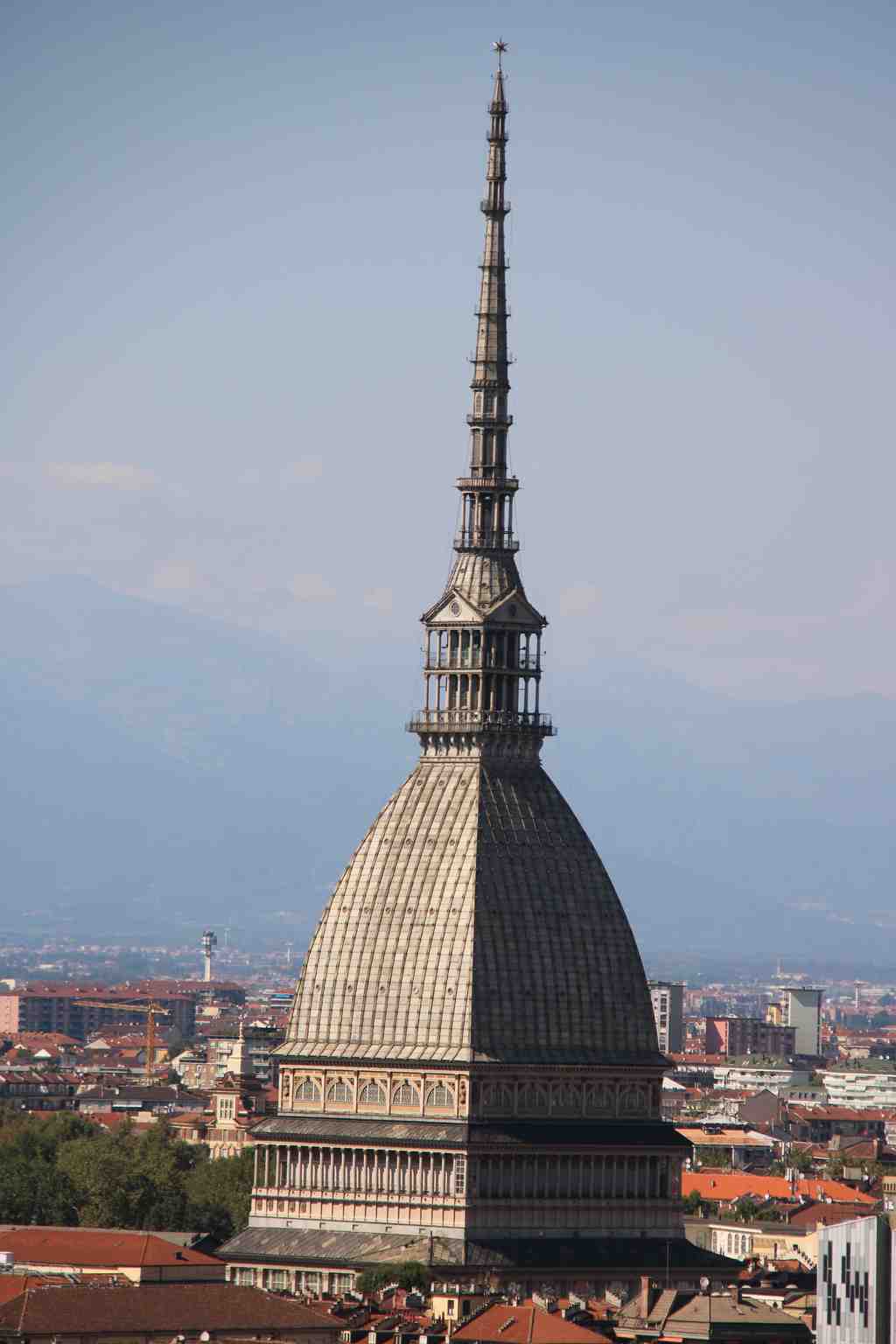
To spot the landmark, look up for an enormous, pale-colored building with a dizzyingly tall, pointed spire that pierces the sky - it towers above the rooftops, so you truly can’t…Mehr lesenWeniger anzeigen
To spot the landmark, look up for an enormous, pale-colored building with a dizzyingly tall, pointed spire that pierces the sky - it towers above the rooftops, so you truly can’t miss it! Welcome, traveler! As you stand here at the feet of the mighty Mole Antonelliana, tilt your head back and take in its breathtaking, skyscraping spire. This isn’t your average building - it’s Turin’s wild architectural daredevil, rising almost as if it’s trying to poke a hole in the sky. Now, this Mole isn’t a little creature digging tunnels below you - in Italian, "mole" means a monumental building, and monumental hardly begins to describe it! The story begins in 1863, right after Italy finally united. Turin was feeling pretty fancy - after all, it was the capital city, and its Jewish community decided it was time for a grand new synagogue. Enter Alessandro Antonelli, an architect famous for his "let’s go taller" attitude. The community handed him the blueprints and a big (but, as it turned out, not big enough) purse of coins. Antonelli, being a dreamer, decided to shoot for the stars, literally. He kept adding height to his design, pushing the final plans to an eye-watering 167.5 meters. Imagine the conversations: “Alessandro, can we maybe stop at 100 meters?” And he’d reply, “Just 50 more, I promise!” But all this ambition came at a price. Costs ballooned. Time dragged on. Construction halted in 1869 with just a provisional roof closing off Antonelli’s skyward adventure. The capital of Italy moved to Florence - suddenly, Turin wasn’t feeling quite so important anymore, and the community no longer needed such a sky-high synagogue. The Jewish community had spent more than double what they planned, and the city was abuzz - they’d all watched this peculiar tower grow taller and taller, like a stubborn weed nobody could trim. The people of Turin weren’t about to let it wither! So the city stepped in, finishing the project (and generously swapping land with the Jewish community so they could finally have their synagogue, just with a little less stress about budget and height). Antonelli, never missing a chance to go big, worked right up until his death in 1888. He originally wanted to crown his brick behemoth with a statue of a winged, lance-wielding angel - the “genio alato” as a symbol of the House of Savoy. In the end, the spire was topped with an extravagant star that shimmered above Turin. The star’s had a rough ride up there, battered by wild storms and a tornado or two. In 1904, fierce winds ripped down that heavenly statue, causing a truly dramatic moment (imagine: the angel dangling precariously, suspended above the terraces - not your average Tuesday). The building survived two world wars, bombings all around it, and a tornado in 1953 that snapped off the entire top 47 meters. Each time, the city rebuilt it, now with a modern metal core, but always keeping that old-world magic on the outside. Over time, the Mole has become a treasure trove of stories. It housed the Museum of the Risorgimento and now, the National Museum of Cinema lives here - making it the tallest museum in the world. Want more fun? The Mole Antonelliana appears on the 2 cent Italian euro coin and even inspired the logo for the 2006 Winter Olympics. In the evenings, you might spot neon red Fibonacci numbers climbing one of the dome’s faces - a wild mix of mathematics and art by Mario Merz. And if you hear a faint whisper of laughter, maybe it’s the sound of Nietzsche, the philosopher, who absolutely adored this place-calling it “the most brilliant work of architecture ever built” and comparing its drive skyward to his own philosophy. Yes, even philosophers get a little giddy here. Through history’s ups and downs, lightning strikes and windstorms, the Mole Antonelliana still keeps watch over Turin, glowing with thousands of LED lights and soaking up every story, every movie, every memory. Now, what do you think - ready to reach for the sky?
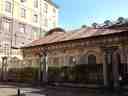
Eigene Seite öffnen →To spot the Royal Academy of Turin, look just ahead for a pale, mustard-yellow and brick building with a tiled roof and arched windows, partly hidden behind a decorative iron…Mehr lesenWeniger anzeigen
To spot the Royal Academy of Turin, look just ahead for a pale, mustard-yellow and brick building with a tiled roof and arched windows, partly hidden behind a decorative iron fence and stone columns. Now, picture yourself standing right outside these walls, where history almost echoes through the air-if you listen closely, you might just hear the faint shuffle of noble boots and the laughter of young aristocrats from centuries ago! Back in 1673, this place wasn’t just any old school-it was a grand dream, brought to life by architect Amedeo di Castellamonte, guided by the vision of the widow Duchess Maria Giovanna Battista. She wanted a palace like no other, a stage for the next generation of Europe’s elite knights and gentlemen to learn not only books and languages, but the arts of dueling, horseback riding, and courtly dance. Imagine the clatter of hooves in the courtyard, nobles in fine silks, and the scent of fresh parchment and polished armor swirling through the halls. By the time the doors swung open in 1679, the Reale Accademia di Savoia became a melting pot of Europe’s youthful blue bloods-there were Italians, Poles, Austrians, Germans, English, Russians, and plenty more, each learning to be the perfect courtier. Unlike today’s military academies, the lessons here weren’t just about war: they learned literature, history, French, Italian, fencing, dance, and, of course, how to hold oneself like royalty. Military training was just one slice of the curriculum-a polite afterthought for those who fancied a noble career in the army or those who simply wanted to impress their friends at duels. But times change fast! By the 1720s, the old Duke's son, Vittorio Amedeo II, decided everyone should have their own path-some to war, some to theology, some to government office. The school became an elegantly organized chaos of young men learning how to manage everything from swords to scripture. Yet, even the most elegant palaces can’t withstand the march of history for long. In 1798, Napoleon’s French soldiers swept into Turin and, with one firm “au revoir!”, closed the doors of the original Royal Academy. The halls fell quiet. But don't worry, the story doesn't end there! After the dust of revolution settled and the kings came marching back, in 1815, the place was reborn as the Regia Militare Accademia-a new academy, this time strictly for the bravest and brainiest boys of the Savoy kingdom who dreamt of military glory. To get in, all they needed was a royal nod (and, let’s be honest, probably a pretty good set of family manners). The youngest came at only nine years old, their eyes wide, dragging trunks larger than themselves. Eight years later, they'd march out as shiny new lieutenants, ready for action. Honor, discipline, and that famous Italian flair were all in a day’s work for the students. The tricolor flag of Italy replaced the old banners, filling everyone with hope-and a bit of stylish pizzazz, too. Of course, with every year, reforms swept through like strong winds, trimming down studies, shifting entry ages, and splitting and merging courses. By the late 1800s, the Academy was churning out experts for every sort of military skill-and doing so under the careful eye of men with names as grand as their moustaches. But as you gaze at the walls, you might notice scars-reminders of tough times. In the 1930s, a fierce fire and then the rumble and wrath of World War II bombings battered the building. Pieces of the old loggias remain, especially along via Verdi, telling silent tales of grandeur and survival. Even though part of the site was demolished for a new Teatro Regio in the 1950s, the spirit of the old Academy lives on. Today, parts of the original structure are still used by the Italian Army’s infrastructure unit and, in 1997, the site was declared part of the UNESCO World Heritage Residenze Sabaude. Not bad for an old school full of dancing, dueling, scheming nobles! So as you stand here, look up at the tiles and arches and imagine Turin once alive with the gossip and dreams of princes and cadets-laughter echoing through the corridors and maybe, just maybe, a ghostly nobleman sneaking out after curfew. Onward, my friend-there’s much more Turin to discover!
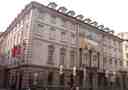
Eigene Seite öffnen →The Palazzo Cacherano di Bricherasio stands proudly at the corner, its regular grayish facade accented by neoclassical windows topped with triangular pediments and a row of little…Mehr lesenWeniger anzeigen
The Palazzo Cacherano di Bricherasio stands proudly at the corner, its regular grayish facade accented by neoclassical windows topped with triangular pediments and a row of little attic dormers along the roof-just look for its grand, stately elegance along Via Lagrange, near the iron railings and banners at the entrance. Alright, time for a leap into the past-step closer and picture yourself here, centuries ago. The year is 1636, and this square palace rises from an area once known as the Contrada dei Conciai-yes, that’s “Tanners' Street.” But you won’t smell leather nowadays, just the aroma of the modern coffee wafting from inside. Now, listen closely…. Back in the 18th century, noble families like the Solaro di Monasterolo and later the Cacherano di Bricherasio called this place home. If these walls could talk, they’d tell stories of grand military honors and dazzling parties-rumor has it, a few ghosts of bored noblemen might still wander looking for a good soirée. In the mid-1800s, the great Italian writer Giovanni Berchet found refuge within these thick walls, seeking peace during turbulent times-a tiny stone by the entrance today marks his legacy. Imagine Berchet penning verses, ink smudges on his fingers, with visions of revolution swirling in his mind. In 1855, the Cacherano di Bricherasio family moved in, bringing both old money and big hearts. They weren’t just about fancy titles-the family had a knack for philanthropy, supporting the less fortunate and turning their home into the cultural hotspot of Turin. Luigi Baldassarre Cacherano di Bricherasio gave the place a neoclassical facelift, adding elegance and a certain “I-belong-in-a-painting” flair. Sadly, Luigi’s story ended too soon, but his wife, Teresa, and their children, Sofia and Emanuele, continued the tradition: Sofia became a painter and turned the palazzo into the city’s artistic living room, regularly hosting legends like the painter Lorenzo Delleani and the conductor Arturo Toscanini. You might almost hear the clink of glasses and bursts of laughter echoing from lavish 19th-century soirees. But the twists don’t end there. Emanuele, Sofia’s brother, was a daring soul-by day, a philanthropist; by night, a lover of engines and speed! In 1899, right in this very palace, Emanuele and some like-minded aristocrats scribbled signatures on a founding document for a certain car company you might’ve heard of…FIAT! Imagine the tension as they dipped their pens, barely knowing they’d just birthed a giant of Italian industry. World Wars passed, garden gates changed, and the iron fencing out front went up and came down. When Sofia passed in 1950, the last Bricherasio, she left this palace to a charity-before it changed hands again and again, transforming into a school of embroidery, an institute for mechanical studies, and finally an exhibition space attracting international art lovers. If you stretch your imagination, perhaps you’ll catch the ghostly whirr of sewing machines or the low hum of a classroom. After weathering years of silence and dust, this noble shell returned to life in 2010. A modern bank moved in, but don’t worry-there’s still space for creativity. The glass and metal addition at the ground level is a modern café, welcoming not only bankers but also curious wanderers like yourself. And for history buffs, there are public tours at special times of year. As you stand before these stately gray walls, with their stone columns and neat lines, try to picture the parade of lives that shaped the Palacio. Once a noble playground, then a haven for artists, rebels, businessmen-and now, a bit of all these, standing tall on Via Lagrange. So, if you feel a sudden urge to paint, invest, or start your own car company, don’t say you weren’t inspired.
Eigene Seite öffnen →
12 weitere Stationen anzeigenWeniger Stationen anzeigenexpand_moreexpand_less
To spot the Museo Egizio, look for a grand, reddish-brown building with towering stone columns and two large, black statues of Egyptian gods standing guard right by its main…Mehr lesenWeniger anzeigen
To spot the Museo Egizio, look for a grand, reddish-brown building with towering stone columns and two large, black statues of Egyptian gods standing guard right by its main entrance. Welcome to one of the most magical portals into ancient Egypt… in the heart of Turin! You’re standing before the Museo Egizio - a place packed so tightly with mummies, papyrus, gods, and mysteries that even the pharaohs would feel right at home. But trust me, you won’t need a camel to enter - just a little imagination and perhaps the courage to stare down those massive guardians at the door! Let’s rewind the clock to 1630. Imagine a time when Turin had never seen Egyptian wonders, until the arrival of something called the Mensa Isiaca - a mysterious altar table made in the Egyptian style, probably crafted for some curious Romans longing for a bit of Nile magic right here in Italy. This treasure lit a spark in the hearts of the royals, especially King Charles Emmanuel III. He decided, “Why stop here? Let’s bring Egypt to Turin!” So off he sent his botanist, Vitaliano Donati, across the Mediterranean to Egypt. Imagine Donati stepping off his boat, the desert air swirling around him, gathering relics from places like Karnak and Coptos and bringing 300 pieces back. The birth of an extraordinary collection! Jump ahead to 1824 - Turin’s Egyptian collection is about to explode in size! King Charles Felix acquires a massive hoard from Bernardino Drovetti, France’s general consul who got a little obsessed collecting everything from statues, to mummies, and even papyrus rolls. Some people gather stamps, Drovetti gathered an Egyptian civilization! Jean-François Champollion, the man who cracked the hieroglyphic code, came racing over, eager to dive into the pile of papyri. Rumor has it, he used Turin’s collection to unlock secrets lost for thousands of years - but also, that the most important papyrus, the legendary “Papiro dei Re,” went missing like a magician’s disappearing trick. Years later, even a parapsychologist was called in to find it! Unfortunately, the magic wasn’t strong enough, and parts of it are still missing. Maybe you’ll spot it somewhere in the museum, hiding behind a sarcophagus! The mysteries grew as local collectors added more treasures. In 1833, Giuseppe Sossio’s 1,200 ancient Egyptian pieces joined the party. Then, the great Egyptologist Ernesto Schiaparelli started excavating in Egypt itself. His discoveries between 1900 and 1920 filled the rooms with even more jaw-dropping relics-mummies, painted fabric from over 5,000 years ago, and even the perfectly preserved tomb of Kha and Merit, moved here for you to marvel at today. The museum’s star power didn’t stop there, though. In the 1960s, after Italy helped save ancient Nubian monuments threatened by rising waters, Egypt gave the Turin museum a full temple-the Temple of Ellesyia-as a thank you. Yes, Turin has its very own ancient Egyptian temple! And the museum itself has weathered history: during World War II, many artifacts were spirited away to a safe home in Agliè before returning triumphantly after the war. By the 21st century, this grand building got a Hollywood-style makeover with imaginative lighting and dazzling displays. Dante Ferretti, who’s designed dreamlike movie sets, added his special touch for the 2006 Winter Olympics, turning visits into an adventure. In 2019, Museo Egizio joined an international project called Multaka. Special guides-refugees themselves-offer free tours in Arabic, creating a meeting of cultures and voices, past and present. So, whether you want to stare into the face of a mighty pharaoh, decode the world’s oldest Books of the Dead, or just stand and imagine ancient Egypt’s sands swirling in modern Turin, you’re in the right spot. Would you like to step inside and risk a mummy curse? Don’t worry, the only real danger here is getting stuck in a long line of curious history lovers! Seeking more information about the multaka network, collection or the gallery? Ask away in the chat section and I'll fill you in.
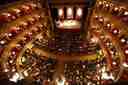
Eigene Seite öffnen →Right ahead, you can spot the Carignano Theatre by its grand, cream-colored four-story facade, lined with elegant rectangular windows, neoclassical pediments, and a central…Mehr lesenWeniger anzeigen
Right ahead, you can spot the Carignano Theatre by its grand, cream-colored four-story facade, lined with elegant rectangular windows, neoclassical pediments, and a central entrance marked with tall columns and a balcony above-just look towards the building with intricate stonework overlooking the lively pedestrian piazza. Now, step closer and imagine you're drifting back in time-not to just any old stage, but the oldest theatre in Turin! The Carignano Theatre, or “Teatro dei Principi di Carignano,” has seen more drama, laughter, and perhaps a little backstage gossip than anywhere else in the city. Founded at the turn of the 18th century, it was originally a playground for the city's aristocrats; back then, it was less about the drama on the stage and more about the drama among the audience! The first parties here were held in a building called the Trincotto Rosso, which, believe it or not, was more known for raucous noble festivities and games than for refined performances. By 1703, enter Prince Emanuele Filiberto Amedeo di Savoia-Carignano, who, after admiring his majestic palace across the square, decided it was only appropriate to have a theatre fit for royalty as well. Guided-probably with a regal flourish-by Guarino Guarini’s architectural genius, the theatre took on its distinctive look and feel, with the earliest performances staged for the royal court’s elite. You can almost hear the rustle of silk dresses and the whispered scandals floating under the gold balcony. The real fun began in 1719, when the doors opened to the public. Imagine the excitement as locals streamed in for the premiere of “Il carceriere di se stesso,” starring the famous soprano Francesca Cuzzoni. By 1727, the theatre had grown even grander-thanks to the “Società dei Cavalieri,” who filled the stage with comedies, dances, and concerts, while the prestigious nearby Regio handled the highbrow operas. Don’t worry, though-everyone got their dose of melodrama one way or another. Disaster struck in 1786. One chilly February evening, a fire blazed through, reducing everything to ash. Picture the heat, the crackle of flames, nobles in ornate masks dashing for the doors! Yet, like the most determined of stage characters, the Carignano rose again, rebuilt with gusto by architect Giovanni Battista Feroggio-six months and it was back to dazzling the city, fresher and finer than ever. Over the years, Carignano became the beating heart of Turin’s social life, hosting concerts, debates, and some of the world’s most famous performers-ever heard of Paganini, Dario Fo, or Vittorio Gassman? Paganini even made theatre history here, scandalizing the king by refusing to repeat his performance after a grueling concert, uttering his legendary line: “Paganini does not repeat!” Turin was a city of two kings… and, at least on this square, of two theatres fit for kings. If these walls could talk, boy, would they have stories! Hidden deep beneath your feet is the old brewery, where-back in the day-Carlo Alberto himself enjoyed a cold one. The building has survived more than one shakeup, including World War II. Bombs rained from the sky-most of Turin’s other theatres were destroyed-but somehow, Carignano escaped major harm, thanks to the sharp action of staff and a bit of luck. Walk inside and imagine the plush red velvet seats, the carved and gilded balconies, and the grand chandelier sparkling overhead. Gaze up to the painted ceiling by Francesco Gonin-the “Triumph of Bacchus” parading above you. Even the ghosts must be well entertained! The theatre has had its fair share of mysteries too-Dario Argento filmed terrifying scenes here for his movies, and you can almost sense the suspense lingering in the corridors. In the last century, Carignano was swept into the modern age, renewed and cared for, always full of life. Every big name you can think of has stood on this stage: actors from Sarah Bernhardt to Dario Fo, directors like Luca Ronconi, and artists in every genre. With every renovation, the theatre’s spirit grows richer. Sit quietly for a second-can you almost hear the swell of applause, the rumble of laughter, or the hush before the curtain rises? After centuries of turmoil, restoration, and incredible performances, the Carignano Theatre is still, quite simply, where Turin comes to cheer, gasp, and be amazed. Now, doesn’t that deserve a standing ovation?
Eigene Seite öffnen →To spot Torre Littoria, just look straight up for the bold, red-and-white high-rise with rows of windows and a tall antenna that soars far above its neighbors-trust me, you can’t…Mehr lesenWeniger anzeigen
To spot Torre Littoria, just look straight up for the bold, red-and-white high-rise with rows of windows and a tall antenna that soars far above its neighbors-trust me, you can’t miss the tallest thing in sight! Now, as you stand here with your neck craned back (watch out for pigeons, by the way), imagine it’s 1933, and Turin is buzzing with modern dreams and a bit of political bravado. Torre Littoria rises sharply against the sky, a clear statement in glass and brick: “Look at me, I’m not afraid to stand out!” This was Turin’s very first high-rise, leaving everyone gawking-locals, tourists, even the pigeons. Original plans called for it to be the grand headquarters of the National Fascist Party, but in a classic Italian plot twist, the party never actually moved in. Milan took first dibs, then Rome. Instead, the whole tower ended up in the hands of Reale Mutua Assicurazioni, an insurance company that had already footed most of the bill. That’s right: the city’s boldest building is actually filled with people filing claims and calculating premiums! Maybe not as exciting as secret meetings, but perhaps safer for the carpets. Built with some of the most cutting-edge materials of its day-think glass bricks, linoleum, and a welded metal skeleton-the tower had the kind of innovation that made its neighbors whisper behind its back. Some folks loved Torre Littoria and its fearless modern look. Others called it “the finger of the Duce,” “the mobile phone,” and “the arrogant tower.” How’s that for nicknames? During World War II, it even became the lookout point for one of the city’s air raid sirens, and though it caught a few bumps from bombings, the pride of Turin just shook off the dust and kept standing tall. Still today, the Torre Littoria’s dramatic height next to the Royal Palace can feel like it’s challenging all the old traditions, a rebel on the skyline. It’s part of what makes Turin so fascinating-a place where every building has more drama than a soap opera!
Eigene Seite öffnen →In front of you, Via Garibaldi stretches straight ahead like a grand, elegant corridor between two lines of pale 18th-century buildings-just walk toward the long, straight…Mehr lesenWeniger anzeigen
In front of you, Via Garibaldi stretches straight ahead like a grand, elegant corridor between two lines of pale 18th-century buildings-just walk toward the long, straight pedestrian street that's flanked by old shutters, balconies, and the occasional café umbrella spilling onto the walkway. Now, picture yourself stepping into a true time machine-though don’t worry, you won’t need to spin any dials or risk turning into a Roman centurion. Via Garibaldi is one of Turin’s oldest roads, and as you walk its nearly one-kilometer length, you’re retracing footsteps that stretch back to the days when Julius Caesar was just a very ambitious teenager. This street was once the “decumanus maximus,” the main east-west road of Roman Turin-imagine, ancient carts trundling over dusty stones, merchants shouting about their wares, and the sweet, suspiciously sticky smell of honey seeping from market stalls. Back then, the population was barely five thousand-so smaller crowds, but presumably the same level of complaining about traffic. Via Garibaldi (it wasn’t always called that!) was the city’s main artery, connecting two vital gates: Porta Decumana, now by the towers of Palazzo Madama, and Porta Praetoria, roughly where you find yourself right now. If you squint, you might imagine Roman soldiers marching in formation, their sandals slapping the stones, or a wayward goat breaking loose from a vegetable cart. Don’t worry-no goats today. After Rome fell, things got rough, and the glamorous road shrank to a mere four meters wide-narrow, muddy, and lined with humble brick houses. Locals called it strata Civitatis Taurini. Yet, even as time passed, the street stayed lively: merchants came seeking luck under the protective gaze of Saint Expeditus-yes, there’s a patron saint of speedy deliveries. If you listen closely, can you hear the old voices bargaining, wheels creaking over cobbles, and church bells ringing from converted Roman temples? In the late Renaissance, the name changed again-Contrada Dora Grossa. Why? Well, in 1573, Duke Emmanuel Philibert ordered a new canal to wash out the city’s narrow alleys. The “dòira,” or stream in Piemontese dialect, flowed right here, earning the street its fresh name. So much for fancy fountains-Turin was proud of its practical plumbing! Then came transformation. Imagine the 1700s: the scent of pastries drifting from bakeries, the parade of ornate carriages, and elegant folks in powdered wigs strutting the brand-new sidewalks-possibly Europe’s oldest, since they were added here as early as 1730. Not only that, this was one of Turin’s very first paved streets! Royal orders stretched Via Dora Grossa longer than ever, eventually reaching Piazza Statuto and lined on both sides by stately palaces and lavish churches-like Chiesa dei Santi Martiri, Chiesa della Santissima Trinità, Chiesa di San Dalmazzo, and the grand palazzos Scaglia di Verrua and Saluzzo di Paesana. Even Napoleon’s troops couldn’t resist giving it a new name-rue du Mont-Cenise-but after the French left, the Savoia family switched it back, and finally, after the unification of Italy, the street was renamed after the legendary Giuseppe Garibaldi. For most of the 1900s, Via Garibaldi pulsed with public and private traffic cars, trams, and buses. Imagine the constant clatter and whirring engines, shopkeepers racing for deliveries, and the occasional dramatic umbrella chase on a windy day! In 1979, after much local arguing-Turin is famous for passionate debates-the street finally became what you see today: the second-longest pedestrian street in Europe, just behind the famous one in Bordeaux. So as you walk, notice how the street divides other avenues-northern and southern stretches have different names-but all of them meet here. You’re not just strolling between shuttered palaces and busy cafés, you’re wandering through layers of history, invention, and maybe a few ghostly echoes of the perfect bargain or the best cup of coffee some ancient merchant ever tasted. Keep your eyes open-you never know when the next story will leap out from behind a portico!
Eigene Seite öffnen →To spot the Palazzo Civico, just look ahead for an elegant, cream-colored building with a series of grand arches on the ground level, topped with rows of windows and a prominent…Mehr lesenWeniger anzeigen
To spot the Palazzo Civico, just look ahead for an elegant, cream-colored building with a series of grand arches on the ground level, topped with rows of windows and a prominent clock sitting above the entrance, right in the center of the facade. Welcome to Palazzo Civico-Turin’s own city hall and a building that’s seen more drama, celebration, and architectural hairdos than most people at a royal wedding! Imagine you’re standing in a bustling piazza, the morning sun glinting off pale Baroque stone, the air lively with footsteps and, if you listen closely, the toll of that grand clock up above. This is the heart of Turin, and Palazzo Civico is the city’s stately front door. Now, way back in the days of flouncy wigs and ducal coats-think 1663-a clever architect named Francesco Lanfranchi, armed with designs inspired by Emanuele Tesauro, was asked to build a new city hall right here, on what was then Piazza delle Erbe. The site once bustled with medieval market life, but Lanfranchi’s bold Baroque lines-and a fair bit of aristocratic muscle-quickly set a new tone for Turin’s government. In fact, the very first stone was laid with quite the audience: an archbishop, a duke, and the formidable Madama Reale Cristina di Francia. If you ever want a building to stand the test of time, invite some royals to the groundbreaking-no pressure, right? Once complete, the new Palazzo was actually much more slender than what you see now. No clock tower yet, and smack in the center: a dramatic Savoy-Orléans coat of arms, flanked by proud bronze lions. But before you get too attached, let’s set off a little drama: along came the Jacobeans during the revolutionary chaos of 1799, and-snap!-down with the lions and the arms. Political movements, it turns out, make for very bad interior decorators. But let’s rewind to happier scenes! The grand opening of this palace just so happened to coincide with a right royal wedding: Carlo Emanuele II and Princess Francesca Maddalena d’Orléans. Picture lavish festivities spilling onto the piazza, the young couple waving from the balcony, while fireworks light up the sky above. And then, as is often the case with royal stories, tragedy followed celebration-Carlo Emanuele remarried here after Francesca’s untimely passing. Just when you thought our city hall might rest easy, the 1700s brought another wave of change. Benedetto Alfieri, an architect known for dramatic flourishes, added those grand wings stretching toward Via Garibaldi and Via Corte d’Appello. The once cozy “piazzetta del Butirro” behind the palace became a stately courtyard, enveloped by the ever-growing building. Other architects took over in turn, tweaking facades and interiors with the careful hands of painters touching up a masterpiece. Speaking of masterpieces, take a moment to imagine what happens inside! As you’d expect for a palace of power, the grand staircase sweeps visitors up beneath painted ceilings-thank Pietro Fea for those swirling frescos. The journey ends at the glittering Salone dei Marmi, or Hall of Marbles, resplendent with its 19th-century décor: glinting marbles, a heroic relief of King Vittorio Emanuele I astride his horse (a nod to the restoration of the royal family after Napoleon’s little detour in Italian history), and a balcony where wedding parties stand today to wave at the city below. In fact, if you’re ever in Turin and fancy a grand civic wedding, this is the spot to say "I do!” Let’s not forget the mysterious and regal Sala Rossa-where the city council has convened since the palace first opened its doors. Plush with red velvets and damasks, the room positively glows with a blend of history and power. Look up for ceiling paintings by seventeenth-century artist Casella, catch the eyes of a mayor or two in stately portraits, and soak in the sense that people have been debating the fate of Turin right here for centuries. Above the main council chair? An enormous oil painting of Carlo Alberto di Savoia keeps a watchful, royal eyebrow on proceedings-surely ready to frown if someone suggests renaming the city after themselves. So as you stand out here, listen to the echoes of celebration, debate, and royal intrigue swirling around Palazzo Civico. It’s not just a building, it’s Turin’s beating civic heart-and a reminder that sometimes, history is just as dramatic (and stylish) as the city itself.
Eigene Seite öffnen →To spot the Palatine Gate, just look ahead for two towering, round red-brick structures with plenty of rectangular windows, joined by a central wall-this ancient doorway stands…Mehr lesenWeniger anzeigen
To spot the Palatine Gate, just look ahead for two towering, round red-brick structures with plenty of rectangular windows, joined by a central wall-this ancient doorway stands proudly in the open park, looking like a slice of Rome dropped into the heart of Turin. Standing here, you’re about to travel back almost two thousand years-no time machine needed, just a sprinkle of imagination and maybe a bit of sunscreen. Close your eyes for a second, and picture the hustle and bustle of Roman Turin: carts squeaking over stone, soldiers marching through those tall arches, and traders arguing over prices for fresh olives right where you’re standing. These weathered towers you see in front of you-over thirty meters high, built with the classic Roman touch and a dash of imperial flair-once guarded the northern entrance to what the Romans called Julia Augusta Taurinorum. Today, it’s called “Turin,” but back then, this gate was known as the Porta Principalis Dextra. Sounds fancy, but it basically meant this was the main northern door into the city. Look at those twin, sixteen-sided towers. Can you believe they’ve stood watch since the first century AD, surviving time, war, and the occasional overzealous pigeon? In those days, the central wall between them would have been busy with Roman traffic, and those four entryways below-two wide, two narrow-welcome both chariots and humble pedestrians. The deeper grooves worn into the stone? They’re ancient Roman “track marks” from countless wagon wheels grinding against the guardhouse, a little historical traffic jam evidence. You could call it ancient Turin's first set of speed bumps. Above you, two tall lines of windows, the lower ones arched like open eyes and the upper with a jack arch style-these were not just for decoration. The Romans had a clever system of cateractae here, heavy grates that could drop down to seal the city when danger approached. Imagine the tension in the air when bandits or enemies gathered at the horizon and Roman soldiers stood ready to slam those gates shut! The Palatine Gate owes its name to a mysterious “palazzo” that was supposed to be nearby. But here’s a fun quirk-no one really knows for sure which palace the name refers to. Was it the grand old House of the Senate, just inside the walls? Or maybe the City Palace, the Palazzo di Città? Some whisper it came from a long-lost amphitheatre, once alive with the roars of the crowd and gladiators, now buried somewhere in the fog of history. Others call it the Porta Comitale, hinting at nobles, or the Porta Doranea, after the nearby Dora River. As centuries rolled on, the city changed, but this stubborn old gate kept its post, even as names and fashions faded in and out. In the 11th century, as the Roman Empire’s shadow gave way to medieval uncertainty, the gate got a gothic makeover-it even became a castrum, a little fortress! Several invasions and some medieval DIY repairs later, the western tower was rebuilt with battlements, turning this grand old archway into a true medieval lookout post. Fast forward to the 1700s-the city planner wants to knock it down! Typical, right? But, like an ancient superhero, engineer Antonio Bertola swoops in, convincing the Duke to spare this treasure. Centuries later, in 2006, Turin finally gives the gate the respect it deserves, creating the Archaeological Park and even making the towers accessible-though I’d still recommend the stairs, not a toga and sandals. And don’t miss those two bronze statues out front-Augustus Caesar and Julius Caesar, looking dramatic and ready to strike a pose. They’re not original, but they sure know how to make an entrance. The real fun? Historians still argue if they’re standing in the right spot! So as you stand here, feet on ancient stones and eyes wide with wonder, remember: this isn’t just a ruin. It’s Turin’s memory, whispering stories through its battered bricks about emperors, soldiers, merchants, and maybe, if you listen close, the sound of a Roman gate grating down in the middle of a moonlit night. Well, that or just the faint echo of the city’s ancient wagons rolling home. Let’s keep moving-who knows what secrets the next stop will reveal?
Eigene Seite öffnen →Look for a series of low, ancient stone and brick walls nestled beside a grand, historical building-these are the remains of the Roman Theatre of Turin, peeking out just at your…Mehr lesenWeniger anzeigen
Look for a series of low, ancient stone and brick walls nestled beside a grand, historical building-these are the remains of the Roman Theatre of Turin, peeking out just at your feet and stretching toward the neighboring Palazzo Reale. Welcome to the Teatro romano di Torino, where every stone beneath your shoes tells a story older than most countries! Imagine it: the year is 13 BC, and Augusta Taurinorum, now Turin, is a fresh Roman colony buzzing with new beginnings. Right where you're standing, workers are laying out a massive rectangular theater, designed with the precision and flair that only the ancient Romans-those original drama kings-could manage. Can you picture it? A crowd of thousands, the anticipation of a show thrumming through the air, and the best marble seats reserved for the bigwigs of Roman society, while the rest had to climb the cheap seats up back-think of it as the world’s first balcony tickets! Originally, the structure was simple but grand: a semicircular sweep of stone steps, a stage with an impressive backdrop, and three monumental doors where actors would burst onto the stage. You could almost hear the cheers as they emerged, maybe to the latest love tragedy or sword-clanking epic. The poor weren’t left out; they’d pack into the upper gallery, which was rebuilt over time in sturdy stone-probably after a few too many stampedes. Even back then, Italians knew the value of comfy seats for an epic drama! Through the ages, the theatre became more elaborate. Fancy columns, glittering marble seats for the city’s VIPs, and even a lush garden behind where playgoers could gossip during intermissions. If you needed a bit of fresh air after all the theatrical excitement, you’d stroll through that cool garden, perhaps gossiping about the actor who forgot his lines or the wild plot twist in the last act. With room for 3,000, this place was the Broadway of ancient Turin! They didn’t stop at plays, either. Ever heard of a water show inside a theater? Some archaeologists think they staged naumachiae-mock naval battles-right here! They’ve found old drains around the place, which suggests that at least once in a while, this theater turned into a splash zone. Makes you wonder if the front row had to bring their ancient umbrellas! But history isn’t all curtain calls and applause. By the third century and the rise of Christianity, the party was over. Theatre was officially “un-Christian,” and this magnificent place was abandoned. Pieces of the building were scavenged-recycled to construct the first cathedral. If repurposing ruins was an Olympic sport, the Romans would have taken gold! The theater saw even tougher times during the 1500s, when almost all that remained was crushed in a fierce French siege. For centuries after that, the stones you see now lay forgotten, hidden away like treasure just below the cobbled city streets. Then came the great plot twist: in 1899, while workers were busy tearing down part of the Royal Palace, they uncovered these remarkable ruins. Imagine their shock, seeing ancient walls rising beneath rubble! Alfredo D’Andrade, an architect who clearly loved a good detective story, rushed in and insisted these Roman remains must be protected. He convinced the king to halt construction, and thanks to him, this slice of antiquity survived-not just beneath the city, but proudly visible to visitors like you. So look around: the layered stones, those odd little pits, even traces of the twelve holes for the ancient curtain mechanism-you’re not just seeing ruins, you’re standing on a stage where generations dreamed, laughed, and cheered. Behind you, the Cathedral stands watch, and all around, the ghosts of emperors, actors, and eager Romans mingle. Take a deep breath and let yourself travel back through time-just be careful not to try out your own Shakespearean monologue, or you’ll have me for competition!
Eigene Seite öffnen →Right ahead, you’ll spot the Turin Cathedral by its crisp white Renaissance marble facade with three grand doors, and that tall, reddish-brown bell tower on the left-just look for…Mehr lesenWeniger anzeigen
Right ahead, you’ll spot the Turin Cathedral by its crisp white Renaissance marble facade with three grand doors, and that tall, reddish-brown bell tower on the left-just look for the mix of white stone and ancient brick rising above the square. You’re now standing in front of the magnificent Turin Cathedral, officially called the Cathedral of Saint John the Baptist-the heart of Turin’s spiritual life, and the kind of place where if walls could talk, they’d need their own epic fantasy trilogy. To give you a sense of scale, just imagine almost every important event in the city happening in this very spot over the last five centuries! The adventure begins way back here in Piazza San Giovanni, a place layered with history. Before this marble giant existed, three ancient churches crowded this sacred space, probably built on top of even older Roman buildings and pagan temples. Each church had its own purpose: one for San Salvatore, one for Santa Maria di Domno, and one for-you guessed it-San Giovanni Battista, which was considered the star of the show. How did John the Baptist become so special here? Legend has it, it was all thanks to Queen Theodolinda, wife of King Agilulf of the Lombards. She thought, “Why not make John the Baptist the patron of the whole realm?”-and that’s how the dedication stuck. But don’t worry, this place isn’t just about holy serenity. It’s also seen its fair share of royal drama and even bloodshed. Take a step back to the 7th century: after King Rodoald died, the city was swept up in a Game of Thrones-worthy power grab. Imagine Garibaldo, the duke of Turin, strutting into the old church on Easter Sunday, thinking he was clever enough to seize the throne. Suddenly--he was struck down by a mysterious avenger from a rival family, right while attending Mass! If these stones had memory, they probably wince just thinking about it. Now let’s fast forward to the Renaissance. By 1490, those three old churches came down to make way for this stunning new cathedral-though the brick bell tower you see beside the church remains from just before, started in 1469, and carefully preserved. On July 22, 1491, Bianca of Monferrato, the regent of Savoy, laid the first stone of the new cathedral. The construction fell to a master builder named Meo del Caprino, who worked up until 1501. Talk about job dedication: he literally spent the last years of his life perfecting this church, which was finally consecrated in 1505. By 1515, thanks to a friendly pope named Leo X, this church wasn’t just another stop on the city map-no, it became a metropolitan cathedral. Of course, no great building ever stays the same for long. By the 1600s, the cathedral was ready for an upgrade-a chapel big enough to keep Turin’s greatest treasure, the Holy Shroud. Architect Guarino Guarini came in swinging spreadsheets and ideas, building a dome so graceful you’d think it could float away. Twenty-eight years, stacks of black and white marble, and a few architectural disagreements later, his chapel was done in 1694-perfect for wowing any visitor who dared to look up. Over the centuries, the cathedral kept collecting treasures-a stunning replica of Da Vinci’s Last Supper, painted by Luigi Cagna in 1835, so heavy that only the main wall could handle the weight; some grand marble statues; masterpieces by painters like Bartolomeo Caravoglia and Giovanni Martino Spanzotti; and even the monumental tombs of bishops and a countess, all tucked inside. The good news is, even after a disastrous fire struck in 1997, destroying part of Guarini’s masterpiece, firefighters heroically saved the Holy Shroud. Architects swooped in for a massive restoration, both inside and out, and even created a specially controlled case for the precious relic-a labor of love that still shines today. So right now, as you take in the Renaissance marble gleaming in the sunlight, the robust bell tower stretching skyward, and the delicate domes peeking out behind, picture all those centuries of crowded gatherings, whispered prayers, royal power struggles, ringing bells, and the soft echo of footsteps on cool stone. Turin’s cathedral isn’t just a building-it’s the city’s entire story, written in marble, mystery, and the occasional royal misunderstanding. And keep your ears open-sometimes, under the sound of today’s bustling crowds, you might just catch the ghostly notes of the cathedral’s 3,498-pipe organ or the distant thud of history, still unfolding.
Eigene Seite öffnen →To spot Palazzo Chiablese, glance over at the large, understated brick building with simple pale shutters and a set of flags above the arched doorway-right on the edge of Piazza…Mehr lesenWeniger anzeigen
To spot Palazzo Chiablese, glance over at the large, understated brick building with simple pale shutters and a set of flags above the arched doorway-right on the edge of Piazza San Giovanni, near the Royal Palace. Now that you’ve found it, imagine for a moment the centuries of whispers, laughter, secrets, and footsteps that fill this very square. Palazzo Chiablese isn’t your typical picture-perfect palace; it wears its history on its walls like a noble family keeps its old portraits-some tidy, some a little cracked, but all full of fascinating stories. Let’s rewind to the 1500s: this was the era of dukes, intrigue, and lots of heavy coats. The Duke of Savoy, Emanuele Filiberto, had the bones of this palace set over pre-existing homes-if you look closely, you can still see the traces on the façade, echoes of lives long gone by. Now that’s what I call “doing a little home renovation.” The first owner? The mysterious Marchesa Beatrice Langosco di Stroppiana. Who was she, you ask? She was the duke’s secret lover, and he gifted her the property-nothing says love like a palace, eh? Over the centuries, the palace became a real game of royal musical chairs. Cardinals moved in, then dukes, then princesses. Imagine Cardinal Maurizio of Savoy and his wife Ludovica stepping out onto the square in ornate clothes, or perhaps Benedetto Maurizio, the Duke of Chiablese (who gave the palace its name), hurrying from room to room, planning grand feasts and secret meetings. It was their home, but after them, even more royal characters came and went-each leaving a layer of dust, drama, and maybe a few broken vases. By the early 1800s, during the French occupation, the palace saw no rest. Camillo Borghese, some say quite the dashing fellow, and his wife Paolina (Napoleon’s sister!) occupied these rooms with boxes of Parisian hats and perhaps a bit of tension about how many mirrors one truly needs. Once the Savoys returned, it became the home-and final resting place-of King Carlo Felice, who died here in 1831. But don’t get too somber; right after, it turned into the birthplace of Margherita, Italy’s first queen. Yes, the Queen Margherita whom the pizza is probably not named after, but it’s a tasty rumor! The palace’s fortune wasn’t always abundant. During the Second World War, bombs rained down on Turin, smashing roofs, shattering windows, and destroying treasures-imagine the crash of glass, the sharp scent of burning wood, and the heartbreak as centuries-old furniture and delicate wall panels vanished in seconds. The most splendid bedrooms and the fabled “Chinese sitting room” were all lost. Even so, the palace held onto some secrets: among the furniture that survived was a marvelous two-part desk by the famous cabinetmaker Piffetti. Stolen and whisked off abroad, it caused more drama than an art heist movie, but luckily, the Italian authorities finally retrieved it in 2018. Hard to hide a giant, fancy desk, I suppose! In the post-war era, Palazzo Chiablese had a new role. It belonged to the State and became not only an office for cultural authorities-protecting art, architecture, and history across Piemonte-but also a gateway for the public. Thanks to dedicated volunteers, visitors could explore lavish halls once reserved for the elite: the Swiss Guards Hall, the elegant Tapestry Room lined with 17th-century French tapestries recounting the legend of Artemisia, and the magical Gallery of the Swan. If you’re wondering if you can see all this yourself, the palace opens for guided tours a few days a week, completely free-unless you count the cost of being amazed. Step a little closer and you might catch the scent of old, waxed floors and echoes of elegant shoes. The walls hold art by masters: Crivelli, Cignaroli, the great Beaumont. Over the doors, painted scenes by Guglielmi and others remind you you’re not just in a building-you’re in the heart of centuries of drama, love, war, and rebirth. Not bad for what started as a duke’s very fancy love letter!
Eigene Seite öffnen →To spot the Royal Palace of Turin, just look for the large, elegant white building directly ahead with rows of proud windows, a grand iron gate flanked by two bronze horse…Mehr lesenWeniger anzeigen
To spot the Royal Palace of Turin, just look for the large, elegant white building directly ahead with rows of proud windows, a grand iron gate flanked by two bronze horse statues, and above it all, the tip of a graceful spire peeking behind from the palace roof. Now, as you stand facing those grand gates-imagine yourself stepping back in time, when carriages clattered on these stones and velvet-cloaked nobles strolled through these doors. Right in front of you rises the Royal Palace of Turin, once the sparkling heart of the mighty House of Savoy. Hard to believe, but in the shadows of its stately walls lurked not just kings and queens, but a palace brimming with secrets, power plays, and-believe it or not-one very famous piece of cloth. Our story begins centuries ago, when the city of Turin first became the capital of Savoy. The location for the palace was simply perfect: sunny, open, and right where the Duke could watch over those two vital city gates. Strategic, right? The original building here was once a Bishop’s palace-and, for a brief episode, home to the French Viceroys of Savoy. Legend has it, when this place first got its nickname, people called its neighbor “Pasta with Tuna” because of the odd architecture. Don’t worry, your taste buds are safe-nothing fishy remains except the stories. Step forward into the 1600s. Regent Christine Marie of France, a woman who wasn’t afraid to call the shots, ordered a full renovation for this palace in 1645. After all, her son was finally coming home from a civil war, and nothing says “welcome back” like a palace that gleams brighter than all your enemies’ castles put together. With Baroque superstar Filippo Juvarra on board, marble, gilded wallpaper, and enough art to make your eyes spin filled the halls. Paintings went up, statues arrived, and treasures from far and wide-think rare animals, antique vases, and enough royal furniture to fill a football stadium-flooded in. And because every palace needs its own bit of drama, Christine Marie moved the court out to Valentino Castle for a while, just to shake things up. Her children were born there, but the real action always drifted back here. Take Victor Amadeus II: he had the Daniel Gallery painted with scenes so grand, visitors would probably stop just to gape with their mouths open. By now, the royal family was feeling especially sophisticated, so they added their most prized private space-the Chapel of the Holy Shroud. Imagine priests processing by torchlight, and the air heavy with whispers about the Shroud of Turin, the mysterious cloth many believed had wrapped Christ himself. Can you feel the suspense? The chapel’s spiral dome was a true architectural marvel, linking the palace to Turin Cathedral next door. Of course, being royal gets exhausting, so Victor Amadeus III and his queen Marie Antonietta of Spain sometimes ran off to their country retreat, the Palazzina di caccia di Stupinigi. But this palace stayed busy, with neoclassical touches appearing and rooms made anew for each generation. A tangled web of family, politics, and grandeur-imagine the endless banquets, formal dances, and the rustle of silk dresses as guests whispered courtly secrets. Even after the days of kings and queens, the palace still had surprises in store. When Italy became a republic in 1946, the palace switched from royal residence to a museum of the House of Savoy’s finest treasures. Today, its rooms dazzle with golden tapestries, delicate porcelain, and the famous Royal Armoury-think suits of armor that look absolutely impossible to wear at a dinner party. Don’t forget to look at the gates-the golden Medusa is there to frighten off intruders with a glare so fierce you’ll think twice about stealing any royal biscuits. Somewhere, Anna Caterina Gilli, a master painter, left her brushstrokes for sharp eyes to find. So here you are-right where dukes brooded, queens plotted, and history’s greatest cloak-and-dagger games played out. If these walls could talk, they’d tell you that the Royal Palace of Turin is more than a building: it’s a living time machine, ready to sweep you into centuries of dreams, drama, and a dazzling sparkle of royal dust.
Eigene Seite öffnen →To spot the Turin Marathon, just look for the bold red and white finish line arch set up right in front of a splashing fountain, with crowds pressed behind barriers and a big…Mehr lesenWeniger anzeigen
To spot the Turin Marathon, just look for the bold red and white finish line arch set up right in front of a splashing fountain, with crowds pressed behind barriers and a big clock overhead-impossible to miss once you see the excitement. Now, take a deep breath and imagine the buzz of adrenaline around you-the scent of sweat and energy drinks in the air, the shuffle of running shoes, and cheering echoing off Turin’s grand piazzas. The Turin Marathon is more than just a race; it’s one of the city’s proudest sporting traditions, and today, you’re standing at the very heart of it. Every November, professional runners from all corners-Italy, Kenya, Ethiopia, you name it-gather here, their hearts pounding with hope, as they line up at Piazza Castello, eager for the challenge that lies ahead. This isn’t just any street run. The modern edition first hit the roads in 1987, but its roots stretch back as far as 1897. Turin’s long romance with marathons once saw runners even in the roaring 1920s, and in the 1930s it drew crowds for the European Athletics Championships. And of course, in grand Italian style, if there’s a marathon, you can bet it’s had to change with the times-races have crisscrossed between Susa and Avigliana before finally looping back to this remarkable city route. But the marathon is more than an event for the superhuman. It’s a people’s party, with a competitive race and a non-competitive fun run that fills the city with laughter and local pride. Before you think you can just join in on a whim, remember, runners are checked with a compulsory medical-Turin looks out for its sprinters (and its pasta-loving amateurs). Imagine, on race day, thousands of feet pounding across the cobblestones-over 2,500 marathoners, 7,000 fun runners in the Stratorino, and a whopping 12,000 little dynamos in the junior sprint. That’s nearly enough people to form a conga line all the way to Rivoli! As you watch the city transform-old folks waving flags, the odd dog in a blue Turin jersey, and vendors trying to sell enough water bottles to float the Po-you’re caught in the magic of the moment. Maybe you’ll even feel a bit competitive yourself, dreaming of breaking the course record: a blistering 2 hours and 7 minutes for men, 2 and a half hours for women. But hey, if you just make it to the next café for a celebratory gelato, you’re a champion in my book. Now, onward to our next stop, and don’t worry-I promise no running required!
Eigene Seite öffnen →Right in front of you opens the vast, stone-paved Piazza Castello, a grand square surrounded by elegant arcaded buildings, with the majestic Palazzo Madama and its towers seated…Mehr lesenWeniger anzeigen
Right in front of you opens the vast, stone-paved Piazza Castello, a grand square surrounded by elegant arcaded buildings, with the majestic Palazzo Madama and its towers seated boldly at the center-just look straight ahead for the bustling heart of Turin’s history. Now, let your imagination take over as you stand here in this grand, open square. Imagine centuries ago, horses’ hooves echoing off the cobblestones, Roman soldiers marching through what was once the eastern entrance to the ancient Roman city of Julia Augusta Taurinorum, right beneath your feet! You see, this square isn’t just a spot for busy locals and tourists-it's a melting pot of Turin’s boldest dreams and most legendary stories. Back in the Middle Ages, where you now stand used to be a fortified gateway, later becoming a castle with big, intimidating towers-home to nobles and their secrets! As the centuries rolled on-and trust me, the square has seen more costume changes than a theater actor-the Dukes of Savoy showed up, deciding Turin would be their capital. The city sprang to life as fancy palaces popped up, and the square became the place for everything from Carnival parties to historic celebrations, grand parades, and royal arrivals (they really knew how to throw a party). If you listen closely, maybe you can hear the distant laughter and shuffle of masked revelers beneath the arcades. Want a visual? Picture the oldest twin porticos, called the Fair Porticos, on either side of Via Garibaldi-used for lively fairs, daring duels, and the hustle of traders. One housed the snazzy Hotel Trombetta, which even saw the political delegates during Italy’s unification-imagine them plotting history over strong coffee! The Salvadoran church of San Lorenzo at the northwest, with its unfinished facade, keeps the symmetry of the square, as if it just couldn’t bear to break ranks. But wait, there’s more. In the 17th and 18th centuries, the square got a stylish makeover thanks to architects like Castellamonte and Juvarra. Castellamonte added those sprawling porticos so even the king’s velvet shoes wouldn’t get wet as he strolled to the river. Not to be outdone, Juvarra brought a flourish of Baroque style, designing part of Palazzo Madama (that grand beauty in the middle). Plot twist: fires and wars played their own roles-an art gallery wing connecting Palazzo Madama to Palazzo Reale was torched not once, but twice! But Turin just shrugged, rebuilt, and kept marching forward. The 19th century hit, Napoleon came by (as he tended to do!), and shook up the square by demolishing ancient walls, leaving the space more open-finally, everyone could see just how stunning the palaces were! King Carlo Alberto later crowned his new gates with bold bronze statues of Castor and Pollux-giant twins "protecting" the royal palace. The square saw fancy paving, a brand-new Library stuffed with rare treasures (including Leonardo da Vinci’s very own self-portrait), and the jaw-dropping Galleria Subalpina, with its echos of shoes on stone and café murmurs. Even the 20th century had its drama. Suddenly, trams and automobiles whirled around, and the controversial Torre Littoria shot up on the southwestern corner-an 87-meter pop of modernism, antennas and all, poking up above the old rooftops. Think of it as Turin’s way of declaring “I’m old, but I can be trendy too!” Of course, Piazza Castello has always been center stage for celebrations-remember the Olympics in 2006? Glowing lights, concerts, and medals were handed out, filling the air with excitement. And every June, the square crackles to life for the "St. John’s Bonfire"-a towering wooden pole topped with a bull, the city’s symbol, is set aflame. Folkloric music and costumed dancers spin as the bonfire lights up the night sky. If the pole falls toward Via Roma, it’s said to mean good fortune for the city-talk about a fiery fortune cookie! Stand a moment in the center, and you can almost trace the lines of history under your feet, stories stacked like pages in an epic book. From ancient Romans to modern-day soccer fans celebrating Juventus victories, this square has seen it all-power, passion, parades, and even the occasional explosion of confetti. Isn’t it amazing what you can find when you wander into the heart of a piazza? Interested in a deeper dive into the description, i will make of san giovanni or the places of interest? Join me in the chat section for an insightful conversation.
Eigene Seite öffnen →
Häufig gestellte Fragen
Wie starte ich die Tour?
Laden Sie nach dem Kauf die AudaTours-App herunter und geben Sie Ihren Einlösecode ein. Die Tour ist sofort startbereit – tippen Sie einfach auf „Play“ und folgen Sie der GPS-geführten Route.
Benötige ich während der Tour Internet?
Nein! Laden Sie die Tour vor dem Start herunter und genießen Sie sie vollständig offline. Nur die Chat-Funktion benötigt Internet. Wir empfehlen den Download über WLAN, um mobiles Datenvolumen zu sparen.
Handelt es sich um eine geführte Gruppentour?
Nein – dies ist ein selbstgeführter Audioguide. Sie erkunden unabhängig in Ihrem eigenen Tempo, wobei die Audioerzählung über Ihr Telefon abgespielt wird. Kein Reiseleiter, keine Gruppe, kein Zeitplan.
Wie lange dauert die Tour?
Die meisten Touren dauern 60–90 Minuten, aber Sie kontrollieren das Tempo vollständig. Pausieren Sie, überspringen Sie Stopps oder machen Sie Pausen, wann immer Sie wollen.
Was, wenn ich die Tour heute nicht beenden kann?
Kein Problem! Touren haben lebenslangen Zugriff. Pausieren Sie und setzen Sie sie fort, wann immer Sie möchten – morgen, nächste Woche oder nächstes Jahr. Ihr Fortschritt wird gespeichert.
Welche Sprachen sind verfügbar?
Alle Touren sind in über 50 Sprachen verfügbar. Wählen Sie Ihre bevorzugte Sprache beim Einlösen Ihres Codes. Hinweis: Die Sprache kann nach der Tour-Generierung nicht mehr geändert werden.
Wo greife ich nach dem Kauf auf die Tour zu?
Laden Sie die kostenlose AudaTours-App aus dem App Store oder von Google Play herunter. Geben Sie Ihren Einlösecode (per E-Mail gesendet) ein, und die Tour erscheint in Ihrer Bibliothek, bereit zum Download und Start.
Wenn Ihnen die Tour nicht gefällt, erstatten wir Ihnen den Kaufpreis. Kontaktieren Sie uns unter [email protected]
Sicher bezahlen mit