AudaTours logoAudaTours

Matera Audio Tour: Steingeschichten und Heilige Echos

Audioguide12 Stopps

Unter Materas sonnengebleichten Steinen lebt die Erinnerung an alte Geheimnisse und kühne Rebellion – Flüstern, gefangen in den gewundenen Höhlen und widerhallend durch barocke Türme. Diese selbstgeführte Audiotour lädt Sie ein, verborgene Dramen zu entschlüsseln, die sich durch die labyrinthartigen Gassen der Sassi, die feierliche Kathedrale und den prächtigen Palazzo Lanfranchi ziehen. Entdecken Sie Geschichten, die von der eiligen Menge übersehen wurden. Wer schmiedete tödliche Rachepläne in den Tunneln unter Materas ältesten Häusern? Welche unsichtbare Kraft stoppte jahrhundertelange Kathedralenbauarbeiten? Warum streiten die Einheimischen immer noch über einen bestimmten Skandal, der mit einem unvollendeten Fresko in Lanfranchis Sälen verbunden ist? Bewegen Sie sich durch schattige Gassen und sonnige Plätze, spüren Sie den Puls der Geschichte und den Nervenkitzel der Entdeckung. Erleben Sie, wie Materas ikonische Ecken zu Bühnen für Revolte, Hingabe und Geheimnis werden. Bereit, in Materas vielschichtige Legende einzutauchen? Drücken Sie Play und gehen Sie dorthin, wo die Geheimnisse der Stadt noch immer lebendig sind.

Tourvorschau

map

Über diese Tour

  • schedule
    Dauer 40–60 minsEigenes Tempo
  • straighten
    2.9 km FußwegDem geführten Pfad folgen
  • location_on
    StandortMatera, Italien
  • wifi_off
    Funktioniert offlineEinmal herunterladen, überall nutzen
  • all_inclusive
    Lebenslanger ZugriffJederzeit wiederholen, für immer
  • location_on
    Startet bei Matera

Stopps auf dieser Tour
  1. Matera isn’t just a town; it’s a timeline carved into living rock. Beneath your feet, the Sassi districts-those famous “stones”-look like a salty-white labyrinth clinging to the…Mehr lesenWeniger anzeigen

    Matera isn’t just a town; it’s a timeline carved into living rock. Beneath your feet, the Sassi districts-those famous “stones”-look like a salty-white labyrinth clinging to the edge of a deep, wild canyon. But that maze is more than meets the eye: it’s been a home, a fortress, and-depending on the century-a battleground where history and humanity left their fingerprints. The story of Matera reads like an epic adventure novel. In ancient times, long before your favorite TV shows or Italian grandmothers’ recipes, mysterious Paleolithic hunters made this land their home. Their traces are still here, tucked inside the caves along the “Gravina,” that deep, dramatic gorge you see dividing the old city. By the Neolithic age, Matera’s residents got clever-digging trenches, building villages, and mastering the delicate art of not falling off cliffs. By the way, if you ever have to explain Matera to someone, just say it’s the place where people perfected the “living in holes” lifestyle way before hobbits made it cool. Now, blink a few centuries forward: Magna Grecia flourished along the southern shores, connecting Matera with Greek colonies. The local emblem-a sturdy bull munching on three stalks of wheat-wasn’t just city pride, it was a dash of myth, blending past legends from the Greeks with rural life. Walk these cobblestone streets at night, look up, and you may find why some old historians believed the name Matera came from the Greek word for “starry sky”-the twinkling city lights reflecting the heavens. The centuries were not always kind. Matera saw waves of Longobards, Saracens, Byzantines, and Normans. Monks carved churches right into the stone, turning caves into sanctuaries. In the Middle Ages, the city faced epic showdowns with emperors and barons-one particularly nasty count, Tramontano, raised taxes until the townsfolk got, let’s say, dramatically fed up and sent him on a permanent vacation in 1514. Fast forward to the 1600s: Matera finally broke away from Terra d’Otranto, becoming the capital of Basilicata and enjoying boom years in business, trade, and culture. It hasn’t just sat still in recent history, either-during World War II, Matera became a symbol of resistance as the first southern city to rise against Nazi forces. Its spirit and sacrifice earned it high national honors-silver and gold medals for bravery, which, I think we can agree, are better than any reality show trophy. Despite challenges-including forced evacuations from the Sassi in the 1950s and the rumble of earthquakes-the people of Matera proved as tough as their limestone homes. UNESCO noticed too: in 1993, Matera’s Sassi became a World Heritage Site. And not to brag, but in 2019, Matera was crowned European Capital of Culture, right up there with the likes of Paris and Rome, but with more caves and fewer croissants. Matera sprawls across a vast landscape-the largest town in Basilicata-with rolling hills to the west and dramatic plateaus of the Murge to the east. The weather here? Let’s just say, in winter, you’ll need a jacket (or a friendly local dog), and in August, you’ll want some gelato and shade. And as you wander, keep your eyes open for the city’s proud symbol-the weary bull, crowned and dignified, standing firm. The town’s motto says it all: “The tired ox plants his hoof more firmly.” In other words, when the going gets tough, the Materani dig in and make history. Or at least, they dig a few more caves. So, ready to dive deeper? Matera’s stones are full of stories-every nook, every echo, every breathtaking view. Let’s take the first step on this timeless adventure. Want to explore the physical geography, origins of the name or the monuments and places of interest in more depth? Join me in the chat section for a detailed discussion.

    Eigene Seite öffnen →
  2. To spot the Tommaso Stigliani Provincial Library, look for a sun-warmed stone building with a grand, arched doorway just off the street, and a glossy sign announcing its name…Mehr lesenWeniger anzeigen

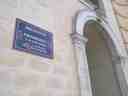
    To spot the Tommaso Stigliani Provincial Library, look for a sun-warmed stone building with a grand, arched doorway just off the street, and a glossy sign announcing its name right beside the entrance. Now, imagine standing here almost a hundred years ago-Matera was a place with very few books, hardly any libraries, and the local population struggling with high illiteracy. The legendary Italian poet Giovanni Pascoli himself, after arriving to teach Latin and Greek here in 1883, was so distraught by the lack of reading material that he sent long, exasperated letters to his old teacher Carducci, practically begging for more books. If only he could see this place now! The Tommaso Stigliani Library came to life in 1933 thanks to a certain Pasquale Dragone-a lawyer with a heart as big as his mustache and a true passion for books. At first, it wasn’t quite the magical realm of knowledge you see today. Picture a cramped ground-floor room with only two spaces and around 2,000 donated books trying desperately to stretch themselves across nearly bare shelves. Yet Dragone, who soon became the library’s first director, rolled up his sleeves and decided it was high time Matera started turning pages. In the early years, the library wasn’t exactly swarming with readers-probably because it felt more like somebody’s oversized closet than a welcoming library. Only after moving in 1937 to Via Don Minzoni did it start to bloom, becoming a proper institution where locals could finally lose themselves in stories, hunt down rare manuscripts, or just escape the daily grind for an hour or two. As word spread, the library began to hoard treasures: the unused collection from the nearby National Archaeological Museum’s library arrived, stacks from noble families like the Dragones were donated, and one of the biggest catches was the D’Errico collection-nearly 4,300 gorgeously bound volumes on everything from old legal codes to the wild stories of 19th-century Naples. Imagine how proud the staff must have been to guard such jewels! Things got a little dramatic in the 1940s, though. Wartime Italy wasn’t exactly a peaceful place for libraries. In 1944, Dragone was suspended from his job for political reasons, and a parade of temporary directors marched through the front door. Organization? Let’s just say there were probably more overdue books than days in the year. By the 1960s, the library's shelves were groaning under the weight of all those books, and the crowds of eager readers made it clear: “We need more room, please!” That chance came when the old Civil Hospital moved out, and suddenly there was a spacious new building waiting on Via San Rocco. With new reading rooms and an even better collection, the library became a beacon for students desperate to do their homework somewhere other than the kitchen table. Not only did it expand its book collection-think ancient manuscripts, rare incunabula, and even an organ and a delightful assortment of old gramophones (must have made for some unusual library music)-but it also embraced its role as Matera’s center of learning, reprinting lost works on local history, launching bulletins, you name it. Yet, in 1986, a structural mishap shut the library down, keeping bookishly inclined Materani twitchy with anticipation for years. Finally, after much debate and a proper dose of Italian drama, the current space in Palazzo dell’Annunziata opened with fanfare in 1998, attended by none other than Prime Minister Romano Prodi. Today, the library’s archive has ballooned to over a quarter of a million documents-ancient books, modern tomes, rare periodicals, and enough curious donations to satisfy even the pickiest bookworm. So as you stand outside, think of all the worn hands that opened these doors in search of wisdom, the smell of old pages inside, and the passion that turned Matera from a town without books into the proud home of one of southern Italy’s true treasures. And probably the only library where you can find a 500-year-old book and a gramophone in the same building!

    Eigene Seite öffnen →
  3. To spot the Palazzo dell’Annunziata, look for the huge, rectangular cream-colored building with tall arched windows and a grand clock perched right at the center of its roof,…Mehr lesenWeniger anzeigen

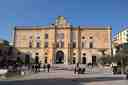
    To spot the Palazzo dell’Annunziata, look for the huge, rectangular cream-colored building with tall arched windows and a grand clock perched right at the center of its roof, dominating the piazza in front of you. Now, let me sweep you back to the bustling heart of Matera in the 18th century. Imagine dust swirling as masons and architects argued over blueprints while the glorious outline of the Palazzo dell’Annunziata began to rise from deep, stubborn foundations-so deep, in fact, that workers had to dig down nearly fifteen meters, a bit like Matera’s early answer to a basement swimming pool. The year was 1735, and an architect named Vito Valentino promised the Dominican nuns a stunning new monastery, complete with a church at its core. The Sisters were eager; time was ticking, and so was Valentino’s patience. But nothing in Matera is ever simple-halfway through the construction, the architect and the nuns’ administrator clashed with the kind of drama you’d expect from a soap opera, forcing Valentino off the project before he could finish. The poor guy likely never expected to be replaced by Mauro Manieri from Lecce, who arrived with his brothers to fix, change, and, well, basically start over. Manieri even demolished the new church that was halfway built just to create a fresh courtyards and reimagined interiors. You have to admit, this was one building that experienced an architectural identity crisis! Picture the confusion: by 1747, the nuns moved in, but the grand church was missing, leaving the building feeling a bit like a gigantic cake with the cherry forgotten on top. Yet, what did emerge was the towering, almost out-of-scale façade, so huge that locals started using it as the ultimate comparison for anything unusually big. The church itself would only appear nearly a hundred years later, courtesy of engineer Gaetano di Giorgio-finally giving the Palazzo its spiritual heart. By then, though, the nuns must have been expert movers, switching temporary lodgings more frequently than tourists searching for better Wi-Fi. Times changed. By 1861, the monastery was dissolved and suddenly, this palace of spiritual devotion swapped habits for gavels, becoming a courthouse and, on the side, a school. Fast-forward to the early 1900s: a cornice and the now-iconic clock were added to complete the monumental look you see today. Tick tock! By the late 20th century, after a harsh earthquake left the building empty and crumbling, a restoration transformed it once again-a phoenix rising from the ashes. In 1998, under the eyes of the Italian Prime Minister himself, its doors swung open as Matera’s provincial library, making it a palace not just of bricks, but of books. Even now, echoes of its history linger: the old chapel serves as a cinema, and rooms once hushed with prayer are alive with whispers of stories. So, as you stand before this mighty façade, try to imagine centuries of sisters, architects, arguments, judges, teachers, and readers, all leaving their marks inside these formidable walls-a story as grand and layered as the building itself.

    Eigene Seite öffnen →
9 weitere Stationen anzeigenWeniger Stationen anzeigenexpand_moreexpand_less
  1. To spot the Sassi of Matera, look just ahead at the dramatic hillside covered in pale stone houses and twisting paths, stacked and carved straight from the rock-a real stone…Mehr lesenWeniger anzeigen

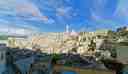
    To spot the Sassi of Matera, look just ahead at the dramatic hillside covered in pale stone houses and twisting paths, stacked and carved straight from the rock-a real stone honeycomb beneath the open sky. You’re standing in front of one of the most mind-bending cityscapes in the world, and no, you haven’t fallen into Dante’s Inferno or on the set of a Hollywood epic, though both have had their turn here. These are the Sassi of Matera: two ancient districts-Sasso Barisano and Sasso Caveoso-etched and sculpted into the side of the Murgia plateau for thousands of years. Just imagine what this place looked like long ago: the sound of daily life in rock-hewn homes, echoing through cave corridors and over rooftop gardens. History clings to every surface here, sometimes literally-just feel the coolness of the tufa stone that has sheltered people since the Paleolithic era, right up to the 1950s. These dwellings have seen it all: Neolithic villagers, medieval monks hunched over their icons, Renaissance nobles gazing from stone balconies. Some houses dive so deep into the rock it’s as if you’re stepping into another world. Back in the day, families, animals, and water cisterns all shared close quarters. I suppose you could say they took the phrase “tight-knit community” to a whole new (underground) level. Take a look: Sasso Barisano winds northwest towards Bari, famous for its carved portals and ornate stonework. Face south and you see Sasso Caveoso, its stepped arrangement of dwellings echoing the seats of an immense rocky theater, looking out over the ravine. Between them rises the Civita, crowned with the Matera Cathedral-perched up like the grand judge overseeing an ancient trial. As you wonder how these homes stayed so cool in the Italian heat, here’s the secret: the rock itself. Tufa functions like a natural air conditioner, keeping things pleasantly steady year-round. Ingenious channels and cisterns guided water down into each nook; some houses boasted up to seven water tanks. Of course, there were even hanging gardens and rooftop cemeteries. Yes, here in Matera, the dead rested above the living-a set-up that might make even the Addams Family jealous! Once, after sunset, families lit lamps outside cave doors, creating a “starry sky” below ground level. Imagine being one of those passersby, squinting at the glowing labyrinth beneath your feet. Some say Matera’s name even comes from the Greek “meteora”-a “starry heaven.” Now that’s poetic urban planning. But life here wasn’t always picture perfect. By the early 1900s, overcrowding made conditions tough. Families and livestock crammed into damp grottoes with very little fresh air or sanitation. The government finally ordered an evacuation between 1952 and 1965, moving thousands to brighter, healthier neighborhoods. It was a bittersweet moment-finally, better living, but at the cost of abandoning centuries of memory-filled caves. Yet the Sassi didn’t stay forgotten forever. In 1993, they were declared a UNESCO World Heritage Site for their unique cultural and urban legacy. Restoration began, and now you find artisan workshops, boutique hotels, and even scenes from famous films. Remember Mel Gibson’s “The Passion of the Christ?” That was right here. Matera’s stone maze has played ancient Jerusalem more times than Hollywood can count. Peek inside the next cave you pass and you might just stumble upon a house-museum, still dressed in period clothes, or a contemporary art gallery bringing new color to these old stones. The Sassi hold secrets in every shadow and step. Up ahead, maybe you’ll even spot a modern musician strumming a tune inspired by these ancient alleys. Matera is a city written in stone, but never set in stone-always changing, surprising, and utterly unique. Now, who knew a place could be both prehistoric and perfectly photogenic?

    Eigene Seite öffnen →
  2. To spot the Museum-laboratory of peasant civilization, just look for a whitewashed stone building with a rounded arch entrance and some quirky signs, right on your left as you…Mehr lesenWeniger anzeigen

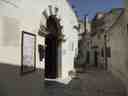
    To spot the Museum-laboratory of peasant civilization, just look for a whitewashed stone building with a rounded arch entrance and some quirky signs, right on your left as you turn into this narrow cobblestone lane. Welcome to a place where history isn’t just in dusty books - it’s under your feet, behind these walls, and sometimes hiding in a forgotten grain basket! Just picture it: we’re standing in the heart of the ancient Sassi, and this museum stretches out over 500 square meters, like a time capsule built right into a neighborhood that’s looked almost the same since the 1500s. The founder, Donato Cascione, must’ve loved his job - he created not just a museum, but something a bit like a living stage, where every room shows what peasant life really felt like. As you step in, it’s impossible not to imagine the hustle and bustle of daily life. The first space you see is a lamione, a raised stone room joined to a cave. In the past, this was the luxury upgrade of the era: the family slept up high, while their goats and cows snored below. Hey, if anyone ever tells you a studio apartment is cramped, just tell them about Matera! Most people here were farmers, but hidden among the bedrooms you’ll find old workshops where craftspeople kept the city running. There’s a blacksmith’s hammering, the gentle clatter of weaving, the whir of a potter’s wheel - it all returns if you listen closely. Cascione and his team didn’t just collect stuff; they hunted down every detail to recreate entire lives. They even consulted the elders for those juicy stories you can’t read in textbooks - like old tricks for shining shoes or building a chair sturdy enough for grandma’s cat. Each tool, basket, and pot has its own secret, and some stories even have a little drama. Did you know there’s a whole display just for brigands and childhood memories? If you ran through these alleys a century ago, you might have to dodge a shoemaker’s workbench, a giggling bunch of kids, or even a sheep or two. The museum now also runs a hands-on workshop, where kids and students try ancient crafts from painting to pottery. Imagine getting your hands covered in clay, shaping a bowl just like the people of the Sassi did centuries ago. Alongside all this, they’ve published books and guides so the stories keep going, passing from generation to generation. So take a deep breath - the air you smell is full of old flour, sawdust, and echoes of lives lived deeply, right where you’re standing. Ready to delve deeper into the structure, preparation or the tour itinerary? Join me in the chat section for an enriching discussion.

    Eigene Seite öffnen →
  3. Wow, take a look around! Right in front of you stands the grand Cathedral of Matera, officially known as the Cathedral of the Madonna della Bruna and Saint Eustachius. If you…Mehr lesenWeniger anzeigen

    Wow, take a look around! Right in front of you stands the grand Cathedral of Matera, officially known as the Cathedral of the Madonna della Bruna and Saint Eustachius. If you think it looks impressive now, imagine how people felt in the 1200s-it’s like seeing a skyscraper pop up in the middle of a medieval town! The story of this cathedral is almost as high as its bell tower, and it starts right here on the highest spur of the Civita, separating the famous Sassi below. Picture yourself stepping through time-first, you’d find a tough old Norman castle here. Dig even deeper and you’d discover traces of a much older Paleochristian place of worship. They say that building this cathedral required raising the rocky base by over six meters, just so the new church could lord it over the surrounding houses and the Sassi valleys beneath. Imagine the clanking of chisels and grumbling workers, stones being dragged up the slopes day after day. The cathedral’s construction began in 1230, thanks to the willpower (and probably stubbornness) of Emperor Frederick II, the local count and Holy Roman Emperor-because why conquer lands if you can’t also conquer the skyline? It was finished by 1270 and then dedicated, at first, to Saint Mary of Matera. But there must have been a bit of naming confusion over the years-think of it as a medieval identity crisis-because later it was called Santa Maria dell’Episcopio, then Santa Maria della Bruna, and finally it became the Cathedral of the Madonna della Bruna and Saint Eustachius. And if you’re wondering, yes, the Madonna della Bruna is one of Matera’s fiercest protectors. Over the years, the cathedral has been visited by popes, elevated to a “minor basilica,” and, like any aging beauty, has undergone extensive restorations-especially in the early 2000s, when whole medieval beams and cornices were lovingly repaired. Let’s talk about this exterior. The church was designed in the distinctive Apulian Romanesque style and-fun trivia!-the perfect westward orientation is believed to be the work of a medieval Materan astronomer, Alanus. Up above you, the 16-rayed rose window dominates, watched over by a fierce Archangel Michael squashing a dragon. There are mystical figures all over, including saints keeping a stone-cold (literally) eye on things. Central above the main door, the Madonna della Bruna gazes down protectively. Peer off to your right and you’ll find the famous “lion’s gate,” where two stone lions hunker down like feline bouncers, ready to keep out any troublemakers-except you, you’re on the guest list. There’s even Abraham, father of three religions, sculpted above another door, a nod to the diversity of faiths swirling through Matera centuries ago. And let’s not forget that four-tiered, 52-meter-high bell tower. It’s been keeping watch since the days when news travelled as fast as a fast horse. Inside, it’s a different world: a Latin cross floor plan, three naves, lots of majestic gold leaf, and ten sky-bright windows. Most people can’t handle this much sparkle before their morning coffee! The central nave is taller than the side ones, separated by arcades and ten chunky columns. Over the centuries, fancy stucco and gold details were added-because apparently, plain stone wasn’t fabulous enough. The ceiling? Covered by a wooden coffered roof painted in the 19th century, showing off colorful masterpieces. Keep your eyes peeled for a dazzling Byzantine fresco of the Madonna della Bruna dating back to 1270-that’s serious artistic vintage. There are paintings, ornate Renaissance chapels, altars dedicated to local saints, and a Nativity scene sculpted from local stone featuring Matera’s own landscapes-a Materan Christmas, every day of the year! Among dazzling altar pieces and polychrome artworks, the walnut choir carved in 1453 stands in the apse and the grand pipe organ looms, always ready to blow your hat off with music. Soak it up and imagine Matera’s cathedral alive with centuries of festivals, prayers, and a good dose of local drama-because no cathedral survives this long without a few stories up its sleeves! Shall we tiptoe to our next stop, or are you tempted to slip inside for a look?

    Eigene Seite öffnen →
  4. The Venusio family is at the heart of this tale, and boy, did they know how to make an entrance. Their origins go all the way back to Amalfi, with records showing they arrived in…Mehr lesenWeniger anzeigen

    The Venusio family is at the heart of this tale, and boy, did they know how to make an entrance. Their origins go all the way back to Amalfi, with records showing they arrived in Matera around 1455 - practically yesterday, if you’re a piece of stone in this city. Through luck, clever moves, and perhaps a bit of healthy competition, the Venusios rose to become one of Matera’s most noble families. They even snapped up the title of Marquis in 1752 after acquiring a grand feudo over in Terra di Bari. Not too shabby, right? Imagine the buzz in the 1500s when the Venusios got their hands on an old Orsini house with its juicy vegetable garden. That first plot was just the beginning. Little by little, they gobbled up neighboring land. In 1722, they started work on the massive east wing you see. Of course, no good expansion happens without a neighborly dispute - the Venusios and the Guia family next door had a friendly ‘discussion’ or two over the new construction. Attention to detail was key: the impressive main façade along Via S. Potito stretches a whopping 40 meters, and the entire palace covers 1,600 square meters - that’s a lot of room for fancy dinners and maybe the odd game of hide-and-seek. At the heart, there’s a noble courtyard, flanked by two smaller ones, and - get this - they absorbed a whole church: the Church of the Blessed Virgin of the Seven Sorrows, which became the Venusio’s private chapel. Life inside was strictly upstairs-downstairs. Picture the bustling lower floors, filled with cellars, stables, and store rooms for the servants. The family themselves floated above, literally, living in grand vaulted rooms bathed in sunlight. The palace transformed throughout the centuries - in fact, the north wing you see now wasn’t finished until the late 1700s. And talk about making room: in 1738, houses were knocked down to make way for an elegant coach entryway. The differences in architectural style between the newer north side and the older parts are like a visual time machine. By the 1960s, the palace was given a modern makeover, but not all changes were for the best - beautiful frescoes and the ornate staircase balustrade were sadly lost. For years, it stood in a lonely state of disrepair, but today, this grand old palace shines again, welcoming guests as an elegant hotel. So, while you gaze at these ancient stones, remember: you’re standing where centuries of power, ambition, and a bit of noble mischief once ruled the day. And just think, they say every stone holds a secret - maybe one will whisper to you if you listen closely!

    Eigene Seite öffnen →
  5. To spot the Palazzo del Sedile, look for an impressive, light-colored stone façade with a large arched entrance flanked by two tower-like structures-one with a clock and the other…Mehr lesenWeniger anzeigen

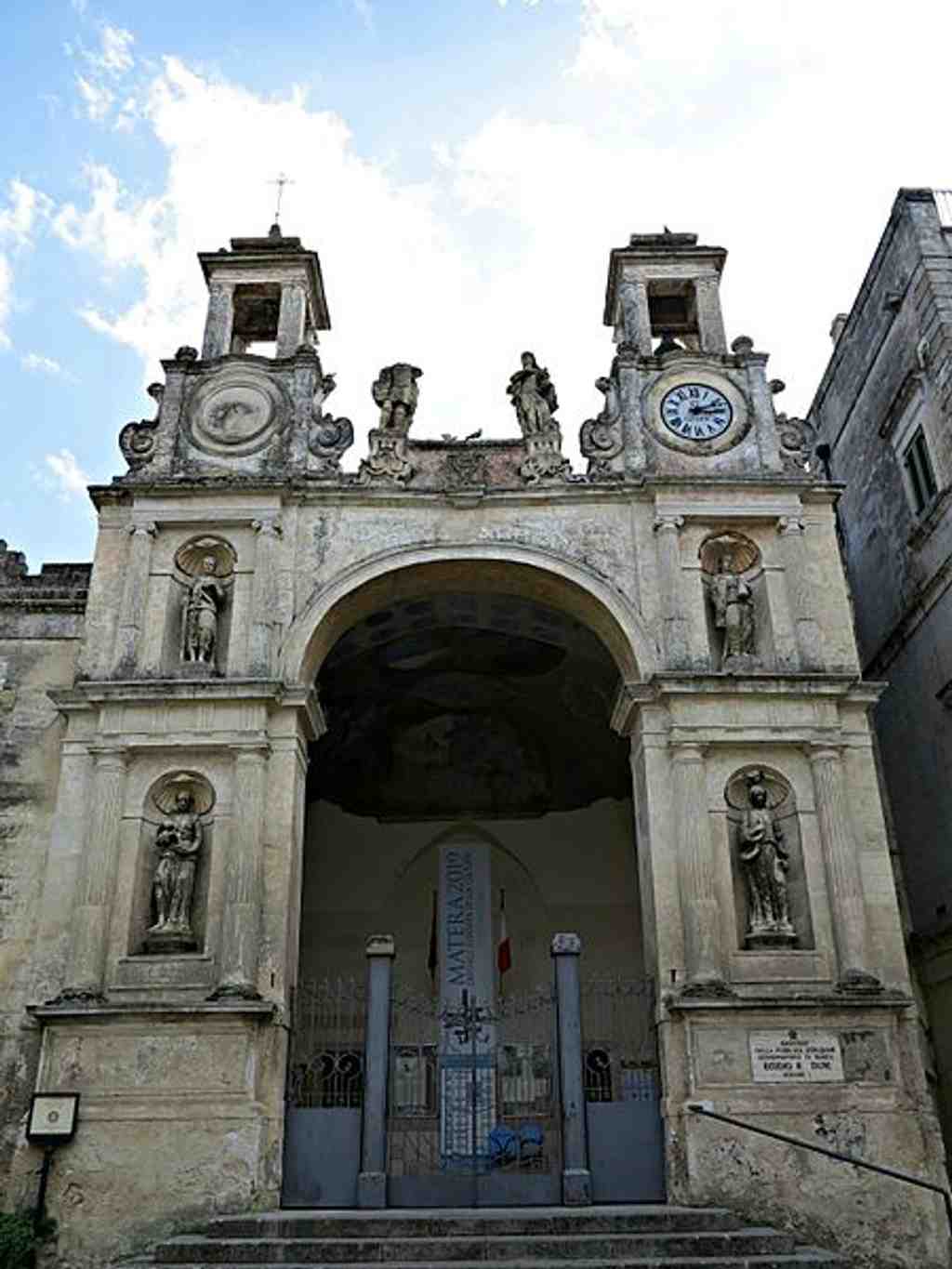
    To spot the Palazzo del Sedile, look for an impressive, light-colored stone façade with a large arched entrance flanked by two tower-like structures-one with a clock and the other with a sundial-lined with statues above and around the arch. Welcome, traveler, to the beating heart of old Matera-the Palazzo del Sedile! Imagine you’re standing where the townsfolk have gathered for centuries, beneath the gaze of stone saints and watchful statues. In the 1500s, this spot was positively buzzing with city life-discussions about bread prices, rules for selling cheese, and debates over who’d pay for fixing the town’s water all echoed through these arches. I like to imagine some ancient Materan muttering, “You think ice is expensive now? Wait ‘til you see the price of snow cones!” Before the grand palace you see now, the city council, known as the Parliament of Matera, bounced around different buildings, dragging their books and scrolls behind them. Eventually, though, they needed a proper headquarters-no more squatting in someone’s dining room. The Sedile was built at the foot of the old city walls, right between the gates of Juso and the hill of San Francesco. This became the “talking palace”-but not just because the council never stopped chattering. The façade itself is actually designed to speak to you, believe it or not! See the statues on either side? On the left stands Saint Eustace, and on the right, Saint Irene, the city’s protectors. But look closer: below their feet rest the ancient Sassi of Matera, right on the palace wall. Zoom in on the four women in the niches-they stand for the four cardinal virtues: Prudence and her snake, Fortitude snapping a column, Temperance mixing water into wine (a skill I wish my uncle at family reunions would learn), and Justice, holding scales and a sword. It’s as if the palace is whispering, “Here’s how to run a city right!” The big Renaissance arch in front of you is flanked by two towers-one with a clock that’s counted down countless meetings, and one with a sundial that’s probably confused a few visitors on cloudy days. Step inside and you’d find an archway adorned with frescoes of King Charles III on horseback, plus painted ceilings celebrating the beauties of the old Kingdom of Naples. In the 1960s, a conservatory brought music back to the Sedile-its new concert hall filling Piazza del Sedile with melodies instead of council squabbles. These days, whether you’re here for politics or a piano recital, this palace still makes history sing.

    Eigene Seite öffnen →
  6. To spot the Palazzo Bernardini, look for the grand, light-colored palace with arched windows and a stately elegance perched high up in the sea of stone buildings dominating the…Mehr lesenWeniger anzeigen

    To spot the Palazzo Bernardini, look for the grand, light-colored palace with arched windows and a stately elegance perched high up in the sea of stone buildings dominating the skyline above Sasso Caveoso-it's one of the most distinguished, regal structures you’ll see. Now, let’s take you on a little journey through time right here in front of Palazzo Bernardini. Imagine the comings and goings of aristocrats, whispers of secret inheritances, and a few golden ducats shuffled under candlelight. This isn’t just any stately home-this palace has been the beating heart of Matera’s noble life for centuries, known not only as Palazzo Bernardini, but with a parade of names to match its colorful past: Palazzo Ferraù, or even Giudicepietro depending on which family crest was hanging at the door. Originally, this grand building belonged to the Ulmo family, but fate, love, and a strong dowry intervened. Beatrice Ulmo, clever as ever, brought it into the hands of Giambattista Ferraù. Thanks to a distant uncle with a suspiciously deep wallet-don Antonio Tarsia-Ferraù and his wife inherited a fortune of eighty thousand ducats, helping to raise their status to one of Matera’s nine most powerful families in 1592. And as with all good families, there was intrigue: entries and exits switched locations depending on taste or perhaps a little gossip, especially after the local government set up house next door in 1759. When it came to impressing his wife, Giambattista’s son, Giuseppe, didn’t just buy flowers-he decked out entire rooms in luscious white and gold stucco, with mythological scenes painted above the doors. The palace became a stage for opulence and drama, especially in 1806 when King Joseph Bonaparte himself came to town. What better excuse for a royal ball? The entrance was moved to the grand piazza, the music echoed from high-ceilinged rooms adorned with Murano glass chandeliers and delicate mirrors, and the family’s best damask chairs were put to the test by Matera’s dancing nobles. Art lovers, listen up: inside those walls, mythological figures parade through paintings, and even today you’ll find echoes of ancient Rome, with color palettes inspired by the archaeological wonders of Pompeii and Herculaneum. The palace changed hands-eventually landing with the Bernardini family after more than a few passionate marriages and strategic sales-and today, it’s still a treasure chest of Matera’s golden age. If these stones could talk, they’d certainly have a few spicy stories to share about love, power, and a party or two that lasted until sunrise. Shall we move on, or do you need a moment to recover from all that imagined dancing?

    Eigene Seite öffnen →
  7. The Domenico Ridola National Archaeological Museum stands before you with its impressive stone facade, twisted columns, and a statue above the dark wooden entrance-just look for…Mehr lesenWeniger anzeigen

    The Domenico Ridola National Archaeological Museum stands before you with its impressive stone facade, twisted columns, and a statue above the dark wooden entrance-just look for that elegant doorway wrapped by spiral-carved pillars. Now, imagine you’re standing at the doorstep of centuries of mystery and discovery. Behind these solid doors, history isn’t just hiding in the shadows-it’s on glorious display, thanks to Domenico Ridola, a local doctor with a serious archaeology obsession. This place was once a convent dedicated to Santa Chiara, but in 1911, it transformed into Basilicata’s oldest museum, all because Ridola donated his personal treasure trove of ancient artifacts to the state. I bet Luca, the security guard, still hopes each visitor is the reincarnation of Ridola himself-always on the lookout for another lost coin or prehistoric spearhead. The museum holds five main rooms crammed with objects found right here in Matera’s hills and valleys. The first room alone could make Indiana Jones jealous: think stone-tipped arrows, javelins, and axes, many from mysterious caves like the Grotta dei Pipistrelli-or as I call it, “Bat Cave,” minus the caped crusader. Here’s a surprise: in the Neolithic era, people were finally settling down, trading in wandering for agriculture, and making quirky ceramics with brown paint and crazy geometric patterns. Picture it-pots covered in zigzags and triangles, fresh from lively Stone Age pottery parties. But wait, the plot thickens. The next rooms tell stories from the valleys of the Basento and Bradano rivers, spotlighting items from ancient villages like Pisticci and Montescaglioso. You’ll catch sight of mysterious Roman necropolis finds, warrior tombs from the Iron Age, and red-figured vases painted by the “Painter of Pisticci”-who was probably much less grumpy than his nickname suggests. There are prized funeral treasures, glittering coins, and even delicate bronze statues that have stubbornly survived since the 4th century BC. One particularly powerful room is devoted to finds from Matera itself. Here, you’ll sense ancient lives captured in burial goods, Roman bronzes, and-if you peer closely enough-perhaps even a tiny Hercules with his club at the ready. Nearby, treasures from Timmari flash with the armor of forgotten warriors, and enormous red vases demand attention like the divas of ancient dinner parties. Finally, there’s the Ridola Room: imagine old letters, yellowed manuscripts, and mementos from Ridola’s lifelong hunt for secrets buried in Matera’s soil. After Ridola died in 1932, other heroes like Eleonora Bracco picked up the torch, ensuring the quest for ancient truths never faded. All these memories, mysteries, and marvels-right here, in the heart of Matera.

    Eigene Seite öffnen →
  8. Right in front of you stands a grand, stone building with a tall, symmetrical facade, crowned by a dramatic central clock above a row of statues set into deep niches-if you spot a…Mehr lesenWeniger anzeigen

    Right in front of you stands a grand, stone building with a tall, symmetrical facade, crowned by a dramatic central clock above a row of statues set into deep niches-if you spot a banner and a clock tower over the main entrance, you’ve found Palazzo Lanfranchi. All right, get ready for a tale where monks, architects, students, and even a mysterious medieval graveyard all cross paths right here! Built between 1668 and 1672, Palazzo Lanfranchi was dreamed up by Brother Francesco da Copertino at the request of Archbishop Vincenzo Lanfranchi, who wanted a place to host the diocese’s seminar. Not a bad spot for a campus, but let’s just say the real estate market in 17th-century Matera had its quirks! The bishop hoped to build in the Civita, but it was as crowded as a pizza place at noon, so he settled for this spot on the tufa plateau. He even had to buy extra land from the Convent of Carmine, which now sleeps quietly within these walls. As you stand here, notice how the asymmetric facade draws your eyes up and across-a masterstroke of design. The lower level features five big niches, each with a statue of the Madonna del Carmine and some very serious-looking saints. And there’s that big rose window, blending spiritual symbolism with early baroque flair. The upper story keeps things lively, with tall vertical pilasters, nine arches (most of them blind, so don’t peek too hard), and a proud pediment topped with a clock. Time marches on, and Palazzo Lanfranchi keeps perfect score-even if you’re a few minutes late for this tour! Right out front, you can’t miss “La Goccia,” a modern sculpture by Kengiro Azuma. It’s like the universe wanted to drop a giant raindrop just for your visit. Now, picture this: after Italy’s unification in the 19th century, Palazzo Lanfranchi traded monks for students-it became home to the Emanuele Duni high school. Yes, real stories unfolded in these halls, including lessons taught by the poet Pascoli, who most certainly gave out some epic homework right where you now stand. If these students ever heard there was a barbarian cemetery discovered beneath the building, well, I bet test day suddenly seemed a little less scary. Over time, the Palazzo had its fair share of renovations and expansions-rooms were added, floors raised, tunnels discovered. Today, the building is home to the National Museum of Medieval and Modern Art of Basilicata. Inside, the art collection sparkles with sacred works, a private painting gallery once owned by Camillo D’Errico, and modern masterpieces from the likes of Carlo Levi. There are even areas set aside for digital exploration, from multimedia shows in the library to science and photography archives. Fancy a room with a view? The Salone delle Arcate up top-with its grand archways and daylight spilling in-is perfect for displaying everything from ancient inscriptions to modern art installations. This grand old palace is more than just a pretty facade-it's a lively link between Matera's modern city and its ancient Sassi, a bridge between old-school tradition and new creative energy. And all with a bit of mystery, a dash of school spirit, and maybe even the occasional friendly ghost from that underground cemetery.

    Eigene Seite öffnen →
  9. Directly ahead, rising from the very heart of the stone city on top of a rugged rocky outcrop, you'll spot the Church of Santa Maria di Idris - just look for the ancient, little…Mehr lesenWeniger anzeigen

    Directly ahead, rising from the very heart of the stone city on top of a rugged rocky outcrop, you'll spot the Church of Santa Maria di Idris - just look for the ancient, little church clinging dramatically to that giant limestone cliff, crowned with a cross and peering over the maze of the Sassi. Now, let your imagination climb those steep stone stairs alongside you as you approach this incredible church, chiselled straight from living rock. The Church of Santa Maria di Idris isn’t just perched atop Monterrone as if it’s supervising Matera; it’s actually carved from this giant hunk of limestone, right in the middle of Sasso Caveoso. Locals call her “Madonna de Idris,” and there’s a splash of mystery even in her name: maybe it’s from the Greek “Odigitria,” meaning “she who shows the way,” or maybe after the precious waters that once trickled from this rock - whichever story you pick, she’s quite literally pointing the way over centuries. Step closer and you might expect echoes of monks from the Middle Ages to greet you inside. The church’s outer wall and the petite bell tower appear modest, but duck your head inside and you’ll feel the hush of history pressing in - an odd, irregular nave, where centuries of builders left their marks and thieves time snatched many of the original frescoes away for safekeeping. In the dim light, you’ll spot a Madonna with Child from the 1600s, a humble Crucifixion, and patron saint Eustachio eternally protecting Matera. But wait, behind a secretive tunnel, the crypt of San Giovanni in Monterrone hides more surprises: Byzantine icons, a stern Christ Pantocrator, and mysterious saints emerging from the gloom, some so ancient their names are lost to the stones. Every wall here whispers stories from the 12th to the 17th centuries, with sacred art tucked in every nook. So, as you stand below, take a breath - you’re surrounded by faith and folklore layered thicker than these mighty rocks!

    Eigene Seite öffnen →

Häufig gestellte Fragen

Wie starte ich die Tour?

Laden Sie nach dem Kauf die AudaTours-App herunter und geben Sie Ihren Einlösecode ein. Die Tour ist sofort startbereit – tippen Sie einfach auf „Play“ und folgen Sie der GPS-geführten Route.

Benötige ich während der Tour Internet?

Nein! Laden Sie die Tour vor dem Start herunter und genießen Sie sie vollständig offline. Nur die Chat-Funktion benötigt Internet. Wir empfehlen den Download über WLAN, um mobiles Datenvolumen zu sparen.

Handelt es sich um eine geführte Gruppentour?

Nein – dies ist ein selbstgeführter Audioguide. Sie erkunden unabhängig in Ihrem eigenen Tempo, wobei die Audioerzählung über Ihr Telefon abgespielt wird. Kein Reiseleiter, keine Gruppe, kein Zeitplan.

Wie lange dauert die Tour?

Die meisten Touren dauern 60–90 Minuten, aber Sie kontrollieren das Tempo vollständig. Pausieren Sie, überspringen Sie Stopps oder machen Sie Pausen, wann immer Sie wollen.

Was, wenn ich die Tour heute nicht beenden kann?

Kein Problem! Touren haben lebenslangen Zugriff. Pausieren Sie und setzen Sie sie fort, wann immer Sie möchten – morgen, nächste Woche oder nächstes Jahr. Ihr Fortschritt wird gespeichert.

Welche Sprachen sind verfügbar?

Alle Touren sind in über 50 Sprachen verfügbar. Wählen Sie Ihre bevorzugte Sprache beim Einlösen Ihres Codes. Hinweis: Die Sprache kann nach der Tour-Generierung nicht mehr geändert werden.

Wo greife ich nach dem Kauf auf die Tour zu?

Laden Sie die kostenlose AudaTours-App aus dem App Store oder von Google Play herunter. Geben Sie Ihren Einlösecode (per E-Mail gesendet) ein, und die Tour erscheint in Ihrer Bibliothek, bereit zum Download und Start.

verified_user
Zufriedenheit garantiert

Wenn Ihnen die Tour nicht gefällt, erstatten wir Ihnen den Kaufpreis. Kontaktieren Sie uns unter [email protected]

Sicher bezahlen mit

Apple PayGoogle PayVisaMastercardPayPal

AudaTours: Audioguides

Unterhaltsame, budgetfreundliche, selbstgeführte Stadtrundgänge

App ausprobieren arrow_forward

Beliebt bei Reisenden weltweit

format_quote Diese Tour war eine großartige Möglichkeit, die Stadt zu sehen. Die Geschichten waren interessant, ohne zu konstruiert zu wirken, und ich liebte es, in meinem eigenen Tempo erkunden zu können.
Jess
Jess
starstarstarstarstar
Tbilisi-Tour arrow_forward
format_quote Das war eine solide Art, Brighton kennenzulernen, ohne sich wie ein Tourist zu fühlen. Die Erzählung hatte Tiefe und Kontext, übertrieb es aber nicht.
Christoph
Christoph
starstarstarstarstar
Brighton-Tour arrow_forward
format_quote Habe diese Tour mit einem Croissant in der einen Hand und null Erwartungen gestartet. Die App schwingt einfach mit einem mit, kein Druck, nur man selbst, Kopfhörer und ein paar coole Geschichten.
John
John
starstarstarstarstar
Marseille-Tour arrow_forward

Unbegrenzte Audioguides

Schalten Sie Zugriff auf JEDE Tour weltweit frei

0 Touren·0 Städte·0 Länder
all_inclusive Unlimited erkunden