AudaTours logoAudaTours

Lecce Audio Tour: Barocke Echos und antike Wunder

Audioguide13 Stopps

Sonnenlicht prallt von Lecces goldenem Stein ab, doch hinter jeder verzierten Fassade verbirgt sich ein Geheimnis, das ans Licht drängt. Auf dieser selbstgeführten Audiotour offenbaren sich die verworrene Vergangenheit und die lebendige Seele der Stadt, während Sie durch Gassen und Plätze schlendern, die die meisten Touristen übersehen. Welche Universitätsaula hallte einst von rebellischen Studentenprotesten wider, die Salentos Traditionen bis ins Mark erschütterten? Warum unternahmen die mächtigen Führer der Erzdiözese Lecce außergewöhnliche Anstrengungen, um eine jahrhundertealte Täuschung zu verbergen? Und welche seltsame Rivalität verwandelte eine einfache Straßenecke in eine Bühne für einen wissenschaftlichen Skandal? Bewegen Sie sich durch Lecce auf Pfaden, wo Laternenlicht-Schatten einst Verschwörer und Visionäre gleichermaßen verbargen. Jede Biegung lädt zu einer neuen Entdeckung und einer neuen Perspektive ein, sodass Sie diese geschichtsträchtige Stadt mit ungetrübten Augen sehen können. Der Tag gehört Ihnen – tauchen Sie ein in die Geschichten, die in Lecces Stein gemeißelt sind, bevor sie verblassen. Beginnen Sie Ihre Reise jetzt.

Tourvorschau

map

Über diese Tour

  • schedule
    Dauer 40–60 minsEigenes Tempo
  • straighten
    3.5 km FußwegDem geführten Pfad folgen
  • location_on
    StandortLecce, Italien
  • wifi_off
    Funktioniert offlineEinmal herunterladen, überall nutzen
  • all_inclusive
    Lebenslanger ZugriffJederzeit wiederholen, für immer
  • location_on
    Startet bei Kirche des Karmel

Stopps auf dieser Tour
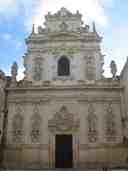
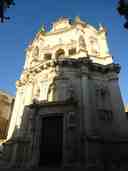
  1. To spot the Church of the Carmine, just look for a grand, creamy stone façade bursting with intricate baroque decorations and rows of statues standing watch in elegant niches…Mehr lesenWeniger anzeigen

    To spot the Church of the Carmine, just look for a grand, creamy stone façade bursting with intricate baroque decorations and rows of statues standing watch in elegant niches above and around a large central doorway. Now, let your imagination wind back through the streets of Lecce to the late 1400s-picture humble Carmelite monks making their way toward the city, trailing the dust of centuries and hope in their hearts. They settled first outside the city walls, near Porta San Biagio, in a church that seemed perfectly peaceful. But all was not quiet in Lecce-no, not at all. In 1546, the earth itself grumbled and shook beneath their feet. As mortar crumbled and stones crashed to the ground outside the walls, the monks decided it was time for a move. They relocated within Lecce’s walls, to a place they would soon dedicate to the Madonna del Carmelo. That old site, however, wasn’t quite grand enough for their ambitions. With a bit of monkish determination and, perhaps, a little divine inspiration, they dreamed up something truly magnificent. Enter Giuseppe Cino, a local architect with flair - and, apparently, a love for curly baroque details. The first stone was laid on July 15, 1711. Cino worked passionately, carving and designing until his death in 1722, but the story didn’t end there. Mauro Manieri picked up the mantle, ensuring the church you see in front of you was finally completed in 1737. Take a closer look at the façade-three distinct levels stacked one atop the other, a sort of baroque layer cake topped with a frosting of statuary and flowery ornaments. The lowest level is guarded by four impressive statues-in one niche stands Saint Angelo from Jerusalem, in another Saint Albert, and with them the prophets Elijah and Elisha. Each seems to silently swap secrets with the passersby. Above, you’ll spot Santa Teresa of Avila and Maria Maddalena de’ Pazzi, expressions serene as they keep vigil beside the large central window. But don’t just marvel at the outside-imagine the inside: a unique structure modeled after the shape of a human foot, echoing biblical tales and a reminder, perhaps, to walk a little slower and soak in each wonder. The church opens up into an elliptical nave, lined with baroque chapels gleaming with altars, some dedicated to prophets, others to saints and the sorrowful Madonna. Overhead, a domed roof shimmers with tiles colored green and white, and high above the altar, the ceiling holds a wooden masterpiece-Paolo Finoglio’s painting, where the Virgin Mary herself offers the scapular to St. Simon Stock. Hidden inside are treasures of paint and stone-an altarpiece here, statues there, and a wooden crucifix that’s witnessed nearly three centuries of whispered prayers. With every prayer and echo, the Carmine became a haven of faith and a dazzling example of Lecce’s baroque heart. So as you stand beneath these statues and stone garlands, imagine the lives that passed through-monks, architects, artisans, restless citizens-each leaving a mark in this labyrinth of beauty. And remember, next time you stub your toe, blame the monks-they made sure this church is shaped like a foot!

    Eigene Seite öffnen →
  2. Straight ahead, you’ll see a spectacular façade exploding with creamy-white carvings! Look for a grand church front decorated with swirling columns, playful statues, and a huge…Mehr lesenWeniger anzeigen

    Straight ahead, you’ll see a spectacular façade exploding with creamy-white carvings! Look for a grand church front decorated with swirling columns, playful statues, and a huge rose window set perfectly in the center-its dramatic details gleam beautifully against the sunny sky. Welcome, traveler, to Lecce-the dazzling heart of Italy’s heel. Close your eyes for a moment and imagine the city waking up in the golden southern light. The air shimmers with warmth, the nearby cafés clink with coffee cups and laughter, and everywhere, the creamy Lecce stone buildings seem to glow with the memories of two thousand years of bustling history. People call Lecce “The Florence of the South,” and you can see why: look at all that ornate Baroque stonework! It’s almost as if a pastry chef designed the city by decorating every building like a wedding cake. But don’t be fooled-this delicate stone is the mighty “Lecce stone,” so soft and workable the local sculptors could make magic from it, turning even the wildest architectural dreams into reality. But Lecce’s story started long before the carvings and columns. Picture, if you will, ancient legends swirling in the morning mist. The city sprang from a mysterious seed-possibly Sybar, said to be founded by the Messapii during the Trojan War. Then, cue the dramatic entrance of the mighty Romans! By the third century BC, they conquered this ancient land and gave it a new name: Lupiae. Maybe the people of Lupiae didn’t love the name, so under Emperor Hadrian, they moved the whole city a couple of miles to the northeast-a bold urban update, Roman-style! Can you imagine Rome issuing a notice: “Please pack up and move three kilometers this weekend”? That’s next-level city planning. Walking these streets, you can almost hear the thundering crowds of the ancient theater and amphitheater, their excitement echoing through the stones. If you listen closely, maybe you’ll catch the faint cheers from two thousand years ago. These were not quiet centuries for Lecce. After the Western Roman Empire went down in a blaze of glory, the Ostrogoth king Totila swept through during the Gothic Wars, sacking the city. But Lecce has always had a habit of bouncing back-like a stubborn cat, you just can’t keep it down for long! Back under Eastern Roman (Byzantine) control, Lecce endured Saracen raiders and the Lombards, all jostling for a piece of this sunny, olive-tree-scented pie. Things got lively again with the Normans-yes, the “here-we-come” Normans, who conquered everything from England to Sicily. Lecce’s own Tancred was even the last Norman king of Sicily. By the time the Hohenstaufens, Angevins, and later rulers came around, Lecce had become a bustling, important city in the Kingdom of Sicily-one of the largest fiefs, no less! Flash-forward to the 16th and 17th centuries, and the city exploded into the brilliant Baroque you see today. Lecce flourished with fresh energy, dressing itself up in ornate churches and palaces to put everyone else to shame. Some say the townspeople built so many extravagant buildings, the city practically challenged Florence to an “art-off.” But there were tough times too: a deadly plague struck in 1656, claiming a thousand lives. Yet the people endured, holding onto faith, beauty, and a strong sense of “la dolce vita.” And the drama didn’t end there! Fast forward to World War II, and imagine the whirr of fighter planes over these cobbled streets. Italian pilots stationed in Lecce tried to help their friends in the Aegean Sea, but arrived too late-just one more chapter of Lecce’s long, unpredictable saga. Later, American bombers roared from nearby airfields, thundering across Europe, the fate of nations hanging in the balance. But Lecce isn’t just about the past. Today, it hums with students from the University of Salento, spirals with the aroma of rich olive oil, and clinks glasses filled with the region’s celebrated wine. The city exports everything from ceramics to its famous soft stone, and its football team brings locals together with roaring cheers and the clash of cleats. So, take a moment here in front of this ornate marvel, and let yourself feel the layers of Lecce: ancient roots, Roman pride, Baroque splendor, and modern Mediterranean joy-all woven together like tangled vines of wisteria on a sunlit wall. If these stones could talk, oh, the stories they’d tell. Ready to see more? Let’s keep the adventure rolling! Eager to learn more about the demographics, geography or the twin towns - sister cities? Simply drop your inquiries in the chat section and I'll provide the details you need.

    Eigene Seite öffnen →
  3. The story of Salento has more twists than a village alley during a festival. In ancient times, this land was called everything from Messapia to Iapygia, Salentina, or even…Mehr lesenWeniger anzeigen

    The story of Salento has more twists than a village alley during a festival. In ancient times, this land was called everything from Messapia to Iapygia, Salentina, or even Calabria, depending on who was invading or writing about it that year. The Greeks arrived first, giving the culture a good shake, teaching new words, and possibly new dance moves. Then the Byzantines showed up in the Middle Ages with their own flair, making the Salento more of a cultural cocktail than a neat shot. Throughout history, this region was part of the immense “Terra d’Otranto,” a county so old and so large that people still debate where Salento really begins and ends. Imagine a group of historians arguing in a sunny piazza, tossing dialects around like fresh friselle bread-you’d get the idea. Until the 1900s, Lecce was the proud capital, before two new provinces-Taranto and Brindisi-split off, just like a family argument at Sunday lunch. Now, as the sun lights up these streets, you’re surrounded by endless olive groves-gnarled trees that look like they’ve seen too much, and probably have. The land here is mostly flat, with only gentle hills in the north and south. The soil is red, rich in iron, turning fiery at sunset, and dotted with prickly pear cactus, almond trees, and wildflowers that burst into colors every spring. Even the houses glimmer with white lime, their walls dazzling in the sunlight (better bring sunglasses unless you want to see spots). You’ll stumble upon trulli or pajare-ancient stone huts used by farmers-standing guard over the fields. These aren’t just pretty; they’re like rural superheroes, protecting tools and farmers alike from rain or curious goats. In the countryside, the silence is broken only by birds: elegant herons, proud kestrels, and yes, every so often the mysterious cry of the hoopoe. If you’re extremely lucky (or unlucky, depending on how much of a wildlife fan you are), you might spot a fox darting between dry stone walls or, in very recent times, a wolf returning to these lands. Talk about a “who’s who” of Mediterranean fauna! Salento isn’t just about nature, though-culture here is as lively as the pizzica pizzica, the region’s very own dance. Once believed to cure women from a spider’s bite with wild music and feverish dancing, pizzica pizzica now brings entire towns together for vibrant festivals. And let’s not forget the food! You haven’t really visited unless you’ve tasted pezzetti (spicy horse stew), or a fresh puccia, or the creamy, dreamy pasticciotto leccese pastry. If you hear someone crunching loudly, don’t worry, they’re probably just enjoying their friseddhe-hard barley bread made for soaking in olive oil and tomato. But what truly sets Salento apart is its language. The local dialect is so musical and unique, some have mistaken Salento natives for Sicilians! The difference? Well, the “v” often disappears, and words find endings even if they don’t need them. In some villages, Greek is still spoken, a wild echo from 1,000 years ago, thanks to the Grecìa Salentina community. And just a stone’s throw away, you’ll find the traditions and tongue of the Arbëreshë people, descendants of Albanian refugees who fled centuries ago and never stopped celebrating their roots. As you walk these streets lined with baroque palaces and fortified farmhouses, you’re witnessing architecture born from centuries of collaboration and contest. Houses crowd together in tight clusters, their courtyards-called “corte”-bustling with laughter, washing, and gossip. Peek through the alleyways and you might stumble into one: a hidden world behind grand stone doors, where families share stories and snacks under a sky just as blue as the Ionian. And when night comes and the music resonates through the squares, imagine the ancient Messapi, Romans, Greeks, and swashbuckling pirates who have all left their mark on the Salento. Each step you take here is a dance through layers of history, flavor, and tradition-so keep your eyes open and maybe, just maybe, join in for a spin of pizzica. After all, it’s the only way to keep up with this land’s heartbeat! Exploring the realm of the toponym, geography or the climate? Feel free to consult the chat section for additional information.

    Eigene Seite öffnen →
10 weitere Stationen anzeigenWeniger Stationen anzeigenexpand_moreexpand_less
  1. To spot the Church of San Matteo, look ahead for a striking baroque façade with dramatic curves-convex on the lower level and concave above-framed by tall columns and intricate…Mehr lesenWeniger anzeigen

    To spot the Church of San Matteo, look ahead for a striking baroque façade with dramatic curves-convex on the lower level and concave above-framed by tall columns and intricate decorations, standing proudly on Via dei Perroni. Welcome to the Church of San Matteo! Imagine you’ve stepped back to the 17th century, when this street thrummed with the activity of stone carvers and masons. The foundation stone was laid in 1667 by Bishop Luigi Pappacoda, and if you listen closely, you can almost hear the echo of hammers meeting stone as the younger Achille Larducci-whose uncle happened to be the legendary Francesco Borromini-brought this building’s bold design to life. This church stands where an ancient 15th-century chapel once stood, surrounded by the quiet prayers of Franciscan nuns from the adjoining convent. But San Matteo is no ordinary church! Its playful façade looks like it’s been wrapped in a baroque ribbon, its lower half puffing out with scale-like decoration, columns perched on high pedestals, and a magnificently carved portal guarded by the proud crest of the Franciscan Order. If you look up, you’ll see two lavishly decorated niches framing the entrance and, above them, curving lines that would make any wave jealous. The top is crowned with a flourish, reminiscent of Borromini’s style from Rome-because every church needs a touch of Roman glamour, don’t you agree? Step inside and you’re greeted by an airy single nave, laid out in a rare elliptical plan. Imagine sunlight streaming in through ten windows above the chapels-back in the day, the cloistered nuns could secretly peek down from these high vantage points to watch services below. Around you, twelve solemn stone apostles stand watch, the handiwork of Placido Buffelli in 1692, adding a touch of drama to the sanctuary. As you wander, keep an eye out for a colorful collection of altars: there’s Sant’Agata’s story painted in vivid strokes, Saint Francis of Assisi in quiet prayer, a Pietà statue that actually traveled here all the way from Venice. The high altar at the end of the nave is a riot of ornamentation-its saints and angels keeping San Matteo himself snugly in his niche. And don’t miss the lovely wooden pulpit, flanked by four allegorical statues. Even the organ door above the entrance sparkles-it was once part of the grand Basilica di Santa Croce! This church has changed hats over the centuries: from its first opening in 1700, to becoming the parish of Santa Maria della Luce after the suppression of the Franciscan convent in 1810. Through wars and change, San Matteo’s laughter, prayers, and stories are still tucked into every curve and corner. And as you stand here, maybe you can feel the centuries-long conversation that never really ended.

    Eigene Seite öffnen →
  2. To spot the Church of the Trinity of the Pilgrims, look for a small, simple stone building with a squared-off front, a triangular pediment above the main door, and two vertical…Mehr lesenWeniger anzeigen

    To spot the Church of the Trinity of the Pilgrims, look for a small, simple stone building with a squared-off front, a triangular pediment above the main door, and two vertical stone strips topped with decorative capitals framing the entrance. Now, as you stand right outside this humble gem, let’s step into a place where the clock seems to tick in reverse. Picture Lecce at the end of the 1500s-dust swirling through narrow stone streets, and weary travelers arriving at the Ospedale dei Pellegrini, hoping for rest and a bit of kindness. Built in 1589 because a generous man named Achille Marescallo wanted to help those on pilgrimages, this spot quickly became a center of compassion thanks to the Brotherhood of the Holy Trinity of the Pilgrims. Imagine monks in simple robes bustling inside, offering aid and comfort against the backdrop of stone walls and candlelight, their footsteps echoing in the single, long nave. But the story doesn’t stop with travelers and charity. As the centuries rolled on, the hospital’s job faded away. By the time the 1800s rolled in, the hospital had closed-no more bandages or soup, and the building began its next act as a regular city palace. The brotherhood passed the torch to another group, the Confraternity of the Name of God, and the nickname “del Bambino” was born. Why? Look up, and you might spot a little crowned baby Jesus perched above the old prior’s staff, like a divine game of hide-and-seek. Step inside and you'll see how compact and tidy the church feels-three bays split by flat columns, the sunlight sneaking through a simple rectangular window. The hospital upstairs even had a loft so someone could peer down at the service below, perhaps tossing in a prayer (or a yawn, let’s be honest). Today, though much of the original decoration is gone, the gorgeous late Baroque altars carved from Lecce’s famous pale stone still remain, standing quietly on either side, waiting for stories of their own. Nowadays, it’s called the Church of San Nicola, and serves Lecce’s Orthodox community, keeping the spirit of welcome alive. If these walls could talk, they’d tell tales of tired pilgrims, dedicated caretakers, and centuries of transformation-living proof that even the most modest façades hide layers of mystery and heart. And hey, if a little crowned baby Jesus could pop up here, who knows what else you might spot in Lecce? Keep your eyes-and your curiosity-wide open!

    Eigene Seite öffnen →
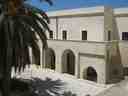
  3. To spot the Castle of Lecce, look just past the sweeping branches of the palm tree in front of you: you’ll see a massive pale limestone building with thick walls and high,…Mehr lesenWeniger anzeigen

    To spot the Castle of Lecce, look just past the sweeping branches of the palm tree in front of you: you’ll see a massive pale limestone building with thick walls and high, squared-off corners, its arched entryways set deep into solid stone. Standing before the mighty Castle of Lecce, let’s imagine you’re right where countless guards once stood, eyes darting from the city wall to the sea, ready for anything-or at least a good story. The castle is perched just east of the city center, near the lively Piazza Sant’Oronzo. Over almost five hundred years, its pale stone has witnessed everything from royal drama and pirate threats, to-would you believe it-a white bear living in the moat. But let me start at the beginning. It all began with Emperor Charles V of Habsburg, who in 1539 took one look at the outdated medieval fortress and basically said, “We can do better.” So, the emperor ordered it torn down and replaced with a state-of-the-art fortress, designed to resist the cannons and cunning of the age. The esteemed military engineer Gian Giacomo dell’Acaya was called in, and between 1539 and 1549, he created the quadrangular marvel before you-complete with mighty bastions at every corner, like the Bastion of Santa Croce and Bastion of Saint Martin. As you walk around the exterior, picture the sounds of masons with their chisels as new walls rose, ready to guard Lecce from attacks coming off the nearby Adriatic coast. The fortress’s job was to keep pirates and invaders at bay, which, let’s be honest, beats handling local parking tickets. But what about those secret entryways? In its time, at least three gates opened into this stronghold: the stately “Porta Reale” for ceremonies, the “Porta ferrata” facing the city, and the mysterious “Porta falsa”-the so-called “fake gate”-near the main tower. Overhead, the imperial Habsburg coat of arms showed any visitor just who was boss here. To make space, entire buildings like the old Celestine Convent and Santa Croce Church had to be demolished-though their memory still lingers, if you know where to look. The imposing keep at the northeast, the Magistra Tower to the left, and the “truncated tower” at the southwest all give hints of earlier centuries. And rumors persist that in the 1300s, the noble Orsini Del Balzo family kept a white bear in the moat-not just to impress their friends, but as an early burglar alarm. The moat was eventually filled in, and the old drawbridges-for both gates-were removed in 1872, though you can still spot some marks where they once rested. Can you imagine the screech as the gate closed up tight, with cannons at the ready in the bastions overhead? But don’t think this fortress was all doom and artillery. In the 1700s, one grand hall was even used as a theater, where the sounds of applause replaced battle cries. By the 19th and 20th centuries, the castle served as a barracks for the military, then gradually transformed. Since 1983, it’s belonged to the people of Lecce, serving as the city’s cultural headquarters. If you listen closely, you might hear the faint voices of actors, soldiers, and even the occasional bear, echoing through centuries of stone-a fortress full of stories, standing proud beneath the southern sun.

    Eigene Seite öffnen →
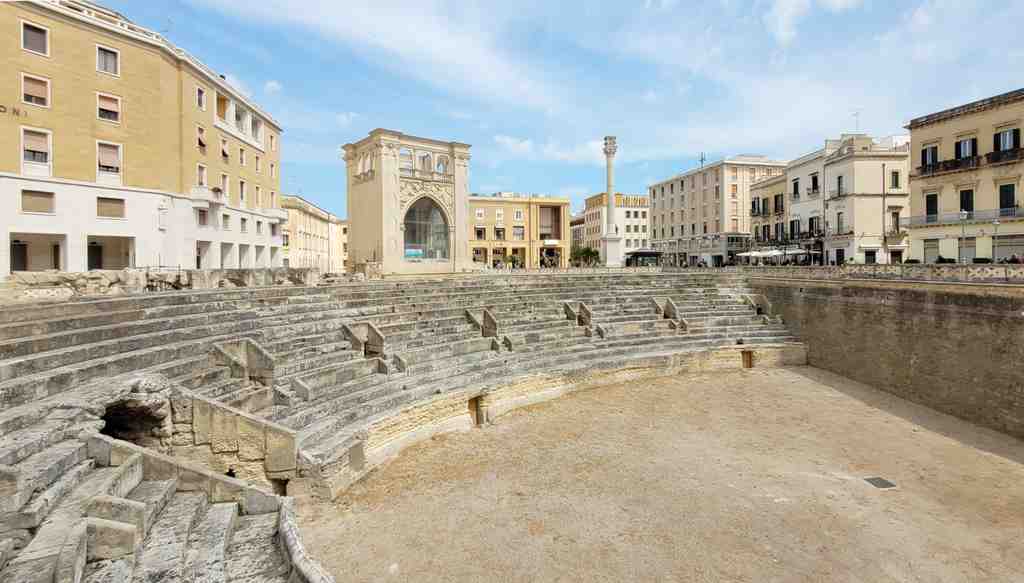
  4. Look to your left in Piazza Sant'Oronzo: you’ll see a grand, half-buried oval of ancient stone steps and arches peeking out from the bustling modern city-this is the Roman…Mehr lesenWeniger anzeigen

    Look to your left in Piazza Sant'Oronzo: you’ll see a grand, half-buried oval of ancient stone steps and arches peeking out from the bustling modern city-this is the Roman Amphitheatre of Lecce. Now, imagine standing here two thousand years ago, the air thrumming with the excitement of 25,000 locals packed on these stone seats. This was Lupiae-ancient Lecce-when it was a thriving Roman city. The amphitheatre, along with its nearby theater sibling, was Rome’s gift to the people, thanks to a surprising visit from a man you might know: Augustus. Long before he became emperor, young Augustus came here during one of Rome’s most dramatic moments-right after Julius Caesar’s assassination. The chaos must have been intense, but Lecce welcomed him, and in return, he left behind two grand stages for drama, games, and spectacle. Talk about a thank-you note! The details of the amphitheatre’s origin are a bit mysterious-historians still argue whether Augustus himself or one of his successors built it. I like to imagine Augustus personally handing over some blueprints on his way out. Over centuries, the monument faded from view, buried beneath the city and almost forgotten. It slept under the feet of busy townsfolk until about a hundred years ago, when construction for the Bank of Italy accidentally struck ancient stone. Suddenly, this time-capsule was cracked open and the grand arena began returning to the light, with archaeologist Cosimo De Giorgi leading the dig like Indiana Jones with a Salento accent. What’s visible today is just the tip-about a third-of what was once an enormous spectacle ground, stretching 102 by 83 meters. In its heyday, lions and gladiators thundered across the sandy arena, separated from the crowd by marble parapets carved with epic scenes of man versus beast. If you listen closely, can you almost hear the roar of the crowd and the clash of ancient games? These days, instead of epic battles, you’ll find music and theater filling the amphitheatre. It’s a living monument, bridging wild Roman drama to modern Lecce’s lively heart. Don’t be fooled by its half-hidden presence-a whole world once erupted right here beneath your feet!

    Eigene Seite öffnen →
  5. In front of you stands the majestic Lecce Cathedral with its tall, ornate bell tower-just look for the stunning cream-colored stonework and intricate façade rising elegantly on…Mehr lesenWeniger anzeigen

    In front of you stands the majestic Lecce Cathedral with its tall, ornate bell tower-just look for the stunning cream-colored stonework and intricate façade rising elegantly on your left. Picture yourself here in the heart of Lecce a thousand years ago, as church bells toll across the bustling square. This spot has been the center of spiritual and political power since the 11th century, when Lecce first became the prized seat of the Norman counts. Imagine armored knights clanking by as Tancred of Lecce, one very ambitious count, squares off against Emperor Henry VI, both dreaming of ruling the Kingdom of the Two Sicilies-let’s just say medieval Italian politics made a game of chess look friendly! But the true soul of the Archdiocese beats inside this cathedral. It’s been dedicated to the Virgin Mary’s assumption for centuries, lovingly cared for by a group known as the Chapter. In the 1600s, if you listened closely, you’d have heard the quiet shuffle of twenty canons’ feet as they hurried between prayer and duties-though the number of holy VIPs has changed over the years, from twenty to sixteen to ten and back again. Talk about job security! Around the corner, the seminary-built from 1694 to 1709-buzzed with young clerics and the deep voices of teachers passing on secret church knowledge. Some years were harder than others, with more funerals than ordinations, but the spirit endured-sometimes with a bit of divine stubbornness. If walls could talk, oh, the stories they’d tell: debates about theology, prayers for guidance, and maybe even the occasional heated discussion over which saint had the best sense of humor. In 1960, after centuries reporting to the Archdiocese of Otranto, Lecce got promoted-Pope John XXIII himself cut the apron strings and made this place answer only to the Vatican in Rome. Then, in 1980, Lecce leveled up again, gaining a whole new province, thanks to Pope John Paul II. Imagine the excitement (and maybe a little nervous pacing) as bishops and canons debated these changes in these very halls. Today, the Archdiocese of Lecce is more than just bricks and mortar. It’s a living timeline of faith, ambition, rivalry, and community spirit-so take a deep breath, look up at the ornate stone, and remember: every stone here has heard a thousand prayers... and at least as many secrets.

    Eigene Seite öffnen →
  6. To spot the Church of Sant'Irene, just look ahead for an impressive limestone facade that rises between narrow streets, crowned with statues and festooned with elegant pillars and…Mehr lesenWeniger anzeigen

    To spot the Church of Sant'Irene, just look ahead for an impressive limestone facade that rises between narrow streets, crowned with statues and festooned with elegant pillars and empty niches-it almost looks like a theatrical stage set carved in stone. Now, let’s step back in time together for a whirlwind tale as you stand before this magnificent church! Imagine the year is 1591: Lecce’s streets are buzzing, stones are clanging, and a clever architect named Francesco Grimaldi is plotting something grand-this very church. Commissioned by the Theatine monks, the church was meant to honor Sant’Irene, once the cherished patron saint of Lecce, long before Sant'Oronzo stole the spotlight in 1656. Oh, the drama of lost popularity-move over, reality TV, Lecce had its saintly feuds first! For decades, this construction site was alive with the hope of creating something to rival the great basilicas of Rome. By 1639, the work was finally done, and the church was consecrated in a flurry of incense and ringing bells. Its grand facade echoes the style of Sant’Andrea della Valle in Rome, which shouldn’t surprise you-it was Grimaldi’s old stomping grounds. Look up! There’s a stone statue of Sant’Irene watching over you sternly, carved by Mauro Manieri in 1717, perhaps silently hoping no one forgets her legacy. The church has seen its fair share of history, too. In 1797, it got a royal visit from King Ferdinand IV of Naples-imagine the fluttering fans and hurried whispers as the king inspected every corner. Fast forward to 1860: this peaceful spot was suddenly transformed into a tension-filled voting station as local citizens filed in to decide whether Lecce would join the newly forming Kingdom of Italy. You could almost hear the nervous scratching of pens and the occasional hopeful smile. For locals, Sant’Irene’s story still lives every May 5th, as the parish bursts into celebration for its ancient protector. Step inside, and you’ll find a single grand nave with side chapels, rich altars, and a treasure trove of art-from Antonio Verrio’s painting of Saint Stephen to the dazzling altars dedicated to saints like Oronzo and Andrea Avellino. If walls could talk, these would serenade you with hymns, revolutionary debates, and maybe even a prayer for Lecce’s next favorite saint. So, take a deep breath and soak it in-you’re standing at the heart of Lecce’s spiritual soap opera!

    Eigene Seite öffnen →
  7. Right in front of you stands a grand, creamy stone church with a two-tiered, symmetrical façade, elaborate scrolls on each side, and a broken pediment over the central door-just…Mehr lesenWeniger anzeigen

    Right in front of you stands a grand, creamy stone church with a two-tiered, symmetrical façade, elaborate scrolls on each side, and a broken pediment over the central door-just look for the powerful pelican sculpture perched right at the very top! Welcome to the Church of the Gesù, sometimes called the Church of the Madonna del Buon Consiglio. Imagine yourself here in the year 1575. The narrow streets hum with rumors: the Jesuits have arrived in Lecce! These newcomers, led by the soon-to-be saint Bernardino Realino, brought with them an energy and ambition that would reshape the city. As you stand before this impressive façade, try to picture a much smaller church once standing here-the old San Niccolò dei Greci, beloved by local Greek-Orthodox worshippers. It was swept away to make room for something much bigger, inspired by their “mother” church in Rome. And as bold as the project was, work began almost immediately, though with a few hiccups: the church opened for worship in just two years, but the construction would stretch on for decades-a classic case of church-while-you-wait! Now, squint a bit and admire the building’s clean, balanced designs. The two levels are tied together by sinuous stone “volutes”-those spiral shapes at the sides-tipping their hats to grandeur but staying graceful. Look above the main portal, where the emblem of the Jesuit order sits flanked by two adoring angels, as though they’re keeping a secret. Up higher, a central window is squeezed between stone curls and crowned by a niche holding a statue of the infant Jesus. But my favorite touch? Way up top, the pelican with its chest pierced, feeding its chicks. It’s a bit dramatic, but it’s meant to symbolize Jesus’ self-sacrifice-though imagine the stonemason’s face when he realized what he had to sculpt! Step inside-if you can, in your mind at least. You’d find a single, wide nave, crossed by short transepts and ringed by four chapels, each carving out silent corners heavy with over three hundred years of prayers. Above, a coffered wooden ceiling bursts with paintings celebrating the triumphs of the Jesuits, painted by Giuseppe da Brindisi. Walk down the right side and you’d pass altars dedicated to stories as shimmering as their golden candles: the Assumption, the Adoration of the Magi, and more. One painting features not just the Virgin and Child but also three Jesuit superheroes-Ignatius of Loyola, Stanislaus Kostka, and Aloysius Gonzaga-crafted by Serafino Elmo in 1752. And to your left, treasures continue, including statues, paintings of saints, and a swirling echo of Lecce’s long artistic history. In the heart of the church, in a beautifully carved choir, you can imagine monks and priests singing through the centuries-first the Jesuits, later replaced by the Benedictines. And tucked within the chapels and beneath the altar, saints rest, martyrs are remembered, and the art of Lecce’s most talented minds still tells stories to anyone willing to look closer. Now, go ahead-give that stone pelican a nod of respect before we move on!

    Eigene Seite öffnen →
  8. You’ll spot the Church of San Niccolò dei Greci just ahead: look for a soft golden stone facade divided into three sections with simple columns, a curvy baroque top, one main…Mehr lesenWeniger anzeigen

    You’ll spot the Church of San Niccolò dei Greci just ahead: look for a soft golden stone facade divided into three sections with simple columns, a curvy baroque top, one main doorway with a rounded arch, and a single tall window right above it. Alright explorer, take a moment to imagine yourself stepping back in time, right here in Lecce’s old heart, where sunlight glows on ancient stone and a gentle breeze teases the air. Before you stands the so-called “Greek Church,” but don’t let the name fool you-this building holds a story about searching for freedom in a world turned upside down. Picture the late 1400s: the city was alive with the footsteps of newcomers. Fleeing the threat of the Ottoman Empire, Albanian families crossed the sea, clutching their traditions and dreams of worship without fear. They didn’t just bring their sandals; they brought their faith-a rich Byzantine rite expressed in songs, prayers, and, of course, delicious bread (but hey, unfortunately I can’t offer you a snack!). These Albanian-and later Greek-communities settled first in a humble chapel where the Church of the Gesù sits today, but fate had another plot twist. When the Jesuits arrived and claimed that land, these resilient folks found themselves, quite literally, churchless-forced to wander from one holy spot to another, determined to keep their Eastern traditions alive in a land of bells, Latin hymns, and sometimes suspicious stares. Finally, they created a new home here, on the site of what had long been a place for Byzantine believers. In 1765, the current church was built, showing off late Baroque style, but with its soul facing east toward the rising sun, like all good Byzantine churches. Imagine the sounds of builders, stone chisels ringing and scaffolding creaking as Lecce's architects, Palma, Marsione, Lombardo, and Carrozza, gave new life to ancient roots. The entrance faces the sunset, because in the East, that altar must always greet the dawn. Let’s zoom in for a peek inside your mind’s eye. Visualize a single light-filled hall, divided by three big arches, with the faint hint of old frescoes-survivors of medieval days-peeking through above the altar. The scent of wax and incense would fill your nose. Separating the ordinary from the sacred: a stone icon screen called an iconostasis, decorated with painted icons. See the faces staring out in calm devotion: Saint John the Baptist (who, by the way, always looks like he’s about to ask for a snack), the Virgin Mary, Jesus the High Priest, and Saint Nicholas-the big star here, loved by Albanian and Greek folks alike. And listen! Even today, this church sings with the ancient sounds of Greek and Albanian prayers-don’t be surprised if you catch a Divine Liturgy in full swing, with chanting rising through the arched roof. In the center: an altar hidden just out of view, two side tables, and icons so bright, they practically glow with centuries of devotion. Want a bit of art gossip? Many of the icons were painted by Demetrio Bogdano, a priest-artist from Corfu, who sometimes gave older masterpieces a fresh coat of paint. Others came from Crete, bought in Venice by a community that never really gave up its roots, just learned to plant them in new soil. Welcome to a crossroads of languages, faiths, and dreams-where the past still glimmers, and every stone has a tale to whisper. Just don’t ask the saints inside how old they are-they never give a straight answer!

    Eigene Seite öffnen →
  9. Straight ahead of you, you’ll notice an impressive stone building with a squat, geometric shape and a striking dome decorated with green and white tiles-just look for the…Mehr lesenWeniger anzeigen

    Straight ahead of you, you’ll notice an impressive stone building with a squat, geometric shape and a striking dome decorated with green and white tiles-just look for the octagonal form and elegant neoclassical façade with its sturdy columns and dramatic triangular pediment. Now, let’s time travel! Imagine the hustle and bustle of 16th-century Lecce. The Church of Santa Maria della Porta, or San Luigi as it’s also called, wasn’t always nestled inside the historic heart of Lecce. No, our story starts outside the city walls, with a simple chapel dedicated to the moment when Mary found young Jesus debating the doctors in the temple. But then, around 1548-when Emperor Charles V was the big cheese of Europe and stone walls sprung up for defense-the church was rebuilt inside the city, as if it tiptoed through the city gates while no one was watching. Fast forward to 1567, when something truly miraculous happened. A woman named Laura Macchia, who had been paralyzed for an unbelievable fifty years (that’s half a century of not being able to walk!), was cured in an instant right here. You can imagine the excitement on the streets-the awe, the disbelief, the tears of joy! The people were so amazed they expanded and beautified the church, and if you look closely by the smaller side door, there’s an inscription commemorating Laura’s miraculous healing. The story doesn’t end there. In 1606, the church was officially promoted to parish status by Monsignor Giovan Battista Guanzato, a man whose robes were probably almost as impressive as this dome above you. The church stood as a beacon for centuries, later becoming the base for the congregation of San Luigi Gonzaga. But as Lecce grew and spread out, so did the parish, and today, though most of the community is now based in a modern complex beyond the old city walls, this old church retains its sense of peace and history-like a wise grandparent with many stories to tell. Speaking of stories, let’s look at the architecture. This isn’t your average old stone chapel. Rebuilt in neoclassical style between 1852 and 1858, the church has a unique octagonal shape, giving it a geometric, almost fortress-like charm. The dome, with its colorful glazed tiles, catches the sunlight in a mosaic that seems to wink down at passersby. The entrance is grand, framed by tall Ionic pilasters and a proper triangular pediment, so you know you’re about to enter somewhere special-no secret knocks required! Step inside (at least in your imagination for now) and you’d see an interior marked by archways, intricate cornices, and ornamental detail. Four large arches support the dome, surrounded by smaller ones leading to chapels dedicated to Lecce’s favorite saints. There’s even a sculpture of the Madonna della Porta herself, keeping an unblinking watch from her marble niche. So as you stand here, take a moment to let your senses soak it all in-the play of sunlight across old stone, whispers of miraculous legends, the mingling of ancient faith and spirited architecture! And remember: in Lecce, even the walls have stories (and the occasional miracle) to share. Shall we continue to our final stop?

    Eigene Seite öffnen →
  10. Right in front of you, you'll spot a modern stone building with large glass windows and a simple, open plaza-a striking contrast to Lecce’s baroque facades, so just look for the…Mehr lesenWeniger anzeigen

    Right in front of you, you'll spot a modern stone building with large glass windows and a simple, open plaza-a striking contrast to Lecce’s baroque facades, so just look for the clean lines and bright glass catching the sun. Now, imagine it's 1955 here in Lecce, and a gentle Mediterranean breeze shuffles through the olive trees while a group of passionate intellectuals led by Giuseppe Codacci Pisanelli gather with a dream: bringing higher education to the very heart of Salento. Back then, the city was steeped in tradition, but this was something new-a university that would blend the old world with cutting-edge knowledge. You might hear the echo of cautious footsteps as the first students entered these halls, their voices mingling with the city sounds outside. The institution started humbly as the Salentine University Council, but like a curious student, it didn’t stay small for long. By the 1960s, it transformed into the “Free University of Lecce,” a name promising open doors and open minds. Just as Italy’s cultural landscape was shifting-think of Vespas buzzing, the Beatles on the radio, and the world getting a little brighter-the university officially became part of the government, ready to educate a whole new generation. But don’t let its bookish roots fool you! The University of Salento pulses with a lively mix of departments-everything from ancient philosophy to modern biotechnology, from the secrets of the sea to the magic of music and digital humanities. There are even programs in viticulture and oenology-yes, you can literally study the science of making great Italian wine here! It’s almost enough to make you want to throw your own graduation party right on the spot. Here’s a little-known fact: since 2005, the university’s been tackling some of the world’s biggest mysteries, joining forces with the Euro-Mediterranean Center for Climate Change. Students and scientists alike dive into the tough questions, solving global challenges and sharing their findings with the world. But university life isn’t all exams and espresso-sports clubs, fencing lessons, summer camps, and even windsurfing trips fill students’ calendars. The Centro Universitario Sportivo keeps the energy high, and if you listen closely, you might almost hear a tennis ball bouncing or sneakers squeaking in the gym. From world rankings to quirky campus traditions, the University of Salento has woven a colorful tapestry of knowledge and life over the decades. And who knows-maybe as you stand here, the winds of discovery are about to blow your way too!

    Eigene Seite öffnen →

Häufig gestellte Fragen

Wie starte ich die Tour?

Laden Sie nach dem Kauf die AudaTours-App herunter und geben Sie Ihren Einlösecode ein. Die Tour ist sofort startbereit – tippen Sie einfach auf „Play“ und folgen Sie der GPS-geführten Route.

Benötige ich während der Tour Internet?

Nein! Laden Sie die Tour vor dem Start herunter und genießen Sie sie vollständig offline. Nur die Chat-Funktion benötigt Internet. Wir empfehlen den Download über WLAN, um mobiles Datenvolumen zu sparen.

Handelt es sich um eine geführte Gruppentour?

Nein – dies ist ein selbstgeführter Audioguide. Sie erkunden unabhängig in Ihrem eigenen Tempo, wobei die Audioerzählung über Ihr Telefon abgespielt wird. Kein Reiseleiter, keine Gruppe, kein Zeitplan.

Wie lange dauert die Tour?

Die meisten Touren dauern 60–90 Minuten, aber Sie kontrollieren das Tempo vollständig. Pausieren Sie, überspringen Sie Stopps oder machen Sie Pausen, wann immer Sie wollen.

Was, wenn ich die Tour heute nicht beenden kann?

Kein Problem! Touren haben lebenslangen Zugriff. Pausieren Sie und setzen Sie sie fort, wann immer Sie möchten – morgen, nächste Woche oder nächstes Jahr. Ihr Fortschritt wird gespeichert.

Welche Sprachen sind verfügbar?

Alle Touren sind in über 50 Sprachen verfügbar. Wählen Sie Ihre bevorzugte Sprache beim Einlösen Ihres Codes. Hinweis: Die Sprache kann nach der Tour-Generierung nicht mehr geändert werden.

Wo greife ich nach dem Kauf auf die Tour zu?

Laden Sie die kostenlose AudaTours-App aus dem App Store oder von Google Play herunter. Geben Sie Ihren Einlösecode (per E-Mail gesendet) ein, und die Tour erscheint in Ihrer Bibliothek, bereit zum Download und Start.

verified_user
Zufriedenheit garantiert

Wenn Ihnen die Tour nicht gefällt, erstatten wir Ihnen den Kaufpreis. Kontaktieren Sie uns unter [email protected]

Sicher bezahlen mit

Apple PayGoogle PayVisaMastercardPayPal

AudaTours: Audioguides

Unterhaltsame, budgetfreundliche, selbstgeführte Stadtrundgänge

App ausprobieren arrow_forward

Beliebt bei Reisenden weltweit

format_quote Diese Tour war eine großartige Möglichkeit, die Stadt zu sehen. Die Geschichten waren interessant, ohne zu konstruiert zu wirken, und ich liebte es, in meinem eigenen Tempo erkunden zu können.
Jess
Jess
starstarstarstarstar
Tbilisi-Tour arrow_forward
format_quote Das war eine solide Art, Brighton kennenzulernen, ohne sich wie ein Tourist zu fühlen. Die Erzählung hatte Tiefe und Kontext, übertrieb es aber nicht.
Christoph
Christoph
starstarstarstarstar
Brighton-Tour arrow_forward
format_quote Habe diese Tour mit einem Croissant in der einen Hand und null Erwartungen gestartet. Die App schwingt einfach mit einem mit, kein Druck, nur man selbst, Kopfhörer und ein paar coole Geschichten.
John
John
starstarstarstarstar
Marseille-Tour arrow_forward

Unbegrenzte Audioguides

Schalten Sie Zugriff auf JEDE Tour weltweit frei

0 Touren·0 Städte·0 Länder
all_inclusive Unlimited erkunden