AudaTours logoAudaTours

Koblenz Audio-Tour: Legenden & Wahrzeichen des Altstadt-Herzens

Audioguide16 Stopps

Unter den glänzenden Türmen der Koblenzer Altstadt wirbeln Geheimnisse wie Nebel, wo Rhein und Mosel sich treffen – Flüstern hallt aus alten Kapellen und Palästen, die die verworrene Seele der Stadt bergen. Schlendern Sie in Ihrem eigenen Tempo mit dieser selbstgeführten Audio-Tour und entdecken Sie verborgene Ecken und vergessene Geschichten, an denen die meisten Reisenden vorbeieilen. Werfen Sie einen Blick hinter prächtige Fassaden und in kryptische Innenhöfe, wo jahrhundertealte Geheimnisse noch immer verweilen. Wer riskierte alles, um das Kurfürstliche Schloss während eines tödlichen Machtkampfes zu stürmen? Welche zwielichtige Transaktion spielte sich am Altar der Liebfrauenkirche ab und veränderte Koblenz für immer? Warum verschwanden Bürger spurlos entlang der idyllischen Rheinanlagen in einer ansonsten gewöhnlichen Nacht? Überqueren Sie Kopfsteinpflasterbrücken voller Skandale und Rebellion. Folgen Sie gewundenen Pfaden durch Drama, Schönheit und die seltsame Poesie des Alltags. Erleben Sie Koblenz in Farben und Geschichten, die Sie nie vergessen werden. Alles beginnt jetzt – treten Sie ein in den Fluss der Geheimnisse und lassen Sie die Stadt ihr Herz offenbaren.

Tourvorschau

map

Über diese Tour

  • schedule
    Dauer 50–70 minsEigenes Tempo
  • straighten
    4.2 km FußwegDem geführten Pfad folgen
  • location_on
  • wifi_off
    Funktioniert offlineEinmal herunterladen, überall nutzen
  • all_inclusive
    Lebenslanger ZugriffJederzeit wiederholen, für immer
  • location_on
    Startet bei Mittelrhein-Museum

Stopps auf dieser Tour

  1. To spot the Middle Rhine Museum, look for a strikingly modern, huge white and glass building with smooth, slightly curved corners and a shimmering horizontal pattern-it stands…Mehr lesenWeniger anzeigen

    To spot the Middle Rhine Museum, look for a strikingly modern, huge white and glass building with smooth, slightly curved corners and a shimmering horizontal pattern-it stands right at the edge of the busy Zentralplatz square, so you can hardly miss it. Now, let me whisk you back through time-don’t worry, no time machines needed, just a good dose of imagination! Imagine the bustling modern square around you fading away, replaced by the cozy, candlelit rooms of a small parish house back in 1835. That’s where the Middle Rhine Museum’s adventure truly began, with a passionate priest named Joseph Gregor Lang. He wasn’t your average clergyman-besides looking after souls, he secretly hoarded paintings! By the time he was done, his humble home was bursting with over 200 works of art. Before he said goodbye to the world, Lang gave his entire collection to the city of Koblenz, probably with the hope that at least someone would dust them off occasionally. But this museum didn’t have it easy-it’s moved as often as a backpacker on a bad hostel streak! After Lang’s home, the collection dodged around town: into a boys’ school, into a gentlemen’s club (where, I imagine, the paintings learned a thing or two about high society), even into the city theater! Every spot seemed just a little too crowded, a little too temporary, and sometimes, they had to make room for things like, oh, libraries or air-raid shelters. During World War I, even the paintings weren’t safe-the city carts them out of harm’s way and, for a while, they’re scattered across official buildings like artistic orphans. Then came the years before the Second World War, with the art finally housed at the grand Electoral Palace. Things were looking up! People came not just for the paintings-by now the collection included all sorts of treasures, from archaeological finds to strange city artifacts, donated by rich ladies and proud locals. If you’ve ever lost something in Koblenz, it probably ended up here! But fate wasn’t done rolling the dice: in 1944, bombs struck, and precious works fell victim to the war. In the frantic days that followed, some pieces were shunted to fortress bunkers-imagine the Mona Lisa crammed into a coat closet, and you have the picture. Even after the war, it got worse before it got better. Allied forces, looters, rising floodwaters-practically a bingo card of museum disasters-tried to erase collections. But miraculously, enough survived for the city to keep rebuilding. Eventually, after nearly being forgotten in a fortress, the museum landed for a long stay at the historic Florinsmarkt in 1965. There it stayed, cherished by generations... until the 21st century called for bigger dreams-and much better fire escapes. And now-you’re standing before it, the ultra-modern Forum Confluentes, opened in 2013! This shiny white box holds centuries of art, stories, and secrets within its walls. In here, you can admire medieval masterpieces, swoon over romantic paintings of the Rhine, spot quirky city souvenirs, or get lost in cutting-edge contemporary works from artists like K. O. Götz and Heijo Hangen. With thousands of years, twenty thousand treasures, and hundreds of years of drama all tucked into these sleek corners, this building has become not just a museum, but a time capsule of Koblenz’s very soul. So have a good look at that smooth modern face-behind that glass and stone, you’ll find the ghosts of passionate collectors, fleeing curators, ambitious artists, and maybe even a priest who’s still keeping an eye on his beloved paintings. If the Middle Rhine Museum could talk, I bet it’d have a few stories that could curl your hair. Now, are you ready for more mysteries and marvels on our journey through Koblenz? Let’s move on!

    Eigene Seite öffnen →
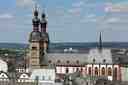
  2. Right in front of you, look for the impressive Church of Our Lady with its two striking onion-domed towers rising high above the rooftops, and a long nave lined with big windows…Mehr lesenWeniger anzeigen

    Right in front of you, look for the impressive Church of Our Lady with its two striking onion-domed towers rising high above the rooftops, and a long nave lined with big windows decorated in red stonework. Welcome to the Church of Our Lady, or as the locals call it: Liebfrauenkirche! Here you are at the highest point of Koblenz’s Old Town-some say the church wanted to be closer to heaven, or maybe just to keep watch over everyone else’s rooftops. This place isn’t just a church, it’s a living patchwork of centuries, where each stone has its own story and the towers have seen just about every haircut trend since the 5th century. Let’s travel back over 1,500 years ago. The Romans had just about left town, and their old hall-a sort of giant Roman party room-stood right here. Along came the Franks with big dreams and even bigger beards, who decided this was a perfect spot for a Christian church. Over the years, this early church grew and changed, and by the 1200s, it was rebuilt into a marvelous Romanesque basilica, complete with galleries and those two square towers you see today. By the way, rumor has it those towers still give fantastic views... if you don’t mind a workout. The church wasn’t just a place to pray-it was the main parish church of Koblenz for centuries. Townsfolk celebrated here, mourned here, and-at one stage-got buried around here too. The graveyard crowded right up to the church walls until 1777, when Elector Clemens Wenzeslaus decided, “that’s enough!” and banned burials inside city centers. Healthier for everyone, if a bit less spooky. If you take a look around, you might spot an ancient chapel, St. Michael’s, clinging to the remains of a Roman city wall tower. Its lower floor was an ossuary-the “bone house”-where skulls and bones piled up in a very Gothic fashion. A little above, a statue of the archangel Michael has been kicking the devil for centuries and seems to be enjoying himself. Fast forward to the late 1600s, and disaster strikes! In the War of the Palatine Succession, French troops bombed Koblenz and burned off the church’s slender Gothic spires. When the dust settled, the new Baroque onion domes were built-a clever move, since now the towers look like they’re wearing fancy hats. Inside, the church is equally lively. Above the nave, a ribbed star-shaped ceiling draws your eyes up. The oldest altar, the Nicholas Altar, features a painting with the Koblenz skyline as it looked before everyone was fascinated by selfies-and you can still see what the city was like before it was bombed in 1688. There’s also a wooden crucifix from the 1300s, gravestones nestled against the walls, and even a few Renaissance tombs whose tenants haven’t complained in quite a while. Through centuries of change, war, and wild architectural experiments, the church never lost its sense of drama-or its uncanny knack for survival. During World War II, bombs destroyed the roofs, but the thick walls held steady. With a patchwork roof and a temporary ceiling, townsfolk returned, calling it “Little St. Mary.” Rebuilding took years, and the church went through several facelifts, eventually reclaiming its rhythm of ringing bells daily. Standing here, you’re looking at not just a church but an epic survivor, a dazzling centerpiece of medieval sacred art along the Middle Rhine, and a proud member of the UNESCO World Heritage family. So, next time you hear bells ringing out over the Old Town, remember: they might just be warning the ancient night watch, calling to worship, or announcing a festival-but most of all, they’re the heartbeat of Koblenz, echoing from these towers across a thousand years. For a more comprehensive understanding of the surroundings of the church, construction and equipment or the tower guardian, engage with me in the chat section below.

    Eigene Seite öffnen →
  3. Let’s rewind to 55 BC, when Julius Caesar had more on his mind than salads. He was leading his troops across the wild and dangerous Rhine to fight the Germanic tribes. The rivers…Mehr lesenWeniger anzeigen

    Let’s rewind to 55 BC, when Julius Caesar had more on his mind than salads. He was leading his troops across the wild and dangerous Rhine to fight the Germanic tribes. The rivers around here were like giant snakes slithering through the land, and Caesar-never one to let a little water get in his way-built the first bridge across the Rhine between Koblenz and Andernach. The Romans were so good at building bridges, they might have invented “DIY home improvement” a couple of thousand years early! You might not see remnants at your feet, but nearby, under places like Münzplatz and Kastorkirche, archaeologists have uncovered where some of the very first settlers in Koblenz built their homes. When Augustus became emperor - long before anyone thought “Caesar” could refer to a pizza - the Romans popped up a fortress right here at the confluence to keep an eye on the crucial road between Mainz, Cologne, and Xanten. For nearly 150 years, historians hunted for proof of that first fort, and, as luck would have it, in 2008-right as workers were preparing for a flower show-someone stumbled upon an ancient moat! Four meters wide, still two and a half meters deep, part of a square Roman fortress one hundred meters on each side. Sometimes you go looking for a tulip and find a castle instead, right? Koblenz is one of the oldest cities in Germany, and you’re literally walking through history where Roman boots once marched and the local Celtic tribe, the Treverer, ruled this whole Mosel valley. In 85 AD, Domitian came along and said, “Let’s make this official!” Koblenz became part of the brand new province of Germania Superior, which is basically ancient Rome’s way of saying, “We liked it so much, we put a government office here.” Back in Roman times, there were sturdy wooden bridges stretching over the Mosel and the Rhine. Picture workers driven by promises of wine, building a 350-meter-long bridge over the Rhine, made from hundreds of oak trees sharpened to a point and hammered into the riverbed. Fifty-one of those water-soaked tree trunks still survive today. I guess Roman engineering really did stand the test of time! Their Mosel bridge, just downstream from where we are, connected to the old Roman highway - you could almost imagine a chariot honking to overtake a donkey cart. As the centuries rolled on, the Romans kept reinforcing their hold here. Around 100 AD, across the Rhine on what’s now Koblenz-Niederberg, they built another fort to guard the border of the wild frontier. This camp lasted until the late third century, when the mighty Franks swept through and the Romans thought it best to relocate-rather than test their luck against those mustache-twirling warriors. Fast forward to the time of Emperor Constantine, a couple centuries later. The Romans, feeling the heat from all directions, built a massive new fortress, nearly six hectares big, here in Altstadt. The old city walls once stood where modern streets curve now: “An der Moselbrücke,” “Alten Graben,” “Am Plan.” The wall boasted 19 round towers, each about ten meters wide. Imagine the hustle of guards, the clang of swords, sleepy traders sneaking in cheese, and children playing in the shadows, all while the towers kept watch. Over time, the city’s medieval walls tangled with these Roman strongholds, and when they finally tore down the last pieces in the 19th century, part of Roman Koblenz faded into legend. But some secrets remain! Under the Florinskirche, for instance, archaeologists uncovered the remains of a Roman tower - proof that those stones have stories to tell. Even part of the old wall pops up in the foundations of nearby homes. And if you ever stumble across a street named “Entenpfuhl” or “Kornpfortstraße,” remember: you’re tracing the lines of ancient fortifications! So, as you stand here, rivers swirling nearby, imagine the scent of woodsmoke as Roman centurions gazed east, listening for the tramp of distant feet or the slap of water against those mighty bridges. Confluentes, the place where rivers - and histories - come together, still murmurs its ancient tales beneath your feet. And if you ever hear the faint clanking of armor behind you, don’t worry - it’s probably just someone dropping a bottle of wine! Onward to more discoveries!

    Eigene Seite öffnen →
13 weitere Stationen anzeigenWeniger Stationen anzeigenexpand_moreexpand_less
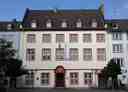
  1. Look for a simple but grand three-story building with a creamy façade, tall red-trimmed windows, and a row of charming dormers peeking from a dark, sloping roof-right in front of…Mehr lesenWeniger anzeigen

    Look for a simple but grand three-story building with a creamy façade, tall red-trimmed windows, and a row of charming dormers peeking from a dark, sloping roof-right in front of you on Münzplatz. Now, as you stand before the House Metternich, let your imagination transport you back over 700 years. Picture the busy medieval streets, the distant clang of a blacksmith’s hammer, and maybe, if you listen closely, the whispers of centuries tangled in the city air. This stately three-story building might look calm and collected now, but it’s been through enough drama for an entire opera! Originally, in the 1200s, this spot wasn’t even a house, but a medieval residence tower-like a stone fortress with a perfect view of both gossip and invaders. The estate belonged first to the Bachem family and sprawled right up to the ancient city wall. Now, here’s a fun twist: the House Metternich literally stands on the shoulders of giants… Roman ones! They built it over three Roman towers, so you’ve got layers of history under your feet-a medieval skyscraper, Roman-style. By 1388, Koblenz owned this whole area, and by the 1400s, it changed hands like a hot potato. In the 1600s, it was in such bad shape that the city had to force its owners to repair it. You could say property-in-need-of-renovation is a timeless tradition. Then came the Metternichs, with a family name as long as their titles: Wilhelm and Lothar von Metternich-Winneburg-Beilstein. In 1674, they rebuilt the place, and that’s pretty much what you see now-or, at least, the shell of it. Imagine yourself in the late 1600s, walking past grand figures in wigs and fancy hats, as carriages rattled across the square. Among them, a baby would one day grow up to be one of Europe’s most important diplomats: Klemens Wenzel Lothar von Metternich, born right here in 1773. The man’s job was to manage empires, but as a child, he might have splashed through puddles just outside where you’re standing. Of course, history loves a plot twist. In 1794, the French revolutionaries swept into town, and the Metternichs lost their beloved house. Goodbye family estate, hello soldiers! The French packed in their troops, then turned the building into a university for law students-imagine hundreds of future lawyers learning the new “Code Civil” inside these walls, maybe dreaming of a world without homework. But wait, things only get busier in the 1800s. When Metternich himself visited his birth house after years in exile, he found the place a total mess-he wrote to his mother that it was much dirtier than he ever remembered. He apparently wasn’t that sentimental, because he sold it back to the Prussians after the king gave it back to him. The people of Koblenz, determined not to let some bossy official take over their market square, bought it together and split up the old estate into parcels. Teamwork, Koblenz style! Through the years, the building became smaller and cozier, housing everything from a bustling wine tavern to a courthouse and even a student dormitory. After World War II, the house was left a burnt-out shell-hard to believe as you see it today. For a while, it was patched up just enough to keep working, and locals gathered again for a glass of wine in the “Winninger Weinstube.” Finally, in the 1970s, it was carefully restored to its current form, balancing old stones and modern life. Today, you’ll notice the creative buzz of an art museum and even a youth meeting center inside, proof that this house is always ready for another chapter. So take a moment to look up at those windows and imagine Roman soldiers marching by, medieval market carts rattling across the square, and a young Metternich peeking out to watch history unfold-right here, where you’re standing. If only these walls could talk! But really, would they ever stop?

    Eigene Seite öffnen →
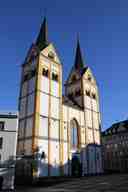
  2. To spot St. Florin's Church, look for two mighty square towers with pointy slate spires and white walls edged with warm yellow stone, rising straight ahead out of the…Mehr lesenWeniger anzeigen

    To spot St. Florin's Church, look for two mighty square towers with pointy slate spires and white walls edged with warm yellow stone, rising straight ahead out of the Florinsmarkt-this towering duo truly dominates the square. Alright, now let’s step back in time and imagine ourselves nearly a thousand years ago, right here on this spot in the heart of Koblenz’s Altstadt. The air is thick with the scent of burning candles, incense, and maybe-just maybe-a whiff of mossy stone from the cool, ancient walls. In the beginning, this wasn’t even St. Florin’s Church but a small Marian chapel tied to a Frankish royal court, where legends say King Childebert himself might have held court in 586. If you listen closely, you might imagine the soft shuffle of monks’ feet under heavy robes, working and praying from dawn to dusk. But the church’s big transformation came around the year 1100, when Bruno von Lauffen, later archbishop of Trier, decided it was time to up the grand factor and ordered a brand-new church in the bold Romanesque style. The church was so sturdy it actually incorporated parts of the old Roman-Franconian city wall-talk about recycling! With its three naves and huge pillars, it set the architectural standard for the Middle Rhine region’s sacred buildings. Over the centuries, this place saw more twists and turns than a medieval detective novel. The original Marian church became dedicated to St. Florin once his relics arrived from Switzerland. Generous donations from archbishops meant land, chapels, and even a hospital sprang from church resources, although I promise no leeches as souvenirs! In the Middle Ages, this bustling site wasn’t just a church-it was the heart of a vibrant complex, alongside the Bürresheimer Hof, Altes Kaufhaus, and Schöffenhaus, four grand historic siblings around the Florinsmarkt. The church has seen more engineering overhauls than a racing car. By the mid-1300s, gothic fever swept inside and the old apse was swapped for a dramatic gothic one. Vaults rose overhead, tall and proud; tower roofs came and went, with their current sharp spires dating back to 1899. Of course, the drama didn’t stop there. In 1688, during the Palatinate War, French armies bombarded Koblenz, and the very spot you’re standing on was rocked by cannonballs, shattering the central nave’s vault. Repairs were swift, and a few years later, a statue of St. Florin himself was installed above the south door, perhaps eyeing up who made a mess of his church. Then came the centuries of change: in the Napoleonic era, the church was seized and nearly turned into a slaughterhouse, though the locals managed to dodge that particular bullet (phew!). In 1820, it reopened as the city’s first Protestant church, and since then, has shared its ownership between the church and the state of Rhineland-Palatinate. Inside, you’d find a grand Romanesque hall washed in white, punctuated by pillars of gray quarry stone, and splashed with stained glass from the 14th century-plus a truly mighty pipe organ, a modern marvel with nearly four thousand pipes! There’s even a cannonball in the baptismal chapel ceiling, just to keep history close at hand, and you might spot ancient gravestones of archbishops who now rest in peace beneath these stones. Five bells ring in the south tower, the eldest cast in 1511-imagine their sound floating out above Koblenz for centuries. Today, St. Florin’s Church stands not just as a monument, but as a living, ringing piece of UNESCO World Heritage, protected and cherished. And don’t forget-should you ever fear getting lost in Altstadt, just look for these twin towers standing tall like two big yellow bookends on the city’s rich story.

    Eigene Seite öffnen →
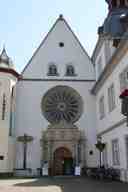
  3. To spot the Jesuit Church, just look for the striking white triangular façade with a huge stone rose window and an elaborate stone-carved portal tucked between the neighboring…Mehr lesenWeniger anzeigen

    To spot the Jesuit Church, just look for the striking white triangular façade with a huge stone rose window and an elaborate stone-carved portal tucked between the neighboring buildings on Jesuitenplatz. Alright, time to imagine yourself stepping into a lively square packed not with traffic, but with centuries of secrets! The Jesuit Church in front of you has more than one tale up its sleeve. If walls could talk, this one would be chattering in at least three different centuries and probably trying to sell you a history textbook. Don’t worry-I’ll be your much friendlier guide! First, take a good look at that grand, round window-the famous rose window-resting above the richly decorated main portal. It’s a survivor, having watched the world outside change dramatically since 1617, when the original church was finished. In fact, this was one of the first homes in Koblenz for the Jesuits, a dedicated group sent here not just for their impressive debating skills, but because the Archbishop of Trier wanted to strengthen Catholic influence after the Reformation. The plan was simple: say goodbye to the Cistercian nuns who’d called this spot home since the 13th century, give the place to the Jesuits, and rebuild with a bit more Renaissance flair! Picture the original church with its awe-inspiring Gothic star vaults and six lines of thick, proud columns-sun streaming through stained glass, echoing with the sound of prayers and lectures, and perhaps, the odd student sneaking a nap. Fast forward to the 19th century: the church finally gets a little tower on its back-after centuries of being enviously turmless-only for it to burn down in 1883, though it rises stubbornly from the ashes. Now, here’s where the story takes a dramatic turn. World War II rolls in, and the church suffers terribly. Imagine the smoke, the rubble, and the debate in Koblenz: “Can we save the ruins?” In the end, a new church is built in 1958-59 from concrete and stone, keeping the west façade with its ornate entrance. If you look closely, you’ll spot figures of saints-John the Baptist, flanked by Ignatius of Loyola and Francis Xavier, and even the archangel Michael presiding at the top. The original door remains, its columns topped with empty niches where statues once stood. The only real complaint the church has these days is about its missing noses! Step inside and let your senses take in the scents of old stone and wood. Salvaged treasures from the past hide within: a 15th-century Pietà, ornately carved sacristy doors, and even some chunky keystones that somehow dodged disaster. Walk around, and you’ll also see modern artistic touches-colorful glass from the 1960s and a brilliant rosary of sculptures and paintings. Even if the Jesuits finally left in 2003-and the Arnsteiner Fathers waved goodbye as recently as 2023-this church still carries the spirit of all its residents. Today it stands not just as a place of worship, but as a monument-officially protected and part of the UNESCO World Heritage Upper Middle Rhine Valley. So, the next time you pass this humble yet heroic building, give it a wink. It’s seen enough history to appreciate the gesture. Ready for our next stop?

    Eigene Seite öffnen →
  4. To spot the Town Hall, just look for the large, bright white building with rows of classic windows and a deep slate roof dotted with red dormers, all nestled behind the archways…Mehr lesenWeniger anzeigen

    To spot the Town Hall, just look for the large, bright white building with rows of classic windows and a deep slate roof dotted with red dormers, all nestled behind the archways and the shaded courtyard-you really can’t miss it as you pass beneath those leafy branches. Welcome to the heart of Koblenz’s civic life-the Town Hall! Take a moment to breathe in the history swirling around you, while sunlight dances through these leafy trees onto white walls and cobbled stones. This place isn’t just a stately spot to collect parking permits; it’s a living piece of the past, woven from as many stories as it has windows. Now, let’s roll back to the 16th century, when this square wasn’t yet bustling with office workers but with the prayers and lessons of Jesuits. The Town Hall actually lives within what was once the Jesuit College, started way back in 1588. Imagine monks in black robes floating through these halls, determined to bring their faith and a touch of discipline to the youth of Koblenz. Back then, you wouldn’t find civil servants here-unless “civil service” meant saying a few extra prayers for unruly students. And if you’d visited even earlier, you’d have found Cistercian nuns here before they were rather briskly moved to make room for the newcomers. But this spot has never been boring. Over the centuries, the place was burned, rebuilt, used as a school, and even as a battlefield hospital-twice! When French and Prussian armies rolled through town, these same thick walls echoed with the moans of wounded soldiers and, later, with music, when the college’s great hall hosted parties and concerts. It even earned itself a spell as a playground for amateur actors in school theater-can you imagine the ghosts of students anxiously clutching their scripts backstage? The city’s official business hopped around five different homes over the centuries, from a medieval house in the Altenhof, to a brewery, and then to a grand old department store. Each time the city grew, it just needed a bigger desk! Finally, in 1895, they settled on moving the Town Hall here. By then, the old Jesuit College had outlived wars, revolutions, and squabbling politicians-and even avoided being swallowed up as army barracks, all thanks to a clever public servant who out-argued the military brass. Talk about winning an impossible argument! If you gaze up and around you now, you’re seeing the results of 400 years of construction and reconstruction: late Renaissance wings, Baroque touches, and some 20th-century expansions, all carefully wrapped around four peaceful courtyards. That fountain you hear bubbling gently? That’s the Schängel Fountain, dedicated not to a city official, but to a mischievous local boy who sprays unsuspecting passersby with water. Consider it Koblenz’s version of good, clean fun-unless you’re wearing your best suit. During World War II, while much of Koblenz fell under the rain of bombs, these buildings survived almost untouched-except for the poor Jesuit church next door, which took a real beating. American troops rolled in, ending the war here by raising their flag straight above the Town Hall. Not long after, the eyes of all of Rhineland-Palatinate turned to this very building, where the state’s first parliament met in 1947, choosing the first Minister-President. The Town Hall has been at the center of history, celebration, and the odd bit of drama ever since. Inside, the walls are topped by painted ceilings that once told students the difference between hard work and laziness-imagine getting pep talks from angels every day at school! Today, you’ll find the mayor’s office, the wedding hall, newspapers, the town safe, and a steady stream of citizens-all under one beautifully historical roof. This whole ensemble, by the way, is a protected UNESCO World Heritage site-the ultimate stamp of approval for a building that’s seen it all and come through shining. So go on-peek through those arches, take in the centuries of stories, and remember: this Town Hall has stood through fire, war, paperwork, and pranks, and it’s still as lively as ever. And if you hear any giggles echoing in the halls, don’t worry-it’s probably just the ghosts of former students, plotting their next school play!

    Eigene Seite öffnen →
  5. To spot the Deinhard, look for a stately white building with green trim and a slate roof right across the street, with a grand entrance and elegant rows of windows-a classic…Mehr lesenWeniger anzeigen

    To spot the Deinhard, look for a stately white building with green trim and a slate roof right across the street, with a grand entrance and elegant rows of windows-a classic façade that proudly bears the words “Stammhaus Deinhard seit 1843.” Alright, take a moment to admire that grand old building-home to secrets, celebrations, and more bubbles than a bath time for elephants! Welcome to the Deinhard Stammhaus, the original headquarters of one of Germany’s most beloved names in sparkling wine and tradition. Imagine it’s the late 1700s: carriages rattling by, the scent of crushed grapes mingling with the crisp Rhine air, and a young merchant named Johann Friedrich Deinhard, bursting with ambition, opens his wine shop here in 1794. Across the old city, the news spread as quick as the scent of fresh bread on baking day: “There’s a new wine in town!” But talk about jumping in at a wild time-just a few months later, French troops marched right into Koblenz. You could practically hear the boots on the cobblestones. Everyone else might have panicked, but Johann didn’t flinch. He kept his doors open, and wine soon became his star attraction. Maybe it helped that he married well-his wife Ludovica’s father was not only mayor but also the highest-taxed citizen in Koblenz. A little family connection never hurts when building an empire, eh? In those days, business was a family affair-and a competition! By 1805, Deinhard had hired his first traveling salesman. You can picture these wine merchants, clinking bottles as they set off by carriage to Cologne and beyond. Together with Karl Anton Tesche, who ran wine shops in two cities, their cellars filled up with promise-and with barrels, of course-in the vaults beneath the old Barbarakloster and a Jesuit cellar. It wouldn’t be Deinhard if mystery didn’t play a part; by 1812, in slipped another partner, Friedrich Wincelius, and the cast of characters kept expanding. Fast forward to 1825: Deinhard wine makes its way to England, with young Anton Jordan-who outshone everyone by actually speaking English! He crisscrossed the channel, becoming the face and the voice of Koblenz wine in London. The company didn’t just survive-it flourished. Johann’s son August took over after his father’s passing, and soon Koblenz wine was landing on tables for both the well-heeled and the crowned heads of Europe. Now, here’s where a little bit of fizz comes into play. Inspired by Tesche-who started making “country wines in the style of Champagne”-Deinhard launched its own sparkling wine factory in 1843, right behind these very walls. Think of that first cork popping as the start of a tradition that would stretch down centuries. Deinhard didn’t just keep up with France, it upped the ante! Their methods brought a new level of quality, making Deinhard bubbles the must-have drink for high society and parties everywhere. Popularity boomed: by 1851, they shipped 176,000 bottles of sparkling wine, with England especially smitten by the “Sparkling Moselle.” Of course, it wasn’t always smooth sailing. Political chaos, changing borders, and, wouldn’t you know it, even river transport headaches tried to trip them up. In fact, August Deinhard himself juggled politics and business, sometimes looking less like a winemaker and more like a circus performer! Innovations kept coming. By 1892, Deinhard was the first in Germany to use the “degorgier” process for sparkling wine-making it taste consistently great, no matter how many bottles rolled out the door. Then came international honors: a Grand Prix at the 1900 Paris World’s Fair. And when the company bought up part of the legendary Bernkasteler Doctor vineyard-paying 100 gold marks per vine-people thought they’d lost their marbles… but those vines paid off in golden Rieslings. Through the stormy 20th century, Deinhard weathered wars, lost markets, rebuilt from rubble, and found new partners-sometimes through marriages, sometimes through sales, and sometimes through a sheer stubborn love of wine. After World War II, business picked up steam again and exports soared just in time for Germany’s big party years when Sekt sales shot through the roof. The 1960s saw new cellars built, modern production lines fizzing to life, and the Stammhaus you see here continued as the heart of the Deinhard story-today, it’s protected as a cultural monument and is part of the UNESCO World Heritage. So, as you stand here, you’re in the center of two centuries of sparkling ambition, family drama, and one heck of a wine collection. Cheers to that-and watch your step, or you might just trip over a secret bottle or two hiding in the cellar!

    Eigene Seite öffnen →
  6. You’re now standing before the grand Electoral Palace, the crowning jewel of Koblenz’s promenade along the Rhine. Imagine the sound of your footsteps crunching on the path as you…Mehr lesenWeniger anzeigen

    You’re now standing before the grand Electoral Palace, the crowning jewel of Koblenz’s promenade along the Rhine. Imagine the sound of your footsteps crunching on the path as you step closer, the mighty facade rising ahead like a noble guardian from another era. Just behind those stately columns, centuries of power, intrigue, ambition, and a dash of royal drama have played out-more twists here than in a German pretzel! The palace was dreamed up in the late 1700s by Clemens Wenzeslaus of Saxony, the last Prince-Elector and Archbishop of Trier, who decided his previous residence was feeling a bit too drafty and “last century.” So, he ordered a new palace-something to make his fellow royals green with envy. French architects were called in, perhaps for that extra sprinkle of Parisian flair, but the project quickly turned into a real soap opera! The first architect, d’Ixnard, was replaced after his grand designs proved a bit too ambitious (or maybe he just couldn’t work under royal pressure-we've all been there). In swooped Antoine-François Peyre, who scaled things down, built on the existing foundations, and gave the palace its elegant, almost classical look. Construction took place between 1777 and 1793, smack in the middle of one of Europe’s most turbulent centuries. As the final touches were going in, the world outside the gates was changing at lightning speed. Revolution was brewing in France just down the river, and Clemens Wenzeslaus, it turns out, was the uncle of none other than King Louis XVI. Right here in Koblenz, French émigrés found refuge from the chaos across the border. Imagine the palace filled with anxious nobles, secret conversations in candlelit halls, and the nervous scratching of quills writing desperate letters home. But in 1794, the French Revolutionary army marched ever closer, and the archbishop had to flee-probably not the grand exit he’d envisioned! Not wanting to leave empty-handed, he loaded the palace's mobile treasures onto ships and sailed off, leaving the palace incomplete. The new owners were, for a while, the French, who used the elegant rooms for more practical things-a bit of military hospital here, a dash of barracks there. After France left, the palace switched sides again, becoming a Prussian army headquarters. Even the future Emperor Wilhelm I resided here during the 19th century, with his wife Augusta inspiring the creation of the beautiful Rhine garden behind the building. Apparently, she liked Koblenz so much she visited every year until just before her death; some people just can’t get enough of river views. By the early 20th century, the palace found itself part museum, part playground for political movements, and even briefly occupied by the followers of a would-be Rhineland Republic. Then came the dark days of World War II. In 1944, bombings reduced the palace to a shell, its grand halls only a memory echoed among ruin and rubble. After the war, Koblenz came together to rebuild. The palace arose anew in the 1950s, keeping its elegant exterior but embracing a more practical, post-war interior. Today, the rooms buzz less with royal intrigue and more with the quiet shuffling of paperwork-government offices fill most of the palace, so unless you have particularly strong feelings about bureaucracy, you might not want to storm the gates. But don’t fret-the stately gardens and restored salons still whisper stories of their ornate past (and you can sneak a peek at special events). In 2011, the palace hosted the Bundesgartenschau-and the grounds bloomed with life and color once again, just as Clemens Wenzeslaus intended, although maybe with a few more selfie sticks. So as you stand here, gaze up at the pristine white-gray stone and peer beneath those regal arches. The palace is more than walls and columns: it’s living history, a survivor and a storyteller, bearing the marks of revolution, royalty, war, and rebirth. And if these walls could talk, they’d probably shrug and say, “This is Germany, after all-there’s always another chapter around the corner!”

    Eigene Seite öffnen →
  7. Directly in front of you, you’ll see a tall reddish stone pedestal topped by a striking bronze figure with one arm raised and a proud eagle at his side-just look between the grand…Mehr lesenWeniger anzeigen

    Directly in front of you, you’ll see a tall reddish stone pedestal topped by a striking bronze figure with one arm raised and a proud eagle at his side-just look between the grand palace behind you and the river for this dramatic statue. Alright, let’s dive into the drama and dreams that brought this monument to life! Picture the scene: the 1920s, postwar Rhineland, freshly dusted off from years of turmoil and occupation. Here in this very spot, in the shadow between the grand Electoral Palace and the mighty Rhine, stands a monument not only to Joseph Görres, but also to the unbreakable spirit of the people of Koblenz and all those who love a good underdog story. Who was Görres? Born right here in Koblenz in 1776-a strange year for revolutions, right?-he grew up to become a firebrand journalist, a passionate champion of freedom, and, rumor has it, a nightmare for stuffy politicians everywhere. But building him a monument? Oh, that was a saga worthy of its own drama! People wanted a tribute to Görres almost as soon as he died in 1848, but he was so controversial that the Prussian government said, “No statue for you!” Decades passed. Tempers cooled (a bit). After the First World War, when the Rhineland was under foreign occupation and German spirits needed a boost, the city council said, “Now let’s honor our hometown hero!” They wanted a monument that shouted, “The Rhine belongs to us!”... and what better place than here, where Görres was born during the reign of the last Elector-the very time this palace was brand new. They formed committees so big, you’d think they were competing for Most Bureaucratic Group of the Year. Presidents, chancellors, archbishops-everyone with a fancy title pitched in. Local sculptor Richard Langer, perhaps after winning a game of rock-paper-scissors against several other artists, got the nod for the design. Of course, actually paying for the monument was another hurdle-people were trying to scrape together a living in tough times, so the collection plate didn’t really overflow. The city and state chipped in just enough to get construction started. They even had to delay putting the actual statue on top, since money arrived as slowly as a glacier on a lazy day. Finally, in 1928, the bronze figure you see before you, all 5.23 meters high and looking like he could command the weather as easily as a crowd, was hoisted onto its four-meter pedestal of Rochlitz porphyry-a rock as tough as Görres’s spirit. This figure strides boldly, right arm high, as if rallying everyone to the call of freedom and justice. In his left hand, he clutches a book-because words, after all, can be more powerful than swords. At his feet crouches an eagle, never missing a chance to strike a dramatic pose. The monument wasn’t just about Görres. It became a silent statement during nervous times-especially when the French occupation forces glared suspiciously at any hint of German pride. The French High Commissioner even banned the dedication speeches from being broadcast-talk about being sore losers! But the statue dodged every drama-barely surviving WWII when many other sculptures along the Rhine were melted down for scrap, thanks to a mayor with enough charm and nerve to keep it safe. Even bombing raids left this monument standing tall. Through years of peace and reconstruction, the monument has remained a place to gather, to sit-and, for many, to remind themselves that no matter how hard things get, there’s always a voice like Görres’s ready to shout for freedom. And next time you walk past, look at the words carved into the sides: “The Rhine is Germany’s pulsing artery.” Not bad for a bronze guy with a book and an eagle! I’ll be here with more stories as we head to our next stop. Eager to learn more about the location, construction or the monument protection? Simply drop your inquiries in the chat section and I'll provide the details you need.

    Eigene Seite öffnen →
  8. As you find yourself standing in front of this impressive modern complex, take a moment to picture armies of engineers, inventors, and bureaucrats hiding behind those glass…Mehr lesenWeniger anzeigen

    As you find yourself standing in front of this impressive modern complex, take a moment to picture armies of engineers, inventors, and bureaucrats hiding behind those glass windows - all working feverishly to make sure the Bundeswehr, Germany’s armed forces, is kept at the cutting edge of technology. This isn’t just a boring old office - it’s the Bundesamt für Ausrüstung, Informationstechnik und Nutzung der Bundeswehr, or, if you’d prefer, BAAINBw. And yes, saying that five times fast is actually part of their recruitment exam. Now, imagine the sound of tapping keyboards and the distant hum of machinery as staff inside coordinate the delivery of everything from armored vehicles to smart uniforms. If Germany’s army needs it, this agency is responsible for finding, testing, buying, and maintaining it. Tanks, stealthy submarines, state-of-the-art helmets, and even humble water bottles - nothing escapes their checklist. In fact, every phase, from drawing board to battlefield (and, if unneeded, the scrapheap) gets their attention. But it hasn’t always been so high-tech or unified. Until 2012, two separate agencies managed all these responsibilities: one devoted to engineering and procurement, the other to information systems. When they fused, forming the BAAINBw, someone must have said, “Let’s make things interesting!” Just like a superhero origin story, this merger meant BAAINBw took on everything: inventing technical fixes, overseeing massive equipment orders, running damage investigations, and even sending gear to friendly non-NATO nations. If you ever hear about a new gadget in the German army, odds are it was born, tested, and maybe even given a little pep talk right here. The agency’s headquarters stands on a location steeped in history, the former administrative heart of the Prussian Rhineland. Somewhere between grand old government halls and tax offices of yesteryear, today’s leaders - a president in the highest pay grade category, supported by vice presidents (including a “military” one, so you know they mean business) - keep the gears turning. Staffed by around 6,800 people, everything from engineers to logistics experts work alongside military personnel and, believe it or not, about 180 external business consultants. If you’re trying to picture the world’s most serious office party, you’d probably find it here. And there’s more: BAAINBw reaches far beyond Koblenz, like a giant logistical spider. It directs technical proving grounds across Germany - testing tanks in Trier, warplanes in Manching, ships in Eckernförde, and technology in Greding. They’ve even got scientists specializing in chemical protective gear in Munster and materials nerds in Erding. Need to check if a piece of kit is up to NATO quality standards? There’s a team for that, too, scattered in cities across the country. But even for a powerhouse like this, things sometimes go off-script. In 2023, the agency found itself at the center of a real-life spy thriller. An officer, codename “Captain,” was arrested for trying to hand over classified files to Russia. He reportedly burned about 1,400 pages of secrets onto CDs and attempted to drop them off at embassies. (We can only hope he used a good playlist as a cover.) In the end, after a dramatic trial, he confessed and landed over three years in prison. Really, BAAINBw has seen more drama than some Netflix series! Of course, running a massive operation like this isn’t all cloak-and-dagger. There are the challenges of filling hundreds of empty posts and, just like everyone else, struggling to find enough engineers, lawyers, and economists. The staff juggles billions of euros in contracts, manages old equipment, and even aids allies in need. If you catch sight of the agency’s emblem, look closely: half a cogwheel, a stylized German eagle, and the Iron Cross - each a nod to its mission and heritage. All set against a white field crossed with red, symbolizing Koblenz itself. So, while you might only see a busy office building, remember: inside, history is being forged, one tank, code, and helmet at a time. And who knows? Somewhere in there, someone might even be trying to perfect the world’s most indestructible coffee mug. Want to explore the tasks, structure or the properties and personnel in more depth? Join me in the chat section for a detailed discussion.

    Eigene Seite öffnen →
  9. You’re facing the District Court of Koblenz-a tall, modern building dressed in a grid of beige panels and rows upon rows of shiny square windows; just look up and slightly to your…Mehr lesenWeniger anzeigen

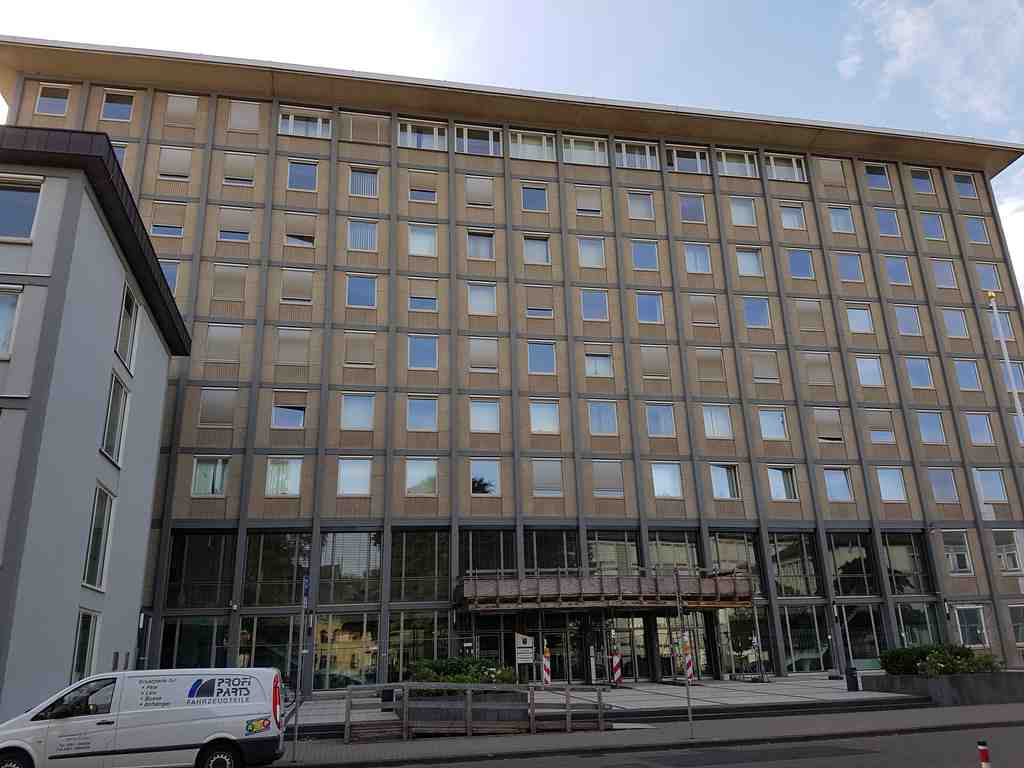
    You’re facing the District Court of Koblenz-a tall, modern building dressed in a grid of beige panels and rows upon rows of shiny square windows; just look up and slightly to your right and you can’t possibly miss its broad, official facade. Now, let’s bring this place to life! Imagine dusty cobblestone streets in the early 19th century, carriages trundling by, and a sense of anticipation in the air-because back in 1820, as Napoleon’s laws still echoed through the Rhineland, the “Landgericht Koblenz” first opened its doors, ready for justice with a French twist. Back then, instead of what you might expect, there were “Landgerichte,” not called district courts but by their grander French names, all ready to sort out everything from neighborly squabbles to high drama in the region. Under the looming clouds of history, fast forward to 1879-imagine clerks fussing with inkwells as the grand German court reforms swept in! The Landgericht Koblenz was reborn, reorganized, and tasked with watching over an impressive patchwork of nearby towns, where, frankly, you can just picture judges looking a little overwhelmed by paperwork. In 1888 this court was bustling, handling the legal business of well over 380,000 souls, with a president, two directors, and a hefty team of judges delivering verdicts-perhaps over lunch, if you believe the rumors. Here’s a fun sound for you: But the story doesn’t end there-oh no! Through wars, upheaval, and new laws, the District Court was tested by countless storms. During the Nazi era, it became the seat of a “special court”-grim times, with tense silence in the corridors, and perhaps, if these walls could talk, some secrets left buried in the echoing halls. After World War II, it was curtains down for a while-all courts closed, the air thick with uncertainty. But justice, like a stubborn detective in a cozy crime novel, found its way back. Soon, the ordinary courts reopened, governing livelihoods, land, and-of course-marital disputes, like whose mother-in-law gets to visit for Christmas! Not forgetting the Labor Courts: in 1927, the court even hosted one of only three “Landesarbeitsgerichte” labor courts in the entire regional jurisdiction. Nowadays, if you listen closely, you might sense the building buzzing with the footsteps of 250 busy people, with 75 seasoned judges orchestrating affairs across 14 sections for civil law, 16 for criminal law, and more departments than you can shake a legal textbook at. There are special teams tackling topics like medical malpractice and cyber law-yes, it’s not all wigs and scrolls anymore! And don’t worry, there’s still a chamber just for youthful mischief-makers. Who’s in charge? Currently, President Stephan Rüll and Vice President Andrea Mannweiler steer the ship, while there’s a whole relay team of presidents stretching back to the time of top hats. So, as you look up at those many windows, think of the millions of stories, disputes, and decisions that have shaped the city from within these modern walls. They say a good courthouse hears more secrets than any café in town-so maybe, just maybe, the next big story here is only a gavel pound away!

    Eigene Seite öffnen →
  10. In front of you, the Rhine Facilities stretch out as a long riverside promenade lined with young and old trees, where sunlight flickers through leaves onto wide walkways filled…Mehr lesenWeniger anzeigen

    In front of you, the Rhine Facilities stretch out as a long riverside promenade lined with young and old trees, where sunlight flickers through leaves onto wide walkways filled with people enjoying the open air and views of the flowing river-just look toward the water, under the shade of those leafy canopies, and you’ll spot it right away. Imagine yourself here nearly two hundred years ago: instead of busy joggers and families, horses struggled along a dusty path as they hauled heavy ships upstream, and wild poplar trees crouched at the water’s edge. What you’re seeing now is the result of history’s gardening project, stretching a whopping 3.5 kilometers along Koblenz’s left bank. The Rhine Facilities began with big dreams, royal ambitions, and a dash of French flair. It was back in 1809, during the French occupation, that the idea of transforming this bank into a park first took root-literally. Adrien de Lezay-Marnésia, an energetic French administrator, filled the area with nurseries for fruit trees and decorative shrubs, and suddenly the city’s kitchen garden became a tiny Eden. For a while, well-to-do Koblenzers could stroll among magnolias, hawthorns, and winding paths that made the garden feel bigger than it really was. Just don’t ask who had to prune all those bushes! But, like any good garden tale, disaster (and a few city council meetings) intervened. Lezay-Marnésia was transferred away, funds dried up, and “Parc Lezay” soon found itself sold off and used for firewood storage. For decades, the area languished-until the Prussians arrived. By the mid-1800s, Princess Augusta, an avid fan of English gardens, decided her young daughter deserved a royal playground. She commissioned the superstar garden architect Peter Lenné, who had a knack for making gardens look effortlessly natural. Lenné ditched the ruler-straight flowerbeds and instead gave Koblenz sweeping lawns, twisting paths, flowering trees, and lawn benches just begging for gossip. Thanks to Princess Augusta’s obsession and Lenné’s green thumb, the Rhine Facilities were transformed into a landscape park fit for a queen-and, eventually, everyone else. The park kept growing as the city’s old fortress walls were finally taken down in 1902, offering even more room for grand promenades and eye-catching statues. Speaking of which, when the Germans felt especially patriotic after the Franco-Prussian War, they just couldn’t resist decorating the riverbank with bold monuments to emperors and national poets. One might say they took “bigger is better” as their gardening motto! Flash forward to the twentieth century, and this riverside haven was not always in bloom. Bombs during World War II hammered Koblenz, flattening trees, pavilions, and elegant hotels alike. Once-peaceful lawns turned to ruins, and much of the park’s fancy furniture was carted away or destroyed. Still, the Koblenzers rolled up their sleeves-literally and figuratively!-to replant, re-pave, and restore the park, gradually transforming debris into greenery. By the time the Bundesgartenschau arrived in 2011, the Rhine Facilities got their latest makeover. The modern promenade you see today gleams with new walkways, riverside staircases perfect for people-watching, and rows of young trees. Old meets new as you stroll past lush green lawns, towering plane trees, artful flowerbeds, and the gentle buzz of riverside life. These grounds have hosted everything from royal picnics to international flower festivals-and if you’re lucky, you’ll catch the scent of linden blossoms drifting on the breeze. From royal fantasy garden to lively modern boulevard, the Rhine Facilities are a testament to Koblenz’s ability to survive, adapt, and add a bit of natural charm to every generation. So take a stroll, pick your favorite tree, and think of all those city gardeners and royal visionaries who’ve kept this riverbank so full of life and stories. Ready to delve deeper into the layer, konrad-adenauer-ufer or the empress augusta grounds? Join me in the chat section for an enriching discussion.

    Eigene Seite öffnen →
  11. Straight ahead, you’ll spot the Koblenz cable car by looking up to see a thin line of glassy cabins gliding high above the Rhine river, stretching from the leafy green at your…Mehr lesenWeniger anzeigen

    Straight ahead, you’ll spot the Koblenz cable car by looking up to see a thin line of glassy cabins gliding high above the Rhine river, stretching from the leafy green at your feet all the way over to the grand Ehrenbreitstein Fortress. Imagine it’s a sunny morning in 2011, crowds are buzzing, the river is sparkling, and-suddenly-this spectacular cable car swoops into Koblenz’s skyline. But wait, let’s rewind to before the swooping. Koblenz faced a classic problem: how do you get thousands of visitors from the Rhine’s riverbank up to Ehrenbreitstein Fortress for the big garden show, the Bundesgartenschau, without clogging the streets with buses? Cue the big debate: should they go for a bus connection or risk something a bit more… uplifting? Thankfully, someone said, “Let’s do a cable car!” Why not float through the air like a superhero? So, in April 2009, construction starts-with a few trees sacrificed but, in fairytale style, for every tree cut, three new ones were planted. Giant steel cables are strung across the water, sometimes with the help of a helicopter, making locals crane their necks in awe. By June 2010, glittering cabins dangle from those cables, and the people of Koblenz are finally invited to step inside. It’s quite an engineering feat: nearly 900 meters of cable stretch across the Rhine, swooping passengers up about 112 meters in altitude. It’s not just Germany’s first three-cable circulating ropeway, it’s also a champion in moving crowds-7,600 people per hour if you count both directions. Inside the glass cabins, as you float over ships chugging below, you get a 360-degree view of the dramatic Rhine Valley-history, nature, and a dash of vertigo all at once. But not everyone was thrilled. UNESCO worried the cable car might spoil historic views between the Basilica of St. Castor and the river valley. Originally, the plan was to take it down after three years. Local folks said, “We love this ride! Over 100,000 signatures and massive demonstrations!” Imagine Koblenz’s city square packed with people, kids waving signs-maybe one that says, “Don’t cut our cable!” After much back-and-forth (and more paperwork than you’d need to lasso those cables), UNESCO finally says, “Okay, the cable car can stay-at least until 2030.” Technically speaking, this cable car is a beast in the ropeway world. Powered by a big electric motor, each cabin (built in Switzerland) can carry 35 passengers. One even has a glass floor-so if you ever fancied walking on air above the Rhine, there’s literally a seat for that. The ride takes just a few minutes, smoothly gliding up to the fortress. Statistically, it’s as safe as they come: even on days when storm winds blast at over 140 km/h, the double cable design makes these cabins nearly immune to swaying. Worst-case, there are backup motors ready to bring every cabin safely in. It’s more than a shortcut or a tourist gimmick-it’s a lifeline between old and new Koblenz, between river and fortress, between city festivals and the wild slopes above. Thirty-five people in every cabin, thousands every hour, and somehow, you still get the feeling you’re on your own, flying just a little bit. Now, standing here, you can almost picture that first day of operation: politicians giving speeches, excited passengers taking selfies before anyone knew what a selfie was, and the city holding its breath as the first cabin drifts out over the water. From controversy to celebration, this cable car has become Koblenz’s moving lookout-a sky-high blend of invention, persistence, and a healthy dose of Rhine-side ambition!

    Eigene Seite öffnen →
  12. As you stand before the mighty St. Kastor Basilica, take in its towering twin spires and warm, pale stone glowing in the sunlight. This is Koblenz’s oldest church-so old, in fact,…Mehr lesenWeniger anzeigen

    As you stand before the mighty St. Kastor Basilica, take in its towering twin spires and warm, pale stone glowing in the sunlight. This is Koblenz’s oldest church-so old, in fact, that if the walls started charging admission for every historic event they’ve witnessed, you’d need to take out a loan just to step inside. The story begins in the 9th century. Imagine the area as a patchwork of wild greenery, the confluence of the Rhine and Moselle rivers nearby, and a group of early Frankish priests and workers bustling around, hauling stone and laying the first foundations. The church was completed around 836, commissioned by Archbishop Hetti of Trier, with a little help from Emperor Louis the Pious. Well, mostly Hetti, since Louis actually missed the grand opening-talk about being fashionably late! The original church was much different in style, but stood proud just outside the gates of early Confluentes, the settlement that would become Koblenz. But even long before these early builders arrived, this ground had stories to tell. Beneath your feet lie remnants of prehistory: Celtic hearths from the Iron Age, then the humming activity of a Roman fort built during Augustus’s time. In 2008, workers unexpectedly discovered a deep Roman trench while sprucing up the gardens for the National Horticultural Show. History literally lurked just a spade’s throw away. Later, a gallo-Roman temple stood here, and after the Romans packed up and left, a Frankish cemetery took over. This was sacred ground before people could even say "Koblenz" without tripping over their tongues. St. Kastor soon became a royal hotspot. In 843, it was the scene of political drama: emissaries of Louis the Pious’s three sons met here to thrash out the details of splitting up the Frankish Empire-an agreement etched in history as the Treaty of Verdun. So, in a way, you could say Europe as we know it began on the threshold of this very church. And the negotiating table? Maybe it was just a creaky old bench, or perhaps they called dibs on the nicest pew! Medieval rulers, emperors, and knights regularly marched through here, settling disputes or brokering peace. In 860, rival kings gathered (hopefully not all wearing crowns at once), and managed a rare feat: negotiating a peace treaty instead of just another royal grudge match. But time wasn’t always kind to St. Kastor. In 882, Norman raiders swooped in and destroyed the church, but the determined townsfolk rebuilt it right away-imagine hammers and saws echoing between makeshift scaffolding. Over the centuries, the building transformed: a mighty double tower facade was added, the eastern choir grew rich in detail, and between 1160 and 1208, much of today’s Romanesque appearance took shape. If you have a detective’s eye, look for all the architectural clues: the round triple-arched apses, the pilasters and steep gables of the towers, the intricate columns and lions perching as symbols of Christ. Walk around to the choir facing the Rhine; there’s an entire “dwarf gallery” up there with 21 arched columns-don’t worry, it’s not full of tourists. Step inside and you’ll find a treasure chest of stories: a mix of Gothic-vaulted ceilings and ancient murals, sensitive restoration work, and a dazzling collection of tombs and artworks. The sandstone pulpit from 1625 is practically shouting for attention, and if you spot a reliquary for the city’s favorite heroes-St. Kastor and Rizza-now you know, that’s medieval bling at its finest. By the way, the bells of St. Kastor are serious veterans. Since 1200, they’ve been confiscated for war, melted into cannons, rescued by daring clergy, and shipped to Hamburg in WWII-only to triumphantly return after peace. Step out and take in the peaceful garden to the south, reborn for the 2011 garden show into a “paradise garden.” Fun fact: before smartphones, there was a clever sundial here; locals could check the time and the date-if they understood the instructions, which read like a Sudoku puzzle with extra steps. The church’s forecourt is home to the Kastor Fountain-built in 1812 with a sly inscription poking fun at the shifting tides of the Napoleonic wars, proof that even monumental architecture can have a sense of humor. Today, St. Kastor continues to anchor this ancient confluence. Part of a lively parish community, a UNESCO World Heritage Site, and still protected by law-it’s a place where centuries meet, and history feels fresh, vibrant, and maybe just a little mischievous. Intrigued by the construction and equipment, environment or the parish community? Explore further by joining me in the chat section below.

    Eigene Seite öffnen →
  13. To spot the Teutonic Order Commandery, look straight ahead for a striking white building with steep gabled roofs and red-trimmed windows behind an old stone wall-right beside lush…Mehr lesenWeniger anzeigen

    To spot the Teutonic Order Commandery, look straight ahead for a striking white building with steep gabled roofs and red-trimmed windows behind an old stone wall-right beside lush gardens and a flower-lined path. Now, take in the view-here stands the Teutonic Order Commandery of Koblenz, where knights once traded silver spurs for garden shears… well, almost! Imagine it’s the year 1216. Knights in white cloaks with bold black crosses stride through this very ground, the air thick with excitement and a hint of mystery. The mighty Moselle and Rhine rivers crash together nearby, and on this prized spot, the very first Teutonic stronghold in the Rhineland rises from the muddy earth. Called here by Archbishop Theoderich of Wied, the knights quickly became local legends-not for their swordplay, but for their care of the sick at St. Nicholas Hospital, which they moved close to the old Kastor Church. The city’s leaders liked the idea; after all, it turned out knights who can also fix a fever were pretty valuable during the Middle Ages. Before long, the Teutonic Commandery was Koblenz’s power player. Fancy this: by the mid-1200s, the knights had expanded so much, they were getting deeds for villages and land all the way out in Frücht. Their headquarters, often called “Deutscher Ordt” or “Deutsches Eck,” became so famous that when the Kaiser Wilhelm I statue was built in 1897, the very name “Deutsches Eck” moved with it. It’s like the area had a case of identity crisis! By the 15th century, the Koblenz Commandery was a big deal, being one of just four “chambers” directly under the Teutonic Grand Master himself. Some say the Koblenz commander had so much land-in far-off places like Elsen and Waldbreitbach-that he even got a say in the Holy Roman Empire. It must have been nice to attend all those imperial meetings-imagine the size of the scrolls and the complaints about the catering! Of course, history is never simple. Fast forward to 1794: French troops marched into Koblenz, and the old order was toppled. By 1809, the knights were out, the property landed in private hands, and almost overnight these storied halls became a grain magazine. Walls were knocked down, new timber creaked under sacks of wheat, and parts of the church even vanished-except for a single wall, still clinging to its fancy stone vaults. As the world spun into the 20th century, the building served as the Prussian State Archive-imagine rows of dusty documents and librarians who probably dreamed of armor and sword fights instead of paper cuts. Then, in World War II, bombs fell on Koblenz. The flames consumed almost everything, leaving shattered stone and charred beams. But from the ashes, the “Rheinbau,” the building before you, was rebuilt with care in the 1950s, preserving its steep roof, shield gables, and quirky turret for a new chapter. Today, this place isn’t home to knights, scribes, or secret meetings, but the Ludwig Museum-a treasure trove of French modern art. Step inside and you might find yourself face to face (or thumb to thumb) with the giant “Thumb” sculpture by César or lost in a piece about memory and forgetting. Outside in the Blumenhof-the same garden where knights grew herbs-you’ll find modern artworks instead of medieval carrots. And one last bit of magic: the Commandery is part of the UNESCO World Heritage Site of the Upper Middle Rhine Valley. Underneath this calm garden, builders have stumbled on knightly ruins even in the 21st century. Who knows? Maybe a lost sword or secret document still waits beneath the flowers, keeping the old mysteries alive, right at the confluence of the Rhine and Moselle. If you're keen on discovering more about the buildings, coming of the kammerballei koblenz or the commander of the kammerballei koblenz, head down to the chat section and engage with me.

    Eigene Seite öffnen →

Häufig gestellte Fragen

Wie starte ich die Tour?

Laden Sie nach dem Kauf die AudaTours-App herunter und geben Sie Ihren Einlösecode ein. Die Tour ist sofort startbereit – tippen Sie einfach auf „Play“ und folgen Sie der GPS-geführten Route.

Benötige ich während der Tour Internet?

Nein! Laden Sie die Tour vor dem Start herunter und genießen Sie sie vollständig offline. Nur die Chat-Funktion benötigt Internet. Wir empfehlen den Download über WLAN, um mobiles Datenvolumen zu sparen.

Handelt es sich um eine geführte Gruppentour?

Nein – dies ist ein selbstgeführter Audioguide. Sie erkunden unabhängig in Ihrem eigenen Tempo, wobei die Audioerzählung über Ihr Telefon abgespielt wird. Kein Reiseleiter, keine Gruppe, kein Zeitplan.

Wie lange dauert die Tour?

Die meisten Touren dauern 60–90 Minuten, aber Sie kontrollieren das Tempo vollständig. Pausieren Sie, überspringen Sie Stopps oder machen Sie Pausen, wann immer Sie wollen.

Was, wenn ich die Tour heute nicht beenden kann?

Kein Problem! Touren haben lebenslangen Zugriff. Pausieren Sie und setzen Sie sie fort, wann immer Sie möchten – morgen, nächste Woche oder nächstes Jahr. Ihr Fortschritt wird gespeichert.

Welche Sprachen sind verfügbar?

Alle Touren sind in über 50 Sprachen verfügbar. Wählen Sie Ihre bevorzugte Sprache beim Einlösen Ihres Codes. Hinweis: Die Sprache kann nach der Tour-Generierung nicht mehr geändert werden.

Wo greife ich nach dem Kauf auf die Tour zu?

Laden Sie die kostenlose AudaTours-App aus dem App Store oder von Google Play herunter. Geben Sie Ihren Einlösecode (per E-Mail gesendet) ein, und die Tour erscheint in Ihrer Bibliothek, bereit zum Download und Start.

verified_user
Zufriedenheit garantiert

Wenn Ihnen die Tour nicht gefällt, erstatten wir Ihnen den Kaufpreis. Kontaktieren Sie uns unter [email protected]

Sicher bezahlen mit

Apple PayGoogle PayVisaMastercardPayPal

AudaTours: Audioguides

Unterhaltsame, budgetfreundliche, selbstgeführte Stadtrundgänge

App ausprobieren arrow_forward

Beliebt bei Reisenden weltweit

format_quote Diese Tour war eine großartige Möglichkeit, die Stadt zu sehen. Die Geschichten waren interessant, ohne zu konstruiert zu wirken, und ich liebte es, in meinem eigenen Tempo erkunden zu können.
Jess
Jess
starstarstarstarstar
Tbilisi-Tour arrow_forward
format_quote Das war eine solide Art, Brighton kennenzulernen, ohne sich wie ein Tourist zu fühlen. Die Erzählung hatte Tiefe und Kontext, übertrieb es aber nicht.
Christoph
Christoph
starstarstarstarstar
Brighton-Tour arrow_forward
format_quote Habe diese Tour mit einem Croissant in der einen Hand und null Erwartungen gestartet. Die App schwingt einfach mit einem mit, kein Druck, nur man selbst, Kopfhörer und ein paar coole Geschichten.
John
John
starstarstarstarstar
Marseille-Tour arrow_forward

Unbegrenzte Audioguides

Schalten Sie Zugriff auf JEDE Tour weltweit frei

0 Touren·0 Städte·0 Länder
all_inclusive Unlimited erkunden