
Ingolstadt Audio-Tour: Brücken, Parks und Legenden der Mitte
Im Herzen Ingolstadts schlängeln sich alte Parkwege unter stillen Bäumen, die einst königliche Intrigen und geheime Treffen beherbergten. Hinter hübschen Fassaden birgt die Stadt Geschichten von Rebellion, ungelösten Verbrechen und der bizarren Entwicklung von Ordnung und Chaos. Diese selbstgeführte Audio-Tour ist Ihr Schlüssel zu verborgenen Ecken und vergessenen Geschichten, die Ihnen ermöglicht, Erzählungen zu entdecken, die nur wenige je hören. Wandern Sie in Ihrem eigenen Tempo und lassen Sie jedes Wahrzeichen Geheimnisse enthüllen, die die meisten Besucher verpassen. Welcher mysteriöse Vorfall im Luitpoldpark versetzte die Stadt wochenlang in Aufregung? Warum verschwand ein Denkmal im Klenzepark kurzzeitig spurlos? Welches ungewöhnliche Relikt liegt im Keller des Bayerischen Polizeimuseums verborgen, verbunden mit einem jahrhundertealten Skandal? Verfolgen Sie die Grenzen, wo Geschichte und Gerücht verschwimmen – von baumschattigen Pfaden zu großen Denkmälern und geheimnisvollen Hallen. Jeder Schritt pulsiert mit dem Nervenkitzel der Entdeckung und dem Echo von Momenten, die Ingolstadt für immer verändert haben. Schieben Sie die Blätter der Zeit zurück und beginnen Sie Ihre Reise in Ingolstadts verborgene Vergangenheit.
Tourvorschau
Über diese Tour
- scheduleDauer 30–50 minsEigenes Tempo
- straighten3.4 km FußwegDem geführten Pfad folgen
- location_onStandortIngolstadt, Deutschland
- wifi_offFunktioniert offlineEinmal herunterladen, überall nutzen
- all_inclusiveLebenslanger ZugriffJederzeit wiederholen, für immer
- location_onStartet bei Luitpoldpark
Stopps auf dieser Tour
5 weitere Stationen anzeigenWeniger Stationen anzeigenexpand_moreexpand_less
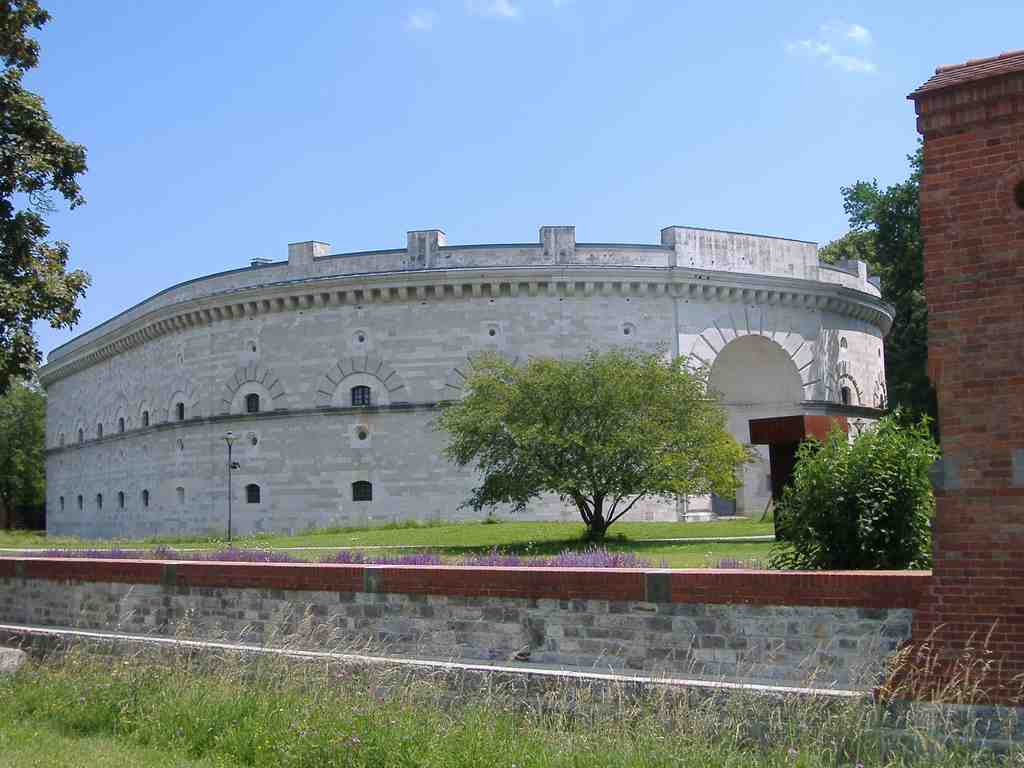
Look straight ahead for a massive, rounded, two-story stone building, with arched windows and a fortress-like feel - it curves gently and stands out in the middle of the open…Mehr lesenWeniger anzeigen
Look straight ahead for a massive, rounded, two-story stone building, with arched windows and a fortress-like feel - it curves gently and stands out in the middle of the open park. Welcome to the mighty Reduit Tilly! Imagine, if you will, the year is 1828. King Ludwig I wants a structure so solid even an army would break a sweat trying to get in. Under the mastermind architect Leo von Klenze and fortress specialist Michael von Streiter, this semi-circular colossus rises along the Danube, its thick walls ready to shelter cannons, soldiers, and, in the ultimate plot twist, even the royal family and their crown jewels if Bavaria ever faced invasion! The echo you hear isn’t just your footsteps - it’s centuries of soldiers drilling inside those barrel-shaped rooms and whispers of secret escape plans. Named after General Tilly, Bavaria’s tough-as-nails commander from the Thirty Years’ War (the kind of guy you wanted on your side), this place means business. But don’t let the stern look fool you - today, it’s home to a fascinating World War I exhibition. And after decades of guarding the kingdom, the Reduit was spruced up for the 1992 garden show and now keeps watch over Klenze Park, trading the clang of weapons for birdsong and family picnics. Imagine the stories these walls could tell - and maybe, just maybe, a jewel or two is still hiding somewhere inside!
Eigene Seite öffnen →Right in front of you, you’ll spot Klenze Park by its bright flowerbeds lining tidy gravel paths, and those distinctive old reddish-brick fortress walls peeking from behind a mix…Mehr lesenWeniger anzeigen
Right in front of you, you’ll spot Klenze Park by its bright flowerbeds lining tidy gravel paths, and those distinctive old reddish-brick fortress walls peeking from behind a mix of trees-just follow the scent of summer flowers and listen for laughter drifting across the greenery. Welcome to Klenze Park, which locals simply call “Klenze”-but don’t worry, you don’t need to be on a first-name basis to enjoy it! Imagine standing here back before 1992: instead of blooming gardens, this whole area was filled with crumbling warehouses and industrial rubble, the only visitors being the occasional lost pigeon. Then, in a stroke of inspiration-and a few thousand wheelbarrows of soil-it all changed for the Bavarian State Garden Show in 1992. The park was named after Leo von Klenze, a royal architect who gave the local fortress its dramatic facades. You’re standing in a place practically built on history, as these grounds hold fortresses like the Reduit Tilly and Turm Triva. Today, they house parts of the Bavarian Army and Police Museums. From spring through summer, about 100,000 people wander these lawns each month-mostly energetic teens, but also families, friends, and visitors who have traveled from afar just for a taste of Klenze’s magic. At the river’s edge is a footbridge straight into the old town, and there’s even a floating stage-someone tried to create a city beach here once, believe it or not! In August, things get competitive with the Schanzer Fishermen’s Joust, where participants try to knock each other into the Danube. And if you’re here at the end of the school year? Get ready, because the Klenzefest transforms this peaceful park into a wild bash for students-with music, bands, and plenty of supervised fun. Yes, security makes sure it’s all fun and games, rather than wild wrestling matches with beer bottles. So, breathe in that fresh river air, listen for laughter, and maybe hum a tune-because Klenze Park is a lush patchwork of stories, celebrations, and a dash of youthful mayhem!
Eigene Seite öffnen →Straight ahead you'll see a large, round white-stone fortress with small windows dotted all around its walls-look just past the trees and you can't miss its sturdy, commanding…Mehr lesenWeniger anzeigen
Straight ahead you'll see a large, round white-stone fortress with small windows dotted all around its walls-look just past the trees and you can't miss its sturdy, commanding presence. This is no ordinary fortress-welcome to the Bavarian Police Museum, tucked inside the formidable Turm Triva in Klenze Park. If you think police museums are all lost whistles and old hats, think again! Imagine walking through these arched halls while the scent of old leather uniforms and polished boots lingers in the air. The museum first opened in December 2011, but the story inside stretches back over a century-right to the spark of the 1918 revolution. Here, you’ll discover police badges that glint like treasure, sleek old motorcycles standing ready, and uniforms that once marched through key moments of Bavarian history. You might even hear the echo of clicking heels as an officer patrols the halls. Past exhibitions have shown everything from historic documents and rare vehicles to cameras and typewriters once used by Bavaria’s finest. One thought-provoking show even explored the police’s complicated role during the dark days of the Nazi era-a reminder that courage and conscience sometimes come into sharp conflict. So, ready to solve the mystery of Bavarian policing? Step on in-but don’t try to handcuff your guide!
Eigene Seite öffnen →In front of you is a simple, broad, grey steel bridge with sturdy concrete supports, stretching across the Danube river-just look straight ahead over the water and you can’t miss…Mehr lesenWeniger anzeigen
In front of you is a simple, broad, grey steel bridge with sturdy concrete supports, stretching across the Danube river-just look straight ahead over the water and you can’t miss it! Now, let’s unravel the story of the Konrad-Adenauer-Brücke-you’re standing by Ingolstadt’s first permanent post-war crossing over the Danube! Imagine the year is 1948, the city is still patching itself together after World War II, and crossing the river is more of a balancing act than a stroll. Locals were hoping for a fancy stone bridge, but the city council-always mindful of the budget, maybe after one too many sausage-and-dumpling lunches-chose steel instead. The bridge finally opened in 1952 under the name Donaubrücke. There were grand ideas for a tram line running through here, but those tracks stayed in people’s dreams, not on the pavement. In 1977 the bridge was named after Konrad Adenauer, Germany’s chancellor, but by the 1990s, it was creaking under the weight of progress and Schwabian bread deliveries alike. The solution? A facelift between 2001 and 2002, swapping out the old superstructure for a new one, all for a cool 4.1 million euros. Today, it bridges not only the Danube but also Ingolstadt’s old town and lively Klenzepark, standing as a true connector-solid, unassuming, and always up for a strong traffic jam.
Eigene Seite öffnen →

Häufig gestellte Fragen
Wie starte ich die Tour?
Laden Sie nach dem Kauf die AudaTours-App herunter und geben Sie Ihren Einlösecode ein. Die Tour ist sofort startbereit – tippen Sie einfach auf „Play“ und folgen Sie der GPS-geführten Route.
Benötige ich während der Tour Internet?
Nein! Laden Sie die Tour vor dem Start herunter und genießen Sie sie vollständig offline. Nur die Chat-Funktion benötigt Internet. Wir empfehlen den Download über WLAN, um mobiles Datenvolumen zu sparen.
Handelt es sich um eine geführte Gruppentour?
Nein – dies ist ein selbstgeführter Audioguide. Sie erkunden unabhängig in Ihrem eigenen Tempo, wobei die Audioerzählung über Ihr Telefon abgespielt wird. Kein Reiseleiter, keine Gruppe, kein Zeitplan.
Wie lange dauert die Tour?
Die meisten Touren dauern 60–90 Minuten, aber Sie kontrollieren das Tempo vollständig. Pausieren Sie, überspringen Sie Stopps oder machen Sie Pausen, wann immer Sie wollen.
Was, wenn ich die Tour heute nicht beenden kann?
Kein Problem! Touren haben lebenslangen Zugriff. Pausieren Sie und setzen Sie sie fort, wann immer Sie möchten – morgen, nächste Woche oder nächstes Jahr. Ihr Fortschritt wird gespeichert.
Welche Sprachen sind verfügbar?
Alle Touren sind in über 50 Sprachen verfügbar. Wählen Sie Ihre bevorzugte Sprache beim Einlösen Ihres Codes. Hinweis: Die Sprache kann nach der Tour-Generierung nicht mehr geändert werden.
Wo greife ich nach dem Kauf auf die Tour zu?
Laden Sie die kostenlose AudaTours-App aus dem App Store oder von Google Play herunter. Geben Sie Ihren Einlösecode (per E-Mail gesendet) ein, und die Tour erscheint in Ihrer Bibliothek, bereit zum Download und Start.
Wenn Ihnen die Tour nicht gefällt, erstatten wir Ihnen den Kaufpreis. Kontaktieren Sie uns unter [email protected]
Sicher bezahlen mit 


