
Paris Audio-Tour: Ein historischer Rundgang
Ein einziger Kopfsteinpflasterstein in Paris kann Jahrhunderte der Rebellion, Geheimnisse und des Überlebens flüstern, wenn man weiß, wo man hinhören muss. Entdecken Sie das Quartier Saint-Gervais auf dieser selbstgeführten Audio-Tour und wandern Sie durch geschichtsträchtige Straßen, wo sich die Geschichte hinter jedem Fensterladen und Schatten verbirgt. Erleben Sie die Stadt jenseits von Postkartenklischees, wenn Sie Gassen und Heiligtümer betreten, die viele Reisende übersehen. Welche stille Nachwirkung blieb nach dem Anschlag in der Rue des Rosiers? Wer verschwand hinter den alten Mauern des Kreuzgangs und der Kirche von Billettes im Schutz der Mitternacht? Warum birgt der Boden der Synagoge in der Rue Pavée die Antwort auf ein seltsam spezifisches architektonisches Geheimnis? Bewegen Sie sich durch Paris als Detektiv und Zeuge, folgen Sie den Echos verlorener Revolutionen, verblasster Skandale und des durch Turbulenzen geprüften Glaubens. Jedes Wahrzeichen verschiebt Ihre Perspektive, bis Sie die verborgene Seele dieser Stadt zum Leben erwachen sehen. Hören Sie, was die meisten nicht können. Beginnen Sie Ihre Reise, wo jeder Stein eine Geschichte erzählt.
Tourvorschau
Über diese Tour
- scheduleDauer 40–60 minsEigenes Tempo
- straighten2.9 km FußwegDem geführten Pfad folgen
- location_onStandortParis, Frankreich
- wifi_offFunktioniert offlineEinmal herunterladen, überall nutzen
- all_inclusiveLebenslanger ZugriffJederzeit wiederholen, für immer
- location_onStartet bei Place Saint-Gervais
Stopps auf dieser Tour
To spot Place Saint-Gervais, just look for the open trapezoid-shaped square framed by leafy trees and ringed by handsome old stone buildings, with the towering, ornate façade of…Mehr lesenWeniger anzeigen
To spot Place Saint-Gervais, just look for the open trapezoid-shaped square framed by leafy trees and ringed by handsome old stone buildings, with the towering, ornate façade of the Saint-Gervais-Saint-Protais church rising dramatically at the far end. Welcome to Place Saint-Gervais! As you stand here, take a deep breath and imagine the centuries pressing in all around you-because if these cobblestones could talk, they might never stop chattering! This square is one of the oldest crossroads in Paris, right in the very heart of the Saint-Gervais neighborhood-a place that’s seen more pageantry and peculiar happenings than a royal court on parade day. Let your eyes follow the trapezoidal shape of this open space, edged by the shadows of grand old buildings and the whispering leaves above. But, if you really want to tune into the spirit of Place Saint-Gervais, you’d better look for the legendary “Orme Saint-Gervais.” Don’t worry, you can’t miss it! It’s the proud elm tree standing before the church. Fun fact: this isn’t just any tree-it’s the latest in a long line of elms that have graced this spot since the Middle Ages! Back in those days, this place was called the “carrefour de l’Orme”-or Elm Crossroads. Why? Because, believe it or not, it was common to plant an elm before the main churches. And what an elm! Protected by a big chain, it was an all-star of Parisian community life. After mass, villagers would gather under its branches, finding shelter from the rain AND the sun-which, in Paris, sometimes happens in the same hour. Here, local judges settled disputes, landlords collected their rents, and townsfolk swapped stories, gossip, and probably a few questionable jokes. Artists loved this tree too! The “Orme Saint-Gervais” has been immortalized in paintings, carvings, and even on the church’s own choir stalls. But don’t think it was all neighborly chats and shade. If you lived here in the 1400s, you might have owed rent to the Duke of Guyenne, and you’d pay it right here at the foot of the elm. Imagine the tension-coins nervously clinking, eyes scanning the square, hoping your purse was heavy enough to appease the landlord. And let’s not forget, this lively hub was immortalized in poems as “l’Ourmetiau,” or “little elm,” when the tree was still a youthful sapling-just a sprout with a big future. Flash forward to the time of grand revolutions and sudden change: around 1790, the elm was chopped down to make room for an expanding, modern Paris. Its wood, legend says, went to the cannons-so from giving shade to giving firepower, the Place Saint-Gervais elm was truly a tree of many talents. Like any good Parisian square, Place Saint-Gervais evolved. In the 19th century, it was expanded and boxed in by elegant stone buildings, including military barracks-one for the Garde, another for municipal workers, all bustling with the city’s comings and goings. Nowadays, if you see people hurrying off to the Hôtel de Ville, they might just be passing the same space where, not so long ago, hopeful job-seekers gathered under the tree to “strike a deal”-quite literally! The current elm was planted in 1935, renewing a tradition that’s as rooted in Parisian life as the tree itself. And since 2025, the square also shelters the touching Jardin du 13 Novembre 2015, a living memorial to resilience in the face of tragedy. So, as you stand here, let your imagination reach back seven centuries. Feel the voices gathered, the judgments rendered, the laughter and the worries shared beneath spreading branches. In Place Saint-Gervais, history isn’t just beneath your feet-it’s in the air, in the shadows, and, of course, in the leaves overhead. Welcome to the crossroads of time in the heart of Paris! Ready to find out what’s around the next corner? Let’s go!
Eigene Seite öffnen →Take a look straight ahead-Baudoyer Square stretches out before you with its big stone-faced town hall and bustling open-air market stalls lined up under a canopy of trees. Now,…Mehr lesenWeniger anzeigen
Take a look straight ahead-Baudoyer Square stretches out before you with its big stone-faced town hall and bustling open-air market stalls lined up under a canopy of trees. Now, let’s imagine this spot, not just as a busy square in the heart of the Marais but as a place where time and history mix like the scents of fresh bread and wet cobblestones after a Parisian rain. Don’t worry, you’re not standing in just any square-it’s a stage where Romans, medieval knights, rebels, and even honeybees have all played a part! First, picture yourself stepping onto this square hundreds of years ago, when it wasn’t even a square. Back then, it was just the edge of the city-where the old Carolingian walls stood, guarding Paris since the 10th century. Somewhere around here, a mysterious “Porte Baudoyer” gate once stood, but nobody’s quite sure if the square got its name from the gate, or the other way round. Maybe it was the name of a long-forgotten defender, like Baudacharius, or maybe a Roman camp lay beyond. Historians have scratched their heads about the meaning for centuries-so if you have a good guess, you’re already in good company! Fast forward a few centuries, and by the Middle Ages this spot was called “place Baudoyer,” although you might have heard people mumbling “Baldaeri,” “Baudet,” or “Baudacharius.” So if you were a Parisian lost in a time warp, you’d better listen closely and answer to anything that sounds vaguely like Baudoyer! But now, take a deep breath and imagine the air thick with tension-a cemetery stretched out here in the 1500s, the “Vieux Cimetière Saint-Jean.” Under your feet are the secrets of Gallo-Roman and Merovingian skeletons, unearthed during construction centuries later-some of those bones went to the Catacombs nearby, but a few ancient reminders are still on display by the car park entrance. It sounds a little spooky, but there’s more: this wasn’t just for resting in peace. In the 16th century, it was the scene of public executions. Picture protestants like Barthélémy Milon and Étienne de la Forge, who faced their last days here-burned alive for their faith, while crowds gathered around, voices hushed or jeering. Suddenly, that lively market feels charged with echoes of old tragedies. Let’s shake off the chills and move forward. By the 18th century, the cemetery closed down-maybe Paris realized it was getting just a bit too crowded, both in the ground and above it! The square was renamed “Marché-Saint-Jean,” and new life bloomed, with lively markets and noisy traders selling everything from bread to butter. The grand avenue you saw on the way, rue de Rivoli, cut through the area in the mid-1800s, and the square was reshaped and officially named “Place Baudoyer” in 1868-a patchwork of the old and new. But what about those grand old buildings? Feast your eyes on the imposing mairie across the square-the elegant town hall for the 4th arrondissement, built between 1866 and 1868. Hidden inside: not just municipal offices, but a courtroom, a library, and an event space brimming with local life. Once, the Napoléon Barracks (Caserne Lobau) kept watch over the neighborhood, first as a military guardhouse, then as administrative headquarters-let’s just say this square has always had its eyes on things! And here’s a twist you might not expect: on the town hall roof there are five beehives, home to thousands of bees, quietly producing the chicest honey in Paris, “Miel No. 4.” So the next time you see a bee buzzing by, tip your hat-it might just be one of the neighborhood’s oldest residents! Of course, the best way to soak up Baudoyer Square is on market days. If you’re here on a Wednesday afternoon or Saturday morning, dive into the crowd, grab some cheese or fruit, and listen for the buzz of voices (and maybe the bees overhead). The square is a living tapestry-layers of mystery, memory, and a little everyday magic. Time travelers, history buffs, shoppers, and sweet tooths: welcome to Place Baudoyer, where every step has a story just beneath it-and who knows, maybe one day, yours will be next!
Eigene Seite öffnen →Look to your right and you’ll see a long stone façade topped by a slender bell tower with a cross, standing behind tall windows and beneath a distinct clock-welcome to the…Mehr lesenWeniger anzeigen
Look to your right and you’ll see a long stone façade topped by a slender bell tower with a cross, standing behind tall windows and beneath a distinct clock-welcome to the Cloister and Church of Billettes. Now, get ready for a story that has a little bit of everything: miracles, mystery, royal drama, and a healthy dose of Parisian stubbornness. Let’s set the scene: imagine the year is 1294-Paris smells of wet stone and street vendors are calling out their goods. Right where you’re standing, a wild legend was about to take root. According to the tale, a man called Jonathas, accused of profaning a holy communion wafer, wasn’t about to get off with a slap on the wrist. As the story went, when Jonathas cut into the host, it began to bleed! Not one to be outdone, he supposedly tossed it into boiling water-and what happened next? The host floated up and flew! Whether or not you believe in miracles, this tale caused an explosion of religious fervor, and soon, a chapel-called the “House of Miracles”-was built right here. The king at the time, Philippe IV, decided the land (taken from Jonathas after a very unfortunate day in court for him) could be put to better use. He handed it to Reinier Flaming, who then started the chain of buildings that grew layer by layer into the church you see now. Popularity bloomed; the place became a pilgrimage hotspot, and in 1405 a new, grander church was built, followed in 1427 by a cloister-so if these old stones could talk, they’d have at least six centuries’ worth of juicy secrets. One fun fact: that very cloister is the only surviving medieval cloister in all of Paris, a genuine time portal tucked inside the city. Through the centuries, Billettes transformed and adapted. By the 17th century, the Carmelite monks, also called the Carmes-Billettes, had taken over. But, in true Parisian spirit, the neighbors-specifically, those at Saint-Jean-en-Grève just down the road-objected loudly every time someone tried to rebuild or renovate. Lawsuits, angry petitions, and years of negotiations followed. You could say Parisian bureaucracy has always been a thing; some things just never go out of style! Let’s jump to the 18th century, when you’d have seen monks bustling about, heated debates in the Parliament of Paris, and a determined architect named Jacques Hardouin-Mansart de Sagonne-the last of the legendary Mansart architectural family-battling the neighbor’s complaints to rework the church. He borrowed ideas from his famous grandfather, adding classic touches like those “pots-à-feu” (those fire-pot finials) up on the façade and the palm decorations-keep your eyes sharp, you’ll spot mansart’s elegant style writ large against the sky. During the French Revolution, everything changed. The church and its adjoining cloister were decommissioned and sold off, the monks scattered. But here’s a twist worthy of a novel: what was once seen as a miracle site and then a Catholic monastery, became a home for Protestants-this was a big deal because, before the Revolution, Protestants weren’t allowed to worship freely in Paris. For a time, they were hidden away in embassies or exiled to the suburbs; then came the Declaration of the Rights of Man, and soon after, this very place became a symbol of the newfound religious freedom. In the 1800s, thanks to Napoleon, the Lutheran community was able to acquire the church, turning it into the vibrant Protestant parish it is today. Listen closely-if you were here in the 19th century you might’ve heard organ music rolling out the doors, French and German voices blending in hymns, and maybe the distant ringing of the church bell, gifted by a duchess. Even royal figures, like the princess Hélène de Mecklembourg-Schwerin, came here. Modern touches keep the story going: a sculptor reinvented the altar in the 1980s, contemporary artworks now fill the cloister, and today, it remains a lively venue for concerts and exhibitions-a keeper of memories and a hive of creativity. Take a moment to look up at the stately windows and that delicate bell tower, and let your imagination slip backwards-can you hear the echoes of monks’ footsteps, hopeful prayers, and maybe a medieval Parisian shouting, “Not on my street!”? The Cloister and Church of Billettes is one of those places where legends linger, and history is always just a whisper away.
Eigene Seite öffnen →
11 weitere Stationen anzeigenWeniger Stationen anzeigenexpand_moreexpand_less
To spot Saint-Croix-de-la-Bretonnerie Street, look for the gentle curve in the narrow road lined with handsome stone buildings and quaint shopfronts, just ahead of you. Ah,…Mehr lesenWeniger anzeigen
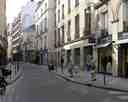
To spot Saint-Croix-de-la-Bretonnerie Street, look for the gentle curve in the narrow road lined with handsome stone buildings and quaint shopfronts, just ahead of you. Ah, welcome to Saint-Croix-de-la-Bretonnerie Street! Now, before you start looking for lost monks or secret treasures (though, to be honest, this street probably has both), take a deep breath and listen. You’re now standing on one of the oldest arteries of the Marais, where every stone seems to whisper stories from centuries past. Let’s wander back in time together-no time machine needed, just imagination and maybe a comfy pair of shoes. Picture this: it’s the 13th century, and Paris is full of mud, mystery, and the occasional monk on a mission. Right here, where you’re standing, a group of canons from Sainte-Croix, cloaked and crossing their hearts-literally, with embroidered crosses on their chests-set up a convent. They called it Sainte-Croix-de-la-Bretonnerie. If you squint, you can almost see them bustling around, eager to win favor from King Louis IX. According to an old tale by Joinville, the king was more than happy to help these pious newcomers, giving them shelter and a patch of land known as Carrefour du Temple, which would soon become Rue Sainte-Croix. But wait, there’s more! The “Bretonnerie” in the street’s name isn’t just a fancy Parisian flourish. Long before even the monks appeared, this was a place known as “Champ aux Bretons”-the field of the Bretons. Why? Legend has it that on a stormy night in 1228, five Englishmen (not the best night for sightseeing, let’s just say) snuck into the orchard belonging to a certain Renaud de Bréhan, a nobleman with royal Welsh connections and possibly a short temper. With only a trusty chaplain and loyal servant by his side, Renaud was challenged by these English rivals. Swords clashed, shouts echoed through the stone gardens, and by sunrise, three Englishmen were no more. The place where this dramatic scuffle took place became the “Champ aux Bretons,” and soon the entire street wore the name with a bit of swagger. By the time the canons arrived in 1258, they found not just a street but a patchwork of gardens, orchards, and scattered homes, all tucked safely inside the mighty walls of Philippe Auguste’s city. Over the next decades, their convent grew rich and powerful, a glittering beacon in the Marais. By 1314, the street had its full, elegant name-Saint-Croix-de-la-Bretonnerie. Picture grand homes rising along the cobbles, fashionable carriages rumbling by, and the air alive with the sound of bells calling the faithful to prayer. Every century has left a mark here. In the roaring 17th and 18th centuries, this very street was dressed to impress with stunning private mansions and delicate little hotels, many of which still line the road today. Imagine hushed secrets traded behind heavy doors, and Parisian astronomers-like Joseph Jérôme Lefrançois de Lalande at No. 16-studying the night sky through smoky glass. But fame here isn’t only about the elite; this street has played host to just about everyone: creative minds (like those at the legendary Les Mots à la bouche bookstore), chocolatiers (the Menier empire was founded at No. 37), and even brave botanists like Denis Dodart, who might have been your neighbor had you visited in the 1600s. Of course, nothing lasts forever. After centuries in the spiritual limelight, the priory closed in 1778, its buildings swept away during the tumults of the French Revolution. In its place, the square you might glimpse ahead was born-a little patch of green where echoes of the past still linger. These days, since the 1980s, the street has reinvented itself, trading medieval drama for vibrant, joyful energy-it’s now a cherished center of gay Paris, bubbling with cafés, cheerful chatter, and just a hint of that old rebellious spirit. So as you walk, listen closely-you just might catch the ghostly footfall of monks, the echoes of a midnight duel, or the faint crackle of Parisian laughter. This street has seen it all, and if you linger a while, perhaps it will let you in on a few more secrets before you wander on. If you're keen on discovering more about the location and access, origin of the name or the historical, head down to the chat section and engage with me.
Eigene Seite öffnen →Just ahead, you’ll spot the Street of the Francs-Bourgeois stretching out with its row of elegant, cream-colored historic buildings on either side-just look forward and you’ll see…Mehr lesenWeniger anzeigen
Just ahead, you’ll spot the Street of the Francs-Bourgeois stretching out with its row of elegant, cream-colored historic buildings on either side-just look forward and you’ll see its old Parisian lanterns dangling above the narrow, cobblestoned road, guiding your way. Welcome to one of Paris’s most characterful streets-where every step feels like a little time machine! Imagine standing here centuries ago, the air filled with the clatter of horses’ hooves, the cries of street vendors, and perhaps a whiff of fresh bread from an old bakery’s oven. The Street of the Francs-Bourgeois goes back to the 14th century, even though some say parts of its backbone once bordered the legendary wall of Philippe Auguste, the city’s ancient ramparts. It wasn’t always so grand-in fact, its name tells a story of compassion and struggle: “Francs-Bourgeois” refers to the poor who once lived here, exempt from taxes because of their dire circumstances, housed in what were called “homes of alms.” So, Paris was already finding clever ways around the taxman! Over the centuries, the street picked up all sorts of nicknames-a bit like an actor changing costumes-as trades moved in and out: it was once called “the street of pulleys,” thanks to the bustling weavers and their noisy contraptions. Picture it: the hum of weaving looms echoing off the stone, mixing with the laughter of children darting between trade carts. And don’t be fooled by the street’s chic vibe today-with its stylish boutiques and luxury shops, it wasn’t always this fashionable! For a long time, the area was lined with workshops and industries. The street could be downright grimy, and there were plenty of locals who might have hesitated to stroll here at night. In fact, the zigzagging path you notice as you walk-the odd recesses and curious corners-comes from centuries of new buildings being set back from the old, thanks to 19th-century rules about street width. So much for straight lines in Paris! Let your eyes wander up-see those grand old buildings, some with stately balconies and ornate stonework? Many of these are what the French call “hôtels particuliers”-the mansions of wealthy nobles and notable families from the 16th and 17th centuries. At number 8, you’d find the grand Hôtel d’Argouges, where the young Louis Daniel Beauperthuy lived when he was a student (no pressure for your own homework). Number 26 is the Hôtel Mortier, designed in the 1500s and jazzed up again in the 1700s-a genuine monument historique! If these walls could talk, they’d have gossip from royal times, revolutionary days, and the bustling 20th century. There was even a caserne here, at number 12, once packed with gendarmes, maybe ready to chase down a villain or two. And at number 24… a somber marker reminds us of Isidore Kargeman and his family, deported during World War II-just one of the street’s many echoes of the city’s turbulent past. A bit further along, you might notice the entrance to the Jardin de l'Hôtel-Lamoignon and the Hôtel Carnavalet. The arc at number 16 was brought here from the Île de la Cité and dates all the way back to medieval times-some people collect stamps; Parisians collect entire arches! Even the local industry has a flavor all its own. At number 39, imagine a foundry, the Société des Cendres, where jewelers would bring their sweepings-yes, their scraps!-and the workers would sift out every last speck of precious metal. Today, the building's been transformed, keeping a bit of its mysterious industrial flair. Now, here’s a twist for the book lovers and dreamers: at number 53, you’ll find the entrance to the beautiful Church of Notre-Dame-des-Blancs-Manteaux, while at numbers 35 and 37, the Maison de l’Europe and the Jardin des Rosiers hold secrets of poetry, music, and even some political intrigue from centuries past. Over time, the street has rolled with the punches-absorbing neighboring streets, changing names with the tidal wave of history (for a time, it was even called “Street of the Free Citizens” during the Revolution; now that’s some PR glow-up!). So as you walk, take in the clinking echo of distant footsteps, feel the shifting moods of centuries swirling around you, and imagine: merchants, noblemen, revolutionaries, even poets, all sharing this very stone path. The Francs-Bourgeois street is like a stage, and for a moment, you’re part of the show. Don’t forget to check for secret gardens and quirky doorways-they’re everywhere if you let your eyes wander.
Eigene Seite öffnen →To spot the Pavée Street Synagogue, look for a tall, narrow building with art nouveau details, marked by vertical lines of windows and a gently curved roof, nestled closely…Mehr lesenWeniger anzeigen
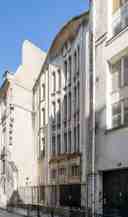
To spot the Pavée Street Synagogue, look for a tall, narrow building with art nouveau details, marked by vertical lines of windows and a gently curved roof, nestled closely between neighboring buildings at number 10 Rue Pavée. Now that you’re standing right outside, let’s step back in time and imagine a scene that’s equal parts Parisian glamour and a sprinkle of mystery-because this is no ordinary synagogue. In fact, it’s the only religious building designed by the legendary Art Nouveau architect Hector Guimard, better known for the Paris Metro entrances! Picture it: The year is 1913. This street is buzzing with the footfalls of newcomers from the east, Russian Jewish families arriving in search of safety and community. Out of the very narrow plot-just five meters wide!-Guimard creates a stone building that seems to stretch up, up, up into the Paris sky, like a prayer itself. This synagogue was not just a place to pray, but a bold announcement: Orthodoxy had made a home here in Paris. It was built for the Agoudas Hakehilos, an association born from nine Orthodox Jewish groups, and entirely funded by the community. On inauguration day, June 7, 1914, the famous cantor Gershon Sirota from Warsaw sang in celebration! Imagine the resonance of his voice filling the high, sunlit space-Guimard designed the interiors to soar with verticality, with two mezzanine levels flanking the main aisle, sunlight streaming through the glass roof and a grand window at the back. Now, here’s a quirky touch: If you look closely, you’ll see the wavy Art Nouveau lines on the façade echoed in the design of the pews inside-triangles and undulating shapes everywhere! And though today there’s a Star of David above the entrance, in the earliest days only a simple triangle marked the spot-sometimes, Jewish symbolism had to stay subtle. But this peaceful place has seen shadows, too. On the eve of Yom Kippur in 1941, tragedy struck. In the dead of night, as the city slept, collaborators dynamited this very synagogue-one of seven attacked that night by an extremist group allied with the Nazis. The damage left behind scars: the entryway was never completely restored to its original glory. Yet, like the spirit of those who worshipped here, the building endured-and was brought back to life. These walls have absorbed a century’s worth of voices: the prayers of Rabbi Joël Leib HaLevi Herzog, the wisdom of Rabbi Rottenberg and his son, the melodies of hazzans like Elinke Hirschin and Zousman Pessine, who tragically perished in Auschwitz. Each left a piece of their story here, stitched into the very fabric of the city. Today, the Pavée Street Synagogue still hums with life as an active Orthodox synagogue, though its doors stay closed to everyday visitors-unless Heritage Days roll around. And if the walls could whisper, they might share tales of survival, transformation and the gentle persistence of community in the heart of the Marais. So as you stand here, you’re not just at a building; you’re at a crossroads of memory and hope, with history looking you right in the eye. Now, ready for the next stop? Let’s keep exploring!
Eigene Seite öffnen →Look for the bright yellow corner building at the intersection, with a deep red awning and the words “Jo Goldenberg” above the entrance-it stands out with its large windows and…Mehr lesenWeniger anzeigen
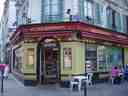
Look for the bright yellow corner building at the intersection, with a deep red awning and the words “Jo Goldenberg” above the entrance-it stands out with its large windows and little tables just outside. Alright, my friend, you’re standing at a corner that looks cheerful-red awnings, shining lights, and colorful tables set out for lunch. But if you listen closely to the cobblestones beneath your feet, they’ll whisper one of Paris’s most intense secrets. Here, in the Marais’s bustling Jewish Quarter, you’re at the infamous site of the 1982 attack on Rue des Rosiers-right in front of what used to be Jo Goldenberg’s famed restaurant. It’s a sunny Monday, August 9, 1982, and the scent of Central European Jewish cuisine drifts out the restaurant’s doors. Imagine about fifty hungry diners chatting and laughing, forks clinking on plates, the hum of Paris in the summer. Suddenly, a car screeches to a halt outside. The door flings open. Out steps a group-faces masked, gray suits, black bags slung on their shoulders. What happens next feels like something from a thriller, except the fear was all too real. Two to five men burst inside, tossing a grenade into the middle of the dining room. A flash, a bang-panicked screams shatter the lunchtime calm, as chairs tip and glasses crash to the ground. As smoke fills the air, the attackers fire their submachine guns at diners and staff. Before anyone can react, a second grenade is hurled. The group bolts for the street, shooting as they go, leaving chaos and heartbreak behind-six people dead, twenty-two wounded, and a wound in the neighborhood that still aches today. The scene spiraled into confusion. A courageous plainclothes policeman named André Douard, who just happened to be nearby, rushed in to help, gun drawn. In the midst of the panic, Marco Goldenberg, the owner’s son, tried to protect the restaurant by firing a hunting rifle out the window-but accidentally shot Douard, thinking he was one of the attackers. In less than three minutes, everything changed, and it left scars both physical and invisible. At first, nobody was sure who was responsible. Some thought it might be a homegrown extremist group, others looked toward the Middle East. The investigation became a real-life detective story: shattered grenades, Polish ammunition traced back to a notorious militant Palestinian faction-the Fatah-Revolutionary Council, led by the mysterious and dangerous Abu Nidal. The weapons, the method, the cold “shoot and run” tactics-it all pointed to this group. They’d struck from Paris to Vienna, Brussels to Rome, all under the relentless leadership of Abu Nidal, a man with more aliases than a spy novel villain. For years, theories buzzed around-some suggested even neo-Nazis might have been involved, thanks to a pair of German troublemakers passing through Paris. Portraits sketched, old photos checked, the mystery thickened, but by 2011, investigators were certain: the trail led back to the Revolutionary Council. They unmasked the team-code-named instructors, sharpshooters, planners-some living as far away as Norway and Jordan. And here’s a little Parisian twist: for years after, if you looked closely at the windows, you could see the impacts from the bullets, tiny reminders of what happened. (They were, you might say, Paris’s most chilling version of “window shopping.”) In 2011, the city placed a new memorial plaque after the original vanished-proof that history in Paris can get misplaced, just like your friend after too much wine. The attack sent shockwaves through France. President François Mitterrand came here to pay homage, but tempers were high-some blamed the government for not doing enough to protect the community. Mitterrand promised change, launching France’s first big anti-terrorist operations. Yet, even with new security, the attackers themselves seemed to vanish into thin air, smuggling themselves out of reach-until decades later, when international warrants caught up with a couple of them at last. In the end, Jo Goldenberg’s restaurant-once a symbol of laughter and good food-closed, but the memory of August 1982 endures. Just imagine how the sounds of the past echo through these streets: the explosion, the shouts, the sirens, the voices of Parisians vowing never to forget. Today, even as cafés fill up and music spills from windows, look around and feel the pulse of Parisian resilience and remembrance. And as you wander on, remember: every street corner in Paris has a story-some sweet, some bitter, and this one? It’s a powerful mix of both. Ready to keep exploring? Let’s go find some hope and history around the next bend! To delve deeper into the attack, investigation or the on the sidelines of the attack, simply drop your query in the chat section and I'll provide more information.
Eigene Seite öffnen →Right in front of you is King of Sicily Street-look for a narrow, winding lane lined with classic Parisian buildings, bustling cafes, and the unmistakable buzz of local city life…Mehr lesenWeniger anzeigen
Right in front of you is King of Sicily Street-look for a narrow, winding lane lined with classic Parisian buildings, bustling cafes, and the unmistakable buzz of local city life stretching ahead. Now, let’s step into the world of King of Sicily Street-don’t worry, you won’t need a crown or a sword, maybe just a good pair of walking shoes! Imagine this street over 700 years ago: no cars zipping by or families savoring ice cream at sidewalk tables. Instead, picture a gritty pathway, echoing with the sounds of horses’ hooves, merchants calling out their wares, and the faint scent of wood fires drifting from open windows. You’re standing on a route so old, it was already bustling back in 1261, making it one of the city’s ancient arteries that stitched together the heartbeat of medieval Paris. And if the name “King of Sicily Street” sounds like something out of a medieval fairy tale, you’d be right on track. Its name harks back to Charles I, Count of Anjou and Provence, and-just to throw some extra glamour in-brother to the legendary Saint Louis. Charles wasn’t just another noble looking for property with a good view; he became King of Naples and Sicily in 1266, and built a grand hotel right here. Imagine elaborate banquets, golden goblets, and walls thick enough to keep out the Parisian winter. This fabulous residence stood along what was once the wall of the old Philippe-Auguste city fortifications-a stone reminder that Paris was a city always ready for a little drama. Now, as centuries rolled by, this street wasn’t just a playground for royalty. At number 8 on this very street, you’d have found the legendary Cabaret du Gros-Pavé-a haunt that was famous enough to be captured by the photographer Eugène Atget in 1910. If you ever wondered where Parisians came for a bit of gossip, a glass of wine, and a hearty laugh, this would’ve been the spot. And at number 24, pause and glance upward-the building here, designed by Georges Debrie in 1898, still boasts its contest-winning Haussmannian façade with elegant balconies curling like mustaches above the street. Paris always did love a bit of flair with its architecture! King of Sicily Street has worn many faces over the years. In the 17th century, it was a key trunk road that sliced east to west across the city, running parallel to the Seine and feeding directly into the famed Rue Saint-Antoine. But don’t let all this grandeur fool you-the street had a wild side, too. By the 18th century, its shadowy corners and twisting alleys had gathered enough criminal tales to fill a detective’s notebook. It popped up frequently in criminal investigations, the background to stories of intrigue that would make even Sherlock Holmes want to peek around the next corner. And on the corner with Rue Vieille-du-Temple, you’ll find the former Hôtel de Vibraye. Today, it hosts a modern boutique, but if you look closely, you’ll spot a panel of mosaic from its days as a horse butcher shop-yes, with an actual horse on display. Paris might be a city of romance, but it’s never forgotten its carnivorous history! On the other side, at the corner with Rue Malher, once stood the massive prison La Force, a place so notorious that, when the crowds stormed the Bastille during the French Revolution, they didn’t forget to stop here and release debt prisoners for good measure. Later, the prison would echo with fear during the Reign of Terror before finally meeting the wrecking ball in 1845. Only a piece of the wall on Rue Malher remains, like the last page of a dark and gripping novel. Through all its changes-being renamed Rue des Droits-de-l’Homme during the Revolution, housing hat-makers and artists, or lending its name to a 1950s novel-King of Sicily Street has grown up along with Paris. As you look down its length today, imagine the footsteps of poets, thieves, revolutionaries, royalty, and everyday Parisians before you. The air here isn’t just filled with city sounds; it’s alive with stories, secrets, and-if you listen closely-a lingering whisper from the past. So go ahead, walk a little slower, glance up at the carved balconies and weathered plaques, and let your imagination fill in the missing centuries. Because on King of Sicily Street, history is just around every corner… and you never know if a king or a cobbler once stood right where you’re standing! Intrigued by the location and access, origin of the name or the historical? Explore further by joining me in the chat section below.
Eigene Seite öffnen →Right in front of you, you’ll spot the narrow, slightly uneven stretch of Rue des Écouffes by looking for its old Parisian façades and tiny balconies lining this cozy street,…Mehr lesenWeniger anzeigen
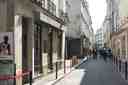
Right in front of you, you’ll spot the narrow, slightly uneven stretch of Rue des Écouffes by looking for its old Parisian façades and tiny balconies lining this cozy street, which stretches away from you with sunlight flickering on the pale stone walls and a handful of shops and passersby guiding your eyes deeper into history. Now let’s step back in time and imagine this street not just as it is now, but as a living, breathing slice of Parisian life unfolding through centuries. Rue des Écouffes is no ordinary street-it’s more like the Marais’s password-protected memory lane, sprinkled with secrets, stories, and a dash of old-fashioned drama. They say you can tell a good neighborhood by the company it keeps, and Rue des Écouffes has been welcoming everyone from bankers and bakers to painters and rabbis-plus the odd accordionist with a wild side. Here’s a fun riddle for you: why is it called Rue des Écouffes? Picture a time when store signs showed a bird of prey-a kite, called “escofles” in the old tongue-swooping above the doors. Some thought it meant pawnbrokers used to prowl these streets, others believed it came from a word for “fancy leather clothing.” But hang on to your baguette-the word for the bird “milan” only entered French in the 16th century, when the street’s name was already old news. Rue de l’Escoufle, as it was called in the 1200s, outdates all those clever guesses. Even the experts were stumped; maybe the street just liked playing hard to get. If you close your eyes for a moment, you might hear a wooden cart bouncing down the cobbles, feel the jolt of a pigeon taking off, or smell fresh bread-because this street, with its odd arrangement and irregular line, grew out of merging two ancient paths in 1854. Before then, it was two separate streets, each with their own flavors and faces, hugging the Marais and echoing with the steps of Jewish families, noble Parisians, and everyday folks. In the early 1900s, many houses here still showed their age with narrow, quirky fronts, big arched doorways, and ornate ironwork holding up window boxes full of geraniums. But change comes for even the snuggest corners: in the 17th and 18th centuries, Rue des Écouffes drew in Paris’s legal minds and money men, while later the Jewish ghetto, once crowded into nearby Rue des Juifs, began to spread its warmth, laughter, and heartbreak right here. If these stones could talk-oh, the gossip! At No. 2, the camera of legendary photographer Eugène Atget once captured a classic Parisian bakery. At No. 3, a brilliant historian named Charles du Fresne, sieur du Cange, scribbled away on ancient manuscripts, probably cursing the Paris traffic even then. At No. 6, things get a little more bohemian: this was once a house of, let’s say, “nightly entertainment,” where the aunt of famous accordionist Jo Privat ran the show and musicians mingled after dark. Beneath it all beats a deeper, prouder heart: Rue des Écouffes is a vital strand in the tapestry of Jewish Paris. At No. 18 stands the Beit Yossef synagogue and the Oratoire Fleischman, founded by Armand Fleischman for his beloved son, Roger, to fill the neighborhood with song, learning, and Hebrew prayers. Step quietly in your mind: the passage is humble, the courtyard peaceful, but the echo of children’s voices once learning Torah is still strong. After the horrors of the war, classes resumed for a while-proof that hope sometimes sneaks in on quiet feet. But there are sorrows marked here, too. No. 18 bears a stark plaque: a tribute to the Engros family, patriots lost to the horrors of Nazi occupation, who once lived and loved in these very walls. At No. 22, the Vel d’Hiv roundup sent forty-four residents-adults and children-into darkness, their cries a haunting reminder of how this joyful street was shadowed by loss. Yet resilience lives on: No. 23 hosts the Marais’s oldest Jewish bookstore, still standing after more than a hundred years, just across from lively kosher restaurants and the shops where you might hear laughter or catch the scent of cumin on the breeze. Famous painters called this street home, like Philippe de Champaigne at No. 20. There’s even a dash of literary flair-Nestor Burma, the hard-nosed detective of Paris, solved mysteries right here in novels and on the little screen. So as you stroll along the Rue des Écouffes today, take a moment to run your fingers along the worn stone, listen for the echoes, and remember: this little street is a patchwork quilt of centuries, cultures, and dreams-stitched together, a memory at every step, still pulsing with the heartbeat of the Marais. And don’t worry, your next stop has even more secrets in store! Seeking more information about the location and access, origin of the name or the historical? Ask away in the chat section and I'll fill you in.
Eigene Seite öffnen →To spot La Force Prison, look for a tall, stern stone building with heavy iron-barred windows and an arched gateway, set deep in a courtyard-the grim, fortress-like structure…Mehr lesenWeniger anzeigen
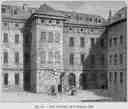
To spot La Force Prison, look for a tall, stern stone building with heavy iron-barred windows and an arched gateway, set deep in a courtyard-the grim, fortress-like structure stands out from anything else nearby. Alright, steel your nerves and imagine yourself standing before the infamous La Force Prison, once the ultimate lock-up for those who ran afoul of Parisian society, whether for unpaid debts, scandalous behavior, or simply being on the wrong side of history! The thick, stone walls before you were designed not only to keep prisoners in, but also to keep the chaos of the Revolution out-or at least, so they hoped. It was originally not a prison at all, but a luxurious mansion called Hôtel de la Force, built for a wealthy nobleman. Picture this quiet street filled with carriages, servants hurrying about, and perhaps a faint aroma of perfume wafting from its stately rooms. But oh, times do change in Paris! When the walls of this grand townhouse echoed with laughter and clinking glasses during grand banquets, nobody could have guessed what awaited. By the reign of Louis XIV, the property was split in two-one side would become the somber Hôtel de Brienne, the other clinging to its old name. Fast forward to 1754, and suddenly you have the state stepping in. By 1780, the mansion had gone from party palace to penitentiary, the velvet curtains traded for iron bars, and the sweeping staircases now echoing with the heavy footsteps of jailers. From the outside, the Grande Force-this very spot-might have looked stately, even a bit elegant, with its yards lined with trees and spacious buildings. But don’t be fooled! Inside, it was a world of gray stone, rattling keys, whispered secrets, and, probably, an awful lot of complaining about the food. The “good” accommodations were for gentlemen prisoners who could afford a bit of comfort, with a view of the trees and perhaps a book or two; the rest contended with cold, damp chambers and the steady drip of water as their only music. Across the way, La Petite Force rose up grimly-a forbidding three-story block, utterly devoid of wood or plaster, carved wholly from stone and lashed together with iron. La Petite Force was especially notorious, built to house women accused of prostitution. The entrance arch greeted you like a giant, toothy mouth waiting to snap shut behind you, and above it all, a stern Doric cornice. Smells of stone dust, candle wax, and desperation would have filled the air. And this place has witnessed terror that even the most imaginative novelist would struggle to describe. When the French Revolution unleashed its fury, the walls shook not with applause but with the roar of vengeance-seeking crowds. During the terrifying September Massacres of 1792, over a hundred prisoners-some famous, like Princesse de Lamballe, a friend of Marie Antoinette-were dragged from their cells and killed right here. You can almost hear the shouts, the banging on the gates, the mounting fear in every cracking echo. Afterward, the two prisons-male and female-were eventually combined. The new system tried to keep hardened criminals away from the young and not-yet-convicted, and believe it or not, prisoners had a few perks: work if you wanted, a little privacy, and maybe a bath every now and then, which was more than most eighteenth-century Parisians got! Over the years, this was the temporary home of revolutionaries, poets, spies, shady noblemen, and-just to keep things interesting-fictional characters from Victor Hugo’s Les Misérables, Balzac’s dramas, and even Dickens’s Tale of Two Cities. If these walls could talk, they’d tell tales of whispered plots and desperate hopes. By 1845, the prison was torn down, leaving behind only a fragment of its wall beside the City of Paris Historical Library. So as you stand here now, listen close: the ghosts of La Force might just be rehearsing the latest scene from their endless, haunted tale. I always say-Paris never really lets its scandals rest in peace! Want to explore the la grande force, la petite force or the notable prisoners in more depth? Join me in the chat section for a detailed discussion.
Eigene Seite öffnen →To spot Saint-Gervais-Saint-Protais, just look ahead for an impressive, creamy stone church with three layers of columns stacked grandly on top of each other, crowned by a cross…Mehr lesenWeniger anzeigen
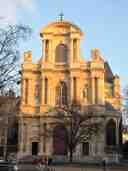
To spot Saint-Gervais-Saint-Protais, just look ahead for an impressive, creamy stone church with three layers of columns stacked grandly on top of each other, crowned by a cross and two angel statues-its facade glows in the sunlight and towers above the square. Welcome! Pause for a moment in front of this magnificent church-Saint-Gervais-Saint-Protais-and imagine that you’re standing where Parisians have gathered for nearly 1,400 years. The morning sun flickers off its creamy baroque facade, which rises like a three-tiered wedding cake dressed with columns and angels. Not bad for a building that started its journey in the dark, flooding days of early medieval Paris! Let’s rewind time and step into the shoes of the fishermen and boatmen who first used this spot in the 7th century. Many came off the nearby river, soaking wet and probably hoping the church would pray their socks dry. It was built up on a low hill to stay dry when the Seine turned into Paris’ biggest swimming pool. The first churches here were humble, but with the growing Marais neighborhood and more money from wine merchants-cheers to them!-a grander building rose in the 1200s. Not content to stop there, the Parisians spent over a century building this very church starting in 1494. Between wars, shortages, and what I suspect were some very long lunch breaks, it slowly took shape. What began as a gothic vision was joined by a dazzling new facade in the 1600s-given its first stone by none other than a young Louis XIII. The style? The first French Baroque in Paris! Here’s a secret: at one point, people couldn’t even see the gorgeous front because it was blocked by other buildings. Famous writer Voltaire once complained, “It is a masterpiece which is lacking nothing except a place from which to see it.” Paris finally cleared the view in 1854, and I bet the building has been showing off ever since! Now, if you go inside, you’ll be struck by the jaw-dropping height of the nave, soaring over you like a gothic ribcage, and lit by windows full of shimmering colors, both centuries-old and strikingly modern. This is a church with serious musical credentials: Saint-Gervais-Saint-Protais was practically the clubhouse for the Couperin family-famous baroque composers and organists. Their house is just next door, and you can still see and hear their beloved organ, an instrument so grand it’s a registered historic monument. Not just anyone can say their family organ is protected by the French government! Let’s not forget the drama. In March 1918, as the people here gathered on Good Friday, a terrible shell crashed through the roof, killing many. It was the worst single loss of civilian life in Paris during World War I bombings. Even with that tragedy, the church’s walls stood strong, holding memories amidst the music and prayers. Walk toward the carved wooden choir stalls-some are centuries old and more than a little cheeky, showing scenes from daily life, wild animals, even a man and a woman bathing together! Apparently, later churchgoers were a bit shocked and tried to cover up the naughty bits. And don’t miss the Chapel of the Virgin at the back, where a huge stone crown floats in midair like it’s waiting for a royal to walk in. The glass here is truly Paris’ story told in color: Renaissance scenes meet windows painted just a few decades ago by artists Sylvie Gaudin and Claude Courageux. Throughout the 17th and 18th centuries, the Marais’ aristocratic families filled these pews, their footsteps mingling with the fishermen’s ghosts. During the French Revolution, however, Saint-Gervais was emptied and transformed into the very serious-sounding "Temple of Reason and Youth." Luckily, it was returned to the church in 1802, and today, it’s the headquarters for the Monastic Fraternities of Jerusalem-a unique order keeping monastic life alive in the very heart of the city. So whether you feel a little grand, a bit musical, or even slightly mischievous, Saint-Gervais-Saint-Protais has something for everyone. Take a deep breath-you’re standing in a living timeline of Paris itself. Let's move on! Wondering about the facade, nave or the choir stalls? Feel free to discuss it further in the chat section below.
Eigene Seite öffnen →To spot City Hall Street, look for a narrow street edged with pale stone buildings, and keep your eyes peeled to the right-there’s a striking turret with a cone-shaped slate roof…Mehr lesenWeniger anzeigen
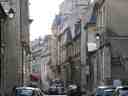
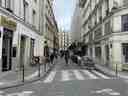
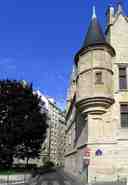
To spot City Hall Street, look for a narrow street edged with pale stone buildings, and keep your eyes peeled to the right-there’s a striking turret with a cone-shaped slate roof protruding from the corner, making the entrance hard to miss! Now, as you stand at the edge of City Hall Street, let your imagination drift back-not just a few years, but centuries. This street, stretching nearly half a kilometer from the Hôtel de Sens to Rue de Brosse, follows more or less the same curve it has for 800 years, shadowing the great Seine and humming with echoes from every era Paris has seen. Let’s peel back the layers: the smooth stones under your feet have felt the patter of medieval boots, the clattering hooves of horse-drawn carts, the parade of religious processions, even the thunder of revolution. This road didn’t always bear the grand title of City Hall Street. Back in the 13th century, it was first called “rue de la Foulerie,” thanks to the fouleurs, or fullers, who busied themselves washing and ‘fulling’ wool, using water from the nearby river. Later came the “morteliers”-no, not a band of nighttime assassins, as some dramatic storytellers claimed, but hardworking masons who specialized in making ‘mortiers’-huge stone troughs for mixing mortar. Their sweat and dust gave the street its long-held name: rue de la Mortellerie. But the truth isn’t always just about bricks. In the Middle Ages, this sector was the lifeblood of a bustling village of fishermen and boatmen, flanked by tiny side alleys with such poetic names as rue du Paon-Blanc and ruelle des Trois-Maures. Picture it: the air thick with the smell of wet stone, the river’s mist mingling with the shouts of masons and the clanging tools of the men breaking rocks into dust for cement. Imagine religious processions weaving slowly from Notre-Dame to distant churches, winding their solemn way through the crowd and chaos. The street has seen its share of shadows too. A devastating cholera epidemic swept through Paris in 1832, leaving heartbreak in its wake. Here in Mortellerie, out of fewer than 5,000 residents, over 300 lost their lives-an unimaginable heartbreak in a tight-knit community. The stories of grief and resilience echo in these very walls. In 1835, the street got its more dignified name-rue de l’Hôtel-de-Ville-because if you keep walking, it leads you straight to the heart of Paris’s civic life, the majestic Hôtel de Ville. And yet, not all was peace. In June 1848, these stones were blasted and bloodied in the swirling chaos of revolution-imagine barricades rising where you stand, while the artist Ernest Meissonier captured the clash for immortality in his famous painting. Things changed in the name of progress. Whole stretches of buildings and ancient alleys were swept away, like dust off a cobblestone, especially after the grim devastation of World War I. Streets that once connected to the quay disappeared, replaced by the grander, straighter roads of the modern city. Somewhere under your feet lies the memory of the old rue de la Masure and the deeply historic, but very narrow, rue du Paon-Blanc. But City Hall Street is more than lost alleys and vanished masons. Look for house number 56-its cellar is officially protected for its age. At No. 62, the restaurant Chez Julien occupies an old auberge, still showing off an ornate 1820s cast-iron grill, and its painted ceiling will have you feeling like you’ve wandered into a storybook sky. Or peer up at No. 80, where the sundial and pediment come from another lost street, quietly ticking off the time as the city races on. Even in its present-day hush, where you can hear your own footsteps, City Hall Street carries magic-a place where every stone, every shadow, has a story, and where the ghosts of masons, fishers, revolutionaries, and Parisians lost and found linger on. Welcome, friend, to a crossroads of memory and living history… where the city’s beating heart is never far away. And hey, keep your eyes open-a little Parisian magic might just be hiding in the next window!
Eigene Seite öffnen →To spot Saint-Paul-Saint-Louis in front of you, just look for the grand stone façade loaded with carved columns, three statues gazing down, a golden clock at the center, and huge…Mehr lesenWeniger anzeigen
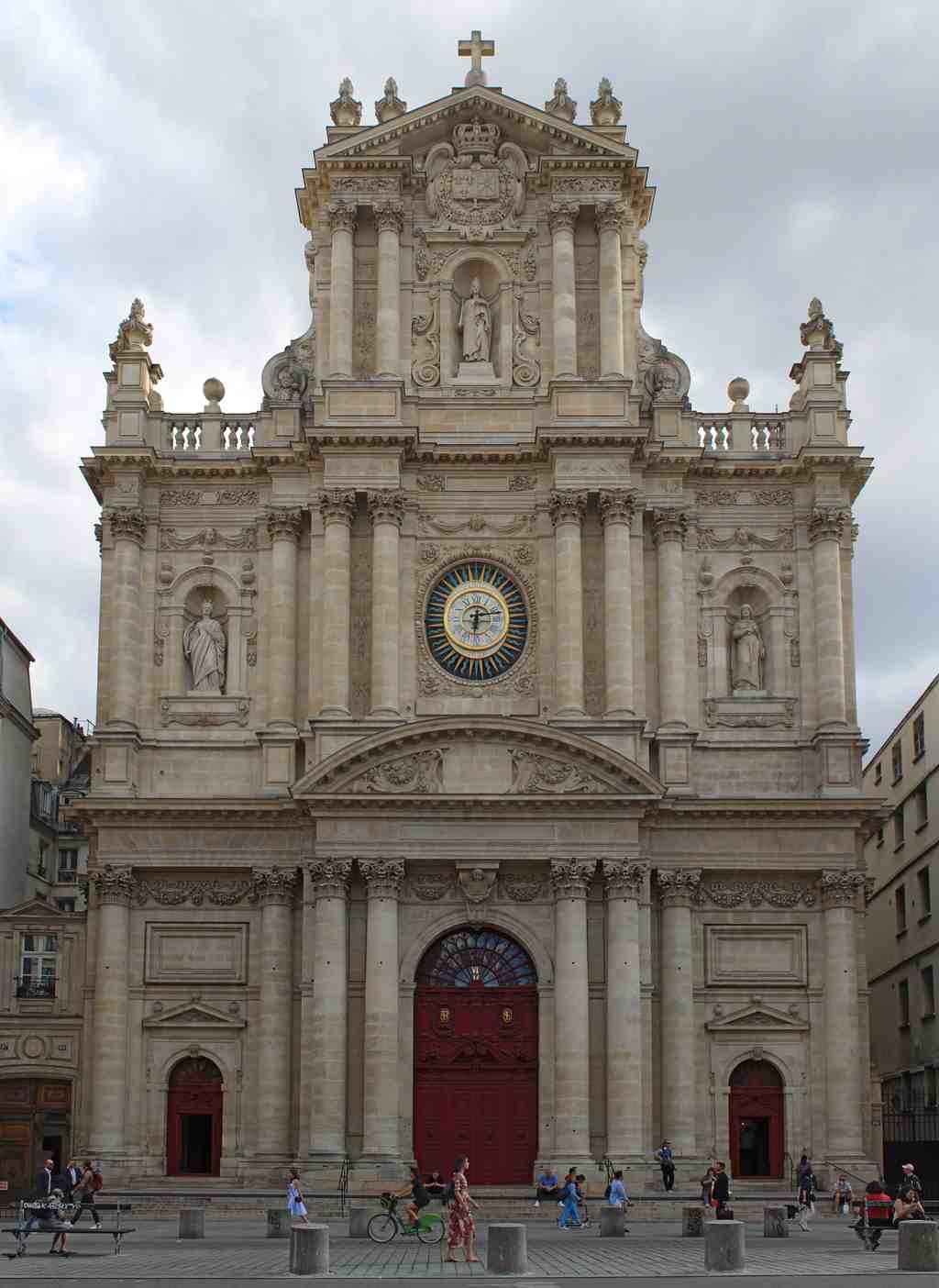
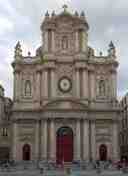
To spot Saint-Paul-Saint-Louis in front of you, just look for the grand stone façade loaded with carved columns, three statues gazing down, a golden clock at the center, and huge red doors right beneath-all stacked up like a cake designed by an over-caffeinated architect. Now, step into one of the most dramatic chapters in Parisian church history! Imagine it’s the early 1600s-horses clop down Rue Saint-Antoine, and the Marais quarter isn’t quite as fashionable as today. Suddenly, a bold new church rises above the city’s rooftops. Built from 1627 to 1641 by two determined Jesuit architects, Étienne Martellange and François Derand, this marvel didn’t just settle for Gothic arches. Instead, they went all-in on the fancy new Baroque style-think more sparkle, more drama, and a whole lot more wow. It was the first in all of Paris to do this, and it sparked a trend hotter than Parisian bread at sunrise. But before this, the ground beneath your feet was holy in a wilder way. An older church, Saint-Paul-des-Champs, stood here as far back as 1125, serving up baptisms for notables like Madame de Sévigné and attracting legendary locals like the chemist Antoine Lavoisier-until he sadly lost his head (and his church membership) to the guillotine during the Revolution. Behind it, a cemetery once teemed with whispers, holding the remains of everyone from François Rabelais to the architect François Mansart. Today, that’s all gone, but a scrap of the old wall still clings to existence next to the Lycée Charlemagne, like a historical hangnail. Flash forward, and the Jesuits set up shop here, building this dazzling house of worship with Louis XIII himself laying the first stone-proving even kings enjoy a little DIY. The church was decked out for grand audiences: imagine Cardinal Richelieu saying mass on opening day, or the Jesuit preacher Louis Bourdaloue thundering from the pulpit and drawing crowds bigger than a Paris sale at Galeries Lafayette. The church quickly earned a reputation for soul-stirring music too, featuring future superstars like Marc-Antoine Charpentier and Jean-Philippe Rameau at the organ keys and choirs that made the stones tremble. In fact, the Jesuits here became the official “conscience directors” of France’s kings-talk about job security! Oh, but no church in Paris gets to coast for long. The Jesuits had a royal falling out in 1762 and got kicked out, and the church got handed over to a different religious crew. Even so, it remained a secret treasure house for history: it once hid the hearts of Louis XIII and Louis XIV after the Revolution (no, not metaphorically-the actual hearts, sealed in urns!). The Revolutionaries stormed in and turned the church into a temple for their wild new “Cult of Reason,” and at one dark moment, the church witnessed the killing of five priests during the September Massacres-a memory still marked by a plaque. Once peace returned, Saint-Paul-Saint-Louis reclaimed its magic, gathering up big-name artists too. Delacroix himself painted Christ in the Garden of Olives for the church. And right by the entrance, look for the giant clamshell holy water bowls-donated by none other than Victor Hugo after his daughter got married here in 1843. This place has seen both love and loss: just seven months after her wedding in this church, Leopoldine was swept away with her husband in a tragic river accident. And while the exterior shows off its Baroque muscles-columns everywhere, statues almost stepping out to greet you, and a dome that was one of the first in Paris-the inside is pure theater. Flooded with light, shimmering with white stained glass (so much more upbeat than the medieval gloom), sculpture is crammed into every nook, and the paintings bring saints, kings, and martyrs to life. Every sound is rich and grand, especially when the organ lets loose-its pipes and pedals have survived revolution, restoration, and even modern wiring. So take in those three statues above the door, the golden clock, and the sense that you’re standing where drama, beauty, faith, and ambition all collided-turning a once-middle-of-nowhere parish into one dazzling symbol of Parisian style and resilience. If you're curious about the exterior, interior or the art and decoration, the chat section below is the perfect place to seek clarification.
Eigene Seite öffnen →
Häufig gestellte Fragen
Wie starte ich die Tour?
Laden Sie nach dem Kauf die AudaTours-App herunter und geben Sie Ihren Einlösecode ein. Die Tour ist sofort startbereit – tippen Sie einfach auf „Play“ und folgen Sie der GPS-geführten Route.
Benötige ich während der Tour Internet?
Nein! Laden Sie die Tour vor dem Start herunter und genießen Sie sie vollständig offline. Nur die Chat-Funktion benötigt Internet. Wir empfehlen den Download über WLAN, um mobiles Datenvolumen zu sparen.
Handelt es sich um eine geführte Gruppentour?
Nein – dies ist ein selbstgeführter Audioguide. Sie erkunden unabhängig in Ihrem eigenen Tempo, wobei die Audioerzählung über Ihr Telefon abgespielt wird. Kein Reiseleiter, keine Gruppe, kein Zeitplan.
Wie lange dauert die Tour?
Die meisten Touren dauern 60–90 Minuten, aber Sie kontrollieren das Tempo vollständig. Pausieren Sie, überspringen Sie Stopps oder machen Sie Pausen, wann immer Sie wollen.
Was, wenn ich die Tour heute nicht beenden kann?
Kein Problem! Touren haben lebenslangen Zugriff. Pausieren Sie und setzen Sie sie fort, wann immer Sie möchten – morgen, nächste Woche oder nächstes Jahr. Ihr Fortschritt wird gespeichert.
Welche Sprachen sind verfügbar?
Alle Touren sind in über 50 Sprachen verfügbar. Wählen Sie Ihre bevorzugte Sprache beim Einlösen Ihres Codes. Hinweis: Die Sprache kann nach der Tour-Generierung nicht mehr geändert werden.
Wo greife ich nach dem Kauf auf die Tour zu?
Laden Sie die kostenlose AudaTours-App aus dem App Store oder von Google Play herunter. Geben Sie Ihren Einlösecode (per E-Mail gesendet) ein, und die Tour erscheint in Ihrer Bibliothek, bereit zum Download und Start.
Wenn Ihnen die Tour nicht gefällt, erstatten wir Ihnen den Kaufpreis. Kontaktieren Sie uns unter [email protected]
Sicher bezahlen mit 


