
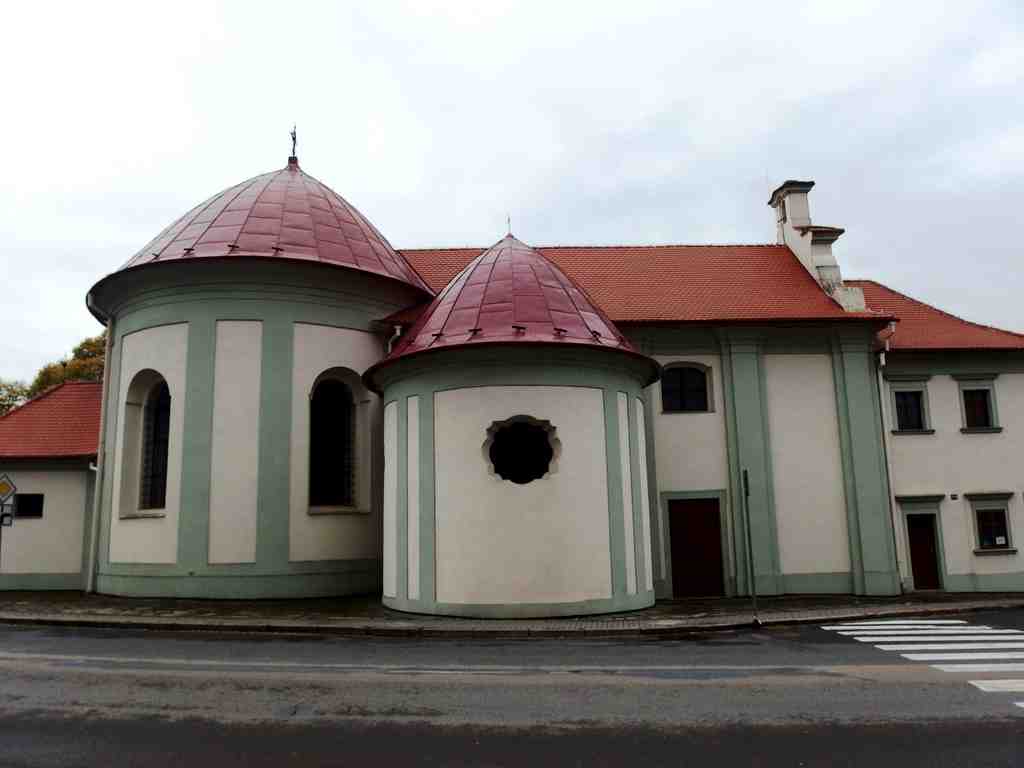
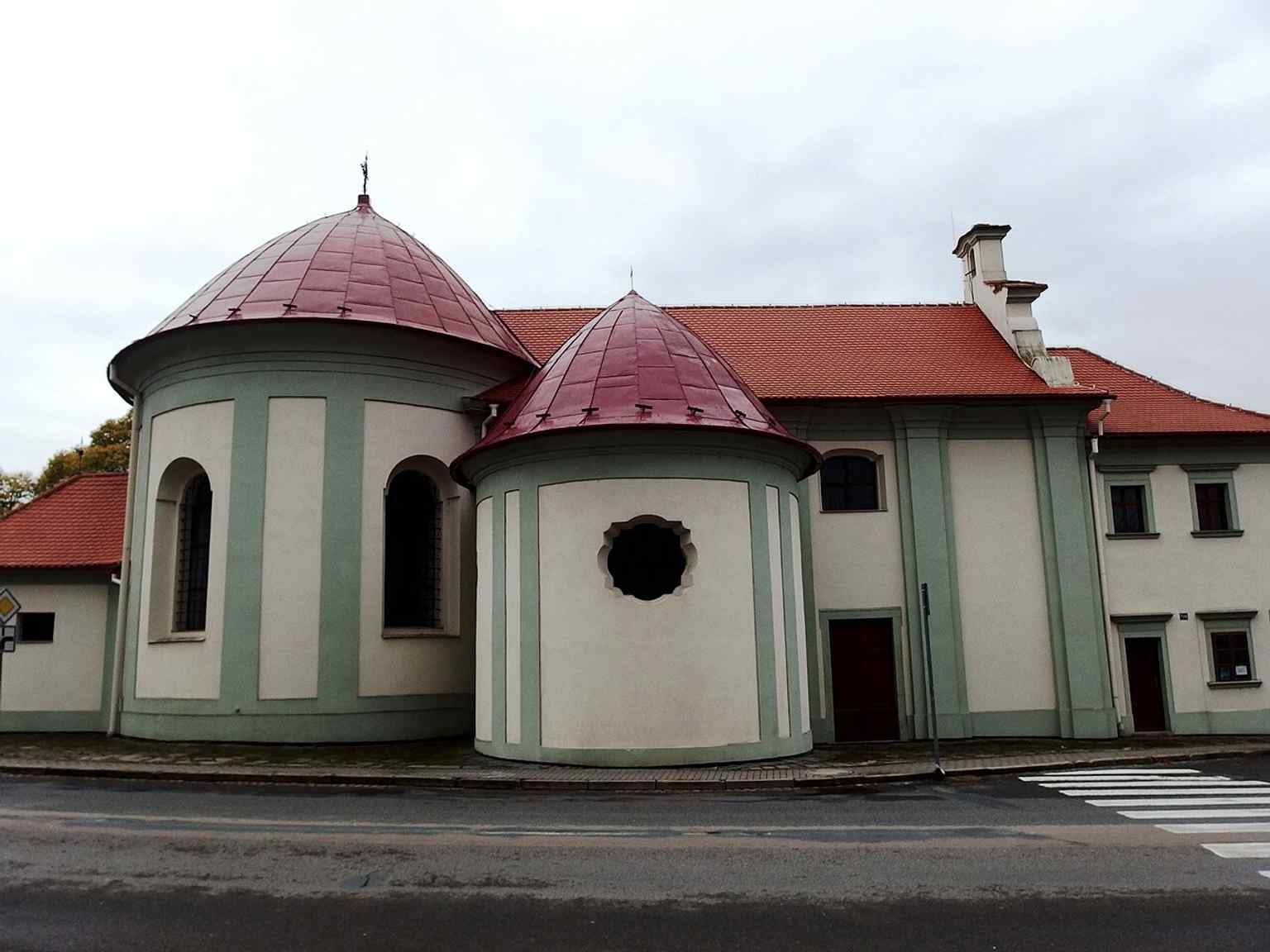
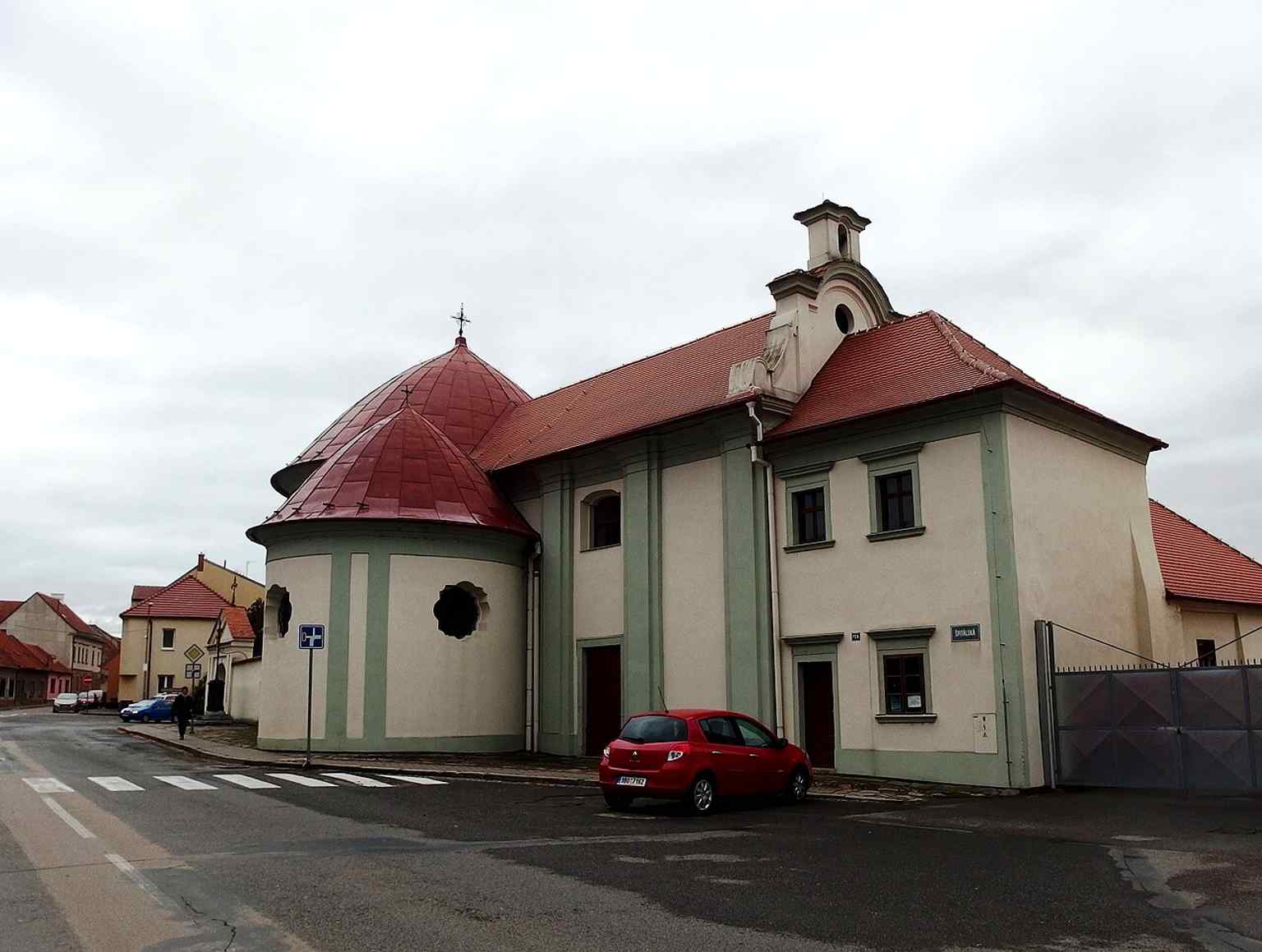
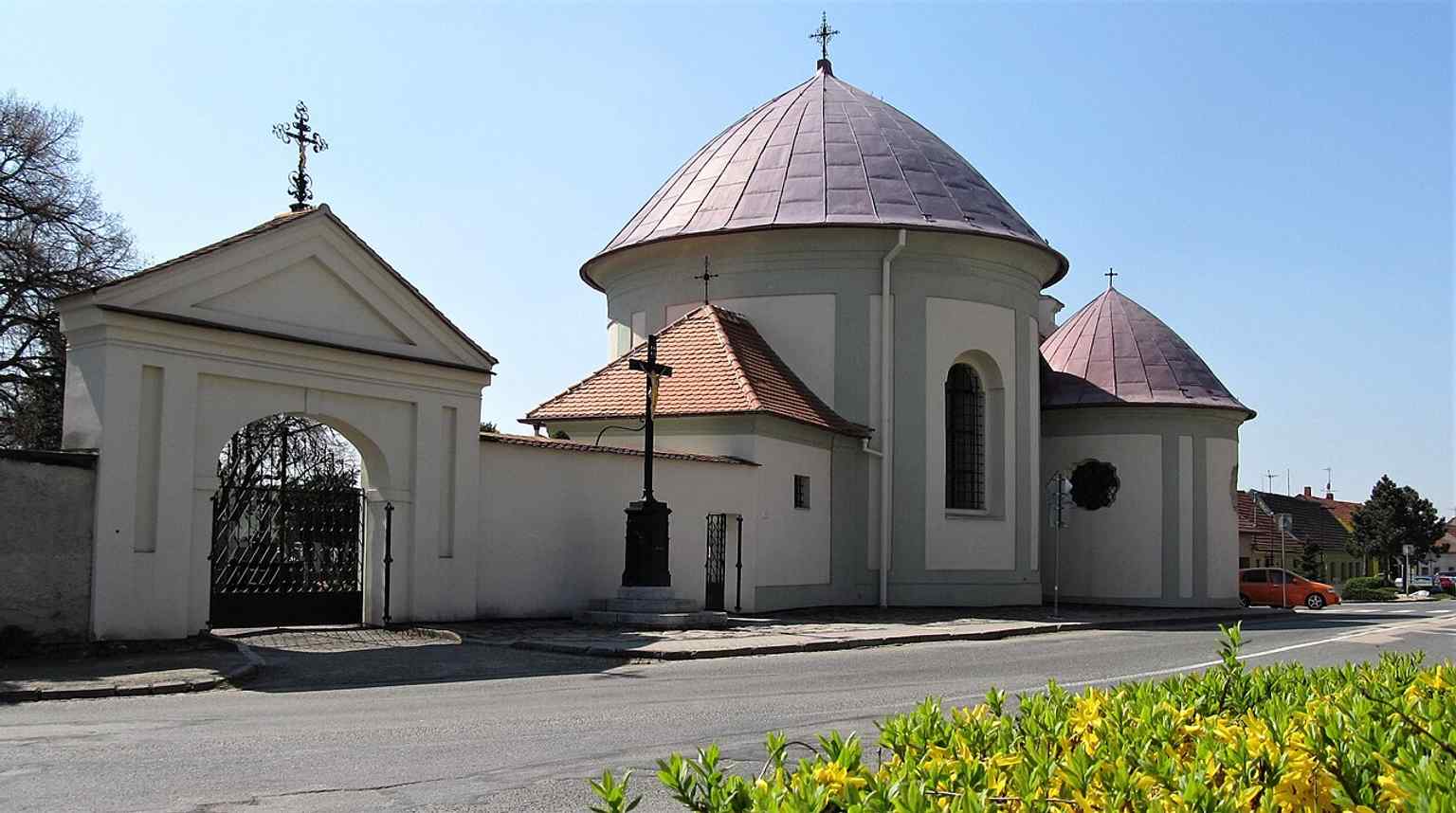
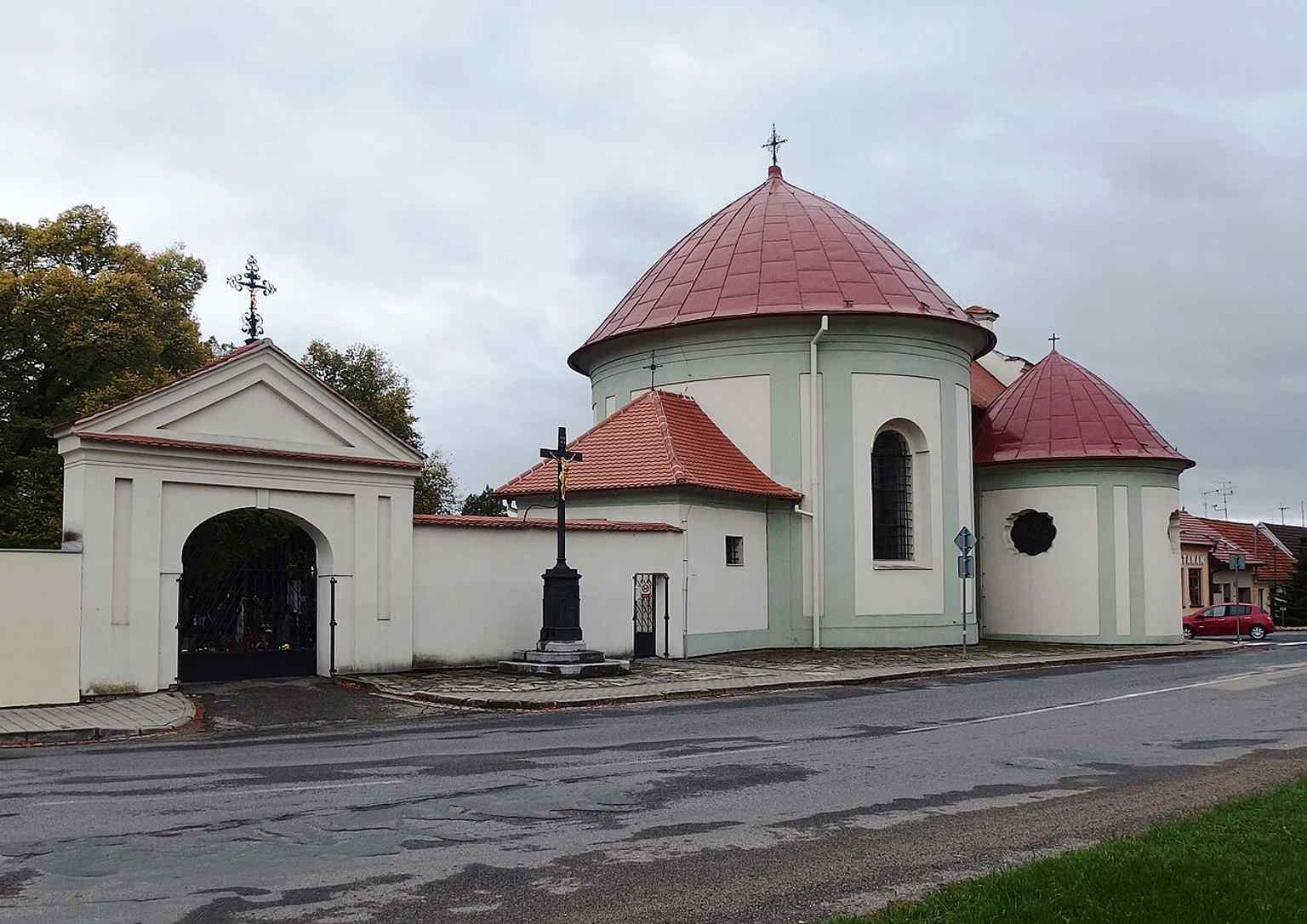
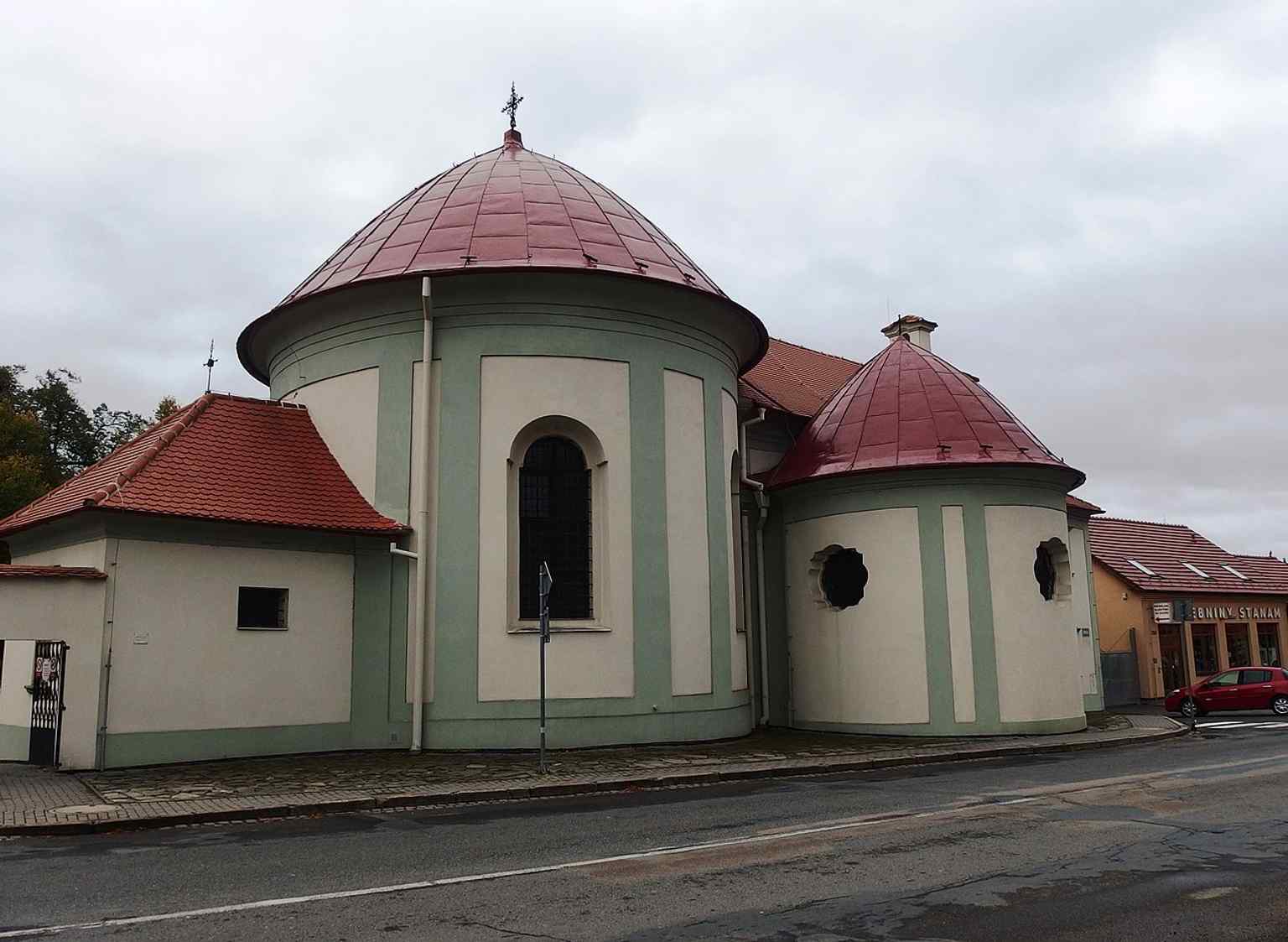
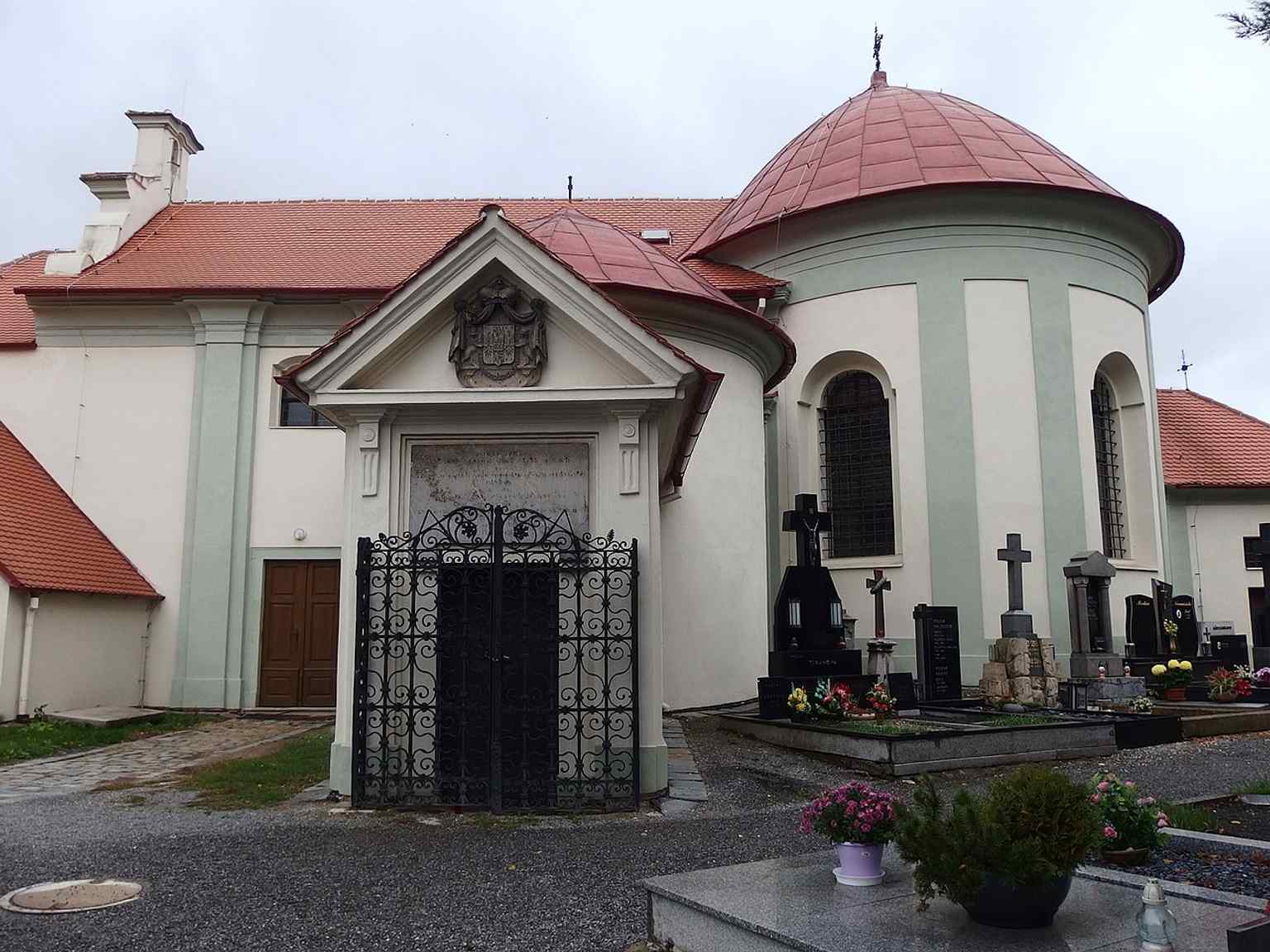
You should be seeing a building with smooth white and pale green walls, defined by its curving domed sections topped with red roofing, and a small, uniquely shaped circular window cut into the side of the closest rounded section.
Welcome to the Chapel of St. John the Baptist. At first glance, this place has a very peaceful, Baroque charm, but its roots stretch way back to the thirteenth century. Back then, a Catholic military order known as the Teutonic Knights ran a hospital right on this spot. It was not a hospital like we think of today with bright lights and heart monitors, but rather a medieval haven for the poor and the frail. The whole surrounding neighborhood was even named Hospital Suburb. Over the centuries, the original Gothic building was destroyed during various wars and then rebuilt, eventually expanding into the connected complex you see now.
If you want a peek at the architectural bones of this place, pull up your screen. Inside, the chapel is built in what is called a trefoil cross layout. Basically, instead of a standard rectangular room, the floor plan branches out like a three-leaf clover, creating these wonderful oval side chapels that sit under lower domes, leading up to a towering central dome over the main altar. It gives the interior a real sense of sweeping motion.
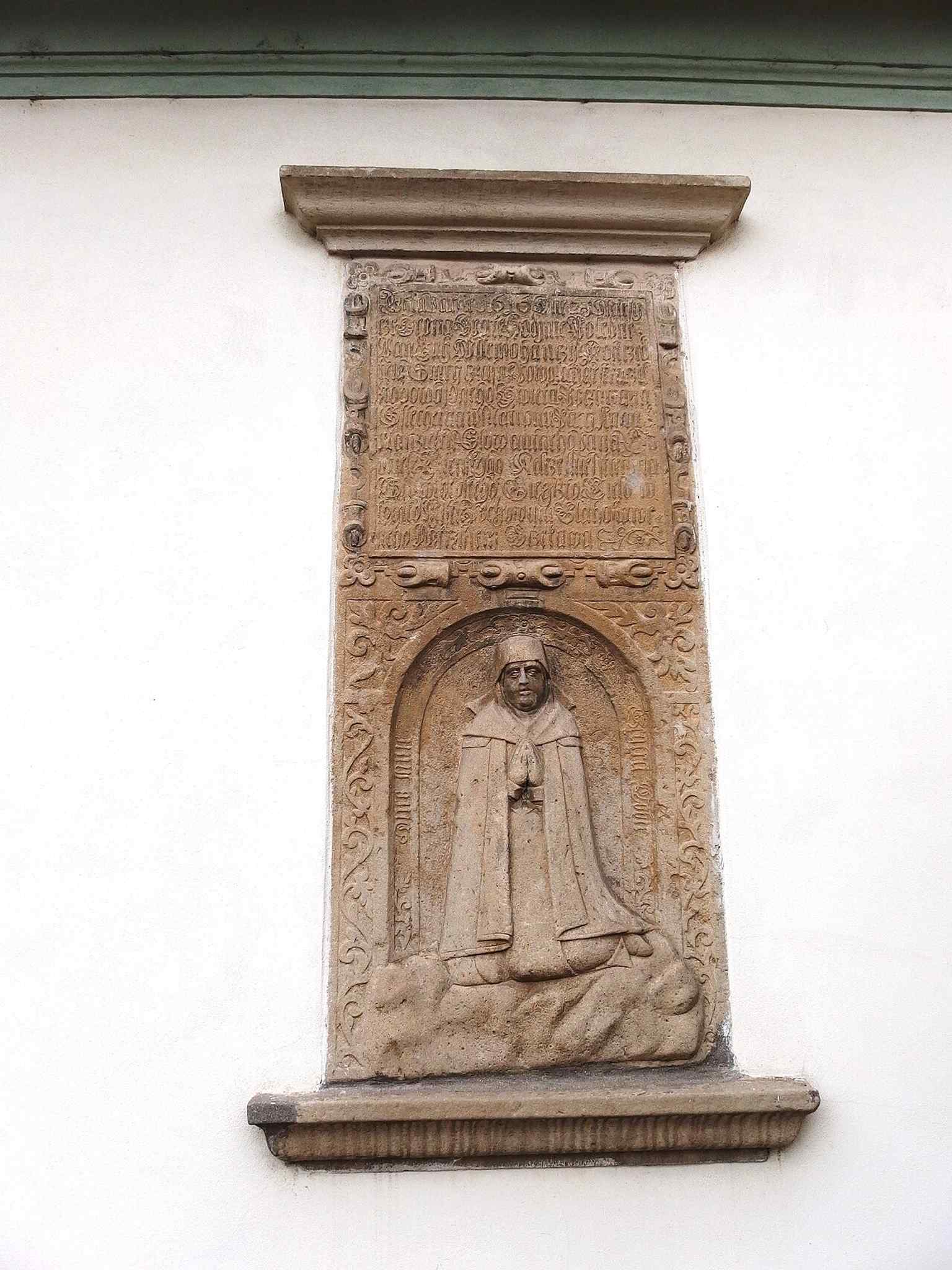
But the most fascinating story here is hidden right underneath this structure. In 1795, the powerful Kounic family built a tomb directly under the south chapel. Let us check out the inside of that crypt on your app. Down there rests Václav Antonín. He was a diplomat and the State Chancellor, which meant he was essentially the primary advisor and problem solver for the mighty Empress Maria Theresa for decades. When the crypt was opened and examined in 1980, they found Václav Antonín still dressed in his original aristocratic clothing, bearing the gleaming star of a prestigious chivalric order on his chest.
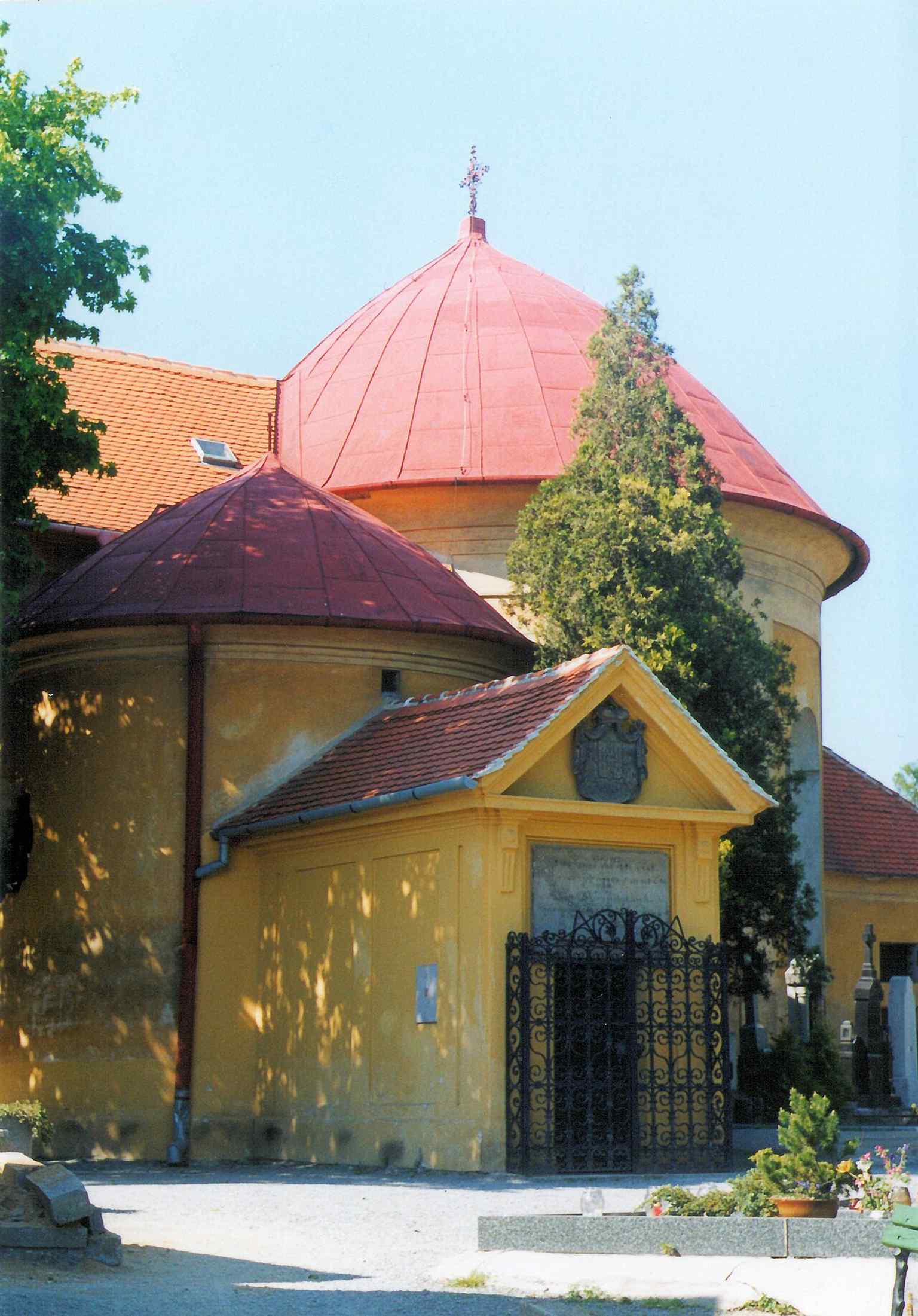
And he was not the only one resting in style. Another family member, Marie Leopoldina, was found buried wearing a full Rococo gown, a delicate cap, and high-heeled shoes. Rococo fashion was famously elaborate and ornamental, so if you are going to spend eternity somewhere, you might as well dress for the occasion.
Just outside the cemetery, you will also find a classical gate topped with a hand-hammered metal sculpture of Jesus, and a nearby iron cross from 1855. Those ironworks were a huge industry around here, turning out everything from simple tools to fine art. It all forms this quiet little pocket of history where powerful statesmen and everyday citizens end up sharing the exact same ground.
When you are ready to keep exploring, we can head to the next stop.





.jpg)

.jpg)
.jpg)

.jpg)
.jpg)
.jpg)