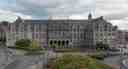
Lüttich Audiotour: Echos von Bischöfen, Kathedralen & Verborgenen Kammern
Ein geheimer Schatz von Heiligen liegt unter den belebten Straßen Lüttichs und hallt wider von Musik, Rebellion und geflüsterter Intrige. Unter den prächtigen Türmen und hinter Opernvorhängen pulsiert die Stadt mit unerzählten Geschichten, die nur wenige wirklich aufdecken. Begeben Sie sich auf eine selbstgeführte Audioreise, die sich durch versteckte Innenhöfe und prächtige Fassaden schlängelt und Sie zu Geschichten führt, die die meisten Reisenden übersehen. Lassen Sie jeden Schritt Jahrhunderte voller Spannung und Spektakel freisetzen. Welche schattenhafte Verschwörung drohte einst, die Mauern der Kathedrale von Lüttich zu stürzen? Wer verschwand hinter den Samtvorhängen der Opéra Royal de Wallonie und löste einen Skandal aus, über den noch immer hinter vorgehaltener Hand gesprochen wird? Warum verbirgt das Wappen über der Diözese ein vergessenes Bündnis mit einem feindlichen König? Bewegen Sie sich durch gepflasterte Gassen und hoch aufragende Hallen, während Legende mit Realität verschwimmt. Spüren Sie, wie die Geschichte unter Ihren Füßen auflebt, und sehen Sie, wie sich Lüttichs wahres Drama mit jeder Wendung entfaltet. Entdecken Sie, was die meisten nie sehen – Ihre Geschichte beginnt, wo andere enden.
Tourvorschau
Über diese Tour
- scheduleDauer 30–50 minsEigenes Tempo
- straighten2.2 km FußwegDem geführten Pfad folgen
- location_on
- wifi_offFunktioniert offlineEinmal herunterladen, überall nutzen
- all_inclusiveLebenslanger ZugriffJederzeit wiederholen, für immer
- location_onStartet bei Servatiuskirche
Stopps auf dieser Tour
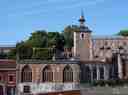
To spot the Church of Saint Servatius, look for a sturdy square stone tower peeking out above the rooftops next to dramatic, striped brick and stone walls with tall, arched Gothic…Mehr lesenWeniger anzeigen
To spot the Church of Saint Servatius, look for a sturdy square stone tower peeking out above the rooftops next to dramatic, striped brick and stone walls with tall, arched Gothic windows-right at the foot of the hill beneath the Liège citadel. Imagine yourself now, right outside this curious old church-though I have to warn you, this place has seen more drama than a soap opera set! It all began back in 933, under the watchful eye of Bishop Richer, who decided it was high time to rebuild after the Norsemen had ravaged Liège in 881. So started the Church of Saint Servatius, a survivor born out of ashes, doing its best impression of a medieval phoenix. Picture medieval Liège, narrow streets bustling with merchants, the scent of woodsmoke, and the constant hum of church bells. Amid this, Saint Servatius found its feet. Though first written about in 1189, by the 13th century it had grown into the sturdy Gothic marvel catching your eye today. In those days, the church wasn’t just a place of worship-it was home to hermits right up until the 15th century. I promise, their daily routine certainly had fewer snooze buttons than ours. Liège’s history is a game of ‘Dodge the Disaster’, and this church has an impressive scorecard. It dodged destruction in 1468 when the Bourgundians sacked the city, but wasn’t so lucky in 1491, when an orkan-yes, a full-blown storm-took a battering ram to it! The 16th century pitched in, too, with a crumbling spire collapsing onto the vaults in 1583. Luckily, Pastor Jean Curtius rolled up his sleeves and patched things up, blending late Gothic style with a sprinkle of Renaissance flair. France then decided to join the party. Revolutionaries arrived in 1794, shattered churches and convents, and soon Saint Servatius was confiscated and sold for a hefty sum. But stubborn as a Belgian waffle, the church came back to life as a parish church. Fast forward to 1883, and all that modern railroad construction rattled the church again, quite literally-the vibrations forced more repairs. Even fires fancy a bit of Saint Servatius. In 1981, a blaze tore through the church; all that remained standing afterwards were its bare stone walls-like the world’s most somber birthday cake. Since then, restoration efforts have managed to revive much of its structure, though the high roofs never returned, and some interior columns had to be entirely rebuilt. Peek at the exterior-see the blue limestone around the choir and the charming red brick and marlstone stripes in classic Maasland style. Don’t miss the sculptures on the southern side: Saint Servatius himself, a medieval coat of arms said to be Bishop Richer’s, and a 933-dated relief of the legendary Perroen of Liège. Gothic windows here boast delicate tracery, like stone lacework that’s endured the ages. Inside, much has changed. The sumptuous 18th-century Baroque décor, intricate stuccowork, and most precious artworks didn’t make it after the great fire, but some 13th-century columns hang on, stubborn as ever. In the choir, surviving fragments of stained glass shimmer beside plainer windows. Among the few treasures that escaped destruction are a stone statue of Saint Servatius, a 1665 wooden figure of Saint Balbina, a 1571 marble-and-bronze baptismal font, and a handful of ancient tomb crosses. Even some paintings and silver relics, like a goblet-shaped reliquary, survived centuries of turmoil-and the clumsiest movers in Liège. So as you stand outside, take in the patchwork of styles and scars, every stone whispering tales of calamity, repair, and resilience. You’ve just met the real Saint Servatius-a church that never lets a disaster keep it down for long! And if you smell smoke, don’t worry… it’s probably just a local barbecue, not another chapter in the saga.
Eigene Seite öffnen →To spot the Prince-Bishops' Palace, just look ahead for a massive gray stone building with tall arched windows and ornate spires rising above the roof, dominating Place…Mehr lesenWeniger anzeigen
To spot the Prince-Bishops' Palace, just look ahead for a massive gray stone building with tall arched windows and ornate spires rising above the roof, dominating Place Saint-Lambert right in front of you. Let your imagination sweep you back through centuries as you stand before this grand palace, its facade towering over the square like a watchful giant. Picture it: more than a thousand years ago, Bishop Notger looked out over these same cobbles and imagined a fortress-stronghold, a palace fit for a prince and bishop in one. Now, listen as the echoes of the past whisper through the quiet air. Fire and fury have shaped this place. The first palace burned to the ground in 1185. Then, like a stubborn phoenix, it rose again under Bishop Rudolf of Zähringen, only to be battered and set ablaze by marauding Burgundians and another unlucky fire in 1505. You’d think by then someone would have invested in a medieval fire department! When Bishop Érard de La Marck took charge in 1505, he found little more than smoking ruins and entrusted the talented Arnold van Mulken to build a new palace in 1526. That’s the heart of the structure you see now, holding stories in every stone. Walk closer and marvel at the main facade-redesigned in grand Louis XIV-Regency style after another fire in 1734. Picture the hustle as craftsmen hammered and chiseled under the sharp eye of Brussels architect Jan Andries Anneessens. Step around to spot the newer west wing, seamlessly added in 1849 by Jean-Charles Delsaux, a blend so perfect that even the most eagle-eyed admirer might miss the join. Peek through the grand gates and imagine the busy hum inside, where today the palace is a house of justice and government. The main courtyard surrounds you with arcades, and if you could sneak inside (only open to bold visitors on rare heritage days!), you’d see 60 wildly decorated columns-no two are quite alike. Over time, the palace has survived flames, feuding dukes, and the march of progress. So as you watch the clouds gather above, feel the weight of history and the splendor of a place that has truly stood the test of time.
Eigene Seite öffnen →As you stand here on the bustling Place Saint-Lambert, take a deep breath-and let’s travel back more than a thousand years, to a time when this very square was home to one of…Mehr lesenWeniger anzeigen
As you stand here on the bustling Place Saint-Lambert, take a deep breath-and let’s travel back more than a thousand years, to a time when this very square was home to one of Europe’s grandest Gothic cathedrals. That’s right, look all around: imagine towering stone spires rising above you, grand arches casting cool shadows, voices echoing as worshippers shuffle in for mass. The mighty Saint Lambert’s Cathedral once dominated this space-so impressive, it rivaled even the likes of Notre-Dame in Paris. Picture yourself here on a crisp morning in the 8th century. The air buzzes with excitement, and pilgrims whisper tales of Saint Lambert, the martyred bishop of Maastricht, whose tragic assassination right here in Liège turned the site into a magnet for devotion and miracles. People flocked from miles around, chanting, praying, weeping in awe at the spot that soon became his shrine. For a brief moment, you might even hear the soft steps of Saint Hubert himself, Lambert’s successor, who led the way in returning Lambert’s remains and transforming this place into the beating spiritual heart of Liège. Over time, this sacred space grew increasingly majestic. First came a beautifully simple shrine, faced west in a rare twist-so much for reading the directions! By the time Bishop Notger took charge in 978, he decided to up the ante: he gathered a chapter of sixty canons and started building a church fit for an empire. Imagine vast halls bathed in sunlight, intricate Ottonian columns, and a crypt protecting the precious relics of Lambert himself. Two towers, two choirs, two transepts-clearly, when Saint Lambert’s got a point to make, he makes it twice! Let’s move to the mid-1100s. This church was now a masterpiece of its day, modified and expanded with remarkable stonework, and visited by legendary figures such as Frederic of Lorraine, who would become Pope Stephen IX. But things weren’t always peaceful. In August 1106, the controversial and excommunicated Emperor Henry IV was discreetly entombed inside, sparking outrage among the German bishops, who declared the cathedral “contaminated.” Talk about an awkward houseguest. Then, disaster struck in 1185. Imagine the sudden crackling of flames in the night, shouts and chaos as fire swept through the cathedral’s cloisters, consuming centuries of faith and craft. But within hours, hope was rekindled. Workers and townsfolk rallied, launching reconstruction right away. The new building emerged in the bold Gothic style, springing from old foundations, its vaults climbing over 30 meters into the air. So monumental was the effort that processions marched through the city, and even Pope Innocent IV offered indulgences-popes, it seems, make for good fundraising! Engineers weren’t finished yet. In 1391, construction began on an epic tower-135 meters tall-towering so high over Liège it rivaled the citadel itself. By 1433, Saint Lambert’s Cathedral had reached its full, awe-inspiring size: almost 100 meters long, wider than your average castle, gleaming with sandstone towers reminiscent of those in Brussels and Breda. Beyond the main cathedral, a small neighboring church called Our Lady with the Font quietly witnessed royal baptisms-including Charlotte Stuart, the daughter of Charles Edward Stuart. Clearly, this was both a holy and happening hotspot. But even holy ground can tremble before the winds of revolution. In 1794, following the Liège Revolution, the cathedral became a symbol of the old regime’s power-bad news for fancy churches. The revolutionaries wasted little time: first, they stripped its lead for ammunition; soon after, they toppled its grand towers. By 1827, almost nothing remained except a lonely passage to the bishop’s palace. Even so, many treasures survived-goldwork, sculptures, manuscripts-which today fill St. Paul’s Cathedral nearby, the successor to Lambert’s lost glory. Now, the only clue to that epic history lies beneath your feet, in the Archéoforum-a silent witness to centuries of devotion, drama, and transformation. So as you gaze across this lively square, remember: you’re walking the ghostly aisles of a cathedral that once defined a city. Not bad for a spot with no roof, right?
Eigene Seite öffnen →
6 weitere Stationen anzeigenWeniger Stationen anzeigenexpand_moreexpand_less
Directly in front of you, look down to your right toward the modern, glass-fronted entrance tucked beneath the grand stone steps, with the word "Archéoforum" by the doors - that’s…Mehr lesenWeniger anzeigen
Directly in front of you, look down to your right toward the modern, glass-fronted entrance tucked beneath the grand stone steps, with the word "Archéoforum" by the doors - that’s your portal to the underground past! Alright, step right up and get ready for a real archaeological adventure! Right under your feet lies a time capsule, buried beneath the busy square of Place Saint-Lambert. Imagine the rumble of Roman sandals, the humming of medieval prayers, and the chilly silence after Saint Lambert’s grand cathedral was destroyed. The Archéoforum lets you walk the same paths as those ancient Belgians - there are old walls from the days of the Gallo-Roman villa (fancy Roman houses, basically ancient apartments) and even stone and bone tools left behind by people living here thousands of years ago. The cathedral ruins at the heart of the site tell their own tale of glory and downfall, standing strong for centuries before vanishing in the blink of a historical eye. Rumor has it, if you listen closely, you might still hear ancient footsteps echoing on the stones below. So, are you ready to unlock Liege’s hidden history and meet everyone from Roman citizens to medieval bishops, all in one underground trip? Watch your step-the past is alive down here!
Eigene Seite öffnen →To spot the Opéra Royal de Wallonie, look for a stately white neoclassical building right in front of you, perfectly symmetrical, with tall marble columns across its facade, grand…Mehr lesenWeniger anzeigen
To spot the Opéra Royal de Wallonie, look for a stately white neoclassical building right in front of you, perfectly symmetrical, with tall marble columns across its facade, grand arched windows, and flags waving above its arcades. Imagine standing here on the Place de l’Opéra in 1820, where carriages clatter by and expectant crowds gather, craning their necks to catch a glimpse of the city’s brand-new theatre. The Opéra Royal de Wallonie wasn’t just plopped here out of nowhere; in 1816, King William I of the Netherlands handed over the land and materials from an old Dominican convent to Liège, but only if they promised to build a theatre worthy of the city’s dreams. Mademoiselle Mars, a renowned actress of her day, laid the first stone on a July afternoon in 1818-no pressure, right? Thanks to architect Auguste Dukers, the result was this imposing, marble-clad neoclassical masterpiece, with a dramatic balustrade and stately arcades that seem to practically hum with anticipation. The doors first opened on November 4th, 1820, and the scene was set for centuries of music, laughter, heartbreak, and (let’s be honest) at least a few over-the-top costumes. Originally, the theatre was just on loan from the city-sort of like borrowing your friend’s car, except with more chandeliers and less risk of spilling coffee on the seat. By 1854, the city officially owned it, and out front, the statue of André Grétry, Liège’s beloved composer, gazes over the square. Here’s something both touching and just a touch dramatic: his actual heart was buried in the base of that statue in 1842. Hey, musicians really do put their hearts into their work around here. Fast-forward to 1861 and the theatre’s getting a makeover, courtesy of architect Julien-Étienne Rémont. Picture an extension that makes the building bigger and grander, and a hall glimmering with the opulence of the Second Empire, ready to seat over 1,500 eager listeners. But it’s not all standing ovations. In August 1914, the opera was requisitioned by the German army during World War I. Just imagine: velvet seats swapped for straw bedding, the scent of perfume replaced with, well, something a lot less glamorous. For five long years, the opera was silent, except for the restless noises of soldiers taking shelter in the dark. It took until October 1919 for music and applause to fill the air again. By 1930, all eyes were back on the building as the Exposition internationale de Liège arrived. The theatre got a new pediment carved by Oscar Berchmans and lost its white plaster to show off the raw beauty of its stones. Somehow, this grand old house survived the ravages of the Second World War, remaining a stubborn beacon of art and hope. A new era began in 1967, with the formation of the Opéra royal de Wallonie’s own permanent troupe. From then on, the opera’s story has been filled with colourful personalities and constant reinvention, not least because of the local government’s ever-creative ways of scraping together enough francs and euros to fund the music. Despite budget hiccups, there were glittering successes-a ballet company (that, sadly, had to close in 1997), innovative set and costume workshops, and performances reaching far beyond Belgium’s borders. In 2009, the opera house itself became the star of a massive renovation. For three years, the grand lobby, hall, and sweeping staircase were restored to their full 19th-century glory, while a brand-new stage tower rose overhead, topped with a striking modern grid. After bouncing performances to a temporary “opera tent” nearby, the doors swung wide again in September 2012, just in time for a triumphal performance seen by Belgian royalty. Today, the Opéra Royal de Wallonie marries the best of old and new, hosting world-class musicians in a theatre that’s both historic and high-tech. And if you peek upstairs, you might just hear an orchestra tuning up or see a team of artists painting backdrops and sewing sequins, hard at work to keep the magic alive.
Eigene Seite öffnen →You’ve just reached the Royal University of Agriculture - but, wait a second, you’re not in Cambodia, are you? Well, neither am I, technically, but let’s take a little mental…Mehr lesenWeniger anzeigen
You’ve just reached the Royal University of Agriculture - but, wait a second, you’re not in Cambodia, are you? Well, neither am I, technically, but let’s take a little mental journey to the warm, humid air of Phnom Penh’s Dangkao Section, where rice paddies and motorcycles hum in the distance and students rush between classes with notebooks full of dreams. The story starts back in 1964, under the watchful eye of Prince Norodom Sihanouk. He wanted to give Cambodia’s farmers and future leaders a leg up, so he founded one of nine royal universities - a brand-new world for agronomy and ambitious minds. Imagine the sound of construction, the buzz of excitement, and the scent of fresh earth on opening day. But then, darkness fell. In 1975, the university shut its doors as the Khmer Rouge swept across the country. For four long years, classrooms gathered dust, and the hopeful chatter of students vanished. But just like seeds springing back after a thaw, in 1980, the doors reopened under a new name: the Institute of Agricultural Education. The students weren’t just learning how to farm - they were training to help rebuild Cambodia, one rice paddy and one buffalo at a time! Here’s a twist: in the ’80s, many professors came from the Soviet Union, so lessons were all in Russian! If you were a student, you needed to learn to say “tractor” and “chicken” - but with a Russian accent. Eventually, the curriculum shifted back to Khmer, and by 1994, the university adopted its current name, Royal University of Agriculture. Now, it’s a vibrant place bursting with energy and knowledge, with nine faculties and even a Faculty of Rubber Sciences. Yes, rubber - it bounces, and so does this place! Today, RUA is Cambodia’s go-to for everything from veterinary medicine to sustainable farming, helping plenty of students literally grow their future. So, next time you eat a bowl of fragrant Cambodian rice, you might just have a Royal University of Agriculture graduate to thank - now that’s food for thought!
Eigene Seite öffnen →To spot Liège Cathedral, simply look up for a grand grey stone building with lots of pointed arches, colorful stained-glass, and a dramatic spire soaring above the square to your…Mehr lesenWeniger anzeigen
To spot Liège Cathedral, simply look up for a grand grey stone building with lots of pointed arches, colorful stained-glass, and a dramatic spire soaring above the square to your right-a true medieval marvel peeking between the trees. Now that you’re standing before the legendary Liège Cathedral, let’s dial back the centuries and imagine the scene! Imagine the year is 967, and Bishop Eraclus, inspired after a trip to Cologne, decides to build a brand-new church in honor of the Apostle Paul. Only, he didn’t get very far-just up to the windows-before he passed away. Luckily, his successor, Notger, wasn’t the sort to leave things half-finished; he completed the church and packed it with canons-no, not the kind that go boom, but rather clergy who sang and prayed. This was just the beginning. The city around you grew so fast that a second chapel sprang up, dedicated to Saint Calixte. By the Middle Ages, Liège was teeming with clergy, canons and chapels-a kind of spiritual theme park! But Liège was also at the mercy of rampaging rivers and political drama. In 1374, the Meuse flooded so high that the only way inside the church was by boat. Imagine the canons rowing to their morning prayers in their robes-certainly less dramatic than walking on water, but just as wet. As you look at the cathedral’s pentagonal apse and tall, Gothic windows, imagine its long construction-starting in the 13th century and stretching, inch by inch and stone by stone, until the 15th century. Along the way, disasters struck: more epic floods, a fire in 1456, a shaky earthquake on Christmas Eve 1755. The only thing this building hasn’t survived is a dinosaur attack… yet. Then came the French Revolution storming across Europe. In 1795, catastrophe struck: the city’s main cathedral, Saint Lambert’s, was destroyed. Suddenly, all the treasures and the very heart of Liège’s church life were swept away. Our St. Paul’s-once just a humble collegiate church-was promoted to cathedral status. But not before it suffered indignities of its own; the French used it as a stable and a slaughterhouse. The canons? They probably didn’t sing much over the smell of cows and butchers. But like a Belgian superhero, St. Paul’s Cathedral bounced back. Napoleon himself helped the church regain some of its possessions, and relics lost in the chaos were ceremoniously returned with fanfare-just picture the clatter of bells and crowds gathering as treasures and saints’ bones (in special boxes, don’t worry) came home. The cathedral is a patchwork of history: its soaring nave is filled with beautiful marbles-red from Rochefort, black from Dinant, and white all the way from Italy. Inside, you’ll find masterpieces by Renaissance painters, treasures rescued from lost churches, and even the rare sight of “Le génie du mal,” a sculpture so beautiful-and distracting-that the first version was banished! And if you wander around, follow the cloisters to their leafy courtyard. The cathedral isn’t just a building; it’s a survivor’s tale written in stone, water, glass, and the muddy footprints of both horses and heroes. So take a good look: every window, every bell, and every spire up there has seen centuries of triumph, disaster, and rebirth, ringing with the heartbeats of Liège for more than a thousand years. Want to explore the building, description or the index of artists in more depth? Join me in the chat section for a detailed discussion.
Eigene Seite öffnen →First, take in the rich, musty scent of stone and old wood. The Treasury inhabits part of the 15th-century cloister attached to the mighty Saint Paul’s Cathedral. Look up! The…Mehr lesenWeniger anzeigen
First, take in the rich, musty scent of stone and old wood. The Treasury inhabits part of the 15th-century cloister attached to the mighty Saint Paul’s Cathedral. Look up! The ornate, leafy ironwork on the door in front of you is actually from the ancient Saint Lambert’s Cathedral, dating all the way back to the 1200s. Imagine hands, centuries ago, polishing these hinges to a shine, hoping the next Viking invasion wouldn’t pry them open! Luckily, the Saints-and perhaps a few clever canon members-kept the treasures mostly safer than your grandma’s biscuit tin. Of course, safety was relative. The story of this treasure is practically a medieval adventure novel. Some events were more tense than a bishop at a bake sale. Picture the year 882, the city is about to be raided by Norsemen, but the cathedral’s treasures survive, tucked away safely! In 1468, it was the turn of Charles the Bold’s Burgundian army to threaten the loot. But the cunning keepers of Liège spirited it away to Maastricht just in time-playing the most dangerous game of hide-and-seek you can imagine. And yet, despite the danger, the bishops couldn’t resist dipping into the loot for, shall we say, “special purchases.” Need to buy a new duchy? Just sell a few chalices! Want to fund a crusade? Well, that 10th-century candelabra is looking awfully pawnable… The treasures have seen more bartering than a Saturday morning flea market. But these riches weren’t just for show. Many are sacred relics that would have drawn pilgrims from afar. The centerpiece, literally and figuratively, is the dazzling bust of Saint Lambert-crafted from nearly ten kilograms of gold and silver, a true showstopper made in the 1500s by the silversmith Hans von Reutlingen, who was barely out of his teens at the time. Move over, overachievers! There’s also Charles the Bold’s splendid golden reliquary, decked in gemstones and boasting a tiny statue of Charles himself alongside Saint George. You could say the Bishop and Charles had a “shrine-ful” friendship-though it started after Charles’ army flattened the city. Gifting an expensive relic as an apology? That’s one way to say sorry! As you wander through the ten different rooms, you’ll uncover treasures from all corners of Liège’s past: 11th-century ivory reliefs showing Christ raising the dead; winding cloths nearly as old as the cathedral itself; and unbelievably intricate textiles that survived fashion trends more dangerous than any invading army. One of the pieces, a dazzling chasuble made for Bishop David of Burgundy, is decked in enough gold thread to make a rapper blush. And there’s more to this place than gold and silver. The halls echo with the weight of stories-documents that survived wars, fires, and, let’s be honest, some very clumsy canon librarians. Hundreds of medieval manuscripts slumber here, alongside thousands of prints gathered by monastic collectors from across Europe. Some of the albums are basically 18th-century Wikipedia, except with better handwriting and fewer pop-up ads. In recent years, the Treasury has been restored and expanded, gleaming with a mix of medieval shadow and modern light. The legendary Saint-Paul tower was added not too long ago, its sleek concrete lines standing proudly beside gothic arches. So as you stand here, take a deep breath-feel that shiver of history under your feet, the wonder in the air, and maybe, just maybe, the urge to check your own pockets for something gold. Like every visitor before you, you’ve become part of this treasure’s long, gleaming story. Just try not to take anything home except memories!
Eigene Seite öffnen →To spot the Roman Catholic Diocese of Liège, look for the dramatic Gothic church building rising above a lush garden, with blackened stone, soaring pointed arches, and a tall…Mehr lesenWeniger anzeigen
To spot the Roman Catholic Diocese of Liège, look for the dramatic Gothic church building rising above a lush garden, with blackened stone, soaring pointed arches, and a tall spire adorned with clock faces-not to mention a crowd of colorful flowers at its feet. Welcome! You’re now right in front of the heart of spiritual and historical life in Liège-the Roman Catholic Diocese. This place has roots so deep, you’d need a medieval archaeologist and a very long shovel to reach the bottom! Imagine it’s the 4th century. There’s a chill in the air, maybe not unlike today, but instead of paved streets and city sounds, you’d hear the distant clang of blacksmiths, the chatter of Roman soldiers, and the chorus of early Christians chanting prayers. The diocese began in Tongeren, northwest of here, in a time when those borders stretched wildly far-going from France, near Chimay, snaking all the way up past Stavelot, Aachen, and even into what’s now the Netherlands. Back then, bishops probably spent more time traveling than catching up on holy emails. For a while, the whole deal was under the thumb of Trier and Cologne, but then Tongeren said, “Let’s stand on our own two feet!” Autonomy arrived, and so did legendary bishops. We’re not entirely sure if Saint Maternus-who might be the same guy who founded the Archbishopric of Cologne-was actually first to take the job here, but it makes a good story! The first bishop we can confirm was Saint Servatius. And here’s a fun twist-he died around 384 and was buried in Maastricht, where his successor eventually moved the bishop’s seat. This was a diocese that could not sit still. But the story gets juicier! Bronzed warriors, dramatic conversions, and even martyred bishops. Saint Lambert, who was truly fearless, finished converting the wild Ardennes to Christianity-and was murdered right here in Liège. His loyal successor, Saint Hubert, did something very beautiful: he placed Lambert’s body here in Liège, basically founding the city itself. Over Lambert’s grave, he built a chapel-St. Lambert’s Cathedral-which became the city’s magnetic core. Next thing you know, a bishop’s palace pops up nearby. During the centuries, bishops wielded power not just spiritual but political. Some even worked for Charlemagne! Bishop Agilfrid and Gerbald got to put “Appointed by Charlemagne” on their business cards. Bishop Franco had such a reputation, even an Irish poet wrote songs about him-now that’s ancient PR. Brighter times alternated with hardship. In the 7th century, bishops kept butting heads with pagans and sometimes even gave up hope, abandoning their posts in frustration. But not all was gloomy: Saint Monulphus built a church over Saint Servatius’s grave in Maastricht, which became the now-famous Basilica of Saint Servatius. The boundaries and names kept changing, sometimes at the stroke of a quill in Paris, sometimes due to marching armies, and even the Treaty of Vienna. In the 1800s, after some serious negotiations (and let’s be honest, a fair bit of European squabbling), the diocese’s territory narrowed to about the same borders as the present-day Province of Liège. Imagine all the languages spoken here over the centuries-French, German, Latin, and the occasional medieval muttering when the bishops had to move again due to revolutions or a visit from Napoleon. Today, the diocese serves over half a million people in hundreds of parishes, a living thread connecting the past with present-day Liège. So as you look at this magnificent church, with its sharp Gothic windows, tall spire, and clocks keeping watch over time, imagine all the stories, struggles, and triumphs that unfolded on this very ground. The Diocese of Liège isn’t just about faith-it’s about centuries of resilience, vision, and people who left their mark on history, sometimes by singing, sometimes by building, and sometimes, by simply refusing to give up.
Eigene Seite öffnen →
Häufig gestellte Fragen
Wie starte ich die Tour?
Laden Sie nach dem Kauf die AudaTours-App herunter und geben Sie Ihren Einlösecode ein. Die Tour ist sofort startbereit – tippen Sie einfach auf „Play“ und folgen Sie der GPS-geführten Route.
Benötige ich während der Tour Internet?
Nein! Laden Sie die Tour vor dem Start herunter und genießen Sie sie vollständig offline. Nur die Chat-Funktion benötigt Internet. Wir empfehlen den Download über WLAN, um mobiles Datenvolumen zu sparen.
Handelt es sich um eine geführte Gruppentour?
Nein – dies ist ein selbstgeführter Audioguide. Sie erkunden unabhängig in Ihrem eigenen Tempo, wobei die Audioerzählung über Ihr Telefon abgespielt wird. Kein Reiseleiter, keine Gruppe, kein Zeitplan.
Wie lange dauert die Tour?
Die meisten Touren dauern 60–90 Minuten, aber Sie kontrollieren das Tempo vollständig. Pausieren Sie, überspringen Sie Stopps oder machen Sie Pausen, wann immer Sie wollen.
Was, wenn ich die Tour heute nicht beenden kann?
Kein Problem! Touren haben lebenslangen Zugriff. Pausieren Sie und setzen Sie sie fort, wann immer Sie möchten – morgen, nächste Woche oder nächstes Jahr. Ihr Fortschritt wird gespeichert.
Welche Sprachen sind verfügbar?
Alle Touren sind in über 50 Sprachen verfügbar. Wählen Sie Ihre bevorzugte Sprache beim Einlösen Ihres Codes. Hinweis: Die Sprache kann nach der Tour-Generierung nicht mehr geändert werden.
Wo greife ich nach dem Kauf auf die Tour zu?
Laden Sie die kostenlose AudaTours-App aus dem App Store oder von Google Play herunter. Geben Sie Ihren Einlösecode (per E-Mail gesendet) ein, und die Tour erscheint in Ihrer Bibliothek, bereit zum Download und Start.
Wenn Ihnen die Tour nicht gefällt, erstatten wir Ihnen den Kaufpreis. Kontaktieren Sie uns unter [email protected]
Sicher bezahlen mit