
Toowoomba Audio-Tour: Treten Sie ein in die Geschichte
Unter Toowoombas großem Uhrenturm und dem Art-déco-Glanz verweilen Geheimnisse in den Schatten von roten Ziegeln und cremefarbenem Stein. Begeben Sie sich auf eine selbstgeführte Audio-Tour durch das historische Herz der Stadt, wo vertraute Fassaden unerzählte Dramen, Skandale und Triumphe enthüllen, die Toowoomba jenseits der Postkarten geprägt haben. Diese Reise lüftet Schichten, die die meisten Besucher nie sehen. Warum haben Flammen die Bildungszukunft der Stadt über Nacht neu gestaltet? Wer schmiedete in den stillen Ecken des Rathauses Pläne, um in turbulenten Zeiten die Macht zu beeinflussen? Welche seltsame Tradition im Empire Theatre spaltete einst die Toowoombaer Gesellschaft bis in die Reihen? Gehen Sie unter Bögen, wo einst Rebellion schwelte, und verweilen Sie neben Theatern, die aus Ruinen wiedergeboren wurden. Lassen Sie die Geschichte unter Ihren Füßen pulsieren, während jedes Wahrzeichen zu einer Bühne für lebendige Kämpfe und unerwartete Wendungen wird. Die Neugier ruft. Treten Sie näher an Toowoombas wahre Geschichte heran – ein Ziegelstein, ein Geheimnis nach dem anderen.
Tourvorschau
Über diese Tour
- scheduleDauer 40–60 minsEigenes Tempo
- straighten5.3 km FußwegDem geführten Pfad folgen
- location_onStandortToowoomba, Australien
- wifi_offFunktioniert offlineEinmal herunterladen, überall nutzen
- all_inclusiveLebenslanger ZugriffJederzeit wiederholen, für immer
- location_onStartet bei Toowoomba Technische Hochschule
Stopps auf dieser Tour
To help you spot it, look for a stately two-story brick building featuring a charming combination of classic red brickwork and cream-colored accents. You’ll notice the building…Mehr lesenWeniger anzeigen
To help you spot it, look for a stately two-story brick building featuring a charming combination of classic red brickwork and cream-colored accents. You’ll notice the building has a heritage feel, with its distinct archways running along the lower floor, and tall windows on both levels giving it a grand appearance. The architectural highlight is the proud “1911” inscription you’ll find on one section, marking its historic significance. Now, let's dive into the history! The Toowoomba Technical College, located at 124 Margaret Street in East Toowoomba, is a heritage-listed landmark that was designed by the talented Thomas Pye and built way back in 1911. It was originally established to provide vocational education and training to the people in Toowoomba and the Darling Downs region. It's had quite a name journey too, being known as the Southern Queensland Institute of Technical & Further Education (SQIT) at one point. Here's a fun tidbit: Can you believe that before this grand building was constructed, vocational education in Toowoomba operated in a building that unfortunately went up in flames in 1898? That blazing event was like the city council’s cue to up their architectural game. Eventually, they decided to build the new town hall on the same site, which also served multiple purposes including rooms for a school of arts and a technical college. When it came to designing the new college building, Thomas Pye from the Department of Public Works really knew how to draw it up! The two-story brick structure contains distinctive features like pavilions, cornices, and a parapet, designed to catch the eye. The building also considered the local climate, minimizing western windows and ensuring that the art rooms received ample south light. In 1911, Sir William MacGregor, the Governor of Queensland, laid the foundation stone, kicking off a new era of structured technical education in Toowoomba. Over the years, the site expanded and evolved, adding various workshops and facilities to meet growing educational demands. So, take a moment to admire this historic building-a cornerstone of education in Toowoomba that's been shaping skills and careers for over a century. Now, let’s move on to our next stop, the Empire Theatre!
Eigene Seite öffnen →Alright, you should be looking to your right now! The Empire Theatre is hard to miss with its glorious Art Deco facade. You'll see an elegant cream-colored building adorned with…Mehr lesenWeniger anzeigen
Alright, you should be looking to your right now! The Empire Theatre is hard to miss with its glorious Art Deco facade. You'll see an elegant cream-colored building adorned with vertical lines and intricate geometric designs. Flanking this grand theatre are tall palm trees, giving it a touch of Hollywood glamour. Above the entrance, you'll find the word "EMPIRE" prominently displayed, guiding you like a beacon. Ah, you’ve found it - the Empire Theatre! A heritage-listed jewel right in the heart of Toowoomba. Added to the Queensland Heritage Register back in May 1994, this theatrical gem boasts a rich history. Its design is pure Art Deco, throwing us back to the golden age of Hollywood. Picture this: the exterior framed by palm trees, while the entry foyer dazzles with metallic gold and bronze, complete with fish tanks. Yes, fish tanks in a theatre - quite the sight! Step inside, and you’ll be met with the theatre’s crowning glory: the grand proscenium arch. The stage itself is a marvel, over 13 meters wide and 12 meters deep, with plenty of room for spectacular performances. It even has a hydraulic orchestra pit that can be raised or lowered as needed - talk about fancy! This theatre’s history stretches back to 1911 when it first opened its doors. The community absolutely adored it, but fate had other plans. The original building succumbed to a fire in 1933. However, like a phoenix, it rose from the ashes, bigger and better, with the new design to host 2,500 patrons. For a time, it was Queensland's largest provincial theatre!
Eigene Seite öffnen →You're approaching Toowoomba City Hall, which should be easy to spot on your left. Look for a grand, two-story building with a stunning clock tower rising above it. The building…Mehr lesenWeniger anzeigen
You're approaching Toowoomba City Hall, which should be easy to spot on your left. Look for a grand, two-story building with a stunning clock tower rising above it. The building is a combination of red brick and cream-painted stone, giving it a stately, historic look. The clock tower is adorned with the clock face on each side and a flag flying high at the top. The symmetrical facade features elegant arches and columns, and you can see wide steps leading to the main entrance. Toowoomba City Hall is not just any building; it's a heritage-listed treasure at 541 Ruthven Street, designed by the imaginative Willoughby Powell and constructed in the year 1900 by Alexander Mayne. This iconic structure was the first purpose-built city hall ever in Queensland and the very spot where Toowoomba was declared a city. Fancy that! Originally, this building was a one-stop-shop for municipal business, a tech college, a school of arts, and even a public hall. Talk about multifunctional - it could give today's multi-use buildings a run for their money! Toowoomba itself has quite the backstory. The region was first settled in 1842, with the area now known as Drayton attracting early settlers. But thanks to a drought in the late 1840s, residents began eyeing the Drayton Swamp Agricultural Area, a place with abundant water, coolly nicknamed "The Swamp." This area was surveyed and sold in 1853 and officially named Toowoomba in 1858. The Borough of Toowoomba was proclaimed in 1860, quickly followed by the first town hall in James Street in 1862. Fast forward to the 1860s and 1870s, Toowoomba saw rapid expansions: railways, schools, foundries, and even draining those swamps and setting up waterworks. As Toowoomba blossomed into a vital Darling Downs hub, the town's prosperity was mirrored in its impressive structures. The necessity for a new town hall led to the construction of this City Hall we see today, which, by the way, replaced older versions and centralized the town's activities. When you finish soaking up the history here, head over to our next stop, the ever-beautiful Laurel Bank Park.
Eigene Seite öffnen →
11 weitere Stationen anzeigenWeniger Stationen anzeigenexpand_moreexpand_less
Alright, you should be seeing the Alexandra Building on your left. It's a striking two-storeyed building with a green facade on the lower level, topped off with ornate white and…Mehr lesenWeniger anzeigen
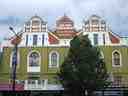
Alright, you should be seeing the Alexandra Building on your left. It's a striking two-storeyed building with a green facade on the lower level, topped off with ornate white and brick-red detailing on the upper level. The name "ALEXANDRA BUILDING" is prominently displayed on the facade, so keep an eye out for that while you walk. Now, let’s dive into some history, shall we? The Alexandra Building is a heritage-listed beauty that was designed by the notable Toowoomba architect, Harry Marks. Built in 1902 by James Renwick at 451-455 Ruthven Street, it made a grand entrance into the Queensland Heritage Register on October 16, 2008. Initially, this gem housed a banquet/concert hall on the upper floor and two retail spaces on the lower floor. You see, by the end of the 19th century, Toowoomba had carved out its niche as the administrative and commercial heart of the Darling Downs. Positioned on the main route to Brisbane, it became a bustling conduit for produce heading to the coast and a vital supply hub for western pastoralists. The Alexandra Building played a key role in cementing Ruthven Street’s status as Toowoomba's commercial centre. Confectioner and pastry chef extraordinaire, Thomas Kelsall Lamb, utilized the building for his business, TK Lamb and Co. They sold delectable hams, small goods, dressed poultry, and even Christmas cakes through a successful mail-order business. The building also doubled up as a hive for public gatherings, like public meetings, wedding receptions, parties, and concerts. And there you have it! This architectural marvel not only adds historical depth to Ruthven Street but also showcases the flair of Harry Marks and the thriving commercial history of Toowoomba. Take a moment to admire its intricate design before we move on.
Eigene Seite öffnen →Alright, you're closing in on stop number 3, the White Horse Hotel. Look to your right as you walk along Ruthven Street-keep an eye out for a two-storey building that can’t be…Mehr lesenWeniger anzeigen
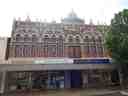
Alright, you're closing in on stop number 3, the White Horse Hotel. Look to your right as you walk along Ruthven Street-keep an eye out for a two-storey building that can’t be missed. Its facade is richly decorated with white cement render trim, and it boldly declares "White Horse" at the top, which is a instant giveaway that you've found the right spot. Now, let's dive into its fun history! The White Horse Hotel, located at 456 Ruthven Street, is a heritage-listed gem that has seen more facelifts than a Hollywood star. A hotel has been gracing this spot since 1866, kicking things off under the watchful eye of Daniel Donovan. It then went through a series of renovations, with the most significant transformation happening around 1912, courtesy of Toowoomba architects, James Marks and Sons. By the time the 1970s rolled around, the verandah was removed-a bit like a guest leaving a party early. The hotel finally closed its doors in 1986 and was converted into shops and offices two years later. It's now home to a couple of clothing stores and a hairdressing salon, but you can still feel the echoes of its illustrious past. This building's story is quite a saga, from its early days as a bustling hostel run by folks like Louis Phillips and Edward Brosnan, to its extensive remodels by architect Reginald Marks. Each layer of brick and mortar speaks of a different era, making it a real-life time machine disguised as a shopping destination! So, whether you’re here for the shopping or just soaking up history, the White Horse Hotel is a remarkable testament to Toowoomba's rich architectural and social history. Enjoy your visit and onward to the next landmark!
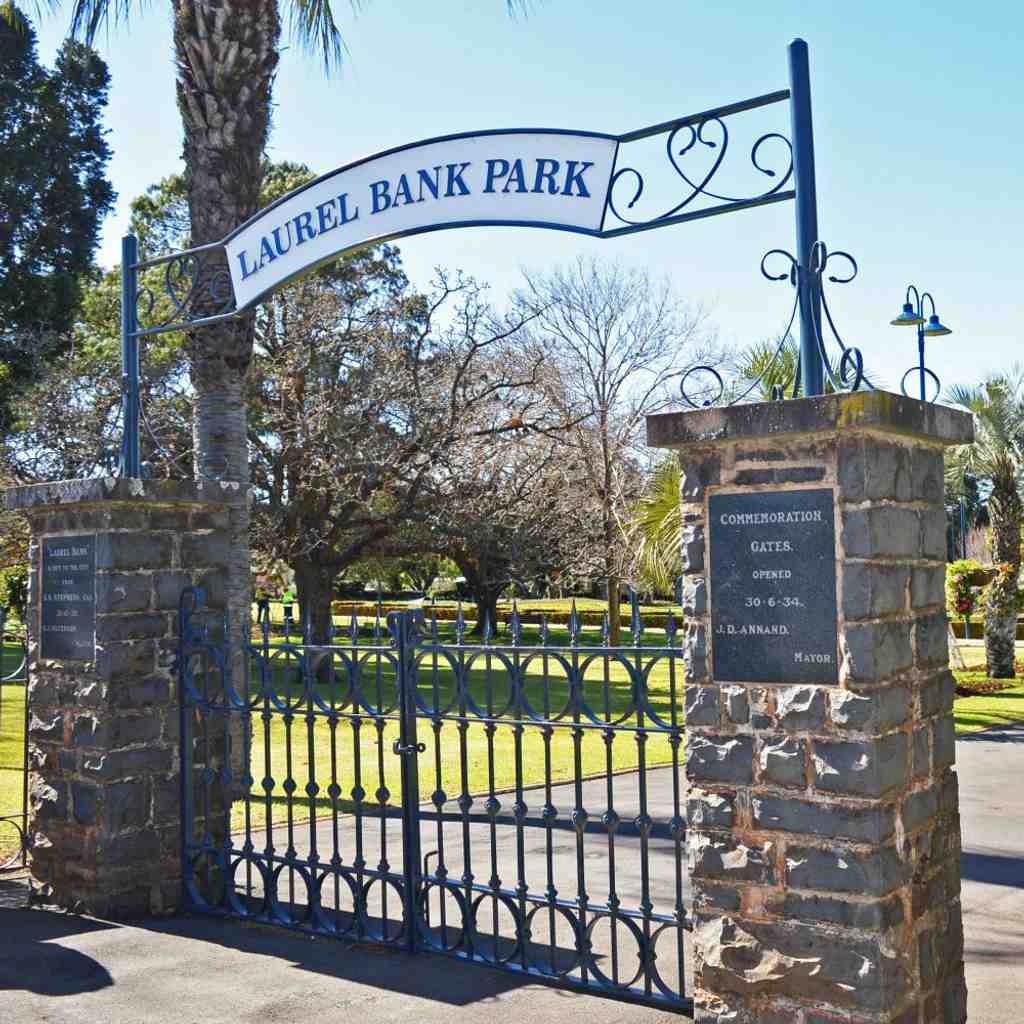
Eigene Seite öffnen →As you come up on your left, you should see the grand entrance of Laurel Bank Park, marked by a lovely iron gate supported by sturdy stone pillars. The sign overhead proudly…Mehr lesenWeniger anzeigen
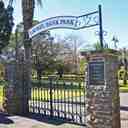
As you come up on your left, you should see the grand entrance of Laurel Bank Park, marked by a lovely iron gate supported by sturdy stone pillars. The sign overhead proudly announces "Laurel Bank Park," welcoming you to this historic green space. Now, let's dive into some fun facts about Laurel Bank Park! This gem of a park, located at the corner of West Street, Hill Street, and Herries Street, is a heritage-listed slice of heaven right here in Toowoomba. It spans a generous 4.3 hectares (approximately 11 acres) and has been a public delight since it was added to the Queensland Heritage Register on 30 November 2018. The park’s history is packed with charm. It started blooming back in 1904, thanks to the green thumbs of local resident Samuel George Stephens Jr., who generously donated it to the city in 1932. Can you imagine tending a garden for nearly 30 years before sharing it with everyone? Stephens certainly had a heart for horticulture! Within the park, you'll encounter an array of mature trees, perfect for a cool, shady stroll, and two croquet lawns added in the 1930s when the park was in its prime development. And here's a cool tidbit: during World War II, the park served as a rest and recreation camp for US Navy submariners. The former mess hall from this era still stands, making it the only remaining building from that period within the park. Laurel Bank Park has been attracting tourists since the 1930s and remains a picturesque tourist magnet today. With Toowoomba’s cooler climate, courtesy of its 700 meters elevation above sea level, you’ll find a rich variety of plants and trees that might struggle in warmer regions like Brisbane. This garden city vibe takes root way back to the days of William Groom, Toowoomba's first mayor, who successfully lobbied for a recreational reserve in 1869, giving rise to what we now cherish as the city's green spaces. So, go ahead, breathe in the fresh air, enjoy the stunning gardens, and maybe even try your hand at croquet if you're feeling adventurous!
Eigene Seite öffnen →As you approach Clifford House, keep your eyes peeled to the right side of Russell Street. You're looking for a substantial and grand two-storeyed sandstone and brick building,…Mehr lesenWeniger anzeigen
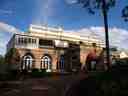
As you approach Clifford House, keep your eyes peeled to the right side of Russell Street. You're looking for a substantial and grand two-storeyed sandstone and brick building, partially concealed by mature trees in picturesque gardens. It's set back from the street, framed by a circular drive, beckoning you closer with its stately presence. The façade itself is quite distinguished. You'll notice the symmetrical northern frontage that stands out. The base level features large arched windows with white trim, giving the building a touch of elegance. The first floor is adorned with timber verandahs, and the corrugated iron roofs are punctuated by several substantial chimneys. To the west, there's a single-storeyed brick Billiard Room. Clifford House, often called 'St James' Palace', was built around 1865. It's a heritage-listed clubhouse located at 120 Russell Street, Toowoomba. This majestic building, unveiled to the world in the mid-1860s on land once owned by the Honorable James Taylor, is not just a looker but also a storyteller. Fed up with the ordinary? James Taylor, the driving force behind Toowoomba's development, ensured Clifford House was anything but. Not only was he an avid land investor and a prominent figure in the city's development, but he also took his social, cultural, and economic duties fiercely, even donating land to various groups and churches. They nicknamed him “the King of Toowoomba,” and by the looks of Clifford House, you'll understand why. Initially intended as a gentlemen's club, financial troubles saw the property return to Taylor, who rebranded it as Clifford House, named after his father's birthplace. You'll love knowing that a billiard room was added in 1883, upping the grandeur. At various points, it housed notable residents like Francis Thomas Gregory and even served as the Surveyor's Office and Lands Office. Today, this spectacular building isn't just a relic; it lives and breathes as a restaurant and reception center, interweaving history with modern charm. So, take a moment to admire the intricate cornices, take in the grandeur of the arched windows, and imagine the echoes of grand soirees from yesteryears. Clifford House is a true architectural gem, embodying the spirit and cultural heart of Toowoomba.
Eigene Seite öffnen →Now, let's dive into some fun facts about this landmark. St James Church is a heritage-listed site that dates all the way back to 1869. Designed by the well-known Brisbane…Mehr lesenWeniger anzeigen
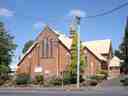
Now, let's dive into some fun facts about this landmark. St James Church is a heritage-listed site that dates all the way back to 1869. Designed by the well-known Brisbane architect Richard George Suter, it reflects the classic Gothic Revival style that was popular for parish churches in England at that time. The original brickwork, featuring those striking polychrome stripes, is particularly unique in Queensland. Funny enough, this site wasn't always agreed upon for the church. There was quite a debate back in the day. Some locals wanted a brick building to replace the small timber one at St Luke's site, while others supported relocating to this very spot near the Mort Estate. Eventually, the latter won, thanks to James Taylor MLA who generously donated the land. Construction began once the Bishop gave his nod of approval in 1869, and it wasn't long before the church was officially opened on December 23, 1869. This marked the start of its interesting journey as an important part of Toowoomba’s heritage. And just a fun tidbit - many thought this new building would simply replace the old St Luke's, but surprise, it was named St James instead! So, enjoy soaking in this piece of history. If those walls could talk, they’d have quite the tale to tell!
Eigene Seite öffnen →As you proceed down Mill Street, Carlton House will appear on your left. To help spot it, look for a charming single-storey brick residence. It has a hipped corrugated iron roof…Mehr lesenWeniger anzeigen
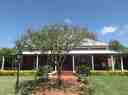
As you proceed down Mill Street, Carlton House will appear on your left. To help spot it, look for a charming single-storey brick residence. It has a hipped corrugated iron roof and is surrounded by well-tended garden beds and a path leading up to the front door. The house features a wrap-around veranda supported by white posts, providing a nostalgic glimpse into the past. You'll notice its symmetrical design, with the brickwork forming a neat pattern and chamfered corners around the openings. The house itself is constructed from rich, warm bricks laid in the elegant Flemish bond style. Now, let's dive into the story of this heritage gem: Carlton House is a heritage-listed boarding house found at 3 Mill Street, Toowoomba, in Queensland, Australia. Built between c.1875 and the early 1900s, it was added to the Queensland Heritage Register on 31 October 1994. This lovely house overlooks the Toowoomba Railway yards to the east, a perspective James Augustus Pearson might have appreciated when he erected it by 1877. The land it sits on, part of the first subdivision surveyed by JC Burnett in 1849, has seen a fair bit of action. It was passed around by notable figures before James Taylor acquired it in 1862 and eventually, James Pearson in 1874. Pearson, recognizing its proximity to the railway station (completed in 1867), thought it was a prime spot for a guest house catering to railway passengers. In 1877, an ad in the Toowoomba Chronicle marketed Carlton House as offering "superior accommodation" for families, ladies, and gentlemen visiting the area. Over the years, it changed hands numerous times, with notable owners like Jane Thomas, Bridget Horan, John Luddy, and William Glover contributing to its rich history. The early 20th century saw the addition of facilities for servants, transforming it to meet evolving needs. The House continued evolving, even being converted into flats during the 1930s. After much restoration and conservation efforts over the years, it now stands proudly restored to its former glory. With its red brick facade, elegant verandas, and a vintage charm that whispers tales of yesteryears, Carlton House is a beautiful reminder of Toowoomba's rich heritage. So, take a moment to appreciate the craftsmanship and history encapsulated in this splendid dwelling!
Eigene Seite öffnen →As you approach, feast your eyes on a charming two-story building with a mix of both brick and stucco elements, standing proudly across the street! The Toowoomba Trades Hall is a…Mehr lesenWeniger anzeigen
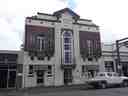
As you approach, feast your eyes on a charming two-story building with a mix of both brick and stucco elements, standing proudly across the street! The Toowoomba Trades Hall is a distinctive structure, designed with a symmetrical facade. Look for a central arched window with vertical bars that kind of remind you of a grand entrance to a stately manor. On either side of this central feature, you’ll spot two sets of lovely French balconies. The upper part of the building bears a sign saying "Toowoomba Trades Hall" and below it is the construction year, "1934." Now, let me tell you a bit about this landmark. Toowoomba Trades Hall, perched here on 19A Russell Street, is an architectural gem designed by Matthew Williamson and constructed by Kell & Rigby in 1934. This heritage-listed building was added to the Queensland Heritage Register on 29 October 2010. Toowoomba has a proud history of workers rallying for rights. Back in the mid-1860s, trade unions became a thing in Queensland, with Toowoomba soon becoming a hotbed for labor activity. Picture it: back in 1865, around 200 navvies, who were working on the Main Range railway, demanded better wages and working hours by marching right into Toowoomba. Talk about making some noise! By 1934, trade unions had deeply rooted themselves in the working culture, pushing for better conditions and rights. This hall? It was the epicenter of all that hustle and bustle! With numerous events and meetings held here, it played a crucial role in the labor movement in the region.
Eigene Seite öffnen →
Häufig gestellte Fragen
Wie starte ich die Tour?
Laden Sie nach dem Kauf die AudaTours-App herunter und geben Sie Ihren Einlösecode ein. Die Tour ist sofort startbereit – tippen Sie einfach auf „Play“ und folgen Sie der GPS-geführten Route.
Benötige ich während der Tour Internet?
Nein! Laden Sie die Tour vor dem Start herunter und genießen Sie sie vollständig offline. Nur die Chat-Funktion benötigt Internet. Wir empfehlen den Download über WLAN, um mobiles Datenvolumen zu sparen.
Handelt es sich um eine geführte Gruppentour?
Nein – dies ist ein selbstgeführter Audioguide. Sie erkunden unabhängig in Ihrem eigenen Tempo, wobei die Audioerzählung über Ihr Telefon abgespielt wird. Kein Reiseleiter, keine Gruppe, kein Zeitplan.
Wie lange dauert die Tour?
Die meisten Touren dauern 60–90 Minuten, aber Sie kontrollieren das Tempo vollständig. Pausieren Sie, überspringen Sie Stopps oder machen Sie Pausen, wann immer Sie wollen.
Was, wenn ich die Tour heute nicht beenden kann?
Kein Problem! Touren haben lebenslangen Zugriff. Pausieren Sie und setzen Sie sie fort, wann immer Sie möchten – morgen, nächste Woche oder nächstes Jahr. Ihr Fortschritt wird gespeichert.
Welche Sprachen sind verfügbar?
Alle Touren sind in über 50 Sprachen verfügbar. Wählen Sie Ihre bevorzugte Sprache beim Einlösen Ihres Codes. Hinweis: Die Sprache kann nach der Tour-Generierung nicht mehr geändert werden.
Wo greife ich nach dem Kauf auf die Tour zu?
Laden Sie die kostenlose AudaTours-App aus dem App Store oder von Google Play herunter. Geben Sie Ihren Einlösecode (per E-Mail gesendet) ein, und die Tour erscheint in Ihrer Bibliothek, bereit zum Download und Start.
Wenn Ihnen die Tour nicht gefällt, erstatten wir Ihnen den Kaufpreis. Kontaktieren Sie uns unter [email protected]
Sicher bezahlen mit 


