
Newcastle Audio-Tour: Der historische Herzschlag des Hügels
Unter Newcastles Skyline verweilen Legenden in roten Backsteinen und gotischen Türmen und deuten auf Geheimnisse hin, die gerade außer Sichtweite lauern. Folgen Sie einem selbstgeführten Audio-Pfad, wo alltägliche Straßen Geschichten verbergen, die die meisten Passanten nie bemerken. Warum wäre die große Kathedrale der Stadt beinahe eingestürzt, bevor sie überhaupt errichtet wurde? Wer war der mysteriöse Sträfling-Schulleiter, der zukünftige Generationen mit Kreide und Glück formte? Und welcher Skandal machte Newcastles ältestes Reservoir zu einem Schlachtfeld für Bierliebhaber und Ingenieure gleichermaßen? Jeder Halt öffnet ein weiteres Kapitel – politische Auseinandersetzungen, unerzählte Katastrophen, verlorene Ambitionen und Momente wilder Genialität – und führt Sie von heiligen Grabstätten zu Spielplätzen, die auf versteckten Wassertanks thronen. Erleben Sie Newcastle neu, während jeder Schritt seine gespenstische Vergangenheit und triumphale Wiedergeburten enthüllt. Bereit, die Geschichte zu entschlüsseln, die über, unter und um Sie herum brodelt? Drücken Sie jetzt auf Play und tauchen Sie ein in die lebendige Geschichte der Stadt.
Tourvorschau
Über diese Tour
- scheduleDauer 40–60 minsEigenes Tempo
- straighten3.8 km FußwegDem geführten Pfad folgen
- location_onStandortNewcastle, Australien
- wifi_offFunktioniert offlineEinmal herunterladen, überall nutzen
- all_inclusiveLebenslanger ZugriffJederzeit wiederholen, für immer
- location_onStartet bei Christ Church Kathedrale, Newcastle
Stopps auf dieser Tour
10 weitere Stationen anzeigenWeniger Stationen anzeigenexpand_moreexpand_less
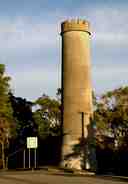
Look ahead for a tall, round stone tower with battlements on top, standing a bit like a castle lookout above the trees-that’s your unmistakable clue you’ve reached The Hill. Ah,…Mehr lesenWeniger anzeigen
Look ahead for a tall, round stone tower with battlements on top, standing a bit like a castle lookout above the trees-that’s your unmistakable clue you’ve reached The Hill. Ah, welcome to The Hill, where Newcastle rolls out its patchwork quilt of history-and some rather fancy house prices! Can you feel the old bones of this place beneath your feet? Imagine, long before the Victorian terraces or impressive towers, this was the land of the Awabakal people, looking out over the harbor and bushland. The wind up here would’ve carried the smoke from early campfires, and later, the chugging of steam engines as miners pulled coal from the earth. Back in 1823, Henry Dangar charted this very ground for the first town plan-he probably never guessed folks would be paying nearly two million dollars for a home here one day! Take a breath and step into the past: what you see around you was once called Church Hill, then Prospect Hill, and it was dotted with convict prison blocks and coal pits. There’s even a set of grand homes built in a San Francisco style, each with timber bones and stories of their own. And the old railway? It first rattled to life right nearby, its whistle echoing down the streets. Now, you’re standing at a crossroad of past and present, with echoes of miners, convicts, and the laughter of families all tangled beneath modern gardens and heritage-listed homes. The Hill’s story is layered-thrilling, gritty, and, given those house prices, just a little bit posh!
Eigene Seite öffnen →To spot the Newcastle Art Gallery, look for a bold, geometric building with tall concrete columns and angular shapes, its pale facade set behind a wide sidewalk and purple banners…Mehr lesenWeniger anzeigen
To spot the Newcastle Art Gallery, look for a bold, geometric building with tall concrete columns and angular shapes, its pale facade set behind a wide sidewalk and purple banners waving out front. Now, take a breath and look up at this wonderfully boxy structure-it’s not just what’s inside that’s artistic, but the building itself is a piece of 1970s geometric architecture in the brutalist tradition. Imagine yourself standing here when the gallery first opened its doors-in 1957, after Roland Pope donated a dazzling 123 artworks, on the condition that Newcastle build a proper home for them. Newcastle obliged, of course-a bit like agreeing to host a party just to keep the presents! For decades, art-filled rooms buzzed with visitors, with Pope’s collection shaping early tastes. But here’s the magical twist: with every new director, the collection grew, stretching from Sydney to Melbourne, and even across the seas. In 1977, the air here was electric with anticipation -Queen Elizabeth II herself arrived to cut the ribbon on the new, purpose-built building you see now. Picture the excitement: flashbulbs popping, hats worn slightly too high, and everywhere that fresh-cement smell of the future. The 1970s concrete lines? That’s not just style-it’s a statement, sticking out proudly in a city built on bricks, coal, and steel. Directors like Gil Docking and David Thomas, both Melburnians, helped the gallery’s collection stretch beyond Sydney’s borders. Think of it as the gallery playing an extended game of “art Pokémon”-gotta collect them all! When Nick Mitzevich took over in 2001, he brought a bright spark of new energy. Suddenly, there were community art days, lively events, and marketing with flair-if galleries could run, this one would’ve been doing laps! Nick often chatted with the gallery’s inaugural leader, Gil Docking, to build the collection with stories as well as paintings. Next up: Ron Ramsey, a globe-trotter with tales from Canberra to Washington DC, took charge in 2007 and added his own international flavor. And as of 2024, Lauretta Morton holds the reins, overseeing thousands of masterpieces and juggling gallery work with roles on statewide arts boards-she’s a regular hurricane of creativity! But here’s where the plot thickens. By 2020, the gallery was bursting at the seams: 7,000 pieces, just aching to see the light. Newcastle started planning a grand, $40 million expansion-a two-year art nap for the building, but a dream come true for those treasures trapped in storage. Former director Nick Mitzevich remains the project’s loudest cheerleader, probably waving pom-poms made from old exhibition fliers. What can you find inside? Australian art from colonial times straight through to edgy works being made today. There are paintings that shimmer with stories, sculptures crafted from marble, spinifex grass, old engines, and even feathers-step too quickly, and you might trip over Brett Whiteley’s towering Black Totem II, standing guard near the entrance. The gallery’s heart is in Australian art, but its arms hug the world: the largest collection of modern Japanese ceramics in the southern hemisphere, avant-garde “crawling through mud” pots, and standout pieces from Europe and America. Listen closely and you’ll almost hear Margaret Olley’s paintbrushes tapping, as she donated over 46 works to the gallery-and check out international masterpieces from Auguste Rodin, held within these walls thanks to local benefactor William Bowmore. Stare at John Olsen’s “The sea sun of 5 bells,” hung for decades in a private dining room, but now radiating here for all to see. And, of course, with its Foundation raising millions for new art, and an ever-changing roster of directors, artists, and volunteers, Newcastle Art Gallery is always alive with a hint of mystery, a flash of color, and a thumping, creative energy. So, whether you’re an art fanatic or just stopping in for a splash of culture, step inside and become part of Newcastle’s ever-growing artistic story!
Eigene Seite öffnen →To spot Woodlands, Newcastle, look for a grand Victorian Italianate mansion set back from Church Street-it's the stately house that stands out with elegant features and a sizeable…Mehr lesenWeniger anzeigen
To spot Woodlands, Newcastle, look for a grand Victorian Italianate mansion set back from Church Street-it's the stately house that stands out with elegant features and a sizeable presence just ahead on your right. Now, imagine yourself stepping into the shoes of a well-to-do Newcastle resident in 1877, back when this mansion first appeared atop The Hill, designed with flair by James Henderson for Joseph Wood, the proud owner of the Castlemaine Brewery. With its sweeping verandas, ornate mouldings, and more fireplaces than winter could ever demand, Woodlands has always stood out as a place of comfort and character. But the real story starts when you listen closely to the walls-if only they could talk, right? The mansion has switched roles more times than a chameleon in a paint store. After its early days of lavish family life, the house was bustling with eager young minds when it became the Cathedral Hill Grammar School. Just when you thought things had settled down, along came World War I, and Woodlands was filled with the soft shuffle of slippers as an Australian Red Cross home for wounded soldiers-if a billiard room could talk, I bet it would have some tips about patience and recovery! The excitement didn’t end there. The school returned, but soon enough, World War II knocked, and Woodlands transformed into the Centaur Hospital, filled with hurried footsteps and quiet conversations in the hallways. After wars faded and peace settled in, new arrivals to Australia found their first home here when Woodlands became a boarding house for migrants-imagine all those hopeful hearts, sharing kitchens and dreams under one roof. Even that wasn’t the last transformation! Dr. William Bowmore ran it as a private hospital for nearly a quarter century. Only after all these adventures did Woodlands once again become a home, lovingly restored for the modern world but still echoing with laughter, lessons, and maybe one or two mysterious stories from its past. So, as you stand here, take a deep breath and picture the countless lives and secrets these walls have guarded. If you listen carefully, maybe you’ll catch a whisper from the past-or at least a dramatic echo from that old billiard room!
Eigene Seite öffnen →To spot Horbury Hunt Hall as you walk along Church Street, look for a striking, somewhat sturdy brick hall on your left, just where Church Street meets Wolf Street; its somewhat…Mehr lesenWeniger anzeigen
To spot Horbury Hunt Hall as you walk along Church Street, look for a striking, somewhat sturdy brick hall on your left, just where Church Street meets Wolf Street; its somewhat “plain” and “barn-like” appearance with late Victorian details will give it away. Now, take a deep breath and imagine yourself standing here in Newcastle, but wind the clock back to the late 1800s. The ground under your feet is busy with carts and chatter and the great dream of building a cathedral is alive all around you. But before the magnificent Christ Church Cathedral could rise, there was a little problem-the old church had to go, and Newcastle's faithful needed somewhere to gather. Enter the hero of our story: John Horbury Hunt, the renowned architect with a taste for innovation almost as legendary as his beard. Picture Hunt striding up Church Street, plans in hand, eyes twinkling with ambition. He was asked to design a “pro-Cathedral”-a temporary home fit for worship, right here, on the opposite side of Church Street from the cathedral’s future footprint. At the same time, Hunt needed to replace the old Christ Church School, which the Department of Public Instruction had just snapped up. No pressure, right? Well, Hunt wasn’t a man to shy away from a challenge. By 1878, his sturdy new hall was up, its roof pitched low and buttresses standing sentinel against the wind. Hunt tossed in groups of lancet windows, single-stepped buttresses, and stringcourses that zipped around its brickwork. For a dash of flair, he added late Victorian touches like wooden, mullioned windows and a shingled clerestory. Some people loved it, but others called it “severely plain” or “barn-like”-which, let’s be honest, in the 1880s was the architectural equivalent of a scowl and a sniff! But the drama didn’t stop there. In the great soap opera of Newcastle church-building, the Dean, Arthur Selwyn, enters stage left. The Reverend was as influential as they come, but his relationship with Hunt was, well, rocky at best. As Hunt’s brick walls went up, Selwyn grumbled about the design, and eventually, Hunt was off the project! In swooped Frederick Menkens, an architect with a flair for interiors, and suddenly the inside of Horbury Hunt Hall began to sing with an American stick-style arcade. Imagine the tension-a building that’s half Hunt’s brisk innovation, half Menkens’ decorative artistry. Selwyn, Hunt, and Menkens: a trio of strong personalities, each one leaving their fingerprint in brick and stone. For 18 extraordinary years, this “temporary” building wasn’t just a hall; it was the beating heart of Newcastle’s Anglican parish. Every Sunday, the faithful walked up the hill, through Newcastle’s sea breezes and coal dust, to gather here. Weddings, funerals, Christmas bells-all echoed against these walls. It was only after almost two decades that the Cathedral finally opened and Horbury Hunt Hall became the “Cathedral Hall,” a quieter, steadfast witness to the passing of generations. The twists continue. Over the years, the building found fresh purpose-first with Newcastle Grammar School, who gave it new life as part of the campus, then through a careful restoration after some rough times left mortar crumbling and plaster peeling. Even with changes-some of them not so gentle-Horbury Hunt Hall kept its spirit. Sure, its once-famous city views have faded as Newcastle’s skyline grew, but if these bricks could whisper, you’d hear stories of faith, conflict, and community. When you look at this hall today, remember: this isn’t just “another old building.” It’s a landmark for the bold experimenters, the stubborn critics, the worshippers who didn’t mind a drafty barn if it meant the community could stand together. It’s a place that carries the legacy not just of an ambitious architect and a demanding Dean, but of Newcastle itself-always growing, always ready for the next chapter. And hey, even if you agree it looks a bit “barn-like,” never underestimate the barns of history-they tend to have the best stories.
Eigene Seite öffnen →As you stand before the heart of the City of Newcastle, take a moment to let the energy of the place wash over you. Imagine, for a second, the hum of busy streets, footsteps…Mehr lesenWeniger anzeigen
As you stand before the heart of the City of Newcastle, take a moment to let the energy of the place wash over you. Imagine, for a second, the hum of busy streets, footsteps echoing off old pavement, and the gentle murmur of locals carrying on as they have for generations. Welcome to a city whose story is woven from innovation, resilience, and a touch of good old-fashioned Aussie spirit. Long before the council chambers and modern mayors, the land here was alive with stories of the Awabakal and Worimi peoples, the very first custodians of these shores and rivers. Their connection to the land and water is deep-imagine salt on the breeze and the sound of gum leaves rustling overhead, their presence still felt in the energy of the city today. Fast forward to the mid-1800s, and things really started to heat up-parliamentary style! In 1859, with the ink barely dry on the Municipalities Act, Newcastle officially became a city. It was split into three wards: City, Macquarie, and Honeysuckle-yes, just like the flower. Apparently, ‘Ward One, Two, and Three’ was simply too bland for a city that likes to keep things interesting! Only eight years later, we levelled up again-now declared an official borough. Newcastle, it seems, always had its sights set higher. As the city bustled through the decades, a bold move was made in 1937. The government decided it was time for a bit of urban teamwork-and so, ten surrounding suburban municipalities were merged to create the Greater Newcastle. Like a superhero team-up, only with more paperwork and less spandex. Neighboring areas of Lake Macquarie and Tarro also joined up, and by 1949, the city was simply known as the City of Newcastle. Sometimes, you’ve got to keep the name simple so you can focus on grander things…like keeping up with the paperwork. Now, you might think things would have settled down, but in the 21st century there was drama afoot! In 2015-a mere blink in city time-a review suggested Newcastle should merge with nearby Lake Macquarie, and later with Port Stephens. Imagine the council meetings: ‘Should we share our beaches? Our bakeries? Our precious parking spots?’ After much debate, the government called it off in 2017. Newcastle fans: 1, Mega-Merger: 0. Today, the City of Newcastle is divided into four wards and makes up much of the metropolitan area. It’s run by a dedicated team of thirteen councillors and a directly elected Lord Mayor. Speaking of which, the city’s latest mayor is Councillor Dr. Ross Kerridge, an independent thinker who reminds us that sometimes it takes a fresh perspective to stir the pot. But who’s actually living here, you ask? In 2021, over 168,000 people called Newcastle home-roughly half and half men and women. The median age is 37, so if you feel a little youthful standing here, you’re in good company! Indigenous heritage runs strong, with 4.4 percent of locals identifying as Aboriginal or Torres Strait Islander-above the national average. There’s a sense of pride and belonging that buzzes in the air, along with that ever-present scent of the sea. Australian roots run deep here: over 80 percent of folks were born right here in Australia, well above the national average. Religion lingers in the background-nearly a quarter of people tick ‘Catholic’ on the census-but if Newcastle worships anything, it might just be football, coffee, and beach days. And you might notice that around here, your chances of overhearing a foreign language are slimmer than average-less than twelve percent of homes speak another language, compared to over twenty percent across the country. So, as you stand here, try to picture the layers of decision-making, the tradition of grassroots democracy. And whether you’re a local, a visitor, or somewhere in between, remember: Newcastle has always been a city that evolves while staying true to its roots. Next time you pass a council meeting, listen out-there might just be another big chapter waiting in the wings. For further insights on the suburbs, towns and villages, council or the election results, feel free to navigate to the chat section below and inquire.
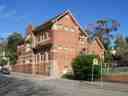
Eigene Seite öffnen →Look to your right and you’ll spot a big, handsome red-brick building with sandy trim, tall chimneys, and a peaked roof sitting proudly right on the corner-yep, that’s the Old…Mehr lesenWeniger anzeigen
Look to your right and you’ll spot a big, handsome red-brick building with sandy trim, tall chimneys, and a peaked roof sitting proudly right on the corner-yep, that’s the Old Newcastle East Public School! Alright, as you stand in front of this school, let your imagination drift back more than a hundred years, when the sound of children’s laughter, shouts, and maybe a mischievous prank or two drifted from those tall windows. Built between 1908 and 1912 and designed by the master architect Walter Liberty Vernon, this building was no ordinary collection of classrooms. It was the very heart of learning in Newcastle, and if you listen hard enough, maybe you’ll still hear the echo of a school bell calling students in from play. This place was created in a style called Federation Free Classical-so while it looks fancy with its stone caps and pointed roof, it was also made to stand strong for generations. The face brick and sandstone details catch the sun in the morning, just as they always have, and those prominent chimneys once puffed away on cold winter days as lessons marched on inside. Imagine walking in through the Bolton Street entrance, with its gabled roof greeting you like a castle-some kids probably imagined they were entering a fortress, ready for adventure! But that’s not all. When the last school child left in 1982, you might think the building’s days of excitement were over. Not so fast! The old school soon found itself at the center of local dramas-with lawyers and judges instead of teachers and students-when it became part of the Newcastle Court House. It even served as a Community Justice Centre, helping folks solve their differences. When the courts moved out, things could have gotten quiet again, but this mighty building simply changed costumes and took on a new life as apartments. Even as the world around it changed, its proud brick walls stayed the same. So, you’re looking at a building that has watched children’s hopes, adult debates, and city life swirl around it for well over a century. And honestly, that much history in one spot-now that’s something worth a gold star!
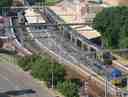
Eigene Seite öffnen →To spot Newcastle railway station, look for a long row of brick buildings with cream-colored verandahs and slanted rooftops directly beside the train tracks, with trains often…Mehr lesenWeniger anzeigen
To spot Newcastle railway station, look for a long row of brick buildings with cream-colored verandahs and slanted rooftops directly beside the train tracks, with trains often lined up alongside the platforms. Welcome to Newcastle railway station, where echoes of train whistles and bustling crowds once filled the air-if you inhale deeply, you might even catch a faint drift of coal dust and salty sea breeze, just as passengers did for generations. Picture yourself here in the 1870s, the city humming with excitement as the brand-new station opened in December 1878, under the watchful eye of John Whitton, the Engineer-in-Chief with a reputation for building dreams on rails. This wasn’t just any station: it was the grand finale of the line, the city’s very own link to the wide, wild world beyond the Hunter Valley. Back then, imagine arriving at this hub after a rickety journey-or saying a tearful goodbye, waving as one of the shiny locomotives disappeared down the tracks. In its earliest years, the building was all about symmetry and style: five brick buildings in a row, with a lantern-topped booking hall at the center and cool Renaissance touches along every corner. The raised skylights brought splashes of sunshine onto the ticket counters below, and grand verandahs wrapped the platform, shading travelers and porters alike. But the station wasn’t always this sprawling. Newcastle’s first railway terminus stood at nearby Honeysuckle Point-until the locals insisted, “No, no, bring the railway right into the heart of town!” In 1857, after much debate (and a contract for £6,347, which must have sounded astronomical), a single rail line crept east toward the wharf, welcoming goods and guest alike. The first passengers admired views of the harbor before the handsome red-brick station you see now took shape. By 1880, another platform stretched out alongside, making room for the growing crowds. Even in its early days, getting a ticket involved weaving through lively rooms-the ticket office, a ladies room (quite progressive!), the parcel office, and, naturally, the stationmaster’s sanctum. Over the years, Newcastle railway station adapted like a seasoned traveler-renovating for new eras. In 1892, a grand canopy stretched overhead to shield visitors from blazing sun and sudden storms. Hungry travelers in 1897 could now tuck into hearty meals in the Railway Refreshment Room, built for the busiest stops in the state. Local lore claims you could get the finest meat pie in NSW right here. Platform parties lasted long into the night, and, rumor has it, even a runaway chicken once delayed the Sydney express. By the roaring 1920s, Newcastle was a city on the move, and the station was its beating heart-three storeys of hospitality, admin, and bedrooms for staff needing shuteye before dawn’s next train. The grand Scott Street verandah got a facelift, rebuilt in brick, while the dining room soared skyward. The station’s hotel even welcomed wayward travelers who missed the last night train-imagine ghost stories swapped in those shadowy upstairs hallways. Electricity swept in by 1984, humming along the tracks, and for decades you could hop on a train bound for the dazzling lights of Sydney, or the peaceful green valleys inland. Coaches and buses buzzed in and out, turning the station into a true crossroads. But change loomed: the 2010s brought debate, protest, and a tug-of-war between rail lovers and city planners. On Christmas night in 2014, the last grand train departed at exactly 23:27, marking the end of an era as crowds gathered in Pacific Park, voices raised in protest-voices that still seem to echo in the arches. Yet the story didn’t end there. Like a phoenix rising, the Newcastle station precinct reopened in 2018 as The Station-a space for arts, markets, and community adventures. Stand here a moment-imagine the click-clack of boots, laughter, farewells, and train horns from decades past. This place is woven into the city’s history: a symbol of Newcastle’s connections, changes, and community spirit. Even today, as you gaze at the sun-dappled brickwork and the old verandahs, know that every corner has a story to tell-and maybe, just maybe, if you listen closely, you’ll catch the distant sound of another train rolling into the heart of the city. Seeking more information about the description, platform and services or the heritage listing? Ask away in the chat section and I'll fill you in.
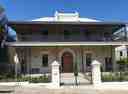
Eigene Seite öffnen →You’re standing in front of a grand two-storey Victorian Italianate building with a brick exterior, elegant stone brackets at the roofline, and an old verandah trimmed with…Mehr lesenWeniger anzeigen
You’re standing in front of a grand two-storey Victorian Italianate building with a brick exterior, elegant stone brackets at the roofline, and an old verandah trimmed with decorative iron columns-look for the long, symmetrical facade just across Bond Street from the park, facing north towards the harbour. Let’s imagine it’s the late 1800s-the air is thick with the salty tang of the harbour, and the noisy clatter of coal and cargo fills the docks nearby. Across the way, sailors loiter, their faces weathered from endless days at sea, searching for a clean bed and a little peace. This building, Coutt’s Sailors’ Home, was their answer-a sanctuary built in 1882, dreamed up by Reverend James Coutts, who, after witnessing the hardships faced by wayward mariners, decided it was time Newcastle looked after its sailors the way a mother hen watches her chicks. The city rallied around, and a parade of naval volunteers and brass bands marked the laying of the foundation stone, with the whole town given a holiday to celebrate. Much like a ship that’s sailed through every storm, this place has had a wild journey of its own. At first, the Home offered a safe place from the grog sellers and rowdy streets, with broad stairs and a grand bay window looking out over the harbour, reading rooms filled with tales from afar, and dorms set beneath soaring ceilings. Imagine the laughter echoing down those halls as sailors, just off ships that crossed the world, swapped stories and played cards. Reverend Coutts would have been proud-though his marble plaque inside can’t seem to agree with the actual year it opened (a little mix-up, or maybe just a bit too much rum?). But the wind soon changed. By the early 1900s, sailors started choosing other boarding houses-maybe the food was better, or a few too many rules cramped their style. People floated ideas for a navigation school to give new mariners their start, but in the end, it was mostly the sound of creaking floorboards and the occasional party, like that ball where Newcastle’s finest danced across polished floors. When Newcastle’s shipping days began to wane, so did the Home. By the 1930s it was struggling, and government schemes came and went. The building turned into a health clinic-the famous Sister Kenny ran a pioneering polio treatment centre here in the 1930s, teaching the world that gentle movement could save crippled limbs. But the clamor of the trains and the sooty air from the Zaara Street Power Station soon chased the new patients away as well. What followed was a game of musical chairs: the Home became government offices, storing everything from typewriters to air raid gear. The old chapel-once a place for sailors to pray for loved ones far away-was even shamefully turned into the men’s loo (no holy water there, I’m afraid). Scandals, arguments, and failed plans swirled like a sailor’s yarn. The city flirted with turning the Home into a Maritime Museum and even an Aboriginal art gallery, but repairs were always expensive, and nobody stepped up until Alastair and Diane Kinloch bought the worn-out building in 2014 and lovingly turned it into their residence. Over the years, this place has seen it all: it stood at the edge of the old convict lumber yard-imagine the clang of hammers and the grumbling of chains as prisoners built Newcastle’s future stone by stone. It cradled sailors blown in from every corner of the globe, then patients, government officials, and even an outrageously misplaced toilet block. Through it all, it has kept a noble, slightly faded charm: those cast-iron columns and original doors are the bones of history, carrying stories and secrets in every creak of the floorboards. So, as you stand on Bond Street, take a moment to look up at its timeworn balconies and feel the breeze that once carried the hopes of men who knew the sea’s fury. Coutt’s Sailors’ Home isn’t just bricks and mortar-it’s Newcastle’s heart, built for protection, adventure, laughter, and the odd misadventure or two. And really, isn’t that what every good landmark is all about?
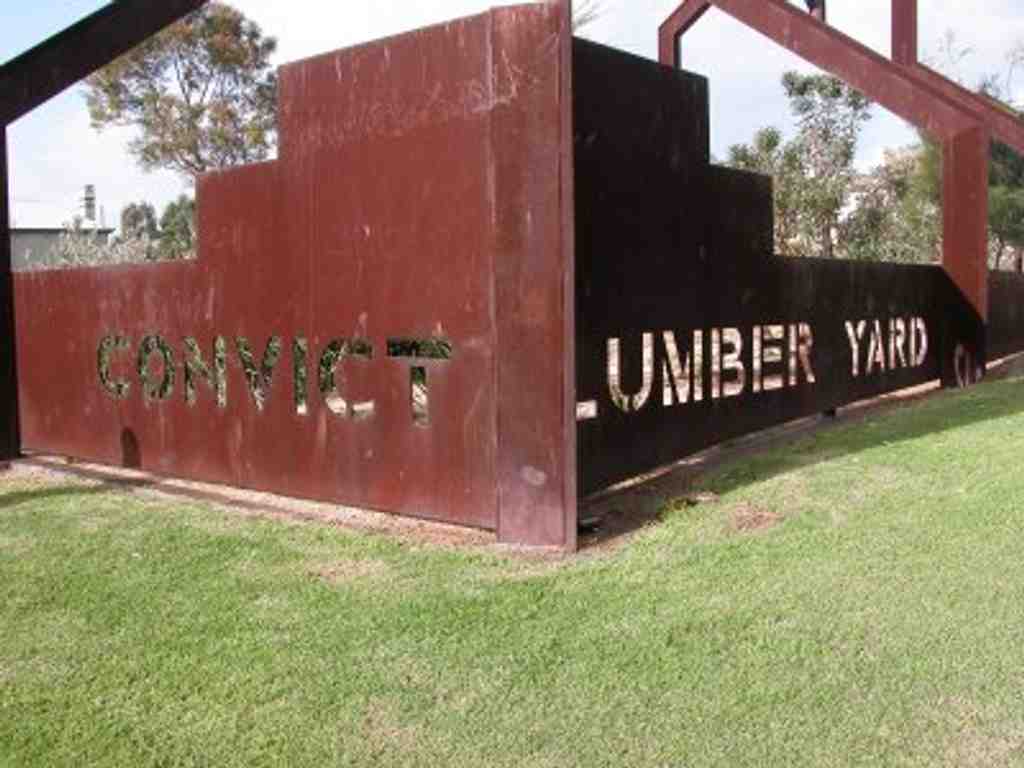
Eigene Seite öffnen →Look to your left for a striking rusty-red metal sculpture with “CONVICT LUMBER YARD” cut out in bold letters-its silhouette stands boldly in the grass, making it hard to…Mehr lesenWeniger anzeigen
Look to your left for a striking rusty-red metal sculpture with “CONVICT LUMBER YARD” cut out in bold letters-its silhouette stands boldly in the grass, making it hard to miss. Alright, time to step into one of Newcastle’s most intriguing patches of ground! If these grassy lawns could talk, they’d whisper tales of backbreaking work, clanging tools, and convict dreams under the blazing sun. Welcome to the Convict Lumber Yard! Picture yourself here over 200 years ago, when this peaceful spot would have sounded very different. Now, imagine the salty air mixed with the sharp, resinous scent of freshly worked timber, the clatter of carts, and the stern voices of guards. It’s 1801, and this is where Newcastle’s first convict settlement took root. Men in heavy chains, sweating through their grimy shirts, toiled day after day sawing lumber and shaping timbers for the colony. When Newcastle’s penal era officially ended in 1822, many convicts thought the worst was over... but the site stayed busy as a lumber yard. Then, as fate would have it, in 1832 the gates swung open again-not for a fresh shipment of pine, but for another round of convict laborers. This time, their task was monstrous: to build the famous Nobby’s breakwater out in the turbulent harbor, hauling massive stones and logs, all under the watchful eyes of guards in scarlet coats. They called it “The Stockade,” which sounds dramatic enough to be a prison-themed soap opera! The sea winds must have cheered when in 1846, the breakwater was finally finished, and the tough old days of convict occupation faded-at least, mostly. With the age of steam rolling in, the landscape changed again, swapping bricks for steel rails. By 1857, trains came puffing through as the mighty Great Northern Railway was built, knots of whistles and chugging engines filling the air. Parts of the site transformed to support the busy shipping and steam railway industries. Picture goods yards bustling with crates, porters rushing by, and the faint smell of coal mingling with salty ocean breezes. Look behind you and you might catch a glimpse of two historical survivors: the sturdy, two-story Paymaster’s Office, where payroll secrets were once kept under lock and key, and the stately Station Master’s Residence-a real Victorian beauty, its design fit for railway royalty. These buildings saw waves of change, from customs officials to the whirr of sewing in Brett’s sail loft nearby (which, sadly, didn’t make it past 1939). There were cozy railway cottages for employees, a hall bustling with meetings, and even a tennis court on the grounds-because nothing says “railway institution” quite like a spot of tennis after your shift! Even as railways ebbed and flowed, the land kept yielding surprises. In 1987, archaeologists paid a visit, trowels in hand, ready to sift through old layers of soil-and they hit the jackpot! Hidden just beneath your feet were the remains of Aboriginal tools, convict-built brick drains, a kiln floor, and even the well that quenched the thirst of countless laborers. It’s like the ground itself is a time capsule packed with secrets: bricks from a collapsed convict hospital, and the actual barracks walls that once enclosed so many weary workers. What’s truly amazing is how many eras left their footprints here. This yard gives rare physical evidence of those tough-as-nails industrious convicts, and later, the busy railway workers who shaped Newcastle into the thriving city you see today. And talk about a killer view: peek through the trees, and you’ll see the harbor sparkling-the same view workers enjoyed, sometimes, between swings of the axe or when sneaking a quick break. Today, the Convict Lumber Yard is more than just dirt and ruins; it’s proof of survival through hard times. It’s a place where Aboriginal stories, convict grit, and railway innovation all overlap, adding layers to Newcastle’s history. These old foundations, bricks, and memories create a place that is a treasure chest for archaeologists, a touchstone for the community, and yes, a fantastic set for anyone dreaming of a historical soap opera! So, next time you walk by and feel the breeze or hear the distant clang of metal on stone, remember-you’re standing on ground that shaped New South Wales. Now, who’s ready for the next chapter?
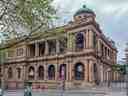
Eigene Seite öffnen →To spot the Newcastle Post Office, just look for a grand, two-storey sandstone building with sweeping columns, arched windows, and green domed rooftops holding court on the corner…Mehr lesenWeniger anzeigen
To spot the Newcastle Post Office, just look for a grand, two-storey sandstone building with sweeping columns, arched windows, and green domed rooftops holding court on the corner - it almost looks like it’s wearing a crown and keeping a watchful eye on the city. Now, let me whisk you back in time. Imagine Newcastle in the early 1900s - the smell of sea air mingling with coal dust, horse-drawn carriages rattling along Hunter Street, and this mighty post office, freshly built, standing proud and sparkling like the jewel of the town. Its designer, Walter Liberty Vernon, must have had a grand imagination because he gave us a building that looks more fit for a palace than simply sorting out your bills! But Newcastle’s postal adventure really gets cooking long before these formidable columns appeared. Rewind to 1828: the first Newcastle post office opens its doors, tucked away in a modest building nearby, with the local convicts’ boss, Duncan Forbes Mackay, doubling as postmaster! The “Lord Liverpool” - no, not a royal, just a humble cutter ship - chugged up from Sydney once a week, mail pouches thudding to the dock, bringing news that might be weeks old by the time it reached the eager or anxious folks of Newcastle. As Newcastle grew - fueled by the roaring coal industry and dreams of a bustling future - so did its need for communication. The old post offices wore out fast: one even survived a fire, although Mrs Thompson, the postmaster’s wife, was reportedly more concerned with getting her laundry done than saving the mail! That’s dedication… or maybe just a sign that good laundry is hard to come by. Finally, come the turn of the 20th century, Newcastle decided its post office needed to match its ambition. The government picked this very site - a spot once holding the old Court House - and set to work. It was a true team effort: sandstone workers, carvers, steel benders, and tile-layers threw themselves into the project, although, in true government fashion, the cash ran out as often as the ink ran dry on telegrams. Somehow, the budget ballooned from nineteen thousand pounds to over thirty-three thousand! I’d like to see their spreadsheet. After much nail-biting and coin-counting, 1903 saw the grand opening: this immense Federation-era building, with its symmetry, colonnades, and lovely domes, officially flung open its doors. If you look at the stone carvings and the elegant balustrades, you can almost hear the pride of a city declaring, “We’ve made it!” Inside, it wasn’t just about letters. The post office buzzed with the sounds of telegraphs, clanging telephones, and hurried footsteps of postmasters, bankers, and even electoral agents - all under one roof! As decades rolled by, the building expanded, took knocks from earthquakes, survived roof leaks, watched modern technology creep in, and outlasted government departments that came and went. Each scar, crack, and repair stands as silent witness to more than a century of Newcastle’s history - strikes, celebrations, and even noisy plans to turn it into a fancy bar (with a side gig as a laundry, perhaps?). Though the post office has long since moved out, and the grand halls are quieter than they used to be, the grand sandstone face of this building - all classical elegance and New South Wales pride - remains a centrepiece of local memory. It’s seen this city grow from a gritty coal port to the vibrant community you see today. So, as you stand here, imagine the echoes of gossip and greetings, stamping and sorting, officialdom and oddity that have passed through these doors. And if the walls could really talk, you’d probably be waiting in a very long queue just to hear their stories!
Eigene Seite öffnen →



Häufig gestellte Fragen
Wie starte ich die Tour?
Laden Sie nach dem Kauf die AudaTours-App herunter und geben Sie Ihren Einlösecode ein. Die Tour ist sofort startbereit – tippen Sie einfach auf „Play“ und folgen Sie der GPS-geführten Route.
Benötige ich während der Tour Internet?
Nein! Laden Sie die Tour vor dem Start herunter und genießen Sie sie vollständig offline. Nur die Chat-Funktion benötigt Internet. Wir empfehlen den Download über WLAN, um mobiles Datenvolumen zu sparen.
Handelt es sich um eine geführte Gruppentour?
Nein – dies ist ein selbstgeführter Audioguide. Sie erkunden unabhängig in Ihrem eigenen Tempo, wobei die Audioerzählung über Ihr Telefon abgespielt wird. Kein Reiseleiter, keine Gruppe, kein Zeitplan.
Wie lange dauert die Tour?
Die meisten Touren dauern 60–90 Minuten, aber Sie kontrollieren das Tempo vollständig. Pausieren Sie, überspringen Sie Stopps oder machen Sie Pausen, wann immer Sie wollen.
Was, wenn ich die Tour heute nicht beenden kann?
Kein Problem! Touren haben lebenslangen Zugriff. Pausieren Sie und setzen Sie sie fort, wann immer Sie möchten – morgen, nächste Woche oder nächstes Jahr. Ihr Fortschritt wird gespeichert.
Welche Sprachen sind verfügbar?
Alle Touren sind in über 50 Sprachen verfügbar. Wählen Sie Ihre bevorzugte Sprache beim Einlösen Ihres Codes. Hinweis: Die Sprache kann nach der Tour-Generierung nicht mehr geändert werden.
Wo greife ich nach dem Kauf auf die Tour zu?
Laden Sie die kostenlose AudaTours-App aus dem App Store oder von Google Play herunter. Geben Sie Ihren Einlösecode (per E-Mail gesendet) ein, und die Tour erscheint in Ihrer Bibliothek, bereit zum Download und Start.
Wenn Ihnen die Tour nicht gefällt, erstatten wir Ihnen den Kaufpreis. Kontaktieren Sie uns unter [email protected]
Sicher bezahlen mit 


