
胡志明市语音导览:历史与高度之旅
一个建立在革命基础上的城市永不停歇。胡志明市将其最狂野的传说隐藏在显眼之处,从龟湖中升起的莲花状纪念碑,到黎贵惇高中教室里回荡的反抗低语,以及建筑大学中建筑师梦想成真的大胆线条。参加一次自助语音导览,它将带你穿越西贡的秘密戏剧、丑闻、学生起义和几乎被遗忘的谜团——揭示大多数游客匆匆而过的事物。 为什么一座纪念碑会爆炸,让当地人低语着龙和诅咒的故事?谁冒着一切风险在殖民学校的墙壁上涂写反叛信息?一张学生蓝图在一个为灵魂而战的城市中激起了什么? 让你的脚步追溯反叛者、艺术家和幽灵的纠结之路,故事从绿树成荫的大道和宏伟的立面背后迸发出来。穿越时空和能量,在每一个细节中发现西贡的炽热精神。 准备好深入这座城市不为人知的故事核心了吗?现在就开始聆听吧。
导览预览
关于此导览
- schedule持续时间 40–60 mins按照自己的节奏
- straighten4.5 公里步行路线跟随引导路径
- location_on
- wifi_off离线工作一次下载,随处使用
- all_inclusive终身访问随时重播,永久有效
- location_on从 龟湖 开始
此导览的景点
If you want to spot Turtle Lake, just look towards the busy roundabout surrounded by tall, leafy trees-you’ll see a large, flower-like concrete monument rising tall above a pool…阅读更多收起
If you want to spot Turtle Lake, just look towards the busy roundabout surrounded by tall, leafy trees-you’ll see a large, flower-like concrete monument rising tall above a pool and pathways, right in the heart of the intersection. Alright, get ready for a story that’s got more twists than a bowl of instant noodles! You’re standing in front of Turtle Lake, or as the locals call it, Hồ Con Rùa. Right now, you’re at the bustling meeting point of three big roads: Võ Văn Tần, Phạm Ngọc Thạch, and Trần Cao Vân. It might be hard to imagine, but you’re actually at the heart of centuries of drama, change, and a bit of turtle magic. Let’s take a trip back in time-hold your hat, we’re heading to 1790! This very spot was once the Khảm Khuyết Gate, leading into the old “eight-sided” Citadel, a fortress built by emperors and guarded by soldiers who, I’m pretty sure, never dealt with today’s scooter traffic. By 1837, that old citadel was torn down and a smaller one popped up, but even that didn’t last. When the French sauntered in around 1859, they flattened the fort and began sketching out a whole new city on this land. Turtle Lake? Back then, it was just a checkpoint on the edge of a fortress road leading down to the river. Now, imagine the clang and bang of hammers in 1878--a grand water tower went up right where you stand, quenching the city’s thirst. People drank the water not knowing, of course, that one day students would be sipping iced tea by the same spot. As time rolled on, the French wanted more than just water-they wanted a monument. They built a statue with three French soldiers in bronze, marking their “ownership” over Indochina. Locals cheekily called it the “Square of Three Figures.” But revolution never takes a vacation, and by 1956, the statue was gone, replaced by a peaceful fountain. The name changed too-Chiến Sĩ Square, saluting soldiers of a different era. Then, in the wild swirl of the sixties, the roundabout became the place to be. Enter architect Nguyễn Kỳ, who dreamed up something new: a centerpiece with five soaring concrete columns, flaring out like a giant hand or flower, circling a big pool-eight-sided, of course, for a bit of feng shui luck. In the middle stood a turtle, proudly hauling a stone stele with the names of countries supporting the old Republic of Vietnam. Some said this was to pin down the “tail of the dragon”-a mystical spot that was said to ensure the president stayed in power. Want a handy tip? If anyone asks, just say you’re helping to keep the dragon from wiggling too much! By 1972, this area was officially called International Square and, true to its new name, saw chatter and snacks from morning to midnight, thanks to the cafés and street food all around. But don’t let the peaceful splashing of the fountain fool you--because the seventies brought real drama. After the fall of Saigon, the turtle and its stele were blown up in a mysterious bombing. Locals whispered about secret plots and “unleashing the dragon's tail.” Security agents scrambled, but in the end, the turtle lost-but not its name. Even without its famous turtle, everyone still calls it Turtle Lake. Now, step back, take a breath, and look around. You’re standing in an intersection that has been a fortress, a water tower, a colonial boasting ground, a political hotspot, and now, a favorite hangout for students in search of snacks and teenagers hoping to snap the perfect photo. Stop for a coffee or lemonade, listen for echoes of old revolutions and battles-maybe even the soft shuffle of a turtle’s feet if you use your imagination-and remember that, sometimes, a small spot in a big city can hold centuries of stories, both real and legendary. And if you hear a dragon snoring under the ground…well, you might just be standing right on its tail!
打开独立页面 →To spot the Trường Trung học phổ thông Lê Quý Đôn, just look ahead for an impressive, grand building with classic Western architecture and rows of tall windows, its proud name…阅读更多收起
To spot the Trường Trung học phổ thông Lê Quý Đôn, just look ahead for an impressive, grand building with classic Western architecture and rows of tall windows, its proud name displayed above the main entrance-the oldest high school still standing in all of Vietnam. Now, let’s take you back in time. Imagine: it’s the year 1874; the streets of Saigon are a swirl of dust, carts, and French hats. Right in front of you, exactly where you are now, the French admiral and governor Jules François Emile Krantz signs a decree, making the wild dream of a new high school real. Not just any school-this would be the very first high school in all of Saigon. Its first students weren’t local kids rushing in with schoolbags and messy hair. No, this place was built for the sons (and maybe some very lucky daughters) of French officials living under the tropical Vietnamese sun, missing the cloudy skies of France. The school started off with a rather elegant French name: Collège Chasseloup-Laubat, named after a French navy minister called Prosper de Chasseloup-Laubat-imagine trying to fit that on a school uniform! Its first buildings went up between 1874 and 1877, following all the grand blueprints of Western design. Picture tall windows, tiled roofs, and an air of seriousness that must have made the local geckos straighten up when they scurried past. At first, only French students could enter. Imagine peeking over the walls as a local child, seeing only crisp European uniforms marching between classes. But by the early 1900s, a twist appeared. The gates creaked open for local Vietnamese students-but only if they had French citizenship. Life inside was almost like a divided city: two separate zones. There was the Quartier Européen for French kids, and the Quartier Indigène for Vietnamese students, who got to study a bit more Vietnamese on the side, but still followed the same tough French program, all the way up to the baccalaureate exams. Whether French or Vietnamese, they all had to tackle those classic French tests-talk about a multilingual headache! Now, the tension of history didn’t leave these classrooms untouched. In 1926, during a heated period of resistance against colonial rule, Vietnamese students scribbled four bold letters-A. B. L. F.-on the blackboard. It stood for “A bas les Français,” or "Down with the French." This wasn’t just a rebellious doodle; it was a message of protest as students joined in mourning national figure Phan Chu Trinh, turning the school into a microcosm of a changing country. Over the years, these halls echoed with laughter, whispers, and some nervous late-night cramming. Some of the best minds of southern Vietnam passed through here, chosen for their smarts after grueling exams, their names even published in local newspapers-imagine your school results on the front page! Gradually, the school’s identity changed as Vietnam’s own story shifted. In 1954, to help people forget the colonial days, the name became Jean Jacques Rousseau. The school now focused on Vietnamese students, but with French administrators still peering over their glasses. Then, in 1967, the keys finally passed to the Vietnamese educational authorities, and the school gained another new name-Lê Quý Đôn, after a famous Vietnamese scholar. Oh, but wait, the building you see today? It hasn’t changed much! The main structure has four long two-story wings arranged in the shape of the Chinese character for “mouth”-so students could chatter day and night, perhaps? The architecture still shows off its dignified Parisian roots. Despite restorations and some newer additions, the ancient bones remain, making this one of the most beautiful-and historic-campuses in Vietnam. By 1998, the school added a statue to honor its namesake, Lê Quý Đôn, standing just behind the gate. A few years later, in 2009, it became one of the first financially autonomous public schools in Ho Chi Minh City-a pioneering step for local education. And just when you think this school couldn’t have a bigger spotlight, the Vietnamese president himself attended the opening ceremony in 2009, celebrating a school that gets 100% graduation rates for its new programs. So, as you’re standing here, feel the weight of more than a century of stories swirling around you-French footsteps, Vietnamese voices rising up for freedom, exam cheers, and quiet moments under the ancient eaves. And hey, as you walk by, don’t be surprised if you catch a whiff of chalk dust or hear a ghostly echo of “A bas les Français!”-because here, every wall remembers.
打开独立页面 →
再显示 11 个站点显示更少站点expand_moreexpand_less
To spot this landmark, look for a low, square rooftop with a helicopter perched on top and a line of people scrambling up a narrow metal stairway-if you see a scene that looks…阅读更多收起
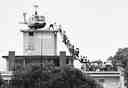
To spot this landmark, look for a low, square rooftop with a helicopter perched on top and a line of people scrambling up a narrow metal stairway-if you see a scene that looks like it belongs in the climax of an action film, you’re in the right place! Alright traveler, you’re now standing at the site of one of the most dramatic moments in 20th-century history-this is where the Vietnam War reached its climactic end and Saigon changed forever. So, let’s go back to April 1975. Imagine yourself surrounded by the hum of anxious crowds and the unmistakable whirring of helicopter blades -there’s a tension in the air, thick enough to cut with a spoon. The city is on edge. The North Vietnamese forces are closing in, and this rooftop is the last hope for thousands of desperate people who just want a chance at freedom. Things hadn’t always been this way, you know. For years, Saigon had been fairly calm despite the chaos outside its borders, but now things have changed overnight-panic in the streets, rumors echoing everywhere, people desperately trying to get exit visas while the price of everything from boat tickets to brooms has skyrocketed. At this very spot, in the final hours, helicopters swoop in from the sea as part of a giant operation called "Operation Frequent Wind," the biggest helicopter evacuation in history. If you listen carefully, you might almost hear the crackle of radios instructing Americans and South Vietnamese when it’s finally time to run for the ladder. The streets below are jammed-cars, bicycles, waving families, abandoned suitcases. Saigon’s defenders are battered and divided, trying to mount a last stand with little hope left, while inside this building, people cling to each other, begging for a seat on the last chopper out. Embassy workers anxiously call their loved ones, and Americans signal their Vietnamese friends-many are climbing that very same metal stairway, risking it all in a bid for escape. The soundtrack of this moment is unforgettable: the distant rattle of artillery, the roar of engines, a bittersweet chorus of hope and heartbreak. Meanwhile, all across the city, chaos and confusion reign. The South Vietnamese government, overwhelmed and out of options, shuffles through three presidents in two weeks! Across town, young soldiers and families throw together makeshift goodbyes-while U.S. officials have resorted to playing "White Christmas" on the radio as the secret code to evacuate. It sounds like a Christmas party gone very wrong. The tension peaks as North Vietnamese tanks roar towards the center of Saigon. They crash through barricades, past stunned defenders. The city’s main points-bridges, airports, radio stations-fall one by one like dominoes. At the Presidential Palace not far from here, the gates are finally smashed open, and the old flag is torn down, the new red one hoisted up on the roof. The battle is over in moments, but the aftershocks ripple through decades. You can almost sense the mix of relief and fear in the air-some people celebrate, others mourn. For many locals, it’s a day of victory and liberation, known as Reunification Day. For others, especially the refugees who fled abroad, it’s forever "Black April," a time of heartbreak and exile. Saigon is renamed for Ho Chi Minh, finally united after years of fierce struggle-its name changed on July 2, 1976. Stand here for a second and imagine what people saw from this very spot: a city shrouded in uncertainty, yet strangely hopeful, as the helicopter took off one last time, leaving a rooftop empty-but alive with the echoes of history. It’s a reminder that when history turns a page, sometimes you really can hear it flip. Seeking more information about the names, north vietnamese advance or the evacuation? Ask away in the chat section and I'll fill you in.
打开独立页面 →To spot the Notre-Dame Cathedral Basilica of Saigon, just look for two tall, pointed bell towers made of bright red bricks and a large statue of the Virgin Mary standing proudly…阅读更多收起
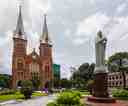
To spot the Notre-Dame Cathedral Basilica of Saigon, just look for two tall, pointed bell towers made of bright red bricks and a large statue of the Virgin Mary standing proudly in the garden out front. Now, as you stand before this grand old cathedral, let’s travel back in time-to a Vietnam still echoing with the clatter of horses’ hooves, brush of colonial uniforms, and the rumble of ambitions. Picture French colonists arriving, hoping to make their spiritual stamp on Saigon, only to find that their first church was barely big enough to fit their dreams-or their ever-growing congregation! So, what does a bishop do? He calls in reinforcements... not with prayers, but with bricks-fantastic red ones shipped all the way from Toulouse, France. Imagine the ships arriving at the docks, packed with tiles and stones, each one stamped with the pride of Marseille; those very bricks are in front of you right now, still radiating their color after over a century, despite not having a fancy protective coating. Here’s where it gets lively. The first wooden church they built fell victim to the tiny but mighty-termites! So, for a while, every service happened in the French Governor’s guest-chamber, giving those Sunday sermons a bit of that “palace luxury” feeling. But soon, a new competition was announced-the great cathedral site contest! Where would it go? There were three top spots, and after much debate and probably a few polite French arguments over tea, this very spot was chosen. They broke ground in 1877 and three years later, voilà: the Saigon Church rose up, its twin towers reaching for the sky. The cost? Two and a half million French francs-a sum that could make even the most pious bishop clutch his rosary! But wait, there’s more. In 1895, those towering spires were crowned with crosses, each so big you’d need a team of very enthusiastic altar boys to lift them. Each of the bell towers got six bronze bells, their combined weight nearly 29 metric tonnes-so if you think today’s traffic is loud, imagine all those bells ringing at once! The crosses themselves are enormous: 3.5 meters high, and as wide as a door. The whole structure, with everything on top, climbs over 60 meters-the perfect beacon for the faithful... or just anyone looking for a dramatic meeting point. Out in the flower garden once stood a bronze statue of a French bishop leading a Vietnamese prince by the hand-now just a memory and a strong statue base remain. But that platform didn’t stay empty for long. In 1959, a new resident arrived: a statuesque granite Virgin Mary, shipped from Rome and celebrated with ceremonies worthy of a royal wedding. She stands for peace, and it’s said that one day in 2005, she even shed a tear down her right cheek. True or not, people flocked in such numbers that the city had to stop traffic all around for days. That's some divine attention! Inside, the details are just as magical: 56 glass squares made by Lorin of Chartres-yes, the same French town famous for its medieval stained glass. Some tiles were replaced over time, especially after wars, but the original stamp of “Guichard Carvin, Marseille St André France” can still be found if you know where to look. But don’t be fooled! This church isn’t just a pretty face. The foundation is so strong it could carry ten times the weight above-so, should there ever be a special “cathedral stacking tournament,” Saigon’s cathedral would win on sheer muscle alone! As the years went by, its title grew fancier-Chief Cathedral, then Basilica, thanks to the Pope in Rome in 1962. Its official name is quite a mouthful, but to most, it’s simply “Notre-Dame.” Today, you stand where thousands have gathered for hope, peace, and a good story or two. Imagine, storms have swept through, wars have raged, politicians have posed for photos, and still, the cathedral with its red face and two proud towers stands right here, keeping watch over the city. So, as the traffic whizzes by, take a moment to soak in the sweeping views, the scent of the nearby flowers, and the feeling of centuries passing you by. If you feel inspired to snap a picture, don’t blame me if you end up with the best photo in your memory card!
打开独立页面 →To spot the Ho Chi Minh City Opera House, just look for the grand cream-colored building right in front of you with sweeping steps, ornate carvings, elegant statues, and a…阅读更多收起
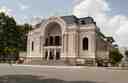
To spot the Ho Chi Minh City Opera House, just look for the grand cream-colored building right in front of you with sweeping steps, ornate carvings, elegant statues, and a towering arched façade adorned with French-style details. Now, take a moment to really soak in the elaborate exterior before you-imagine standing here over a century ago, just as midnight struck on New Year’s Day, 1900. The city was alive with excitement as Saigon’s brand-new Opéra de Saïgon threw open its heavy doors, flaunting its French colonial elegance under the soft glow of streetlamps. Designed by the French architect Félix Olivier and constructed by Ernest Guichard and Eugène Ferret, the theatre was meant to whisk colonial Saigon into the most glamorous corners of Paris. Picture elegant couples stepping out of rickshaws, the air thick with anticipation, and chandelier light spilling from the windows onto Dong Khoi Street. This wasn’t just a building-it was a calling card of French sophistication. Its ornate façade, inspired by the famous Petit Palais in Paris, once dazzled passersby with curlicue engravings, flourishes, mythical faces, and stately statues. Every last bit of decoration, from the tiniest carving to the grandest balustrade, was designed in France and traveled all the way here by ship-perhaps feeling a bit seasick, or simply eager to see the tropics! From the outside, you'd never guess the building has lived a secret double life. In its earliest days, it drew French aristocrats and curious locals eager to enjoy operas, ballets, and European spectacles. But as Saigon grew wilder and nightclubs boomed in the 1930s, the mighty opera house found itself-can you imagine?-sidelined for jazz clubs and dance halls! The city debated its fate: Should it become a full-time concert hall instead? In an attempt to “youthen” the building (yes, that was a trend), they actually stripped off many of its historic decorations in 1943. But, like any good star, it never lost its flair. Then came the war years, when Allied bombs damaged the roof and silence fell over the velvet seats. After the Second World War, the theatre bore unlikely witness to some of history’s heaviest moments. With refugees pouring in after the French retreat from the north in the 1950s, the opera house swapped drama and music for the weary hum of displaced families-no applause, just relief echoing through its hallways. Not long after, the opera house stepped into political spotlight. Between 1956 and 1967, it transformed from a site of music to the buzzing house of South Vietnam’s National Assembly-imagine rows and rows of polished shoes, heated debates, and the future of a country being decided under high, painted ceilings. In 1975, after the Fall of Saigon, yet another chapter began as the People’s Congress gathered here, planning the next era of the city with the murals and golden decor as silent witnesses. But theatres are meant for shows, not politics! Thankfully in 1976, the grand old building returned to her first love-live performances. To celebrate the city’s 300th birthday in 1998, artisans carefully restored many of the lost flourishes on her famously “over-the-top” façade; today, the statues and details shine like a proud grandmother wearing her best brooches. And just when you think it couldn’t get more dramatic, the Opera House now even sits atop its very own metro station! With the opening of the Opera House Station, new generations can emerge from the future right into the glow of the past. So as you stand here, let your imagination spin you through the roaring parties, the somber war years, the stormy debates-and now, the magical nights when music drifts out into a buzzing, modern city. The Ho Chi Minh City Opera House: always ready for its next act, and maybe, just maybe, for your own story as well.
打开独立页面 →Look for a large cream-colored building on the corner with the words "REX HOTEL" on top, accented by a crown and flag-you’ll find luxury fashion stores like Chanel and Rolex at…阅读更多收起
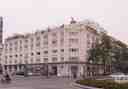
Look for a large cream-colored building on the corner with the words "REX HOTEL" on top, accented by a crown and flag-you’ll find luxury fashion stores like Chanel and Rolex at street level, right ahead of you! Standing here, you’re not just looking at a hotel-you’re staring straight into the pages of history! The Rex Hotel has been many things over the years, but boring definitely isn’t one of them. Imagine the year is 1927, and the scent of motor oil wafts out from where you’re standing. This very spot was once the Bainier Auto Hall, a sleek two-story dealership for shiny European cars, proudly run by a French businessman. Citroëns gleamed in the Saigon sun, turning eyebrows and-sometimes-stealing hearts. Fast forward to 1959: the place transforms from a garage into a vibrant entertainment empire. Mr. and Mrs. Ung Thi wave a magic renovation wand, and suddenly, there’s a snazzy 100-room hotel, three buzzing cinemas, a dance hall, a cafeteria, and a library. Imagine the AC blasting in those movie theaters-top-of-the-line for the time-and the thrill of watching the latest films on a massive Todd-AO screen. The city’s cool crowd could escape the sticky heat, grab some popcorn, and enjoy movies with surround sound modern enough to make jaws drop. Now, picture the 1960s. The hotel is partway open, and 400 U.S. Army soldiers are the very first to check in while construction dust still settles around them. By day, the sound of typewriters click away as the American Culture Centre moves in-a spot for lectures and tracing fingers along the spines of books in the new Abraham Lincoln Library, right where high-end boutiques stand today. But wait, the plot thickens! During the Vietnam War, the Rex is ground zero for the most famous press conferences in the city. Every day at 5 o’clock, journalists crowd into a room here, eager for the latest updates. Only, these weren’t your average conferences; this was the “Five O’Clock Follies.” Cynical reporters gave it that name because the military officers seemed-let’s say-overly optimistic about “progress,” no matter how tough the day had been. Barry Zorthian, the press ringmaster, would passionately spin his briefing while the typewriters hammered out the first drafts of history. Outside, the rooftop buzzed every evening, packed with war correspondents swapping wild stories over rooftop drinks, military officials cooling off from the day’s heat, and city lights sparkling all around. The hotel ran with 600 employees and hosted nearly as many dazzling moments as it did gossip and laughter from the world’s journalists. The end of the war brought a new era. The fall of Saigon meant new owners and new names-the state tourism bureau took over, and for a while, it was the Bến Thành Hotel. But everyone just kept calling it the Rex, and in 1986, the name was officially back. After a lavish renovation in 2003, the old auto hall’s lobby was walking the fashion runway: now, it’s one of the city’s swankiest shopping arcades, with mega-brands like Chanel and Rolex glinting behind the modern glass. So if these elegant walls could talk, they’d have stories of roaring engines, swinging dance parties, whirring film projectors, heated war briefings, and maybe a few secret love affairs. Standing here at the Rex, you’re not just outside a hotel. You’re at the crossroads of a century of Saigon’s dreams, dramas, and sparkling nights.
打开独立页面 →In front of you is a grand, cream-yellow building with a tall central clock tower, red-tiled roofs, a flurry of ornate white decorations, and the bright red Vietnamese national…阅读更多收起
In front of you is a grand, cream-yellow building with a tall central clock tower, red-tiled roofs, a flurry of ornate white decorations, and the bright red Vietnamese national flag flying high above-just look straight ahead, and you can’t miss its stately elegance towering over the beginning of Nguyen Hue boulevard. Now, take a second to absorb this architectural gem-it’s like a slice of European history baked right into the heart of Ho Chi Minh City! This, my friend, is the Ho Chi Minh City People’s Committee Building, once known as the Hôtel de Ville. Imagine it’s the early 1900s. Paris is in vogue, and Saigon is buzzing with colonial ambitions. The French, eager to stamp their personality on the city, brought in architect Fernand Gardès, who must have thought, “Let’s give Saigon a City Hall worthy of a Parisian postcard... but with a tropical twist!” As stones were stacked and columns raised from 1898 to 1908, the locals would have gawked at this Baroque and Rococo extravaganza slowly growing at the head of Nguyen Hue street-its white Corinthian columns and lavish decorations almost daring the humid air to tarnish them. There’s a clock up there, high above, flanked by a goddess and two little angels wrangling mythical beasts. If you squint, you might almost hear the tick-tock of time piling up underneath the grand spectacle. Don’t forget to check out the flag atop the sharp central tower, fluttering in the breeze. That flag isn’t just decoration-it’s a symbol of resilience and change. This building has seen more name tags than a conference attendee! Under the French, it was the elegant Hôtel de Ville or “Dinh Xa Tay” in Vietnamese: a classy address for colonial officials. Later, as the Republic of Vietnam took hold, it became “Tòa đô chánh Sài Gòn,” the center stage for the local government. After the city’s liberation, it settled into its current important role, but trust me, it still loves a dramatic parade on national holidays. On April 30th, 2023, for the first time ever, the doors swung open for visitors, as if the old walls finally whispered, “About time, isn’t it?” Up until then, only birds and the iconic city clock got a peek inside! Walk a little closer and you’ll spot the five arched gates at the front-each one crowned with swirling ironwork like icing atop a wedding cake. Imagine the rumble of 1940s Saigon cars breezing through those very portals. Fancy a shortcut? Well, back then, the side gates let government cars swoosh straight into the inner courtyard. If the exterior seems almost too lavish for mere paperwork, it’s because the building originally drew inspiration from northern French bell towers-and it certainly was designed to impress! The center tower reaches up with pomp and a giant smile, and below, its façade parades a mix of baroque flair: roses, garlands, and sculpted lion faces guard the balconies. The triad of female figures above symbolize Marianne, representing France’s ideals of liberty, equality, and fraternity. Quite literally, the French left their sculpted fingerprints everywhere-maybe just in case anyone forgot who was in charge! Peek through the windows and try to imagine the hum of activity: bureaucrats bustling, columns of sunlight slanting over art nouveau railings, and walls decorated in classic Louis XV motifs-waves of laurel leaves and geometric patterns, gleaming in all directions. Somewhere on a staircase, two cherubs hold the original Saigon city seal. The spirit of the place is part grandeur, part playful-a little like a stately town hall caught winking at a cathedral as the noon bell rings. But even these regal walls have changed to keep up with the city’s rapid pace. New wings sprouted in the 1960s and 1990s-security posts here, extra offices there, and later an underground parking garage for the motorbikes that claim every inch of Saigon’s streets. In recent years, experts from faraway Lyon lit up the façade, so at night this old building glows like the chandelier at a grand ball. Step into the garden at the front and you’ll see a memorial stone, hinting at another bit of drama from August 25th, 1945: the unveiling of the Southern Vietnam Provisional Administration Committee-a day when revolutionaries stirred the city and hope was in the air. So, as you stand before these walls, remember: over a century of stories are carved into every arch and statue. The stately facade hides layers of political plot-twists, a whole cast of historical characters, midnight decisions, and perhaps one or two curious officials who wished those lions could talk. If these walls could giggle, they’d probably say, “Bienvenue, traveler! The party-and the paperwork-never ends at City Hall.”
打开独立页面 →Look straight ahead for a grand, elegant mansion gleaming in white and grey, guarded by a spiky fence and framed by tall columns and intricate carvings-if you see a building that…阅读更多收起
Look straight ahead for a grand, elegant mansion gleaming in white and grey, guarded by a spiky fence and framed by tall columns and intricate carvings-if you see a building that looks like it's ready for both a history lesson and a fancy party, you've found the Ho Chi Minh City Museum! Welcome, explorer, to one of the most storied corners of Ho Chi Minh City. If these walls could talk, they'd probably start with a dramatic sigh, do a little costume change, and then launch into a decades-long soap opera with more twists than a bowl of noodles. Picture this: it's the late 1800s, Saigon is abuzz with the clatter of colonial ambition, and a French architect by the name of Alfred Foulhoux gets the not-so-small task of designing a museum to show off goods from southern Vietnam. By 1890, he unveils this majestic structure before you, a mix of Western classical lines and Asian rooftops, complete with mysterious statues and carvings-you might even spot a chicken and an owl tucked into the designs, representing day and night. It was like the original 24-hour museum, just quieter! But here’s the plot twist: before anyone could even show off a single coconut grater, Henri Éloi Danel, the Deputy Governor of Indochina, says, “Merci, I’ll take that as my house!” Voila! It becomes the deputy governor’s palace. And what a house party it was-no less than 14 French officials took turns living here before 1911, probably all arguing about who left crumbs on the marble floors. Then came the era of the Governors of Cochinchina, another parade of hats, each one dreaming of ruling southern Vietnam from these very halls. Yet the house’s drama was only just beginning. Come 1945, World War II throws the whole city into chaos-Japanese forces take over, a new governor moves in, then a Vietnamese imperial official, then revolutionary Viet Minh, then… wait for it… the British Army! It’s like speed dating for governments. By October that year, the French sweep back in, turning this place into the temporary residence of high-ranking commissioners. Each time you hear the clack of your shoes on these steps, imagine the shuffle of boots, sandals, and hurried whispers plotting the region’s fate. Fast forward, and the building changes names like a rockstar changing costumes. It’s been called the “Gia Long Palace,” “Commissioner’s Palace,” even the “Residence of the Chief of State.” In 1950, this site becomes etched in the memory of generations: over 6,000 students and teachers gather outside to protest for justice, leading to fierce clashes and the tragic death of young Trần Văn Ơn-a moment that drew tens of thousands to his funeral. The palace was at the center of more than one revolution. Jump again to the early sixties-an attempted assassination rocks the grand old Independence Palace, sending President Ngô Đình Diệm scurrying here for safety. Imagine the hush of secret tunnels being dug beneath your feet, a maze of escape passages built in the dead of night to keep the President and his family safe from bombs above. If you feel a chill, don’t worry-it’s just the ghosts of secrets past brushing by! And then, when Vietnam’s whirlwind history finally begins to settle, the palace becomes home to the Supreme Court of South Vietnam, until the momentous spring of 1975. After the city’s reunification, this storied building stands empty for a while-a pause to catch its breath-before being reimagined in 1978 as the Revolutionary Museum, finally opening to the public as the Ho Chi Minh City Museum in 1999. Step inside, and you’ll see not just the city’s greatest hits, but its heart and soul, told through 1,700 square meters crammed with relics: ancient bronze drums, stone axes, traditional wedding outfits, and models of night markets buzzing to life. There’s the clink of old coins, scenes of joyful festivals, and somber displays of heroic struggles-each one a thread in the wild tapestry of Saigon. Outside, don’t miss the planes and military vehicles quietly resting in the garden, reminders of decades of battle and peace. And next time someone says history is boring, you can just laugh and tell them about the museum that survived empires, bombs, and-unlike your last houseplant-never gave up on its next act!
打开独立页面 →Right in front of you is a grand cream-colored building with bold geometric patterns on the windows, rows of palm trees lining the rooftop, and a tall red flag waving above a…阅读更多收起
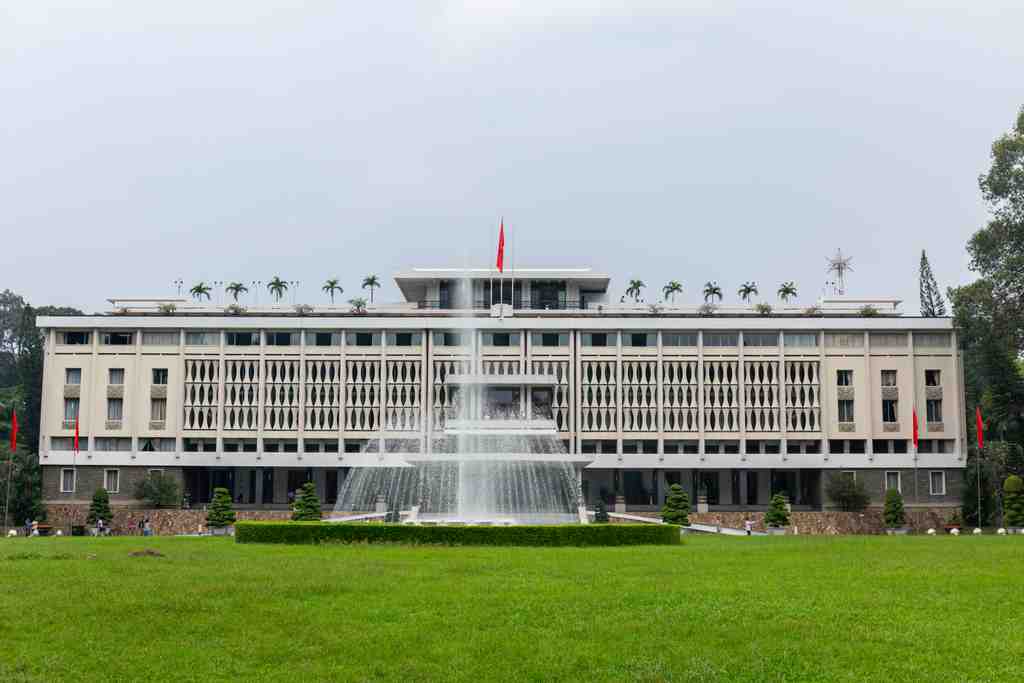
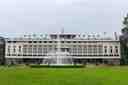
Right in front of you is a grand cream-colored building with bold geometric patterns on the windows, rows of palm trees lining the rooftop, and a tall red flag waving above a large central fountain-spot it straight ahead across the wide lawn. Welcome to the famous Independence Palace! Here, you’re not just seeing a building-you’re stepping into Vietnam’s most powerful chapter of 20th-century history. Picture the 1960s: palm trees sway in the heat, the hum of downtown Saigon in the air, and a sparkling brand-new palace rises from the city. This was once the home and headquarters of the president of South Vietnam, built after the old palace was blown up by two very unhappy pilots. President Ngô Đình Diệm wanted something modern and unbreakable, so he got the top prize-winning Vietnamese architect, Ngô Viết Thụ, who, by the way, was kind of a celebrity himself. Construction started in 1962, but unfortunately, Diệm never lived to see it finished-history can be a real prankster sometimes! The palace had shiny floors, secret rooms, and sweeping views. It saw glamorous state dinners, secret meetings, and lots of high-stakes drama. General Nguyễn Văn Thiệu ruled from here for almost a decade, while outside, life in Saigon buzzed with scooters, street vendors, and a sense that something big might be coming. And oh boy, was something big coming! Fast forward to April 1975. Saigon is tense. Rumors swirl outside these gates. Suddenly, from above--a rebel pilot dives in to bomb the palace! The explosions shake the ground, but barely scratch the building-maybe Diệm’s wish did come true after all. But the real turning point is almost cinematic. On April 30, at 10:45 a.m., a North Vietnamese tank rumbles down the street and bulldozes through the main gate-. Soldiers pour in, the war is over, and Vietnam is reunited at last. The president’s tea is still hot on his desk-talk about an abrupt quitting notice! Since then, the Palace has left behind battles and coups and instead welcomes curious visitors, official delegations, and yes, even the odd digital tour guide like me. If these walls could talk, they’d whisper of spies, escapes, and the thundering joy (and chaos!) when peace finally arrived. So take a moment, close your eyes, and imagine the echoes of history swirling all around you. This is more than just a building-it’s Vietnam’s story, standing tall in the sun. And as you end our tour here, just think-you’ve walked through history’s front door!
打开独立页面 →


常见问题
如何开始导览?
购买后,下载 AudaTours 应用并输入您的兑换码。导览将准备好立即开始--只需点击播放并按照 GPS 引导的路线行驶即可。
导览期间我需要互联网吗?
不需要!开始前下载导览并完全离线享受。只有聊天功能需要互联网。我们建议在 WiFi 下下载以节省移动数据。
这是导游带领的团体游吗?
不是--这是自助语音导览。您按照自己的节奏独立探索,通过手机播放音频解说。没有导游,没有团体,没有时间表。
导览需要多长时间?
大多数导览需要 60-90 分钟才能完成,但您完全控制节奏。随时暂停、跳过站点或休息。
如果我今天无法完成导览怎么办?
没问题!导览具有终身访问权限。随时暂停和恢复--明天、下周或明年。您的进度已保存。
有哪些语言可用?
所有导览均提供 50 多种语言版本。在兑换代码时选择您的首选语言。注意:导览生成后无法更改语言。
购买后我在哪里访问导览?
从 App Store 或 Google Play 下载免费的 AudaTours 应用。输入您的兑换码(通过电子邮件发送),导览将出现在您的资料库中,准备下载并开始。
如果您不喜欢该导览,我们将退款。请联系我们 [email protected]
安全结账使用 


