AudaTours logoAudaTours

华盛顿语音导览:信仰、遗产与隐藏故事的回响

语音指南9 景点

一座大教堂的穹顶在城市天际线上闪耀,其高耸的拱顶和石拱门下隐藏着层层秘密。在华盛顿,历史在每一座阴影笼罩的礼拜堂和石质走廊中低语,渴望被敏锐的耳朵倾听。 这个自助语音导览将带您穿越宗教的宏伟、学术的阴谋和政治的十字路口。超越明信片上的风景,发现大多数游客从未听说过的竞争抱负和失落的传说。 哪桩被遗忘的丑闻几乎让神学院陷入绝境?为何在一个深夜,一场无声的叛乱在政策研究与天主教研究学院中蔓延?以及一块小小的彩色玻璃窗如何点燃了校园内数十年的激烈辩论? 从圣所到圣殿,每一步都揭示着精神戏剧和不为人知的斗争。以一种全新的、令人振奋的视角审视华盛顿的神圣之心。 准备好揭开这座城市光鲜外表下隐藏的秘密了吗?您的故事现在开始。

导览预览

map

关于此导览

  • schedule
    持续时间 30–50 mins按照自己的节奏
  • straighten
    3.5 公里步行路线跟随引导路径
  • location_on
  • wifi_off
    离线工作一次下载,随处使用
  • all_inclusive
    终身访问随时重播,永久有效
  • location_on
    从 圣母无染原罪国家朝圣地圣殿 开始

此导览的景点

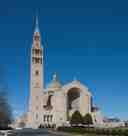
  1. To spot this landmark, look for the towering cream-colored spire and a gigantic dome mosaicked in dazzling blue and gold right ahead-trust me, it’s the biggest church building in…阅读更多收起

    To spot this landmark, look for the towering cream-colored spire and a gigantic dome mosaicked in dazzling blue and gold right ahead-trust me, it’s the biggest church building in North America, so if you see something enormous and grand, you’re in the right place! Welcome to the Basilica of the National Shrine of the Immaculate Conception! Right in front of you rises a building so massive, you could fit a flock of tourists and still have space for a marching band. If you think the dome looks almost heavenly, you’re not alone-at 237 feet tall and covered in 47,000 shimmering tiles, it’s nearly as large as the U.S. Capitol’s dome and shines a little brighter (though, apologies, Congress, it probably disagrees). The brilliant blues, bold yellows, and passionate reds aren’t just for show; they’re coded with meaning, representing the Virgin Mary, Jewish tradition, and Christ’s sacrifice respectively. Now, let’s rewind the clock. Imagine the murmur of the crowd in 1920, as Bishop Thomas Joseph Shahan dreams up a church that would put all the others to shame. He pens a newsletter and the excitement snowballs across America. Dioceses everywhere chip in, pennies and prayers piling up in Washington until, finally, the first big ceremony draws over 10,000 people all dressed in their Sunday best. That first foundation stone is blessed as dignitaries, ambassadors, and government officials look on, some probably wondering how big this church could possibly get. But every epic tale has a few plot twists. Construction crawls forward until 1932, when the Great Depression and then World War II bring things to a grinding halt. For decades, the Crypt Church is all people see-talk about a dramatic cliffhanger. But then, post-war, the bishops rally like superheroes with blueprints and fundraising drives, and by 1959, Catholics and crowds pack in for the dedication of the Great Upper Church. You can almost sense the collective sigh of relief! Inside, the atmosphere is nothing short of breathtaking: mosaic-covered domes on every side, narrow beams of colored light filtering down through grand stained glass, and eighty-two Marian chapels, each dedicated by groups from the far corners of the Catholic world. There’s even a chapel honoring the Maronite faithful, complete with a mosaic inspired by a sixth-century gospel. And don’t forget-behind those thick medieval-style stone walls, clever engineers tucked in modern surprises. They hid speakers so no one misses a sermon, added heating slabs big enough to roast marshmallows (okay, I might be kidding about the marshmallows), and even a basement cafeteria if your spiritual journey makes you hungry. This basilica is unique: it isn’t actually a parish church, and the Archbishop doesn’t control it. The shrine’s real “bosses” are the Catholic University-who gave up this land for it-and the U.S. Conference of Catholic Bishops, making this a true national church. Since the 1990s, popes have graced its halls: Pope John Paul II made it a minor basilica, Pope Benedict XVI brought the rare Golden Rose-a papal honor so fancy it probably needs extra polish-and Pope Francis canonized Junípero Serra here with a Mass on the green. Still not impressed? Here’s a good nugget to tell your friends: the basilica’s only permanent inhabitant is Bishop Shahan himself. His remains are the only ones interred here, a fitting tribute for the dreamer who started it all. And if you get lost, just find the Brookland-CUA Metro station less than a third of a mile away. After all, this place was built to welcome everyone-and now, here you are, standing before the country’s grandest hymn in stone. For further insights on the details of vicinity, architecture or the completion (21st century), feel free to navigate to the chat section below and inquire.

    打开独立页面 →
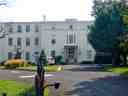
  2. You’re standing in front of a building at the heart of the Catholic University of America, but take a deep breath-because you’re about to step into a story that’s got just about…阅读更多收起

    You’re standing in front of a building at the heart of the Catholic University of America, but take a deep breath-because you’re about to step into a story that’s got just about everything: scandal, visionaries, a think tank, and a touch of international intrigue. Welcome to the Institute for Policy Research and Catholic Studies, or IPR for short-though if you want to sound like a local, throw in a “The” at the beginning and speak like you know a secret. Picture the early 1970s, tensions running high, people with briefcases scurrying down these very sidewalks. Back then, the roots of IPR came from something called the Boys Town Center for the Study of Youth Development-an offshoot of a Catholic-run home for wayward boys in Omaha. But there was a twist-someone peeked at the books and realized Boys Town was sitting on a mountain of cash, almost $300 million, and only taking care of a couple hundred kids! If this sounds like the plot of a movie, you’re not alone. The solution? “Let’s put that money to work for real research,” thought the board (and, no doubt, a few very sharp investigative reporters). Out of this storm, funds flowed into Catholic University, bringing not just dollars, but a tidal wave of students, researchers, and ambitious projects. Imagine teams in this building discussing everything from youth development to theology, anthropology, and sociology. Somewhere between the coffee breaks and stacks of paperwork, a new building even rose up: Aquinas Hall, still echoing with old academic debates. For a decade, things moved at lightning speed, but in 1982, Boys Town said, “Thanks, but we’re out,” and pulled their funding. The Center was left staring into an uncertain future. Researchers scattered, faculty drifted away, and it was touch-and-go for a while. You can almost picture the mood inside: long faces, empty chairs, and half-drunk coffee growing cold. Yet, a few determined leaders-Che Fu Lee, Hans Furth, James Youniss-rolled up their sleeves. They shifted focus, dug deep, and turned the center into Catholic University’s first real think tank, even renaming it The Life Cycle Institute. Let’s be honest, doesn’t that sound like a group that could come up with a plan to live forever? Fast forward to 2009, the Institute adopted its current name and sharpened its mission. Now, it’s an engine powering deep research and big conversations on issues affecting Catholic life, public policy, ethics, and pretty much any major question rattling around academia or Congress. Inside those walls today, you’d hear meetings on things like human rights, trafficking, privacy, foreign affairs-real cloak-and-dagger stuff. There are working groups tackling everything from genocide to national security to mental health. If you’re wondering whether anyone ever disagrees in there, let’s just say the round-table debates might make you wish for popcorn. One highlight? In 2023, IPR gathered experts worldwide for a major conference on the Nuremberg Principles-yes, the rules that came out after World War II to protect human dignity and define war crimes. The last living Nuremberg attorney, Benjamin Ferencz, made his final public appearance to greet them over video. That event was a reverent moment, the echoes of history whispering through these halls. Oh, and every year from 2011 to 2017, this place threw a fundraising banquet with a secret weapon-the Bishop John Joseph Keane Medallion, named after the University’s first rector. If you see a glint on someone’s lapel, you know they’re either a rockstar in Catholic service, or they took a wrong turn at the costume shop. So as you stand here, take a moment and imagine: behind those doors, world-changing ideas are still bouncing off the walls. For a research center, this place sure knows how to keep things exciting-scandal, salvation, and a whole lot of debate. Not bad for a day’s work in D.C. Exploring the realm of the mission, current work of the institute or the the keane medallion? Feel free to consult the chat section for additional information.

    打开独立页面 →
  3. Let’s wind the clock back to 1917. World War I is shaking the world outside, but right here, the Society of the Priests of St. Sulpice-the Sulpicians, for short-are busy digging…阅读更多收起

    Let’s wind the clock back to 1917. World War I is shaking the world outside, but right here, the Society of the Priests of St. Sulpice-the Sulpicians, for short-are busy digging foundations for a new seminary. They’d been asked years before to help run the Catholic University’s divinity college, but now they wanted a space of their very own. I imagine there were plenty of hammering, laughter, and the occasional comment about the Washington humidity. When they first opened their doors, the Sulpician Seminary operated as a branch of Saint Mary Seminary in Baltimore. But the story changed in 1924, when they officially branched out as an independent institution-kind of like a spin-off show that turned out to be even better than the original. By 1940, with a new partnership with the Catholic University’s school of theology, the place took on its current name: Theological College. Now, if you think seminary life is all quiet contemplation, think again. The Sulpicians have a particular style of training. Their founder, Father Jean-Jacques Olier, aimed to foster deep, inner transformation-so much that, as he said, “It is no longer I who live, but Christ who lives in me.” That’s a tall order, but, hey, nobody ever accused the Sulpicians of thinking small. Their program focuses on forming men of sturdy character, teaching spiritual formation, and building a sense of community and collegiality. It’s like Hogwarts, but instead of learning spells, students master prayer, philosophy, and maybe some fantastic coffee brewing. Speaking of students, the Theological College has a few tricks up its sleeve. There are three academic programs tailored for future priests, including a top-notch pre-theology course and the prestigious Basselin Scholars program, named after Theodore B. Basselin, which shapes the “best and brightest” into philosophical powerhouses. Seminarians here hail from all corners-Charleston, Dallas, Los Angeles, Pittsburgh, Salt Lake City-you get the idea. This place is a national crossroads for priestly formation. Let’s not forget the faculty, composed mostly of Sulpician priests, under the watch of the eighteenth rector, Reverend Gladstone Stevens-he’s the head priest, teacher, and probably occasional referee, guiding new generations every year. There’s a bit of star power, too. More than 1,500 priests have trained here, including 45 bishops and six cardinals-names like Cardinal Joseph Bernardin, Cardinal Donald Wuerl, and Bishop Robert Barron. You could say it’s the seminary equivalent of a sports team with a lot of Hall of Famers. So as you stand here, surrounded by leafy trees and the gentle bustle of scholars and spiritual seekers, remember that you’re at the crossroads of tradition, intellect, and a touch of heavenly ambition. If you suddenly feel like breaking into Gregorian chant-well, no one here would judge! Exploring the realm of the sulpician tradition, academic programs or the rectors? Feel free to consult the chat section for additional information.

    打开独立页面 →
再显示 6 个站点显示更少站点expand_moreexpand_less
  1. You’re now standing in front of one of the most hidden treasures in Washington, the Oliveira Lima Library-sometimes known as the Ibero American Library. Imagine it’s 1916: the…阅读更多收起

    You’re now standing in front of one of the most hidden treasures in Washington, the Oliveira Lima Library-sometimes known as the Ibero American Library. Imagine it’s 1916: the world is changing fast, but inside the beautiful walls of The Catholic University of America, Manoel de Oliveira Lima and his wife Flora are making a very important deal. Picture their excited whispers and the shuffling of crisp old pages as they hand over their private library, on the strict condition that it would stay a separate, special place-unlike any other! When it opened in 1924, Manoel proudly became the first librarian-and you can almost see him here, mustache twitching as he carefully arranges 40,000 books focused on Portuguese Brazil. If you wondered if he ever took a day off, think again; this library was his life’s passion! After his death in 1928, his wife Flora took over and raised the collection to a whopping 58,000 books. Not to be outdone, she also added stacks of letters, rare art, and albums full of newspaper clippings from their travels around the globe-Lisbon, Berlin, even Tokyo! Talk about wanderlust! Among the treasures here: original maps, a bronze bust of Brazil’s Emperor Pedro I, and the only color copy of Gaspar Barleus’s “Rerum per Octenium in Brasilia.” There’s even the first French book about Brazil, written by a friar with perhaps too much time on his hands! Don’t breathe in too hard; these rarities aren’t allowed to leave the library, not even for a little adventure. But thanks to a big digitizing project, you can peek into thousands of Portuguese and Brazilian books online. So, this seemingly quiet underground corner is buzzing with stories almost too wild for fiction. Shall we keep the journey going?

    打开独立页面 →
  2. Look ahead for a stately, light-colored mansion with tall windows and a small porch supported by classic columns, standing proudly behind a decorative black fence-this is Brooks…阅读更多收起

    Look ahead for a stately, light-colored mansion with tall windows and a small porch supported by classic columns, standing proudly behind a decorative black fence-this is Brooks Mansion. Alright, story time! Imagine you’re stepping back into the 1840s, where you’d see Colonel Jehiel Brooks, a weathered War of 1812 vet, showing off his brand-new Greek Revival mansion-maybe even bragging a little to the neighbors. He called the place Bellair, and he shared it with his wife, Ann Margaret Queen, who-fun fact-was the daughter of one of the biggest landowners in the city. The house sat on a massive 246-acre plantation, with rolling fields and quiet country roads where the only “traffic jam” was a runaway horse. But times change! After the Brooks family moved on, the land was sold off, split up, and-voilà-the suburb of Brookland was born. Brooks Mansion itself transformed many times: it became a boarding house, then a home for the Marist Brothers, who even stuck on an extra wing (because who doesn’t want more room for activities?). The Benedictine Sisters arrived in 1905, filling the mansion with the excited chatter of young students at St. Anthony’s Academy, and later offering shelter for women in need. By 1928, with women now admitted to Catholic University, the mansion buzzed with the energy of high schoolers at St. Anthony’s. Hidden behind those elegant columns and windows are stories of faith, learning, and a few hard-fought property deals. Today, after more twists and turns-a stopover with the Metro authority, a brush with the endangered places list-Brooks Mansion stands as a guardian of neighborhood tales and a hub for community TV (DCTV). That’s a history worth a peek, don’t you think?

    打开独立页面 →
  3. Take a look down Quincy Street, and let your feet rest a moment-this spot in the Brookland neighborhood became the heart of a tough Washington story that rippled across the city…阅读更多收起

    Take a look down Quincy Street, and let your feet rest a moment-this spot in the Brookland neighborhood became the heart of a tough Washington story that rippled across the city and the country. It’s early morning, January 7, 2023. The street is quiet, houses standing stoic under sleepy shadows. Suddenly, the stillness breaks-a car, stolen by a group of teenagers, rolls up for a midnight misadventure. In their world, it might’ve been a daring adventure, but real life doesn’t always work out like the movies. Now, picture Jason Lewis, age 41-a longtime Parks and Recreation employee, a father of four, and someone who probably hoped his wildest night would be chaperoning a dodgeball tournament. Instead, he awakens to odd noises outside, and, living in a city where nerves can get frayed, he grabs his legally-owned firearm and heads outside to investigate. Maybe he’s groggy, maybe his pulse is thumping louder than reasonable. Out in the chilly air, he sees what he calls “youngsters” at the cars. He shouts at them. Karon Blake-just 13, a middle-schooler-runs toward Lewis’ home, possibly startled, possibly looking to get away. Lewis fires. Karon, shot twice, collapses in the shrubbery between the two properties. Lewis’s girlfriend frantically calls 9-1-1. The clock keeps ticking. Moments later, when police arrive, they find Lewis trying CPR, desperate to undo what’s irreversibly done. You might wonder what those frozen minutes felt like. Punching through the darkness comes the memory of Karon’s voice-captured on video-saying “I’m only 12,” apologizing, caught between dread and regret. His friends, faces lost in shadow, jump in the car and vanish down the street. It’s one of those messy moments that leave everyone questioning the choices made. As dawn crept over Quincy Street, the city awoke to the news. Outrage built. Some demanded to know who fired the shots, others demanded reforms. The city’s mayor, Muriel Bowser, and Police Chief Robert Contee-both seasoned in handling D.C. controversies-responded with cautious press statements. They confirmed that Jason Lewis, who had worked for the city for nearly two decades, had been placed on administrative leave. Public anger and misinformation buzzed like summer mosquitos; everyone had an opinion, but the facts were still seeping out. Soon after, Karon’s family launched a fundraiser for funeral expenses. Neighbors grieved. Vigils lined this very block with candles, prayers, and silent pleas for something to change. At his funeral at Israel Baptist Church, hundreds packed the pews, from city council members to classmates-there wasn’t a dry eye in the house. The legal gears started to grind. On January 31, Jason Lewis turned himself in and was charged with second-degree murder. His court hearings made the news, and his case became another chapter in D.C.’s debate about safety, responsibility, and the rights of people to feel secure in their homes. Prosecutors worked hard, but in the jury’s eyes, something about Lewis’s story didn’t fit murder. Instead, they convicted him of voluntary manslaughter and other charges-serious, but not the harshest. This January, he was sentenced to 12 and a half years-less than half what prosecutors wanted. It might make you ponder: in this city, is there any justice that feels whole? As you stand here, let the weight of this street-and its sorrows-sink in. D.C. Council members spoke out: “No car or material possession is worth a life,” they declared. The law is clear-defending property is never an excuse for taking a life, especially of a child. This block, once just another row of houses, became a stage for impossible choices. Personally, I wish Washington’s most famous overnight drama had been a raccoon in a trash can. But this story reminds us all-sometimes, true tales leave the hardest fingerprints.

    打开独立页面 →
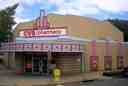
  4. Look for a cream-colored Art Deco building with bold red stripes and a big CVS/pharmacy sign above the entrance-the unique old theater shape stands out on your left. Alright,…阅读更多收起

    Look for a cream-colored Art Deco building with bold red stripes and a big CVS/pharmacy sign above the entrance-the unique old theater shape stands out on your left. Alright, time for a bit of showbiz magic! Imagine you’re standing here in 1937, as the bright lights flicker on and car engines hum, drawing a crowd eager to see the very first film: “I Met Him in Paris.” Back then, this very spot was buzzing with laughter and clinking popcorn buckets, and all eyes were on the beautifully designed Art Deco facade by John Jacob Zink, the same guy who gave the region over 200 movie theaters. Fast-forward to the 1960s and the spotlights dimmed, only for Catholic University to give the place a second act, filling these walls with new kinds of stories until ’71. But wait, the plot thickens! In the late ’70s the silver screen rolled again, only to change to something wildly different-punk rock concerts in the 1980s, with music loud enough to make the seats shake. Some might say the old theater still wants an encore after all these years; now, you can pick up your prescription in the same place where mosh pits once ruled! And guess what? It’s now a historic star, listed on the National Register of Historic Places. Now that’s what I call dramatic flair!

    打开独立页面 →
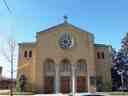
  5. To spot St. Anthony of Padua Church, just look for a big, honey-colored brick building with a huge round stained-glass window and three inviting wooden doors, right at the center…阅读更多收起

    To spot St. Anthony of Padua Church, just look for a big, honey-colored brick building with a huge round stained-glass window and three inviting wooden doors, right at the center of Monroe Street NE-you can’t miss it! Picture yourself back in 1891 right where you’re standing, but instead of cars and playgrounds, there’s the soft clip-clop of horse hooves and the earthy scent of new gardens planted by ambitious settlers. Antoinette Margot, a bold woman who worked with Clara Barton and the Red Cross, packs her bags-hot on the heels of Washington’s latest wave of development-and settles here in Brookland. Alongside her friend Leonide Delarue, Antoinette dreams of a Catholic community, so what does she do? She teams up with a brilliant priest from Catholic University, Fr. Henri Hyvernat (try saying that three times fast), to gather the locals. The very first Mass is held not in a grand church but right at a neighbor’s cozy house, filling the air with hope and the delicious aroma of home-baked bread. Soon, the church blossoms thanks to Cardinal James Gibbons and the first official pastor, Desire C. DeWulf. Today, you’re standing on land where friends, faith, and a little daring spirit turned a patch of Northeast D.C. into “Little Rome,” right next door to a bustling Catholic school. Not bad for a place that started with little more than a prayer and a lot of heart!

    打开独立页面 →
  6. Look for a two-and-a-half-story Queen Anne-style house with blue wood siding, a prominent bay window above the wide front porch, and a pointed roof just behind the trees right in…阅读更多收起

    Look for a two-and-a-half-story Queen Anne-style house with blue wood siding, a prominent bay window above the wide front porch, and a pointed roof just behind the trees right in front of you. You’ve made it to the Slowe-Burrill House-this blue delight with its big porch and that jigsaw puzzle of shingles up top isn’t just a pretty face. Picture yourself here a hundred years ago: the gentle sound of laughter floating out from the backyard, the clinking of tea cups, the fresh scent of grass and summer air swirling together as brilliant minds gather under the sun. In 1922, Lucy Slowe and Mary Burrill-trailblazing African American educators and courageous partners-moved in, turning this house into a quiet symbol of love and defiance. This was no ordinary home; it became the hub for intellectual gatherings, with the rear yard serving as the lively stage for picnics, debates, and celebrations among African-American women thinkers. There’s a dash of suspense, too! When Howard University tried to force Lucy Slowe to live on campus, she stood her ground, rallying support from friends, colleagues, and even the famous Mary McLeod Bethune. Slowe and Burrill refused to budge, filling their home with warmth, friendship, and, dare I say, the best garden parties in Brookland. Even the university’s top brass couldn’t oust her; Lucy’s determination echoed through these wooden halls until she passed here in 1937, with Mary mourning her loss and saying goodbye to their shared dream house soon after. In 2024, after more than a century of stories, the Slowe-Burrill House finally received its fitting crown as a National Historic Landmark. This place celebrates unsung courage-African American, women’s, and LGBT history all rolled together, wrapped up in the shade of that big bay window. It’s a place where love and learning took center stage, even when the world tried to dim the spotlight. If you listen carefully, you might feel some of their steadfast spirit soaking into the front porch boards beneath your feet. Congratulations-your tour ends at a home where history dared to live out loud.

    打开独立页面 →
常见问题

如何开始导览?

购买后,下载 AudaTours 应用并输入您的兑换码。导览将准备好立即开始--只需点击播放并按照 GPS 引导的路线行驶即可。

导览期间我需要互联网吗?

不需要!开始前下载导览并完全离线享受。只有聊天功能需要互联网。我们建议在 WiFi 下下载以节省移动数据。

这是导游带领的团体游吗?

不是--这是自助语音导览。您按照自己的节奏独立探索,通过手机播放音频解说。没有导游,没有团体,没有时间表。

导览需要多长时间?

大多数导览需要 60-90 分钟才能完成,但您完全控制节奏。随时暂停、跳过站点或休息。

如果我今天无法完成导览怎么办?

没问题!导览具有终身访问权限。随时暂停和恢复--明天、下周或明年。您的进度已保存。

有哪些语言可用?

所有导览均提供 50 多种语言版本。在兑换代码时选择您的首选语言。注意:导览生成后无法更改语言。

购买后我在哪里访问导览?

从 App Store 或 Google Play 下载免费的 AudaTours 应用。输入您的兑换码(通过电子邮件发送),导览将出现在您的资料库中,准备下载并开始。

verified_user
满意保证

如果您不喜欢该导览,我们将退款。请联系我们 [email protected]

安全结账使用

Apple PayGoogle PayVisaMastercardPayPal

AudaTours:语音导览

有趣、经济实惠、自助徒步导览

试用应用 arrow_forward

深受全球旅行者喜爱

format_quote 这次导览是游览这座城市的绝佳方式。故事很有趣,感觉不太照本宣科,我喜欢能够按照自己的节奏探索。
Jess
Jess
starstarstarstarstar
第比利斯导览 arrow_forward
format_quote 这是了解布莱顿的一种可靠方式,感觉不像游客。解说有深度和背景,但并未过度。
Christoph
Christoph
starstarstarstarstar
布莱顿导览 arrow_forward
format_quote 一手拿着羊角面包,零期望地开始了这次导览。这款应用真的很适合你,没有压力,只有你、你的耳机和一些很酷的故事。
John
John
starstarstarstarstar
马赛导览 arrow_forward

无限语音导览

解锁全球每个导览的访问权限

0 导览·0 城市·0 国家
all_inclusive 无限探索